Disclosure: Some links in this post are affiliate links. As an Amazon Associate I earn from qualifying purchases, at no extra cost to you. Learn more
Specs are compiled from manufacturer listings and verified buyer reviews and can change over time — please confirm the key details on the product page before buying.
If your toes feel pinched by the second mile, the problem is usually the last, not your feet. A genuinely wide walking shoe gives your forefoot room to spread and land flat, and that single change fixes most of what makes long walks miserable. The picks below cover every shape of wide foot, from extra-wide trainers to a roomy toe box that still looks like a normal sneaker.
This guide is built by comparing the manufacturers’ published specifications and the patterns across verified customer reviews, so you get each pick’s real strengths and trade-offs instead of marketing spin.
The options here split into two camps: shoes that run genuinely wide through the whole foot, and shoes with a roomy toe box and a normal heel. For anyone with a broad forefoot who walks daily, the pair most worth starting with is the New Balance 608 V5, the crowd favorite at 4.5+ stars across 89,000+ ratings and the best wide walking shoe for most people.
Top Picks

How To Choose The Best Wide Walking Shoe
Buying wide is not one decision, it is two. You are choosing how much room your forefoot gets, and you are choosing how the shoe holds your heel while it gives you that room. Get both right and a walk feels easy. Get either wrong and you get rubbing, sliding, or toes that go numb.
Width label versus toe box shape
A “wide” or “extra-wide” width label means the whole shoe is built on a broader last — more room through the midfoot and heel as well as the toes. A wide toe box is different: the front of the shoe flares out for your toes while the heel stays snug. If your problem is a bunion, a hammer toe, or a broad forefoot with a narrow heel, the toe box shape often suits you better than a wide width alone.
Heel lock keeps a roomy shoe from sliding
Extra room up front only works if your heel stays put. Look for a padded collar, a pull tab, or lacing that reaches high on the ankle. A top eyelet that sits close to the ankle is a small detail that stops your foot from sliding forward on downhills and long pavement stretches.
Cushioning and drop change how the walk feels
Cushioning is how much soft foam sits between your foot and the ground. A plush midsole feels kinder on concrete; a firmer one gives you more stability and less wobble. Drop is the height difference between heel and toe. A zero drop platform sits your heel and forefoot level, which changes how your foot lands — worth knowing before you commit to a long walk in them.
Side-by-Side Comparison
| Model | Best For | Width Approach | Cushioning | On/Off | Amazon |
|---|---|---|---|---|---|
| New Balance Men’s 608 V5★ Best Overall | Most wide-footed walkers | Wide and extra-wide widths | Padded collar and tongue | Lace-up | Amazon |
| NORTIV 8 Trail Running ShoesBest Toe Box Room | Paved and light trail walks | Wide toe box | Firm midsole | Lace-up | Amazon |
| adidas Men’s Kaptir 4.0 | Everyday errands and treadmill | Roomy toe box, knit upper | Cloudfoam midsole | Slip-on feel | Amazon |
| Skechers Vigor AT Slip-in | Hands-free daily wear | Wide width available | Air-Cooled Memory Foam | Slip-in | Amazon |
| Skechers Max Cushioning Glide Step | Long shifts on hard floors | Wide and extra-wide | Max Cushioning + Goga Mat | Hands-free slip-in | Amazon |
| ALTRA Men’s Lone Peak 8 | Trail and mixed terrain | Roomiest toe box, zero drop | Altra EGO midsole | Lace-up | Amazon |
| Brooks Men’s Adrenaline GTS 25 | Stability plus all-day support | Wide widths, roomy toe box | Soft stability cushioning | Lace-up | Amazon |
Detailed Reviews
1. New Balance Men’s 608 V5 Casual Comfort Cross Trainer
Our pick — 4.5+★ from 89,500+ verified ratings; the strongest balance of quality and price.
The wide trainer that finally reads “wide” as actually wide, not a suggestion.
New Balance builds this one on real width options, including wide and extra-wide, and it uses a leather upper with a padded collar and tongue. Those two details do the quiet work: the leather holds its shape so the shoe doesn’t slump around your forefoot, and the padding cushions the top of your foot and your ankle where laces usually bite. A pull tab at the heel helps you get in without crushing the back down.
What wins people over is how it behaves on the first walk rather than the tenth. Owners describe it as comfortable from day one, with a supportive arch and enough room that a first-time wide buyer says the “Wide” designation is genuinely wide. It also holds up as a walking shoe rather than just a gym shoe — the substantial rubber sole gives more support and stabilization than softer trainers, which is why it suits power walking and long errands alike. People come back for it in multiple colors and treat the old pair as yard shoes.
The honest catch is the sole and the laces. Some long-term buyers report the shoe wearing out faster with heavy day-in, day-out use, and the stock laces run thick and long. A few buyers also find the arch support stronger than they expected if they are used to a soft, neutral shoe. Think of it as a supportive shoe, not a marshmallow one — the trade-off you accept for stability.
What it gets right
- Genuine wide and extra-wide widths, with buyers confirming the fit is truly broad.
- Leather upper with padded collar and tongue that hold their shape.
- Substantial rubber sole with more support and stabilization than a soft trainer.
- Comfortable from day one with a supportive arch for long walks.
- Available in many colors, so repeat buyers can restock their favorite.
Where it asks something back
- Durability is mixed — some heavy users see the shoe wear after months of daily wear.
- Stock laces are thick and long.
- Firmer feel than a plush walking shoe, so it may not suit walkers who want softness above all.
The call: Reach for this if you have a broad foot, want a supportive arch, and walk for exercise or all-day errands.
Look elsewhere if: You want maximum cushioning underfoot or a hands-free slip-on design.
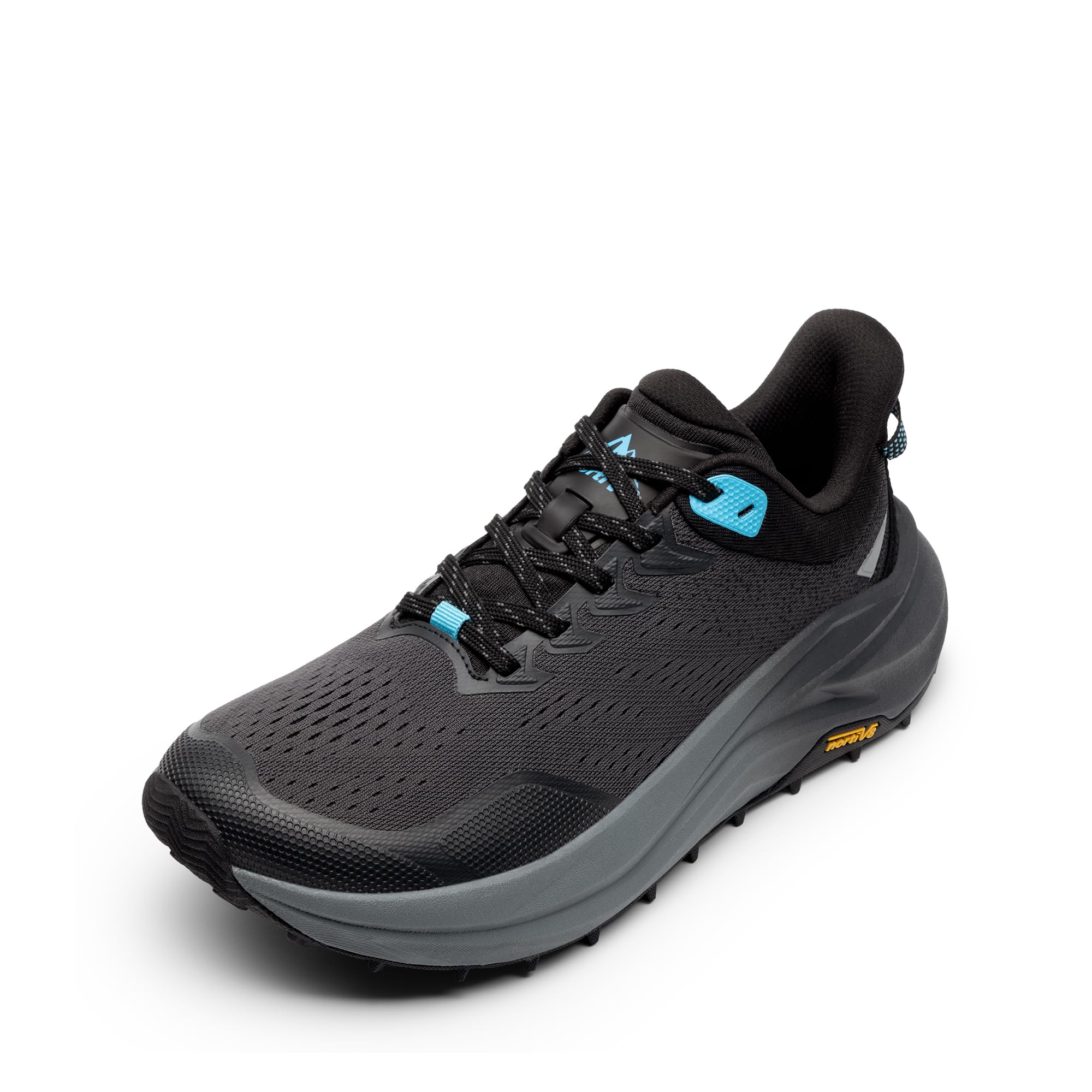
2. NORTIV 8 Men’s Trail Running Shoes Wide Toe Box
A roomy-toe shoe at a value price, built for people whose toes need to spread.
The defining number here is the 5mm drop — a slightly lower platform than most trainers, which encourages a more level landing on pavement. The toe box is the real headline, though. Experienced hikers praise it for how much room it leaves up front, and it helps one buyer specifically with Morton’s neuroma, a painful nerve condition in the forefoot. That is a shape a lot of wide walkers need and few shoes deliver at this tier.
The build is sturdier than the price suggests. A firm midsole gives you stability rather than a soft, bouncy feel, a reinforced toe bumper guards the front against scuffs, and the heel lock is good enough that your foot does not slide. Trail owners mention the tread stays intact past 300 miles of technical terrain. What wins people over is the combination: roomy up front, stable underfoot, and grippy enough for a dusty path.
The honest trade-offs come with the shape. It is heavier than the Hoka and Altra shoes some buyers compare it to, and the arch support is minor, so if you need strong arch lift this is not that shoe. The knobby tread that grips a trail is fine on pavement but not as quiet as a walking-sole. One walker found the collar too high and stiff against the ankle bone from the start. And above a size 12 there are no half sizes, so a very large foot has to pick a whole size.
Best for mixed terrain: You get a 5mm drop and a wide toe box that suit bunion and hammertoe buyers, plus a reinforced toe bumper for scuffs.
Worth knowing: The midsole is firm and the arch support is minor. It is a stable, grippy shoe for paths and pavement, not a soft all-day cushion.
The verdict: A strong option if your toes need space and you want stability at a value-tier price.
Not the one for: Walkers who need strong arch support or a soft, plush ride.
3. adidas Men’s Kaptir 4.0
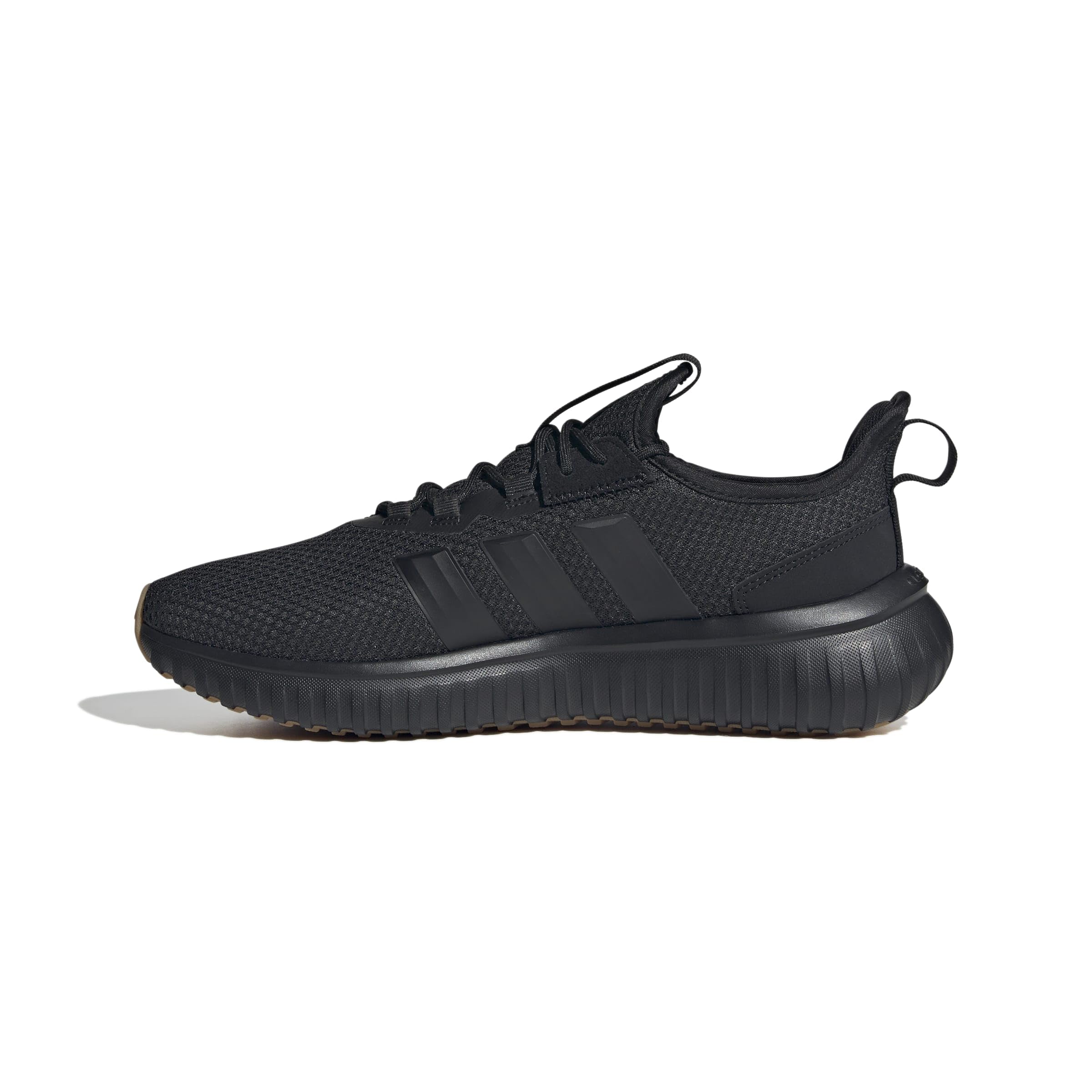
A roomy knit sneaker that looks like a lifestyle shoe and wears like a slipper.
This one leads with its upper. A soft knit with a mesh collar flexes with your foot instead of pressing on it, and the Cloudfoam midsole gives lightweight cushioning for smooth strides. The textile lining adds softness, and a durable rubber outsole gives you grip. Buyers describe the fit as easy and comfortable for walking, and the style gathers compliments — it pairs with jeans and casual outfits without shouting “athletic shoe.”
The design has a useful quirk: it is not marketed as a slip-on, but it functions like one because the tongue is part of the shoe’s shape and does not curl or collapse when you slide your foot in. For a wide-footed walker, that matters — the entry stays open. One buyer with a hip replacement wears them as their everyday pair. It is also comfortable for standing and errands rather than just the treadmill.
The caveat is fit consistency. The fit gets mixed feedback — the shoe runs a little narrow for some feet and slightly small for others, so ordering your normal size is a gamble. A previous version of this model ran narrow with sizing that was off compared with earlier versions, but this iteration has a roomy toe box and a good fit, size-wise, for many buyers. If you are between sizes, sizing up half a size is the safer move. There is one more thing: the knit is soft and breathable but not built for rough use.
Style that earns mentions: Plenty of buyers call out the look — it dresses up errands better than a chunky trainer.
Sizing is a question mark: Some feet find it narrow and some find it small, so treat half sizes as your friend.
Comfort-first fit: Best for someone who wants a roomy, breathable knit sneaker for errands, commuting, and treadmill time.
One thing to check: The knit upper is soft and light — it is not a heavy-trail or rough-work shoe.
4. Skechers Mens Vigor at Hand Free Slip-in Sneaker
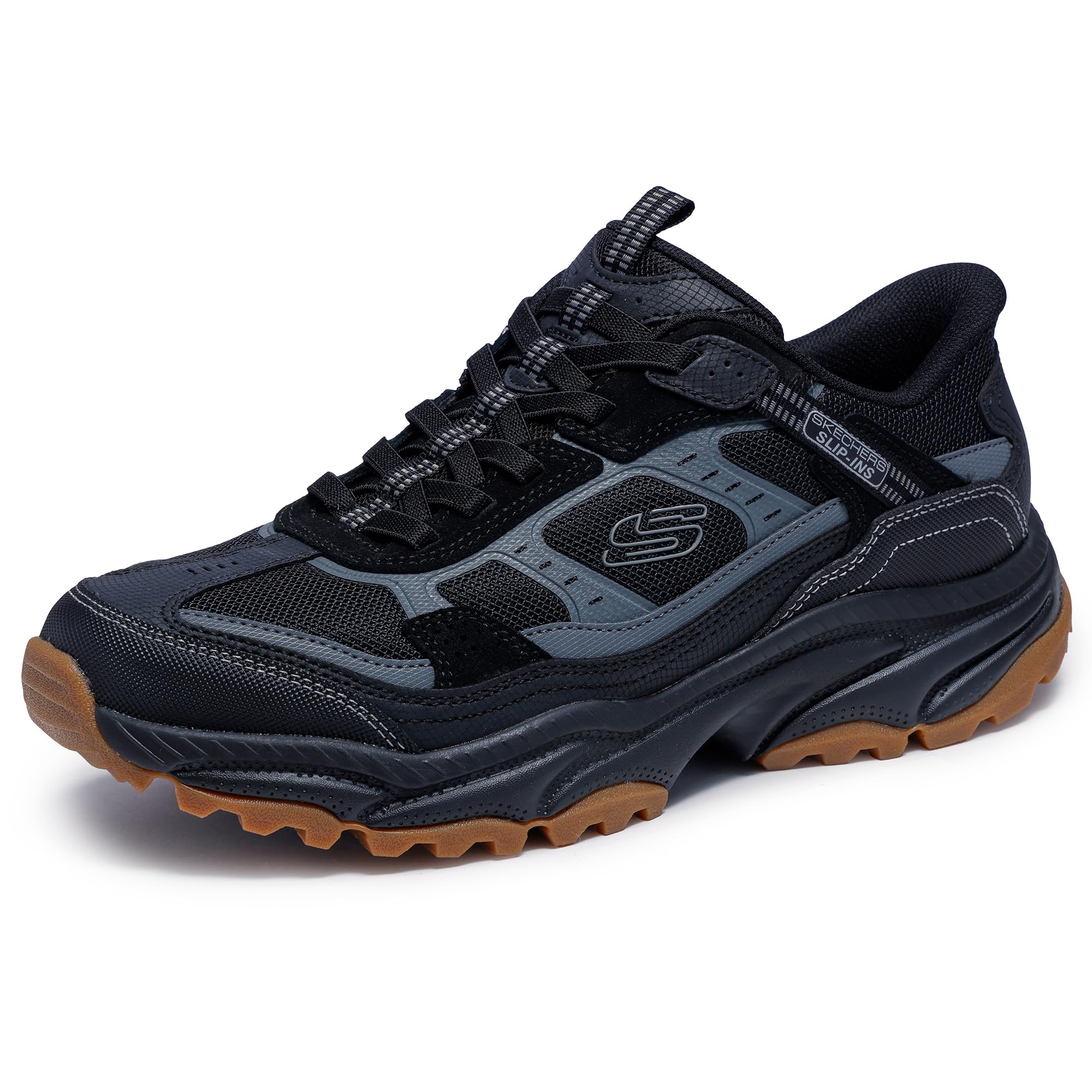
A wide slip-in for anyone who is done bending over to tie laces every morning.
The reason this one exists is the entry. It is a slip-in with stretch laces and faux laces that look real, so you step in and go without tying. A premium leather and synthetic upper holds the shape, the rugged traction outsole grips, and the Air-Cooled Memory Foam insole gives you all-day cushioning. It comes in wide widths, and buyers with big feet note the wide design is what makes it work.
What the reviews keep returning to is the ease of use — the slip-on design cradles the foot and people with back trouble or limited mobility can put them on without help. Beyond that, the shoe is versatile: buyers use it for long walks, hikes, and travel, and one pair lasted over a year before needing replacement. A drywall construction worker who stands all day has reordered it multiple times. It is lightweight, comfortable, and holds up to daily wear.
The one honest limit is that you cannot tighten it. There is no lace to crank down, so it is not a runner’s shoe — a few customers note the slip-in needs a little practice to step into at first. It is also built for comfort and light trail grip rather than hard technical terrain. If you need a lock-down fit for fast movement, look at a laced shoe instead.
Why it earns its slot
- Hands-free slip-in with stretch laces — no tying needed.
- Air-Cooled Memory Foam insole for cushioning through the day.
- Available in wide widths for bigger feet.
- Lightweight and comfortable enough for all-day standing.
- Rugged outsole for grip on light trails and pavement.
What it cannot do
- No adjustable lacing to lock down the fit for running.
- Some buyers find the step-in takes a try or two at first.
- The design favors comfort over a snug, athletic fit.
Built for: Someone with wide feet who wants to step in and go, especially with back or mobility limits.
Not built for: Runners who need to cinch the laces down tight.
5. Skechers Max Cushioning Glide Step
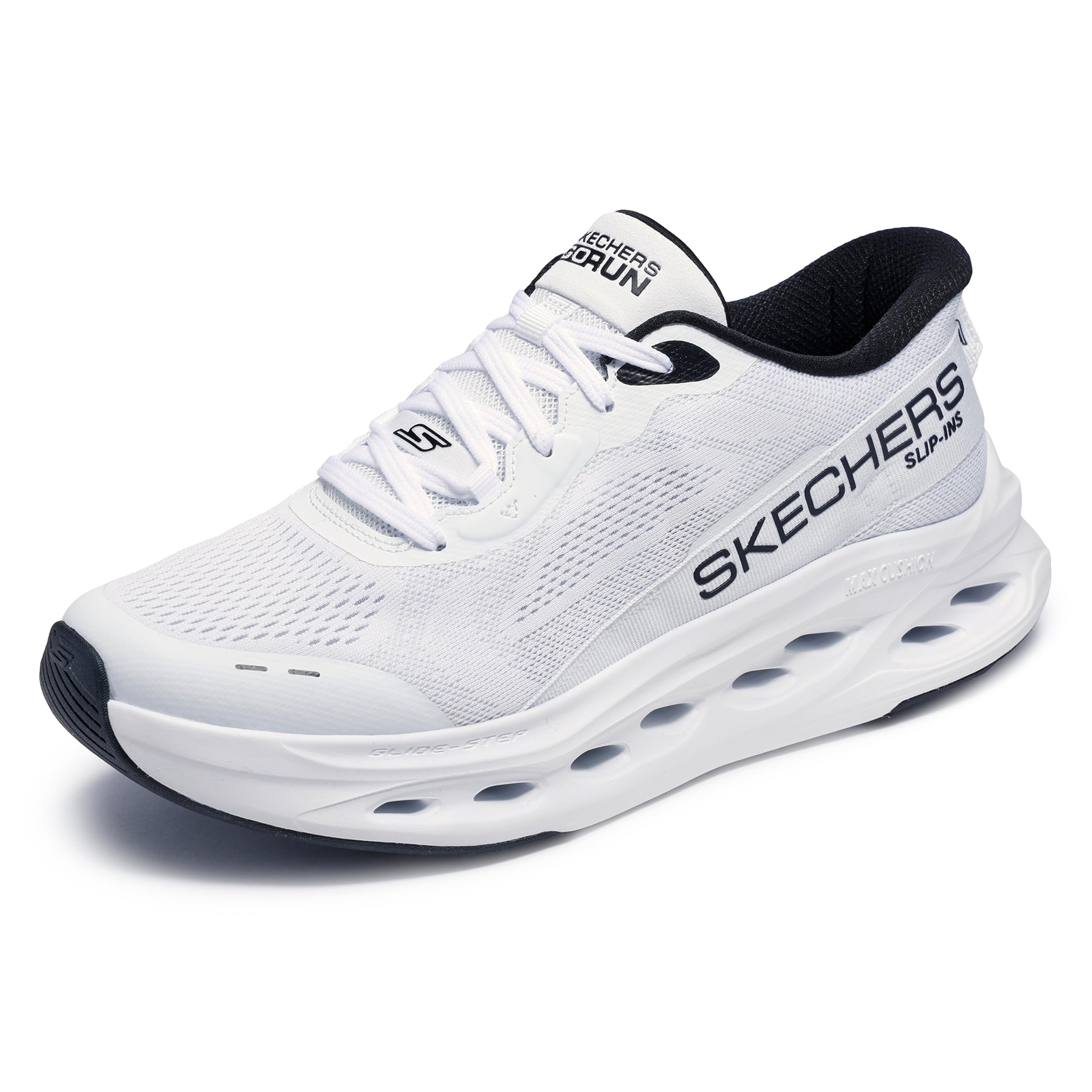
Max cushioning and a hands-free heel, made for eight-hour shifts on hard floors.
This is the plush option. Max Cushioning and Glide-Step work together with a Glide-Step rocking motion that eases you forward as you walk. A breathable Skechers Air-Cooled Goga Mat insole sits inside, and a Goodyear Performance Outsole adds grip. The Heel Pillow and hands-free slip-in mean you step in and go without bending. It comes in wide and extra-wide, which is what makes the cushioning usable for a broad foot.
What wins people over is comfort over long days. Buyers describe them as walking on pillows, and one personal trainer on their feet all day likes the cushioning and fit. Buyers compare the comfort to Hokas and note it holds up through full eight-hour shifts with minimal foot fatigue. Buyers who ordered extra-wide for post-surgery orthopedic needs say the fit worked for them. The slip-in design fits well even when laced tight, no break-in is needed, and the look is sleek enough for daily wear.
The trade-off is the price-to-comfort bet and the laces. One buyer expected faux laces and found real ones, and another had to add high-arch insoles for more support. Durability feedback is mixed, so a heavy daily user should treat it as a cushion-first shoe rather than an indestructible workhorse. If you want a firm, stable ride, this much softness may feel like too much.
The cushioning payoff: Max Cushioning plus the Goga Mat insole deliver a pillowy ride for standing all day.
The support question: Arch support is adequate for many but not deep, so a high-arch walker may want an insole.
Your pick if: You are on your feet for long shifts or long walks and want the softest ride with a hands-free entry.
Skip if: You prefer a firm, stable platform or want deep arch support built in.
6. ALTRA Men’s Lone Peak 8 Trail Running Shoe
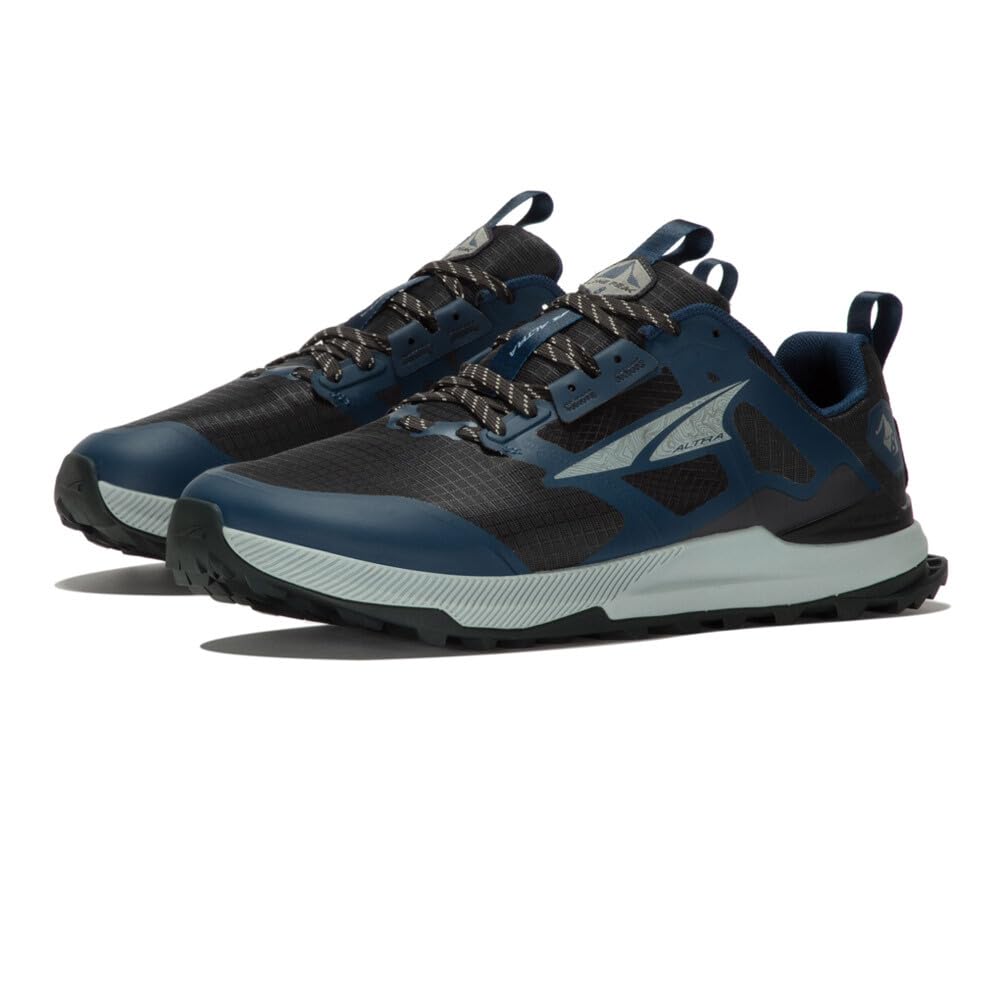
The roomiest toe box here, on a zero-drop trail shoe that grips loose ground.
Altra’s defining claim is space, and the Lone Peak 8 delivers it. It is built on a zero drop platform — heel and forefoot sit at the same height — with Balanced Cushioning that encourages a level landing. The signature FootShape gives your toes room to sit naturally, and it is the roomiest toe box in this lineup. A MaxTrac outsole with TrailClaw canted lugs under the metatarsals gives sticky grip on dirt, gravel, and roots.
What wins people over is comfort and versatility. Buyers praise how well the toe box works for wide, flat feet, and how the shoe handles hiking, rucking, and walking as well as trail running. Reviewers point out the arch support holds up on long hikes, the fit runs true to size, and the shoe feels light on foot. Long walking days and short runs both get good reports, and one buyer says it holds grip worth the trade. It also runs true to size, maybe a touch bigger compared to Brooks.
The honest catch is durability. The mesh and inner heel padding can wear before the rest of the shoe, and the upper is stiff at first, so break them in around town before a big trail day. Grit can get in without gaiters, and the mesh is breathable — which means it also lets water in. The zero-drop platform changes how you land, so give your calves time to adjust if you are coming from a raised trainer. And the trail styling is not the quietest for office wear.
Space where it counts: The roomiest toe box in the group, with zero drop and TrailClaw lugs for grip underfoot.
The durability trade: The upper and inner heel can wear before the sole does, so a trail-only buyer should size the expectations to match.
For the trail-curious: Best if your toes need maximum room and your walks head onto dirt, gravel, or light trail.
Skip the zero drop if: You are not ready to change how your foot lands, or you need a firm, high-drop trainer.
7. Brooks Men’s Adrenaline GTS 25 Running Shoe
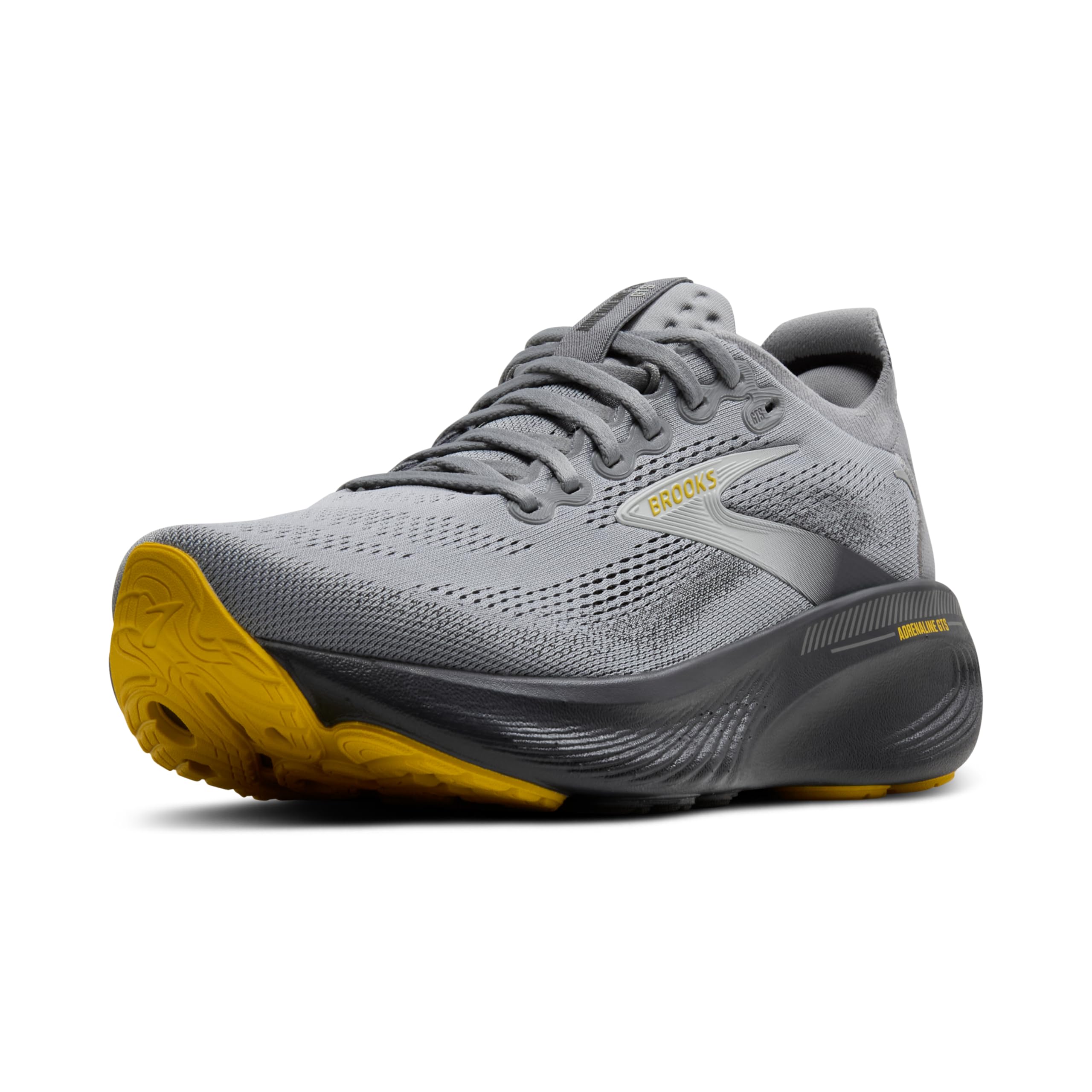
A stability trainer that keeps a wide foot supported through long walking days.
If your foot tends to roll inward or you want a shoe that steadies each step, this is the one. It is a stability running shoe built for support, with a wide toe box, strong heel and arch support, and durable soles. It comes in wide widths, and one large-footed buyer with a wide forefoot reports the fit was perfect with no inner deformation after two weeks of wear.
What wins people over is how it holds up across a whole day. Buyers wear it through eight to twelve hour work days and long standing shifts without foot fatigue, and describe the cushioning as soft without feeling tight or squishy. Arch support is strong for both running and walking. One buyer with stroke-related hip issues found walking easier in them, and a runner with shin splints reports no shin pain during or after a 5k. One long-term user logged six months and 300 paved-trail miles with no knee or ankle trouble.
Sizing is where it trips people up. The shoe runs small, so sizing up half a size is the safe call for many, even though others find a size 11 fits a wide foot perfectly. Value is mixed — it is a premium-tier shoe, and some buyers feel the support is worth it while others hesitate at the tier. Laces can feel snug if you prefer a looser fit, and a few buyers want a slip-on instead.
The case for stability
- Stability design with strong heel and arch support.
- Wide toe box and wide widths for broad feet.
- Durable soles that hold up across months of paved walking.
- Cushioning that is soft without feeling tight or squishy.
The honest limits
- Runs small — many buyers need to size up half a size.
- Premium-tier shoe, so value is relative to how much you want the support.
- Laces can feel snug for buyers who like a looser fit.
Pick it for: Support and stability through long walking days, especially if your foot needs guidance on each step.
Size check first: This one tends to run small, so a half size up is worth considering before you commit.
Know the Specs
Width and toe box
The width label is how broad the whole shoe is built. A wide or extra-wide width gives you room across the midfoot and heel as well as the toes. A wide toe box is shaped differently — it flares out up front while keeping the heel snug. If your issue is a bunion, a hammer toe, or a broad forefoot with a narrow heel, the toe box shape usually suits you better. Match the shape to the painful spot, then pick the width.
Drop and platform height
Drop is how much higher the heel sits than the toe. A zero drop platform places them level and changes how your foot lands, which is why some walkers love it and some need time to adjust. A small drop like 5mm sits just slightly lower than a standard trainer. Neither is better — a higher drop feels familiar if you are coming from a traditional shoe, while a lower platform encourages a more level stride on long walks.
Common Questions
How do I know if I need a wide width or just a wide toe box?
Do wide walking shoes run true to size?
Is zero drop good for walking on pavement?
Will a slip-in shoe stay on my foot while walking?
How much arch support should a wide walking shoe have?
Are these shoes good for standing all day at work?
How long should a wide walking shoe last?
Can I wear a trail shoe like the Lone Peak 8 for everyday walking?
Does a wide toe box make a shoe look oversized?
What is the difference between a stabilization sole and a soft midsole?
The Bottom Line
For most wide-footed walkers, the wide walking shoe to start with is the New Balance 608 V5, because it combines a genuine wide and extra-wide build with a supportive arch and a substantial sole that suits long walks. If you want the roomiest toe box for trail days, the ALTRA Lone Peak 8 is a good match. If you simply want to step in and go, the Skechers Max Cushioning Glide Step offers the softest hands-free pick in a wide fit. The New Balance line has earned its place at the top, and the value is hard to argue with.
How we choose
We do not accept paid placement. Every pick is matched to a real buyer and a real use-case; we do not hands-on test units.
Sources
Specifications: manufacturer listings and product documentation. Review insights: verified customer reviews, as of October 2026. Pricing: not shown on this page (it changes often); check the current price via the retailer link.
As an Amazon Associate, Aappliancez earns from qualifying purchases. This does not affect which products we feature.