Disclosure: Some links in this post are affiliate links. As an Amazon Associate I earn from qualifying purchases, at no extra cost to you. Learn more
Specs are compiled from manufacturer listings and verified buyer reviews and can change over time — please confirm the key details on the product page before buying.
If your toes feel pinched by mile three, the shoe is the problem, not your feet. A wide toe box (extra room at the front of the shoe) lets your toes splay out the way they do when you walk barefoot. That extra room at the front is what stops the rubbing, the black toenails, and the burning along the outside edge of your foot. Below are nine running shoes that actually give your toes room, sorted by how they feel on the road versus the trail and by how much cushioning sits underfoot.
This guide is built by comparing the manufacturers’ published specifications and the patterns across verified customer reviews, so you get each pick’s real strengths and trade-offs instead of marketing spin.
Some of these are zero-drop, meaning your heel and toes sit at the same height off the ground, and some use a more traditional raised heel. The list below covers both, plus which ones handle bunions and which ones run narrow through the midfoot. Here are the wide toe running shoes worth putting on your feet before your next long run.
Top Picks

How To Choose Wide Toe Running Shoes
The mistake most people make is buying a shoe one size longer to get more width. That buys you extra length your heel has to slosh around in, not extra room where your toes actually sit. Toe box width and overall shoe length are two separate measurements, and only one of them fixes a squished forefoot.
Look at the shape of the front, not just the width label
A shoe built around a wide toe box usually flares out toward the front, so the widest point sits at your toes rather than at the ball of your foot. That shape lets your big toe stay straight instead of angling inward. If you have a bunion or a tailor’s bunion, that straight-line toe position is what keeps pressure off the joint.
The trade-off is a secure midfoot. A shoe that is roomy at the front but still cinches down across the middle stops your foot from sliding forward on downhills. Brands that build this shape deliberately describe a roomy front paired with a locked-in midfoot, and that pairing is worth checking for.
Decide if you want zero drop before anything else
Zero drop means your heel and forefoot sit level, at the same distance from the ground. A traditional running shoe raises the heel slightly, which shifts weight forward. Neither is better on its own — but if you have only ever run in raised-heel shoes, switching straight to zero drop asks a lot of your calves and Achilles in the first few weeks.
A shoe with a small amount of drop, such as the 5 mm on the Topo Athletic Ultrafly 5, splits the difference. A 4 mm drop on the Altra Escalante 4 sits closer to level. If you want the full natural feel, zero drop is the setting to look at.
Match the cushioning to where you actually run
Deep, soft foam feels great on pavement and on a concrete floor all shift. On loose gravel and wet roots, that same softness can feel vague underfoot. Trail shoes tend to pair moderate cushioning with a stickier rubber outsole and raised lugs (the small tread blocks under the sole) that bite into dirt.
Ask yourself which surface takes up most of your miles, then lean that way. A road shoe used on trails wears faster and grips worse. A trail shoe used on pavement feels heavier and louder than it needs to.
Side-by-Side Comparison
| Model | Best For | Heel-to-Toe Drop | Weight | Surface | Amazon |
|---|---|---|---|---|---|
| Brooks Men’s Glycerin Stealthfit 22★ Best Overall | All-day comfort and easy slip-on | — | — | Road | Amazon |
| ALTRA Men’s Escalante 4Toe Room Champion | Zero-drop road miles and gym work | 4 mm | — | Road | Amazon |
| Topo Athletic Women’s Ultrafly 5Best for Bunions | Bunion-friendly daily walking | 5 mm | 7.9 oz (W7) | Road | Amazon |
| New Balance Mens Fresh Foam X 860 V14 | Overpronation support | — | — | Road | Amazon |
| ALTRA Men’s Lone Peak 8 | Trail running and rucking | 0 mm | 10.7 oz / 303 g | Trail | Amazon |
| ALTRA Women’s Lone Peak 8 | Women’s trail and hiking | 0 mm | — | Trail | Amazon |
| ALTRA Women’s Torin 8 | Plush zero-drop road cushioning | 0 mm | 8.4 oz | Road | Amazon |
| New Balance Men’s Fresh Foam X More V6 | Long shifts on hard floors | — | — | Road | Amazon |
| THE NORTH FACE Men’s Altamesa 500 | Cushioned trail stability | — | — | Trail | Amazon |
Detailed Reviews
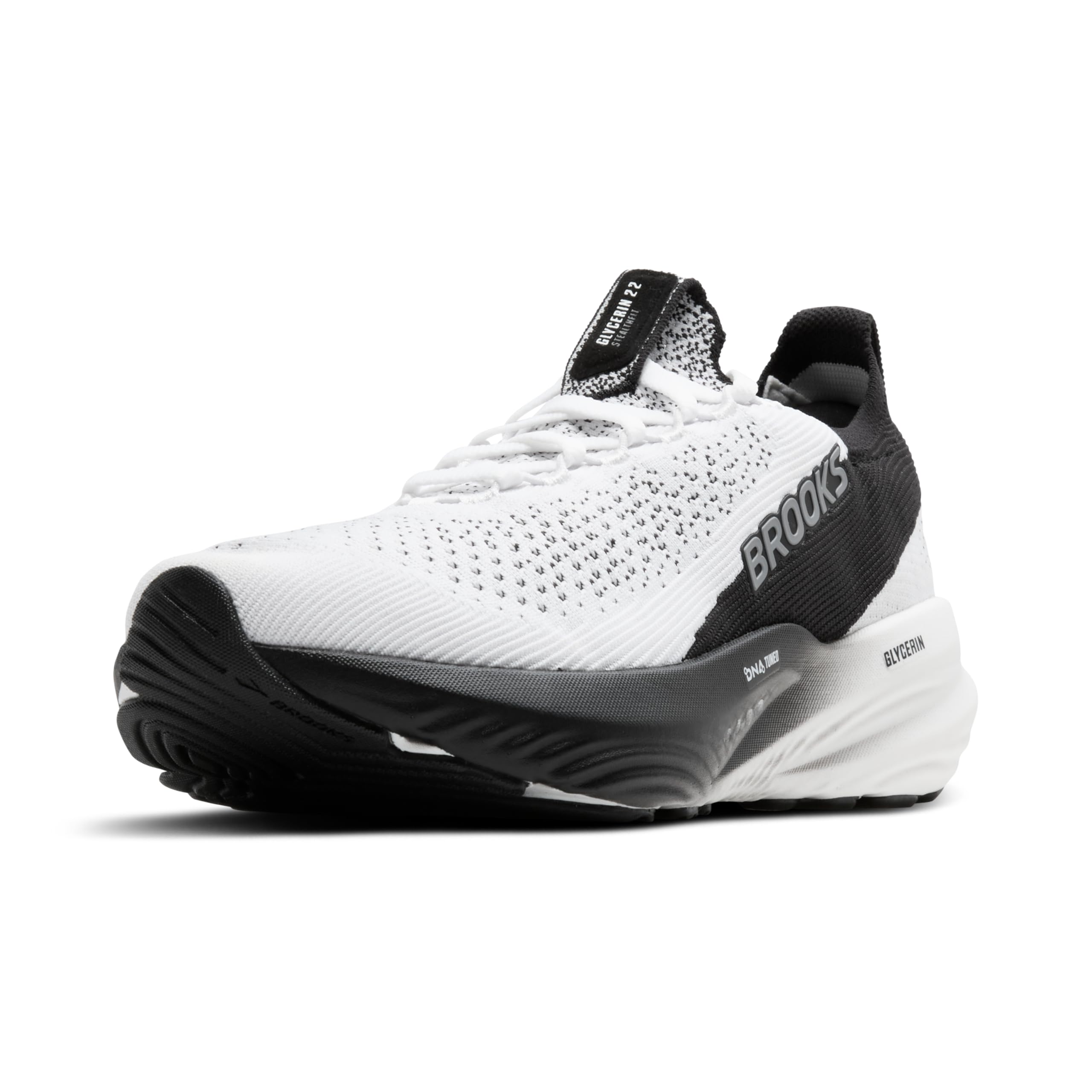
1. Brooks Men’s Glycerin Stealthfit 22 Neutral Running Shoe
Our pick — 4.5+★ from 550+ verified ratings; the strongest balance of quality and price.
The sock-fit shoe you can kick off without untying — and wear for twelve hours straight.
The Stealthfit upper is one continuous knit sleeve with no separate tongue and no stitched seams across the top of your foot. That means nothing digs in at the bend where your toes flex, which is where a lot of wide-footed runners get sore spots. You slide in, the shoe wraps down around your instep, and you are out the door. It is the calmest step-in feel on this list, and it is the reason this pick takes the top spot for most people.
Underfoot it runs on Brooks’ plush cushioning with a stable, planted feel rather than a mushy one. The 22 version is a touch less squishy than the 21 it replaces, and that trade makes it steadier for longer days on your feet. Consider the crowd it draws: nurses, custodians, teachers, people logging 15 to 18 miles a week plus a full shift standing on hard flooring. Buyers report “1000+ miles on four pairs (three 22s, one 21), now on fifth.” That is a real durability record from someone who puts in serious mileage.
What wins people over most is the overall build quality, with comfort close behind — the shoe arrives feeling already broken in, no blister phase, no two-week adjustment. The honest catch is support. This is a neutral shoe, so if your arches need guiding or you overpronate, the arch structure here is not built for that and a stability shoe will serve you better. Some long-term owners also note the knit upper picks up road grime quickly, and the black sole finish can scuff off with heavy use.
Here is the head-to-head that matters: this shoe carries a 4.5+ rating, and the Altra Escalante 4 below sits at 4.4. Brooks edges it on score and on long-term durability evidence, while the Escalante wins on outright toe room. If your toes are the primary problem, keep reading. If you want a shoe that disappears on your foot from the first wear, stop here.
What earns it the top spot
- smooth knit sleeve upper with no separate tongue, so nothing rubs across the top of your foot
- Slip-on entry — a genuine help if you are in and out of shoes all shift
- Arrives broken-in, with no blister phase to push through
- Proven mileage record from repeat buyers who keep coming back to the Stealthfit line
Where it holds back
- Neutral platform, so no built-in guidance for overpronation
- Knit upper shows dirt fast and the dark sole finish scuffs over time
- Not built for trails — rocks and roots come straight through the outsole
Made for: anyone on their feet all day who wants a neutral shoe that goes on in one motion and never needs breaking in.
Look past it if: you need stability control or arch guidance — this platform is deliberately neutral.
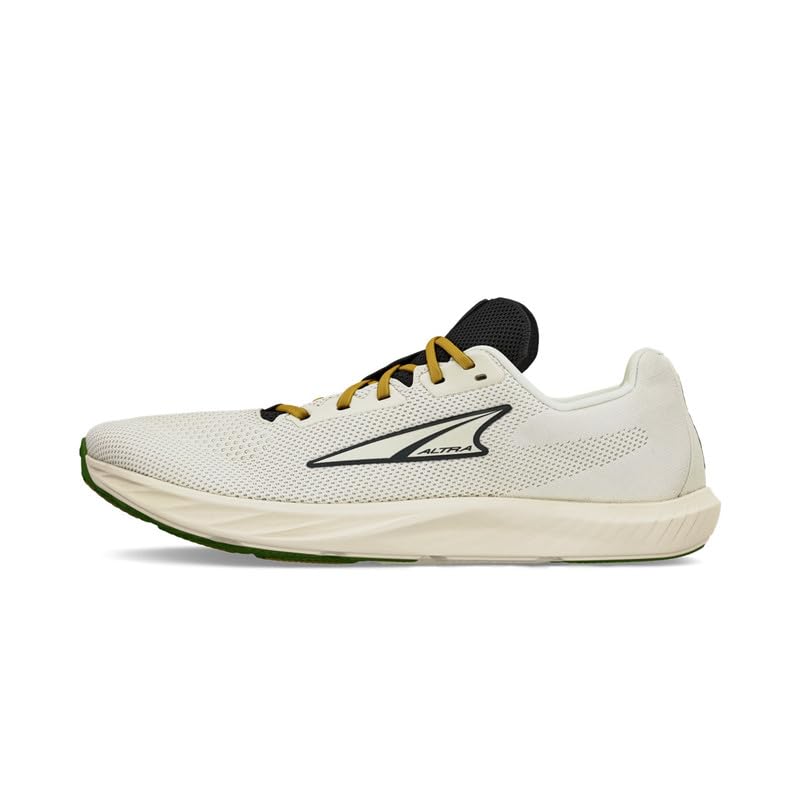
2. ALTRA Men’s Escalante 4 Road Running Shoe
Built around a foot-shaped last, not a pointed one — your toes finally get to lie flat.
Altra’s FootShape design is the whole point here. The front of the shoe is cut to follow the outline of a human foot rather than tapering to a point, so your toes sit side by side instead of stacking. The midfoot stays snug so your foot does not slide forward, and the engineered knit upper stretches enough to forgive an awkward instep. For a 4E-width foot, that combination is unusual — one very wide-footed runner reported the side rail did not dig in at all, and got 20 pain-free miles from it.
The Escalante 4 pairs that shape with zero drop and Altra EGO midsole foam, which returns a springy, lively feel rather than a sinking one. The rubber midsole was reworked for lighter weight and more flexibility, so you feel the road through the shoe. It handles fast training runs, daily walks, and gym sessions without complaint — a genuinely versatile road shoe rather than a one-trick tempo trainer.
Durability is the fair warning. The score here holds steady thanks to strong quality and fit marks, but the single biggest gripe across the review pages is how the shoe holds together long term, with some reporting separation inside four months. Others have gone much further — owners mention “Held up well after 300+ miles.” Treat it as a shoe that rewards rotating with a second pair. The tongue is also not stitched to the sides on every version, so it can creep forward and to one side as you run.
Compared with the Brooks above, this one gives you more toe spread and a lower, more grounded ride, but less built-in cushioning depth and a shorter track record on longevity. It is the pick for a runner who wants their feet to do the work.
The shape argument: if toe splay is your number one reason for shopping, nothing on this list beats the FootShape cut here — and the zero-drop platform keeps your foot flat and level all the way through.
The maintenance note: rotate it with another pair and you will get far more months out of the sole. One shoe used every single day wears out faster than the same shoe shared across a week.
Reach for this if: you have wide feet and want the roomiest front-end on a lightweight road shoe.
Think twice if: you have never run in zero drop — give your calves a gradual ramp-up before long distances.
3. Topo Athletic Women’s Ultrafly 5 Road Running Shoe
Five millimetres of drop, a 30 x 25 mm platform, and a toe box shaped to keep a bunion clear.
Here is where the drop comparison gets concrete. Heel-to-toe drop (how much higher the heel sits than the toe) is 5 mm on the Ultrafly 5 and 4 mm on the Altra Escalante 4 above. That small difference matters if you are easing off raised-heel shoes and want a gentler transition than full zero drop (where heel and toe sit level). The platform measures 30 x 25 mm, which is 2 mm more cushioning than the previous version, so the forefoot gets genuinely more foam without going soft and vague.
The upper is recycled engineered mesh, and the footbed is OrthoLite, which gives a soft step-in feel. Topo calls the toe box anatomical, and that shows up in practice: Women with bunions describe wearing these all day without pain at the joint.. The midsole has a medial post — a slightly firmer zone on the inner side — that offers light guidance rather than heavy correction. If you want a nudge toward neutral rather than a firm stability shoe, that is the setting.
The shoe weighs 7.9 oz in a women’s size 7, which keeps it light for a cushioned daily trainer. It suits a four-mile daily walk, or a full teaching day on your feet. What draws the most praise is how the shoe looks, with fit right behind it — people like wearing these as everyday shoes, not just training shoes. The follow-up question is durability: some owners find the outsole wears faster than they would like, so if you pound the same pair every day, watch the tread.
Set against the New Balance 860 below, this one asks less of your stride and guides rather than stabilizes. The 860 corrects more firmly but does not feel as free at the toe.
Best match for: women with a bunion or a wide forefoot who still want a small heel lift under them.
Worth knowing: the medial post is light guidance, not full stability — if you need firm correction, look at the 860 instead.
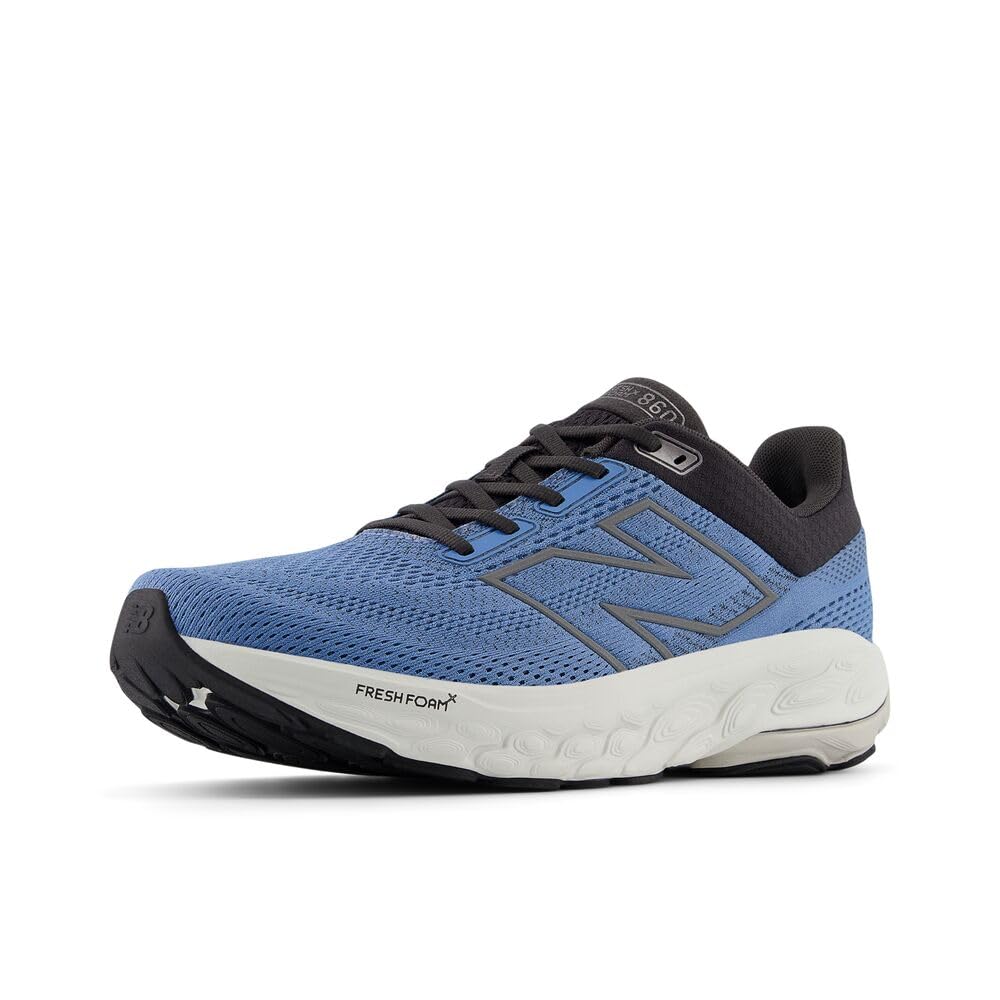
4. New Balance Men’s Fresh Foam X 860 V14
The rare stability shoe that also gives a bunion somewhere to sit without pressure.
Most stability shoes clamp the forefoot to keep your foot from rolling inward, and that is exactly what makes them painful for a wide foot. The 860 V14 runs its support through the midsole and heel instead, using a Fresh Foam X midsole for cushioning with a built-in structure that resists inward roll. That leaves the front of the shoe free to be roomy. One runner with hallux valgus ordered their usual size in the wide version and had nothing to report after two weeks of wear.
The rocker geometry takes getting used to. The sole is shaped to roll you forward, which several wearers describe as a pushy feeling under the midfoot in the first days. It settles once the foam breaks in, and then the shoe feels soft but stable rather than wobbly. Runners covering 6 to 7 km a day on pavement found the heel locked and the ride steady.
Where it earns its keep is the day job. Hospital nurses wear these through twelve-hour shifts, and One nurse described them as a stabilizing shoe for their back across long shifts.. Plantar fasciitis and flat-footed wearers have also landed here after other brands let them down., though the fit runs snug in the standard width — sizing up half a size is the common move. This is the most popular shoe on the list by a wide margin, and the 4.5+ rating reflects that long history.
The honest note: the upper fabric has less stretch than a knit shoe, so it holds its shape rather than molding to you. And light-colored versions show dirt quickly, a small thing but a real one if you wear them to work.
Why it holds its ground: a stability shoe that does not squeeze your toes is genuinely uncommon, and the wide sizing option makes it usable for feet that usually have to pick one or the other.
The break-in reality: give it a week of short walks before you judge it. The forward roll softens as the foam settles.
Pick it when: your foot rolls inward and you want correction without losing toe room.
Skip the standard width if: you already know you need extra room — order the wide version from the start.
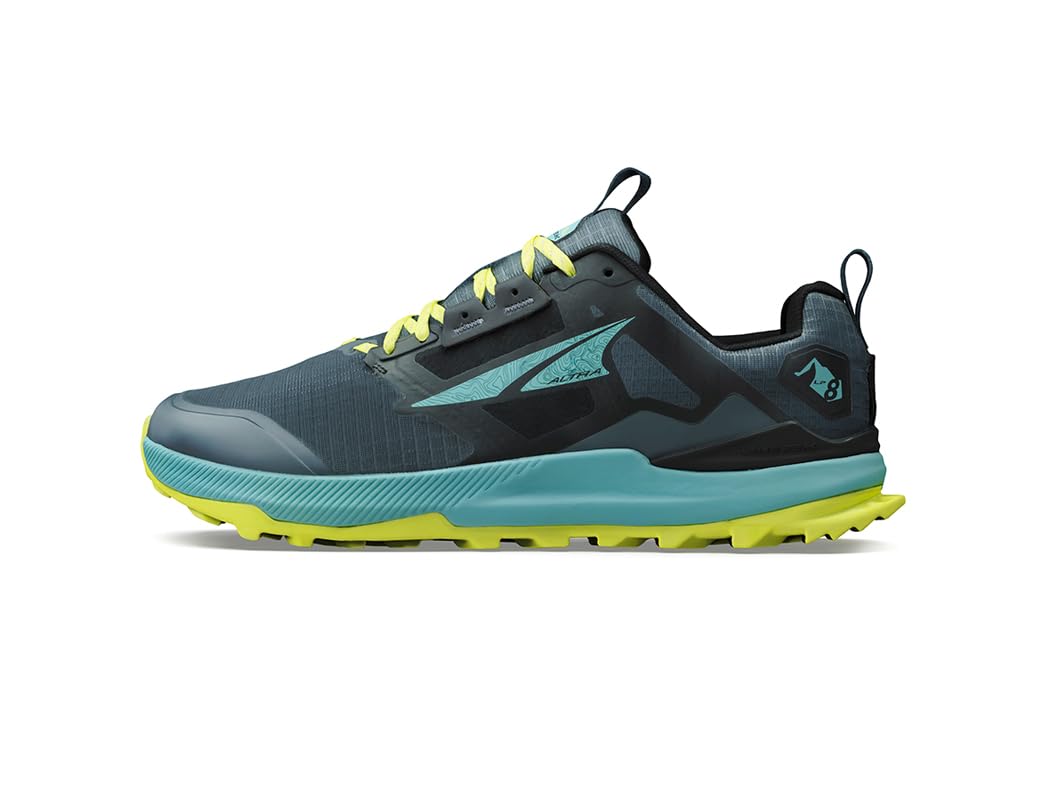
5. ALTRA Men’s Lone Peak 8 Trail Running Shoe
Altra’s roomiest toe box, wrapped in ripstop and bolted to a sticky trail sole.
Altra labels this the roomiest toe box in its lineup, which puts it a step beyond the Escalante 4’s FootShape cut. The extra width runs through the midfoot too, so your whole foot sits flat rather than being squeezed into a narrow waist. A ripstop mesh upper resists snags on brush and rock, and the MaxTrac rubber outsole uses TrailClaw lugs — angled tread blocks set beneath the ball of your foot — for grip on loose dirt and wet roots.
The weight is 10.7 oz / 303 g, heavier than the road shoes here, which is what you expect once you add real tread and a protective upper. It carries a 25 mm stack with zero drop, and Altra’s Balanced Cushioning keeps heel and forefoot level to encourage a flatter landing. That flat platform is what lets you feel the ground while still having foam under you.
The shoe earns its place for hiking and rucking as much as running. Owners take it on dirt and gravel, then keep wearing it for daily walks once the trail day is done. What draws the most praise is the overall build, with comfort close behind and toe room a strong third — a rare case where the trail shoe does not punish you on the walk back to the car.
The trade-off is the sole. The grip is excellent, but the rubber compound wears faster than a road outsole, and the mesh can tear at a bony toe or a prominent joint. Owners tend to accept that bargain knowingly. The upper also needs a short break-in before a long trail day — walk around town in them first.
Against the North Face Altamesa 500 below, this one gives more toe room and a flatter platform, but less protective cushioning on sharp rock.
The right call for: trail runners, hikers, and ruckers who want maximum toe spread on uneven ground.
Know before you buy: the outsole trades lifespan for grip, so budget for replacing them sooner than a road shoe.
6. ALTRA Women’s Lone Peak 8 Trail Running Shoe
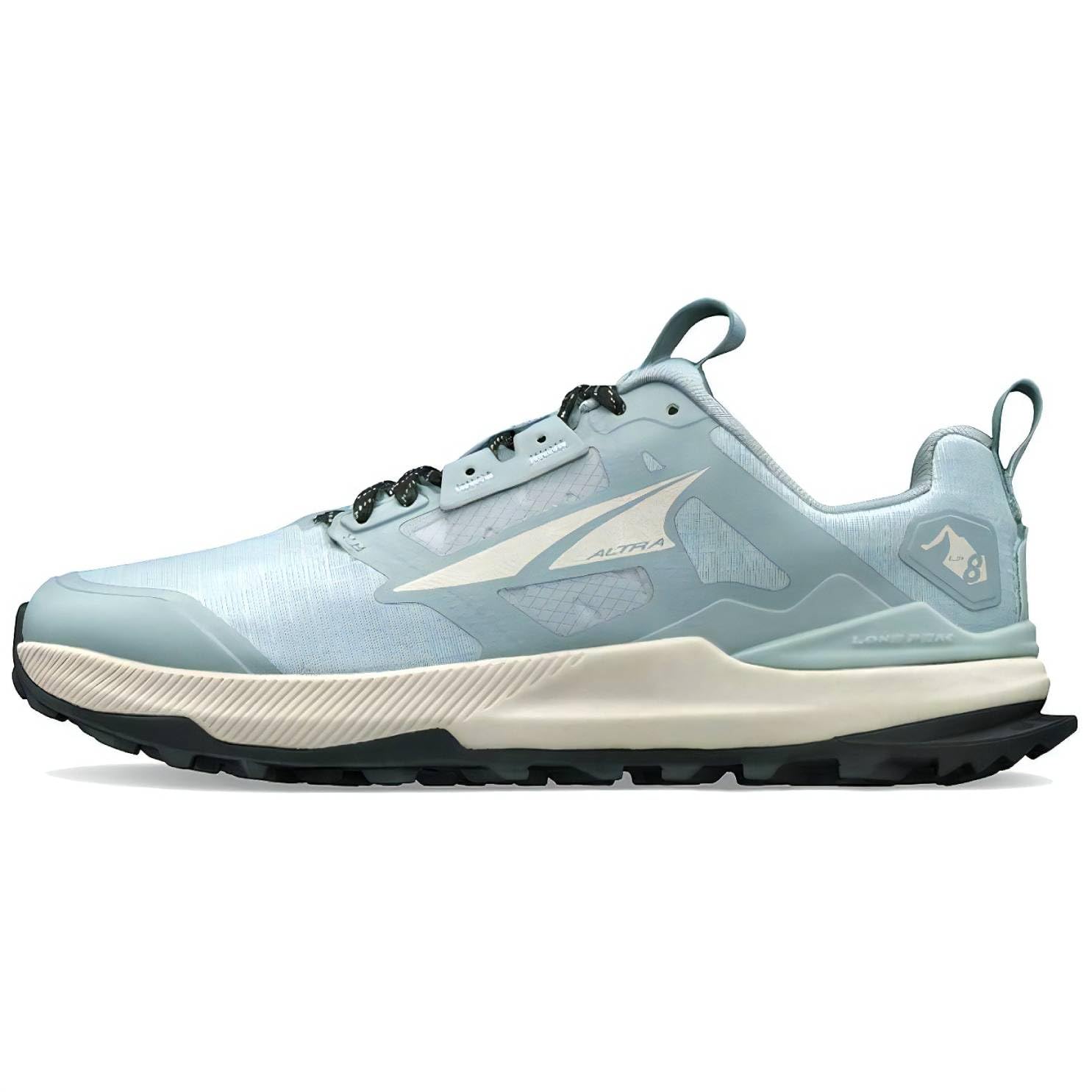
The women’s cut of Altra’s trail workhorse, built to keep a hiking toe intact on steep descents.
Same MaxTrac outsole and same ripstop upper as the men’s version, shaped on a women’s last. That shaping matters more than most people assume — Altra designs FootShape around biological differences between men’s and women’s feet, so the toe box flares where a woman’s forefoot actually widens. Hikers who had been getting bruised toes on rocky descents in other brands describe finishing steep four and five mile hikes without pain.
The platform is zero drop with mid-level cushioning, and the TrailClaw lugs angle beneath the metatarsals for grip. On loose dirt and gravel the traction holds. On wet roots and slick rock, it is less sure-footed — that is the honest limit of this outsole compound, and one long-distance runner found it out on a muddy twenty-mile effort.
Toe room is the second most-discussed feature after overall build quality, and it shows in how people use these. They wear them for a three to four hour daily dog walk, for Yosemite and Tahoe hikes straight from the start, and for everyday errands. Sizing runs true for most, though a few owners sized up half a size to get the full room they wanted.
The durability story is split. Many report the shoes holding up over months of regular wear with no marks, while a smaller group had the upper separate from the outsole after about ten months and 230 miles. Treat that as a reason to rotate pairs rather than a reason to pass.
Why hikers keep reordering
- Roomiest toe box in the Altra range, cut on a women’s last
- Zero drop with Balanced Cushioning keeps heel and forefoot level
- TrailClaw lugs angle under the metatarsals for grip on loose ground
- No break-in period — comfortable on the first hike
What to plan around
- Wet roots and slick rock cut the grip down noticeably
- Upper-to-outsole separation shows up for a minority of high-mileage owners
- Pale colorways stain easily on muddy trails
Built for: women hiking or trail running who want toe room above all else.
Not the one for: wet-rock scrambling, where a stickier rubber compound would serve you better.
7. ALTRA Women’s Torin 8 Road Running Shoe
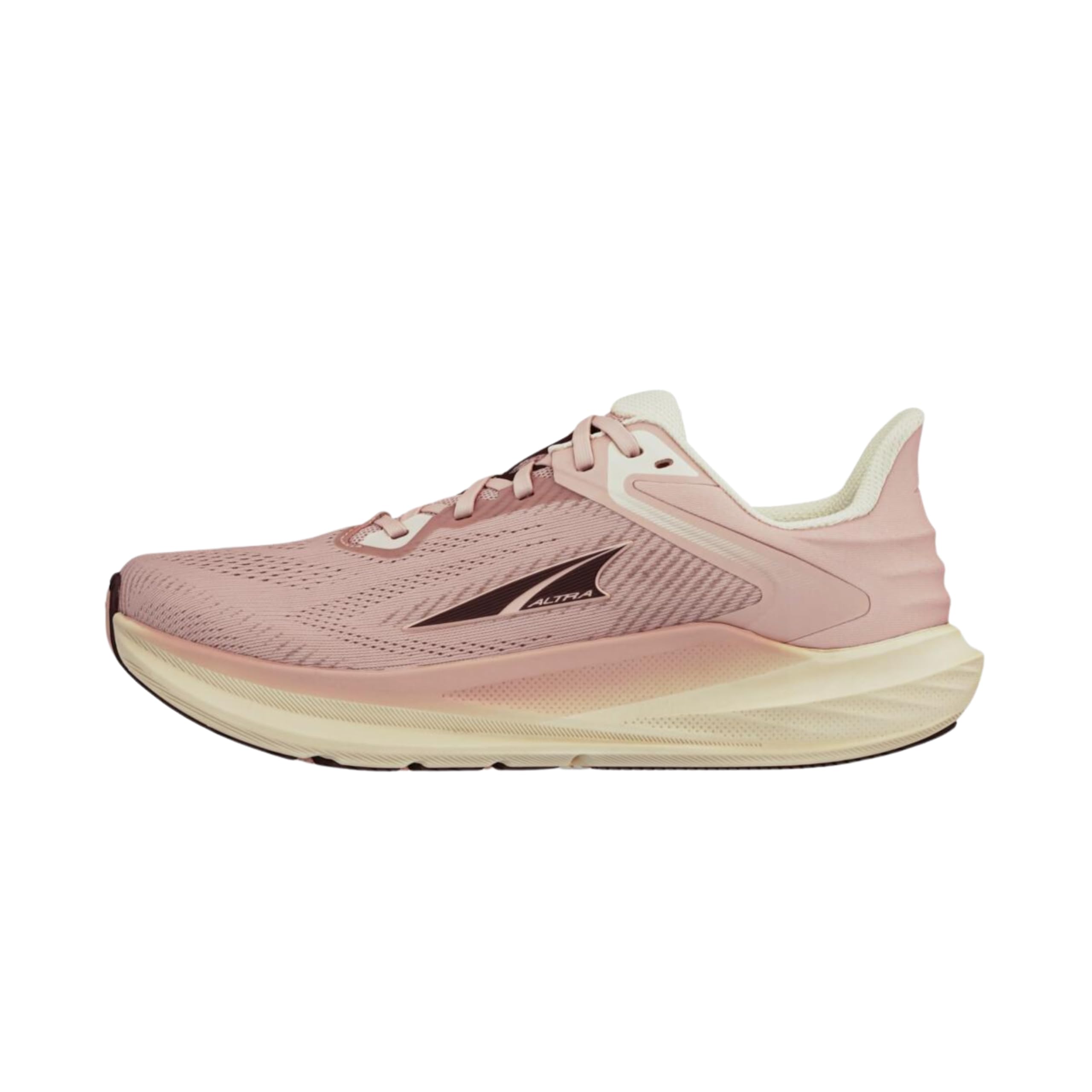
Thirty millimetres of foam under a wide toe box, still zero drop, still just 8.4 oz.
Where the Escalante 4 keeps things thin and road-feel-heavy, the Torin 8 stacks up to 30 mm of cushioning front and back. That is a high-cushion platform at zero drop, which is an unusual pairing — most plush shoes raise the heel. The midsole uses Altra EGO MAX foam, formulated for a bit more bounce and a softer landing, and the whole shoe still weighs 8.4 oz. You get deep comfort without a heavy shoe.
The upper is jacquard mesh with a padded heel collar that molds to your ankle at step-in. Fit is the standout strength here by a distance — the shoe runs wide through the front, which is what women with bunions and plantar fasciitis keep coming back for. One wore them nearly 500 miles in 10 weeks with no fraying, no holes, and no sole separation, and reported no blisters or hot spots at all.
Cushioning is where opinions divide. Plenty of owners call it perfect; a smaller group finds the foam too soft for long distances and wants more structure under the arch. That is a preference question, not a defect — worth knowing which camp you sit in before you commit. A few also note the ankle collar is rigid enough that a low-cut sock can rub, so crew socks solve it.
Set against the New Balance Fresh Foam X More V6 below, the Torin 8 gives you a lower, flatter platform with more ground connection. The More V6 goes softer and deeper, which some feet love and others find unstable.
The fit verdict: a wide forefoot on a zero-drop, high-cushion platform is a rare combination, and it is why this shoe gets reordered in multiple colors.
The softness question: if you like feeling the road, size your expectations down. If you want your joints cushioned on concrete, this is the setting.
Suits you if: you want deep cushioning and a wide toe box on a level, zero-drop platform.
Look elsewhere if: you prefer a firmer, more responsive ride with clear road feedback.
8. New Balance Men’s Fresh Foam X More V6
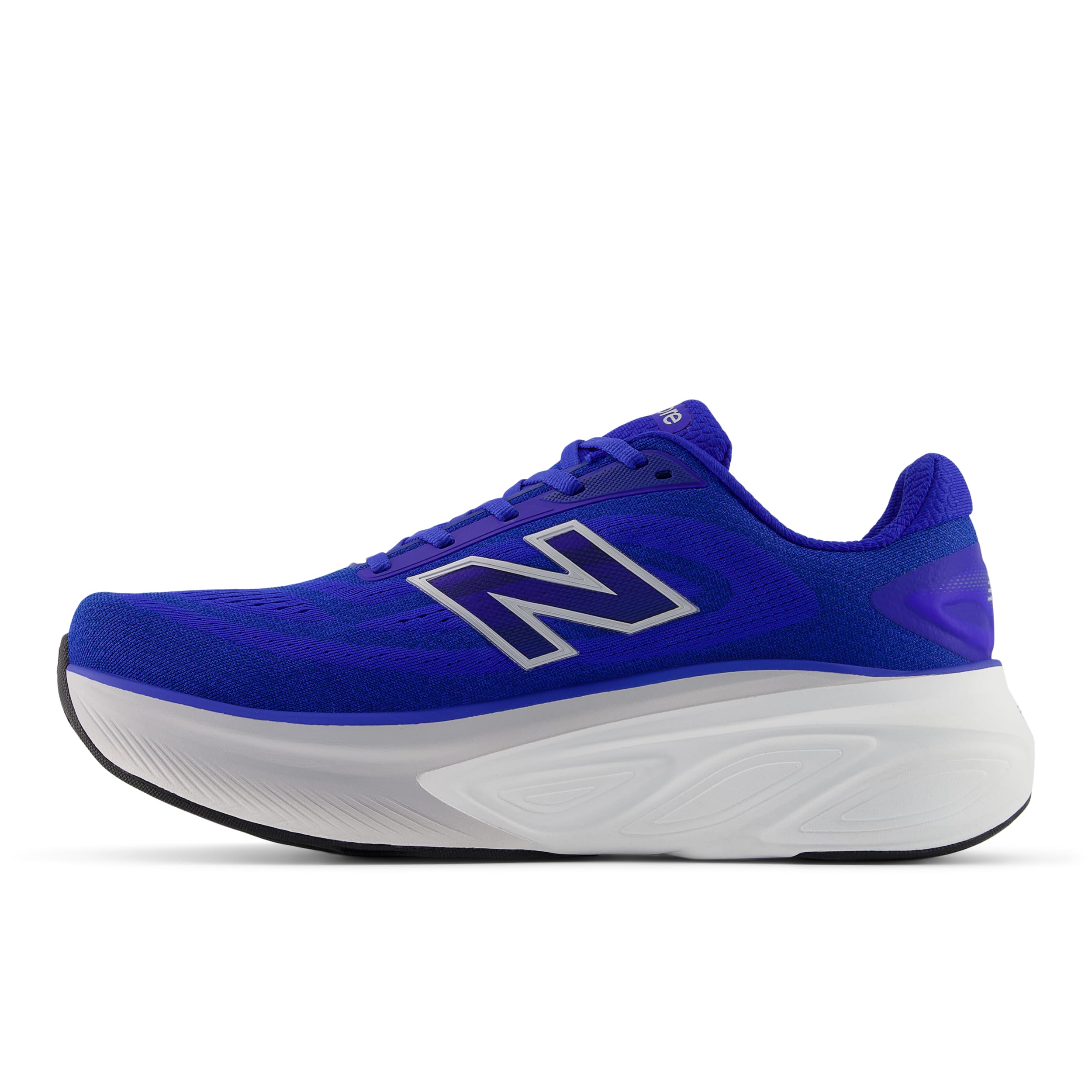
The softest landing on this list, and the one built for twenty thousand steps a day.
New Balance builds the More V6 around a huge slab of Fresh Foam X, and it comes in wide and extra-wide up to 4E. That combination is the reason it belongs here. For a genuinely broad foot, cushioning depth and width usually force a choice — this shoe gives you both. A 10.5 Wide fit with no blisters or hot spots across a 20,000-step day is the experience people describe.
The foam is deep and marshmallow-soft, which isolates impact well. Wearers with ankle, hip, or knee complaints describe it as the shoe that softens a long day on concrete. It is also light for how much foam sits underfoot. If you stand for a living rather than run, this is the pick for a full shift on concrete.
There is a real catch, and it is the foam itself. Softer foam compresses faster, and the tread here wears down quicker than a firmer outsole — the most repeated complaint about this shoe is sole life. A second caution: some find the platform so soft there is no heel support, so their feet sink and their hips tire on longer walks. If you want bounce and structure under the heel, this is not that shoe. Also size down about half a size, since it runs long.
Against the Torin 8 above, this one goes softer and wider but loses some stability and some tread life. It is the more forgiving shoe for standing, the less forgiving one for mileage.
Your shoe if: you are on your feet all day and want the deepest cushioning available in a wide fit.
Give it a miss if: you need firm heel structure for long walking distances.
9. THE NORTH FACE Men’s Altamesa 500 Trail Running Shoe
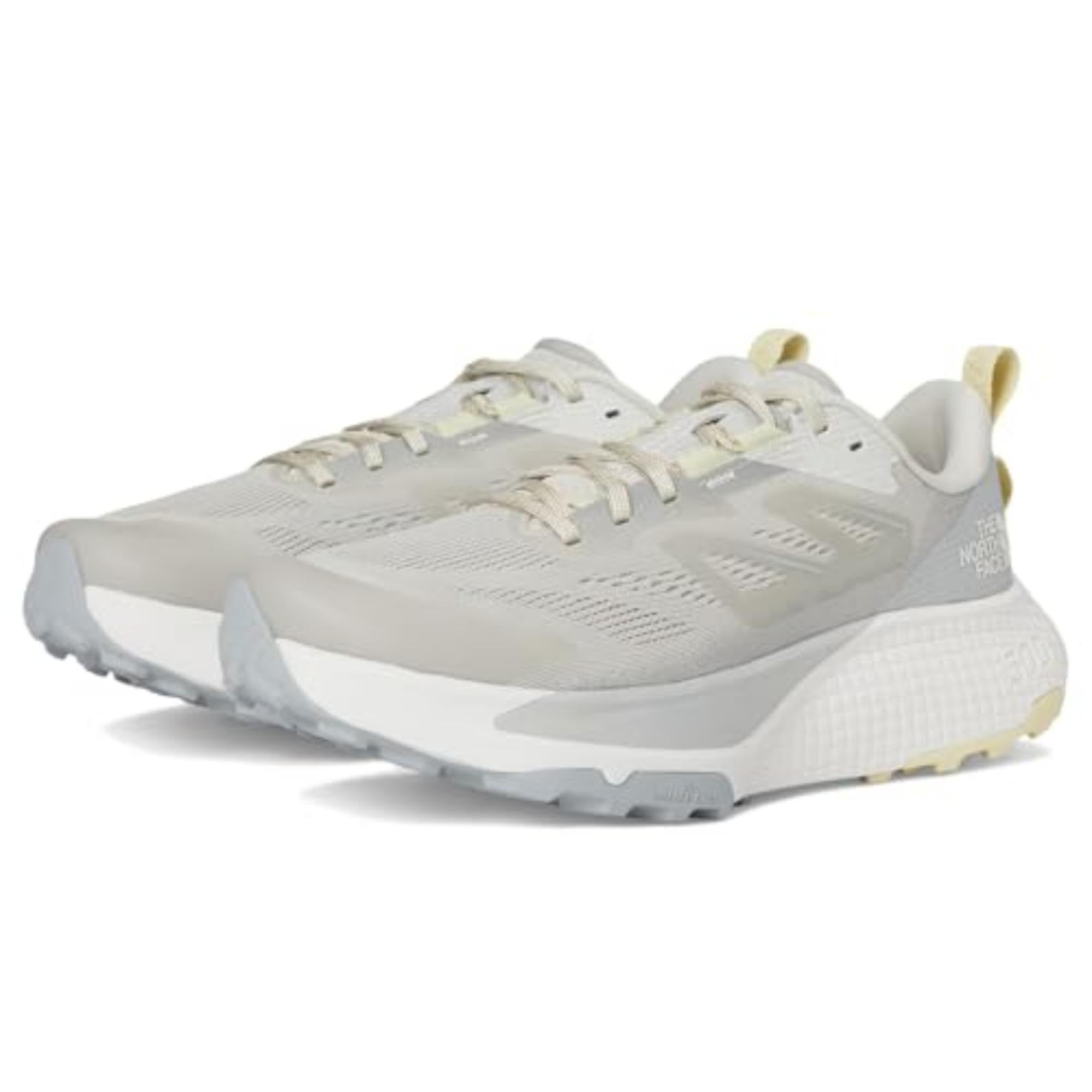
A reinforced toe cap over a roomy front, made for gravel paths and mountain trails.
The North Face built this shoe with its athlete team, and the brief was clear: highly cushioned, stable, and ready for rough ground. The DREAM midsole foam gives a soft, light ride, while the SURFACE CTRL rubber outsole is tuned for trail surfaces. A durable toe cap guards the front end — useful when a rock rolls under your foot at speed and your toes take the hit.
The toe box is roomy enough to let toes spread without pressing on the sides, which is the whole reason it made this list. Wearers report no joint pain even after hours on trail, and the fit lands true across the size run. That combination — protective toe cap over a wide front — is what makes it a credible option for long trail days rather than just short ones.
This is a newer model with a shorter history behind it than the Altra trail shoes above, so the durability record is still forming. What is clear is the intent: cushioning and stability on gravel and mountain trail, with a shape that does not squeeze your forefoot. If you want a trail shoe that feels protective underfoot without feeling like a boot, this is the shape to start with.
The build case: a cushioned, stable trail platform with an armored toe cap and a front end that respects wide feet — a sensible pairing for rocky ground.
The honest gap: there is less long-term wear data on this model than on the Altra trail shoes, so treat your first pair as the test.
Choose it for: gravel and mountain trail running where you want cushioning and a protected toe.
Hold off if: you want a proven multi-year durability record before you commit.
Know the Specs
Heel-to-Toe Drop
Drop is the height difference between your heel and your forefoot, measured in millimetres. Zero drop means your foot sits completely level; a 5 mm drop raises the heel slightly. A level platform asks your calf and Achilles to do more work, so most people ease into zero drop gradually rather than switching overnight.
Stack Height
Stack height is how much foam sits between your foot and the ground, again in millimetres. A 30 mm stack cushions hard pavement well; a 25 mm stack keeps you closer to the surface. On trails, a deeper stack protects against sharp rock, but a shallower one gives you more feel for where your foot is landing.
Toe Box Shape
The toe box is the space at the front of the shoe. A roomy one flares outward so your toes sit parallel rather than angled inward. Brands that build this deliberately call it a foot-shaped or anatomical last. Check the widest point: on a good wide toe box it sits at your toes, not at the ball of your foot.
Outsole and Lugs
The outsole is the bottom rubber layer, and lugs are the raised blocks on it that bite into soft ground. Sticky rubber compounds grip wet rock better but wear down faster. Harder compounds last longer but can slip. If most of your miles are on pavement, a smoother road outsole gives better wear; on dirt, tread depth matters more.
Common Questions
Do wide toe running shoes actually stop black toenails?
How long does it take to adjust to zero-drop shoes?
Can I wear wide toe running shoes with custom orthotics?
Is a wide toe box shoe the same as a wide-width shoe?
How many miles can I expect before a running shoe wears out?
Are wide toe running shoes good for bunions?
Should I size up to get more toe room?
What is the difference between a road shoe and a trail shoe for wide feet?
Do roomy toe box shoes work for people with flat feet?
How do I stop my foot sliding forward in a wide toe shoe on downhills?
The Bottom Line
For most people, the wide toe running shoes to start with are the Brooks Glycerin Stealthfit 22. The smooth knit upper (a one-piece fabric top with no stitched seams) arrives broken in, and the slip-on entry works for anyone spending twelve hours on their feet. If toe spread is the reason you are shopping, the Altra Escalante 4 gives you the roomiest front end on a lightweight road shoe. And if your foot rolls inward (overpronation) and you still need room at the toes, the New Balance 860 V14 is the one to reach for.
Trail runners get two strong routes: the Altra Lone Peak 8 for maximum toe room and a flat, grounded ride, or the North Face Altamesa 500 if you want a cushioned, stable platform with a protected toe cap. Either way, spend a week in short walks before you take either on a long descent.
How we choose
We do not accept paid placement. Every pick is matched to a real buyer and a real use-case; we do not hands-on test units.
Sources
Specifications: manufacturer listings and product documentation. Review insights: verified customer reviews, as of October 2026. Pricing: not shown on this page (it changes often); check the current price via the retailer link.
As an Amazon Associate, Aappliancez earns from qualifying purchases. This does not affect which products we feature.