Disclosure: Some links in this post are affiliate links. As an Amazon Associate I earn from qualifying purchases, at no extra cost to you. Learn more
Specs are compiled from manufacturer listings and verified buyer reviews and can change over time — please confirm the key details on the product page before buying.
If your heels lift off the floor mid-squat or your feet roll inward under a heavy barbell, the culprit is usually the shoe — not your legs. A lifting shoe gives you a firm, flat base or a slight heel lift, so your force goes from the floor into the bar instead of compressing a foam midsole. A cushioned running shoe turns every deadlift into a balance drill. This guide separates trainers built for barbell work from running shoes in disguise, so you can pick the model that matches how you train.
This guide is built by comparing the manufacturers’ published specifications and the patterns across verified customer reviews, so you get each pick’s real strengths and trade-offs instead of marketing spin.
You will see the difference between a stable, flat-bottom trainer and a cushioned cross-trainer within a few lines. From squat depth to strap security, here is what actually holds up under the bar among the weight lifting shoes for women.
Top Picks

How To Choose The Best Weight Lifting Shoes for Women
A lifting shoe is a tool, not a fashion pick. Its one job is keeping your foot planted while you move weight.
Heel drop tells you what the shoe is for
Heel drop is the height difference between the back of the shoe and the front — a raised heel tilts you slightly forward and lets you squat deeper without your ankles fighting back. A flat shoe keeps you level and grounded, which suits deadlifts and lunges where you want your foot as close to the floor as possible. If you struggle to reach depth in a squat, the raised heel does a lot of the work for you.
Midsole firmness decides how much power reaches the bar
A soft, cushioned midsole absorbs impact, which is what running needs. Under a heavy barbell that softness compresses unevenly and steals the force you send into the floor. Look for a firm or dual-density midsole so your foot feels anchored rather than spongy.
Lockdown and toe box fit keep you stable set to set
Straps, lace keepers, and a snug midfoot stop your foot sliding inside the shoe during quick lifts. Just as importantly, the toe box needs enough room that your toes do not jam when you push forward. A shoe that is tight across the top or narrow at the toes will nag you every single session, so get the width right before anything else.
Side-by-Side Comparison
| Model | Best For | Type | Stated Weight | Standout Feature | Amazon |
|---|---|---|---|---|---|
| Nike Women’s Metcon 9★ Best Overall | All-round lifting and CrossFit | Trainer with Hyperlift plate | 3 pounds | Larger Hyperlift plate plus rubber rope wrap | Amazon |
| Reebok Nano GymMost Versatile | Gym classes and daily training | Running-shoe feel trainer | — | Slip-on one-piece tongue and pull tab | Amazon |
| Under Armour Project Rock BSR 5 | Lifting plus HIIT cardio | Cross-trainer | — | Flat-bottomed stable platform with padded collar | Amazon |
| Adidas Everyset Training | Versatile gym work on a budget | Flat trainer | — | Dual-density EVA midsole with zero drop | Amazon |
| New Balance 608 V5 | All-day comfort and wide feet | Cross trainer | 2.4 pounds | ABZORB heel crash pad with internal midsole shank | Amazon |
| Weightlifting Shoes Powerlifting Trainer | Dedicated squat and deadlift work | Raised-heel squat shoe | — | Velcro straps over a hard grippy sole with heel lift | Amazon |
| adidas Powerlift 5 | Straight weightlifting and powerlifting | Raised-heel weightlifting shoe | 2.43 pounds | Inclined sole with tight foot grip | Amazon |
Detailed Reviews
1. Nike Women’s Metcon 9 Workout Shoes
Our pick — 4.5+★ from 650+ verified ratings; the strongest balance of quality and price.
The most decorated trainer here, and the easiest one to recommend to a mixed training week.
You get a larger Hyperlift plate in the heel — that is the firm insert that keeps your heel planted so heavy squats and deadlifts do not wobble. Nike also added a rubber rope wrap, which is a tough layer where the shoe meets a climbing rope so it survives climbs instead of shredding. The shoe is listed at 3 pounds. This is the trainer that covers lifting and CrossFit in one pair, and the owner feedback backs it up: these are the crowd favourites, holding a 4.5+ star score across 600+ ratings.
What buyers rave about is the quality — the most named strength by a clear margin — followed by how well it suits real exercise. Owners call the fit true to size, with one returning a half-size-up because the standard size fit her flat, wide feet better. A reviewer who rolls her ankles said the shoes “really stabilize your ankles” during quick, complex footwork. Another buyer, using them for two months of kickboxing, summed it up simply: “I think they’re great.”
The honest catch is comfort. Some people find them supremely comfortable while others feel the stiffness, especially before they break in. A tight midfoot and a firm ride are the trade-offs for that rock-solid base. If you want a pillow-soft shoe to jog in, this is not it — the Metcon is built for the platform, not the treadmill.
Grip for lifting
- Larger Hyperlift plate gives a planted heel for squats and deadlifts
- Rubber rope wrap holds up to CrossFit rope climbs
- Stable, grippy outsole suited to lifting and CrossFit work
- Buyers report it runs true to size
Stiff for running
- Firm construction needs a break-in period
- Mixed comfort feedback — some feel it dig in
- Midfoot runs snug on some feet
CrossFit regulars: you want one shoe for lifting, CrossFit, and short sprints.
Treadmill runners: you need a plush, cushioned ride for long runs.
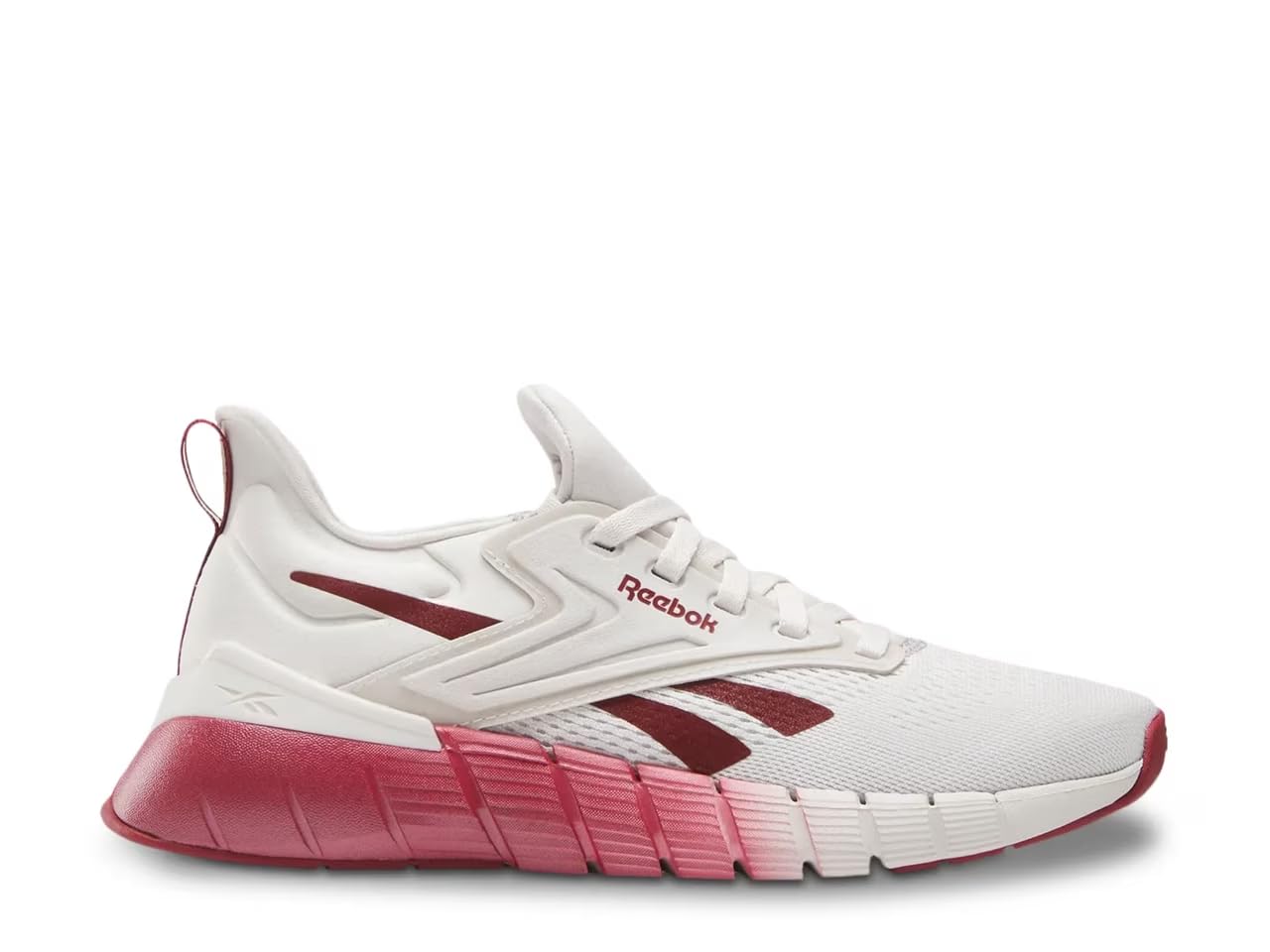
2. Reebok Nano Gym
A trainer with the look and feel of a running shoe that still holds firm under the bar.
Reebok calls this one stable enough for class and home workouts while giving it the silhouette of a runner. The real convenience is the slip-on build: a one-piece tongue and a stiff heel let you step in and out without untying, which matters when your hands are full between sets. A rear pull tab makes it faster still, and owners find the arch support genuinely helpful for flat feet and for keeping your footing steady during a session.
The recurring theme in the feedback is day-one comfort — it fits like a glove straight from the start. Buyers also describe it as light and flexible at the front yet firm enough at the back to support body weight on a flat floor or court. The color options earn their share of praise too. One owner, nearly two years into a pair used for resistance training, reports the “fit is perfect” and that the shoes have lasted.
Watch the sizing, because the Nano runs small and narrow. Buyers who normally wear a Nike or adidas 9.5 went up to a 10.5, and a size 6 customer found a 6.5 still snug across the top. Compared with the Metcon above, you trade a little raw stiffness for a softer, easier ride — which is exactly what makes it comfortable for Zumba and general gym work.
Wide toe box: it walks the line between a cushioned runner and a firm trainer, so it works for lifting class, court workouts, and general gym time without a break-in phase.
Runs half small: a full size up is common here — the cut is narrow, and the one-piece tongue does not give the way a standard tongue would.
Gym allrounders: you want a comfortable all-rounder that slips on and off with ease.
Narrow feet: you need a wide toe box or a shoe for the heaviest squats.
3. Under Armour Women’s Project Rock Blood Sweat Respect 5
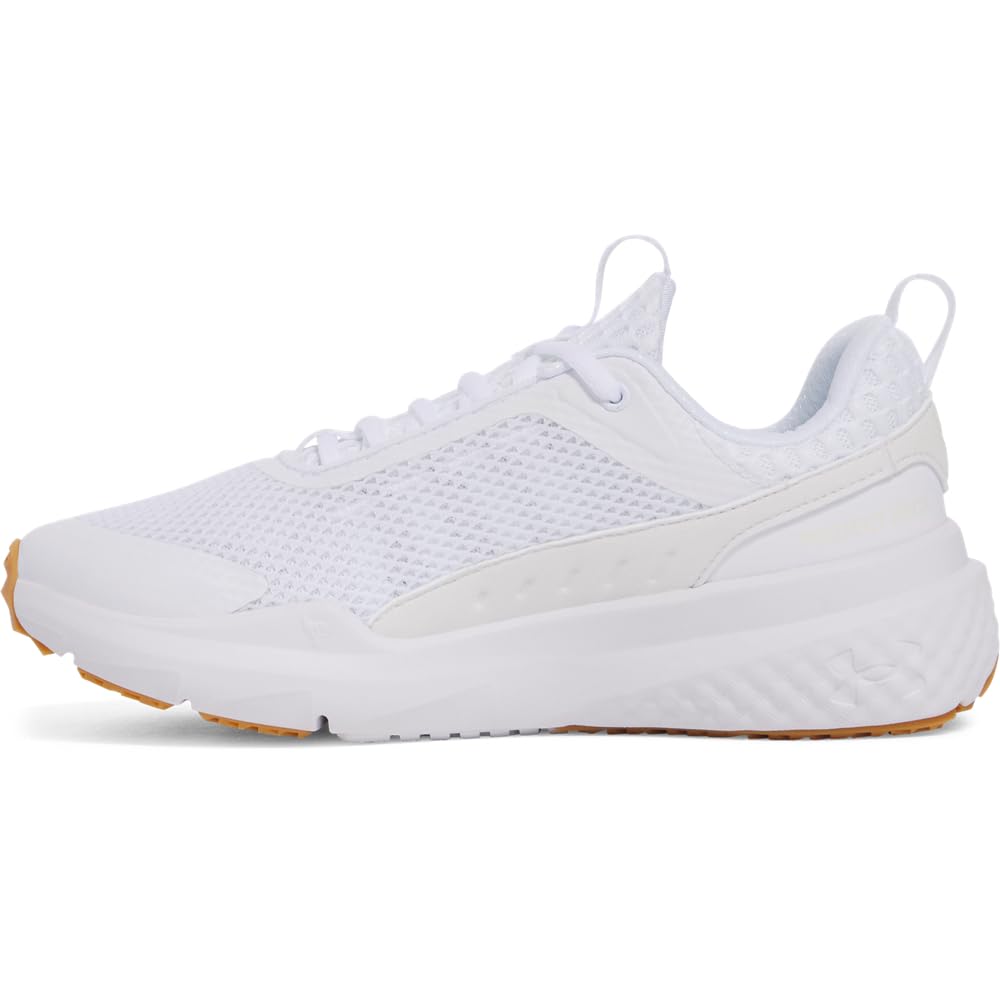
For the lifter who also does HIIT and needs one shoe that survives both without gutting the other.
Under Armour built this cross-trainer around a flat, stable bottom with a well-padded collar and flexible mesh up top. That mix lets it absorb the sprint-and-burpee side of a circuit while staying grounded for lunges and deadlifts. Owners describe it as springy for cardio yet stable under weight, which is the combination most mixed-training shoes fail to pull off. The toe box is roomy, and the short stay-tied laces are a small detail that adds up when you are moving fast.
It lands well on flat-bottomed lifting — buyers use it happily for lunges and deadlifts — and the quality is the strongest point in the feedback, with arch support close behind. High-arched feet get along with it particularly well. One owner who normally wears a 6.5 was happy at a 6.5, and another who lives in flip flops reported no blisters even from the start.
The catch is the toe area, which runs large. Some buyers love the extra room and some find it too much, so the fit is genuinely mixed rather than broadly good. A few also note the top of the foot feels tight until the laces are loosened. Unlike the flatter Adidas Everyset below, this shoe has a springier, more padded feel underfoot — a good thing for HIIT, a less good one if you want the dead-flat platform of a pure squat shoe.
Heavy lifters: anyone splitting sessions between weights and cardio who wants one pair to handle both.
Cardio days: you need a precise, snug toe box for maximum lifting feel.
4. Adidas Unisex-Adult Everyset Training
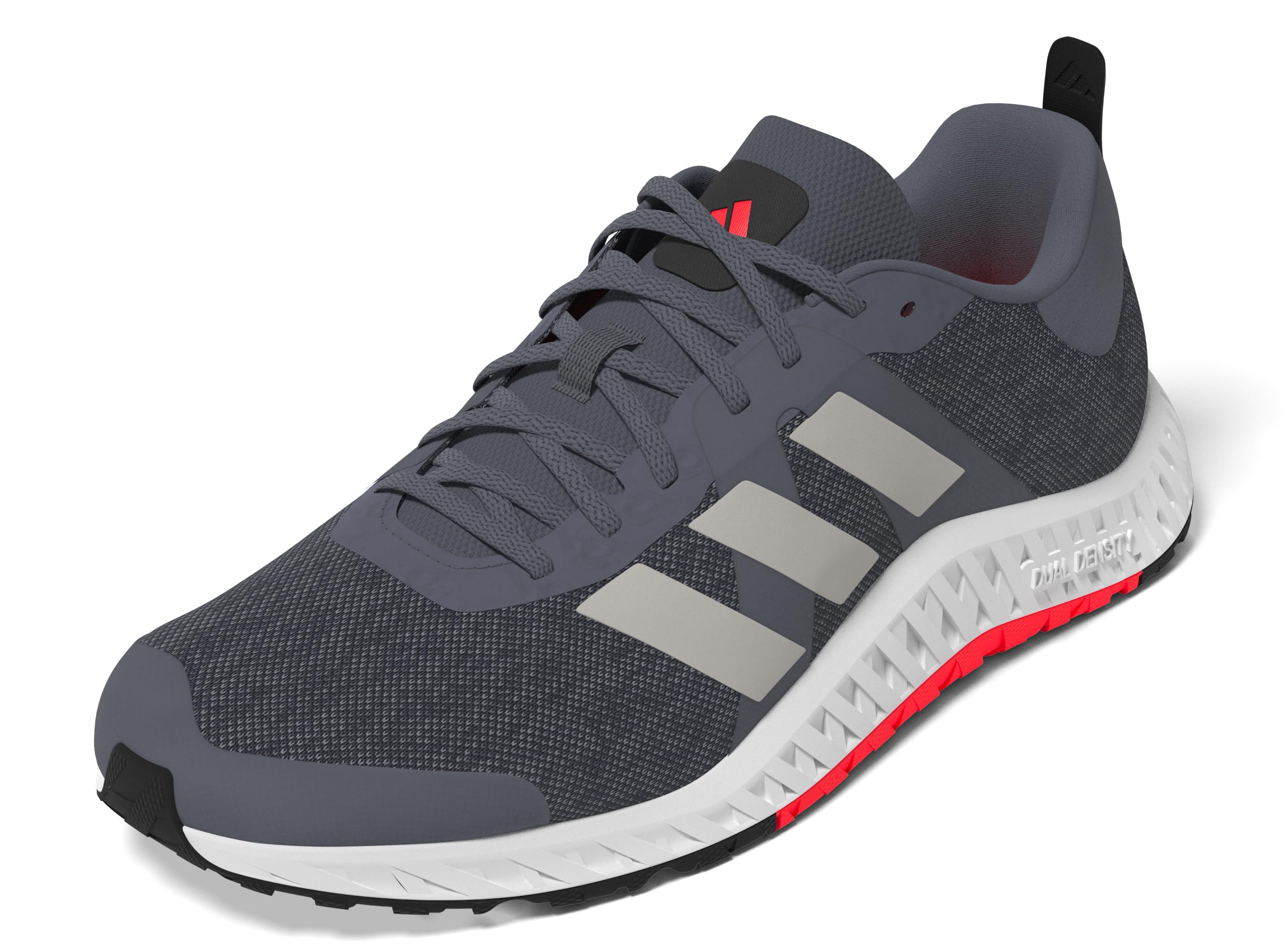
The bare-bones flat trainer that quietly does the lifting job for a fraction of the price of the flagships.
The Everyset uses a dual-density EVA midsole — a firmer foam wrapped around a softer core — so the outside stays firm enough to push against while the inside keeps some comfort. The shape is flatter than most gym shoes, which creates the grounded, stable feeling you want under a barbell, and a breathable knit upper keeps the foot from overheating. Owners mention it handles substantial weight with composure, with one buyer stable under 300lb squats, deadlifts, and lunges.
Lightness is a running theme; people describe it as a shoe they barely feel on. The midsole stiffness earns specific praise for deadlifts and leg press, and buyers rate the value as a genuine highlight — several call it excellent for a basic workout shoe. The knit upper is easy to move in, and the color looks as good in person as in the photos.
Now the fit, because this is where it gets picky. It runs narrow and slightly short, and the wisdom from the feedback is to size up half a size, with wide-footed buyers needing a wide width. Unlike the padded Project Rock above, this is a minimalist shoe with little cushioning on purpose — the stiffness is the point. A handful of buyers also mention the lace eyelets, so treat the lacing gently over time.
Budget trainer: a flat, firm, no-frills trainer that brings the core lifting mechanics without the flagship extras — ideal if you want the essentials and nothing more.
Thin cushioning: narrow and short by design, so half a size up is the safe move, and flat-footed buyers should look at the New Balance below instead.
New gym goers: you want a light, flat trainer for the gym without spending much.
Long sessions: you have wide feet or want substantial cushioning.
5. New Balance Women’s 608 V5 Casual Comfort Cross Trainer
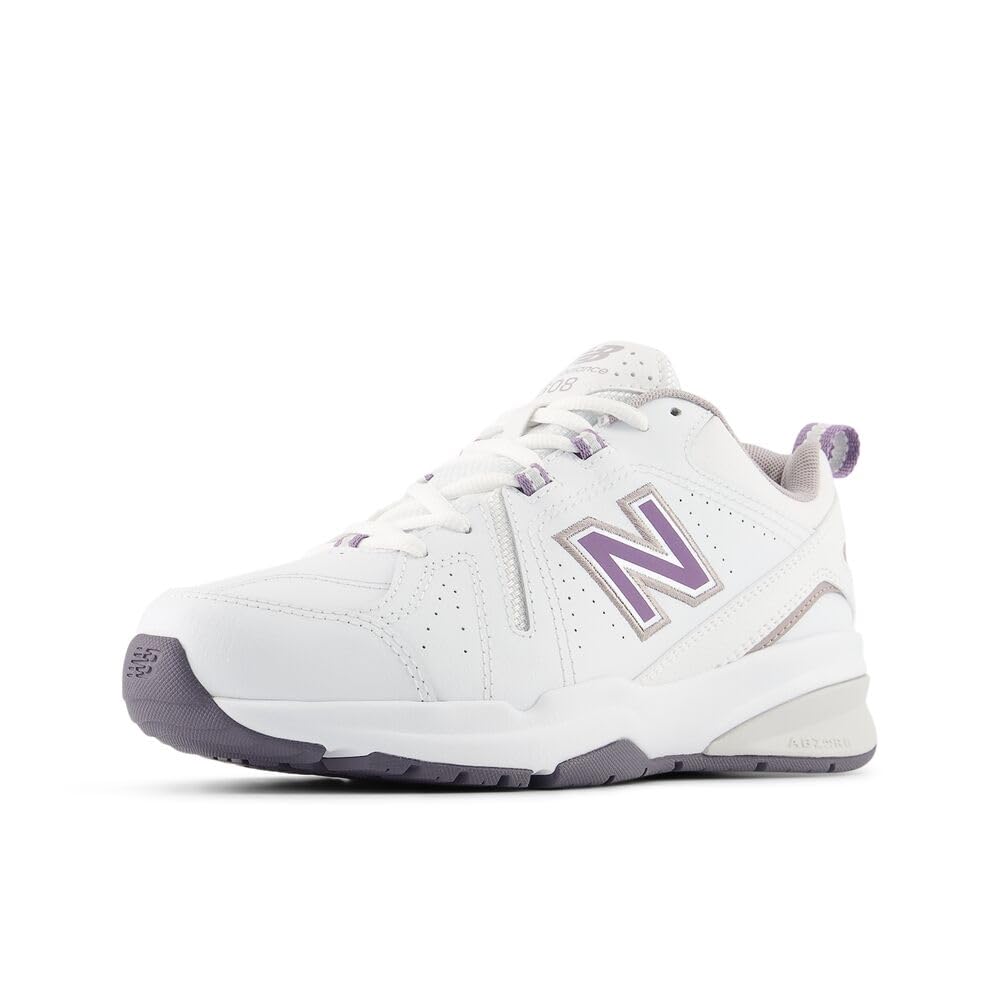
The all-day comfort pick that treats wide feet as the default rather than the exception.
Your feet stay cushioned through long sessions thanks to the comfort features packed into the New Balance 608 V5. An ABZORB heel crash pad (a foam insert that soaks up impact) softens every step, so your joints feel less pounding on hard gym floors. A molded PU insert (a shaped foam footbed) adds arch support, and a dual density collar (two layers of foam around the ankle) holds your ankle steady. The Phantom Liner interior (a smooth lining with few seams) reduces rubbing, so you avoid blisters on longer wears. An internal midsole shank (a stiff piece in the middle of the sole) keeps the shoe from twisting, which helps your stability during lifts. At 2.4 pounds, it stays light for a cushioned trainer, and the sturdy suede upper breaks in nicely over time.
The combination of fit and quality is what keeps buyers loyal here. Wide feet get particular attention — the roomy last is a rare find, and arch support is frequently praised. Buyers routinely call them excellent value and love how they look, and the shoes work across the gym, walks, and standing all day at work, which is more than you can say for a dedicated squat shoe.
One note on the use case: this is a cross trainer built for comfort and all-day wear, not a specialist lifting platform. If your goal is heavy squats, a flatter, firmer shoe like the Everyset is the better match. If your goal is a shoe you can stand in for a twelve-hour shift and still wear to the gym, this is the one. Comfort and stiffness get mixed feedback — some adore the soft walk and some find the leather stiff at first, so give it a break-in.
Casual wearers: you have wide feet and want one comfy shoe for gym, errands, and work.
Lateral work: you are chasing a specialized lifting platform.
6. Weightlifting Shoes
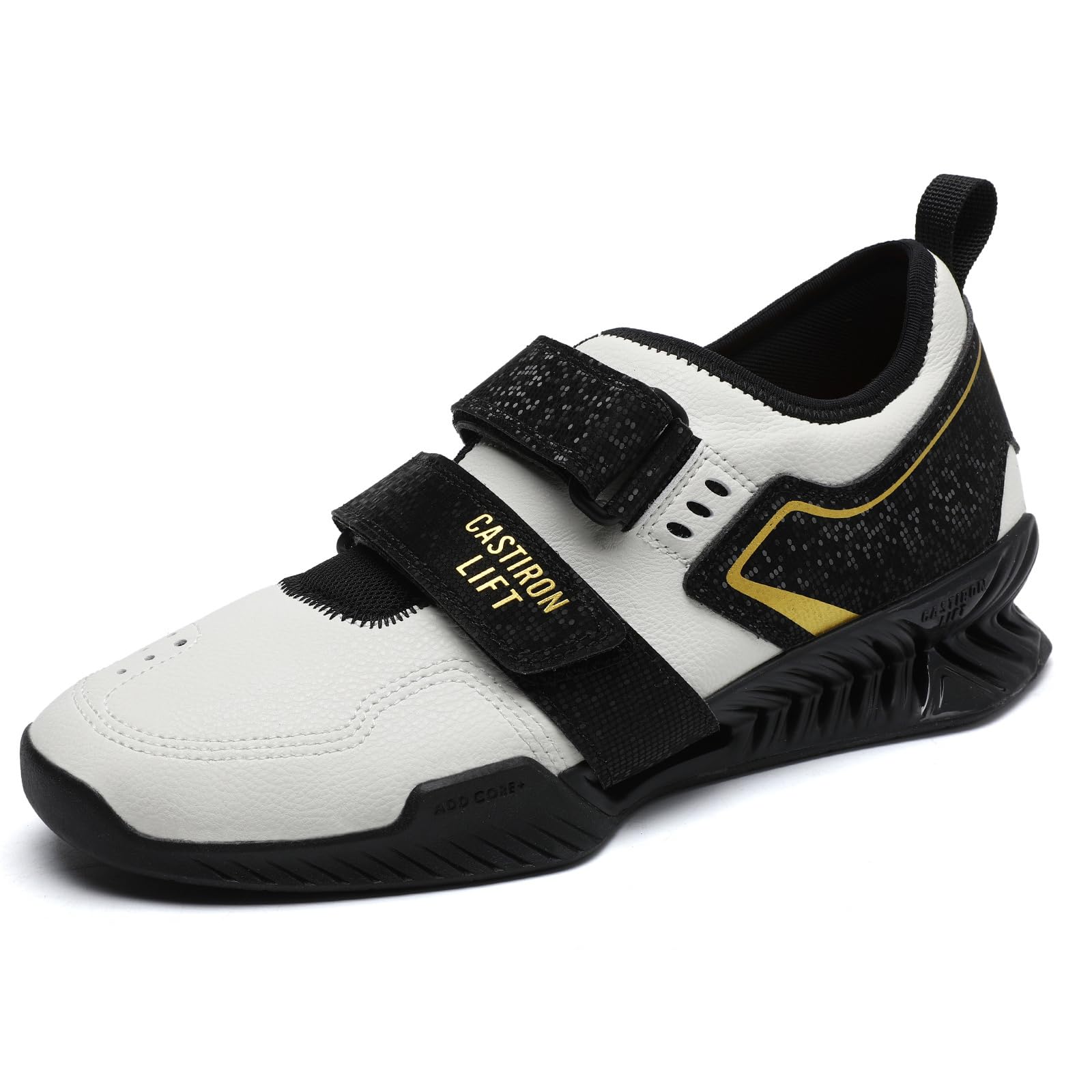
A true raised-heel squat shoe for the lifter who is ready to stop squatting in running shoes.
This is a dedicated weightlifting shoe, not a trainer. The slightly angled sole gives a planted feel and zero foot movement, and the hard, grippy sole helps you drive through the floor. Two Velcro straps hold the foot snugly across the top, and the heel lift helps you hit squat depth that flat shoes make you fight for. That heel angle is what separates it from every shoe above — the Nike and Adidas trainers give you a modest plate or flat base, while this one commits fully to the raised platform that powerlifters train on.
The support is the story in the feedback. Customers note a stable, locked-in feel for front squats, deadlifts, and kettlebell work, and it holds up — owners stretch it over a year and two years of regular gym use without trouble. One buyer, nine months in, noted that as long as you use them for lifting, they will last, and loved the support and slight heel angle for squats and back work. It earns its place as a beginner-friendly entry into real lifting shoes.
Two honest notes. First, the fit runs big, and wide-footed buyers do best going up half a size from their normal women’s size. Second, the looks are polarizing — a couple of buyers found the color mixing unappealing, so if appearance matters to you, know what you are getting. The material also needs a handful of sessions to stretch in. Otherwise this is the most performance-focused shoe on the list for pure barbell work.
Squat depth: the lifter who wants a real heel lift and firm sole for squats and deadlifts.
Daily steps: anyone wanting a shoe for running, cardio, or all-day wear.
7. adidas Unisex Adult Powerlift 5 Weightlifting Shoes
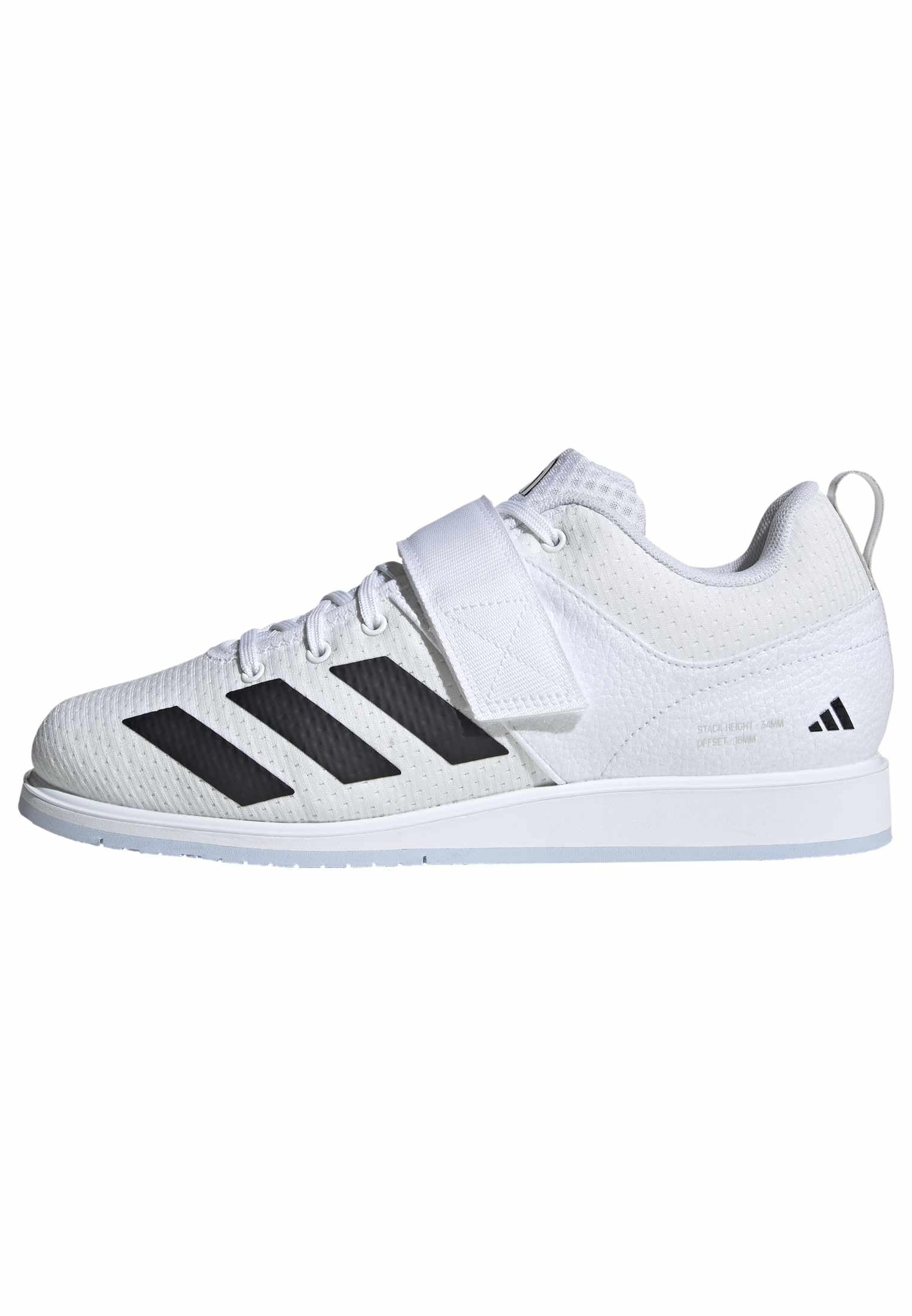
A specialist weightlifting shoe that locks your foot in place the moment you tighten the straps.
The Powerlift 5 is built for one purpose: holding you steady under a barbell. The sturdy inclined sole helps with ankle mobility, and the tight grip around the foot makes for a more stable squat. At 2.43 pounds it stays planted, and the flexible-yet-stable sole lets you stay grounded through squats, deadlifts, and other heavy lifts. Buyers credit it with improving squat alignment and activating the quads and glutes, with one noting it stopped the sliding she used to feel during leg press and glute press.
Durability is a genuine strength — owners describe a pair as still strong after a year of considerable abuse, and quality is the top point in the feedback, with weight-lifting suitability right behind it. A buyer new to lifting who picked these on a program’s recommendation found them well-made and a stable platform for squats. The locked-in feel is the star: the inclined sole, as one buyer put it, “helps with ankle mobility” and stabilizes a squat that running shoes kept disrupting.
Getting the right fit is the main challenge with this shoe. It runs tight and narrow at the toes, and many reviewers point out the sizing chart is off. The common advice is to order half a size up, though some women go down a full size from their normal number. A few with narrow-toed feet could not make it work at all. Compared with the cheaper raised-heel shoe above, this one has a stronger reputation for stability but the same narrow-toe warning, so toe box fit is the number one thing to get right.
Stable platform: a purpose-built, durable squat and deadlift shoe with a locked-in foot grip and an inclined sole that fixes squat alignment.
Narrow toe box: the toe box is tight and the size chart unreliable, so order up half a size and confirm the return policy before you commit.
Powerlifting meets: you are serious about barbell work and want maximum stability.
Wide feet: you have wide toes or want one shoe for cardio and lifting.
Know the Specs
Heel Drop and the Hyperlift Plate
Heel drop is the difference in height between the back and front of the shoe. A larger heel lift tips you slightly forward, which can help you squat deeper when your ankles are tight. The Nike Metcon 9 uses a larger Hyperlift plate (a firm insert in the heel) to keep that raised section from collapsing under weight. Flat trainers like the Adidas Everyset skip the lift and keep you level for deadlifts and lunges. So pick based on if you want help reaching depth or a fully grounded base.
Midsole Firmness and Foot Lockdown
Midsole firmness decides how much of your push actually reaches the floor. A dual-density EVA midsole, like the one on the Everyset, keeps the outside firm and the inside a touch softer, so you get a stable platform with some give. Lockdown is the second half of the equation: Velcro straps, lace keepers, and a snug midfoot stop your foot sliding sideways. Dedicated squat shoes such as the adidas Powerlift 5 lean hardest into lockdown with a tight grip around the foot, which is why they feel so secure once strapped in.
Common Questions
Do women need a women’s-specific lifting shoe or can I wear the unisex ones?
What is a Hyperlift plate and does it help my squat?
Are flat-soled trainers or raised-heel shoes better for deadlifts?
How long do weight lifting shoes for women typically last?
Should I size up or down in lifting shoes if I have wide feet?
Can I use these shoes for running or cardio too?
Do lifting shoes really help with squat depth?
What should I look for in the toe box?
Are the straps on lifting shoes necessary?
How do I break in new weight lifting shoes?
The Bottom Line
For most women, the weight lifting shoes for women winner is the Nike Women’s Metcon 9 because its larger Hyperlift plate and rubber rope wrap handle lifting and CrossFit in one shoe. If you want a soft, easy all-rounder for classes and general gym work, grab the Reebok Nano Gym. And for pure barbell work, the adidas Powerlift 5 is the one to reach for. If the Metcon is sold out, the Nano is the closest all-rounder at a similar standard — just size up.
How we choose
We do not accept paid placement. Every pick is matched to a real buyer and a real use-case; we do not hands-on test units.
Sources
Specifications: manufacturer listings and product documentation. Review insights: verified customer reviews, as of October 2026. Pricing: not shown on this page (it changes often); check the current price via the retailer link.
As an Amazon Associate, Aappliancez earns from qualifying purchases. This does not affect which products we feature.