Disclosure: Some links in this post are affiliate links. As an Amazon Associate I earn from qualifying purchases, at no extra cost to you. Learn more
Specs are compiled from manufacturer listings and verified buyer reviews and can change over time — please confirm the key details on the product page before buying.
The short answer: the tape you want is the one that still holds after the water hits it. Most leaks, cracks, and torn tarps get their patch in the rain, on a wet pipe, or below the waterline — and that is exactly where cheap tape gives up. The picks below are the ones that stay put in those conditions.
This guide is built by comparing the manufacturers’ published specifications and the patterns across verified customer reviews, so you get each pick’s real strengths and trade-offs instead of marketing spin.
The two numbers that decide everything are thickness and width, because a thin tape tears before it seals and a narrow tape cannot bridge a real crack. This guide walks through which waterproof tape actually holds on wet surfaces, and which ones to reach for instead.
Top Picks

How To Choose The Best Waterproof Tape
Waterproof tape is not one product. It is a family of very different materials that happen to share one promise, and picking the wrong member of that family is how a ten-second repair turns into a weekend job.
Adhesive tape versus self-fusing silicone
A standard waterproof tape carries glue on one side and sticks to whatever you press it onto. That glue is the weak point, because water, dust, and oil all defeat it.
Self-fusing silicone tape works the opposite way — it has no glue at all and bonds only to itself, so you stretch it and wrap it over the repair. That matters when the surface is greasy, wet, or simply too awkward for a flat patch.
Thickness and width decide the repair
Thickness is measured in mils, where one mil is a thousandth of an inch. A heavier backing resists punctures and UV breakdown far better than a film-thin roll.
Width and roll length decide how big a repair you can bridge. A wide, long roll covers a torn tarp or a split hose in one pass, while a narrow roll means layering multiple strips.
Match the tape to the surface
Vinyl pool liners, rubber hoses, and metal downspouts each behave differently. Check the compatible material list on the roll before you buy, because a tape that grabs metal beautifully may slide straight off a wet liner.
Side-by-Side Comparison
| Model | Best For | Roll Size | Thickness | Type | Amazon |
|---|---|---|---|---|---|
| Tikfoam Heavy Duty Repair Tape★ Best Overall | Torn fabric, tarps, and RV covers | 4 in x 10 ft | — | Adhesive, single-sided | Amazon |
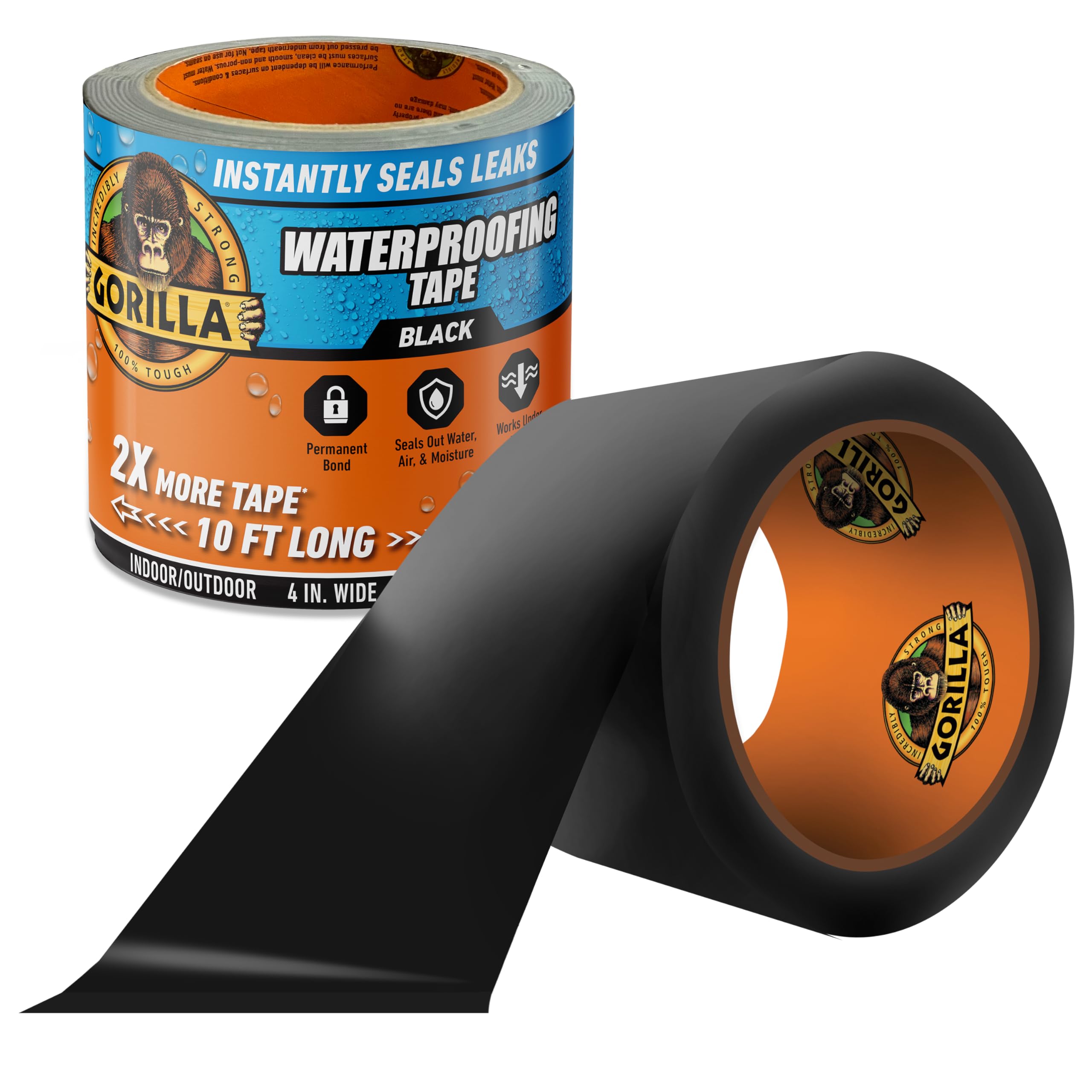
| GORILLA Waterproofing TapeTop Performer | Underwater pool and container leaks | 4 in x 10 ft | 34 mils | Adhesive, single-sided | Amazon |
| Nashua Aqua-Seal Waterproof Tape | Wet and underwater patching | 3 in x 15 ft | 20 millimeters | Adhesive, single-sided | Amazon |
| Arvyne Self Fusing Silicone Tape | Hoses, wiring, and wet-hand wraps | 1 in x 36 ft | 0.5 millimeters | Self-fusing, no adhesive | Amazon |
| Flex Tape Rubberized Waterproof Tape | Big flat patches on roofs and pools | 4 in x 5 ft | 39 mils | Rubberized adhesive | Amazon |
Detailed Reviews
1. Heavy Duty Repair Tape
Our pick — 4.0+★ from 950+ verified ratings; the strongest balance of quality and price.
A clear, reinforced roll built for the torn tarp and the split RV cover you patch in a hurry.
Tikfoam’s roll is the one that behaves as the weather gets worse. The manufacturer states the bond tightens as it warms, so a July patch on a tarp or RV cover holds into cold weather. That is a genuinely useful trait, because most adhesive tape softens and creeps when temperatures swing.
The roll is 4 inches wide and 10 feet long, so a single strip can bridge a real rip on a boat cover or an awning instead of you layering three narrow pieces. It sticks to canvas, fabric, nylon, leather, metal, wood, plastic, glass, and vinyl, which covers nearly every camping and around-the-house repair you will face.
This tape earns its spot because it arrives as a thick, sturdy, wear-resistant sheet, and that thickness is exactly what lets it hold on an above-ground pool liner or an inflatable water slide, where a thin film would just tear away. Buyers report it holds through a full season on above-ground pool liners and inflatable water slides. The one real catch: in genuinely cold weather the maker recommends warming the tape with a blow dryer before you press it down, so plan for that if you are patching in a freezing garage.
What Earns Its Keep
- 4 in x 10 ft roll covers large tears in one pass
- Bond tightens as it warms, per the manufacturer
- Sticks to fabric, vinyl, leather, metal, wood, glass, and plastic
- Handles rain, snow, wind, and sun exposure
The Fine Print
- The maker advises a blow dryer in cold weather
- Adhesive performance is where opinions divide most
- Clear finish shows dirt on outdoor surfaces
Reach for this if: you are patching fabric, camping gear, awnings, or pool liners and want one wide roll that handles a big tear.
Look elsewhere if: your repair is on a wet hose connection, where a wrapping silicone tape suits better.
2. GORILLA Waterproofing Tape
The thickest-backed roll here, and the one people trust with an underwater pool patch.
At 34 mils thick, this is a substantially heavier backing than the 0.5-millimeter silicone roll further down, and you feel that difference the moment you peel it off the liner. A heavier backing is what stops a patch from puncturing or shredding under UV and weather, which is why it holds up on roofs, gutters, and vinyl liners.
The roll is 4 inches by 10 feet and the backing is built for moisture and UV rays, so it survives rain, shine, and direct sun rather than drying out and curling at the corners. The compatible material list runs to acrylic, aluminum, glass, vinyl, and wood, giving you plenty of freedom in where you apply it.
The trade-off here is the adhesive itself. It is deliberately strong, and that strength is why it holds so well once placed — owners mention patching a leaky chicken waterer inside and out and going a month without a drip. The flip side: the same gooey adhesive is awkward to peel off its own backing, so cut the strip with sharp scissors in one steady motion instead of trying to tear it. Press it onto a clean, dry surface where you can, and it will reward you.
Best for: pool liners, water containers, and any repair where the surface can be wiped dry first.
Think twice if: you expect to reposition the strip — this adhesive commits the first time it lands.
3. Nashua 3 in x 15 ft Aqua-Seal Waterproof Tape in Black

A thin, black film-and-rubber roll that keeps its grip even when the surface is still wet.
Pick Nashua’s Aqua-Seal when you cannot get the surface dry before you patch. The maker lists it for underwater and out-of-water use plus wet surface sealing, but only in areas of low water pressure — a pond crack or a damp camera connection is fair game, a spraying garden hose is not.
At 20 millimeters thick and 3 inches wide across 15 feet of length, it is a slim, pliable material that folds around awkward corners far more easily than a chunky roll. It bonds permanently to aluminum, glass, metal, vinyl, and wood, and the temperature range is wide enough for both indoor and outdoor work.
The catch is surface compatibility, and it is a real one to plan around. The tape needs a dry, clean surface for the best adhesion and does not grab silicone caulk even when that caulk is dry. Owners also find it very hard to remove once it sets, which is either a feature or a headache depending on your repair. Applied properly, it does the job it advertises.
Why It Earns A Spot
- Rated for both wet and dry surface application
- Thin 20-millimeter material wraps tight corners
- 15 ft length gives you plenty of patch material
- Sticks to metal, glass, vinyl, aluminum, and wood
Where It Tests You
- Not for high-pressure leaks
- Will not stick to silicone caulk
- Very difficult to remove or reposition once set
Your pick if: you need a low-profile patch on a wet pond liner, a damp pipe, or a camera cable joint.
Pick something else if: the leak is pressurized — this roll is explicitly for low water pressure only.
4. Self Fusing Silicone Tape
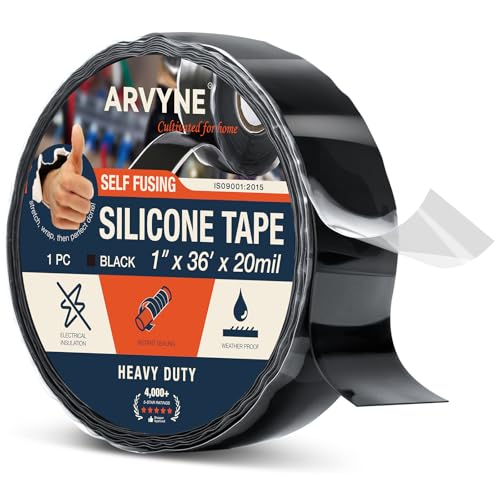
No glue at all — this one bonds only to itself, so it works where sticky tape cannot.
Here is the number that separates this roll from everything else on the list: 0.5 millimeters of silicone. Against the Nashua’s 20-millimeter build that is roughly a forty-fold gap, and silicone is why — it has no adhesive layer to gum up, melt, or dry out, so it stays flexible from -76°F to 392°F.
Because there is no glue, the tape cannot fail the way sticky tape does on a wet or oily surface. It insulates up to 8,000 volts per layer, meets MIL-I-46852, and holds a tensile strength of at least 950 PSI, which suits wiring, hoses, and anything you wrap rather than flat-patch.
The one habit you have to build is stretching it. This tape only grips once you pull it taut and wrap it over itself, and if you lay it on loosely it will simply unwind. Wrap it properly and it does far more than repairs — audio production folks have replaced gaff tape with it for cable looms, and it holds a broken oven door handle just as securely. It removes cleanly with no sticky residue left behind.
Grab this one for: hoses, wiring, tool handles, and any wrap-around repair on a surface that will not take glue.
Not your tape if: you want a flat patch over a hole — a self-fusing roll is not made for that job.
5. Flex Tape Rubberized Waterproof Tape
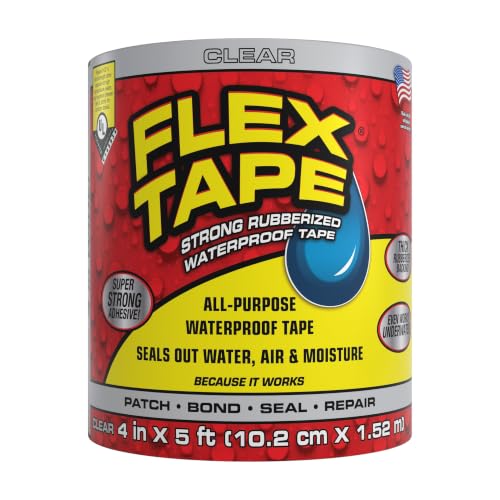
A 39-mil rubberized sheet with the broadest surface list on this page — and the fussiest grip.
Flex Tape brings a genuinely thick, flexible rubberized backing to the job. At 39 mils it is the heaviest material here, and that build is what lets it conform to a curved gutter, a pipe joint, or a boat hull rather than cracking along a fold. The maker rates it for hot or cold, wet or dry, and even underwater use, with UV resistance and a VOC-free formula.
Its compatible material list is enormous — PVC, acrylic, metal, steel, copper, aluminum, wood, ceramic, porcelain, tile, glass, rubber, fiberglass, stucco, plaster, stone, cement, concrete, drywall, EPDM roofs, some plastics, fabrics, and vinyl. If you are patching a roof, a gutter, or a plastic pool liner, the surface is very likely on that list.
Where this roll asks patience is the adhesiveness, which is the most contested part of the product. The recurring theme is that it needs a genuinely clean, dry surface to bond, and laying it onto something still wet means it can lift shortly after. Get the prep right and the 4-inch width covers a lot of ground in one pass — the roll only runs 5 feet long, so measure your repair before you commit the strip.
Where it wins: the 39-mil rubberized backing and the widest material compatibility on the list make it the go-to for a flat roof or gutter patch.
Prep is everything: bond it to a clean, dry surface and it holds; rush it onto a wet one and you will likely be redoing the job.
Choose it when: you have a large flat repair on a roof, gutter, pipe, or pool liner and you can clean and dry the spot first.
Skip the hassle if: the surface will stay wet — the silicone wrap three picks up handles that case far more reliably.
Know the Specs
Thickness in mils and millimeters
Thickness tells you how much abuse a patch will take before it gives way, and it is listed in two units depending on the roll. One mil is a thousandth of an inch, so 34 mils and 39 mils describe a noticeably heavier backing than a thin film. A heavier backing resists punctures, UV breakdown, and the peeling that kills a repair on a sun-baked roof. A thin roll still has its place — it folds around corners and tight joints that a stiff sheet cannot follow. Neither is better in the abstract; you match thickness to the surface. Flat patches on roofs and liners want weight, while wrapping a small hose fitting wants something pliable.
Adhesive versus self-fusing
An adhesive tape glues itself to the surface, and that glue is the part most likely to fail once it meets water, oil, or dust. Self-fusing tape takes the opposite approach — it carries no adhesive and instead bonds only to itself when stretched and wrapped. That difference decides your purchase. If you are laying a flat patch over a hole, you want an adhesive roll with a strong grab. If you are wrapping a hose, a cable, or a handle — especially one you cannot get perfectly dry — a self-fusing silicone roll is usually the way to go. Just remember the self-fusing type needs tension to work, so wrap it snug rather than loose.
Common Questions
Can waterproof tape really be applied underwater?
Which tape is best for a leaking garden hose?
What is the difference between adhesive tape and self-fusing tape?
How do I stop waterproof tape peeling off after a few weeks?
Will waterproof tape stick to a wet surface?
How long does waterproof tape last outdoors?
Can I use waterproof tape on a swimming pool liner?
Is a wider roll always better for repairs?
What temperature range can waterproof tape handle?
Can I remove waterproof tape without damaging the surface?
The Bottom Line
For most jobs around the house, the waterproof tape winner is the Tikfoam Heavy Duty Repair Tape, because its 4-inch width and 10-foot length cover a real tear in one pass and the bond tightens as it warms. If your leak is underwater in a pool liner or a water container, grab the GORILLA Waterproofing Tape — its 34-mil backing is built for that job. And for wrapping a wet hose or a cable joint where glue simply will not hold, the Arvyne Self Fusing Silicone Tape is the one to reach for.
How we choose
We do not accept paid placement. Every pick is matched to a real buyer and a real use-case; we do not hands-on test units.
Sources
Specifications: manufacturer listings and product documentation. Review insights: verified customer reviews, as of October 2026. Pricing: not shown on this page (it changes often); check the current price via the retailer link.
As an Amazon Associate, Aappliancez earns from qualifying purchases. This does not affect which products we feature.