Disclosure: Some links in this post are affiliate links. As an Amazon Associate I earn from qualifying purchases, at no extra cost to you. Learn more
Specs are compiled from manufacturer listings and verified buyer reviews and can change over time — please confirm the key details on the product page before buying.
Most cold-weather pants fail in Antarctica for the same boring reason: they are built for a ski lift in Colorado, not for wind that never stops. The fix is not one magic pair — it is choosing a shell, an insulated layer, or a rated bib that does both, then matching it to how much you will be moving. Below you get six real options, sorted by what each one genuinely does best.
This guide is built by comparing the manufacturers’ published specifications and the patterns across verified customer reviews, so you get each pick’s real strengths and trade-offs instead of marketing spin.
Antarctic weather does not negotiate, so the gear has to work on day one. Here is what holds up, what runs slim, and what you should pack around your legs for the cold — waterproof pants for antarctica.
Top Picks

How To Choose The Best Waterproof Pants for Antarctica
On the ice, your legs face three separate enemies: wind that strips heat, wet snow that soaks fabric, and your own sweat that condenses the moment you stop moving. A pair that only does one of those jobs will leave you cold somewhere on the trip. Decide first if you need a shell (a thin outer layer that blocks wind and wet) to block weather, an insulated layer (a padded layer that traps body heat) to trap heat, or a single garment that already does both.
Shell versus insulated: pick your job first
A shell is the outer wall. It keeps wind and wet snow off you but adds almost no heat, so you wear it over base layers and fleece. An insulated pair does the warming itself, which is what you want for standing around, driving a snowmobile, or long hours at low activity. The smartest Antarctic setups often use one of each — a thin insulated bib for camp and a shell over the top when the weather turns.
Read the cold rating with a skeptical eye
A comfort rating tells you the temperature the maker says the garment handles, but it usually assumes you are active and dressed in layers. A bib rated to -60°F is a serious piece of kit for extreme cold. The trade-off is that such heavy insulation overheats fast once you are working hard at milder temperatures, so match the rating to your coldest expected day, not to the average.
Sizing is the number one reason these pants get returned
Winter pants and bibs run slim far more often than people expect, and the pattern holds across brands here. Size for the layers you will wear underneath, not for your street size. If you are between sizes, go up. A tight waist on an insulated bib is unbearable in cold, because you cannot add a thermal layer underneath without cutting off circulation.
Side-by-Side Comparison
| Model | Best For | Cold Rating | Weight | Waterproofing | Amazon |
|---|---|---|---|---|---|
| RefrigiWear Hi Vis Extreme Insulated Bib Overalls★ Best Overall | Deep cold at low activity | Rated to -60°F | 5.94 lb | — | Amazon |
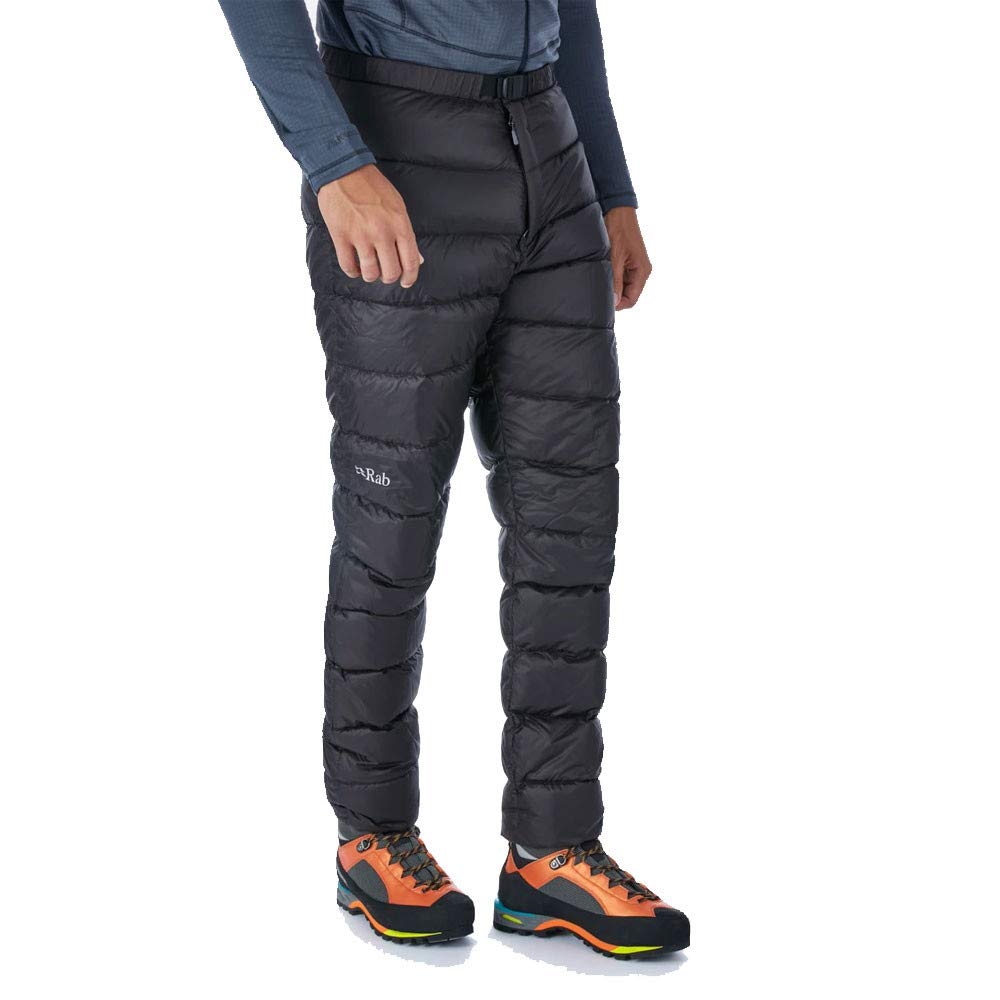
| Rab Men’s Argon Down PantsCamp Warmth King | Camp and sleeping-bag warmth | — | 13.2 oz | Water-resistant | Amazon |
| Marmot Minimalist Pants | Rain and wet-snow shell | — | — | GORE-TEX Paclite, 100% seam taped | Amazon |
| Helly-Hansen Legendary Insulated Bib Pant | Resort and cold-weather fishing | — | 1.9 lb | HELLY TECH Performance, waterproof/breathable | Amazon |
| Helly-Hansen Alpha LIFAloft Pant | Active skiing and movement | — | 1.75 lb | — | Amazon |
| Mountain Hardwear Ghost Whisperer Pants | Ultralight under-layer | — | 9.6 oz | Water-resistant (not waterproof) | Amazon |
Detailed Reviews
1. RefrigiWear Men’s Hi Vis Extreme Insulated Bib Overalls
Our pick — 4.5+★ from 200+ verified ratings; the strongest balance of quality and price.
The only pick here with a number stamped on it for deep cold, and it earns that stamp.
If you plan to stand still in brutal cold — an ice-fishing shack, a freezer dock, a snowmobile stop, a survey line on the ice — this bib is the warmest pick on the list. The whole argument is its -60°F comfort rating (the maker’s stated temperature it is built to keep you warm in). That means the maker built this bib for cold where your gear is the only thing between you and real harm. Owners confirm it holds up: as buyers report from the field, “-65 degrees with windchill while ice fishing. Was warm and really well built.”
What wins people over most is how well it is put together — quality is the thing the review pages praise hardest, ahead of warmth. That shows up in the details: multiple zippered pockets deep enough for gloves and tools, leg zippers that open wide enough to pull the bibs on over boots, and a high-visibility shell (a bright outer layer) that keeps you visible on a dark site. It sits at 5.94 lb, which is a real weight, and that mass is exactly why it traps heat the way it does.
Here is the catch, and it matters for Antarctica in particular. This material does not breathe well, and one honest buyer put it plainly: “If you are using them in -5 to 5 degree weather, you will sweat heavily, especially if working.” So treat this as a stationary-cold or extreme-cold layer, and strip down underneath if the sun comes out or you start moving hard. Sized right, though, it is the warmest thing here by a wide margin — and the crowd backs it, sitting at 4.5+ stars across 200+ owners.
Where this bib wins
- Rated to -60°F, the lowest comfort rating on this list
- High-visibility fabric keeps you seen on dark, exposed terrain
- Deep zippered pockets and leg zippers that clear boots
- Build quality is the most-praised trait among owners
What to plan around
- Fabric breathes poorly — you sweat fast once active at milder temps
- At 5.94 lb it is heavy, roughly three times the weight of a lightweight ski bib
- Sizing is mixed, so try before you commit if you can
The right call if: your Antarctic days are long, cold, and mostly low-activity — driving, watching, standing, working a site.
Think twice if: you plan to hike hard in milder cold, because the breathability here is the real limitation.
2. Rab Men’s Argon Down Pants
Puffy, packable leg insulation that turns a cold tent into somewhere you can actually sleep.
The Argon Down Pants are not a shell. They are a down-filled layer (a padded layer filled with feathers that traps body heat) you pull on when you stop moving and the cold starts to bite — inside a sleeping bag that is not quite enough, around camp, or over your base layer while you sit and eat. Packing down to 13.2 ounces, they crush into a tiny bundle, so there is no excuse to leave them behind on an expedition. The description puts it well: they compress small so you never head out on a trip without them.
The people who love them really love them. One described wearing them to walk the dog “on cold frosty sub zero mornings in Minnesota” and staying cozy warm, with a caveat that any real exertion would overheat them. Another called them “like a sleeping bag for your legs” and used them for winter steelhead fishing. That matches the design: pure heat with almost no breathability, best for low-output cold.
The recurring problem is sizing. A buyer who wears 32/32 across major brands found his usual medium did not fit, and others had to jump to XL from a 35 waist. So order up, and order from a seller you trust, because a few buyers received the wrong product entirely. 20+ ratings sit behind a 3.5+ star average, lower than the other picks here — but the low marks trace mostly to fit and seller issues, not to Rab’s down itself.
Why campers reach for it: warm, soft, genuinely packable down legs that fill the gap between a base layer and a full sleeping bag.
Watch the fit: sizing runs very small and a few buyers got the wrong item, so buy from a reputable seller and size up one to two sizes.
Reach for these if: you want a down insulation layer for camp, the tent, or the sleeping bag — light enough to always carry.
Look elsewhere if: you need a waterproof outer layer in blowing snow; this is warmth, not weather protection.
3. MARMOT Minimalist Pants

A genuine GORE-TEX shell built to keep wet snow and wind off your legs, nothing more.
If your Antarctica concern is wet and wind rather than pure cold, this is the layer to buy. It uses GORE-TEX Paclite — a very thin waterproof-breathable membrane — with 100% seam taping, water-resistant hand pockets, and ankle zippers with snap closures so you can pull them on over boots. Articulated knees (a cut that bends where your leg bends) keep you mobile on rough ground, and an elastic waist with an adjustable drawcord lets you dial in the fit. It weighs almost nothing and layers easily over an insulated pant.
Durability is the story owners tell. As owners mention, one previous pair “lasted ~20 years until membrane disintegrated after rainy hike.” Others describe a comfortable, durable shell that “can really take a beating” and stayed dry through a soaking rain event. That is the value of real GORE-TEX: you buy it once and forget about it for years.
The honest catch is the cut. Multiple people find it snug or true-to-skinny, with a buyer at 5’9″ and 175 lb reporting the large was tight in the waist and legs. Add that it has no belt loops — just a rear elastic band — so it needs to fit well on its own. Note it is a shell only: it will not warm you, so plan an insulated layer underneath for Antarctic cold.
The durability argument: real GORE-TEX with fully taped seams and a track record of lasting many seasons, at 60+ ratings and 4.0+ stars.
The fit caveat: sizing skews tight and there are no belt loops, so buy for the layer underneath and treat the waistband as your only adjustment.
Pick this shell if: you want proven waterproof protection you can trust over any insulated layer.
skip it if: you need warmth built in, because this is a protective shell with next to no insulation.
4. Helly-Hansen Mens Legendary Insulated Bib Pant
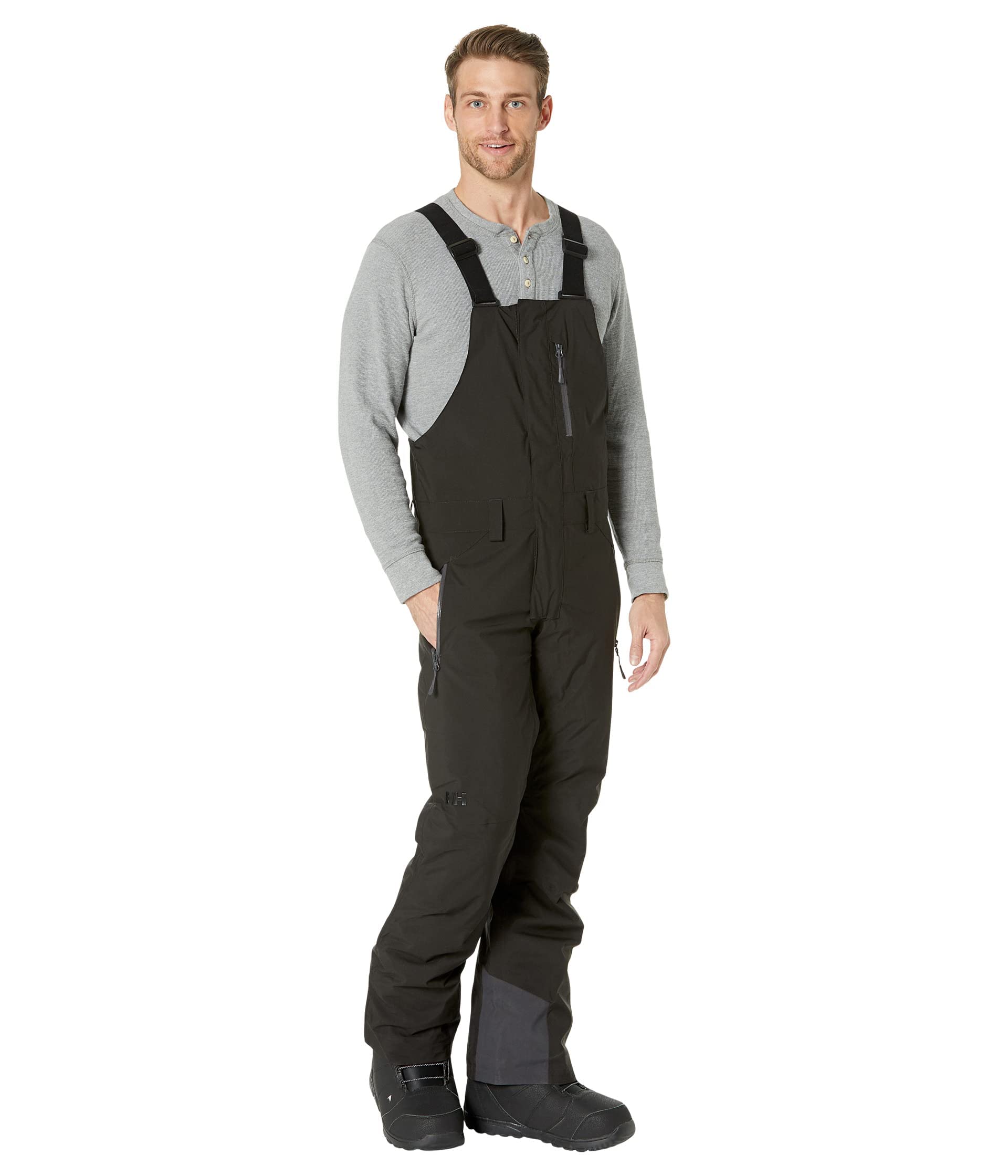
A full-featured insulated bib that tilts toward cold, wet days spent standing in one spot.
This is the bib that blends warmth and weather protection in a single piece. HELLY TECH Performance is the brand’s waterproof-breathable fabric technology, and the bib adds PrimaLoft insulation plus thigh-vent zippers so you can dump heat when you warm up. 2-way stretch fabric keeps it from fighting your stride. At 1.9 lb it is dramatically lighter than a heavy-duty work bib like the RefrigiWear — 5.94 lb by comparison — so it is far easier to move and pack in.
Owners reach for it most for cold fishing and winter days in the elements, and the material quality is what the review pages praise hardest, with warmth right behind. One buyer rolled in the snow and stayed warm and dry. Another praised the softness and said the bib was “not too bulky” and “extremely warm.”
The thing to know is sizing: the fit is the most-discussed topic for a reason, and several people find the medium tight through the thighs and waist. Multiple buyers advise going up one size. The cut is also fairly Euro-slim, which can feel restrictive for broader builds. Add that one buyer waited weeks for shipping — worth factoring in if your trip date is fixed.
What stands out
- Waterproof-breathable HELLY TECH fabric with PrimaLoft warmth and vent zippers
- 2-way stretch fabric moves with you
- Just 1.9 lb — far lighter than a heavy work bib
- Handles blowing snow and cold fishing days well
What buyers flag
- Runs small in the thighs and waist — size up
- Euro-slim cut is tight on larger builds
- Occasional long shipping delays
Best fit for: someone who wants a single bib for cold, wet days and values easy movement over maximum bulk.
Size up or look on: if you have a broad build or a fixed departure date, since the fit is snug and shipping can drag.
5. Helly-Hansen Mens Alpha LIFAloft Pant

The most-loved ski pant on the list, built for people who move and stay dry doing it.
The Alpha LIFAloft carries the highest rating here — 4.5+ stars across 50+ owners — and it earns it by being comfortable first and warm second, which is exactly what a full day of activity needs. At 1.75 lb it is the lightest of the insulated options and stays out of your way. LIFAloft insulation adds warmth without the bulk, and the inner powder cuff — an elastic skirt that seals the leg opening to the boot — keeps snow from sneaking up your leg on deep days.
Owners who ski in these describe them as the most comfortable and warm ski pants they own, with fabric that feels like high-end athletic apparel. That 10-day report matters: no rips, no slipping, stays put despite not being a bib. For Antarctic movement — hiking to a site, getting in and out of a vehicle — that stable, streamlined fit is a genuine advantage over a bulky bib.
What you should know before buying: these run slim. Multiple owners had to return sizes and size up, and one found the small sized closer to a youth cut. The inner boot cuff is also the wear point — one owner noted it got cut several times by ski edges and wished it held up better. Neither issue is a dealbreaker for a properly sized pair, but both point to sizing carefully and treating the cuff gently around sharp gear.
Made for you if: you will be active down there and want lightweight warmth plus a fit that stays put.
Hold off if: you are a true small or need a roomy cut, because the slim sizing here sends plenty of buyers back for a bigger size.
6. Mountain Hardwear Ghost Whisperer™ Pants
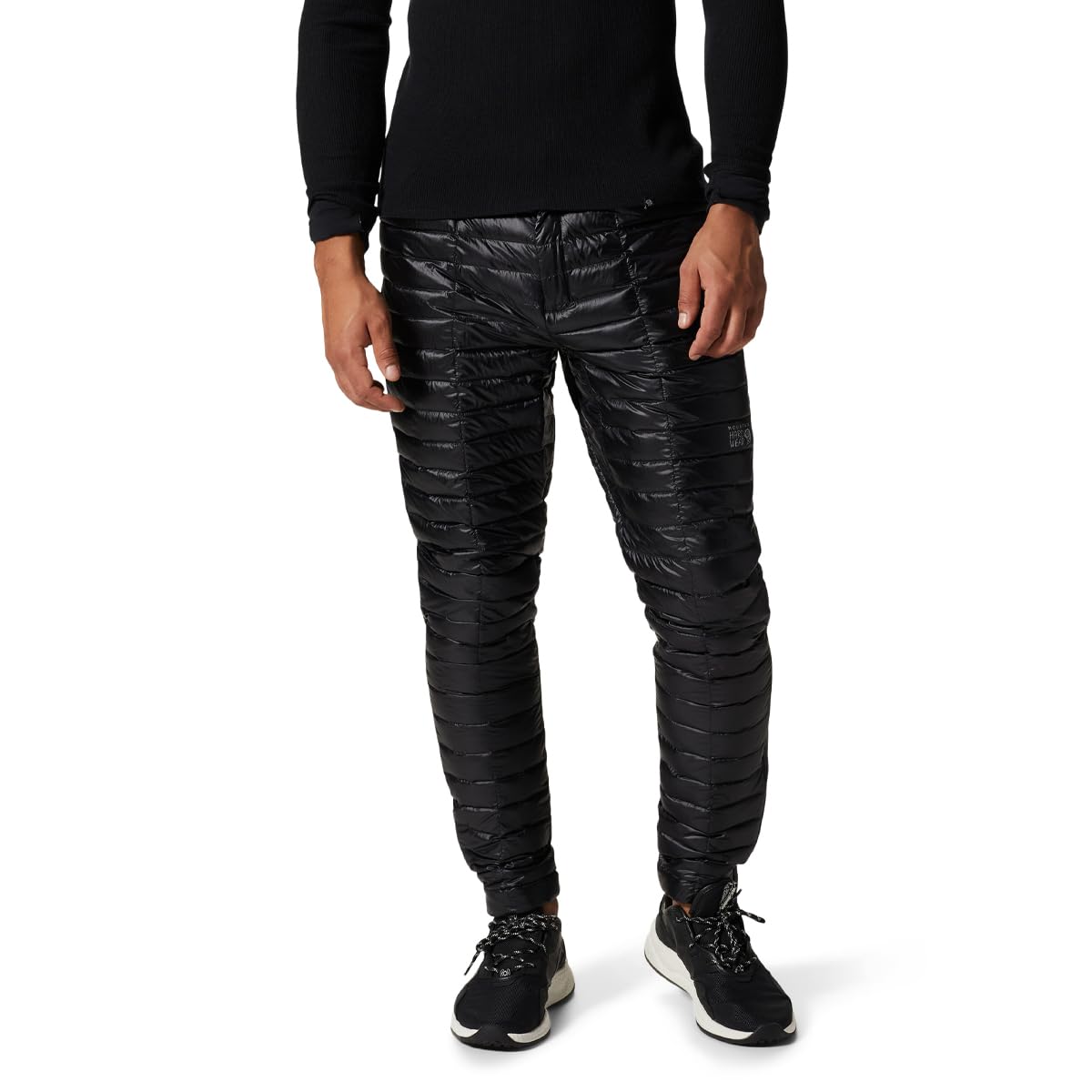
Barely-there down legs that vanish into a pocket and hold serious warmth for their weight.
At 9.6 ounces, this is the lightest thing on the list, and that is the entire pitch. It is a down under-layer you pull on beneath a ski pant or shell, then stuff into its own pocket when you warm up. Worn under a rain shell on the ice, or inside a sleeping bag, it adds real warmth with almost no weight penalty. The design is thoughtful too — tightly spaced, fully stuffed baffles (the stitched channels holding the down) keep the insulation from migrating, so the warmth stays where it should.
What owners consistently praise is the build and the comfort. They describe a perfect fitted cut, an articulated seat that keeps it from bunching, and materials good enough that the pants warm you when you are nearly at rest. Customers note wearing them daily for dog-walking at 40°F or below and feeling like they had nothing on while staying warm.
Two honest points. First, this is not waterproof — one owner wore them in cold and snow flurries and recommended avoiding rain or wet snow, so on the ice the shell goes on top. Second, the value is debated: some find them worth it, others think they are pricey, and the waistband can run tight. There is also occasional sloppy construction reported, so inspect the fly and drawstring when they arrive.
The weight story: 9.6 oz of warm, packable down that works as a basecamp layer or an under-shell boost, with 4.0+ stars across 60+ owners.
The trade-off: not waterproof and not cheap, so it is a layer, not a standalone pant for wet Antarctic days.
Worth buying if: you want a featherweight down layer to slip under a shell or into a sleeping bag without noticing the weight.
Pass on it if: you need actual wet-weather protection, since these are water-resistant at best.
Know the Specs
Waterproof vs. water-resistant
A waterproof fabric is engineered to keep liquid water out entirely, often with a membrane and taped seams. GORE-TEX Paclite and HELLY TECH Performance are examples, and full seam taping matters because seams are where water sneaks through first. Water-resistant fabric sheds light snow and damp but will eventually soak through in steady wet. For Antarctica, choose a true waterproof shell if wet snow is part of your day.
Insulation and comfort ratings
Insulation is the layer that traps body heat — down, PrimaLoft, or LIFAloft all do that job. A comfort rating like -60°F tells you the temperature a maker rates the garment for, usually assuming you are active and layered. More insulation means more warmth but less breathability, so heavy gear overheats once you move hard. Match the rating to your coldest activity, not to the average day.
Fit, layering, and stretch
Winter pants need room for a base layer and possibly fleece underneath. Slim cuts and Euro-style fits look sharp but can bind at the waist and thighs. Stretch fabric, articulated knees, and adjustable waists or drawcords all help you move freely. When sizing is uncertain, go up — a too-tight insulated bib cannot be fixed on the ice.
Weight and packability
On an expedition, every ounce you carry counts. A down layer at around 9.6 oz or a lightweight ski pant near 1.75 lb is easy to carry. A heavy work bib at nearly 6 lb traps more heat but costs you pack space and mobility. Decide whether you are optimizing for maximum warmth at rest or for moving light and fast, and pick weight to match.
Common Questions
Do I need waterproof pants as well as insulated pants in Antarctica?
What does a -60°F comfort rating actually mean?
Why do so many winter pants run small?
Is GORE-TEX overkill for Antarctic cold?
Can down pants be worn as my only outer layer?
Are bib overalls better than waistband pants for extreme cold?
How do I stop snow getting into the legs of my pants over boots?
Will an insulated bib be too warm if I am moving a lot?
How should I wash waterproof and down pants?
What should I pack if my trip is mostly sledding and standing around?
The Bottom Line
For most people heading into genuine Antarctic cold, the waterproof pants for antarctica choice is the RefrigiWear Hi Vis Extreme Insulated Bib Overalls, because it is the only pick here rated to -60°F and it is the warmest by a clear margin. If your priority is staying dry in blowing wet snow, the Marmot Minimalist is the shell to buy — genuine GORE-TEX (a waterproof, windproof fabric) with fully taped seams (sealed stitching so water cannot leak through). And for active days where you want lightweight warmth that stays put, the Helly-Hansen Alpha LIFAloft leads the field. Layer a light down pant underneath any of them and you have a kit that covers standing, moving, and sleeping in the cold.
How we choose
We do not accept paid placement. Every pick is matched to a real buyer and a real use-case; we do not hands-on test units.
Sources
Specifications: manufacturer listings and product documentation. Review insights: verified customer reviews, as of October 2026. Pricing: not shown on this page (it changes often); check the current price via the retailer link.
As an Amazon Associate, Aappliancez earns from qualifying purchases. This does not affect which products we feature.