Disclosure: Some links in this post are affiliate links. As an Amazon Associate I earn from qualifying purchases, at no extra cost to you. Learn more
Specs are compiled from manufacturer listings and verified buyer reviews and can change over time — please confirm the key details on the product page before buying.
If the taps stop and the store shelves empty, the question that decides everything is simple: can you make the water in front of you safe to drink? That is what this guide answers. Below you get eleven water purification systems for survival, from pocket filters you sip through to gravity purifiers that serve a whole family, each one matched to the job it does best.
This guide is built by comparing the manufacturers’ published specifications and the patterns across verified customer reviews, so you get each pick’s real strengths and trade-offs instead of marketing spin.
A 0.2-micron filter stops bacteria but lets viruses through; a 0.02-micron purifier catches them. Read on for the honest breakdown of every pick, so you can settle on the water purification system for survival that fits your kit.
Top Picks

How To Choose The Best Water Purification System for Survival
Start with the water you expect to drink, not with the gear. A clear mountain stream and a flood-swollen river demand different tools. A solo hiker and a family of four burn through a day’s water at wildly different rates. Answer those two and the shortlist narrows to a handful of models.
Filter or purifier — know which one you are buying
A filter traps organisms by pore size and typically stops bacteria and protozoa. A purifier goes finer and also catches viruses, which are the smallest of the three. If human waste could be upstream of your source, or you are travelling abroad, virus removal is worth having. The LifeStraw Family and the MSR Guardian both carry it.
Match the method to your hands and your time
Straws and squeeze filters cost you effort per sip. Gravity systems give you water while you set up camp, but they can be slow and bulky. Pumps trade arm work for speed, often pushing a couple of liters per minute. Tablets are the lightest backup you can carry but need wait time to work and cannot touch chemical contamination.
Read the lifespan number, then read it again
Every system has a rated capacity in gallons or liters before the cartridge needs replacing. A pocket filter rated to 1,000 gallons covers years of weekend trips. A family gravity unit rated to thousands of liters is closer to a multi-year household supply. Match the rated gallon or liter count to the years you expect to depend on the cartridge, not to the sticker price.
Side-by-Side Comparison
| Model | Best For | Filtration Rating | Rated Capacity | Style | Amazon |
|---|---|---|---|---|---|
| LifeStraw Personal★ Best Overall | One-person bug-out bag | 0.2 micron | 4,000 liters | Straw | Amazon |
| LifeStraw Family 12 LBest for Families | Family emergency supply | 0.02 micron | 18,000 liters | Gravity | Amazon |
| Potable Aqua TabletsFeatherweight Backup | Featherweight backup | Chemical treatment | Two 50-count bottles | Tablets | Amazon |
| Sawyer SP128 Mini | Ultralight backpacking | 0.3 micron | 100,000 gallons | Squeeze | Amazon |
| Membrane Solutions 6L | Group basecamp | 0.3 micron | 1,320 gallons | Gravity | Amazon |
| Waterdrop Straw | Travel and trail mix | 0.3 micron | 1,400 gallons | Straw + bag | Amazon |
| Survivor Filter PRO | Dirty-water pumping | 0.3 micron | 100,000 liters | Pump | Amazon |
| GRAYL GeoPress | Fast travel purification | Pathogen + VOC removal | 65 gallons | Press bottle | Amazon |
| Katadyn Vario | Group pumping trips | 0.2 micron | 530 gallons | Hand pump | Amazon |
| Travel Berkey | Everyday countertop | 200+ contaminants reduced | 6,000 gallons combined | Gravity steel | Amazon |
| MSR Guardian | Serious backcountry teams | NSF P248 tested | 10,000 liters | Purifier pump | Amazon |
Detailed Reviews
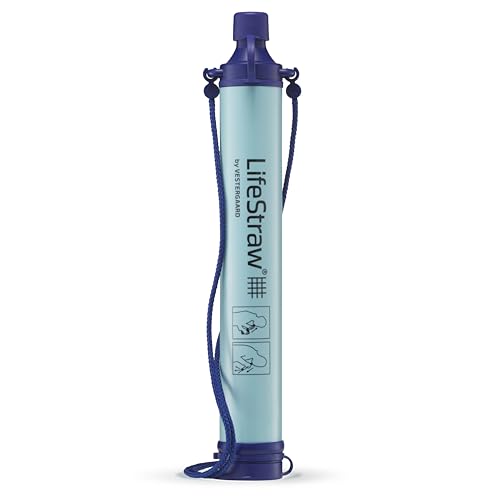
1. LifeStraw Personal Water Filter 1PK
Our pick — 4.5+★ from 125,500+ verified ratings; the strongest balance of quality and price.
The pocket-sized straw that turns any sketchy puddle into drinkable water.
You drop this thing in a bug-out bag and forget it until the day you need it. At 45 g (about 1.6 ounces) it disappears into any pack, and there are no batteries, no pumping, and no moving parts — you simply sip from the source. The 0.2-micron membrane filters out bacteria and parasites, including Giardia and Cryptosporidium, plus microplastics down to 1 micron. For one person on the move, that covers bacteria, parasites, and microplastics in a single sip.
The rated life is what makes this a survival staple rather than a trail toy. One straw delivers 4,000 liters (about 1,000 gallons) of treated water before it stops flowing, which is years of weekend trips for a single hiker. It is not a full purifier, though — viruses, salt, chemicals, and heavy metals pass straight through, so plan a backup against those threats.
For a lone hiker facing a week of bad water, it holds 4.5+ stars across a huge base of owners. Buyers report it as “compact, lightweight, battery-free” and rated for 1,000 gallons. As one put it: “Works great. Doesn’t taste like chemicals.”
What earns its spot
- No power, no pumping — just sip from the source
- 4,000-liter (1,000-gallon) rated life
- Removes bacteria, Giardia, Cryptosporidium, and microplastics
- 45 g weight makes it vanish into any kit
The honest catch
- No virus protection — add tablets where that risk exists
- You must drink straight from the source or a separate container
- Muddy water slows the flow and shortens cartridge life
Reach for it if: you are one person packing light and want a filter that never runs out of batteries.
Look elsewhere if: your water source could carry viruses — this filter will not catch them.
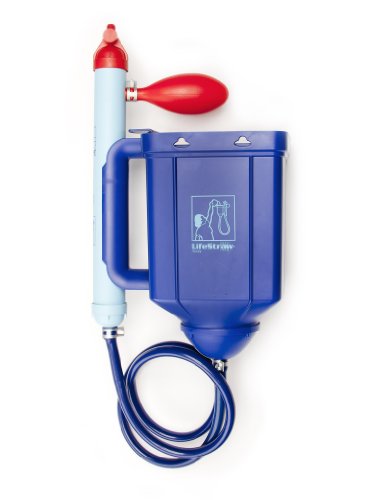
2. LifeStraw Family Gravity Water Purifier 12 L
A hanging bag that makes a family-and-a-half of clean water while you set up camp.
The spec that matters here is the pore size. This purifier works down to 0.02 microns, which removes viruses as well as bacteria and protozoan cysts — a much finer catch than the standard 0.2-micron filters you find in most straws. Pour water in the top, and gravity pulls it through to the bottom. No chemicals, no iodine, no wait-and-hope.
The capacity makes it a family tool. A single unit purifies 18,000 liters (4,755 gallons) — the stated equivalent of clean water for a family of four for three years. The flow rate runs between 9 and 12 liters per hour, so a morning fill covers drinking for several people through the day. It ships in a sealed bag, which makes it easy to stash for an emergency.
Versus the standard pocket straw, this finer membrane catches the viruses a filter leaves behind, so you are covered on the small stuff. The trade-off is pace: it is a passive trickle, and it wants to hang high so the hose runs straight. Taste divides people — most find it clean, a few report an off flavour. Set it up early and let it work while you do other things.
Where it shines: clean water for a household without lifting a finger — you fill the top and walk away. The 0.02-micron membrane is finer than the typical 0.20-micron filters, so viruses get caught too.
What to plan around: there is no storage case once it is open, so add your own bag, and give it a few flushes when new before you trust the taste.
The clear choice for: a household that needs a steady, hands-off supply and wants virus removal built in.
The one snag: you will need to hang it high and keep the chamber topped up, because the passive flow is slow.
3. Potable Aqua Water Purification Tablets PA Plus
Two little bottles that weigh almost nothing and treat water in the time it takes to make coffee.
Tablets are the backup that costs you next to nothing in weight. You get one bottle of 50 purification tablets and one bottle of 50 PA Plus neutralizing tablets, all inside a 2.24-ounce package. The purification tablets make questionable water bacteriologically suitable to drink and are effective against bacteria and Giardia lamblia. The PA Plus tablets go in afterward to clear the iodine taste and colour.
Count matters for planning. Each bottle treats a set volume, so a full kit handles a short-term emergency or a multi-day trek as a secondary method. The pair gives you two bottles of each — a modest but genuinely useful buffer to keep beside a filter rather than as your only plan. The count is exactly double the single-bottle version that shows up in the same listings, a 2.0x difference in tablet volume.
What wins people over is the neutrality — water comes out tasting like water, not like a swimming pool, when you use the Plus tablets correctly. There are limits. Tablets cannot neutralize toxic chemicals, and they work slower in cold water, so strain cloudy water first and give them their full time. Carry a filter alongside if the source is murky.
The lightweight safety net: when the filter clogs or you run out of clean containers, a tablet bottle restores a clean-drinking-water option with zero moving parts.
Grab a set if: you want a compact chemical backup stacked behind your main purifier.
Do not lean on it alone if: your water may carry industrial chemicals — tablets cannot clear those.
4. Sawyer Products SP128 Mini Water Filtration System

A palm-sized filter rated for 100,000 gallons that screws onto a soda bottle.
The number that stands out is the lifespan: up to 100,000 gallons on one cartridge. The 0.1-micron absolute hollow-fiber membrane removes 99.99999% of bacteria (Salmonella, Cholera, E. coli) and 99.9999% of protozoa such as Giardia and Cryptosporidium, plus 100% of microplastics. It weighs just 41 g and fits on a 28 mm bottle thread, a hydration pack, or the included 16-ounce squeeze pouch. Each unit is tested three times to performance standards by Sawyer.
For an ultralight backpacker this is close to a no-brainer. It is faster and less work than a hand pump, with fewer failure points. The included cleaning plunger lets you backflush after a session, and a tip worth stealing: hang a 2-liter bladder above and let gravity do the squeezing. Flow is modest on cold, silty water, so it suits steady sipping rather than filling a group’s worth of bottles at once.
The Mini does not remove viruses or chemicals, so treat it as a field filter, not a full purifier for unknown urban water. The 16-ounce pouch that ships with it is on the small side — many owners swap in a larger bladder. Weigh the palm-sized body against the straw-style filter that starts this list: the Sawyer adds bottle compatibility and a far longer cartridge life for only a little more bulk.
Why backpackers love it
- 100,000-gallon rated cartridge life
- Fits 28 mm bottles and hydration packs
- 41 g, and tested three times per unit
- Squeeze or gravity-feed with a hang bag
Where it stops short
- No virus or chemical removal
- Modest flow on cold, silty water
- Sandwich-fragile pouches wear after a few uses
Built for: the ounce-counting thru-hiker who wants a bottle-compatible filter with a monster lifespan.
Not for: treating unknown urban water — it will not stop viruses.
5. Membrane Solutions 6L Gravity Water Filter Pro
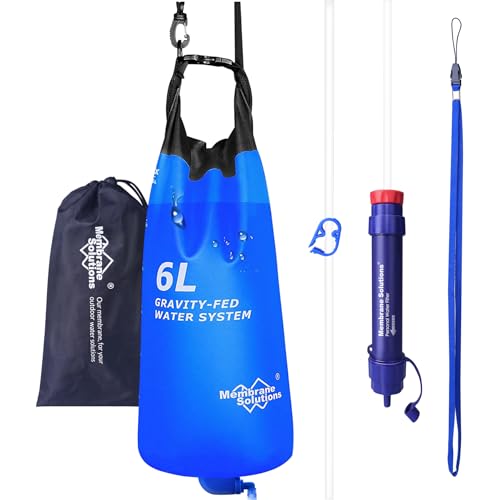
A hanging gravity bag built to keep three to six people drinking at basecamp.
Group camping is the whole point here. The 6-liter bag is sized to serve a small crew, and the 4-stage setup pairs a 0.1-micron hollow-fiber membrane with coconut-shell activated carbon and dual PP pre-filters. That combination reduces chlorine, sediment, and odour from lakes, rivers, and streams. It meets NSF/ANSI 42, 372, and 401 standards, tested independently by NSF and SGS. For off-the-grid water, no pumps, no squeezing, no electricity — just hang it and let gravity deliver up to 0.5 liters per minute.
Lifespan is 1,320 gallons (5,000 liters) on one filter, which is generous for a family camping kit. The TPU build is puncture-resistant and BPA-free, with a reinforced hanging strap, and the whole thing rolls down into a backpack. Compare the flow to the passive LifeStraw Family at 9–12 liters an hour: this one is the more deliberate pour when you want speed, but it can slow down when the carbon stage loads up with algae.
The recurring gripe is air trapping. Once bubbles build in the line, the flow can drop to a trickle, and the fix is to clear the air by drawing through the straw side. Sediment-heavy sources also clog the charcoal stage early. Flush and pre-strain when you can, and keep the breathing path open. For a group on a weekend trip, it is one of the easiest ways to turn a stream into a water station.
The group workhorse: a 6-liter hanging filter that feeds a small crew without anyone standing over a pump. The 4-stage build adds carbon for taste and odour on top of membrane filtration.
The maintenance note: keep it upright on the strap, clear trapped air, and pre-strain silty water, or the charcoal stage turns a fast flow into a drip.
Match for you if: you camp with a few friends or a family and want to leave the water handling to gravity.
skip it if: you are solo and counting grams — the 6-liter bag and filter are more water station than pocket tool.
6. Waterdrop Gravity Water Filter Straw

A straw and a 1.5-gallon gravity bag that give you two ways to drink.
What you get is flexibility. The straw pairs with a 1.5-gallon gravity bag that holds roughly eleven 500 ml bottles of water — enough to carry a full day’s drinking. The 5-stage filtration runs through a 0.1-micron ultrafiltration membrane and reduces chlorine, particulates, sediment, sand, dirt, and bad taste. You can filter into a bottle through the straw, or fill the bag with raw water and drink straight through the mouthpiece.
Two numbers set it apart. Rated output is 1,400 gallons (5,300 liters), and the maximum flow reaches 700 ml per minute — quicker than the palm-sized Sawyer Mini for filling a bottle. Backwashing is a genuine feature: pull the mouthpiece, flush clean water through with a threaded bottle or the bag, and the straw keeps flowing. It packs to 4.64 ounces, so a travel kit or daypack barely notices it.
Owners split on two things: taste and speed. Some are surprised how fast it filters; others find it slow once the membrane (the filter layer that traps contaminants) loads up. On taste, most say the water comes out clean, while a few notice a metallic edge that fades after a flush. The bag top folds into a carry handle but does not seal, so keep it upright. If your trip runs to a hotel tap and a trailhead alike, the two-way use is tough to top.
Why travellers like it: one unit covers both gravity-bag filtering and direct straw sipping, so it adapts on the road. The 5-stage design addresses sediment and taste, not just bugs.
Pick it for: mixed travel where you want one device for a hotel sink and a mountain stream.
One thing to expect: the fill bag will not seal, so store and pack it upright.
7. Survivor Filter PRO Portable Water Filter

A three-stage pump that takes on muddy creek water the other filters choke on.
This is the pick for genuinely nasty water. The 3-stage setup runs a 0.1-micron pre-filter, a carbon stage that reduces heavy metals and chemicals, and a 0.01-micron ultra filter. It removes 99.999% of tested virus, staph, bacteria, and protozoa, plus heavy metals, according to NSF/ANSI standards. Pump output is 500 ml (17 oz) per minute, and the 12.8-ounce body carries a rated life of 100,000 liters. Every filter is replaceable and reusable.
The trick that saves the cartridge is a coffee filter or bandana over the intake. Owners who took muddy, algae-filled sources through it talk about clear, good-tasting output. The pre-filter stage does the heavy lifting and the 0.01-micron ultra filter catches the tiniest threats. When you are drawing from a pond, that extra muscle is exactly what separates a working system from a clogged one.
The trade is effort. Pumping a 32-ounce bottle takes a lot of strokes, and the intake can float in a current, cutting efficiency. Some owners mention the carbon stage runs through its volume long before the ultra filter does. If you want low-fuss pumping on a family camp, look at the Katadyn Vario; the Survivor Filter is the serious dirty-water option.
Its real strengths
- 0.01-micron ultra filter plus carbon stage
- Rated to 100,000 liters
- Handles muddy, algae-heavy sources
- Replaceable, reusable filters
What it costs you
- Pumping is a workout per bottle
- Intake can float in moving water
- Carbon stage needs earlier replacement than the ultra filter
Ideal for: preppers and backpackers who expect cloudy, debris-filled water and want virus-level protection at 500 ml per minute.
Consider a different pump if: you want to fill bottles with little arm effort.
8. GRAYL GeoPress 24 oz Water Purifier

Fill, press, drink — one bottle that purifies 24 ounces in about eight seconds.
Speed is the selling point. The GeoPress purifies 24 oz (710 ml) of water without setup, pumps, hoses, straws, batteries, or waiting. The cartridge removes viruses (rotavirus, norovirus, hepatitis A), bacteria (E. coli, salmonella), protozoa (giardia, cryptosporidium), and microplastics — and it adsorbs VOCs, PFAS, chemicals, pesticides, heavy metals, and odours. For a travel bottle that doubles as a survival tool, that is a lot of threat coverage in one vessel.
You fill and drink from one unit, which separates it from filter-and-bag setups. Scoop from a spigot, a hotel sink, a murky river, or a well, then press the inner bottle down through the outer cup. You never carry a dirty-water container and a clean-water container separately. The cartridge is rated for 65 gallons (250 liters) and can be replaced, so one cartridge covers a long trip. At 15.9 ounces it is heavier than a straw, but it doubles as your drinking bottle, so the weight is not wasted.
The genuine friction is the press. Pushing the inner bottle down under your own body weight takes effort — it is not a light squeeze — and if you overfill past the fill line, water can squirt out the sides. Some owners find it hard on the hands at first and easier with practice. It also does not clean chemical-laden water the way a carbon countertop system can, so it is a field and travel tool, not a household filter.
The all-in-one win: no separate dirty bag, no clean bottle, no pump — one unit you fill and press. The 24-ounce capacity and multi-pathogen cartridge make it a self-contained survival bottle.
Honest friction: pressing the inner container home needs body weight and a solid surface, and overfilling will leak past the seal. Fill to the line, press slowly.
The bottle to grab if: you travel, hike, or prep and want a single self-contained purifier that leaves the setup at home.
Think twice if: you have weak grip or want a hands-off gravity system — this one asks you to press hard.
9. Katadyn Vario Dual Mode Hand Pump
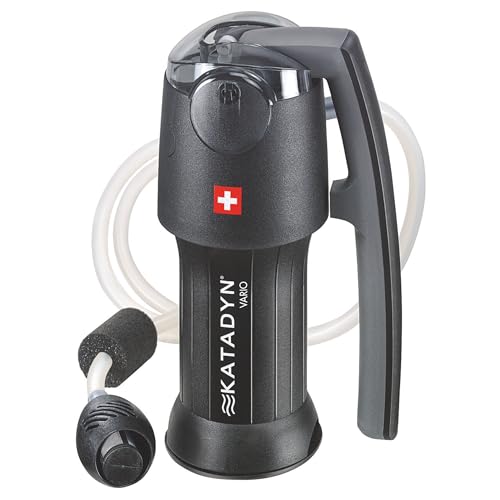
One dial switches this pump between fast fill and long filter life.
The dual-mode dial is the idea that makes sense. In Faster Flow mode the pump delivers up to 2 liters per minute for clear water. Turn it to Longer Life mode and a cleanable ceramic pre-filter takes on turbid or silty sources, protecting the main cartridge. The 3-stage build runs a 0.2-micron glass-fiber filter, the ceramic disc, and activated carbon granules, rated for up to 530 gallons. It weighs 15 ounces and connects to most bottles and hydration packs.
For a group, the speed is a gift. Fill six people’s bottles without the arm-ache of a heavy pump, and the ceramic pre-filter lets you keep going in murky water without clogging the main element. The 1928 heritage is not just marketing: Katadyn has been making water filters for hikers and aid workers for generations, and this one is built to travel. The included Nalgene-compatible base means you screw a bottle straight on and pump.
Two maintenance truths come up again and again. The exposed plastic inlet barb is the weak point, so pack it with padding and keep the cap on. And after use, the unit holds water and can take days to air-dry, so plan a bleach flush and a full dry before storage. The carbon granules need replacement sooner than the glass fiber. Treat it with care and it pumps for years — the ceramic disc even lets you scrub and reuse it.
The group-speed pick: up to 2 liters per minute with a mode dial that handles dirty water without killing the cartridge. That is a lot of clean water with modest effort.
Care and feeding: the inlet barb is easy to snap if packed loose, and drying takes days. Lube the O-rings, keep the cap on, and store it dry.
Made for: the group leader who wants fast fills and a filter that shrugs off silty sources.
Not ideal for: the solo hiker counting every ounce — it is compact but heavier than a straw.
10. Travel Berkey 1.5 Gal Gravity-Fed Water Filter System
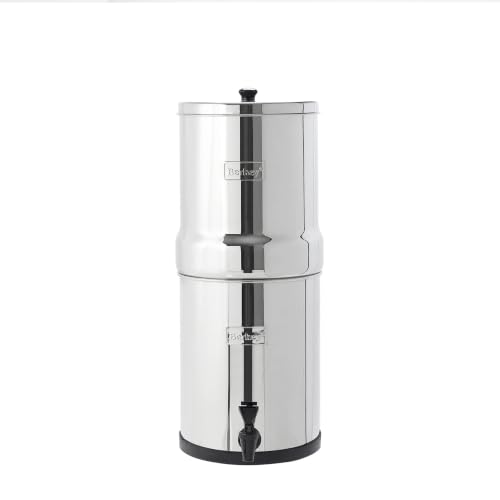
A polished steel gravity tower that filters a household’s water without power.
This is the everyday-drinking end of the spectrum. The Travel Berkey holds 1.5 gallons, serves roughly one to three people, and runs on gravity alone — no electricity, no plumbing, no water pressure. Two authentic Black Berkey Filter Elements remove or dramatically reduce 200+ common contaminants. Filtration runs up to 2.75 gallons per hour, and the pair of elements is rated for about 6,000 gallons combined before replacement.
The build is what you are paying to own for years. The chambers are polished AISI 304 stainless steel, 7.5 inches in diameter and about 18–19 inches tall assembled, with the upper chamber nesting inside the lower to store at about 12 inches. That makes it a genuine countertop fixture that also travels. Even after a power cut, the gravity feed keeps working, so it fits both home use and emergency backup in one unit.
The honest gripes are setup and speed. Assembly is hand-work but the printed instructions are hard to read, and a few owners hit a leaking spigot until they flip or add a washer. The flow is a patient drip compared to a pump. And if you want fluoride reduction, that is a separate add-on. But on taste, it is the standout — the review pages are near-unanimous that coffee, tea, and plain water taste dramatically better after the Berkey.
What makes it a fixture
- 6,000 gallons of combined filter life
- No power, plumbing, or pressure needed
- AISI 304 stainless steel chambers
- Up to 2.75 gallons per hour
Set your expectations
- Patient flow compared with a pump
- Instructions are hard to follow
- Fluoride needs a separate add-on
The everyday upgrade if: you want great-tasting water at home and a no-power backup in the same steel unit.
Look at a pump if: you need to fill bottles in seconds rather than let them drip full.
11. MSR Guardian Water Purifier

A military-spec pump that self-cleans on every stroke and never asks for backflushing.
This is the heavy-duty end of the list. The Guardian meets the NSF protocol P248 testing standard of the U.S. military, using medical-grade hollow fibers to stop viruses, bacteria, protozoa, and particulate from contaminated sources. It pumps at a rapid 2.5 liters per minute and treats up to 10,000 liters. It is built to withstand freezing, drops, heavy use, and harsh environments — the conditions that break lighter filters.
The self-cleaning action is the standout engineering. Every stroke clears the filter, so flow stays fast and you never backflush or scrub the element. Fast output of 2.5 liters per minute leaves the pump-style filters on this list behind — compare the Katadyn Vario at up to 2 liters per minute and the Survivor Filter at 500 ml per minute. If you are filling bottles for a team in the backcountry, the difference in arm effort is real. The storage bag uses a PFAS-free DWR coating to keep gear dry.
Two honest limits keep it from being the universal pick. It is heavier than a straw at 17.3 ounces, and it is priced at the top of this list. Owners who rely on it accept the weight as insurance for the confidence it brings. It has a limited 3-year warranty and is made in the USA. For a hard expedition or a serious global-travel emergency kit, that confidence is what you are buying.
The expedition answer: 2.5 liters per minute, 10,000-litres capacity, and no backflushing ever — this purifier is built for teams in tough conditions.
The one to own if: you run a team in rough country and want military-tested virus removal with zero maintenance fuss.
Overkill if: you are a solo weekend camper — a straw or a squeeze filter is far lighter and cheaper.
Know the Specs
Micron Rating and Pore Size
A micron is a millionth of a metre, and the rating tells you the size of the holes the water passes through. A 0.2-micron filter stops bacteria and protozoa but lets viruses slip by. A finer 0.02-micron purifier catches viruses too. A 0.02-micron rating on a survival system is the number that signals real virus removal.
Rated Capacity in Gallons or Liters
This is the total volume one cartridge handles before it slows and needs replacing. A pocket filter may be rated to 1,000 gallons, a family gravity unit to thousands of liters, and a pump at the top end to 10,000 liters. Match the rated gallon or liter count to the years you expect to depend on the cartridge, not to the sticker price.
Gravity vs Pump vs Straw
Gravity systems drop water through a membrane and need no effort, though they can be slow. Pumps trade arm work for speed and often push a couple of liters per minute. Straws are the lightest but make you work for each sip. A survival kit often carries one main system plus a straw or tablets as a backup.
What Each Method Removes
Mechanical filters catch organisms by size. Carbon stages also reduce chemicals, heavy metals, and taste from water. Chemical tablets disinfect but cannot remove toxins. Read what each pick leaves behind before you rely on it. If a source could carry industrial runoff, you need carbon and a finer membrane, not just a straw.
Common Questions
Will a water filter protect me from viruses in a survival situation?
Can I drink straight from a stream with a straw filter?
How long does a survival water filter cartridge last?
Can purification tablets be used with a water filter at the same time?
Do gravity water filters need electricity or a power source?
Is filtered water safe to store for later in an emergency?
What is the difference between a water filter and a water purifier?
Can these systems remove chemicals or heavy metals from water?
How do I clean and store a survival water filter between trips?
Which is better for a bug-out bag, a straw or a gravity system?
Can a water purifier handle muddy or flood water?
The Bottom Line
For most people building a survival kit, the water purification system for survival winner is the LifeStraw Personal Water Filter — a 45 g straw rated for 4,000 liters that needs no batteries and no pumping. It holds 4.5+ stars across a large base of owners and earns its place in any bag. If your household needs a steady, hands-off supply, the LifeStraw Family Gravity Purifier adds 0.02-micron virus removal and an 18,000-liter capacity. And for the toughest backcountry water, the MSR Guardian is the military-tested pump that self-cleans on every stroke.
How we choose
We do not accept paid placement. Every pick is matched to a real buyer and a real use-case; we do not hands-on test units.
Sources
Specifications: manufacturer listings and product documentation. Review insights: verified customer reviews, as of October 2026. Pricing: not shown on this page (it changes often); check the current price via the retailer link.
As an Amazon Associate, Aappliancez earns from qualifying purchases. This does not affect which products we feature.