Disclosure: Some links in this post are affiliate links. As an Amazon Associate I earn from qualifying purchases, at no extra cost to you. Learn more
Specs are compiled from manufacturer listings and verified buyer reviews and can change over time — please confirm the key details on the product page before buying.
If your lawn turns straw-brown every July, the fix is not more water — it is the wrong seed. Warm-season grasses are bred to thrive in heat, and the picks below are grouped by how you actually use them: quick winter color, fast fill for bald spots, or a durable permanent turf.
This guide is built by comparing the manufacturers’ published specifications and the patterns across verified customer reviews, so you get each pick’s real strengths and trade-offs instead of marketing spin.
Every bag here lists its own coverage, sun needs, and planting window, and those numbers decide whether you green up a patch or waste a weekend. This breakdown narrows the field to the few worth buying for warm season grass seed.
Top Picks

How To Choose The Best Warm Season Grass Seed
You are not really shopping for “grass seed” — you are shopping for a job. Are you covering a bald patch before a party, overseeding a tired Bermuda lawn for winter color, or starting a permanent turf you will live with for years? The job decides which bag wins, and it also decides whether the coverage number on the front is the one that matters.
Know the difference between overseeding and new lawn coverage
Every serious bag prints two coverage figures, and mixing them up is the single most common reason a lawn comes up thin. Overseeding coverage tells you how far the bag stretches when you are sprinkling into existing grass to thicken it. New lawn coverage is the smaller number, because bare ground needs a much denser seed rate. If you are seeding a cleared patch, use the new-lawn figure, or you will under-seed and stare at bare dirt.
Match the seed type to your season and region
Annual ryegrass is a fast, temporary grass — brilliant for winter color in the South or a quick green cover while a permanent lawn fills in, but it dies back when the heat arrives. Warm-season grasses like Bermudagrass are the opposite: they love summer, spread aggressively, and go dormant and brown through winter. Fine fescue is a cool-season workhorse that handles shade and traffic. Pick the type that matches the season you are actually seeding in.
Check germination speed against your timeline
If you need green in a matter of days, germination speed is everything, and the fastest bags advertise results in under a week. Slower, denser turfs can take weeks and reward patience with a thicker, longer-lived lawn. Be honest about how long you will keep watering — a fast seed you stop watering is still dead seed.
Side-by-Side Comparison
| Model | Best For | Bag Weight | New Lawn Coverage | Germination Speed | Amazon |
|---|---|---|---|---|---|
| Pennington Annual Ryegrass, 10 Lb★ Best Overall | Fast winter color and quick fill | 10 pounds | Up to 2,000 sq. ft. | 3 to 7 days | Amazon |
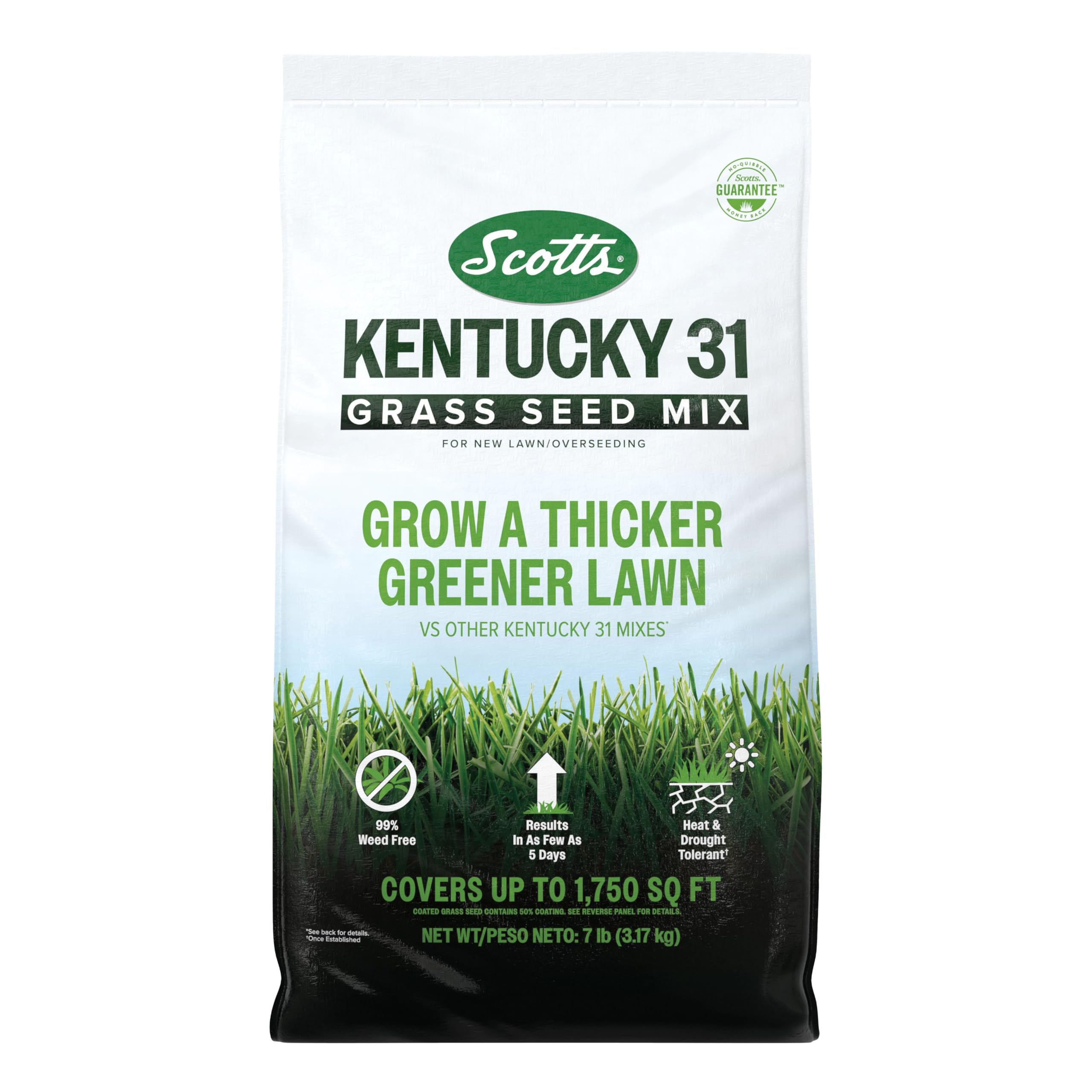
| Scotts Kentucky 31 Grass Seed Mix, 7 lbs.Fastest Sprout | Sun to moderate shade, heat and drought | 7 pounds | 580 sq. ft. | As few as 5 days | Amazon |
| Scotts Turf Builder Grass Seed Sunny Mix, 2.4 lbs. | Small sunny patches with root nutrition | 2.4 pounds | 360 sq. ft. | — | Amazon |
| Pennington Bermudagrass, 5 lb | Permanent southern turf that spreads | 5 pounds | — | 7 to 10 days | Amazon |
| Outsidepride Legacy Fine Fescue, 5 lbs. | Shade, traffic, and pure raw seed | 5 pounds | — | 7 to 9 days | Amazon |
Detailed Reviews
1. Pennington Annual Ryegrass, Grass Seeds for Lawn, 10 Lb
Our pick — 4.0+★ from 1,000+ verified ratings; the strongest balance of quality and price.
The fast winter fix that greens a bare southern lawn in under a week
When you want color on the ground fast, this is the bag the crowd reaches for. It is annual ryegrass — a quick, temporary grass built to throw green up in a hurry, advertised as showing results in 3 to 7 days. Read the label right and that speed makes sense: it is for overseeding southern lawns to hold green through winter, and for propping up thin northern lawns while a permanent grass gets established.
Three things decide whether it works for you. First, light — it wants 6 to 8 hours of full sun. Second, warmth of use case: it is ideal over Bermuda and Zoysia for a winter blanket of color. Third, the size math — a 10-pound bag covers up to 2,000 sq. ft., which is the most ground of the fast-color bags here. It resists disease and stands up to foot traffic, so it holds in a busy yard.
What wins people over is speed and thickness together — buyers report seed sprouting within a couple of days in one case and a full, green carpet by day four. The recurring gripe is honesty about appearance: this is a winter fill grass, not a showpiece. As buyers put it, it “grew very quickly” but is “not as pretty as other grasses” — exactly what you expect from a temporary rye standing in for a permanent lawn.
Why it earns the top spot
- Covers up to 2,000 sq. ft. from a 10 lb bag — more ground than the Scotts Sunny Mix at 1,080 sq. ft. of overseeding
- Results listed in 3 to 7 days for the quickest visible green
- Holds up under foot traffic and resists disease
- Ideal for overseeding Bermuda and Zoysia for winter color
Where it stops short
- Annual type, so it dies back — it is a fill-in grass, not a forever lawn
- Needs 6 to 8 hours of full sun, so heavy shade is out
- Plain green rather than a deep showpiece color
The verdict: the best all-rounder if you want fast, thick winter color across a big southern lawn.
Think twice if: you want a permanent turf or your yard is mostly shaded.
2. Scotts Kentucky 31 Grass Seed Mix, 7 lbs.
A three-grass blend built to shrug off heat and drought once it takes hold
The headline here is a curated blend, not one seed. This mix combines Premium Tall Fescue — dense and dark green with heat and drought tolerance — with Annual Ryegrass for quick growth and Kentucky 31 Tall Fescue for durability and low maintenance. It is the pick for a lawn that takes real summer heat and drought and needs to come back. Results are listed in as few as 5 days, the fastest sprout of any pick here.
The coverage numbers are where this bag asks you to plan. A 7 lb bag gives 580 sq. ft. of new lawn coverage but stretches to 1,750 sq. ft. when overseeding — that is 62% more overseeding ground than the Scotts Sunny Mix at 1,080 sq. ft. The stretch comes from seed weight: 7 pounds here versus 2.4 pounds in the Sunny Mix. Buy it to thicken an existing lawn, not to carpet bare ground unless you buy multiple bags.
Honesty matters with this one, because germination feedback is genuinely mixed — some lawns come up thick and lush, others come up patchy, which often tracks back to soil prep and watering rather than the seed itself. The look, when it lands, is the strong point: a dense, dark-green finish. It also tolerates moderate shade, unlike the sun-only bags — good news for a yard with a tree line. Plant in spring or fall when average daily air temperature sits between 65°F and 85°F.
Planting window is the real rule: 65°F to 85°F average air temperature, spring or fall — seed it outside that window and you are fighting the calendar.
Reach for this if: you have heat and drought pressure plus partly shaded areas and want quick sprouting.
Look elsewhere if: you are seeding bare ground, where 580 sq. ft. of new-lawn coverage runs out fast.
3. Scotts Turf Builder Grass Seed Sunny Mix, 2.4 lbs.
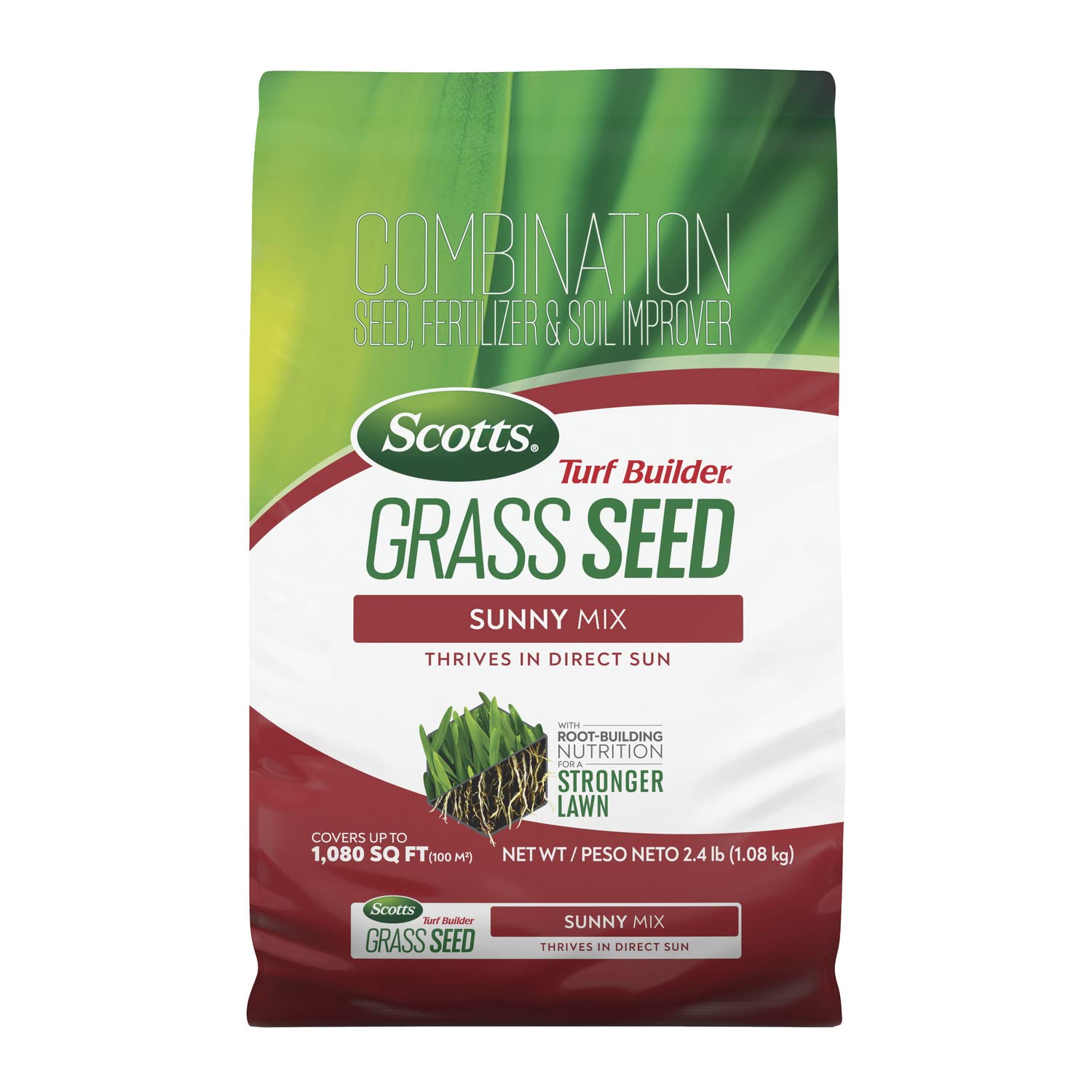
The patch bag that brings seed, fertilizer, and soil improver in one spread
Some jobs are small — a worn spot by the driveway, a strip that never filled in. This mix is built for exactly that. Its Root-Building Nutrition formula combines seed, fertilizer, and soil improver in the bag, which means you are feeding the lawn and prepping the soil in the same pass rather than buying three products. It thrives in direct sun, tolerates light shade, and carries medium to high drought resistance with medium to high durability.
The numbers are for a repair, not a field. New lawn coverage is 360 sq. ft. and overseeding coverage is 1,080 sq. ft. from 2.4 pounds — compare that to the Kentucky 31’s 7 pounds, which is nearly three times the seed weight. Smaller bag, smaller job; that is the trade you accept for the bundled nutrition. You seed in spring or fall, for a new lawn or overseeding.
The thing everyone raves about is how stubborn it is once established — dark green and thick, and it grew over scraped pavement and just 2 inches of dirt in three months, spreading aggressively until it nearly filled the target area. Germination feedback is mixed, with some quick growth and some slow starts. The slow-start crowd gets a durable, thick grass regardless, as one buyer summarizes: “Grows slow but very durable thick grass.”
The bundled formula is the edge: seed, fertilizer, and soil improver together means fewer trips and less guessing on bare or tired soil.
The one to grab: for spot repairs and small sunny sections where convenience beats maximum yardage.
Skip it when: you are seeding a whole lawn — 360 sq. ft. of new-lawn coverage is a patch, not a yard.
4. Pennington Bermudagrass Southern Grass Seeds for Lawn, 5 lb

A wear-resistant summer turf that crawls outward to fill its own gaps
If you want a permanent southern lawn that repairs itself, Bermudagrass is the breed to know. This one is aggressively self-spreading, wear-resistant, and built with a deep root system plus improved cold-tolerant varieties. Its low-growing blend throws fewer clippings, so you bag less on mowing day. At 5 pounds it is half the weight of the Pennington Annual Ryegrass at 10 pounds, so plan your coverage accordingly.
Set expectations on two things. The color comes on strong — owners mention a vibrant finish after germination in 7 to 10 days — and the plant is winter-dormant, meaning it turns brown out of season on purpose. That brown winter lawn is the breed working as designed, not a failure. Bermudagrass also rewards prep: loose seed-to-soil contact, a starter fertilizer, and consistent watering for roughly three weeks, and it dislikes being seeded in the hottest stretch.
Germination is where this bag splits opinion. Handled right, it sprouts within a week and even withstood brutal Texas heat while sprouting, coming up thick with good color. Handled wrong — planted too hot or under-watered — it can disappoint, which is the fair risk with any Bermuda. When you want really full coverage, the makers’ rate matters: one buyer bypassed the standard light rate and sowed 3 lbs. over about 500 feet instead of stretching 5 lbs. over 5,000 square feet.
The prep determines everything: soil contact, a starter feed, and about three weeks of steady watering turn this from a coin-flip into a lawn.
Best fit: a sunny southern yard that wants a spreading, traffic-tough turf that comes back year after year.
Not for you if: you want green through winter — this grass goes dormant and brown by design.
5. Outsidepride Legacy Fine Fescue Grass Seed Mix, 5 lbs.
A pure, no-filler fescue blend for shade and heavy foot traffic
For a lawn that lives under trees or takes a beating, the fine fescues are the answer, and this mix is unusually honest about what is in the bag. It is 100% pure, raw seed with 0.00% other crop and weed seed — no fillers, no coatings — blending 40% Chewings Fescue, 40% Creeping Red Fescue, and 20% Hard Fescue. It handles full sun to dense shade and, once established, tolerates heavy foot traffic and drought.
Fine fescue is a different animal from the fast southern grasses. It wants constant moisture for more than 90% germination and typically sprouts in 7 to 9 days. Growth is slow and deliberate, and the payoff is texture: a soft, uniform, fine-leafed turf with an emerald green that reads brighter than other fescues. It tolerates 5 to 6 hours of afternoon sun and dislikes drought, so water discipline is non-negotiable. It is also low-maintenance and responds only mildly to fertilizer.
The catch is soil and patience. On high-organic soil it knits into a dense mat; on clay or low-organic ground it can come up spotty — which is why some lawns underperform while others thrive. A few report weeds, though that often traces back to the underlying topsoil rather than the seed, since this bag itself carries 0.00% weed seed. Read the labeling before you blame the turf.
Pure seed, real standard: 0.00% other crop and weed seed is the cleanest spec on this list — a genuine point of difference for weed-averse lawns.
The shade and traffic champion: for tricky lawns under trees or with constant footfall, the pure fescue blend is the right tool.
Know before you buy: it needs steady moisture and patience — slow growth means an under-watered patch will not rescue itself.
Know the Specs
New Lawn vs Overseeding Coverage
These are the two numbers that decide how far a bag actually goes, and they are never the same. New lawn coverage is the bare-ground rate — a denser spread that costs you more seed per square foot. Overseeding coverage is the lighter rate for sprinkling into existing grass. On the Scotts Kentucky 31 mix, for example, one 7 lb bag covers 580 sq. ft. as a new lawn but 1,750 sq. ft. when overseeding. Always pick the figure that matches your job, or you will either waste seed or end up with a patchy lawn.
Germination Speed and Days to Green
Germination speed is simply how fast you see green after sowing, and it is the number that matters when you have a deadline. Annual ryegrass lists results in 3 to 7 days, while the slower fine fescue blend needs 7 to 9 days and rewards patience with a denser, longer-lived turf. Fast seed is not automatically better — a quick winter rye dies back, while a slow permanent grass is still there next year. Match speed to what you actually need the lawn to do.
Common Questions
Is annual ryegrass the same as Bermudagrass for a warm-season lawn?
Why does my Bermudagrass turn brown in winter?
How much grass seed do I need for overseeding versus a brand-new lawn?
Can I plant warm season grass seed in spring instead of summer?
Which warm season grass seed grows fastest for a quick green lawn?
Does grass seed need full sun to grow?
How long should I keep watering new warm season grass seed?
Is it better to overseed or start a new lawn from scratch with warm season grass seed?
What does 0.00% other crop and weed seed mean on a grass seed bag?
Why did my warm season grass seed not germinate?
The Bottom Line
For most lawns, the warm season grass seed winner is the Pennington Annual Ryegrass, because it delivers the fastest, thickest green across the biggest coverage — up to 2,000 sq. ft. from a 10 lb bag — making it the safest bet for winter color and quick fill. If heat and drought are your real enemy and you want a durable sun-to-shade mix, grab the Scotts Kentucky 31 Grass Seed Mix. And for a permanent southern turf that spreads itself, the Pennington Bermudagrass is the one to reach for — just accept that brown winter lawn as the breed working as designed.
How we choose
We do not accept paid placement. Every pick is matched to a real buyer and a real use-case; we do not hands-on test units.
Sources
Specifications: manufacturer listings and product documentation. Review insights: verified customer reviews, as of October 2026. Pricing: not shown on this page (it changes often); check the current price via the retailer link.
As an Amazon Associate, Aappliancez earns from qualifying purchases. This does not affect which products we feature.