Disclosure: Some links in this post are affiliate links. As an Amazon Associate I earn from qualifying purchases, at no extra cost to you. Learn more
Specs are compiled from manufacturer listings and verified buyer reviews and can change over time — please confirm the key details on the product page before buying.
If your Achilles tendon aches with every step, the shoe on your foot is doing more damage than you think. A stiff, low heel and a sole that fights your natural roll both load that tendon on every stride. The right walking shoe does the opposite: it cushions the landing, keeps the heel steady, and rocks you forward so the tendon does not have to pull. Below are nine picks that do exactly that, plus the honest limits of each one.
This guide is built by comparing the manufacturers’ published specifications and the patterns across verified customer reviews, so you get each pick’s real strengths and trade-offs instead of marketing spin.
Heel pain changes how you walk, and the wrong pair can keep the cycle going. Here is what to check before you buy walking shoes for achilles tendonitis.
Top Picks

How To Choose Walking Shoes for Achilles Tendonitis
Walking with an irritated Achilles tendon punishes two things: impact on landing and how far your heel has to reach down to the ground. Every choice below targets one of those. You do not need to memorise the spec sheet — you just need to know which lever you are pulling.
Cushioning at the heel comes first
The tendon sits right at the back of your heel, so that is where the shock lands. A thick, soft heel takes that hit before it travels up the back of your leg. Of everything on the spec sheet, heel cushioning is the feature worth paying for first.
Look at the drop and the rocker
Drop is how much taller the heel sits than the toe. Walkers with heel trouble generally do better in a shoe with a gentle drop rather than a steep ramp, because it does not force the tendon into a long stretch on every heel strike. A rocker sole works alongside it: the sole curves up at the toe so the shoe rolls you forward instead of you having to push off and flex the tendon yourself.
Stability frame or neutral cushion?
If your foot rolls inward heavily (overpronation), a stability shoe steadies that roll and keeps the load moving in a straight line. If your foot is neutral or you just want softness, a cushioned neutral shoe is the friendlier walk. Neither frame is better on paper; your own pronation decides which one you need.
Fit beats a fancy spec sheet
Multiple picks in this category are reported to run about half a size small. That matters because a shoe that crowds your toes forces your stride into an awkward hitch, which the tendon then has to absorb. A wide toe box plus a removable insole gives you room to swap in your own orthotic and still sit snug at the heel.
Side-by-Side Comparison
| Model | Best For | Weight | Stated Toe Box / Width Notes | Style Focus | Amazon |
|---|---|---|---|---|---|
| Brooks Men’s Glycerin Max Neutral★ Best Overall | Best overall for long days on your feet | 3 pounds | Roomy toe box reported | Neutral max cushion with rocker feel | Amazon |
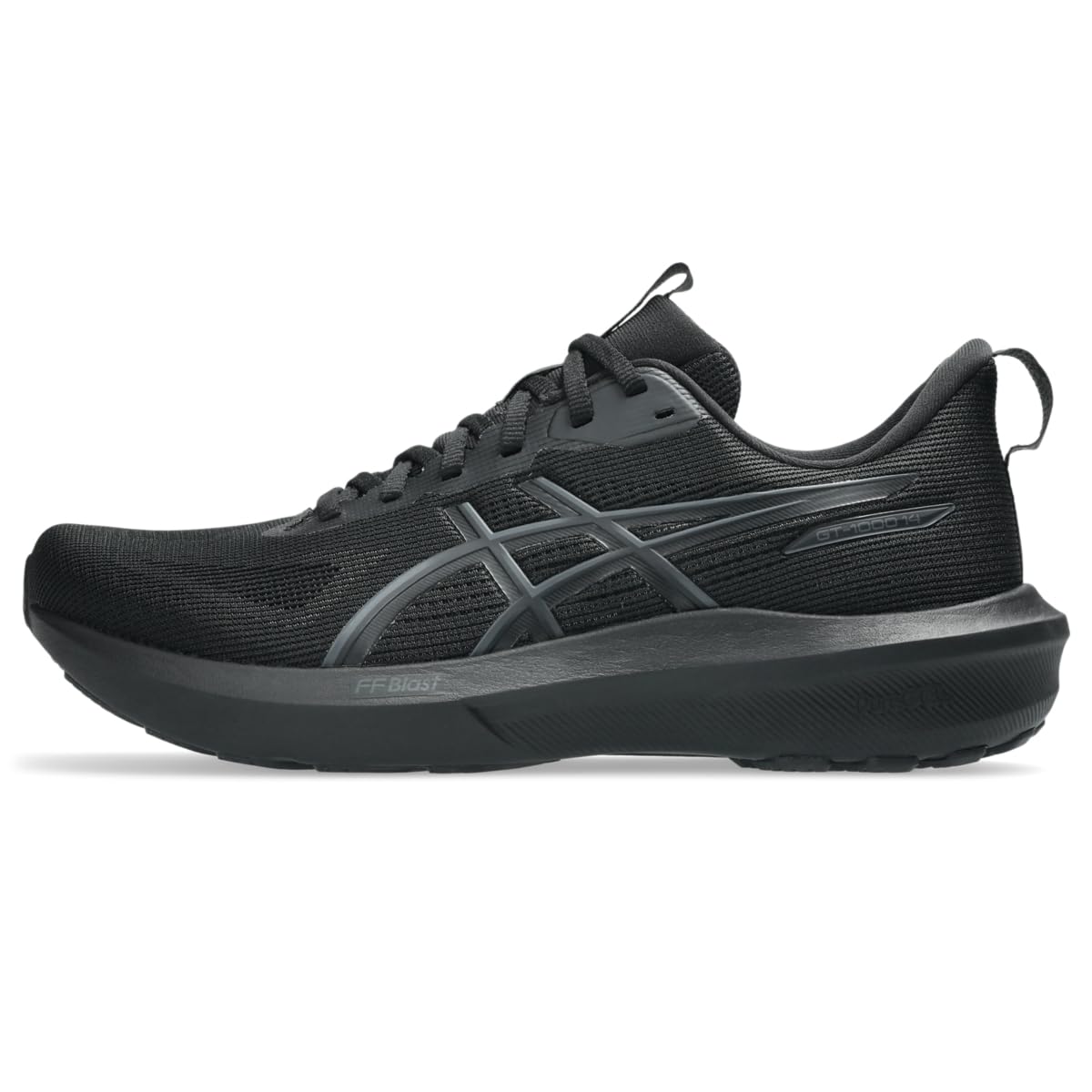
| ASICS Men’s GT-1000 14Best Stability | Support for feet that roll inward | 1.44 pounds | Wide sizes offered | Stability trainer | Amazon |
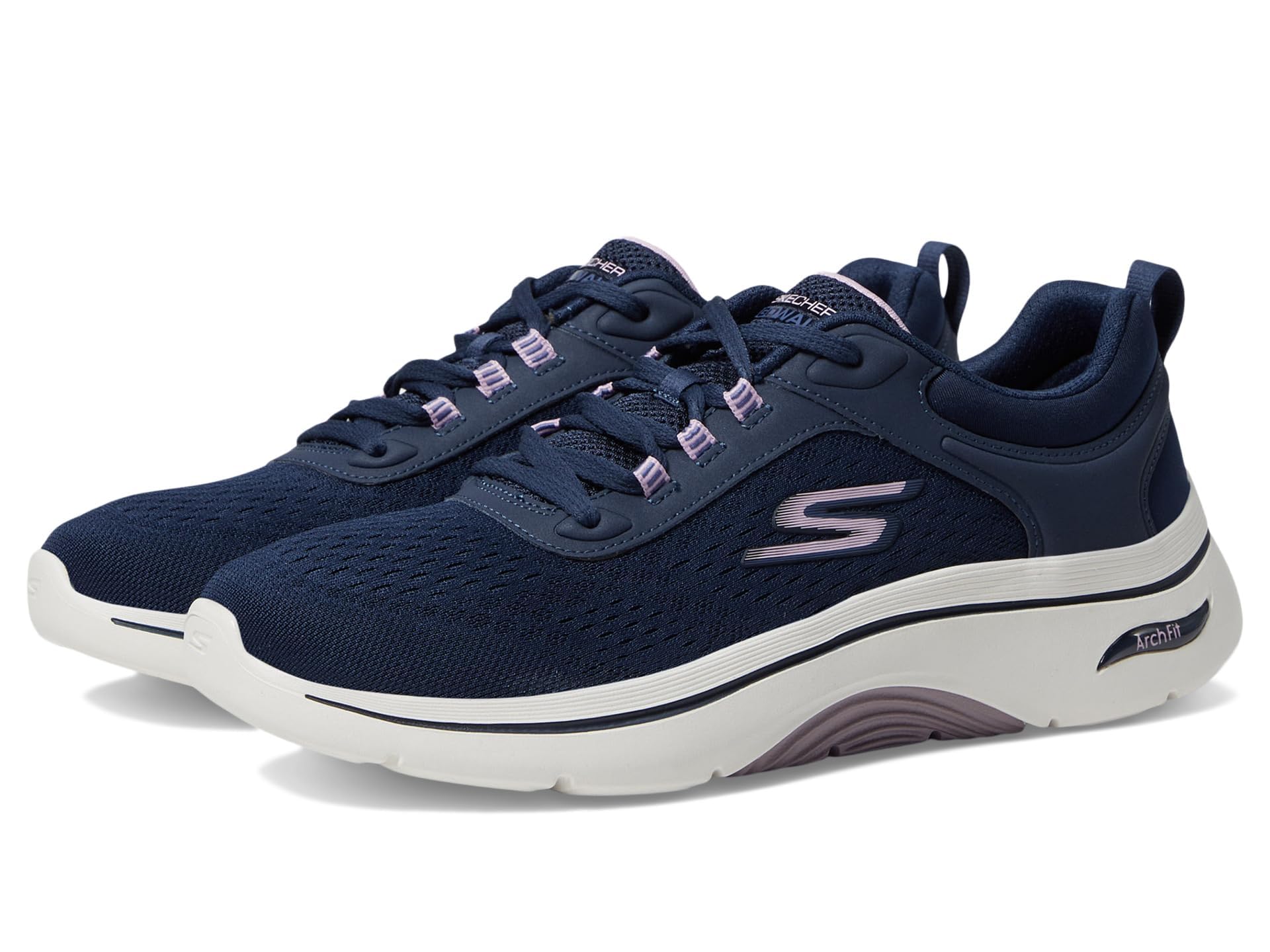
| Skechers Women’s Go Walk Arch Fit 2.0 BalinBest Value | Arch support on a budget | 1.5 pounds | Lace-up style reported | Arch Fit walking sneaker | Amazon |
| Brooks Women’s Ghost Max SE | Clinical and hospitality shifts | — | Tighter toe box than mesh versions | Leather upper walking shoe | Amazon |
| Brace Direct Full Shell Walking Boot | Post-injury immobilisation | — | Size chart X-Small to X-Large | Air-bladder fracture boot | Amazon |
| Orthofeet Tilos Orthopedic Sneakers | Swapping in custom orthotics | — | Extra-wide, extra-deep toe box | Orthopedic sneaker with inserts | Amazon |
| Brooks Women’s Ariel GTS 26 | Ankle support and stability | 1.5 pounds | Wide toe box | Stability running shoe | Amazon |
| Brooks Men’s Beast GTS 26 | Heavier walkers needing a wide base | 1.5 pounds | Standard D box felt narrow at midfoot | Stability with guard rails | Amazon |
| Brooks Women’s Glycerin 23 | Soft max cushion for pavement | 1.5 pounds | Roomy toe box | Neutral max cushion | Amazon |
Detailed Reviews
1. Brooks Men’s Glycerin Max Neutral Running & Walking Shoe
Our pick — 4.5+★ from 600+ verified ratings; the strongest balance of quality and price.
The cushioned heel that makes a concrete floor feel a whole lot softer underfoot.
Start with the number that defines this shoe: a listed weight of 3 pounds. That is heavy for a walking shoe, and it tells you where the bulk went — into a thick, deep cushion under the heel. For a sore Achilles tendon, that is the trade you want. The landing gets absorbed first, so less of it reaches the back of your leg. Walkers on hard surfaces describe the ride as a long stretch of support rather than a fight, and that holds even when they are standing for a shift rather than strolling.
What wins people over is comfort, and the way the shoe keeps its shape over months of use. Buyers report in plain terms: “What a shoe! bought them almost 2 years ago and still working with me on day shifts untill now. low wear signs, easy to wash, so confortable.” The shape that matters here is the rocker-style curve, which rolls your foot forward instead of making you push up onto your toes and flex the tendon. People dealing with knee and ankle trouble describe the same thing — the sole is soft on purpose, but it rebounds on the way through instead of sinking.
Weigh that against the honest limit. If you overpronate heavily, this is a neutral shoe and it will not grip and steer your foot the way a stability model does. A few walkers also want more built-in arch than it offers and end up slipping an insole in. Neither kills the pick — it just means the Glycerin Max suits the neutral-footed walker who wants cushion and roll above everything else.
What walkers keep coming back for
- A listed 3 pounds of shoe, with the mass sitting in a deep, soft heel cushion that softens hard-surface landings.
- The rocker-style sole rolls you through each step, taking push-off load off the tendon.
- Holds up through long days and washes down easily, so it stays presentable for work wear.
- Neutral build that suits most walkers who do not roll inward badly.
What to know before you commit
- At 3 pounds it is far from featherweight, and some walkers will notice it.
- Not a stability shoe, so heavy overpronators should look elsewhere.
- You may want to add your own insole if you need more arch fill.
Go for it when: you want the most cushion under a sore heel and your foot stays fairly neutral through the stride.
Pass it over if: your foot rolls hard inward and you need a stability frame to catch that roll.
2. ASICS Men’s GT-1000 14 Running Shoes
A stability trainer light enough to wear all shift, with a heel that steadies the roll.
Here is the contrast that makes this one stand out: the GT-1000 14 is listed at 1.44 pounds, and the Glycerin Max above tips the scale at 3 pounds. That is a big gap in feel on your foot, and it matters if you are up and moving for hours. The GT-1000 puts a support frame around a foot that rolls inward too much — the company’s own listing calls out overpronation by name — so the stride travels straight instead of dumping load on the inside of your heel and up the tendon.
The thing buyers rave about is build quality, with long-time wearers saying they keep rebuying the same shoe. One buyer’s note in full: “So far so good. I went on an 8 mile run with them to break them in and they felt good. I wear a 10 1/2 wide and that’s what I ordered and the fit was what I had hoped for.” Walkers who spend all day on concrete or gravel describe the GT-1000 14’s heel cushion as generous and its upper as long-lasting. A wide-size option helps if your toes need room but your heel still needs to stay put.
The catch is durability at the sole. Some owners mention the sole edge peeling up over time, so this is not the longest-lived shoe on the list — worth knowing if you log heavy mileage every week. Fit is the other watch item: plenty of owners go half a size up, and one notes the tongue can slide slightly off-centre. Neither is a reason to skip it, just a reason to check the size chart.
Where the value sits: You get dedicated overpronation support and a wide-size option in a 1.44-pound shoe, which is a strong balance of cushion and lightness for all-day wear.
The one to keep in mind: Sole separation is mentioned by some owners, so treat the tread as the part that will wear first.
The right call for you if: your foot rolls inward, you need a wide fit, and you want a light shoe for long stretches on your feet.
Think twice if: you want the absolute softest, most pillowy heel cushion on the list.
3. Skechers Women’s Go Walk Arch Fit 2.0 Balin Sneaker
Arch support that stays put, washable, and gentle on the wallet for daily walking.
If your flat feet or high arches leave you guessing which shoe’s insole to trust, the Arch Fit line is the one to look at. That insole carries a podiatrist-certified arch support label, and it sits on a lightweight ULTRA GO cushion layer with comfort pillars under the heel. At 1.5 pounds it feels light and breathable over long walks, and the engineered mesh upper lets air through.
What gets praised most is the comfort, and it shows up in walkers who need it. Customers note: “Absolutely one of the best feeling shoes I have ever worn. It’s hard to find good shoes for me because of flat feet, no arch, and plantar fasciitis.” Long-time wearers say a pair lasts roughly nine months of regular walking, and the shoe can be washed and quick-dries. It also slips on easily with the tie-up laces, which helps on days when bending to lace is a chore.
The honest issue here is comfort consistency — occasionally a unit arrives with a hard lump in one shoe. Treat that as a batch fluke rather than the norm, and check the fit quickly after it arrives. Also note the Arch Fit line’s slip-on designs are not great for narrow heels, so the laced version here is the better choice if your heel tends to lift.
The core of it: A podiatrist-certified arch-support insole, a 1.5-pound weight, and a washable mesh upper make this a practical everyday walker, and the laced build avoids the heel lift of the slip-on versions.
Worth checking on arrival: A hard spot underfoot is occasionally reported, so walk in them straight away.
Best for: women who want certified arch support, a breathable fit, and a shoe that can go in the wash without a big spend.
Not the one if: you need a deep, plush heel cushion specifically for tendon pain — this leans more on arch support than heel softness.
4. Brooks Women’s Ghost Max SE Walking Shoe

A cushioned leather walker built for the kind of shift that never lets you sit.
For nurses, clinicians, and anyone on their feet for a full shift, this leather version of the Ghost Max balances cushion underfoot with a support feel that keeps your stride steady. The thing people come back to is the fit once it is right — walkers in clinical work describe finishing six to seven hours and still feeling good in the feet. The airy bottom gives a lively walk rather than a dead, mushy one, which helps the tendon roll through the step instead of stalling.
Now the part you cannot skip: this shoe runs small. Reviewers point out going a half size up and occasionally a full size, and a narrow toe box can pinch sensitive spots like a tailor’s bunion. Because the upper is leather, it also starts firm and needs breaking in — and heat drying can shrink it back, taking weeks to stretch out again. Warm, dry storage and a patient first week go a long way.
If you have a sensitive foot and want the roomiest feel, the mesh version of this shoe is often the better fit. The leather here wins when you want a dressier look for the workplace and a firm, structured hold around the heel.
The draw for shift workers
- Cushioned sole that carries you through long standing shifts with the support still intact.
- Leather upper gives a tidy, dressier look for the workplace.
- A lively, airy bottom underfoot rather than a flat and lifeless base.
Where it fights back
- Reported to run small — go up half a size to be safe.
- Leather upper is stiff at first and needs a break-in period.
- Do not heat-dry it, or it will take weeks to stretch back to shape.
Reach for it when: your job keeps you standing and you want a leather walker that looks presentable and cushions the day.
Leave it if: your toes need a wide, soft toe box from day one — the mesh version will fit you more kindly.
5. Brace Direct Full Shell Walking Boot
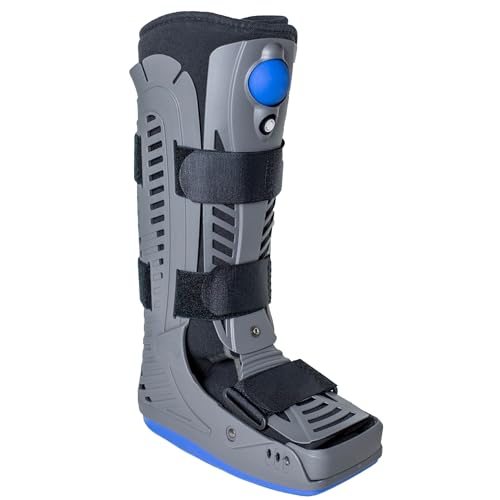
The rigid walking boot that gets you moving again while the tendon heals.
This is not a sneaker and it is not trying to be. It is a full-shell walking boot with an inflatable air bladder — a pump-up pad that tightens the shell around your ankle for a custom fit and steady compression — and it is built specifically for recovery from Achilles tendon ruptures, stable fractures, and severe ankle sprains. When the tendon is too tender for a soft shoe, a stiff, tall shell takes the load off the joint so you can take weight again.
The plain-shell design makes it usable, too. Three straps make it quick to get on and off, and the ventilated outer shell keeps the fit from turning into a sauna on longer days. An owner describes the trade directly: the boot is a bit stiff, but that rigidity is the point — it is the firmness that lets you walk with less pressure on the injured spot. Brace Direct also offers a free video fitting session with a fitting professional, which helps if you are unsure which size to order.
Mind the sizing chart carefully — it maps women’s and men’s sizes to X-Small through X-Large, and the wrong shell size undercuts the whole point. Pair it with your clinician’s guidance on how long to wear it. This is a recovery tool, not a walk-around-town shoe.
What it does well: An inflatable air bladder that dials in compression, three straps for easy on and off, and a ventilated shell — all aimed at keeping a healing ankle stable while you take weight.
What it is not: It is a rigid shell, so it feels stiff from the first step. That stiffness is the whole job.
The right tool for: someone recovering from an Achilles rupture, fracture, or severe sprain who needs immobilisation and adjustable compression.
Not what you want if: you can already walk in a soft shoe — a sneaker will be far more comfortable for that stage.
6. Orthofeet Tilos Orthopedic Men’s Sneakers

Extra-deep sneakers with spare inserts, so your own orthotic finally sits right.
The reason this pair earns a spot: it ships with multiple inserts and spacers — up to four in one account — so you can tune the support and the height under your foot rather than accept whatever padding the factory glued in. A slip-on build means your heel slides in without bending, and the extra-width, extra-deep toe box gives a sore, swollen, or bunion-prone foot the room it needs. That deep fit is also what lets you drop in your own prescription orthotic, which most sneakers will not accept.
Walkers who have tried other brands describe these as the most comfortable all-day pair they have owned, and the adjustability is the star of the show. People dealing with calluses and other foot trouble say the shoe still shows little wear after months of use. Squeaking can pop up on some hard floors, and inserting the included plastic arch booster often solves it and adds support at the same time.
The sizing is forgiving but loose — some wearers need the included 1/8 and 1/16 risers to firm up the hold, and others find it runs half to a full size big. The styling is plain and practical, more clinical than stylish. If your priority is a foot-friendly fit with room for orthotics, that trade is worth it.
Why orthopedic-shoe buyers pick it
- Comes with stackable inserts and spacers so you can dial in the support and fit.
- Extra-depth, extra-wide toe box leaves room for your own orthotic.
- Slip-on entry and a pressure-free fit help on days when bending is hard.
What to expect honestly
- May run half to a full size big, so check with the included risers.
- Reported to squeak on some floors until the arch booster is added.
- Plain styling that will not win a fashion vote.
For the walker who: wears their own orthotic or needs a wide, deep toe box and does not mind a plain look.
Not for the walker who: wants a sleek-looking sneaker or a firm, snug fit from the start.
7. Brooks Women’s Ariel GTS 26 Running Shoe
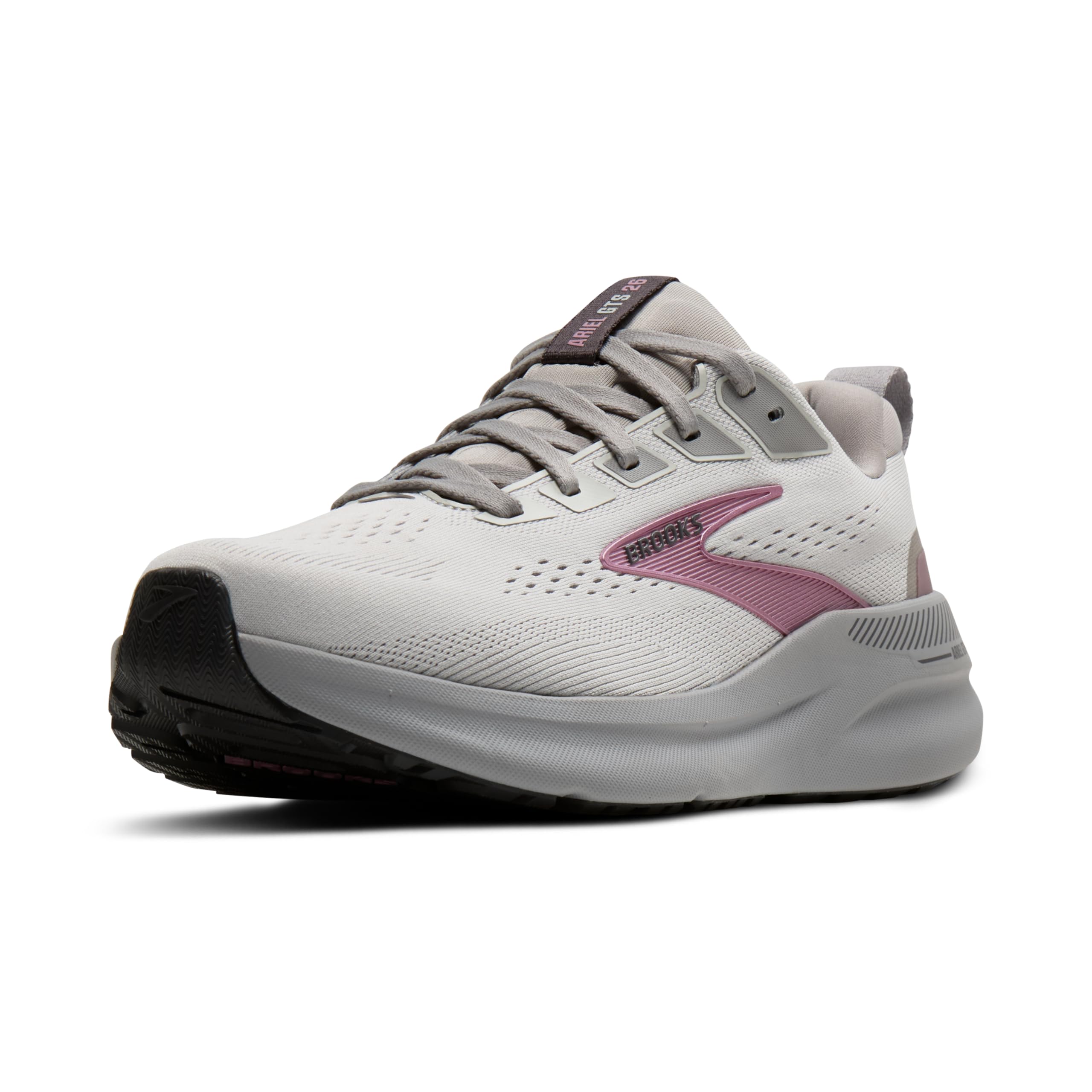
The stability shoe that keeps a weak ankle steady and a wide toe box open.
For a walker with a weak ankle or a post-surgery brace, plain support is not enough — the shoe has to keep the whole foot from rolling. The Ariel GTS 26 is a stability model built to do that, and it earns its place with a genuinely wide toe box. After serious foot surgery, one buyer who has to fit an in-shoe ankle brace says the wide toe box is what made it work, and the shoe has no pain through the day. The cushioning is balanced from heel to toe, so you do not get a soft heel that leaves your ankle wobbling at the front.
What wins people over is comfort, with wearers reporting zero pain when walking and a steady, balanced stance. The look draws compliments too, so it does not read as a medical shoe. For a stability pick, it feels notably lighter than a bruising work boot while still steering your foot.
The honest limit: toe durability is mixed. Some owners say the toe area dents, and a reported squeak on the wide version bothers a few walkers. It also may not be enough for a severe overpronator who needs the firmest possible frame — check that against your own foot before committing.
The real strength: A wide toe box that takes an in-shoe brace, plus stability cushion balanced heel to toe for a foot that needs steering.
The honest limit: The toe area is reported to dent on some pairs over time, and the wide version can squeak.
Choose it if: you need a stable, wide shoe that will take a brace or orthotic and keep your ankle from rolling.
skip it if: your pronation is severe enough that only the firmest frame will do.
8. Brooks Men’s Beast GTS 26 Running Shoe
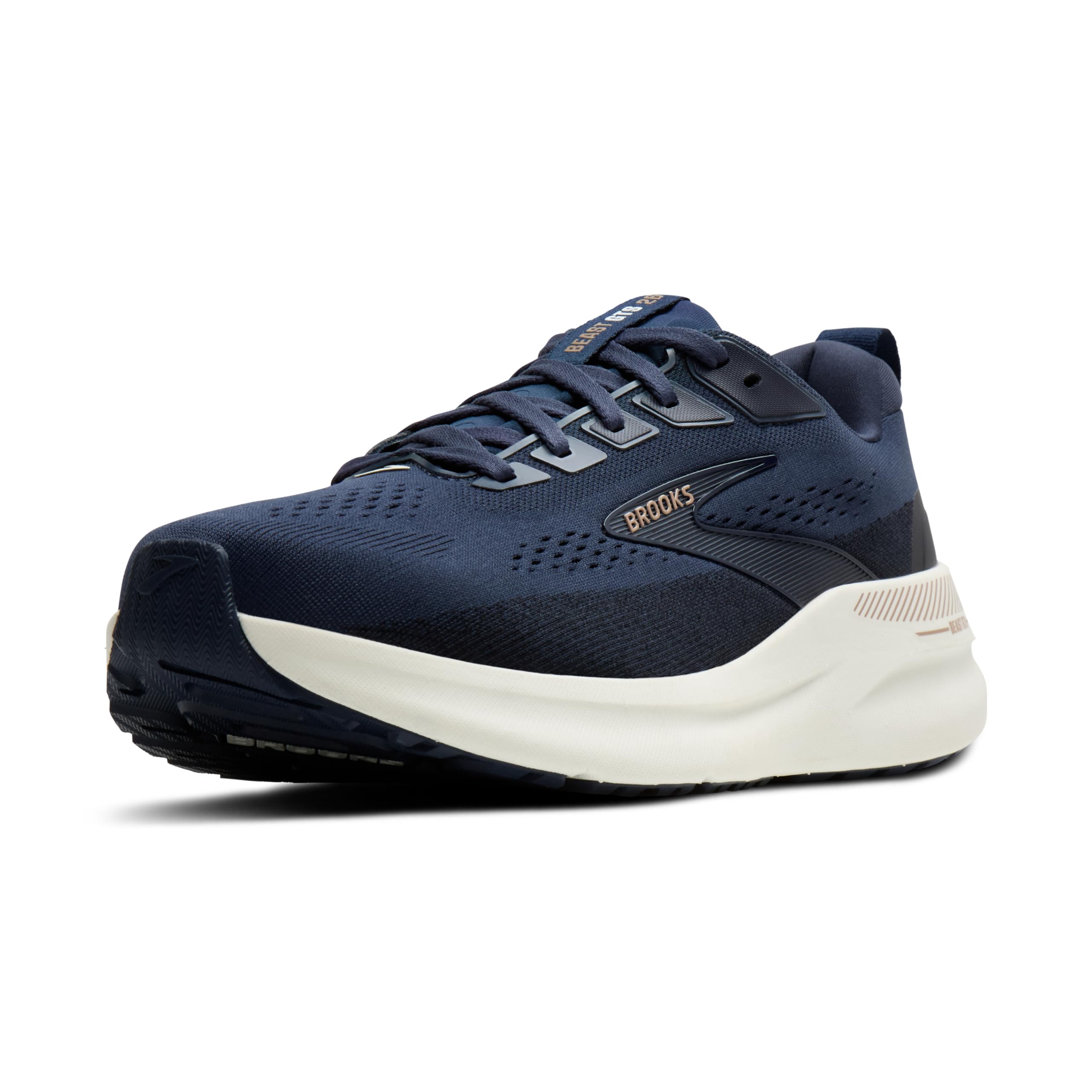
A wide, planted platform with guard rails for bigger walkers who roll at the ankle.
When you carry more weight and your feet roll inward or outward, a light shoe can feel like standing on a rolling pin. The Beast GTS 26 answers that with a firm, non-bouncy foam and a wide base, plus guard rails and heel support that keep the foot from tipping sideways. That last part matters for a sore Achilles, because a foot that tips forces the tendon to fight for balance on every step. Flat-footed, heavier walkers report it makes the shoe feel planted instead of wobbly.
The thing this shoe is praised for is its build, with owners describing it as well made and durable through heavy daily use. It fits a wide, flat foot well, and the padded collar and tongue keep it comfortable at the ankle. The tread is grippy, and the interior sole has a contoured feel under the arch.
The catch you need to hear: it is relatively heavy by nature, and the fit is inconsistent. Several owners say this model runs a half size large, and the standard D toe box can feel narrow at the midfoot even when the length is right. If you wear a wide size, order the right width and check it at the door. Tread wear is also a fair complaint — some owners say the current rubber is softer than what they were used to.
Where the Beast wins
- Guard rails and a firm foam base stop the foot from rolling sideways on the step.
- Wide base and padded collar feel planted and steady for heavier walkers.
- Sturdy, grippy build with a contoured sole under the arch.
The honest trade
- Relatively heavy, so it is not a light and floaty walk.
- Reported to run half a size large, and the D width can feel narrow at midfoot.
- Softer tread than some older versions, so it wears faster.
Right for you when: you are a heavier walker or flat-footed and want a wide, planted shoe that blocks side-to-side roll.
Better left for others if: you want a light, soft shoe or your foot needs a cushioned bounce over a firm base.
9. Brooks Women’s Glycerin 23 Running Shoe

A soft, roomy cushion that keeps your heel comfortable for a full day of steps.
If your walk is mostly pavement and your goal is a plush landing under the heel, this is the softest of the Brooks picks. Owners describe a cushioned footbed that feels like standing on something springy without collapsing inward — a stable max cushion rather than a wobbly one. A roomy toe box keeps the front of the foot free, which takes pressure off the whole stride. With a listed weight of 1.5 pounds, it manages that cushion without feeling like a brick strapped to each foot.
The one thing buyers praise most here is plain comfort, and they do it at long range: walkers report 20,000-plus steps pain-free, and all-day standing is comfortable enough to keep the shoe in rotation. The bounce at toe-off helps you push through instead of dragging, and it works well with an added orthotic if you need one.
The caveat is at the other end of the shoe. A few walkers say the cushion under the ball of the foot is thinner than at the heel, and a bulkier tongue needs pulling up now and then. Sizing runs small for some, so go half a size up if you are between sizes and want toe room.
What sells it: A soft, stable max cushion at the heel, a 1.5-pound weight, and a roomy toe box that keeps the front of your foot free on long walks.
Where it thins out: The front of the sole offers less cushion than the heel, and it can run small for some feet.
Pick it for: long pavement walks and days on your feet where heel comfort comes before everything.
Not your match if: you want firm forefoot support or need a stability frame to control a heavy inward roll.
Know the Specs
Heel-to-Toe Drop
Drop is how much higher the heel sits than the toe. A steep drop tilts your foot into a position that already stretches a tender tendon. A gentler drop keeps the ankle closer to level through the step. When you try a shoe on, stand and rock back onto your heel to feel how much the front wants to lift too early.
Rocker Sole
A rocker sole curves upward at the toe, so your shoe rolls forward like a rocking chair instead of making you flex the tendon to push off. Walkers with an inflamed Achilles tend to find this takes load off the back of the ankle. You will feel it most as a smooth forward tip as you finish each step.
Cushioning Depth
More foam under the heel means more of the landing shock is absorbed before it reaches the tendon. That is the reason a heavier, deeper shoe like the Glycerin Max suits some walkers and a firm shoe like the Beast suits others. The right depth is the one that keeps you feeling stable, not bottomed out.
Stability Frame vs Neutral
A stability shoe adds firm guides around the midfoot and heel to stop a foot from rolling inward. A neutral shoe leaves the foot free and relies on cushion instead. If your foot rolls hard inward, stability keeps the tendon from absorbing that wobble. If your foot is neutral, a neutral cushion is the more natural feel.
Removable Insole and Toe Box Depth
A removable insole lets you swap in your own orthotic. An extra-deep toe box allows that orthotic to fit without crowding the toes. Both matter more than any brand label if you wear a prescription insert. Check the shoe’s listed fit notes for “removable insole” and “extra depth” before you buy.
Weight on Your Foot
Weight changes how tired your legs feel by the end of the day. The Glycerin Max is listed at 3 pounds and the GT-1000 14 at 1.44 pounds, so they sit at opposite ends. A lighter shoe is easier to move in; a heavier one can carry more cushion. Match the weight to how long you will be on your feet.
Common Questions
Will walking shoes help with Achilles tendonitis?
Should I choose a stability shoe or a neutral shoe for heel pain?
Do these running shoes run small?
Can I put my own orthotics in these shoes?
How long do walking shoes usually last before the tread wears out?
Is a walking boot like the Brace Direct a replacement for a walking shoe?
Will a rocker sole make walking feel strange at first?
Are wider shoes better if I have flat feet?
Can I wash walking shoes if they get dirty?
Do high arches need different shoes than low arches?
The Bottom Line
For most walkers fighting a sore heel, the walking shoes for achilles tendonitis that earns the top spot is the Brooks Men’s Glycerin Max — a deep, soft heel cushion under a rocker-style sole that rolls you forward instead of making you push off the tendon, and it holds its shape through long shifts. If your foot rolls inward and you want a lighter shoe, the ASICS GT-1000 14 gives you dedicated overpronation support at 1.44 pounds. And if you wear your own orthotic, the extra-deep Orthofeet Tilos leaves the room and the spare inserts to make it fit right.
How we choose
We do not accept paid placement. Every pick is matched to a real buyer and a real use-case; we do not hands-on test units.
Sources
Specifications: manufacturer listings and product documentation. Review insights: verified customer reviews, as of October 2026. Pricing: not shown on this page (it changes often); check the current price via the retailer link.
As an Amazon Associate, Aappliancez earns from qualifying purchases. This does not affect which products we feature.