Disclosure: Some links in this post are affiliate links. As an Amazon Associate I earn from qualifying purchases, at no extra cost to you. Learn more
Specs are compiled from manufacturer listings and verified buyer reviews and can change over time — please confirm the key details on the product page before buying.
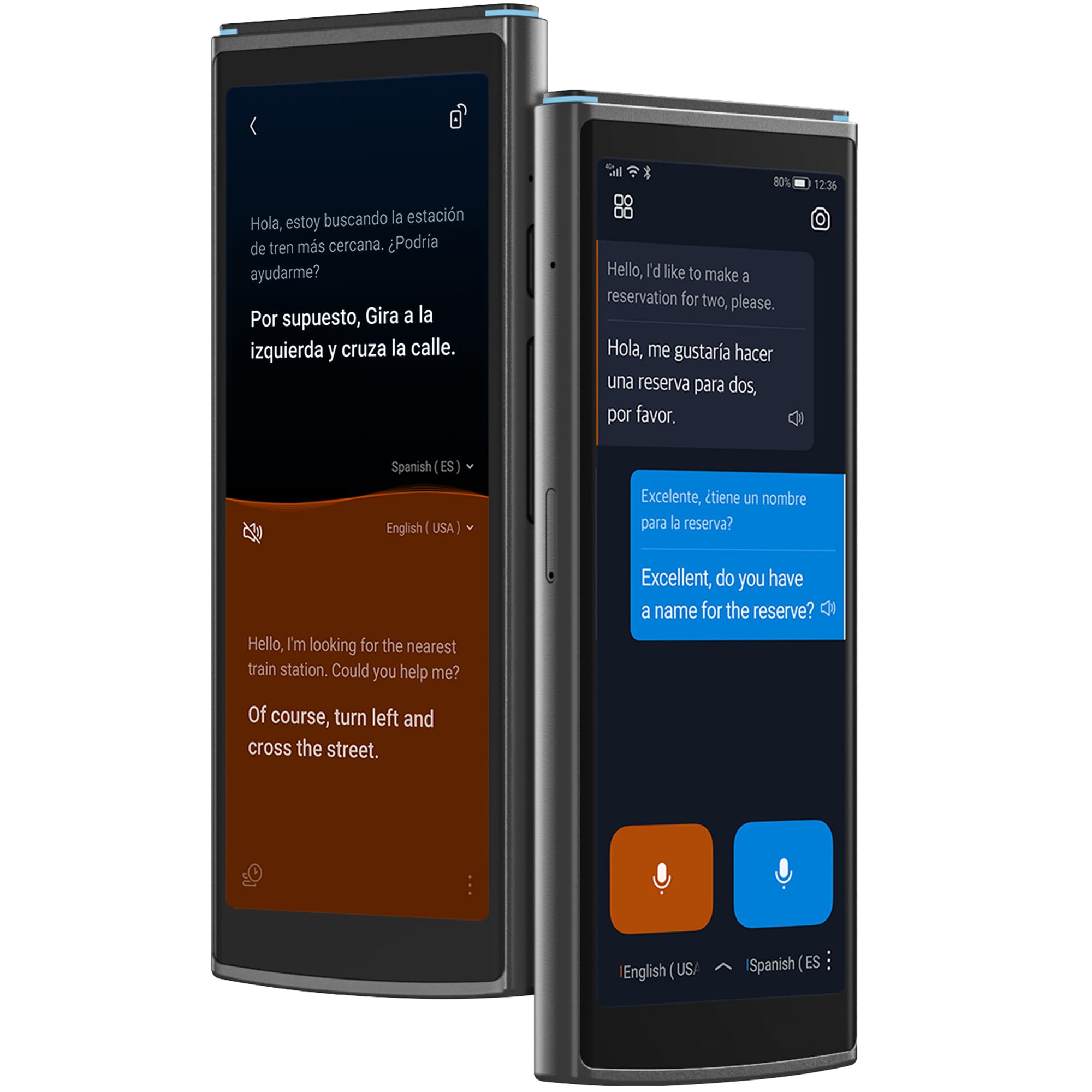
You want to talk to someone who speaks another language, and you want it to happen now, face to face, without handing your phone back and forth like a relay baton. That is the whole job of a translation walkie talkie — a handheld device you speak into that answers back in the other person’s language. This guide covers seven real options, sorted by what each one actually does well, so you can pick the one that fits how you travel, work, or talk.
This guide is built by comparing the manufacturers’ published specifications and the patterns across verified customer reviews, so you get each pick’s real strengths and trade-offs instead of marketing spin.
The picks below split cleanly into two camps: pocket translators that lean on their own screen, and earbud-style devices that keep your hands free entirely. By the end you will know exactly which of these belongs in your bag for the walkie talkie for real time translation job you actually have.
Top Picks

How To Choose The Best Walkie Talkie For Real Time Translation
The mistake most first-time buyers make is counting the language list on the box. A device that claims 150 languages online may only speak a small handful with no internet at all — and the offline number is the one that saves you in a rural clinic, a cruise ship, or a basement meeting room. Judge every option here by how it behaves when the signal drops.
Count the offline languages, not the headline number
Online translation leans on cloud servers, so almost any device can claim a huge language list. The honest figure is how many languages work with no Wi-Fi and no SIM. One pick here covers 16 languages fully offline, another pre-loads 18 offline packs, and a third offers offline translation in 21 essential languages. Match that number to where you actually go.
Decide between a screen and earbuds
A screen device lets both people read the translation at once, which is why split-screen layouts matter — nobody wants to keep handing the unit across a table. Earbuds go the other way: each person wears one and the conversation flows without anyone looking down. Pick the shape that matches your scene, a boardroom or a walking tour.
Check whether you pay again next month
Some translators are a one-time purchase; others bill you monthly for access. Ask before you buy whether the language packs and data are included forever. A device that ships with no subscription and built-in storage is the safer long-term buy for anyone who travels regularly.
Side-by-Side Comparison
| Model | Best For | Offline Languages | Online Languages | Weight | Amazon |
|---|---|---|---|---|---|
| Guardian Translator V2 Earbuds★ Best Overall | Hands-free conversations | 16 | 144 | — | Amazon |
| iFLYTEK AI TranslatorBest For Business | Business and privacy | 18 packs | 60 | 14 ounces | Amazon |
| Vasco Translator Q1 | Global travel, no SIM | — | 95 voice | 5.2 ounces | Amazon |
| FancyDove AI Translator | Everyday travel | 21 | 149 | 1.09 ounces | Amazon |
| CAITS 150+ Language Translator | Pocket carry | — | 150+ | 6.4 ounces | Amazon |
| VORMOR A20 Translator | Budget pocket option | — | 150 | 7.4 ounces | Amazon |
| FLTIDUNDI Z2 Translator | Entry-level tryout | — | — | 6.7 ounces | Amazon |
Detailed Reviews
1. Guardian Translator V2 AI Translation Earbuds
Our pick — 4.0+★ from 20+ verified ratings; the strongest balance of quality and price.
Two earbuds that turn a cross-language chat into a normal, hands-free back-and-forth.
This is the one to look at first if you want the conversation to feel like talking, not like operating a gadget. The Guardian is a pair of earbuds: you each wear one, speak, and the translation arrives in your ear — no screen to read, no unit to pass across a counter. It supports 144 languages when connected online, and 16 languages fully offline with no Wi-Fi needed, which is the number that actually decides whether it works in a taxi with no signal. Buyers report a natural exchange within roughly 8 feet — the range of a two-person chat.
Its best feature is the cost: no subscription and no monthly fee at all. There is no subscription and no monthly fee at all, and 16GB of private on-device storage means your conversations aren’t sitting in a cloud account somewhere. It also packs a built-in HD camera for photo translation — point it at a menu or a sign and the text comes back on screen. Battery life lands at 6 hours of translation or up to 12 hours of music playback, with Bluetooth 5.3 and 14.2mm drivers that make it a decent set of earbuds when you’re not translating. The build leans premium: aerospace-grade aluminum, a travel case, a screen protector, and a QR setup card in the box.
The catch: offline accuracy varies by dialect, so treat the 16 offline languages as a safety net. The device is strongest online, so treat the 16 offline languages as a safety net rather than the main event, and check that your specific language and region are well covered before you rely on it in a remote spot. The 20+ ratings land it at a solid 4.0+ average, and the praise centers on how naturally the conversation flows and how accurate the translations sound — bilingual owners specifically call out that it doesn’t sound robotic.
Where it pulls ahead
- Hands-free earbud mode with no phone app required
- No subscription, no monthly fees, 16GB of private on-device storage
- 144 online languages and 16 fully offline
- Voice plus HD camera translation in one unit
- 6 hours translation, 12 hours music playback
What to weigh up
- Offline accuracy is weaker for some regional dialects
- Strongest results come when you’re online
- Earbuds can drop out if one slips out of range and needs a reset
Reach for this if: you want the most natural hands-free conversation and a one-time purchase with zero monthly fees.
Look elsewhere if: you mostly travel with no signal at all and need rock-solid offline coverage for a specific dialect.
2. iFLYTEK AI Language Translator Device
The split-screen translator built for a boardroom, not a backpacking trail.
The iFLYTEK earns its place on the business side because of one design choice: split-screen translation on a 5.05″ HD touchscreen. Both people read the same display at once, so nobody is sliding hardware across the table mid-negotiation. It covers 60 online languages, and you can pre-load 18 offline packs for flights or remote sites. The 2-year free global data with 200-country coverage is the standout here — no roaming fees and no subscription, so the device stays useful the moment you land. It’s HIPAA-compliant with no external storage or data sharing, which is why it’s pitched at medical and legal settings.
On the physical side, it weighs 14 ounces and carries four microphones, a rear camera, Bluetooth, and 16GB of expandable storage that saves 1,000+ records for later export. Battery runs 6 hours of non-stop use with 10-day standby, and a quick top-up between meetings is enough to get you to the evening. Owners with Dutch, Flemish, and Vietnamese needs report good results, including slang. At 14 ounces, it’s a desk-side tool rather than something you clip to a pocket.
Here’s the follow-up question most buyers ask: does it really handle 60 languages? Auto-recognition covers 6 languages — English, Mandarin, Japanese, Cantonese, Korean, and Russian — so if you need hands-free auto-detect in others, expect to set the language yourself. A 4.0+ average across its ratings puts it comfortably in recommendation territory for professional use; the recurring note is simply that “60 languages” reads broader than the auto-detect feature.
The privacy angle: HIPAA-compliant handling with no external storage is the rare feature that genuinely matters if you’re translating in a clinic or a legal consultation — the conversation stays on the device.
The auto-detect limit: automatic language recognition is narrower than the 60-language list, so plan to tap the language in manually for less common pairings.
Built for: meetings, medical settings, and anyone who needs both parties reading the same screen.
Not the one for: a traveler who wants a featherweight pocket unit — at 14 ounces this is a two-hand device.
3. Vasco Translator Q1

A built-in SIM that keeps translating in nearly 200 countries, forever.
The Vasco Q1 solves the travel problem at the source: a built-in SIM card provides free internet access in nearly 200 countries for the life of the device, so you don’t hunt for Wi-Fi or buy a local plan. It supports 95 languages for voice translation, 116 for text, and 121 for photo translation, and it auto-detects languages and starts translating on its own. The AI assistant in the voice and photo modes will highlight and explain symbols and local customs — handy when a sign or a menu means nothing to you. At 5.2 ounces it slips into a jacket pocket without a thought.
Phone-call translation is the other standout: it translates calls worldwide in 53 languages, starting with 10 free minutes before you buy more through manufacturer support. If you’ve ever wanted to speak to a relative overseas without handing the phone away, that’s the feature to focus on. Owners describe photo translation of a Greek sign as fast and clear, and setup on screen being straightforward. It works without a cell signal too, so the offline claim has real backing in the reviews.
The mixed signals come on accuracy and speed. The reviews themselves split — some find the translation quality superior to free phone apps, with a louder speaker that helps anyone hard of hearing, while others report slower boot-up and a conversation mode that mis-times when to listen. Think of it as a device that rewards familiarity: the more you use the right mode for the right job, the better it performs. It’s at a 4.0+ average, with translation quality the strongest thread and the everyday niggles around speed and latency.
Standout spec: free lifetime data in nearly 200 countries means the Q1 is the least fussy traveler here — it’s online the moment you switch it on.
The trade-off: conversation mode timing is the recurring gripe, so budget a little practice before you trust it in a fast exchange.
4. FancyDove AI Translator
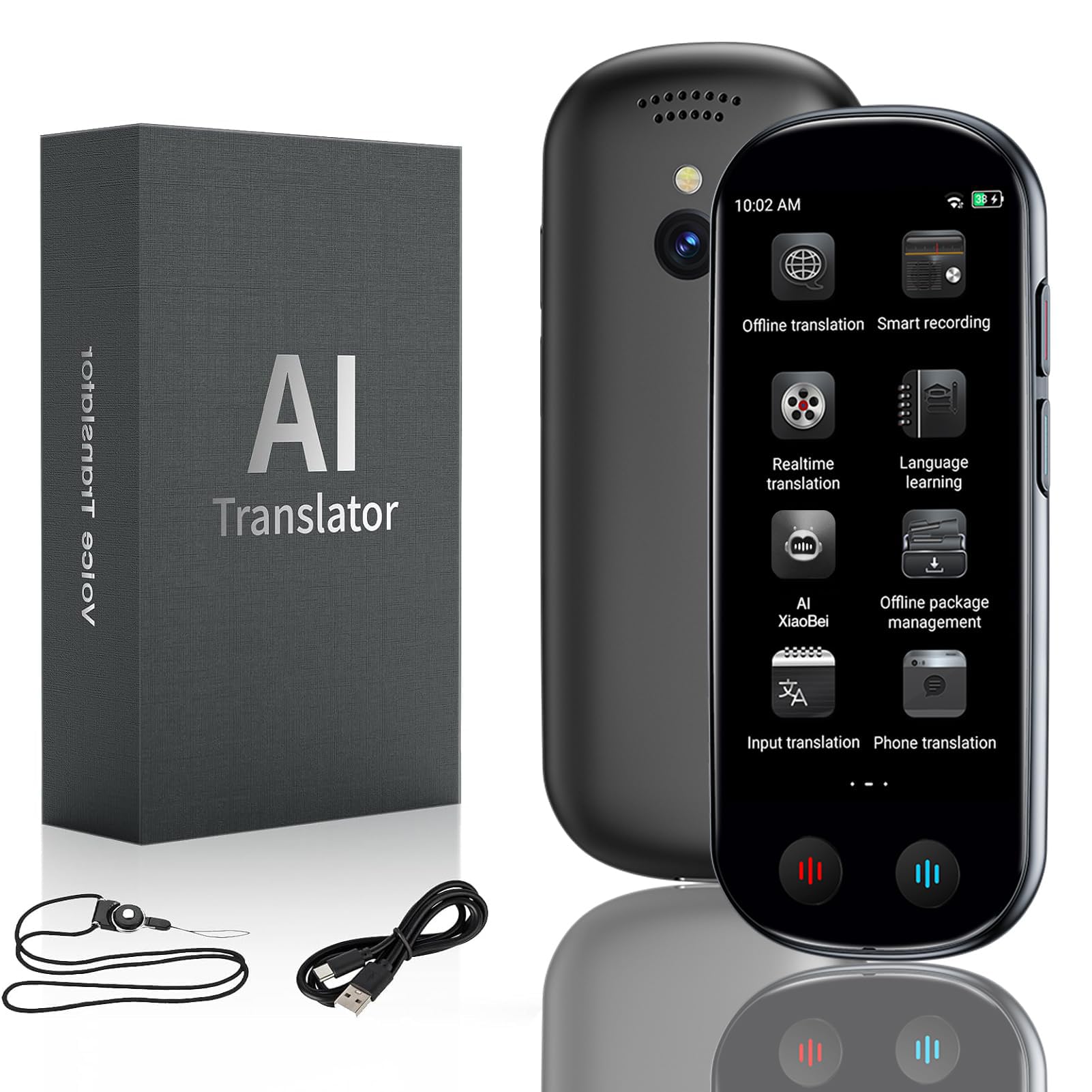
The mid-range screen translator that covers the offline basics without breaking a sweat.
Supporting 149 online languages and 21 offline — the largest offline count on this list — the FancyDove is the value pick for everyday travel. That offline number is the one worth remembering: it means menus, signs, and basic voice translation keep working when there’s no network on a plane, a cruise, or a remote road. There’s no smartphone app required, and physical shortcut buttons sit alongside an HD touchscreen so you’re not hunting through menus. At 1.09 ounces it’s about as light as a translator gets.
You also get a camera with OCR (optical character recognition, which reads text off a photo) for menus, road signs, and documents, plus recording, transcription, and an AI chatbot with daily practice and pronunciation help. The whole thing is aimed at travelers, seniors, students, and business users who want a single handheld unit rather than a subscription. Compare it to the iFLYTEK above and the trade is clear: fewer online languages (149 vs 60 here in name, but a far smaller offline set on most rivals) against a much lighter body.
It’s a device that takes a little getting used to — owners say once it clicks, the flow works, and they’ve used it across Chinese, French, and German speakers. A few note that precision could be better in tougher conditions. With 100+ ratings and a 3.5+ average, this is a solid everyday pick rather than a precision instrument for legal or medical work.
What makes it handy
- 21 offline languages — the broadest offline support here
- Feather-light at 1.09 ounces
- Camera OCR for signs, menus, and documents
- Long-lasting battery for a full day out
- Learning tools including practice and a chatbot
Where it asks patience
- Precision is good, not pinpoint, in harder conditions
- Takes a little practice before the flow feels natural
- Not a substitute for a professional-grade unit in high-stakes talks
Exactly right for: the traveler who wants the widest offline coverage and a body light enough to forget it’s in your pocket.
Step up if: precision in complex or formal conversations matters more than weight and offline breadth.
5. CAITS 150+ Language Translator
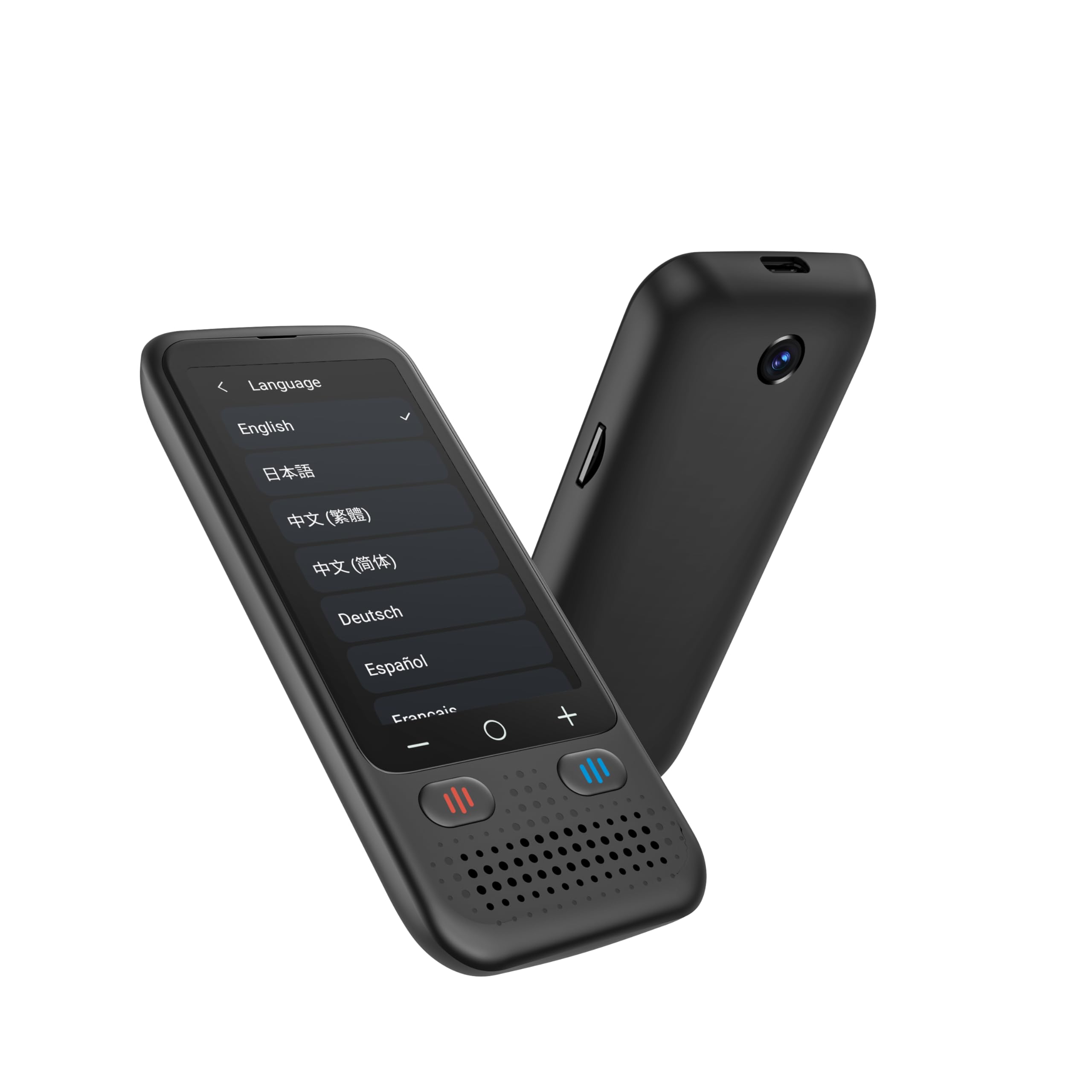
A pocket translation device with a 3-inch screen and 150+ languages at your fingertips.
The CAITS is for someone who wants the biggest language list they can slip into a pocket. It covers 150+ languages across two-way real-time voice translation, with offline, recording, and photo translation packed in, and it runs ChatGPT-style AI for more natural conversation. The 3-inch HD touchscreen gives you enough room to read results without squinting, and the whole unit weighs 6.4 ounces — light enough to carry all day. It’s no Wi-Fi needed for basic phrases, so it works as a fallback when you’re out of signal.
Where it shines is versatility: the same device handles voice, photo, recording, and AI assistance, so you’re not carrying three gadgets. One buyer uses it in a busy medical practice and described it as easy and versatile. Think of it as a compact all-rounder rather than a specialist — the compact screen and pocket-friendly build make it a good everyday companion for travel, business, or learning.
The caveat: it’s a smaller-sample pick, with the strongest evidence coming from one buyer using it in a busy medical practice rather than a large track record. It runs best when you’re connected, so if you need guaranteed offline coverage for a specific language, check that it’s supported before you commit. At a 3.5+ average it’s a reasonable choice for a first pocket translator, but the more established picks above have deeper review history to lean on.
What stands out: 150+ languages in a 6.4-ounce body with a 3-inch screen — real breadth without the bulk.
What to double-check: offline coverage is the make-or-break here, and it’s not as well documented as the online language list, so confirm your target language before relying on it off-grid.
Good match for: the buyer who wants the most languages in the smallest carry and treats offline as a backup.
Consider an alternative if: you need proven offline reliability in a specific language and want a longer review record behind the choice.
6. VORMOR A20 Translator
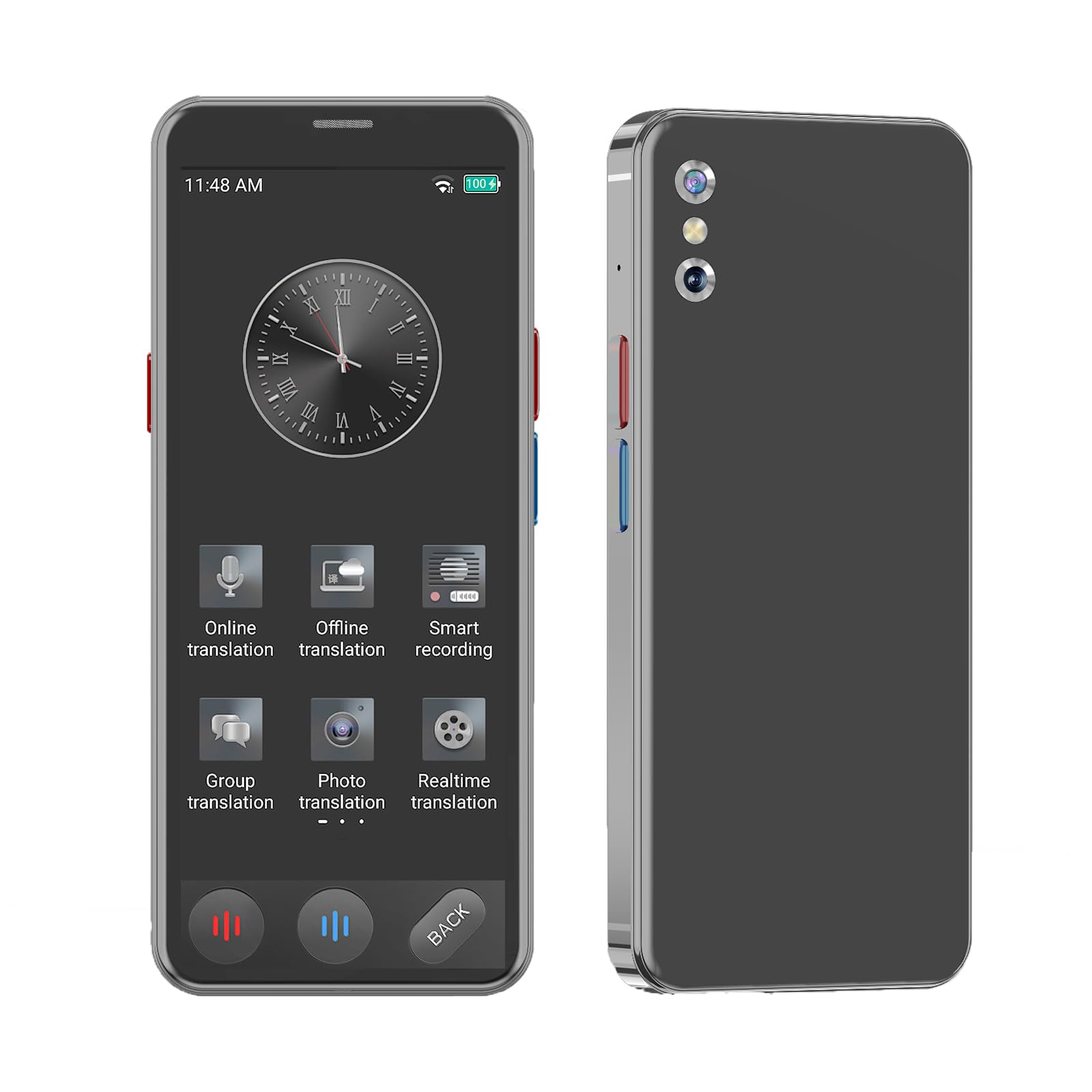
A pocket translator that punches above its price for everyday conversations.
The VORMOR A20 is the budget-friendly pick, and it doesn’t ask you to give up much on paper. It handles up to 150 languages with instant two-way translation, and the maker claims a 0.5-second response time. It works with no Wi-Fi for basic phrases, and it packs ChatGPT-style AI, photo translation, a recorder, currency and unit converters, and a world clock. At 7.4 ounces it’s slightly heftier than the lightest picks here, but the small size still slips into a pocket between conversations.
What wins people over is how usable it is on the move. The screen is clear, the voice translation is fast, and owners note it’s practical for real travel — fast translations for everyday chats, photo translation for menus and signs, and battery that lasts a full day. Compare it to the CAITS above and this one carries the larger 7.4-ounce body against its 6.4 ounces, but it brings a well-documented everyday translation quality that shows up in the reviews repeatedly.
The recurring gripe is offline Spanish. One owner found the online Latin-American Spanish excellent while the offline file was the weak spot, and a small set report occasional repetition or lag in slower moments. That’s a fit issue, not a dealbreaker: for online travel translation and basic phrases, it performs. It sits at a 3.5+ average with a stack of ratings behind it, so the balance tips well for its tier.
Why budget buyers like it
- Up to 150 languages with two-way translation
- 0.5-second claimed response time
- Works without Wi-Fi for basic phrases
- Photo translation, recorder, and AI tools included
- Battery lasts a full day in travel use
The honest limits
- Offline Spanish quality is the weak spot
- Occasional repetition or lag in slower moments
- At 7.4 ounces it’s heavier than the lightest picks
Pick it when: you want a proven everyday translator and mostly work online, so the offline gap never bites.
Look elsewhere when: your main language is Spanish and you’ll rely on it offline — the online mode is the strong half here.
7. FLTIDUNDI Z2 Translator

The entry-level tryout that handles two-way voice and photo work without a subscription.
If your first goal is simply to try a dedicated two-way translation device, the FLTIDUNDI Z2 is the most budget-friendly way in. It handles two-way AI voice translation plus text and photo translation, and it’s aimed at casual travel and everyday chats. The 6.7-ounce body is small enough to hold in one hand, and there’s no monthly subscription standing between you and using it.
The picture: this is an entry-level device with limited reviews, so the evidence base is thin. One buyer found it works best in Chinese and Spanish, while using it as a bridge with fast-speaking Thai family didn’t go as smoothly. That’s the useful note: success depends heavily on how closely the language and dialect you need matches the device’s strengths.
For a first dedicated translator or a low-cost gift, it does the basic job. But if your needs are high-stakes or cover many languages, the more established picks above give you a deeper track record to trust. This one is best treated as a starter rather than a primary tool.
Where it fits: the buyer testing whether a dedicated device beats a phone app, without committing to a premium price.
What to keep in mind: limited review history and mixed language results mean it’s best for casual, lower-stakes conversations.
Right for a first step: casual travelers who want a straightforward two-way device with no subscription.
Go up the list if: you need proven multilingual performance and a larger body of owner experience behind your choice.
Know the Specs
Offline Languages vs Online Languages
Online languages run through cloud servers, so almost any device can claim a big list. Offline languages live on the device itself, which is what actually works with no signal. Judge a translator by its offline number first — that’s the one that holds up on a plane, a cruise, or in a remote clinic.
Two-Way Conversation vs Voice Note
A voice-note translator records one person, then the other. Two-way conversation mode lets both people speak in turn without passing the device, often with a split screen or earbuds. For face-to-face chats, look for the two-way mode that matches your scene.
Response Time and Latency
Response time is how long the device takes to show a translation. A shorter time keeps the conversation flowing; a longer one means repeating yourself. Some devices compensate with faster processors, others lag — check which one matches how fast you speak.
Subscription and Data Costs
Some translators bill monthly for access, others are a one-time purchase. A device with built-in global data and no subscription is the safer long-term buy, because it keeps working without a phone plan or roaming fees.
Common Questions
Does a translation walkie talkie work without Wi-Fi or a phone signal?
Can two people use one device at the same time without passing it back and forth?
Are these translation devices subscription-free?
How accurate is real-time translation on a walkie talkie compared with a phone app?
Can these devices translate a phone call in another language?
Do I need to hold the device close to the speaker for it to hear?
How long does the battery last on a day of translating?
Can these translators read a menu or sign with the camera?
Is a dedicated translator better than using Google Translate on my phone?
Which languages are hardest for these devices to handle?
The Bottom Line
For most people, the walkie talkie for real time translation that gets them talking fastest is the Guardian Translator V2 — two earbuds, 16 offline languages, 144 online, and no subscription at all. If you need both people reading the same screen in a meeting or clinic, reach for the iFLYTEK and its split-screen display. And if you’re crossing borders and want the device online the moment you land, the Vasco Q1 with free lifetime data in nearly 200 countries is the traveler’s pick.
Whichever you choose, the honest nudge is this: a 4.0+ star average and a growing set of owner reviews behind it makes the Guardian the safest single bet on the list, so it’s a good place to start your search.
How we choose
We do not accept paid placement. Every pick is matched to a real buyer and a real use-case; we do not hands-on test units.
Sources
Specifications: manufacturer listings and product documentation. Review insights: verified customer reviews, as of October 2026. Pricing: not shown on this page (it changes often); check the current price via the retailer link.
As an Amazon Associate, Aappliancez earns from qualifying purchases. This does not affect which products we feature.