Disclosure: Some links in this post are affiliate links. As an Amazon Associate I earn from qualifying purchases, at no extra cost to you. Learn more
Specs are compiled from manufacturer listings and verified buyer reviews and can change over time — please confirm the key details on the product page before buying.
If your vinyl siding has gone chalky, green, or gray, you do not have to live with it and you do not have to re-side the house. A restorer lifts embedded mold stains and brings back color buried under oxidation, buying years before you re-side. The trick is knowing which kind you need, because a wash that kills algae and a coating that puts color back are two different jobs. This guide covers both so you can match the bottle to the problem on your walls.
This guide is built by comparing the manufacturers’ published specifications and the patterns across verified customer reviews, so you get each pick’s real strengths and trade-offs instead of marketing spin.
Your siding can look dull for two very different reasons: sun fading on the bright side, or algae growing on the shaded north face. So the best vinyl siding restorer for you depends on which problem you actually have — a deep clean, or a fresh color coat.
Top Picks

How To Choose The Best Vinyl Siding Restorer
Start by naming the problem on your siding. If your siding is green, black-streaked, or dotted with mildew, you need a cleaner that dissolves organic growth. If it is pale, chalky, and uneven, with the color bleached out of the sun-facing side, you need a restorer that puts pigment back. Buy the wrong one and you can scrub for a weekend and still see gray walls at the end of it.
Cleaner versus restorer: the difference that decides everything
A wash like Zep or W M Barr kills algae and lifts dirt off the surface. It does not add color. A restorer like Vinyl Renu lays a coating that evens out sun-faded panels and brings the original tone back. Read the label for “restore” versus “clean” — that word tells you which job the bottle is built for, and getting it wrong wastes a weekend on the ladder.
Think in coverage per gallon, not per bottle
Concentrates go much further than ready-to-use jugs because you dilute them yourself. A one-gallon concentrate can make many gallons of working solution, which is why the high-yield formulas matter on a full house. Measure your wall square footage before you order, then compare that number against the maker’s stated coverage so you buy enough in one trip up the ladder.
Match the surface before you spray anything
Vinyl is forgiving, but window seals, aluminum, Hardie plank, and stucco each react differently to bleach-based products. A bleachy wash can damage window seals if it sits too long, and it can dull certain finishes. Check the label’s compatible-surface list first, and mask or pre-rinse any trim you are worried about.
Side-by-Side Comparison
| Model | Best For | Type | Rated For | Key Spec | Amazon |
|---|---|---|---|---|---|
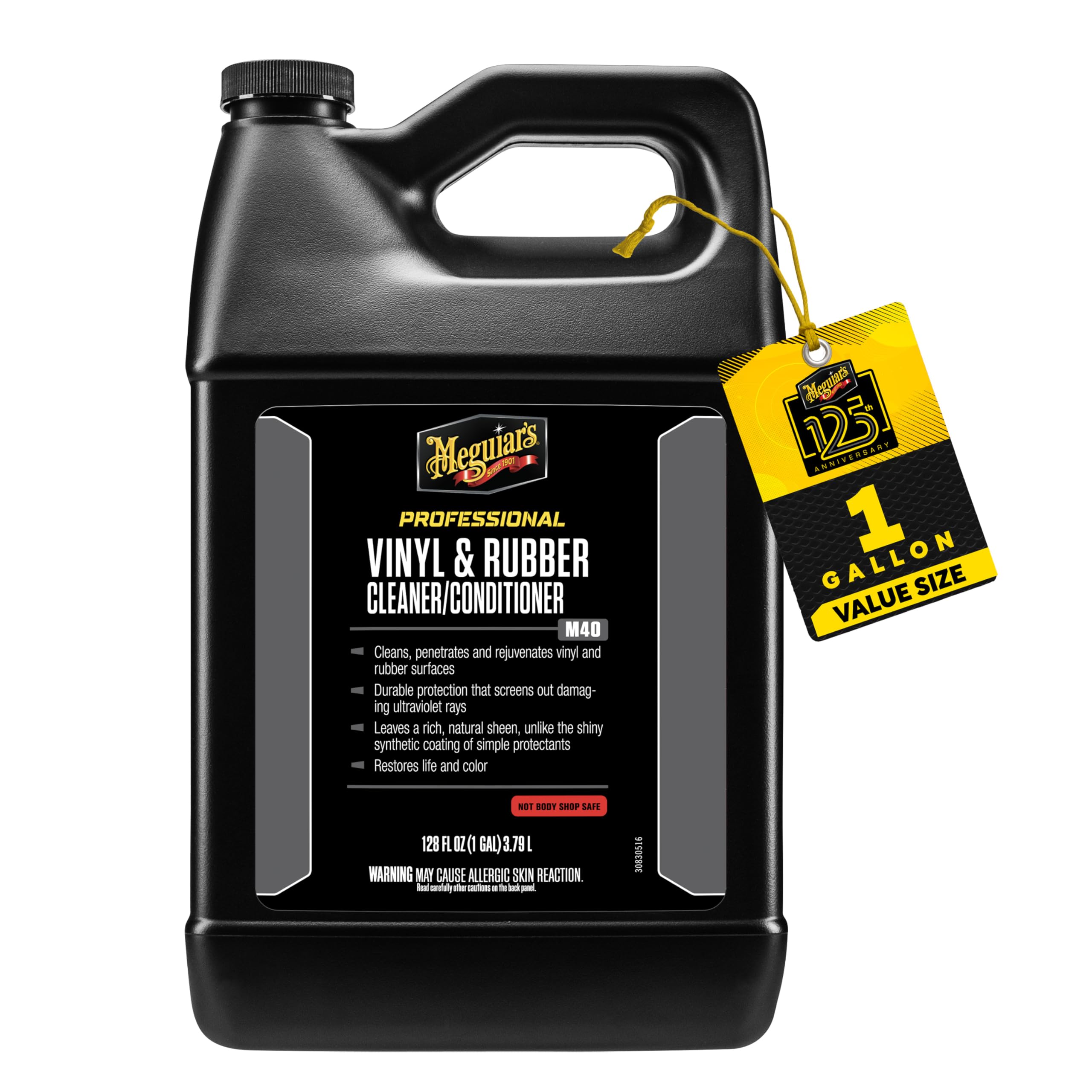
| Meguiar’s Professional M40 Vinyl & Rubber Cleaner & Conditioner★ Best Overall | Car & trim vinyl, rubber, and plastic | Spray-on cleaner & conditioner | Interior & exterior unpainted vinyl and rubber | 1 gallon (128 fl oz) | Amazon |
| Zep House and Siding Pressure Wash Cleaner ConcentrateBest Value | Whole-house siding washout | Concentrate (case of 2) | Vinyl, aluminum, wood, stucco, brick, cement | Makes up to 20 gallons | Amazon |
| W M Barr FG581 128OZ Siding/House Wash | Pressure-washer mold & mildew removal | 128oz concentrate, EPA registered | Exterior siding and house wash | 128oz concentrate | Amazon |
| RMR-86 Instant Mold and Mildew Stain Remover Spray | Stubborn black mold & mildew stains | Ready-to-use scrub-free spray | Decks, wood, vinyl siding, drywall, concrete, brick | 1 gallon (128 fl oz) | Amazon |
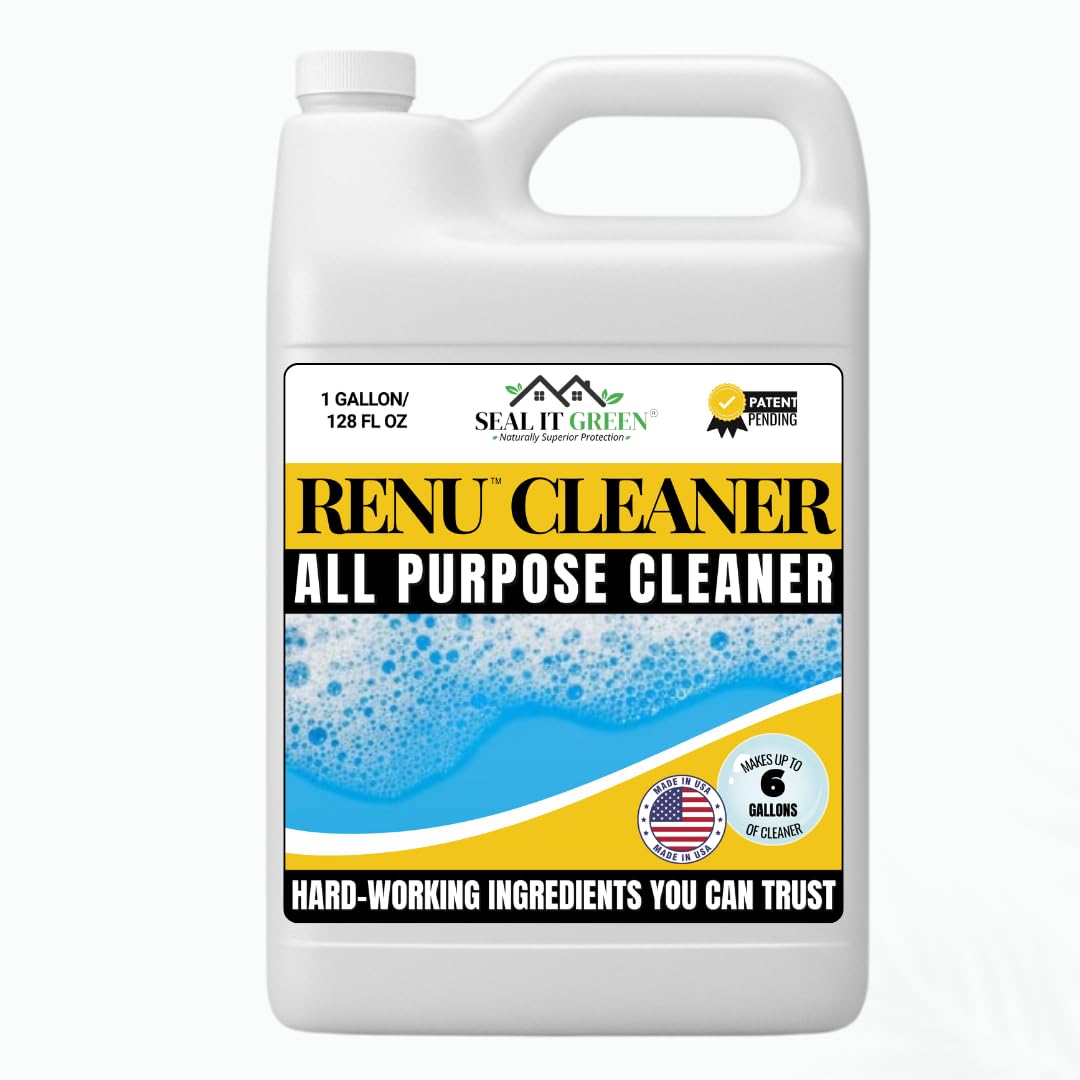
| Renu Universal House Wash | Large-scale siding, decks & pavers | Environmentally friendly concentrate (Zero VOC) | Vinyl/aluminum siding, decks, fences, pavers, outdoor fabrics | Coverage of 2000+ SF | Amazon |
| Elemonator with Chlora-Boost (1G) | Soft-wash & pressure-washer add-on | Liquid surfactant with pH boost | Siding, roof, concrete | 1 oz per gallon of water | Amazon |
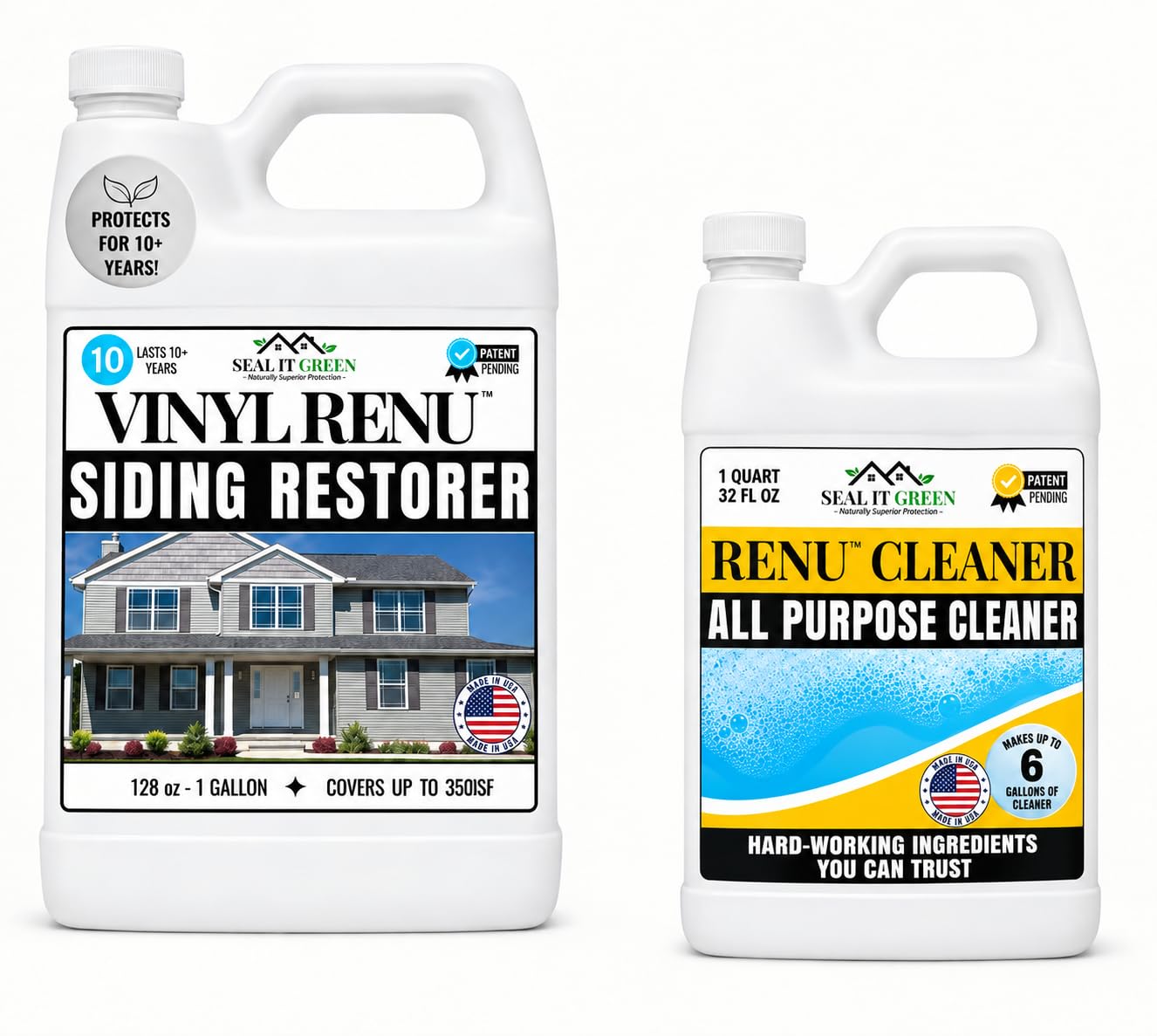
| Vinyl Renu Premium Siding Restorer | Bringing faded vinyl back to color | Restorer kit with cleaner | Vinyl, metal, and Hardie siding | 1 gallon kit (128 fl oz) | Amazon |
Detailed Reviews
1. Meguiar’s Professional M40 Vinyl & Rubber Cleaner & Conditioner
Our pick — 4.5+★ from 2,500+ verified ratings; the strongest balance of quality and price.
The one-gallon jug that treats every square of vinyl on your property like it matters
If your faded vinyl sits on a car, a golf cart, a dash, or any piece of trim small enough to hold a spray trigger, this is the bottle to buy. Meguiar’s designed the M40 as a vinyl and rubber cleaner and conditioner in one, so it cleans, then lays down protection that screens out UV rays. Those UV rays are what bleach the color out of unpainted vinyl in the first place, so the protector matters as much as the wash. Nobody calls it a siding product, and that is the point — it does one job on a tabletop scale, and it does it thoroughly.
The volume here is the whole story. You get 128 fluid ounces in a spray-ready gallon, and the concentrated jug carries you through floor mats, door panels, and the plastic cabin pieces you usually forget. It also performs across rubber, vinyl, and plastic surfaces simultaneously, which means one bottle handles the trim, the mats, and the dashboard without juggling three products. That single-bottle convenience is why so much of the long-term feedback on it sounds less like a cleaning review and more like a detailing habit.
Where it pulls ahead of the house-wash crowd is that it restores rather than strips. The formula leaves a natural sheen instead of a greasy film, and it explicitly revives old, faded color on the surface it touches. That is genuinely different from what you would get from the Zep concentrate, which revives siding through cleaning power alone and adds nothing back. Buyers report it works on a whole car interior after years of sun exposure, and the finish stays soft rather than tacky.
What it does best
- Cleans, penetrates, and rejuvenates unpainted vinyl and rubber in one pass
- Lays down UV protection that screens out the rays that fade color
- Leaves a sleek natural sheen instead of an artificial, greasy look
- Spray-trigger gallon covers floor mats, dashboards, trim, and plastic in one bottle
Worth knowing before you buy
- It is a car and trim product — not a whole-house siding wash
- Directions call for avoiding painted surfaces, so test that trim first
- A gallon goes fast if you detail often
Ideal for: The owner with faded vinyl on a car, RV, golf cart, or dash who wants color and protection back in one spray.
Look elsewhere if: Your actual job is a whole house of algae-covered siding — no bottle of trim conditioner will cover that square footage.
2. Zep House and Siding Pressure Wash Cleaner Concentrate
A concentrate that turns one bottle into a whole-house wash line
Two bottles of concentrate that together make up to 20 gallons of working solution — that is the number to hold onto if you are washing an entire house in one weekend. Zep built this to revive vinyl, aluminum, and wood siding, and the yield is the reason it lands this high. Dilute it, load your sprayer or pressure washer, and you can cover a house plus the garage without running back to the store halfway through.
Applying it is more deliberate than just hosing the walls. Zep’s instructions are to apply the solution from the bottom of the wall upward, then rinse from the top back down, which sheds everything off the surface instead of pushing streaks into the panels below. That order is what earns the streak-free result, and it is why the concentrate is routinely praised for hitting big surfaces efficiently. Load the same full bottle into a pump sprayer or feed it into a pressure washer, and the coverage bar is set to something realistic for a whole home.
Here is the honest catch: the label does not promise to kill mold. This product revives the look of siding by cleaning it, but it is built for dirt, grime, and general buildup — not as a dedicated mold or mildew stain killer. So if your walls are green and blotchy rather than just dull, this cleans the surface, while a purpose-built mold formula like RMR-86 is what lifts the staining itself. Owners mention it handles heavy algae when mixed per the heavy-buildup instructions in a pump sprayer, left to sit for a few minutes, then rinsed with a garden hose. Treat it as the base of your wash, not the cure for worst-case growth.
Where the value lands: The concentrate formula stretches across thousands of square feet, so the running cost per wash is minimal even though the upfront case of two costs more than a single ready-to-use bottle.
The fine print: It cleans and revives the siding’s appearance, but it does not restore color that has faded out of the vinyl to begin with.
Reach for this if: You have a whole house of dull, dirty siding and want to wash it yourself in one weekend on a minimal per-wash budget.
Not your bottle if: You are chasing heavy mold staining — pick the RMR-86 down the list for that.
3. W M BARR FG581 128OZ Siding/House Wash

The outdoor-house-wash pro built to ride your pressure washer’s detergent tube
W M Barr’s approach is practical: get out of the bucket, attach the feed line, and do the whole house. This 128-ounce bottle earns its keep because customers note running it straight into a gas pressure washer’s detergent tube, spraying the siding, letting it sit around ten minutes, and rinsing off green growth with the yellow tip. It is EPA registered, which matters when you want the product to actually tackle mold and mildew rather than just loosen dirt. One gallon reports to clean an entire house when used per the instructions.
One gallon stretches a long way at the 5:1 dilution (five parts water to one part concentrate) — that is the balance. You can dilute it and apply with a pump sprayer, or feed it straight from the jug, then pressure wash. That flexibility is unusual, because most concentrates lock you into one application method. W M Barr keeps both options open, so the bottle works whether you own a pressure washer or are borrowing one.
The recurring lesson from the field is about what NOT to do with it. It performs its mold and mildew removal through the wash itself, and the physics means it ships with a bleach base — strong enough that a shirt can be ruined if it catches a stray mist. One owner warns against adding laundry bleach to the mix, because plain bleach damages window seals and causes air leaks while voiding the window warranty. Use it as directed and it cleans up a heavily grown-over wall; improvise with the chemistry and you can do real damage to the very trim you are trying to protect.
Why it gets picked
- 128oz concentrate at a 5:1 dilution cleans a whole house
- EPA registered for mold and mildew removal
- Feeds straight into a pressure washer’s detergent tube or a pump sprayer
- Removes heavy green growth after a ten-minute dwell and rinse
Set expectations here
- Bleach base means a strong smell and clothing risk
- Not the choice for covering a fading color problem
- The product itself is a wash, not a color restorer
The cleanest fit: A homeowner with a pressure washer and a whole house of green, moldy siding who wants a product built for the feed line.
Where it stops: If your panels have lost their color to sun rather than grown algae, no wash here will bring the tone back.
4. RMR-86 Instant Mold and Mildew Stain Remover Spray

For the deepest black staining, the bottle that erases it without a brush
If your vinyl siding wears dark, embedded stains that everything else leaves behind, this is the product built for that specific problem. RMR-86 is a ready-to-use spray formulated to eliminate the discoloration black mold and mildew leave deep below a surface, and the entire pitch is that you spray it on and watch the stain go. No scrubbing, no brush, no pressure washer required. That “scrub-free” claim is the one buyers keep coming back to, and it is the reason this gallon earns its heavier-duty label.
The physics of it clears a whole surface — vinyl siding, decks, wood, drywall, concrete, brick, kitchen surfaces — wherever mold and mildew tend to grow. The brand’s own guidance is unambiguous: proper ventilation and full protective equipment must accompany every application, and the user experiences tell you why. The full machine of mask, goggles, chemical-resistant gloves, and skin coverage is what makes this manageable rather than miserable. Skip it and the fumes bite back hard, so treat the bottle as a chemistry set, not a spray-on-and-walk-away solution.
It is also not a general outdoor stain product. One owner notes it is best understood as a stain remover rather than a pure mold-killer, so pairing it with care when you hit a stubborn wall is the honest approach. You can feel the difference in the jug: this one weighs 9.26 pounds against the 5.7-pound W M Barr gallon, and its 12.44 x 6.37 x 6.24-inch profile takes up a different footprint on the shelf. This is a bottle you handle with intent.
Biggest win: It dissolves embedded black mold and mildew staining on surfaces from vinyl siding to concrete with no scrubbing step at all.
The trade-off: It arrives with a serious odor and real safety prerequisites — full ventilation, PPE, and never a bare-handed spray.
Made for: A homeowner with stubborn black mold or mildew staining who has already tried a general siding wash and still sees the marks.
Rethink it if: You want a low-effort bottle to simply spray and forget — this one demands ventilation, protective equipment, and a careful container to store it.
5. Renu Universal House Wash
A zero-VOC concentrate aimed at knocking oxidation off 2000+ square feet
What pulls you toward Renu is the ambition of the coverage claim and the fact that it packs zero VOCs. If you want to clean the siding, the shutters, the deck, the garage doors, and the outdoor furniture without harsh fumes in the air, the Zero VOC formula is about as friendly as a restoration wash gets. The stated coverage reaches beyond 2000 square feet, and Renu markets it as cleaning that holds surfaces clean for up to three years.
Where it pays off in practice is appearance. The product is designed to remove stains, oxidation (the chalky, faded film sun leaves on a surface), and dirt on all siding types, and it lands great results on outdoor fabrics, patio furniture, PVC fencing, composite decks, and even floor mats. Buyers appreciate that it makes surfaces look like new after years of buildup. Mixed into the right ratio, it also does the job on the aluminum gutters and the fascia — those black streaks come clean and the surface reads bright again once the work is done.
Follow-through is where this one separates from its advertising. You’ll get more out of it by mixing stronger than the base dilution, letting it dwell five or six minutes, then working the surface with a medium-soft brush and wearing gloves, because it is caustic. Consumer feedback is split on whether the oxidation removal is truly easy or an arm workout, with the honest read being that the stair-step of better results correlates to the amount of brush work you put in. Consider it a semi-manual product: strong enough to be worth the buy, labor-heavy enough that a few customers find it more work than they expected.
Better for: Aluminum and vinyl surfaces showing dissolved dirt or oxidation that still have solid color underneath, and shoppers who care about a low-VOC wash.
Not the lever if: You want pure spray-and-wait — expect to mix stronger than suggested and put real brush work in.
Consider this if: Your siding, gutters, or shutters are oxidized but not faded out entirely, and you would rather scrub with a brush than walk past behind the spray.
Pass on it if: You need pure spray-and-wait results with no elbow grease — this one respects a five-to-six-minute dwell, then wants the brush.
6. Elemonator with Chlora-Boost

The add-on that makes the bleach in your mix work harder and smell better
Elemonator is not a stand-alone cleaner — it is the surfactant you add to a bleach mix to get it to stick, foam, and rinse clean. Pour in enough to hit the recommended dilution of one ounce per gallon of water when downstreaming, and the solution actually clings to a vertical wall instead of running straight off. That cling is the difference between a wash that works and a wash you repeat. For anyone running a soft-wash or pressure-wash setup on siding, roofing, or concrete, this is the multiplier that makes the rest of the recipe behave.
The specific selling point is that it stabilizes sodium hypochlorite, the active ingredient in household bleach, so the chlorine stays active through a longer cleaning session instead of fading in the tank. The pH boost props up the solution so it can work on tougher film and staining, and the rinse step runs cleaner than a straight bleach job would. The lemon scent is doing real work too — it masks the harsh bleach smell that otherwise makes a house wash unpleasant to work near, which earns real gratitude on a job with dozens of entryways.
The one honest brake here is cost. A few customers find it a bit expensive per bottle, and at one ounce per gallon with a mid-tier retail price, the value math depends on whether you are washing a whole portfolio of properties or one house. For the occasional homeowner doing a single wall, a dedicated one-shot wash like the Zep concentrate is the simpler choice. For a pressure-wash operator or a property with repeated washes across the year, the math flips and the bottle earns its keep.
Where it earns the price
- Stabilizes sodium hypochlorite so the chlorine stays active longer in the mix
- Foams and clings to vertical surfaces for a more thorough wash
- pH boost targets tougher film and staining
- Lemon scent masks the harsh bleach odor during application
Straight talk
- Not a stand-alone cleaner — you supply the bleach
- Comments flag the price as a bit high per bottle
- One ounce per gallon is correct; overdosing wastes product
Right for: Anyone running a soft-wash or pressure-wash setup who wants a bleach mix that clings, rinses cleaner, and smells better in use.
Wrong for: A one-wall touch-up where a ready-to-use siding wash saves you the mixing step entirely.
7. Vinyl Renu Premium Siding Restorer
The only bottle here that puts color back instead of washing it down
Vinyl Renu is the true “restorer” in this lineup. Every other product on this list cleans and revives the appearance of the siding; this one adds a finish that brings the original color back to chalky panels, and it is designed to be reapplied once every ten years. The gallon kit ships with a premium color restorer and a separate cleaner, so you strip the oxidation first, then lay down the finish. If your siding has actually gone pale in the sun and no wash has brought the color back, this is the only bottle here that addresses that specific problem.
Application is a brush job, not a spray job, and the coverage takes planning. The listed coverage is 300, and jobs like a 66×14-foot trailer or 22 shutters ran to a weekend or more of work. The cleaner loosens the oxidation — heavy cases call for steel wool or a stiff brush and elbow grease — and then the restorer goes on with a brush in thin coats. Thin coats on dark surfaces like green shutters avoid the milky spotting that shows up under a heavy-handed second pass, while two even coats give the even, like-new result that everyone is chasing.
The big consideration is cost per job. The gallon kit is the most premium line item here, and a few customers find coverage to be the sticking point — one returned to the maker and got a fix that brought the siding to roughly 95% improved, with the remaining gripes tied to coats that came up short of coverage rather than to the finish itself. The durable side is what you are paying for: reviewers point out a satin sheen, water beading on the wall, and dirt having a much harder time sticking to the panel after the coat cures. In a place with harsh winters, that protective layer is doing the job the sun cannot undo.
What earns the premium
- Actually restores original color to sun-faded vinyl, and works on metal and Hardie siding too
- Kit includes both the cleaner and the color restorer
- Applied finish has a satin sheen and sheds water, so dirt gets a harder time sticking
- Designed for a ten-year reapplication window, then refresh the coat
The parts you work for
- Brush-and-elbow-grease job, especially on oxidation-heavy panels
- Some buyers find a single gallon does not stretch as far as they hoped
- Thin coats matter — heavy hands risk milky spots on dark trim
- Highest-cost bottle in the lineup
Built for: Someone whose siding has genuinely gone from a color to a chalky gray, and who wants the actual color back without painting or replacing the panels.
Skip if: Your walls are green with algae but still hold their original color — a cleaner like Zep gets you there for far less effort.
Know the Specs
Cleaner vs. restorer — the label is the spec
The word the manufacturer chose is the single most important buying signal. A “wash” or “cleaner” kills algae and lifts dirt from the surface; it does not add color. A “restorer” or “rejuvenator” lays a coating that brings the original tone back to sun-faded vinyl. Read the label for which job it was built to do, and buy for the problem on your actual wall — cleaning a chalky panel that has lost color will not change what it looks like, and adding a restorer to a merely dirty panel skips the cheaper, easier fix.
Coverage per gallon and dilution ratios
Concentrates change the math. A one-gallon concentrate that makes many gallons of working solution does far more house than a ready-to-use jug. The dilution ratio your label specifies (for example a 5:1 mix) sets how far a gallon stretches. Measure your wall square footage first, then check the maker’s stated coverage and reapplication schedule so you buy enough in one trip. Restorers top out at relatively low coverage per gallon because they lay a coat rather than just spray a solution; washes go far wider because they can be diluted across a whole wall.
Bleach base and surface safety
Many house washes ship with a sodium hypochlorite base — that is ordinary bleach — because it is what kills mold and mildew growth. That base is what makes them effective and what makes them a hazard: bleach can damage window seals and void window warranties, and it can ruin clothing it catches. Check the label’s compatible-surface list before you spray, cover window trim, and keep a garden hose ready to pre-rinse and flush any trim that catches overspray.
Application method and personal gear
How the bottle applies determines how much work the job is. Some feed straight into a pressure washer’s detergent tube for high-reach coverage; some require a brush or pump sprayer. Bleach-based builders demand serious ventilation and personal protective equipment — a full mask, goggles, chemical-resistant gloves, and skin coverage — while a kitchen-safe formula like the silicone-rebuild cream needs almost none. Read the application method on the label first, since it decides whether you can take the job on with what you already own.
Common Questions
What is the difference between a siding wash and a siding restorer?
Will regular bleach work on my vinyl siding instead of buying a dedicated wash?
Is one gallon of restorer really enough for a whole house?
Can I use a pressure washer with a siding restorer?
Will a bleach-based house wash damage my window seals?
How do I know if my siding needs a restorer or a replacement?
Do I need to scrub after applying a mold stain remover like RMR-86?
Can I use a house wash on painted siding, stucco, brick, or Hardie plank?
How long will a restorer like Vinyl Renu last before I need to reapply?
Do I need protective gear to apply these siding products?
The Bottom Line
For most homeowners chasing a cleaner, brighter wall, the vinyl siding restorer that earns the top slot for cars and trim vinyl is the Meguiar’s Professional M40, because it cleans, restores, and screens out the UV rays that faded the surface in the first place. If you are washing a whole house of dirty siding on a minimal budget, grab the Zep House and Siding Pressure Wash Concentrate, which makes up to 20 gallons and covers thousands of square feet. For the one problem no wash can solve — vinyl that has actually gone chalky and pale — the Vinyl Renu Premium Siding Restorer is the only bottle here that puts the color back. Match the bottle to the wall in front of you and you finish the job in one weekend instead of two.
How we choose
We do not accept paid placement. Every pick is matched to a real buyer and a real use-case; we do not hands-on test units.
Sources
Specifications: manufacturer listings and product documentation. Review insights: verified customer reviews, as of October 2026. Pricing: not shown on this page (it changes often); check the current price via the retailer link.
As an Amazon Associate, Aappliancez earns from qualifying purchases. This does not affect which products we feature.