Disclosure: Some links in this post are affiliate links. As an Amazon Associate I earn from qualifying purchases, at no extra cost to you. Learn more
Specs are compiled from manufacturer listings and verified buyer reviews and can change over time — please confirm the key details on the product page before buying.
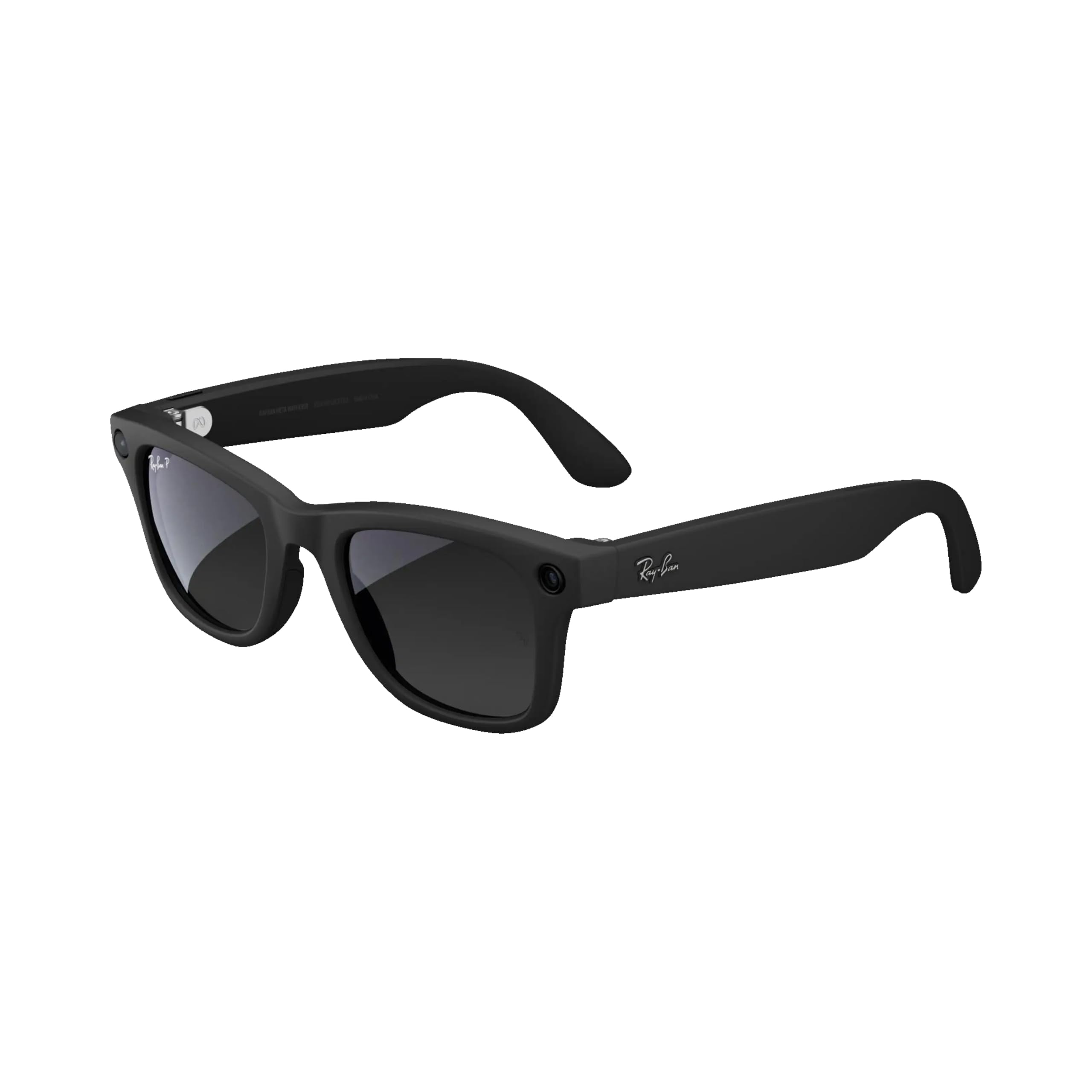
You want to film what your hands are doing — riding, hiking, cooking, chasing a toddler — without holding a phone. The pair that does that job best here is the Meta Ray-Ban Wayfarer, because its 12 MP camera (12 megapixels, about the still detail of a mid-range phone camera) captures a wider, sharper first-person frame than the 8 MP cameras most rivals use. Every other pair on this list gives up something on that one job. Some trade camera quality for a lower price. Some trade polish for a longer battery rating. This page sorts them by what they are actually good at, so you can pick the one that matches how you film.
This guide is built by comparing the manufacturers’ published specifications and the patterns across verified customer reviews, so you get each pick’s real strengths and trade-offs instead of marketing spin.
A pair of camera glasses only earns its place if the weight on your nose and the battery in your temples let you forget you are wearing it until you press record. That is the test I applied to every pair below, and it is why some big-name frames land lower than you might expect. Here is how the leading video recording sunglasses stack up once you strip away the spec-sheet noise.
Top Picks
How To Choose The Best Video Recording Sunglasses
Camera glasses are judged on a different scorecard than regular sunglasses. You are not buying lenses with a camera bolted on — you are buying a camera you will actually wear. That means weight on your nose and battery in your temples decide how often it comes out of the drawer. Start with the three things below and most of the confusion disappears.
Resolution is a starting point, not the finish line
A camera rated 4K records more pixels per frame than one rated 1080p, which matters when you crop or zoom later. But a 12 MP still sensor and an 8 MP one differ by 50% in pixel count, and that gap shows up in how much detail survives a tight crop of a distant subject. Check the number, then check whether the glasses also list stabilization — footage that shakes is unusable no matter how many pixels it holds.
Battery in mAh versus battery in hours
Battery capacity is listed in milliamp-hours (mAh), a measure of how much charge the cell holds. Recording drains it faster than music playback, so treat any quoted hour figure as a music-playback number unless the listing says otherwise. A pair with a charging case can top up mid-day; a pair without one needs a cable and a wall socket.
Fit decides whether you keep wearing them
Frames that clamp your temples or slide down your nose get left at home. Look for flexible temples, stated frame width, and honest notes on whether the shape runs large. A slim fit suits narrower faces; an oversized Wayfarer-style frame suits wider ones. Neither shape is better in the abstract — but the wrong width for your head turns a smart purchase into a drawer ornament.
Side-by-Side Comparison
| Model | Best For | Camera | Battery | Weight | Amazon |
|---|---|---|---|---|---|
| Meta Ray-Ban Wayfarer (Gen 1)★ Best Overall | Everyday POV filming | 12 MP | — | — | Amazon |
| AI Smart Glasses 4K (Plunthorn)Top Performer | Wet-weather commutes | 4K | 290 mAh | — | Amazon |
| AI Camera Glasses 1080P (KOIPSSE) | Budget daylight shooting | 1080P | 220 mAh / 7 hrs | — | Amazon |
| EarlySincere 2026 AI Smart Glasses | Long standby between shoots | 8 MP / 4K | 410 mAh | 64.45 g | Amazon |
| EGQINR AI Smart Glasses | Travel and translation | 8 MP / 4K | 255 mAh / 1.5 hr charge | — | Amazon |
| Meta Ray-Ban Skyler (Gen 1) | Style-first wearers | — | — | — | Amazon |
| Coucur Smart Glasses | Light Bluetooth use | — | 270 mAh | — | Amazon |
Detailed Reviews
1. Meta Ray-Ban (Gen 1), Wayfarer AI Glasses
Our pick — 4.0+★ from 2,500+ verified ratings; the strongest balance of quality and price.
The pair that looks like a normal Ray-Ban until you tap the temple and start filming.
The headline is the camera: an ultra-wide 12 MP sensor (12 megapixels, roughly the still-image detail of a mid-range phone camera) paired with a five-mic system that captures sound in all directions. That is 50% more pixel count than the 8 MP sensor on the EarlySincere pair below. On a wide street or a hiking trail, that extra detail keeps a distant sign or a friend’s face readable when you crop in later. You get hands-free photos and video, open-ear speakers that play music without sealing off traffic noise, and live translation between French, Italian, Spanish, English, German, and Portuguese — no Wi-Fi required.
Owners buy it for the styling as much as the camera, and the frame backs that up: the classic Wayfarer shape in matte black with a slim fit, a 22 mm bridge, and 15.5 cm arms. It reads as ordinary eyewear, which is the whole point when you want to film a street scene without everyone turning to stare. The charging case extends a 3-4 hour battery into a full day of intermittent shooting, so you top up between sessions rather than hunting for a socket. It ships with a cleaning cloth, manual, and quick-start guide, and pairs to your phone for calls, texts, and work meetings over Bluetooth.
The honest catch is software maturity, not hardware. A small slice of owners hit Bluetooth drops, pairing trouble between two iOS devices, and Meta AI behaving inconsistently depending on region — and the recording LED cannot be overridden, so there is no discreet filming. Low-light footage is soft. Neither flaw sinks the product, but both mean the software is less forgiving than the frame’s polish suggests. If your priority is a big, bright 12 MP frame from a frame you would wear anyway, nothing on this list comes closer.
What genuinely earns its keep
- Ultra-wide 12 MP camera with a five-mic system captures a full-scene, clear-sound clip without touching your phone.
- Charging case carries a 3-4 hour battery through to a full day of on-and-off shooting.
- Slim Wayfarer fit with a 22 mm bridge and 15.5 cm arms that reads as normal eyewear.
- Open-ear speakers keep traffic and conversation audible while music plays.
Where it asks for patience
- Meta AI and Bluetooth pairing can misbehave, and setup friction turns some buyers off.
- Low-light video goes soft, so night shooting is a compromise.
- The recording LED stays lit, which rules out quiet filming.
Go with this if: you want the sharpest, widest first-person footage from a frame you would happily wear to lunch.
Think twice if: you film at night or need to shoot without a visible light on your face.
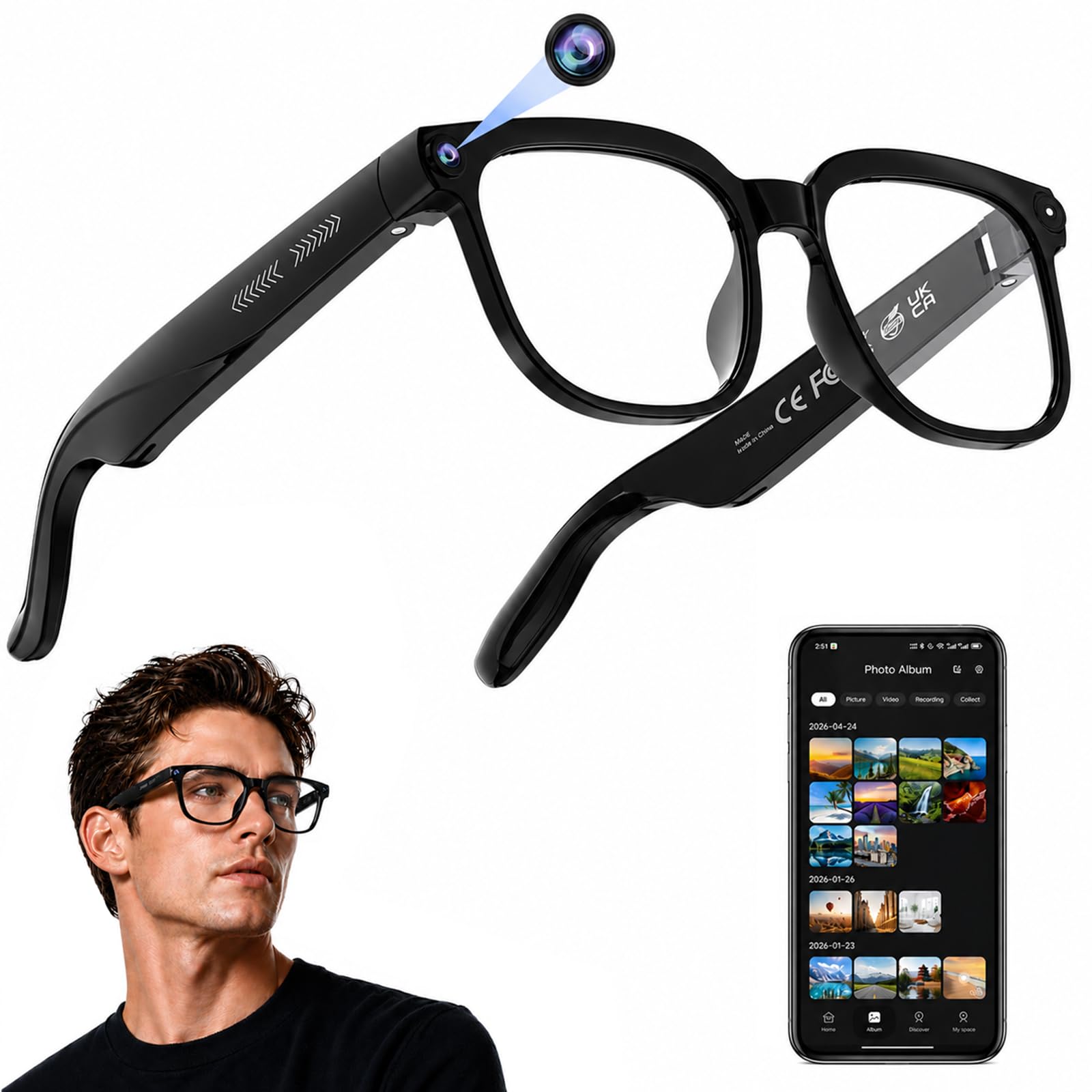
2. AI Smart Glasses 4K
Clearest value on the page: 4K footage, a 290 mAh cell, and a splash rating that survives a commute.
Plunthorn’s pair pushes a 4K recording mode (four times the pixel width of 1080p) into a frame with transparent lenses that looks like nothing special — which is exactly how you want camera glasses to look. The silicone band keeps it steady on your head, the microphone handles voice commands, and Bluetooth links it to either an iPhone or an Android phone for file transfer and app control. It is the pick for someone who wants crisp daylight footage without stepping up to a designer frame.
The defining hardware detail is the IP65 rating — the “6” means it shrugs off dust, the “5” means it handles sweat and light rain spray. That makes it the most weather-tolerant pick here, and for a cyclist or a commuter caught in a shower that matters more than any spec on a box. A 290 mAh battery (milliamp-hours, the charge the cell stores) covers a workday of mixed recording and calls. Owners describe it as a daily-wear tool rather than a gadget — it lives in the rotation of regular glasses.
Where it wobbles is audio in your own clips. The open-ear speakers play music decently, but the recorded soundtrack comes back muffled, which is the recurring note across the feedback. Translation is also fast but stumbles over quick, fluent speech and does better with a pause between lines. Neither is a reason to walk away — the 4K camera and the price-to-feature mix carry the score. Just do not buy it as a podcast recorder.
What carries the score: a 4K camera, an IP65 body, and a 290 mAh battery in one discreet frame — the combination most rivals split across two products.
The sound caveat: open-ear playback outperforms the mic, so treat conversation clips as documentary footage and enjoy the music separately.
Made for: commuters and travellers who want 4K footage that survives dust and drizzle.
Not the one for: anyone expecting podcast-grade audio in the recorded file.
3. AI smart Camera Glasses HD 1080P
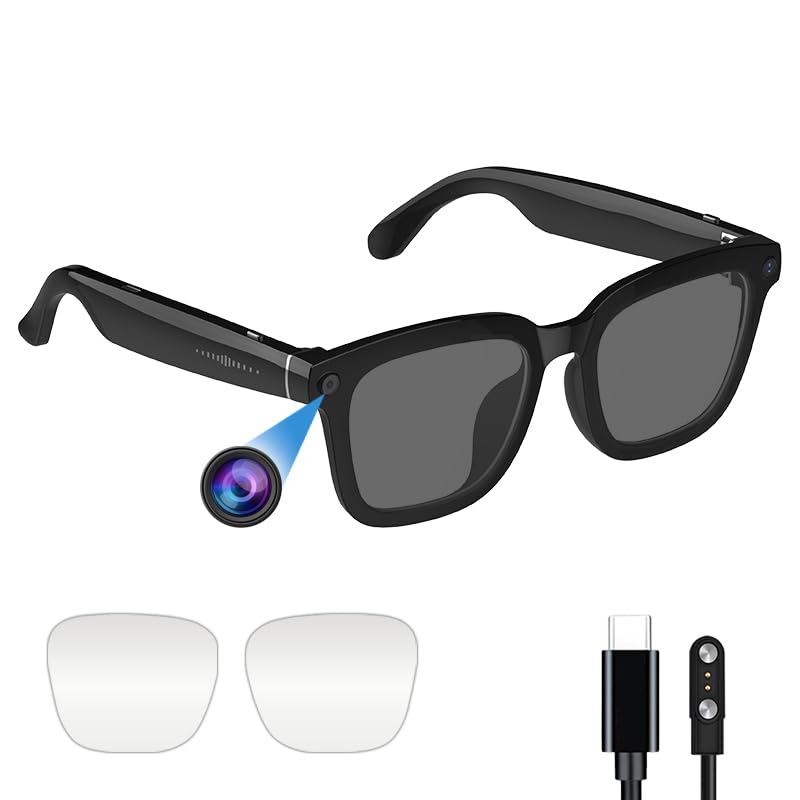
One button, 1080P in daylight, and a battery figure that beats most of the field on paper.
The KOIPSSE pair makes the case for keeping it simple. You get 1080P HD video and photo capture (a full-HD frame, plenty sharp for social and memories), a single-button record trigger, and a 220 mAh cell (the battery inside the frame) listed at up to 7 hours of average use. It also ships with a lens you can swap for clear glass, so the same frame works in a meeting and on a mountain. Travel, biking, and daily walks are where it fits — point your head and tap.
What wins people over is the daylight footage, which comes back cleaner than the price tag suggests, and the ease of getting a clip off the glasses and onto your phone. The arm-frame speakers handle music and calls without blocking the road sounds around you, and the built-in voice assistant manages translation across several languages — useful abroad, if a beat slow. The trade is the one every budget camera glass makes: once the sun drops, the picture does too.
Two smaller niggles worth knowing. Video import takes about a minute and can cut off if your phone screen times out, so push your display timeout past five minutes before you sync. And the build is not indestructible — the occasional arm screw works loose with hard use. Neither changes that this is the smartest entry into the category.
Why it punches up
- 1080P capture with a one-button trigger that needs zero menu-diving.
- 7-hour average battery life and a swappable clear lens included.
- Speaker sound comes through clearer than expected for the price.
What to plan around
- Low-light recording is weak; daylight is where it lives.
- File transfer can stall if your phone screen sleeps mid-import.
- Loose arm screws have turned up on a small number of units.
Grab it for: daylight filming on a budget, where a clear 1080P clip and a one-button trigger beat any spec you will never use.
Pass if: most of your footage happens after dark.
4. EarlySincere 2026 Ai Smart Glasses, 8mp 4k Hd Camera Glasses
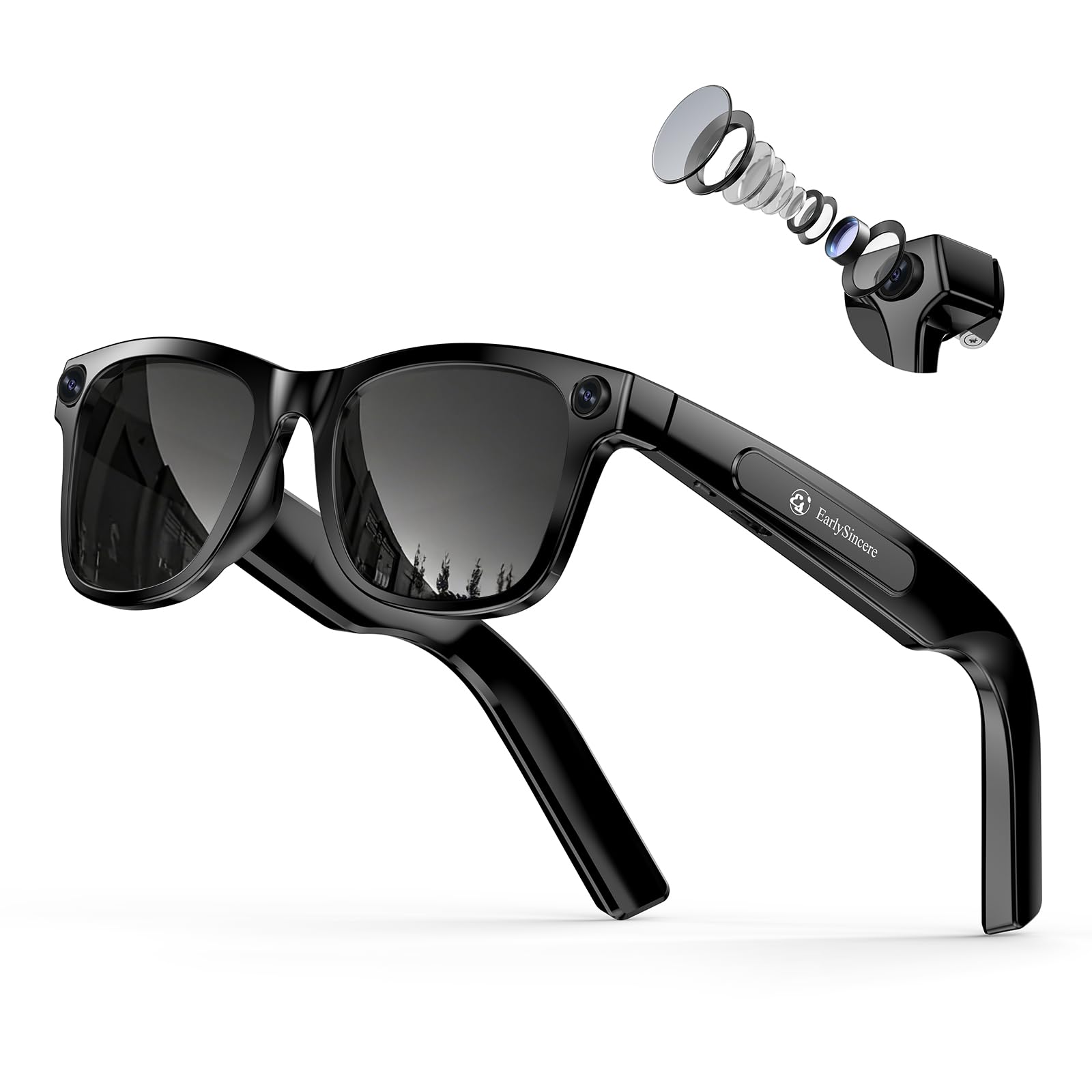
An 8 MP lens with stabilization built in — the travel pair for people who leave glasses in a bag for days.
EarlySincere’s block leads with a 410 mAh battery, the largest cell on this list, quoted at 10 days of standby with a 90-minute recharge and 15-plus hours of music or calls. Read that as standby and audio endurance, not continuous recording, and it tells you who this suits: someone who wants the glasses ready when inspiration hits, not someone filming a marathon. The 8 MP sensor shoots 4K and carries EIS — electronic image stabilization, a digital shake-corrector that keeps a walking clip steadier — which is the feature the cheap end of this market usually skips. Against the Wayfarer’s 12 MP sensor, the 8 MP lands 50% behind in pixel count; what it adds is a steadier handheld feel.
The frame is TR90 plastic with stainless-steel hinges rated for 10,000 folds and temples that flex up to 30°, and at 64.45 g it stays light enough to forget on a long walk. Bluetooth 5.4 and Wi-Fi 4 handle the connection, gradient tea lenses block UV400 (the full UV range), and you can have prescription lenses cut for them at an optician. Travel, driving, and outdoor use are the home turf.
The weak link is the AI, and it is a real one. The assistant fires off comments without being asked and can ignore spoken commands — enough of a headache that some buyers return the pair outright. Mic and speaker quality sit mid-pack. You are paying for the camera, the battery, and the build; treat the AI as a bonus that may annoy you.
The real draw: a 410 mAh cell and stabilized 8 MP footage make it the best holiday pair on this page — charge it, pack it, and it is ready days later.
The honest snag: the AI assistant is the least reliable part of the whole package, so buy it for the camera and the standby, not the conversation.
Built for: travellers who want a big battery, steady footage, and prescription lens options without premium-frame pricing.
Look elsewhere if: a smart, obedient AI assistant is central to why you are buying.
5. AI Smart Glasses 4K Translator
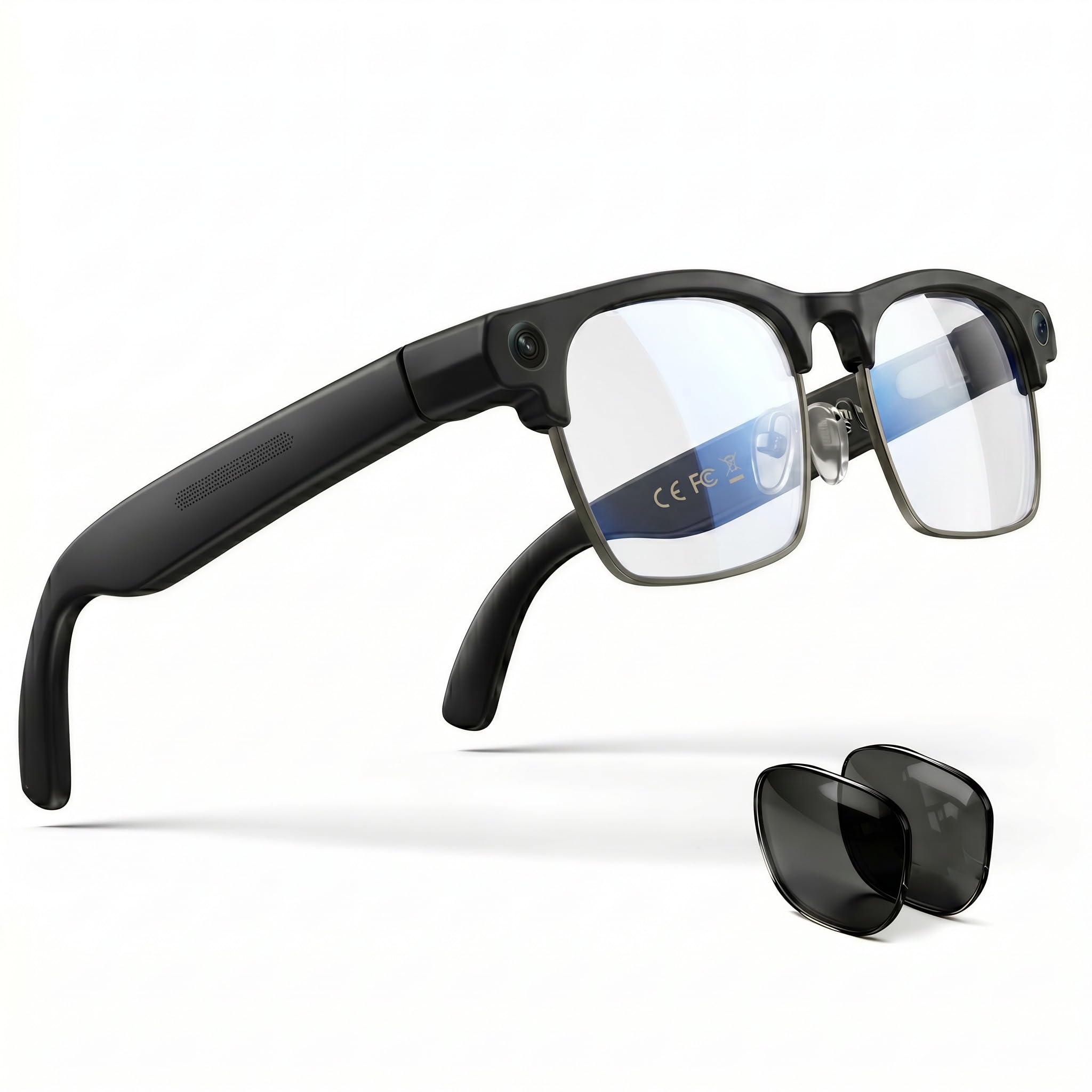
Two lens sets, 4K capture, and translation across 130-plus languages in one travel-ready frame.
The EGQINR pair is the traveller’s kit: an 8 MP camera recording 4K with image-stabilized, AR-coated lenses, 4GB of built-in storage, and a companion app that previews clips and pushes them to social in a tap. It handles two-way translation across more than 130 languages with a quoted 0.1-second response, split into face-to-face, simultaneous, and meeting-recording modes. For international work or study, that is a different job than plain filming — and this pair is the only one here built around it.
The packaging is unusually complete. You get both blue-light-blocking lenses and sunglass lenses, a TR90 frame with a detachable design so an optician can fit prescription glass, a triangular case, a screwdriver, ear hooks, and spare nose pads. The 255 mAh battery recharges in 1.5 hours by magnetic cable and is quoted at up to 7 hours of music or 6.5 hours of Bluetooth calls. Bluetooth 5.4 reconnects automatically within a 10-meter range, and IP65 dust-and-water resistance covers sweat and sudden showers.
The trade-off cuts both ways. At 3.5+ out of 5 across hundreds of buyers, it is well liked for build and camera, yet one strand of feedback targets the footage as short of professional quality for serious social content. Weight is noticeable on a long day, and translation does better when speakers pause between lines. Buy it if you want a translator that also films; do not expect it to replace a dedicated camera rig.
What it brings to a trip
- 130-plus language two-way translation with a quoted 0.1-second response.
- Two lens sets included — blue-light-blocking and sunglass — plus prescription-ready frame.
- 8 MP 4K camera with image-stabilized AR-coated lenses and 4GB storage.
- IP65 body, Bluetooth 5.4, and a fast 1.5-hour magnetic recharge.
What to know going in
- Footage falls short of professional quality, which some content creators notice.
- Weight is noticeable by the end of a full day.
- Translation works best when speech is paced, not rapid-fire.
Pick it when: your filming overlaps with travel, language, or meetings — the lens swap and translator do more work than a plain camera pair.
Choose otherwise if: polished, pro-grade video is the whole reason you are buying.
6. Meta Ray-Ban (Gen 1), Skyler AI Glasses

The style-forward Meta frame — same camera and open-ear audio, sized for a bigger face.
Skyler runs the same Meta Ray-Ban playbook as the Wayfarer above — hands-free photos and video, open-ear speakers, clear calls — in a rounder, more fashion-led shape. The look is the reason people reach for it; buyers describe it as polished, and it photographs like a proper designer frame rather than a gadget. Audio and calls carry over the same easy, open-ear feel, and the Meta ecosystem handles content capture and sharing.
The sizing is the thing to get right. The Skyler silhouette is large, wide, and oversized, and it reads as more feminine than the Wayfarer. That suits a wide face and a big-frame aesthetic beautifully — and it misfires on a narrower head, where it swims. Buyers who love it tend to love the fit as much as the look.
Battery is the recurring asterisk. Owners quote a few hours of heavy use before a recharge, which is fine for bursts and calls but not a full day of continuous filming. Meta AI and software still turn up as friction in some experiences, albeit less so than on the first Meta pairing. Style here is genuine; stamina is the compromise you accept.
The style payoff: a big, polished Meta frame that makes hands-free capture feel like normal eyewear.
The sizing warning: oversized and wide by design — great on a larger face, wrong on a small one.
Reach for it if: you want the Meta experience in the most style-led shape, and a generous frame fits your face.
Skip if: you have a narrow face or need all-day filming stamina.
7. Coucur Smart Glasses Camera
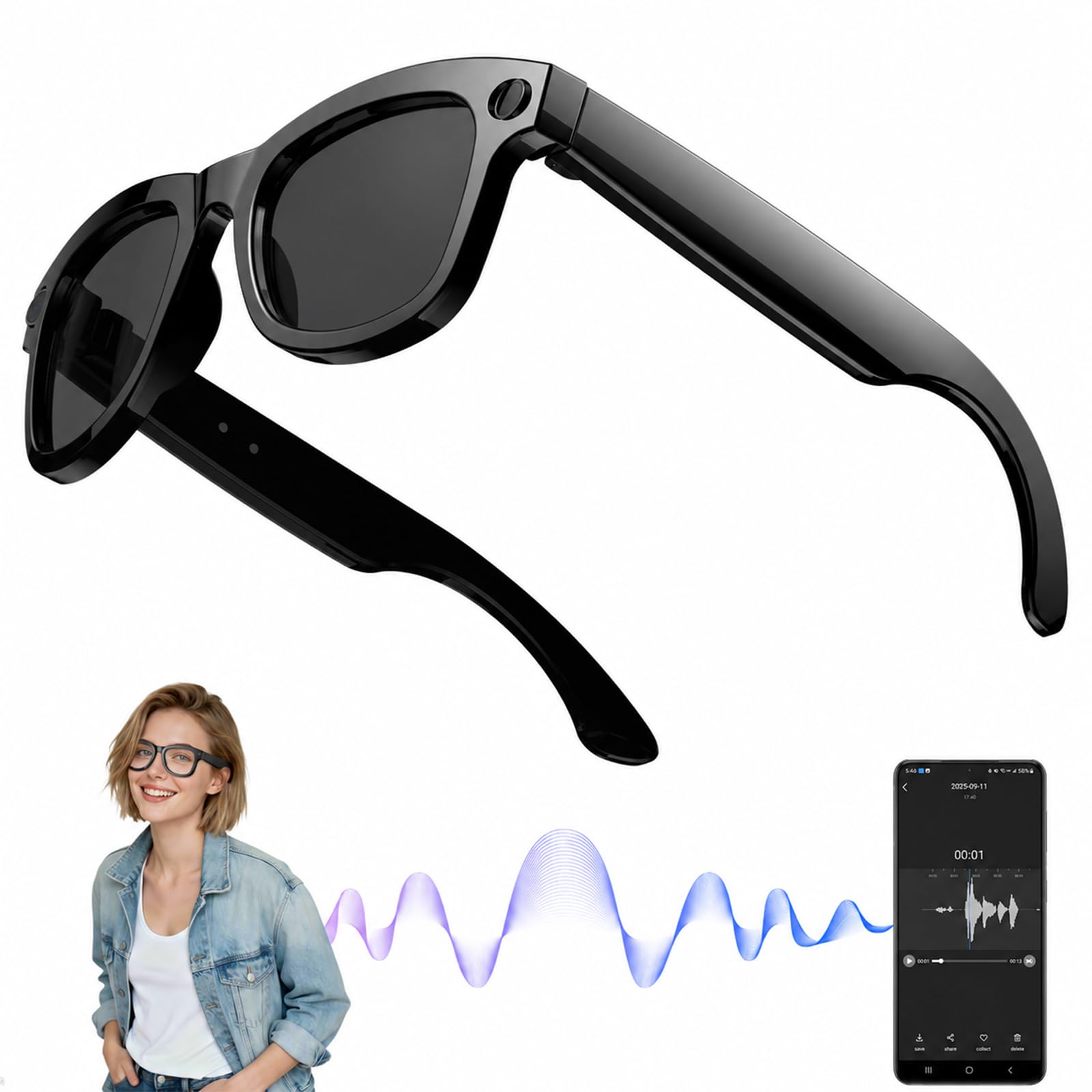
A simple camera-and-Bluetooth pair for beginners — light on specs, easy on the wallet.
Coucur keeps the feature list short: a camera, Bluetooth and Wi-Fi connectivity, a 270 mAh lithium-polymer cell, and button-plus-microphone controls, all in classic black. It pairs to Android and iOS phones and is built for the person just testing what camera glasses can do before committing to a premium frame. The package includes a charging cable, cleaning cloth, and manual.
The fit note comes first because it is the one to check. The frames run bulky and wide, and at least one beginner found them uncomfortable enough to return them. If you have a broader face, that is less of a problem; on a narrow head, measure before you buy. Voice questions do not always get answered reliably either, so treat the AI as a curiosity rather than a feature you rely on.
There is a real case for it as a starter: the camera works, the Bluetooth connects, and the price of entry is low. At this price it is a toe in the water — a way to test whether camera glasses fit your routine before spending on a premium frame. If camera quality and comfort both matter, the 4K Plunthorn or the 1080P KOIPSSE do more for the same kind of buyer who is just getting started.
Why a first-timer might start here
- Camera plus Bluetooth and Wi-Fi in a classic black frame.
- 270 mAh battery and simple button controls.
- Low-cost way to try camera glasses before upgrading.
What to measure first
- Frames run bulky and wide — narrow faces may find them uncomfortable.
- Voice questions do not always get a clear answer.
- Camera quality lags the sharper picks above.
Best first step for: a wider face and a curiosity about camera glasses without the premium commitment.
Go sharper instead if: picture quality and comfort both rank high on your list.
Know the Specs
Camera resolution and megapixels
Megapixels (MP) count the pixels in each still photo — a 12 MP sensor holds 50% more than an 8 MP one, so more detail survives when you crop. Video resolution works differently: 4K is roughly four times the pixel width of 1080p. Both numbers describe sharpness in good light, not in the dark, and neither fixes a shaky hand. Look for stabilization alongside the resolution figure.
Battery in mAh versus playback hours
Milliamp-hours (mAh) measure the charge a cell stores, so 410 mAh holds more than 255 mAh. But hour ratings are usually for music or calls, not recording, which drains faster. A pair with a charging case stretches the day; a pair without one needs a cable. Match the figure to your filming style, not the biggest number on the box.
IP ratings explained
An IP65 rating reads in two parts: the first digit covers dust and the second covers water spray. A “6” means dust-tight and a “5” means it handles sweat and light rain but not a dunk. For commutes and light rain, IP65 is enough. None of these glasses are built for swimming.
Weight and fit on your face
Weight in grams and stated frame width decide whether camera glasses end up in your daily rotation or in a drawer. A 64.45 g frame stays light on a long walk, but an oversized cut can still slide or clamp. Flexible temples and an honest note on fit shape are worth as much as any spec.
Common Questions
Do video recording sunglasses work with iPhone and Android?
How long can I actually record video on a single charge?
Is the recording light always on, and can I turn it off?
Can I put my prescription lenses in camera glasses?
What does EIS stabilization actually do?
Are camera glasses waterproof enough for rain or sweat?
Do these glasses need a phone nearby to record?
Is the Meta Wayfarer better than the Plunthorn 4K for filming?
How much video can the glasses store internally?
The Bottom Line
For most people filming hands-free, the winning pair of video recording sunglasses is the Meta Ray-Ban Wayfarer. Its 12 MP ultra-wide camera and five-mic system capture the sharpest, clearest first-person footage from a frame that looks like normal eyewear. If weather and a big battery matter more to you, reach for the Plunthorn 4K pair. And if translation is half the reason you want camera glasses in the first place, the EGQINR brings 130-plus languages and a spare lens set to the same frame.
The single most useful nudge: match the camera’s low-light performance to the light you actually film in. A 12 MP sensor with weak night performance is a worse buy for a night cyclist than a 1080P pair that nails daylight.
How we choose
We do not accept paid placement. Every pick is matched to a real buyer and a real use-case; we do not hands-on test units.
Sources
Specifications: manufacturer listings and product documentation. Review insights: verified customer reviews, as of October 2026. Pricing: not shown on this page (it changes often); check the current price via the retailer link.
As an Amazon Associate, Aappliancez earns from qualifying purchases. This does not affect which products we feature.