Disclosure: Some links in this post are affiliate links. As an Amazon Associate I earn from qualifying purchases, at no extra cost to you. Learn more
Specs are compiled from manufacturer listings and verified buyer reviews and can change over time — please confirm the key details on the product page before buying.
If your van turns into an oven by noon and a freezer after dark, the fix is not one miracle material — it is two jobs done separately. You need a radiant barrier to bounce the sun’s heat off your walls and roof, and a sound-and-thermal layer to soak up road roar and hold your own warmth inside. Pick the wrong roll and you either get a thin sheet that blocks almost no noise, or a sticky butyl mat that does nothing for summer heat. This guide sorts the seven rolls worth your money by which job they actually do.
This guide is built by comparing the manufacturers’ published specifications and the patterns across verified customer reviews, so you get each pick’s real strengths and trade-offs instead of marketing spin.
The market splits cleanly into reflective rolls, butyl deadeners and fibrous thermal blankets, and knowing which slot each one fills is the whole game. Below you’ll find the best van insulation broken down by job, roll size and install effort, so no wall cavity gets the wrong material.
Top Picks

How To Choose The Best Van Insulation
Start by admitting that “van insulation” is not one product. It is a stack. The outer layer handles radiant heat (sun loading on metal), the middle handles vibration, and the inner layer handles sound absorption and your own body heat. Buy one roll expecting all three and you will be disappointed.
Match the material to the wall, not the marketing
Reflective foil rolls belong on your roof and any sun-facing panel where their shiny surface bounces radiant heat away. Butyl mats belong on large flat metal panels — floors, doors, wheel wells — where they add mass and kill the drum. Fibrous blankets belong in cavities behind your interior panels, where their thickness and loft absorb noise and slow heat loss.
Do the square-foot math before you buy
Measure the panels you plan to cover and add a healthy margin for mistakes and overlaps. A 30 sqft roll covers a small car cabin nicely but will not finish a full van interior. Rolls that ship in several sections are easier to feed into tight spaces than one long awkward log.
Watch the moisture plan
Condensation is the quiet killer of van builds — it rots wood and breeds smell behind your panels. Some rolls here act as their own vapor barrier, while fibrous blankets are called out as moisture resistant on their own. Either way, plan the vapor layer before you button up the walls.
Side-by-Side Comparison
| Model | Best For | Coverage | Thickness | Material | Amazon |
|---|---|---|---|---|---|
| Siless Max 120 mil★ Best Overall | Killing road drone in a finished build | 30 sqft | 120 mils | Butyl mastic | Amazon |
| SmartSHIELD -5mmBest Value | Window and roof radiant blocking | Roll, 600″L x 16″W | 5 millimeters | Aluminum + foam | Amazon |
| Reflectix BP24050 | Camper van window covers | 600″L x 24″W | 0.31 inches | Aluminum + polyethylene | Amazon |
| Siless Hybrid 3in1 200 mil | Three jobs in one roll | 25 sqft | 0.2 inches | Butyl rubber | Amazon |
| SM600L 10′ x 60″ | Walls and headliners on a budget | 120″L x 60″W | 1.65 inches | Polyester fibers | Amazon |
| US Energy Products 48″ x 100′ | Large roofs and floors | 400 sqft | 0.25 inches | Double bubble foil | Amazon |
| 3M Thinsulate SM600L 60″ x 360″ | Whole-van fibrous insulation | 150 sqft | 1.65 inches | Polyester | Amazon |
Detailed Reviews
1. Siless Max 120 mil 30 sqft Car Sound Deadening Mat
Our pick — 4.5+★ from 850+ verified ratings; the strongest balance of quality and price.
The thick butyl mat that takes the hollow rattle out of your doors
If your van sounds like an empty soda can every time a door closes, this is the layer that fixes it. Siless Max comes in at 120 mils thick — that’s roughly three millimeters of butyl mastic, a sticky rubber sheet that adds weight to metal panels and stops them vibrating. The 30 sqft roll is designed for the automotive industry, and it handles the doors, floor pan and back wall of a full van build without leaving you short.
Installation is genuinely beginner-friendly. Trim the pieces to fit, peel the backing, press it down and hand-roll it flat — no spray adhesive and no messy paint-on products. The surface has small indentations that help you see where the roller has been so you can press out air pockets as you go. Owners describe it as easy to cut with ordinary scissors and easy to mold into curves, which matters when you are working around wheel arches and sliding door tracks.
The honest trade-off is weight. Butyl is heavy, and one full-cabin job will add real pounds to your build — fine for a camper, worth planning around if you are chasing payload. It is also a vibration dampener, not a thermal blanket. It does nothing for summer radiant heat, so pair it with a reflective roll higher up the wall. At 4.5+ stars across 880+ owners, this is the crowd favorite on this list, and the gap to the bigger-rated picks here is small.
What earns it first place
- 120 mils of butyl mastic adds real mass to flat panels and kills door drum
- Peel-and-place install with a hand roller — no spray adhesive or drying time
- 30 sqft covers a full van floor, doors and back wall in one roll
- Cut with scissors and molds into curves and wheel wells
Where it stops short
- Heavy — plan payload around a full-cabin install
- Blocks vibration and noise, not radiant heat — needs a foil layer for summer
Reach for this if: you want the road drone and door rattle gone and you are willing to do the roller work yourself.
Look elsewhere if: your main problem is a van that bakes in the sun — this material is not aimed at radiant heat.
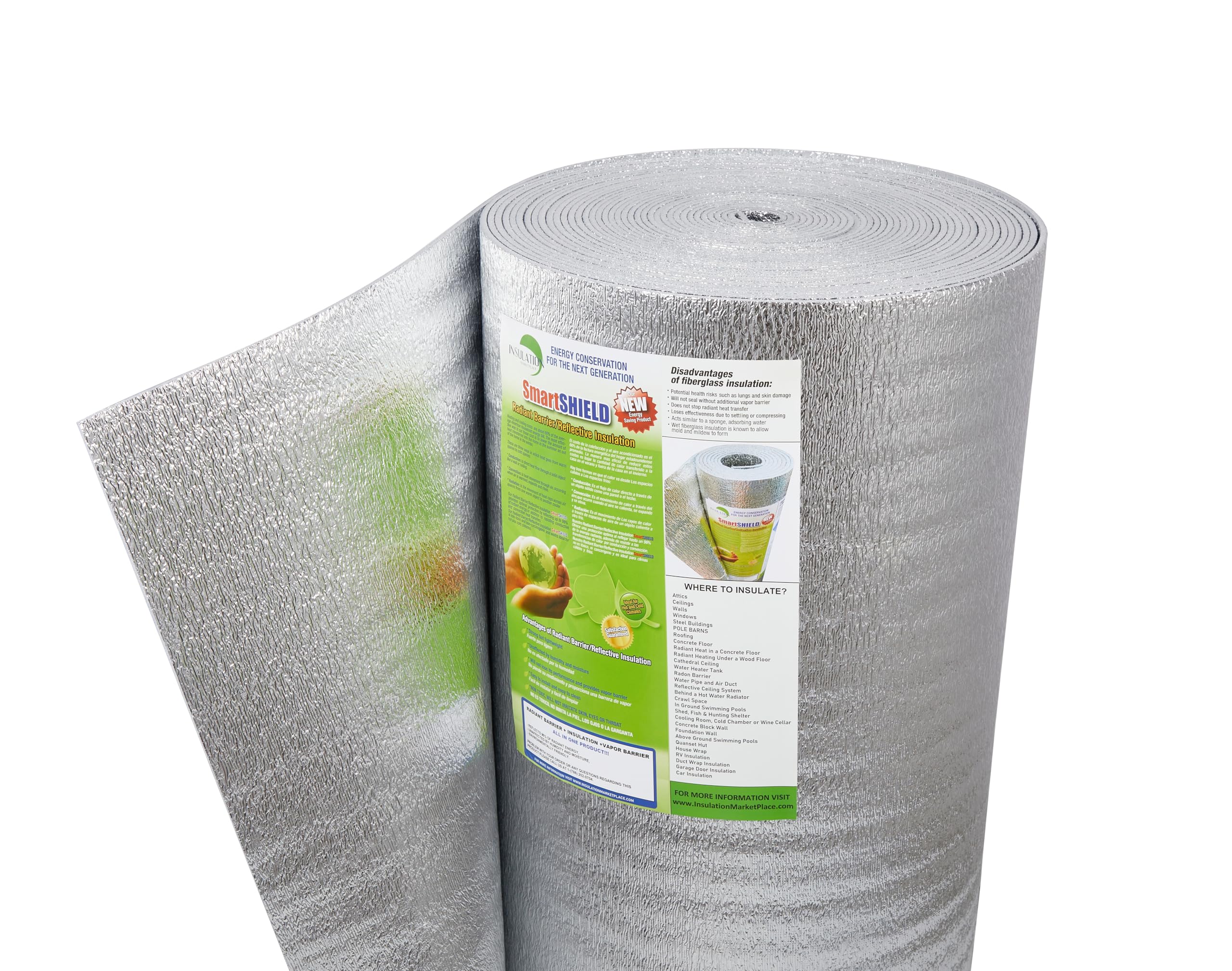
2. SmartSHIELD -5mm 16”X50ft R17 Reflective Insulation Roll
Foam-cored foil that bounces sun off your roof and windows
The number to fix on here is 5 millimeters — a foam core sandwiched between two foil faces, and both sides reflect 95% of radiant heat. That is the exact job a van needs on a sunny roof panel: push the heat back out before it ever warms the metal. The roll runs 600 inches long and 16 inches wide, so you can wrap a window, run a strip down a ceiling rib, or line a wheel arch without wrestling a huge log of material.
What owners like is how little fuss it takes. It is marketed as tear and puncture proof but cuts cleanly with ordinary utility scissors, and there is no separate vapor barrier to buy — the foil faces do that work. One camper reports it kept the weather off their windows through a hot summer and cut the load on their air conditioner. Another notes that doubling the pieces on a garage door made a huge difference — the same double-layer trick works on a van’s rear doors in summer heat.
The caveat is thickness versus expectation. At 5 millimeters it is a radiant barrier first and a thermal blanket second — foil reflects heat, it does not hold much air still. It also compresses if you clamp it down hard, so take your time when working around fasteners. At 4.5+ stars across 1,000+ ratings this is the best value pick on the list, and it pairs beautifully with a fibrous blanket behind your panels.
The radiant-heat read: two foil faces at 95% reflection, a foam core, and a vapor barrier built in — all in one roll you can cut with utility scissors.
The fit note: it is 5 millimeters of foam core, so treat it as a sun-blocker and pair it with a thicker layer if you want real insulation value.
Pick it when: your van’s roof and windows are cooking you and you want the cheapest effective shield against radiant heat.
Hold off when: you are hoping one foil roll alone will muffle road noise — foil this thin will not do that.
3. Reflectix BP24050 24-Inch-by-50-Foot Bubble Pack Insulation

The window-cover staple every stealth camper already owns
Cut a piece, tuck it into the window frame, and the outside cold stops coming in — that is the move Reflectix is famous for, and it is a big part of why the 24-inch width is so useful. The roll stretches 600 inches long and 24 inches wide with a bubble-pack construction 0.31 inches thick. That extra width over a narrower foil roll means less taping and fewer seams when you cover full-size van windows.
Buyers report that shears-cut pieces blocked outside cold at RV windows within 10 minutes of installation. The bubble layer also means it stays put without adhesive — you tuck it into the hollow window frame, trim the corners, and it holds itself against the glass. For slider windows, cut a couple of inches oversize and use velcro on the walls. It doubles as decent blackout for stealth camping, which is a perk no spec sheet will tell you about.
Set expectations on two things. It is not a noise blocker — the material simply is not dense enough to stop sound. And it is best on windows, roof vents and reflective surfaces, not as your only wall insulation. One camper measured a 20-degree temperature swing at the windows and called the Reflectix worth the money. With 650+ ratings at 4.5+ stars and temperature control the thing it is praised for most, this is the roll you buy first if you are sleeping in the van this weekend.
The window-cover verdict: a 24-inch width and 0.31 inches of bubble pack that holds itself in a frame, so you get a blackout thermal cover without glue or velcro on the first pass.
It earns its place if: you want quick window covers that stay up without adhesive and keep the cold out overnight.
Pass it by if: you need a dense material to quiet road noise — this one is a heat and light blocker, not a sound wall.
4. Siless Hybrid 3in1 200 mil 25 sqft Car Sound Deadening Mat

Three layers stacked into one roll: damping, heat block and sound soak
Most builds ask you to buy damping and thermal material separately. This one stacks butyl mastic, closed-cell PE foam and a mass-loaded butyl membrane into a single 200 mil sheet — 0.2 inches of composite designed to fight vibration, exhaust heat and low-frequency noise at the same time. The 25 sqft roll is the version to buy when you do not want to layer three products by hand.
The install story is the same peel-and-place routine as the Siless Max above, and the material feels soft and flexible enough to cut with scissors. It sticks solidly once rolled down, and One van owner covered a full 2025 Chevy Express interior with two boxes and reports road noise virtually gone and a 110°F roof dropping to 97°F. A shop owner doing a full Bronco build notes it conforms well and rolls down flat against panel resonance.
Two things to know before you order. On a hot day the adhesive can stick to its own release paper, so cool the boxes in air conditioning before you start. And the foam layer can catch a flame, so seal edges with aluminized tape and keep a fire extinguisher in the van. At 4.5+ stars across 920+ ratings, this is the pick for anyone who wants one roll to do the damping and the heat blocking together.
The three-in-one case
- 200 mil composite does damping, heat blocking and low-frequency sound in one layer
- 25 sqft of butyl rubber you cut with scissors and hand-roll
- Sticks solidly and conforms around wheel wells and door skins
Worth knowing first
- Hot-weather adhesive can grab its own backing — chill the boxes before installing
- Trim and edge it with aluminized tape, since the foam layer is combustible
Made for you if: you want to skip buying three separate materials and want one thick roll that handles noise and heat together.
Not your roll if: you are insulating walls for warmth alone — a fibrous blanket does that job cheaper per square foot.
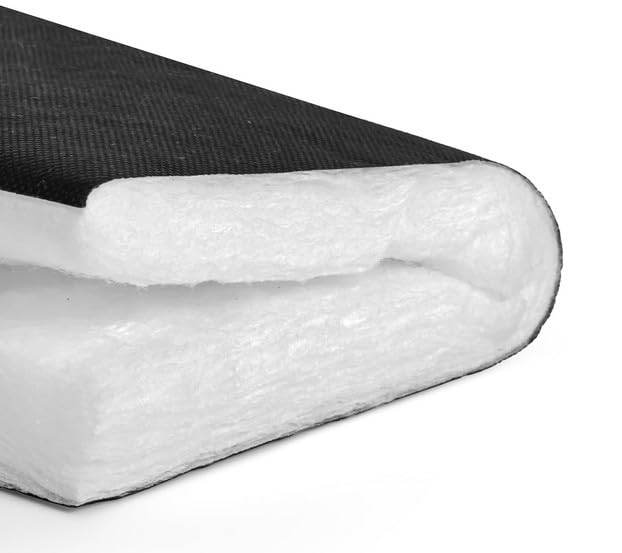
5. Acoustic/Thermal Camper Van Insulation SM600L (10′ x 60″)
A fibrous blanket that slides behind your wall panels and actually holds warmth
Here is the number that decides it: R-5.45 per inch, the insulation rating that tells you how well this blanket slows heat moving through it. That is the stat that matters when you are trying to sleep in a van at altitude in October, and it is why this roll earns its place in the walls and headliner rather than on the windows. The material is 1.65 inches thick at 0.95 lbs per cubic foot, and it lofts up toward 1 3/4 inches over time — light, bulky, non-woven polyester and polypropylene fibers.
It moves quickly in a real build. The 60-inch width and 10-foot length suit the walls and ceiling of a Ford Transit campervan, where you measure, cut with scissors and attach with spray adhesive — 3M adhesive holds it to a ceiling fine. The thin consistent shape slides neatly under finished wall panels in a way loose wool does not. Owners mention the same thing again and again: it is easy to work with, not itchy, and the noise drop is why it is worth the money.
Two practical gripes keep the stars honest. The fibers grab at loose clothing, so wear jeans and not sweatpants when you install it. And it dulls scissors fast, so start with a fresh sharp pair. It is also sold in a single 10-foot section, so plan a second roll if you are finishing a long wheelbase — an owner reports needing a second order to finish their campervan.
What the numbers buy you: R-5.45 per inch in a 1.65-inch lofted blanket — real insulating value in the cavity behind your panels, not just a foil surface.
The install truth: scissors go dull and cotton sticks to the fibers, so dress right and cut with a fresh blade.
The right roll for: filling wall and ceiling cavities on a campervan build where warmth retention and noise absorption both matter.
Think twice if: your build is a full long-wheelbase van and you only order one — you will be ordering a second roll to finish.
6. US Energy Products 48″ x 100′ Double Bubble Reflective Foil Insulation

A 400-square-foot foil roof and floor cover for the biggest builds
Coverage is the whole reason this roll exists: 400 square feet across a 1200-inch length and 48-inch width, with a double bubble construction 0.25 inches thick. That is enough to line a long-wheelbase floor, roof and both sides without a mid-project run to the store. Both faces bounce back up to 97% of radiant heat, so the foil surface does the summer work while the bubble layer adds a little cushion and thermal resistance.
For skirting and window work the results show up fast. One user skirting a motorhome in freezing mountain wind went from a few degrees of inside-versus-outside difference to nearly 20°F warmer. Another lined a shop wall with it and found the surface cool to the touch even in 90°F heat. It cuts with scissors, and aluminum tape grabs it well at the seams — the same trick you will use around van roof ribs.
One recurring gripe: rolls have arrived short of the stated length. It is frustrating, and it is worth measuring your roll on arrival and calling the seller if it comes in under, because customers note the company expedited replacement rolls quickly when contacted. The 48-inch width is also a two-person job on a van roof, and the foil is not a sound blocker, so treat it as the radiant layer in a layered build.
Why the size matters: 400 square feet at up to 97% radiant reflection means you can finish a big van roof and floor in one pass.
Measure it on arrival: a few rolls show up short of length, so check before you cut — the company does make it right when called.
Good match for: long-wheelbase builds and skirting jobs where you want a single generous radiant roll to cover everything.
Less ideal if: your build is a small van where 400 square feet is mostly leftover — a narrower roll wastes less.
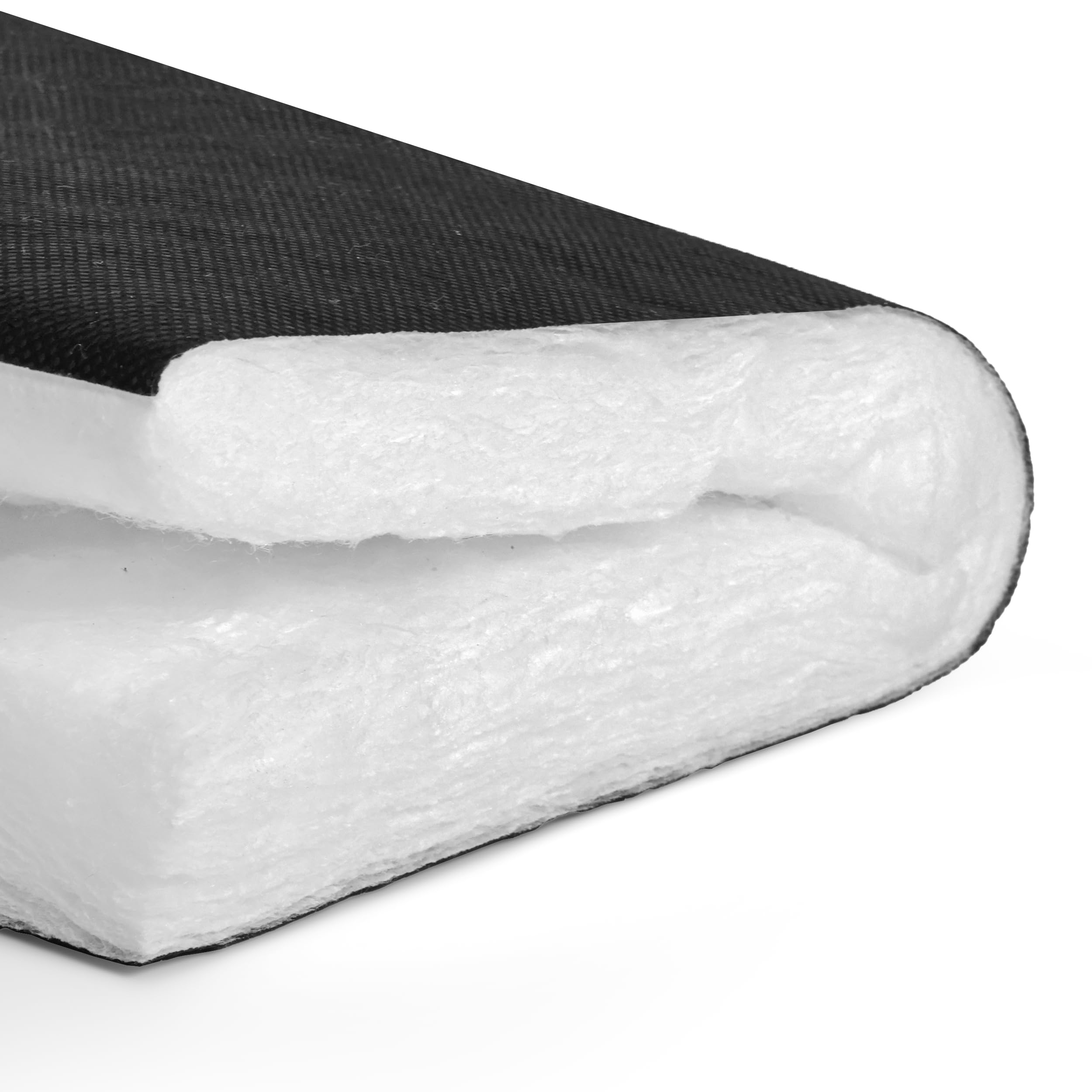
7. 3M Thinsulate SM600L 60 Inch x 360 Inch Camper Van Insulation
The generous fibrous roll that finishes a whole van in one purchase
This is the big-format version of the fibrous blanket: 150 square feet across a 60-inch width and 360-inch length, arriving in three 10-foot sections so each piece feeds neatly into a panel cavity. The same R-5.45 per inch and 1.65-inch thickness apply, in a polyester material that is called out as exceptionally moisture resistant with no extra waterproof layer needed — a real advantage on a build where condensation is a constant worry.
The practical appeal is in the loft. The fiber puffs up immediately when the packaging opens and expands further as you cut it, so a rolled-tight bundle becomes a thick blanket once it lays flat. It cuts easily, and a spray adhesive holds it against a van roof. Reviewers point out it is easy to put in the van and clearly insulating, which is a modest but consistent thumbs-up for a product that does its job quietly.
The 4.0+ star rating is the lowest here, and the thickness claim is the sticky point — one complaint disputes the 1.65-inch spec as wildly overstated. The majority like what lands in their hands once it is opened and lofted, but it is worth unrolling and laying it out before you judge. Also note the delivery format: three separate 10-foot sections, which is easier to handle but replaces one long continuous run.
Why buyers reach for it
- 150 sqft covers a whole van interior in one purchase
- R-5.45 per inch and 1.65-inch loft, with natural moisture resistance
- Ships in three 10-foot sections that are easier to feed into cavities
The honest caveats
- Thickness is disputed — some rolls arrive thin until they loft, so lay it out first
- The lowest-rated pick here, so read the reviews on your own use case before committing
Fits the build where: you want one big fibrous roll to finish every cavity and you value moisture resistance without an extra vapor barrier.
Check the loft first: if the thin delivered state bothers you, open it and lay it out before you decide it is too thin.
Know the Specs
R-value and why it is not the whole story
R-value is a rating of how well a material slows heat flow through itself — a higher number means a better insulator. It matters most in fibrous blankets and foams, and it says nothing about radiant heat bouncing off a foil surface. A van build usually needs both a reflective layer (measured by radiant reflection) and an insulating layer (measured by R-value) to be comfortable in all seasons.
Thickness in mils versus millimeters
A mil is one thousandth of an inch, so 120 mils is a much meatier sheet than 5 millimeters of foam core. Thicker butyl material adds mass and kills vibration, while thinner foils are meant to reflect rather than block sound. Do not assume the thickest, heaviest roll is the right one everywhere — match the thickness to the job the panel needs.
Square-foot coverage and your wheelbase
Coverage tells you how far a roll stretches once it is cut and laid out. Measure your floor, roof, doors and walls, add a margin for overlaps, and compare that total against the roll’s stated square footage. A 30 sqft roll finishes a small cabin; a big van roof and floor can soak up 150 to 400 square feet without much left over.
Vapor barriers and condensation
A vapor barrier stops moisture from passing into your wall cavity, and condensation behind panels is a common cause of rot and smell. Some reflective rolls are built to serve as the vapor layer themselves, while fibrous blankets are often called out as moisture resistant on their own. Decide which layer is doing the barrier job before you close up the walls.
Common Questions
Do I need both a reflective foil roll and a butyl mat in a van?
How many square feet of insulation does a camper van need?
Can I put foil insulation directly against the van’s metal walls?
Will a sound deadening mat reduce noise in a diesel van?
Is reflective foil a substitute for a fibrous insulation blanket?
How do I calculate whether a roll will finish a Sprinter, Transit or Promaster?
Does the thickness on the label match what arrives in the box?
Can I install van insulation without removing the interior panels?
Is there a fire risk with foam-core and butyl insulation?
How long does van insulation last once it is installed?
The Bottom Line
For most builds the van insulation winner is the Siless Max 120 mil because 120 mils of butyl mastic adds the mass that quiets flat panels, and the peel-and-place install is friendly to a first-timer. Pair it with the SmartSHIELD -5mm on your roof and windows for radiant heat, since two foil faces at 95% reflection handle the summer sun that butyl cannot. And if you want one generous fibrous roll to finish every wall cavity, the 3M Thinsulate SM600L gives you 150 sqft at R-5.45 per inch. If you only do one upgrade this weekend, buy the Reflectix roll for the windows — it is the quickest comfort win on this list, and all it takes is scissors.
How we choose
We do not accept paid placement. Every pick is matched to a real buyer and a real use-case; we do not hands-on test units.
Sources
Specifications: manufacturer listings and product documentation. Review insights: verified customer reviews, as of October 2026. Pricing: not shown on this page (it changes often); check the current price via the retailer link.
As an Amazon Associate, Aappliancez earns from qualifying purchases. This does not affect which products we feature.