Disclosure: Some links in this post are affiliate links. As an Amazon Associate I earn from qualifying purchases, at no extra cost to you. Learn more
Specs are compiled from manufacturer listings and verified buyer reviews and can change over time — please confirm the key details on the product page before buying.
Most people buy a UPS for their fridge and discover the hard way that a standard computer backup beeps, overheats, or shuts down the moment the compressor kicks in. The fix is pure sine wave output and enough watt headroom to absorb a compressor’s startup surge. This guide sorts the shelf by what actually survives a refrigerator load, from mid-range units that handle the job to premium lithium models built to outlast the fridge itself.
This guide is built by comparing the manufacturers’ published specifications and the patterns across verified customer reviews, so you get each pick’s real strengths and trade-offs instead of marketing spin.
Refrigerator compressors draw a burst of power on startup that can trip an undersized backup, so matching the unit’s rated wattage to your appliance matters more than outlet count. Below you’ll find the best ups for refrigerator picks ranked by real-world load handling.
Top Picks


How To Choose The Best UPS for Refrigerator
A refrigerator is a motor load, and motor loads behave nothing like a desktop PC. The compressor pulls a short, heavy burst of current every time it starts, then settles into a much lower running draw. Pick a backup whose watt rating absorbs that burst and you ride out short outages with the food still cold. Pick one that cannot, and the unit either trips into overload or drains itself in minutes.
Start with the watt rating, not the VA number
The VA figure (volt-amperes) is the headline number on the box, but the watt rating is what actually limits how much appliance you can hang off the unit. A 1500VA model rated at 900W can carry far less real load than a 1500VA model rated at 1000W. Read the watt number first, then check the VA. And leave headroom — running a backup at its ceiling on a compressor load is how you shorten its life.
Pure sine wave versus simulated sine wave
Pure sine wave output mimics the smooth curve of wall power. Simulated sine wave — sometimes called modified or stepped sine wave — chops that curve into blocks. Motors and compressors run hotter and noisier on a stepped wave, and sensitive control boards can misbehave. For a fridge, pure sine wave is the safer match; simulated output is a compromise you accept on a budget-tier unit, not a feature to seek out.
Runtime is a function of load, not a fixed promise
Every runtime figure you see is measured at a specific load. A unit that runs a router for an hour may hold a fridge for a small fraction of that, because the fridge draws many times more power. Do the math against your appliance’s actual running watts, and remember that a fridge cycles — the compressor is not running every minute, which stretches real-world runtime beyond the worst-case estimate.
Battery chemistry decides your long-term cost
Sealed lead acid batteries are the default in most backups and typically need replacing every few years. Lithium iron phosphate (LiFePO4) packs cost more up front but are rated for far more charge cycles and a much longer service life, and they do not need the same maintenance routine. If the unit will sit in a garage or cabin running continuously, the lithium premium often pays back in avoided replacements.
Side-by-Side Comparison
| Model | Best For | Capacity (VA/W) | Sine Wave | Outlets | Amazon |
|---|---|---|---|---|---|
| CyberPower CP1500PFCLCD★ Best Overall | Whole-home fridge + network gear | 1500VA / 1000W | Pure sine wave | 12 (6 battery) | Amazon |
| APC BR1500MS2Premium Pick | Sensitive electronics and a fridge circuit | 1500VA / 900W | Pure sine wave | 10 (6 battery) | Amazon |
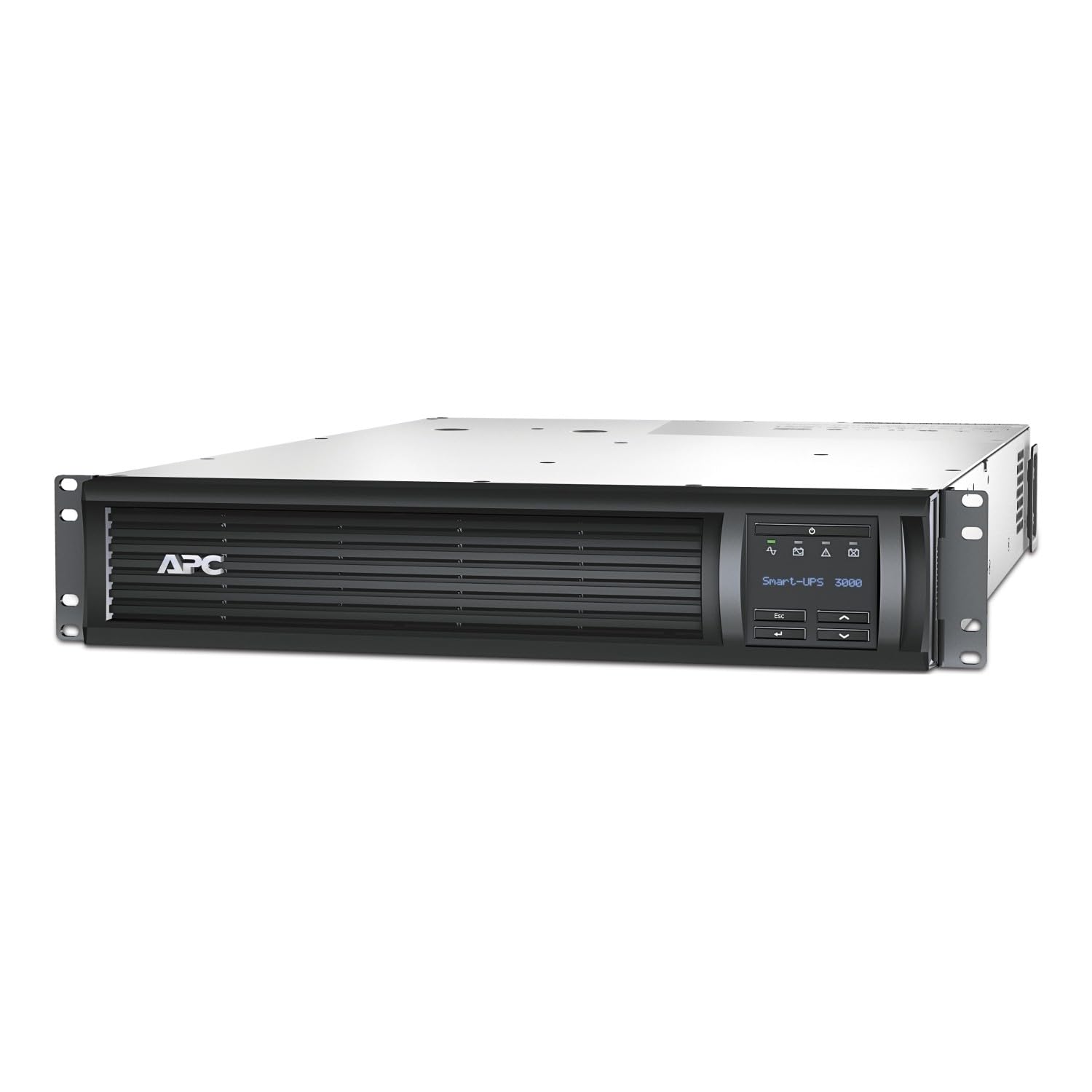
| APC SMT3000RM2UCHeavy Load Champion | Whole-kitchen or walk-in cooler load | 3000VA / 2700W | Pure sine wave | 8 (rack) | Amazon |
| Eaton Tripp Lite OMNI1500LCDT | Long outage coverage for network + fridge | 1500VA / 810W | Simulated sine wave | 10 | Amazon |
| CyberPower BRG1000AVRLCD | Small fridge or garage unit | 1000VA / 600W | Simulated sine wave | 10 (5 battery) | Amazon |
| GOLDENMATE 1500VA Lithium | Set-and-forget long-term backup | 1500VA / 1000W | Pure sine wave | 8 | Amazon |
| SKE Phoenix VL1500 | Budget fridge backup with replaceable battery | 1500VA / 900W | Simulated sine wave | 10 (5 battery) | Amazon |
| Amazon Basics 1500VA | Short-outage flicker protection | 1500VA / 900W | Simulated sine wave | 10 (5 battery) | Amazon |
| Feelfunn 12V Car Fridge | Off-grid cold storage companion | — | — | — | Amazon |
Detailed Reviews
1. CyberPower CP1500PFCLCD UPS
Our pick — 4.5+★ from 11,000+ verified ratings; the strongest balance of quality and price.
The pure sine wave unit that absorbs a compressor kick without flinching.
If you want the one backup most likely to carry a fridge circuit without drama, start here. This unit delivers 1500VA and 1000W of pure sine wave output — the higher watt ceiling of the two main CyberPower mid-range contenders, which matters when a compressor surges. Pure sine wave (a smooth, wall-like power curve) is the output type a motor wants, so the fridge runs at its normal tone instead of humming louder and hotter.
Runtime scales with load, and the design assumes you are not maxing it out. Owners route it to network gear, routers, and mesh nodes at partial load and report hour-plus stretches; put a fridge on it and you should expect far less, because the appliance pulls many times the watts. That is normal physics, not a shortfall. The 12 outlets break down into 6 battery-backed and 6 surge-only, so you can hang the fridge and modem on protected sockets while peripherals ride the surge side.
The multifunction color LCD is the part people actually lean on day to day. It shows battery state and load conditions immediately, tilts up to 22 degrees for easier reading, and flags trouble before it takes equipment down. Automatic Voltage Regulation (AVR — circuitry that trims high and low voltage back to normal without draining the battery) handles brownouts and silent sag so the battery is saved for real outages. Add a 3-year warranty that includes the battery and a connected-equipment guarantee, and the after-sale story is unusually complete for this tier.
Where it earns its keep
- 1000W ceiling gives more compressor headroom than the 900W units on this list
- Pure sine wave output suits motor loads and active-PFC electronics
- Color LCD with tilt shows load and battery state at a glance
- 3-year warranty covers the battery; equipment guarantee backs it
What to weigh first
- At 24.9 pounds it is a substantial lump to mount or move
- Runtime on a fridge load will be short — size expectations accordingly
- Durability reports split between long service and early failures
Reach for this if: you want pure sine wave, the highest watt ceiling in the mid tier, and a warranty that covers the battery.
Think twice if: your fridge is a large side-by-side drawing near the ceiling — step up to a 3000VA class unit.
2. APC BR1500MS2 UPS
The brand-name sine wave backup with a battery you can swap yourself.
APC’s pitch here is pure sine wave for sensitive loads, and the spec sheet backs it: 1500VA and 900W of clean output, up to 73 minutes of runtime at 100W. What you do get is a pure sine wave curve that keeps a compressor and a modern control board happy.
The battery is user-replaceable (APCRBC163), which is the quiet long-game advantage. Instead of retiring the whole unit when the cells fade, you swap the pack and keep the chassis. There are 10 outlets split 6 battery-backed and 4 surge-only, plus built-in coax and Ethernet surge protection on the data lines, so a fridge circuit and the router that reports on it can share the box.
You can live with the trade-offs. Buyers report a persistent electronics smell that gets worse under load. The unit can also be finicky with generator input — owners found that dropping the sensitivity setting from Medium to Low stopped it from cycling between generator and battery. The 16-hour charge time is slow, so plan a full overnight charge before you trust it. For a fridge that only needs to bridge short outages, none of that disqualifies it.
Built for the long haul: user-replaceable battery, 6 battery outlets, and data-line surge protection on top of the sine wave output.
The honest catch: slow 16-hour recharge and a sensitivity quirk on generator power mean you should test your setup before relying on it.
Best fit: anyone who wants a name-brand pure sine wave unit with a battery they can service themselves.
Look elsewhere if: you plan to run it off a generator and want plug-and-play behavior with no sensitivity fiddling.
3. APC SMT3000RM2UC Rack Mount UPS
Double the wattage of the mid-tier units, for a walk-in cooler or whole kitchen circuit.
There is a clear gap between this and everything else on the list. It holds 3000VA and 2700W of pure sine wave output against the CyberPower’s 1500VA and 1000W — literally double the capacity on the VA side. If your load is a commercial fridge, a chest freezer plus a fridge, or a walk-in cooler, this is the bracket that has the headroom. The 2700W ceiling means a compressor surge has somewhere to go instead of tripping the unit into overload.
It is built as a 2U rackmount with support rails included, so it belongs in a rack or a wall-mounted enclosure rather than on a shelf beside the fridge. Connectivity comes through SmartConnect, a remote-monitoring portal that pushes notifications and firmware updates, offered as a 6-month free trial on units registered after August 1, 2023. Automatic Voltage Regulation keeps high and low utility voltage inside a safe band, which is the part that quietly protects the compressor over months of dirty power.
The reality check is the install. It is heavy enough that even getting it racked takes planning — the advice is to remove the disconnected battery, mount the empty chassis, then reconnect and power on. It also needs a specific 30A twist-lock receptacle to feed it, and at least one buyer received a unit that was not the advertised 110V from a third-party seller. Buy from a reputable source and confirm your outlet before ordering.
The spec that matters: 2700W of pure sine wave is enough to sit a real fridge or cooler load behind without running at the ceiling.
Plan around this: rack form factor, a 30A twist-lock feed, and heavy lifting at install — it is not a plug-in-and-forget box.
Choose this for: a serious cooling load where the 1000W mid-tier units simply run out of headroom.
Skip the hassle if: you do not have a rack or the correct 30A receptacle — a tower unit will serve a single fridge better.
4. CyberPower BRG1000AVRLCD UPS
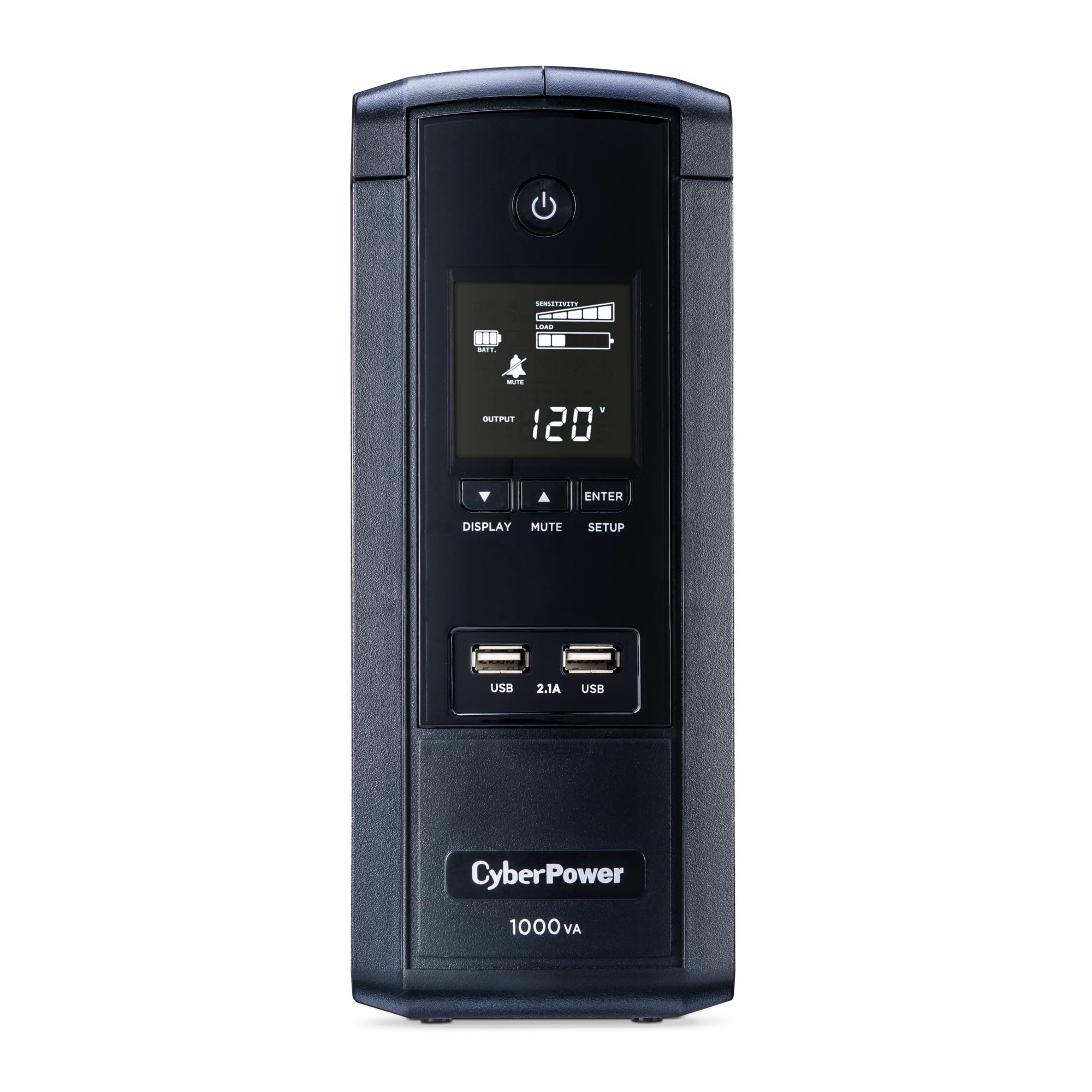
A compact, light tower for a bar fridge or a garage unit you want to keep humming.
Not every fridge job needs 1500VA. This unit lands at 1000VA and 600W of simulated sine wave output, which is enough for a small appliance or a secondary fridge where you mainly want to bridge short flickers. The 5-year warranty including the battery is the longest coverage on this list.
Owners lean on the LCD for a reason. It shows estimated runtime, battery capacity, and load capacity in plain sight, so you can watch the minutes-to-shutdown count down and plan your food-moving. The unit weighs 15 pounds and is small enough to tuck in a corner, and the dim power light makes it livable in a bedroom or garage. Two USB ports add a phone or tablet charge without stealing a protected outlet.
The catch is the 600W ceiling and the simulated wave. A big side-by-side will overwhelm it, and a compressor running on a stepped wave runs less smoothly than on pure sine wave. It is the right tool for modest loads, not the family fridge in a heat wave. The 3-year average battery life figure is also note — this is a unit you will eventually service, not a permanent fixture.
Why it fits a small setup
- 5-year warranty includes the battery — the longest on this list
- Informative LCD shows runtime, load, and battery percentage
- 15 pounds and compact enough for a corner or garage shelf
- connected-equipment guarantee backs the purchase
Where it stops
- 600W ceiling rules out a large side-by-side fridge
- Simulated sine wave is a compromise for compressor motors
- Rated battery life of 3 years means a future replacement
Nail it down for: a bar fridge, a garage cooler, or a secondary unit where short outages are the concern.
Step up instead if: your main fridge is a big one — the 1000W CyberPower above carries that load far better.
5. GOLDENMATE 1500VA/1000W Lithium UPS
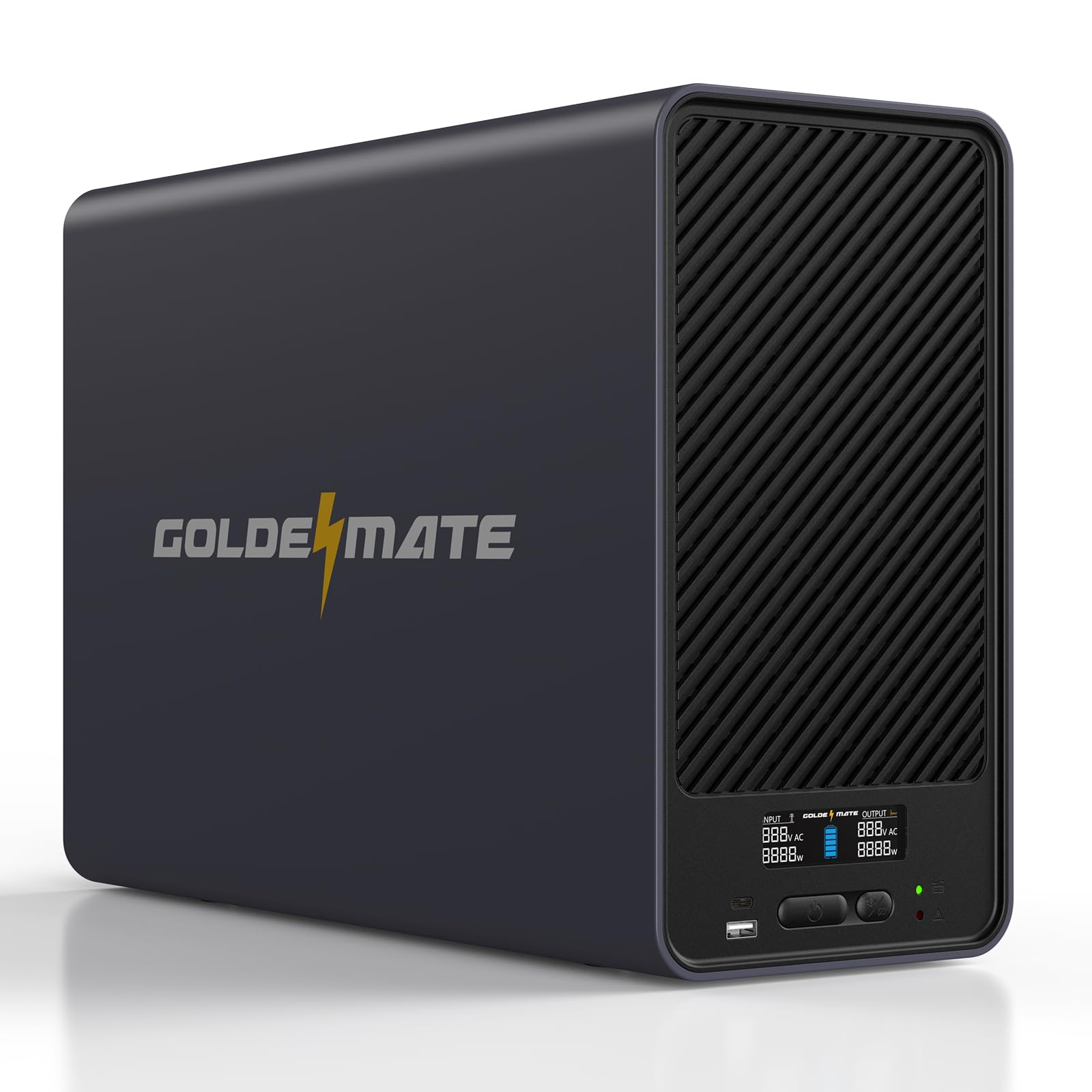
Lithium cells rated for 10 years, so the fridge outlives the battery question.
If you are tired of replacing lead acid cells every few years, this is the answer. It runs a LiFePO4 (lithium iron phosphate) pack — 51.2V, 5.8Ah — rated for over 10 years and more than 3,000 charge cycles. The maker claims that cuts total cost of ownership versus lead acid by over 40%, and the LiFePO4 pack needs no replacement routine. For a fridge in a cabin or garage that runs near-constantly, that is the whole argument.
The output side is no slouch either: 1500VA and 1000W of pure sine wave through a line-interactive design with AVR, plus a battery management system that watches voltage and halts charge or discharge if limits are exceeded. Eight NEMA 5-15P outlets carry both surge protection and battery backup, and the panel is spaced wider than usual to fit bulky adapters side by side. A communication port with the included USB cable lets a Windows PC trigger an automatic shutdown.
Two catches deserve your attention before you commit. The second is generator input — the maker states plainly that generator power may not meet its input requirements, in which case the unit stays in battery mode and will not recharge. Check your outlet voltage and your power source before you buy.
The long-game winner: a LiFePO4 pack rated for 10 years and 3,000+ cycles means no battery swaps for the life of the appliance.
Know before you buy: a 20ms transfer time and unsupported generator input are real limits, so match it to a stable wall outlet.
Made for: a fridge that runs continuously in a cabin or garage where you never want to think about battery replacement.
Not the pick if: you rely on a generator — the unit may refuse to charge from it.
6. Eaton Tripp Lite OMNI1500LCDT UPS

Proven battery longevity that has kept network gear alive through multi-hour outages.
Tripp Lite’s reputation here rests on batteries that keep going long after the warranty. One long-running owner reported the unit carrying a modem, a network drive, and a switch for several hours during a major outage on a 5-year-old battery. That kind of endurance is exactly what a fridge owner wants — a unit that is still useful years in, not one that fades after a season. The 810W ceiling sits modestly below the CyberPower’s 1000W, so it is a mid-tier load handler, not a heavy-kitchen solution.
The feature set is unusually complete for the wattage. Ten outlets, 650 joules of surge protection, and AVR that corrects brownouts and over-voltages between 92V and 150V back to a safe 120V without touching the battery. Data-line protection covers both a 100 Mbps Ethernet RJ45 port and a telephone/DSL RJ11 port. The LCD shows runtime, wattage load, overload state, AVR status, and input voltage, so you can see exactly what the fridge is drawing.
Because the battery is user-replaceable via the RBC51 cartridge, this is a unit you can service rather than replace. The honest downsides are weight and noise — one reviewer’s complaint about loud battery beeps waking them at 2am is a fair heads-up if the unit sits near a bedroom. And the output is simulated sine wave, not pure, so a compressor runs less smoothly than on the pure sine units above.
The strong point: battery longevity is the headline — units are still carrying gear years in, and the cartridge design lets you keep them going.
The trade-off: 810W and simulated sine wave mean a big compressor load is a stretch, and the audible alarms are hard to ignore.
Worth it for: a fridge circuit that needs long bridge time and a battery you can replace rather than retire the unit.
Consider the alternative if: pure sine wave for the compressor is a priority — the CyberPower and APC units above deliver it.
7. SKE Phoenix VL1500 UPS
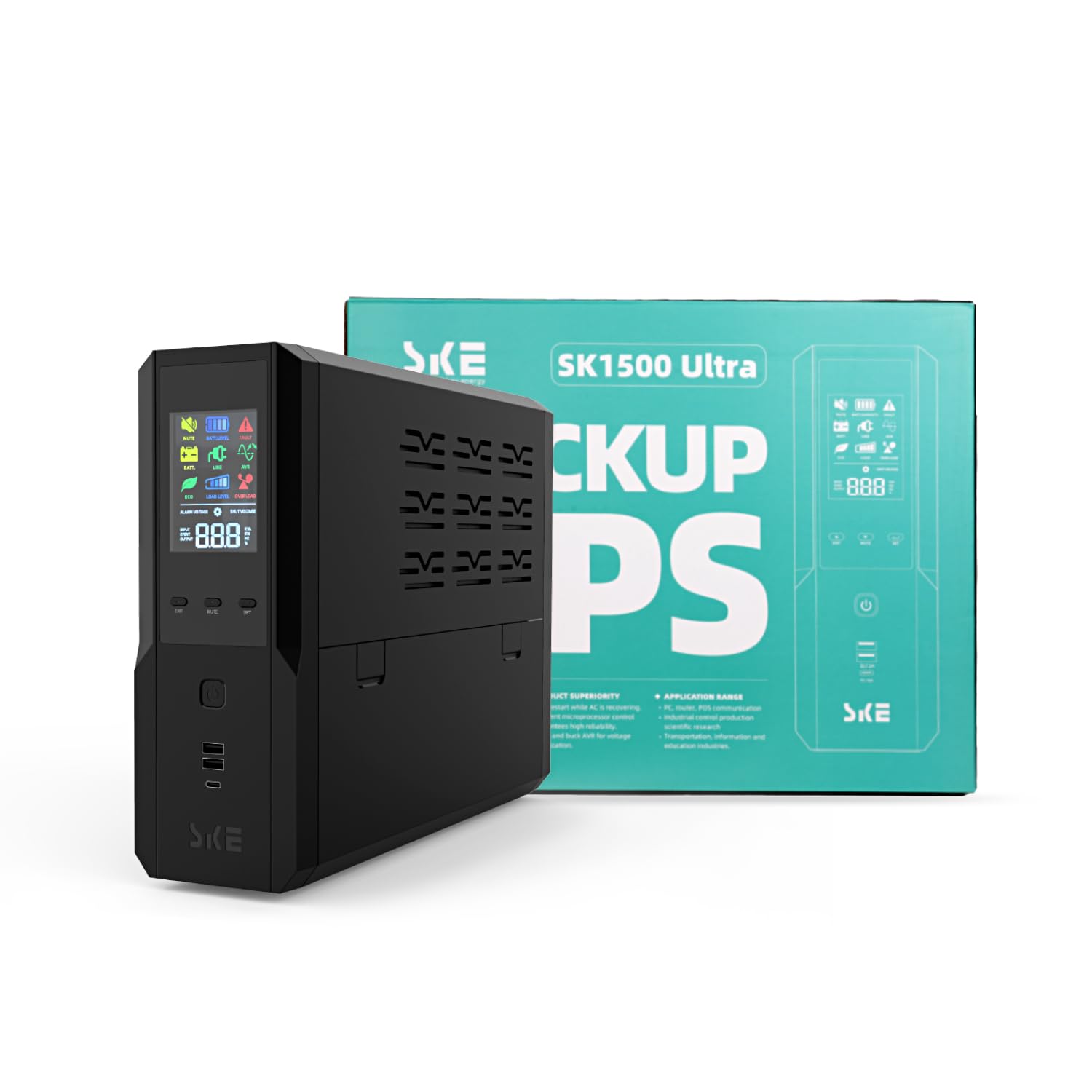
The budget route to 1500VA, with a battery you can swap using a Phillips screwdriver.
You get 1500VA and 900W without the premium price. The spec sheet matches the APC and CyberPower units — 5 black backup outlets and 5 white surge-only outlets, USB-C and USB-A charging, and RJ45 surge protection on the data line. what separates it is the battery: it is user-replaceable with a single Phillips screwdriver, so when the cells fade you swap them yourself instead of buying a new unit.
The compact body can stand vertically or lie flat, which is handy if space beside the fridge is tight. AVR keeps voltage steady and simulated sine wave output runs the load. Owners who tested it report roughly 35 minutes of backup in their runs, though that figure depends entirely on what you plug in — a fridge will drain it faster. The USB-C outlet is a nice extra that most rivals lack at this tier.
The honest limit is the wave type. SKE’s own materials and owner comparisons note it outputs simulated sine wave, which is fine for typical electronics but harder on a compressor and unsuitable for high-end active-PFC supplies. A few units have arrived with problems severe enough to trip a breaker, so test it on arrival. The outlets are also not spaced for bulky brick adapters — plan around that if you have thick plugs.
The budget case
- 1500VA/900W at a value-tier price with USB-C and USB-A charging
- Battery swaps with a Phillips screwdriver — no service visit needed
- Compact body stands upright or flat for tight spaces
- RJ45 port adds data-line surge protection
Know what you’re getting
- Simulated sine wave, not pure — harder on a compressor motor
- Outlets are not widely spaced for brick adapters
- Occasional defective units reported — test on arrival
A smart fit for: a budget-conscious buyer with a modest fridge load who wants a serviceable battery.
Reconsider if: pure sine wave for the compressor is non-negotiable — pay up for the CyberPower or APC.
8. Amazon Basics 1500VA/900W UPS

Short-outage cover and a snug footprint for around the price of a decent surge strip.
For flickers and brief brownouts, a fridge does not always need an exotic unit. This one packs 1500VA and 900W into a mini-tower that is only an inch wider than a regular surge protector — narrow enough to disappear behind an entertainment unit, and easy to slide beside a fridge in a tight galley kitchen. It also has the more compact footprint of the 1500VA tower class, at 13.7 x 3.9 x 9.8 inches versus the CyberPower’s 14 x 3.9 x 11 inches.
The runtime math is stated plainly by Amazon: about 10 minutes at half load (750VA/450W) and roughly 1.5 minutes at full load (1500VA/900W). Read the half-load number as your realistic bridge time — enough to ride out a flicker or a quick breaker reset, not enough to carry a fridge through a long outage. Owner reports of 30 to 60 minutes of safe-shutdown time line up with modest loads, not a compressor at full draw.
Output is simulated sine wave through AVR, so it is a short-outage bridge rather than a long-haul fridge solution. The bundled software is the weak spot — buyers describe it as free but awkward, with Windows 11 requiring exceptions and browser certificate issues. Several owners switched to CyberPower’s PowerPanel software instead. If you only need the battery for brief interruptions, that software quibble never comes up.
Why it earns a slot: 1500VA/900W in a genuinely compact tower, set up so a 2-second brownout leaves the appliance running with no reboot wait.
The honest limit: ~1.5 minutes at full load is short-term cover only, and the bundled software is fiddly.
Get this for: flicker protection and short-outage confidence where space is tight.
Stretch higher if: you need a fridge to survive a multi-hour outage — this is a bridge, not a marathon runner.
9. Feelfunn 12 Volt Refrigerator 40QT
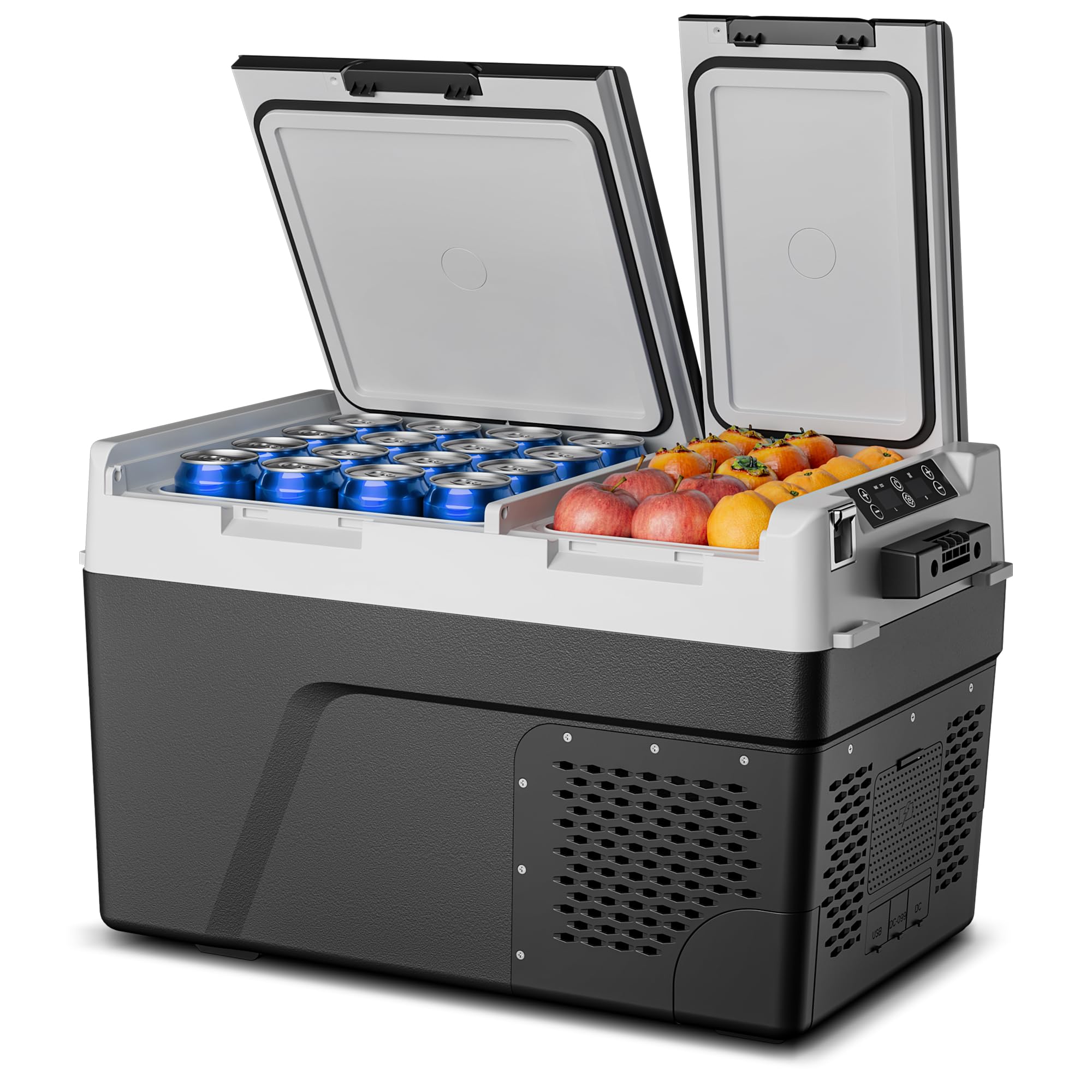
Not a backup — the actual cold storage when the grid does not exist.
This is a different tool from the rest of the list, and it belongs here because sometimes the answer to “how do I keep food cold during an outage” is a second fridge, not a battery behind the first one. It is a 38-liter dual-zone compressor cooler with two independently controlled compartments spanning -4°F to 68°F, so you can run one side as a freezer and the other as a fridge. The maker claims a 77°F-to-32°F pull-down in 15 minutes and -4°F in 45.
Power draw is the part that makes it useful on a backup. Eco mode runs under 30W, and even Max mode at 50W stays under 1kWh per day with smart cycling. Paired with one of the lithium units above, that is a realistic off-grid food plan — far gentler than dragging a full-size fridge along. Owners routinely run them off solar generators and report good capacity on that setup.
It is built for movement: 45dB quiet operation, four fixing holes so it can be strapped down through 40° bumpy off-road conditions, three-level battery protection to prevent draining your vehicle, and UL certification. The trade-offs are the ones you accept with a portable: it is heavy and awkward to move when loaded, and owners note the Max mode compressor is audible while Eco is quieter but allows more temperature swing. It is cold storage for the road, not a replacement for your kitchen fridge.
Where it shines
- Two independently controlled zones from -4°F to 68°F
- Under 30W in Eco, 50W in Max, under 1kWh per day
- 45dB quiet and strapped-down stable over rough ground
- Three-level battery protection guards the vehicle battery
What to accept
- Heavy and awkward to move once loaded
- Max mode is audible; Eco mode allows more temperature swing
- It is a cooler, not a whole-home fridge backup
Pick it for: camping, trucking, or an off-grid cabin where you want cold storage without a wall outlet.
Not a substitute for: keeping your kitchen fridge powered — that still needs one of the UPS units above.
Know the Specs
VA versus Watts
VA (volt-amperes) is the total power the unit can deliver, but watts is the usable portion after losses. A 1500VA unit rated at 900W can carry less real appliance than one rated at 1000W. Always size a fridge backup against the watt figure, and leave headroom so the compressor surge has somewhere to go.
Pure vs Simulated Sine Wave
Pure sine wave matches the smooth curve of wall power. Simulated sine wave steps that curve, which can make a compressor motor run hotter and noisier. For a fridge, pure sine wave is the safer match; simulated output is a budget compromise, not a feature to chase.
Transfer Time
This is how long the unit takes to switch from wall power to battery when the lights go out. A shorter transfer time is gentler on sensitive electronics. Some units switch in up to 20ms, which can crash a PC whose power supply holds up for less time — worth checking if the same unit also protects a computer.
Battery Chemistry and Life
Sealed lead acid is the common default and typically needs replacement every few years. Lithium iron phosphate (LiFePO4) packs are rated for more charge cycles and a longer service life, and they do not need the same maintenance. A user-replaceable battery cartridge also extends a unit’s useful life by letting you swap cells instead of retiring the box.
Common Questions
Can a standard computer UPS run a refrigerator?
Why does my fridge cause the UPS to beep and shut down?
Is pure sine wave necessary for a refrigerator compressor?
How long will a 1500VA UPS keep my fridge running?
Can I plug a fridge into the surge-only outlets?
What is the difference between lead acid and lithium UPS batteries?
Will a UPS work with my fridge if I run it off a generator?
How do I know what wattage my refrigerator needs?
Do I need a rackmount UPS for a fridge?
Can I replace the battery myself when it wears out?
The Bottom Line
For most fridge owners, the ups for refrigerator winner is the CyberPower CP1500PFCLCD because it pairs pure sine wave output with the highest mid-tier watt ceiling at 1000W, plus a 3-year warranty that covers the battery. If you want a name-brand sine wave unit with a battery you can service yourself, grab the APC BR1500MS2. And for a cooling load that needs real headroom — a walk-in cooler or a whole kitchen circuit — the APC 3000VA Smart UPS is the bracket to reach for at 2700W.
The honest nudge: the CyberPower’s 4.5+ stars across 11,000+ owners is the strongest owner signal in the mid tier.
How we choose
We do not accept paid placement. Every pick is matched to a real buyer and a real use-case; we do not hands-on test units.
Sources
Specifications: manufacturer listings and product documentation. Review insights: verified customer reviews, as of October 2026. Pricing: not shown on this page (it changes often); check the current price via the retailer link.
As an Amazon Associate, Aappliancez earns from qualifying purchases. This does not affect which products we feature.