Disclosure: Some links in this post are affiliate links. As an Amazon Associate I earn from qualifying purchases, at no extra cost to you. Learn more
Specs are compiled from manufacturer listings and verified buyer reviews and can change over time — please confirm the key details on the product page before buying.
Road rash is a scrape that keeps reminding you it is there, and the wrong dressing makes it worse every time you peel it back. The pick that handles it best here is the Carbou Xeroform petrolatum gauze, a non-stick mesh pad that lifts off without dragging away the new skin underneath. Below you will find four genuinely different ways to treat a slide on asphalt, from a cut-to-size hydrocolloid roll to a silver gel, and a clear read on which one fits your scrape.
This guide is built by comparing the manufacturers’ published specifications and the patterns across verified customer reviews, so you get each pick’s real strengths and trade-offs instead of marketing spin.
You want a covering that keeps the raw scrape moist and comes off without ripping the new skin open again. A non-stick contact layer is what decides whether a scrape calms down in days or keeps stinging for a week. Every pick below is judged on how well it does that job as a treatment for road rash.
Top Picks
How To Choose The Best Treatment for Road Rash
Get the contact layer right first — that is the piece that actually touches the raw skin. If it sticks, every bandage change reopens the scrape and you are back where you started. So the decision depends on three things: whether the dressing sticks, how much moisture it holds over the wound, and whether you can cut it to fit a knee, elbow, or forearm without wasting half a box.
Non-stick beats absorbent for a fresh abrasion
A petrolatum gauze pad is coated so it will not bond to a healing surface. That means you can lift it off a weeping scrape without a tug-of-war. A hydrocolloid sheet works on a different principle — it seals the spot and holds moisture in, which suits a smaller, cleaner graze better than a wide sheet of open rash.
Match the format to where the scrape sits
A flat 4″ x 4″ pad covers a broad patch of forearm or thigh cleanly. A roll you cut yourself wins on knuckles, heels, and joints, where a square pad wrinkles and peels at the edge. If the rash wraps around a joint that bends all day, the roll format is usually the easier fit.
Side-by-Side Comparison
| Model | Best For | Format | Size | Key Ingredient Or Type | Amazon |
|---|---|---|---|---|---|
| Carbou 4″x4″ Medical Xeroform Petrolatum Dressing★ Best Overall | Broad flat scrapes on arms and legs | Individually wrapped gauze pads, 25 per box | 4″ x 4″ | Petrolatum with 3% Bismuth Tribromophenate | Amazon |
| Hydrocolloid Roll Wound Dressing | Joints, heels, and awkward edges | Cut-to-size roll | Trimmed to any shape | Hydrocolloid, self-adhesive | Amazon |
| SilvrSTAT First Aid Kit Gel 3 oz | Stubborn, slow-to-close spots | Gel in a 3 oz tube | 3 oz | 32 PPM silver, SilverSol Ag₄O₄ particles | Amazon |
Detailed Reviews
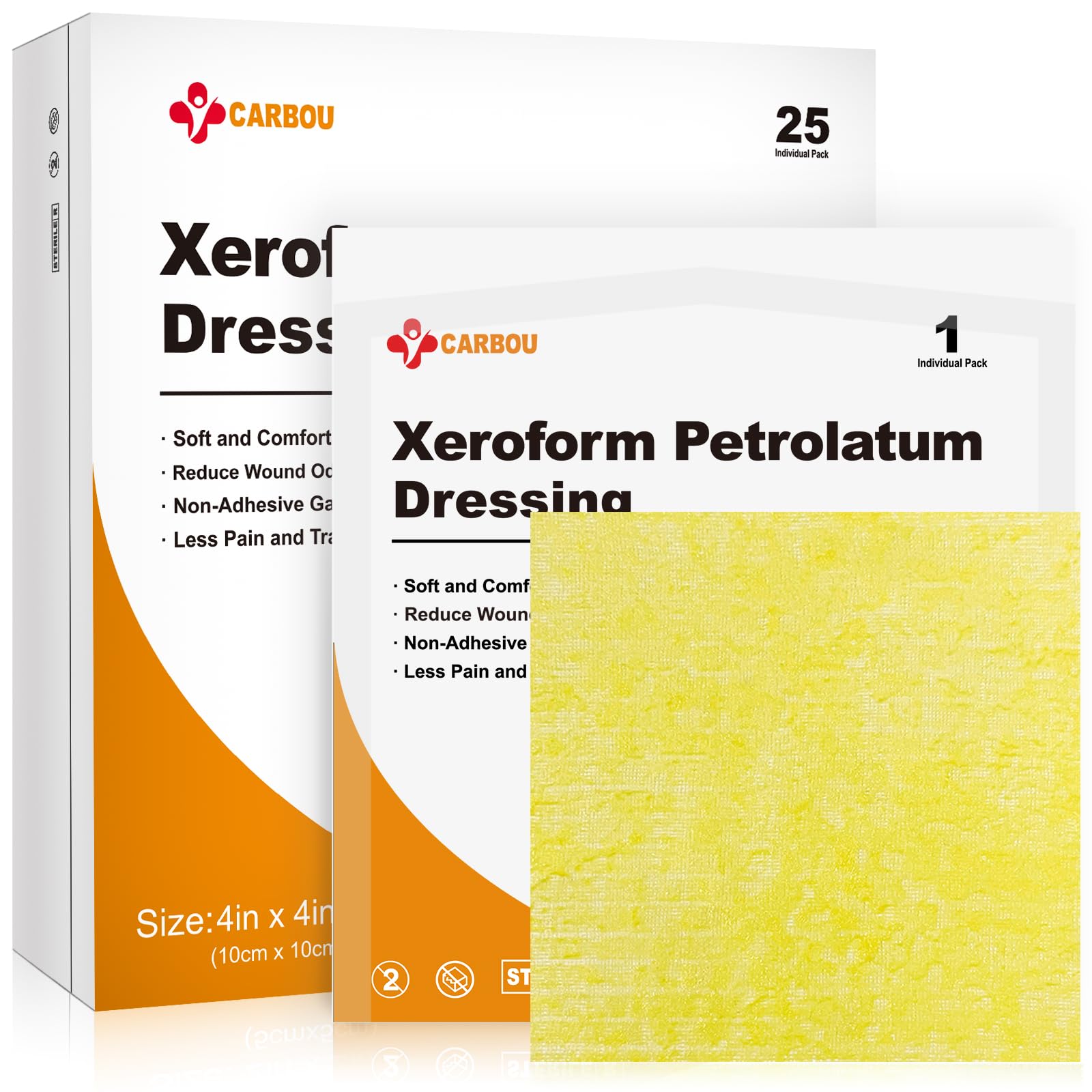
1. Carbou 4″x4″ Medical Xeroform Petrolatum Dressing
Our pick — 4.5+★ from 1,000+ verified ratings; the strongest balance of quality and price.
The petrolatum pad that lifts off a scabbed-over scrape without taking the scab with it.
If your road rash covers a real patch of skin — a forearm, a hip, the side of a thigh — this is the one to reach for. Each pad is a 4″ x 4″ piece of fine mesh gauze, coated with petrolatum (a jelly-like petroleum base that keeps the pad from bonding to a wet surface) and 3% Bismuth Tribromophenate, a mild antiseptic. That coating is the whole point: the pad sits on the wound as a primary contact layer and comes away clean.
The practical upside is that you get 25 of them, each one sealed in its own sterile wrapper, so a fresh pad costs you nothing extra every time you change the dressing. The mesh is soft and thin enough to cut to the shape of the scrape with ordinary scissors. One reviewer noted it was recommended in the ICU for 2nd-3rd degree burns and used over 3 months of healing.
Here is the honest catch. At 8.47 ounces for the box and measuring 7.09 x 6.69 x 1.26 inches, it is a bulky thing to carry — a full first aid kit addition rather than a pocket item. Compare it to the hydrocolloid roll below at 2.4 ounces and you can feel the difference in a bag. The other thing to know is that the pad holds moisture, so you are meant to change it rather than leave it on for days. For a wide, weeping scrape, though, the non-stick layer is worth the cabinet space.
What earns the top spot
- Petrolatum coating means no tug when you remove it from a raw abrasion
- 25 individually sealed 4″ x 4″ pads — a fresh sterile one for every change
- Cuttable mesh so you can shape it to the scrape instead of the other way around
What to plan around
- At 8.47 ounces and 7.09 x 6.69 x 1.26 inches it takes up real space in a kit
- The mesh is thin, so it takes a gentle hand to lay flat on a curved or bleeding area
Reach for this if: your rash is broad and flat, and you want the dressing change to be painless from day one.
Look elsewhere if: you need something that lives in a jersey pocket — the hydrocolloid roll is the travel-sized answer.
2. Hydrocolloid Roll Wound Dressing
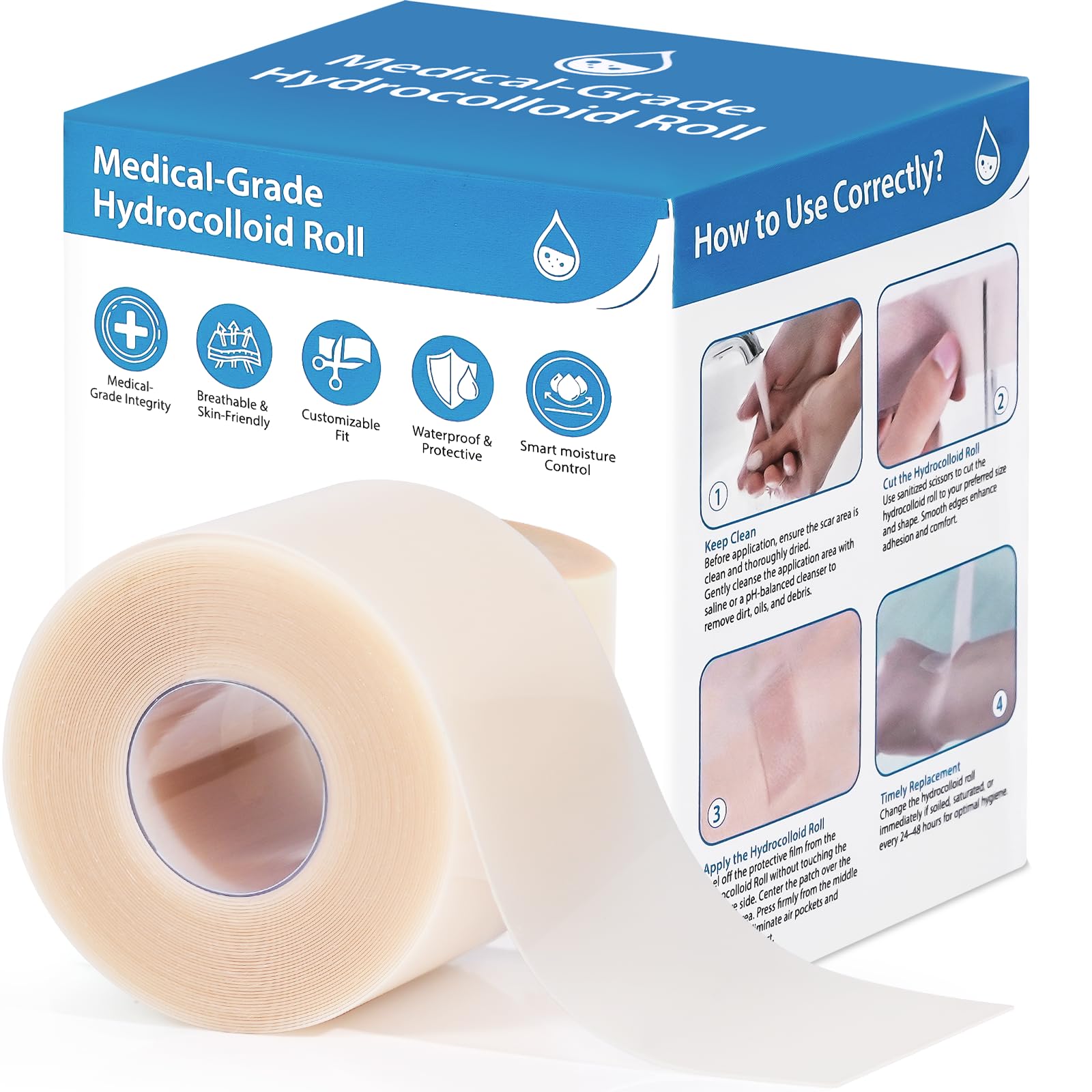
One roll you trim to fit a knuckle, a heel, or a grazed forearm — no leftover waste.
Gravel rash loves awkward places: the point of an elbow, the edge of a knee, the heel where a shoe rubs. A hydrocolloid roll (a flexible, gel-forming sheet that seals over a wound and holds moisture in) is the answer because you trim it to the exact shape, then press it down. The self-adhesive backing keeps it in place through movement, and the roll format means you use only what the scrape needs.
Buyers report it works as advertised on joint scrapes and blisters. What buyers praise most is how well it actually works, and the second thing they bring up is the money saved against buying individual patches. The roll holds 2.4 ounces and packs down to 2.17 x 2.13 x 2.09 inches, so it disappears into a bag or a glovebox — noticeably smaller than the Carbou box at 7.09 x 6.69 x 1.26 inches. As one buyer wrote about the family reaction: “My kids struggle with acne and they LOVE this stuff! Really works.”
A fair warning that shows up in the reviews: the seal can be tight, and one verified buyer advised keeping it on for shorter stretches so the area can breathe between applications. There is also a note about edges lifting after a long soak, though the roll itself is built to stay put through shower routines and daily movement. Trim, apply, and check it after a heavy sweat, and it behaves.
The real advantage: custom sizing means no wrinkled square pad peeling at the corner of a bent joint.
Worth knowing: it is best treated as a shorter-wear cover that you swap regularly, not a set-and-leave layer for a big weeping abrasion.
Pick this one for: joint scrapes, blisters, and spots where a standard bandage will not sit flat.
Pass if: you want one big pad laid over a wide area of rash in a single move.
3. Rawleigh Antiseptic Salve Big Tin 4.5 oz
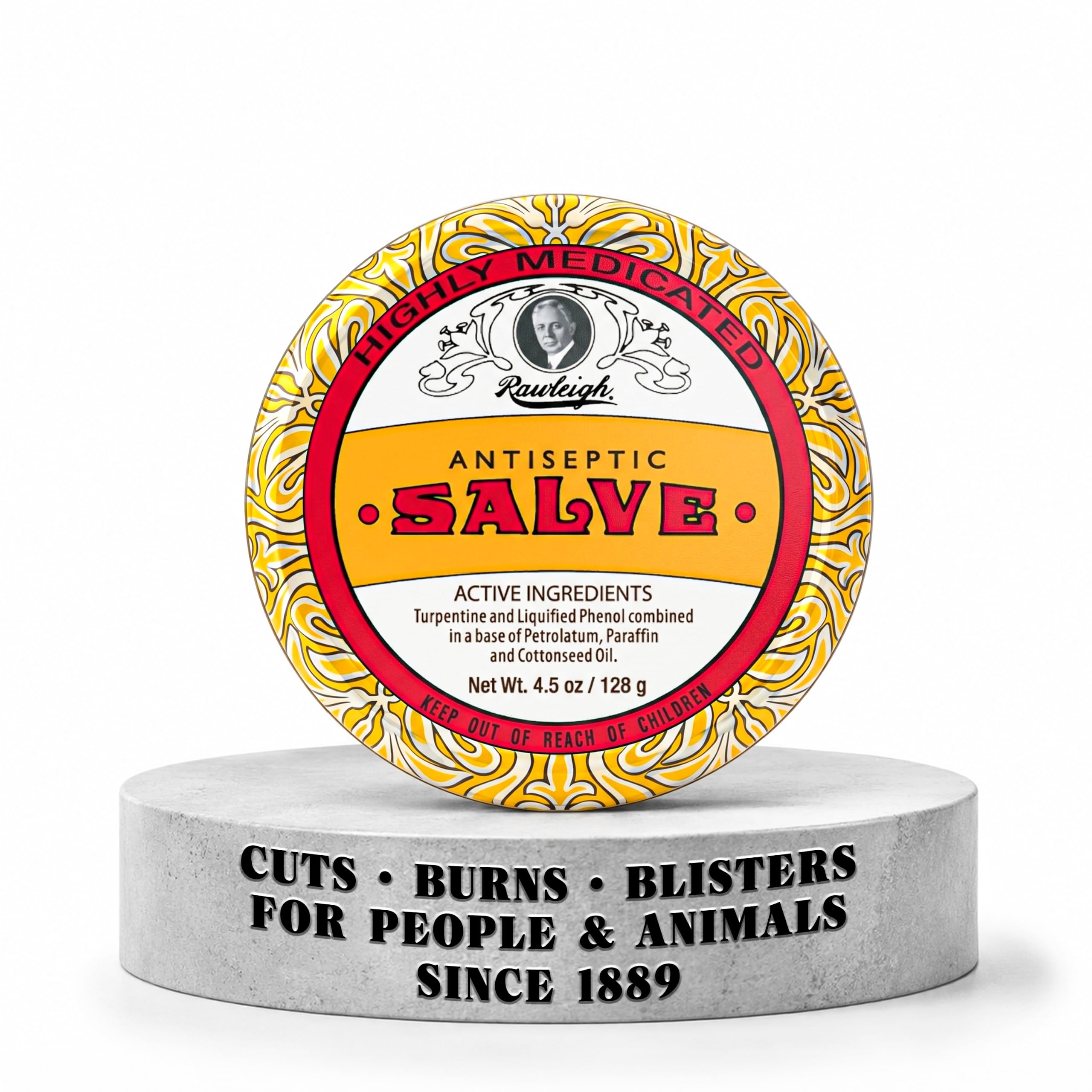
A thick yellow salve in a tin, unchanged for more than a century and made for a chafed, scraped, working body.
Rawleigh built its name on this tin, and the customers keep the tradition going. The formula is turpentine and liquefied phenol in a base of petrolatum, paraffin, and cottonseed oil — a rich, protective barrier you swipe over minor cuts, scrapes, blisters, chapped lips, and cracked heels. It stays put instead of washing off, and a little goes a long way across a 4.5 oz / 128 g family-size tin that lasts the household for months.
The turpentinish scent is strong and unmistakable. Buyers describe it as turpentinish, a sharp, old-timey smell that some love for the memory and others notice sharply. The lid accessibility split is worth flagging: several buyers found the new can lid offered real resistance, with one reviewer calling the hunt for access a hassle. In the spirit of the loyal following, one verified buyer summed up the devotion: “Just like the old salve my grandparents used to use. They even smell the same.”
And it works on more than people. The tin sees use on horses, livestock, and pets — wire scratches and chapped teats among its listed jobs — so a single can serves the whole household and the barn. It is made in a GMP-certified U.S. facility, and the recipe has not changed since 1889.
Why people stay loyal
- Rich petrolatum base stays put and shields the scrape instead of running off
- One 4.5 oz / 128 g tin stretches a very long way
- Multi-purpose across people, horses, livestock, and pets
What to get used to
- The turpentinish scent is a mixed experience — expect it to be noticeable
- That iconic tin lid has been called hard to open by some owners
Best for: riders, ranchers, and anyone who wants a heavy, protective salve that doubles for chafing and dry, cracked hands.
Think twice if: you want a low-scent, modern dressing — the roll above that says far less to the nose may suit you better.
4. SilvrSTAT First Aid Kit Gel 3 oz

A silver gel that firms up into its own covering, so a wide-open scrape does not need tape at all.
Reach for this one when a scrape is not behaving — the one you have been babying for too long. It is a topical gel dosed at 32 PPM silver (parts per million, the strength of the silver suspended in the gel), built around SilverSol Ag₄O₄ particles, and it is pitched for minor cuts, lacerations, abrasions, 1st and 2nd degree burns, and skin irritations. The silver here is delivered as a non-greasy gel that absorbs instead of leaving a film.
What makes it unusually practical on a raw rash is the way it firms over the wound. One verified buyer put it plainly: “makes it own bandage.. no adhesive needed to cover a wound!” That matters when the scrape is in a spot where tape pulls or a pad will not stay put. The 3 oz tube is sized for a first aid kit, a survival kit, or an IFAK (an Individual First Aid Kit), and the instruction is simple — reapply daily or every time you change the dressing.
The thing everyone notes is that it does not leave a greasy film. It absorbs into the skin instead, which is a real difference from a petrolatum salve, and it has no competing odor. If your rash is on a spot that keeps getting knocked, having the gel act as its own barrier can be the deciding factor. It is the premium option here, and the price reflects the silver formulation.
Where it shines: awkward angles and stubborn, slow-to-settle scrapes where nothing else wants to stay put.
Choose this if: your road rash keeps getting rubbed or you want a silver gel that dries clear and needs no bandage to hold it down.
Skip if: a simple petrolatum pad covers your scrape fine — you do not need the silver gel for a clean, shallow graze.
Know the Specs
Non-adherent contact layer
A non-adherent dressing is the pad that touches the raw skin but is treated so it will not bond to it. Petrolatum, a petroleum jelly, is the classic coating. The point is that when you peel it off, healing tissue stays on your body instead of coming away with the gauze. If a dressing does not name this property, assume it may stick.
Hydrocolloid and moisture balance
Hydrocolloid is a flexible, gel-forming sheet that seals over a spot and holds moisture in the wound. That moisture is what lets skin underneath stay soft and heal. The trade-off is that a tight seal needs to be changed regularly so the area can breathe — a gel pad left on too long can trap too much.
Parts per million in silver gel
PPM stands for parts per million, the concentration of silver inside the gel. The SilvrSTAT tube is dosed at 32 PPM. Higher PPM means a stronger silver concentration, not a bigger tube — check the size separately if you plan on daily reapplications.
Salve bases and barrier ingredients
An old-style salve is built on a base of petrolatum, paraffin, and cottonseed oil, which forms a barrier over the skin. The Rawleigh tin adds turpentine and liquefied phenol as its antiseptic ingredients. A barrier-type salve stays thick and protective; a gel like the SilvrSTAT absorbs instead. Pick the texture that fits how you will wear it.
Common Questions
Should I cover a road rash or let it dry out?
How often should I change a road rash dressing?
Is a hydrocolloid roll or petrolatum gauze better for a road rash?
Can I use the Rawleigh salve on a road rash under clothing?
What does 32 PPM mean on the SilvrSTAT gel?
Will these work on a scrape that keeps rubbing against my clothes?
Can I cut the Carbou pads to fit a small scrape?
How long does the Rawleigh tin last?
Are these safe to keep in a first aid kit for a long trip?
Which of these is best for a scrape on my hand or knuckles?
The Bottom Line
For most people, the treatment for road rash winner is the Carbou Xeroform petrolatum gauze because that non-stick contact layer is the single thing that makes dressing changes bearable on a raw scrape. Keep the hydrocolloid roll in the travel bag for knuckles, heels, and joints that need a trimmed fit. Add the Rawleigh salve to the barn or toolbox for chafing and dry, cracked hands, and reach for the SilvrSTAT gel when a scrape is stubborn or sits where nothing else will stay put. Match the format to the scrape — flat pad for broad areas, trimmed roll for joints — and the dressing change stops being the painful part.
How we choose
We do not accept paid placement. Every pick is matched to a real buyer and a real use-case; we do not hands-on test units.
Sources
Specifications: manufacturer listings and product documentation. Review insights: verified customer reviews, as of October 2026. Pricing: not shown on this page (it changes often); check the current price via the retailer link.
As an Amazon Associate, Aappliancez earns from qualifying purchases. This does not affect which products we feature.