Disclosure: Some links in this post are affiliate links. As an Amazon Associate I earn from qualifying purchases, at no extra cost to you. Learn more
Specs are compiled from manufacturer listings and verified buyer reviews and can change over time — please confirm the key details on the product page before buying.
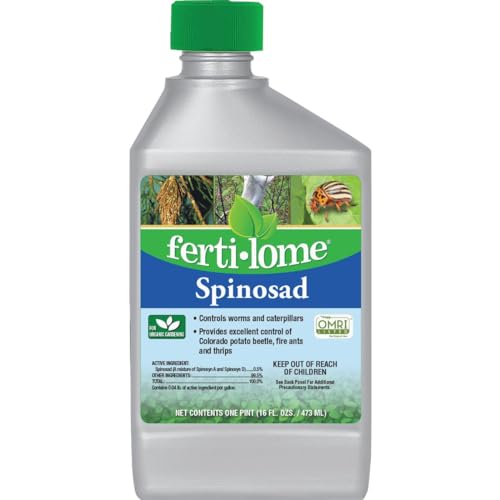
If your evergreens are wearing little brown cones that look like tiny pinecones strung along the branches, those are bagworm cases, and the worms inside are eating your tree from the outside in. The one that suits most yards is the Fertilome Spinosad — a 16-fluid-ounce concentrate that mixes at 4 tablespoons per gallon of water and is OMRI Listed for organic gardening.
This guide is built by comparing the manufacturers’ published specifications and the patterns across verified customer reviews, so you get each pick’s real strengths and trade-offs instead of marketing spin.
You will see sprays, hose-end bottles, and tree implants side by side, plus the timing rules that decide whether any of them work at all. Below is a practical, plain-English guide to the treatment for bagworms that actually reaches the worm inside its case.
Top Picks

How To Choose The Best Treatment for Bagworms
The single mistake that wastes the most money on bagworms is spraying a mature, sealed case. Once the worm seals itself inside that silk-and-plant-matter cone, a contact spray rolls right off. The spray hits silk and plant matter, not the worm. The products below work by four different routes — contact, ingested bacterium, trunk implant, and soil-applied systemic — and matching the route to the worm’s stage is the whole game.
Contact sprays versus systemics
A contact spray like Spinosad or B.t. (Bacillus thuringiensis, a naturally occurring soil bacterium that stops caterpillars from feeding) has to land on the worm or on foliage the worm will eat. That makes it a larval-stage tool, and it means thorough coverage matters more than a strong mix. A systemic works the other way around: the plant takes the chemical up into its sap, and the worm dies after feeding on treated tissue. Acephate implants and concentrate systemics fall in that camp, which is why they can reach worms high in a canopy you cannot spray evenly.
Match the product to the size of the plant
A hose-end bottle is the fast answer for hedges and low shrubs, since you can stand on the ground and soak the top growth. A tree implant is the answer for a trunk you can wrap your arms around, because drilling puts the dose directly into the sap stream. A concentrate in a pump sprayer suits a mixed bed of shrubs, flowers, and small ornamentals where you want to dial the mix yourself. A hose-end bottle aimed at a 25-foot arborvitae is the classic mismatch: the spray never reaches the top third.
Read the label for what it is allowed on
Every one of these bottles is registered for specific plants, and the label — not the marketing copy — is the legal document. One systemic here is labeled for ornamentals and expressly not for vegetables or fruit. If you are treating a vegetable garden, read the back panel for the edible-plant list before you buy. If you are treating a shade tree or a hedge, a concentrate labeled for ornamentals is the correct tool.
Side-by-Side Comparison
| Model | Best For | Active Ingredient | Volume / Count | Application Type | Amazon |
|---|---|---|---|---|---|
| Fertilome Spinosad 16062★ Best Overall | Mixed beds and organic gardens | Spinosad | 16 fluid ounces | Concentrate (4 Tbs per gal.) | Amazon |
| Acecap AC1210 ImplantsBest for Tall Trees | Trees too tall to spray | Acephate | 10 Count | Trunk implant | Amazon |
| BioAdvanced Tree & Shrub | Fast knockdown on hedges | — | 32 fluid ounces | Ready-to-spray hose end | Amazon |
| Monterey B.t. 8 oz | Pollinator-safe caterpillar control | B.t. | 8 fluid ounces | Concentrate | Amazon |
| Bonide Systemic Insect Control | Long-running ornamental coverage | — | 16 fluid ounces | Concentrate (makes 16 gal.) | Amazon |
Detailed Reviews
1. Fertilome (16062) Spinosad Insecticide, 16 oz.
Our pick — 4.5+★ from 150+ verified ratings; the strongest balance of quality and price.
One bottle that treats the shrubs, not just the bagworms.
What makes this the pick for most yards is the breadth on the label. Spinosad is the active ingredient — a compound that hits the worm’s nervous system — and this bottle lists bagworms, tent caterpillars, leafminers, borers, thrips, and worms among its targets. You can use it on vegetables, trees, shrubs, flowers, fruits, and citrus, so a single bottle covers the whole property. The OMRI listing matters if you garden to organic standards: OMRI is the Organic Materials Review Institute, the body that signs off on inputs for certified organic production.
Mixing is simple and spelled out on the label: 4 tablespoons per gallon of water. That 16-fluid-ounce bottle holds a working supply of concentrate rather than a one-and-done spray, so you mix only what you need for the job in front of you. It also comes in a Ready To Spray version if you would rather skip the measuring entirely. Compare that to the 8-fluid-ounce Monterey B.t. — the Fertilome carries twice the liquid volume, so it goes further per bottle on the same foliage. The thing people rave about is simply that it does the job: as owners put it, they “sprayed by shrubs for bag worms. Did the job.”
The honest catch is that Spinosad is a contact-and-ingest spray, so the worm has to eat treated foliage or get hit directly. A case built last season and sealed tight will shrug it off. It also is not a systemic, so a tall tree with worms clustered at the crown is a hard target for a pump sprayer. This is a shrub, hedge, and mixed-bed tool, and it is excellent at that job.
What earns its place
- OMRI Listed, so it fits an organic garden program
- Label covers bagworms, tent caterpillars, and a long list of chewing insects
- Approved for vegetables, fruits, and citrus — one bottle, whole yard
- 16 fluid ounces of concentrate mixed at 4 tablespoons per gallon
Where it stops short
- Needs to coat the worm or the foliage it eats, so timing and coverage matter
- Not a systemic — tall canopies are hard to reach evenly
Reach for this if: you have bagworms on shrubs, hedges, or a mixed bed and want one organic-listed bottle that covers vegetables too.
Look elsewhere if: the infestation is high in a mature tree, where an implant puts the dose where a sprayer cannot.
2. Acecap AC1210 Systemic Insecticide Tree Implants, Pack of 10
When the worms are thirty feet up and your sprayer is not, you drill.
Acephate is a systemic insecticide, which means the tree itself becomes the delivery system. The sap flow dissolves the implant and carries it through the canopy in 4 to 5 days, and the treatment is applied in spring for season-long control. Ten implants will effectively treat up to a 14″ trunk diameter, which is the measurement that decides how many packs you need. Bagworms are on the registered list, along with aphids, borers, budworms, gypsy moth, and tent caterpillar.
This is the product for the yard where spraying is not physically possible. A landscape-company owner calls these “the best,” noting they are easy to apply and that “you really do get results.” Another treatment that paired implants with ground saturation on pine trees hit by borers stopped the loss: no more trees died, and the same routine is planned again the next year. The 10-count pack also runs ten times the unit count of the single BioAdvanced hose-end bottle — ten implants versus one bottle — so the format is a season’s supply of trunk treatments rather than a single afternoon of spraying.
Set your expectations on effort and money. The process involves drilling, hammering, and countersinking, and a large tree can absorb several packs. A year-later report on an average large tree describes roughly 70% improvement after treatment, a six-pack total, and a long drilling session, with healed-over holes that fade from view. It is also slow to show: one month in, the same report noted no visible change yet. Spring timing is not optional — implant outside the sap-flow window and the tree simply does not move the dose.
Why it earns the drill: nothing else here reaches a canopy you cannot stand over, and the dosing rule is precise — ten implants for a trunk up to 14″ in diameter.
What to plan for: the labor is real and the results take weeks, not days, so this is a spring project rather than an emergency fix.
Suits you when: you own a shade tree or conifer with bagworms out of sprayer range and you will do the work in spring.
Not your tool if: the plant is a low hedge — a spray gets there faster and cheaper.
3. BioAdvanced Tree & Shrub Insect Killer Spray, 32 oz

Clip it to the hose, soak the hedge, done by dinner.
The spec that sells this one is the 32-fluid-ounce bottle with a hose-end fitting — no measuring, no mixing bucket, no pump to prime. You screw it onto any garden hose and spray. It kills listed insects on contact, bagworms among the targets, and keeps working on trees and shrubs for up to 2 weeks. The 2.1-pound bottle is light enough to hold overhead one-handed, which matters when the worms are on the upper third of a hedge.
Reach is where this beats a pump sprayer in practice. One buyer reports spraying “really high on my 10 ft bushes from the ground,” and the form factor is exactly why — you aim the hose and let the pressure do the climbing. Japanese beetles on a crab apple tree were knocked back hard, and hedges cleared of pests with a single pass. The thing that wins people over is straightforward effectiveness at a value: this bottle holds twice the liquid volume of the 16-fluid-ounce Fertilome, and it arrives ready to spray rather than needing dilution.
The trade-off is staying power. Two weeks of control is a fast, targeted strike, not a season of protection, so a heavy infestation will need a repeat pass. It is also a contact spray, so the same rule applies: sealed mature cases resist it. Treat it as the quick-response bottle and you will be happy with it.
The case for the blue bottle
- Connects straight to a garden hose — no mixing required
- Kills on contact and holds listed insects for up to 2 weeks
- 32 fluid ounces, twice the volume of the Fertilome concentrate
Where it runs out of steam
- Two weeks of control means repeat applications in a bad year
- Contact-only action leaves sealed cases untouched
Pick this one for: a fast knockdown on hedges and low trees where you want zero mixing.
Keep shopping if: you need one treatment to last the season, which is the implant’s job.
4. Monterey B.t. Caterpillar & Worm Killer, 8 oz with Spoon
The caterpillar specialist that leaves the bees out of it.
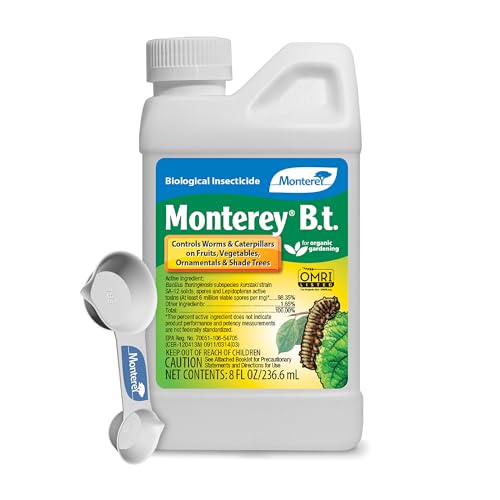
B.t. is a bacterium, not a broad-spectrum chemical, and that is the entire point of this bottle. When used as directed, Monterey states it has no effect on birds, earthworms, or beneficial insects such as honeybees or ladybugs. For a yard with flowering shrubs and a pollinator garden nearby, that distinction is the reason to choose it. The label covers caterpillars and worm-type insects specifically — bagworm, cabbage looper, gypsy moth, fall cankerworm, elm spanworm — and it is OMRI Listed for organic gardening.
Application is flexible: it mixes instantly with water and goes on through either a trigger spray bottle or a pressure tank sprayer. The 8-fluid-ounce bottle is half the liquid volume of the 16-fluid-ounce Fertilome, so you are buying a targeted caterpillar tool rather than a big general-purpose jug. On the results side, the review pages describe bagworm duty done and a set of 25-foot arborvitae saved, with the explicit note that birds, wildlife, and pollinators were unharmed. Webworms on new growth got knocked back too, according to reports, with no odor to deal with.
The catch is narrowness. B.t. works because caterpillars that eat it stop feeding and cannot digest — so it has to be eaten, on treated foliage, by an actively feeding worm. A case already sealed for the season is past its window. The other wrinkle is bottle size: this is a small quantity of concentrate, and shoppers have flagged seller listings that swapped the bottle size, so check what you are actually ordering before checkout.
The one-line reason to buy: it targets caterpillars and worms while leaving honeybees, ladybugs, birds, and earthworms alone when used as directed.
Know before you spray: it must be eaten by a feeding worm, so it works on larvae, not on sealed cases.
Best matched to: pollinator-friendly gardens, organic plots, and anyone treating a bagworm outbreak early in the season.
Less ideal if: your outbreak is already cased up and you need something to reach inside.
5. Bonide Systemic Insect Control, 16 oz Concentrate
A little jug that mixes into sixteen gallons of spray.
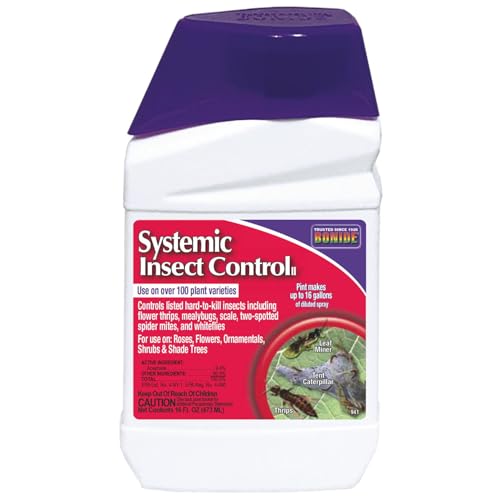
The number that matters here is on the label: this 16-fluid-ounce concentrate makes 16 gallons. That is a season of spraying from one small bottle, and it is why this is the value play for a large ornamental bed. It is a systemic, so the plant takes it up and the listed insects — thrips, mealybugs, scale, 2-spotted spider mites, whiteflies, and more — die after feeding. It is labeled for more than 100 plant varieties, including flower beds, roses, and shrubs.
The label shapes where it belongs. This is for outdoor residential ornamentals, not for vegetable or fruit plants, so keep it off the edible garden. It can be mixed with certain fungicides or fertilizers for a combination spray, and the schedule is every 7 to 10 days while the infestation lasts — a rhythm that suits a bed you walk past weekly. Reports describe an azalea that was fading with insects too small to see, greening back up after treatment, and rosebushes cleared of mites with a single systemic pass.
The catch is the smell. It is potent, and the concentrated form is the worst of it — the review pages describe it bluntly, with one noting it “literally smells like a garbage truck,” and others advising you mix and apply somewhere the odor will not drift through the house for a couple weeks. If you have a garage or a shed to work in, that solves it. Just do not plan to treat indoor houseplants in the kitchen and enjoy the afternoon.
Why the small bottle goes far
- 16-fluid-ounce concentrate mixes into 16 gallons of spray
- Systemic action reaches listed insects beyond bagworms, including mites and scale
- Labeled for more than 100 ornamental plant varieties
The cost of that coverage
- Not labeled for vegetable or fruit plants — ornamentals only
- Strong odor, heaviest in the concentrated form
Worth grabbing for: big ornamental beds of roses, shrubs, and flowers where one bottle needs to cover a lot of square footage.
Skip the edible bed: the label stops at ornamentals, so keep it away from vegetables and fruit.
Know the Specs
Active ingredient: Spinosad, B.t., and acephate
These are three different routes to the same outcome. Spinosad is a compound that disrupts the worm’s nervous system, and it works both on contact and when eaten. B.t. is a bacterium that caterpillars ingest; it stops them feeding, and it is chosen specifically because it leaves bees, ladybugs, birds, and earthworms alone when used as directed. Acephate is the implant chemistry, drawn up through the trunk and into the canopy by sap flow. None of them is “stronger” in the abstract — each is matched to a different stage and a different plant size.
Concentrate, ready-to-spray, or implant
Concentrate means you dilute it yourself: the Fertilome mixes at 4 tablespoons per gallon, and the Bonide bottle makes 16 gallons. Ready-to-spray means the bottle attaches to your hose and the ratio is handled for you, as with the 32-fluid-ounce BioAdvanced. Implants bypass spraying entirely by going into the trunk. The trade-off is effort versus reach and precision — mixing is the cheapest per plant, hose-end is the fastest, and implants reach the highest.
What an OMRI listing actually means
OMRI is the Organic Materials Review Institute, a nonprofit that reviews products against organic standards. A listing means the product has been checked for use in organic production — it is not a claim about how well it kills bagworms. Both the Fertilome Spinosad and the Monterey B.t. carry it, which makes them the two choices if you garden to organic standards.
Trunk diameter and plant coverage
For implants, the decision spec is the trunk measurement, not the bottle size. Ten implants treat up to a 14″ trunk diameter, and a larger tree needs more packs. For sprays, the spec that matters is coverage — a hose-end bottle that reaches the top of a hedge is worth more than a concentrate you cannot aim high enough. Read the dosing line and the plant list on the label before you buy either.
Common Questions
When should I spray for bagworms?
Will Spinosad kill bagworms inside their cases?
Do tree implants work for bagworms on tall evergreens?
Is B.t. safe for bees and other pollinators?
How long does a spray treatment keep working?
Can I use a systemic on my vegetable garden?
How many Acecap implants do I need for one tree?
How much concentrate do I mix per gallon?
Does the Bonide systemic really smell that bad?
Which treatment is best if I want to keep it organic?
The Bottom Line
The treatment for bagworms that fits most yards is the Fertilome Spinosad, because it is OMRI Listed, labeled for bagworms and tent caterpillars, and cleared for use on vegetables, fruits, and citrus at a mix of 4 tablespoons per gallon. If your worms are up in a canopy you cannot spray, drill instead and go with the Acecap implants — ten of them treat up to a 14″ trunk and the sap does the delivery. For a hedge you want to soak from the ground this afternoon, the BioAdvanced hose-end bottle is the fastest hand on the property. Buy the one that matches where the worms actually are, and start before the cases seal.
How we choose
We do not accept paid placement. Every pick is matched to a real buyer and a real use-case; we do not hands-on test units.
Sources
Specifications: manufacturer listings and product documentation. Review insights: verified customer reviews, as of October 2026. Pricing: not shown on this page (it changes often); check the current price via the retailer link.
As an Amazon Associate, Aappliancez earns from qualifying purchases. This does not affect which products we feature.