Disclosure: Some links in this post are affiliate links. As an Amazon Associate I earn from qualifying purchases, at no extra cost to you. Learn more
Specs are compiled from manufacturer listings and verified buyer reviews and can change over time — please confirm the key details on the product page before buying.
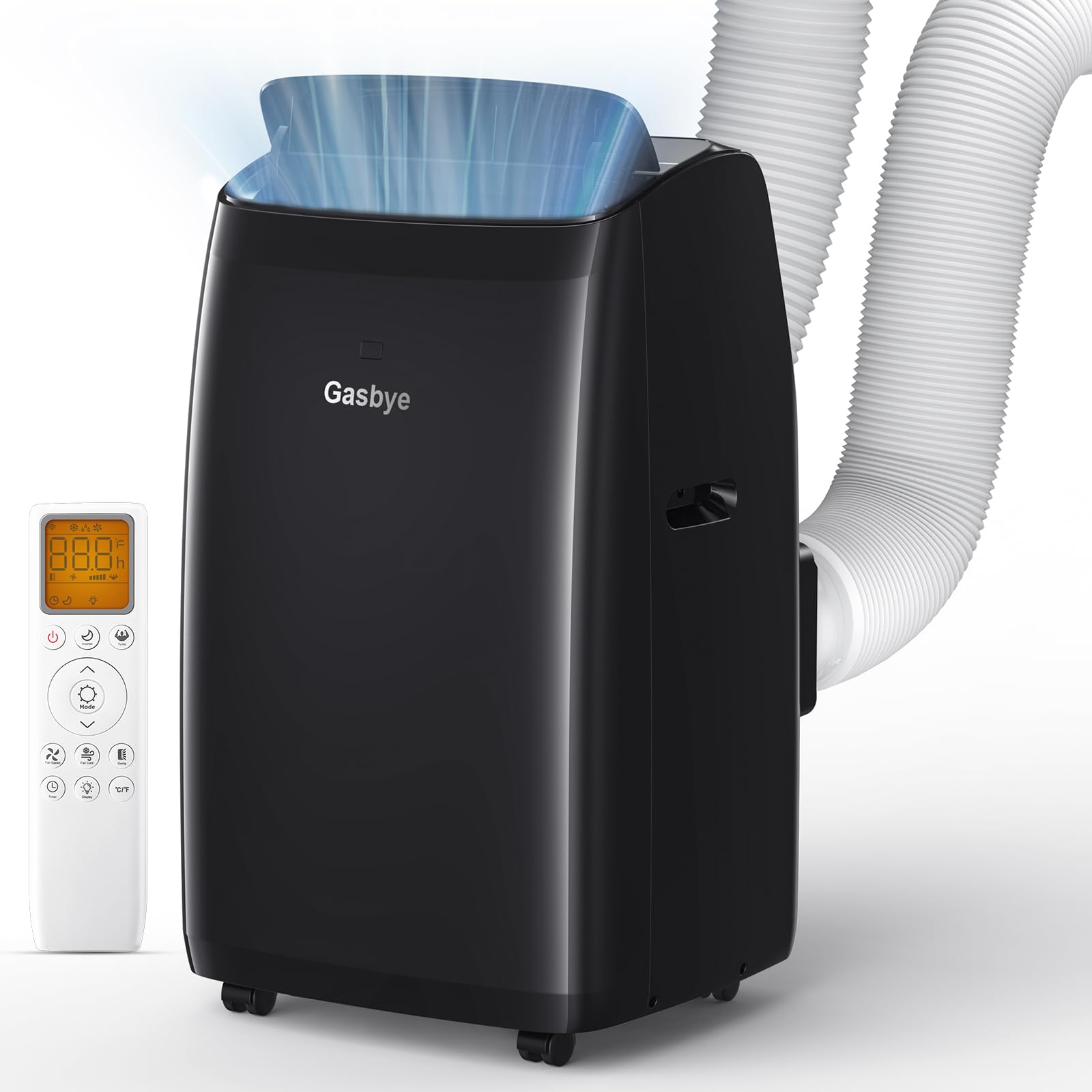
You can cool one hot room without drilling a hole in a wall with a tower AC. Buy the Gasbye dual-hose unit first: it cools a 500 sq. ft. room quietly, and its inverter compressor (a variable-speed motor that draws far less power than a fixed-speed box) keeps running costs down. Gasbye also backs it with a three-year replacement policy. The rest of this list splits into big-room units and small-room value picks, so match the capacity to your square footage rather than chasing the flashiest listing.
This guide is built by comparing the manufacturers’ published specifications and the patterns across verified customer reviews, so you get each pick’s real strengths and trade-offs instead of marketing spin.
Below you get a quick comparison table, seven detailed reviews, a plain-English specs section, and an FAQ that answers the questions buyers actually ask. Here are the best tower ac picks for cooling a real room without a permanent install.
Top Picks
How To Choose The Best Tower AC
A tower AC is a floor-standing air conditioner you roll into a room and vent out a window with a hose kit. Your first decision is not brand or app control. It is the number of hoses, because that single difference decides whether the unit cools evenly or fights itself all afternoon.
Single hose vs dual hose — the decision that changes everything
A single-hose unit blows hot exhaust outside, then pulls replacement air back in through every gap in your room to balance the pressure. That replacement air is warm outside air, so part of the cooling you paid for goes straight back out the door. A dual-hose unit pulls its intake air from outside through a second hose, so your room pressure stays balanced and cooling is faster.
The Gasbye and the DOMANKI are the two dual-hose picks here. That is why both hold a comfortable temperature without the room feeling stuffy.
Match BTU to room size honestly
BTU (British thermal units) is the raw cooling power rating. A 10,000 BTU tower AC is built for a bedroom or office, while a 16,000 BTU unit suits a large living room or an open-plan space. Sizing too small is the single most common reason people end up disappointed — the unit runs flat out and never catches up.
Pay attention to which standard the listing quotes. ASHRAE is the older, more generous rating, and SACC is the tighter modern one, so one unit can honestly advertise two very different numbers. Compare like with like before you judge.
Inverter compressor or fixed speed
A fixed-speed compressor only knows two states — full blast or off — so it cycles on and off and its temperature swings. An inverter compressor slows down and speeds up smoothly, holding a steadier temperature and cutting power use.
The catch with inverter units is they cost more up front. The payoff is quieter running and a lower electricity draw over a long summer.
Noise, drainage and window fit
Sleep mode figures on these units sit between 40dB and 50dB — for reference, a quiet library is around 40dB. If the tower AC shares your bedroom, that number matters more than top fan speed.
Most models here self-evaporate condensation in normal cooling. In very humid homes, though, water can still build up, so check whether the drain outlet is easy to reach. Finally, measure your window before you buy, because every kit here is adjustable but not infinite.
Side-by-Side Comparison
| Model | Best For | Cooling Power | Rated Room Size | Sleep-Mode Noise | Amazon |
|---|---|---|---|---|---|
| Gasbye Dual Hose 14,000 BTU★ Best Overall | Whole-room cooling with balanced pressure | 14,000 BTU | 550 sq. ft. | 45dB | Amazon |
| YLEOOB 16,000 BTU 5-in-1Big-Room Pick | Big rooms plus app scheduling | 16,000 BTU | 750 sq. ft. | 42dB | Amazon |
| Attsix 16,000 BTU WiFi | Light sleepers in mid-size rooms | 16,000 BTU | 750 sq. ft. | 40dB | Amazon |
| Temprium 10,000 BTU WiFi | Bedrooms, offices and garages | 10,000 BTU | 450 sq. ft. | 50dB | Amazon |
| CARLOX 10,000 BTU 3-in-1 | Simple button-and-remote control | 10,000 BTU | 450 sq. ft. | 46dB | Amazon |
| DREO 516S 14,000 BTU | Voice control and drainage-free cooling | 14,000 BTU | 200 sq. ft. | 45dB | Amazon |
| DOMANKI Inverter 16,000 BTU | Open-plan and hard-to-reach rooms | 16,000 BTU | 850 sq. ft. | 42dB | Amazon |
Detailed Reviews
1. Gasbye Dual Hose Portable Air Conditioner
Our pick — 4.5+★ from 500+ verified ratings; the strongest balance of quality and price.
Two hoses and an inverter compressor — the combination that cools a room without dragging hot air back in.
The Gasbye earns the top spot on the strength of two hoses and a 13.6 CEER rating, which is a measure of how much cooling you get per unit of electricity. That 13.6 figure is DOE-verified, and it is the highest efficiency number anywhere on this list. Translated into real life: you get colder air for a smaller power draw than the fixed-speed units here.
The dual-hose setup is the bigger deal day to day. One hose pulls outside air in, the other pushes hot air out, so your room pressure stays balanced and you are not sucking 95°F air through the gap under the door. Cooling performance is what wins people over — it is the most-praised thing about this unit by a wide margin, and Across reviews, the recurring result is a room noticeably cooler in 20 minutes or less. It also holds a set temperature far more steadily than a fixed-speed box that just cycles on and off.
It runs at around 45dB (decibels, a measure of sound), so you can sleep through it, and a Display Off feature darkens the panel lights so the top of the unit goes dark. The catch is size: this is a true full-size 14,000 BTU unit, and Gasbye says outright it is larger than the “mini” models that inflate their ratings. Measure your floor space before ordering. Drainage is the other honest note — above 85% RH (relative humidity, how much moisture the air holds) in an unsealed room, you will need to drain it by hand. Gasbye does put a second drain outlet higher on the back, so you are not lifting the whole unit to reach a plug at the floor. Owners who run it for days at a stretch call it well worth the money.
Why it takes first place
- Dual hoses keep room pressure balanced, so outside heat does not sneak back in
- 13.6 CEER is the highest efficiency rating in this group
- Inverter compressor drops to about 50% load within 2 minutes for quieter running
- Backlit remote plus Display Off for undisturbed sleep
- Three-year coverage with brand-new replacements, not refurbished units
What you should weigh first
- Genuinely big — 15.5″ deep, 17.7″ wide and 29.3″ tall, so it needs real floor space
- Heavy to move between floors
- Manual draining in very humid, poorly sealed rooms
Reach for this if: you want the best-balanced cooling for a mid-size room and you can give it a permanent corner.
Think twice if: your room is small enough that a compact 10,000 BTU tower fits better.
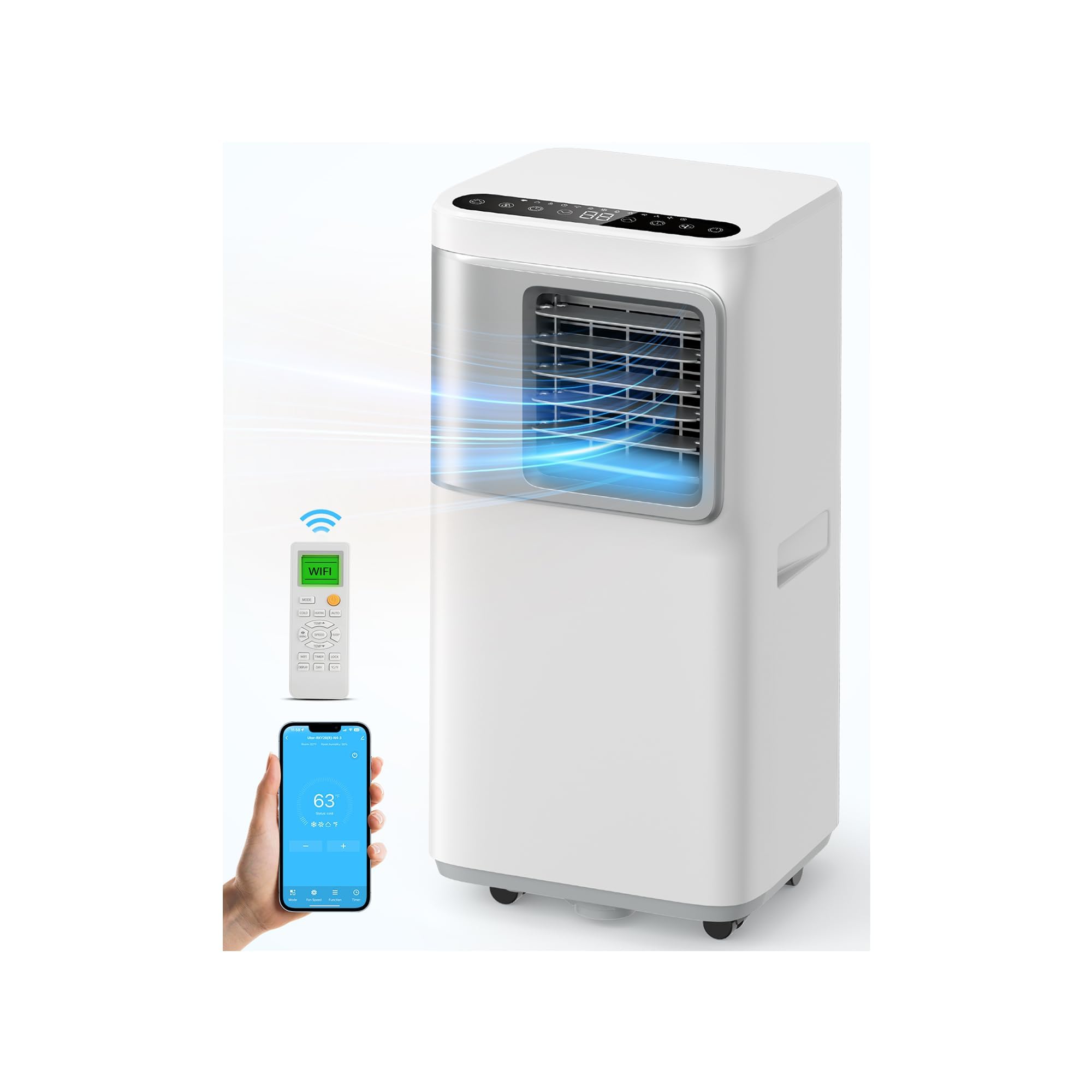
2. YLEOOB 16,000 BTU 5-in-1 Portable AC with WiFi
The largest cooling figure and the largest coverage claim on the list, packed into a wheeled cabinet.
On paper this is the biggest unit here: 16,000 BTU cooling power dialled against a 750 sq. ft. floor area, with sleep mode quoted at under 42dB. Set that against the Gasbye’s 14,000 BTU and 550 sq. ft. and you get a unit built for larger, more open rooms. It also runs a 5-in-1 layout — cool, dehumidify, fan, sleep and a 24-hour timer — plus app and voice control, so you can pre-cool the living room from the car.
Where it gets complicated is real-world cooling. The pattern in the review pages is genuinely split: Several buyers report cold air arriving fast, one measured 48°F at the vent, and others say it barely moved the temperature in their space. A recurring worry in the low reviews is the BTU claim itself, with one buyer pointing out the sticker lists 850W cooling rather than a headline BTU figure. If your room is genuinely large and sun-baked, treat the 750 sq. ft. figure as a ceiling rather than a guarantee and seal the window kit carefully.
What does land well is convenience. Owners consistently find setup easy, the footprint small for the capacity, and the four 360° casters easy to roll. The condensation bin is another pleasant surprise — In one humid mountain home the condensation bin held two weeks of discharge. Just check the vent temperature yourself in the first week rather than trusting the spec sheet alone.
Where the appeal sits: app scheduling, four caster wheels and a dehumidifier mode make this the easiest big-capacity unit in the group for someone who wants one appliance doing several jobs.
The honest counterweight: the cooling results swing hard between owners, so buy this for a well-sealed, not-too-large room and confirm the vent is blowing properly within the return window.
Suits you when: you want maximum advertised capacity plus phone control and easy rolling between rooms.
Look elsewhere when: your room sits near the top of the coverage claim and you need certainty rather than a gamble.
3. Attsix 16,000 BTU Portable AC with WiFi and 40dB Sleep Mode
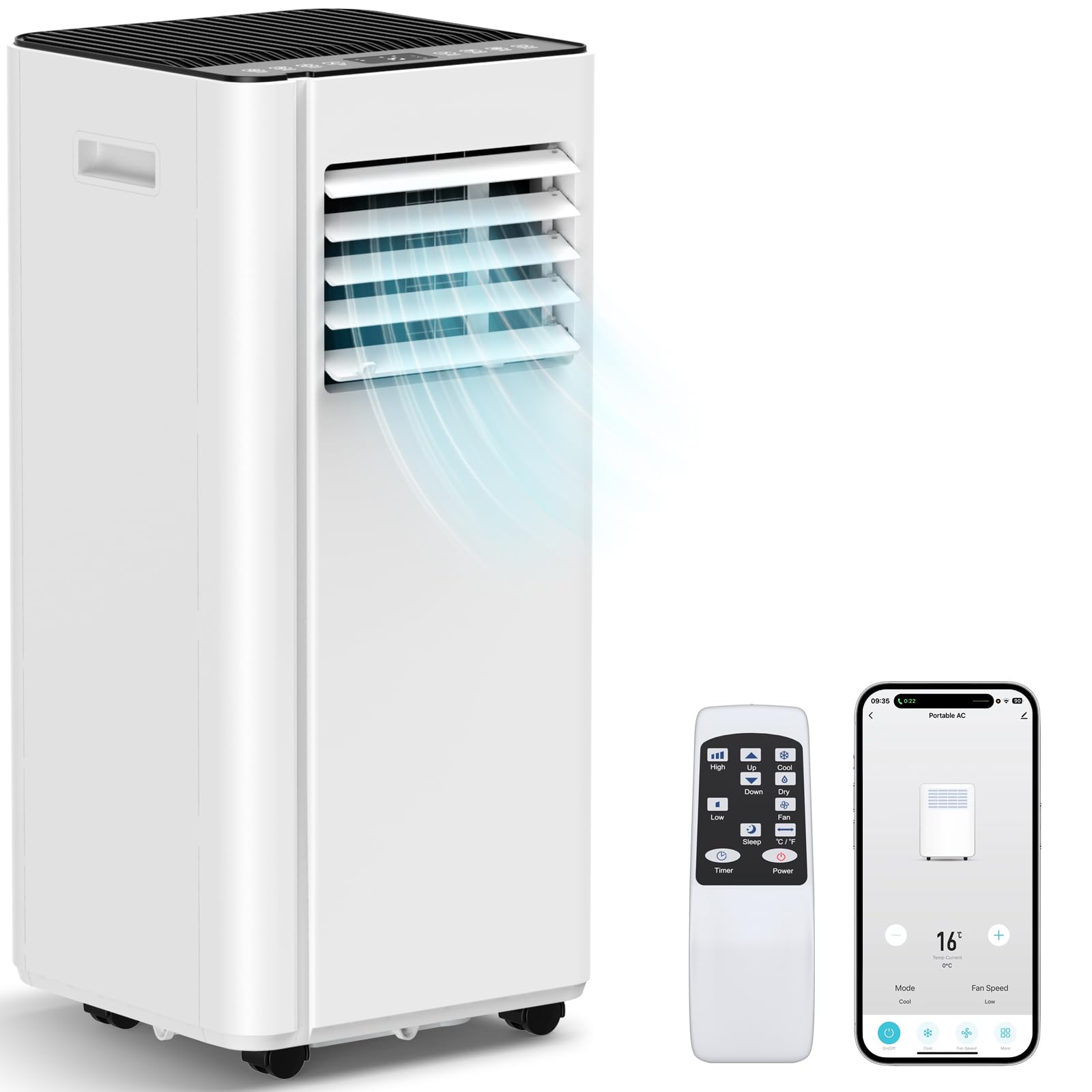
The lowest sleep-mode noise figure here, at a claimed 40dB — library-quiet on paper for a nursery or bedroom.
If a tower AC is going into a room where someone sleeps, this is the number to start from: 40dB in sleep mode. That is the quietest figure on the list, and it pairs with a 0–24 hour timer so the unit shuts itself down after you have drifted off. It also runs on R32 refrigerant and a 16,000 BTU compressor aimed at rooms up to 750 sq. ft.
Control is flexible in a way that suits busy households — touch panel, remote with a 16.40 ft range, or the WiFi app, plus a child lock that stops small hands changing your settings. Drainage-free cooling in normal conditions means no daily pan to empty. The catch, and it is a real one, is that cooling reports split: Some rooms cool fast and drop about 10°F below the set point, while rooms with vaulted ceilings and open stairwells never quite get there. Bedrooms do better than open living rooms in the owner reports.
Two practical details are worth knowing before it arrives. One, it should stand upright for a period before first use, so don’t unbox and switch on immediately. Two, the exhaust hose benefits from some insulation to keep the heat where it belongs — outside. Register the unit, because the QR code route open up a three-year coverage window.
Best-in-group silence: the 40dB sleep figure plus a dimmable panel and timer makes this the pick for a nursery or a light sleeper’s bedroom.
Set expectations by room: close the door, keep the space modest, and this delivers; open it into a two-storey stairwell and you will feel the shortfall.
Pick this one if: quiet running at night matters more to you than raw cooling headroom.
skip it if: you are trying to cool a wide, open-plan floor in one go.
4. Temprium 10,000 BTU Portable Air Conditioner with WiFi
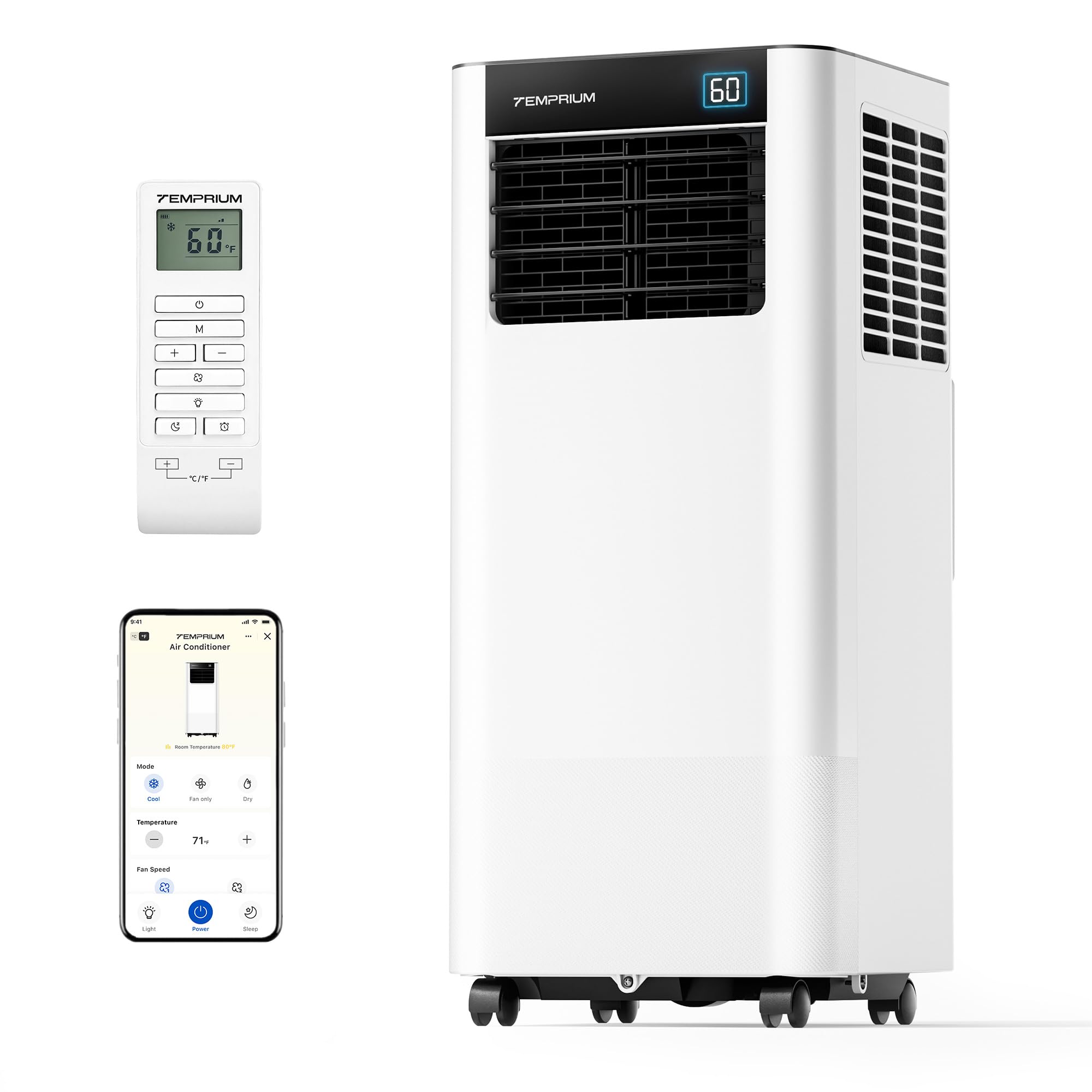
A bedroom-sized unit that drops to 60°F and answers to your voice for the price of an entry-level appliance.
Here is where the list turns sensible and affordable. This is 10,000 BTU ASHRAE — 6,000 BTU in the tighter SACC standard — sized for 450 sq. ft., with airflow of 350 m³/h and a claimed cooldown to 60°F. It carries a CEER of 6.6 and draws an estimated 665 kilowatt hours per year, which is a modest running cost for a room this size. Add Alexa and Google Assistant support and you have hands-free cooling on a budget.
The bedroom angle is well covered. Sleep mode runs at 50dB with a display you can switch fully dark and a programmable 24-hour timer, so you can set it to chill before bed and switch off at dawn. Dry mode pulls up to 56 pints of moisture a day, which matters in a muggy apartment. The window kit fits 20–49 inch sliding windows with no drilling and no tools, making it genuinely renter-friendly.
The catch is capacity honesty. Owners describe it comfortably handling a bedroom or office, but in a 500 sq. ft. space during a heatwave the reports say it plateaus around 80°F, and the drain tray can fill in a couple of hours at high humidity if the fan stays low. Buy it for the room size it is built for, run the self-evaporating system as intended, and it settles in well.
The sensible-buy case
- Voice control through Alexa and Google Assistant on a 10,000 BTU unit
- 350 m³/h airflow with a claimed 60°F output
- 665 kilowatt hours a year estimated running cost
- Tool-free window kit for 20–49 inch sliders
- Washable mesh filter and dual drain ports for easy upkeep
The fine print
- Struggles in rooms at the top of the 450 sq. ft. rating on very hot days
- Sleep mode at 50dB is louder than the 40–45dB units here
- Drain tray needs attention in humid weather at low fan speed
Right answer for: a bedroom, home office or garage that needs smart cooling without much spend.
Wrong answer for: an open living room on a 95°F afternoon.
5. CARLOX 10,000 BTU 3-in-1 Portable AC with 24H Timer

No app, no voice assistant, no learning curve — just top buttons, a remote, and cold air for a small room.
Not everyone wants to run a bedroom air conditioner from a phone. This one is deliberately old-school: push buttons on the top panel and a remote that works from 16ft away, with a 24-hour timer and a child lock to keep little hands off. It is rated 10,000 BTU for rooms up to 450 sq. ft., with cool, fan and dehumidifier modes and a sleep setting that runs around 46dB.
What owners keep coming back to is how well it works on a modest room. It cools a 400 sq. ft. bedroom fast and holds the temperature, and one buyer ran it all summer on a sun-exposed porch in 90–100°F heat and ended up needing a blanket. Setup is tool-free with the included window kit and typically takes under 20 minutes.
Two things to plan for. The noise is fine in normal use but a few owners find it louder than expected on full fan, so keep it off the pillow side of the room. And the drainage arrangement has two plugs, with the bottom one being the practical route — expect to lift the unit and attach a hose occasionally rather than relying on the top port. Neither is a deal-stopper on a bedroom unit; they just shape how you set it up.
Why grandparents like it: the button-plus-remote design means nobody has to download anything to switch it on — a genuine advantage over the app-only units here.
The trade-off to accept: it is a fixed-speed compressor, so temperature swings a little and full-fan noise is noticeable compared with the inverter units higher up this list.
Good match if: you want a straightforward small-room tower AC that anyone in the house can operate.
Not ideal if: you want whisper-quiet running or steady inverter temperature control at night.
6. DREO 516S 14,000 BTU Smart Portable Air Conditioner
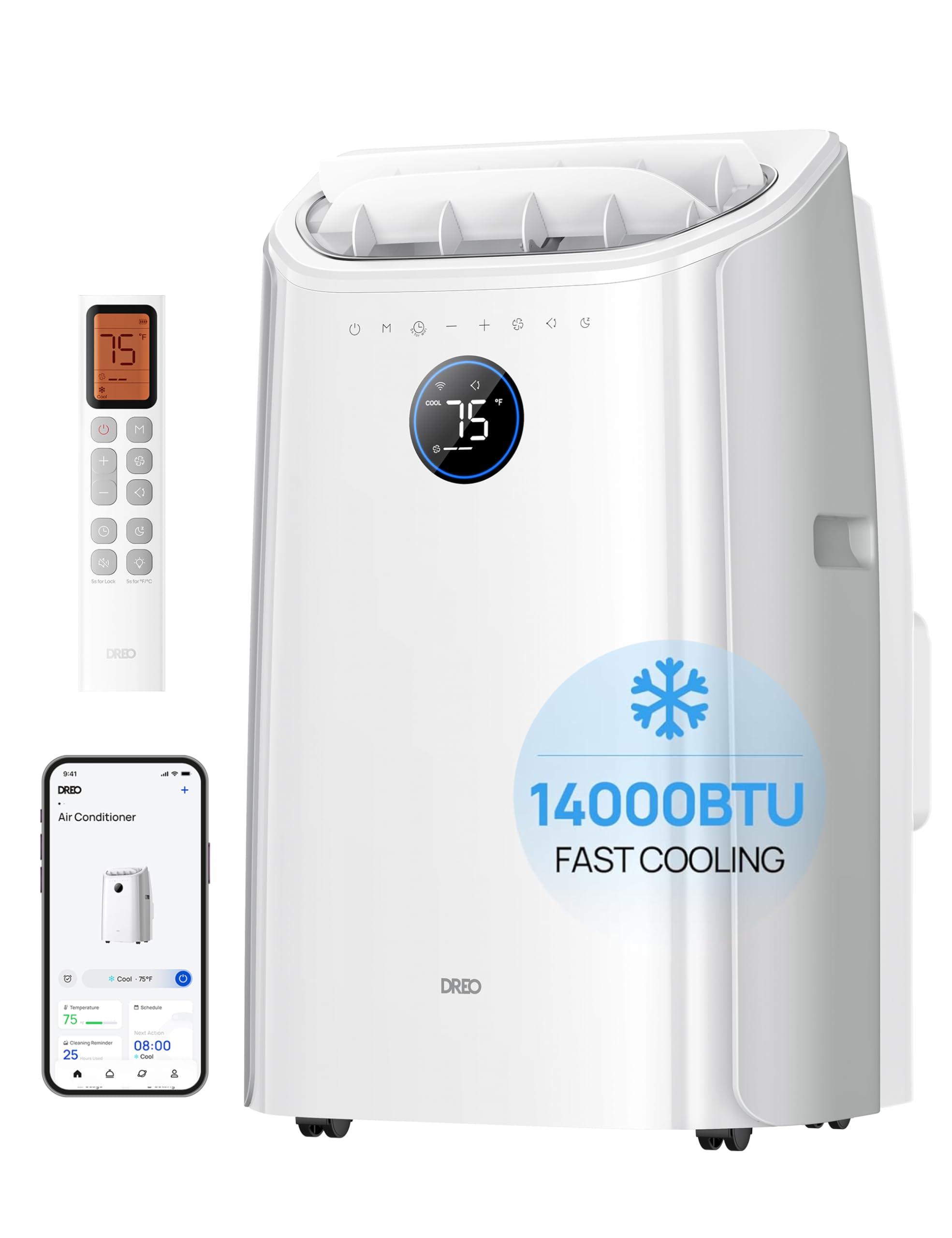
Voice control across all three assistants, plus a noise-isolation system that holds the compressor to 45dB.
The DREO is the most connected unit on this list — Siri, Amazon Alexa and Google Home all work, and the app lets you monitor temperature and humidity and build a custom sleep curve. Its noise-isolation system holds the compressor and airflow turbulence to 45dB, and the self-evaporating system is designed to skip manual draining in environments under 90% humidity. Cooling runs 14,000 BTU ASHRAE, or 10,000 BTU SACC, with coverage claimed up to 16 ft. away from the vent.
Performance is the thing that carries it with owners. Fast cool-downs, steady temperature, and straightforward installation in about an hour are the recurring themes, and the app is genuinely useful for pre-cooling before you get home. The exhaust hose runs warm, so a cloth cover is a small upgrade worth making.
Measured figures tell a louder story than the spec sheet: Independent testing measured about 63dB up close on high, with the advertised 45dB only at a distance. There is also a rare report of an internal failure with a strong odour that required unplugging — treat it as an occasional fault to watch for during the warranty window, not the norm. On coverage, 200 sq. ft. is the conservative rated floor area, so a small-to-mid bedroom is the balance.
Where it pulls ahead
- Works with Siri, Alexa and Google Home — the widest voice support here
- Patented noise-isolation system rated to 45dB
- Drainage-free in conditions under 90% humidity
- Sleep curve function you can customise in the app
Worth knowing before checkout
- Measured noise runs higher than the headline figure at close range on high
- Conservative 200 sq. ft. rated coverage
- Occasional unit faults reported — register the warranty promptly
The fit here: a connected home already running Alexa or Google, cooling one bedroom or office.
The mismatch: a light sleeper who needs library-quiet running at close range.
7. DOMANKI Inverter 16,000 BTU Dual Hose Portable AC
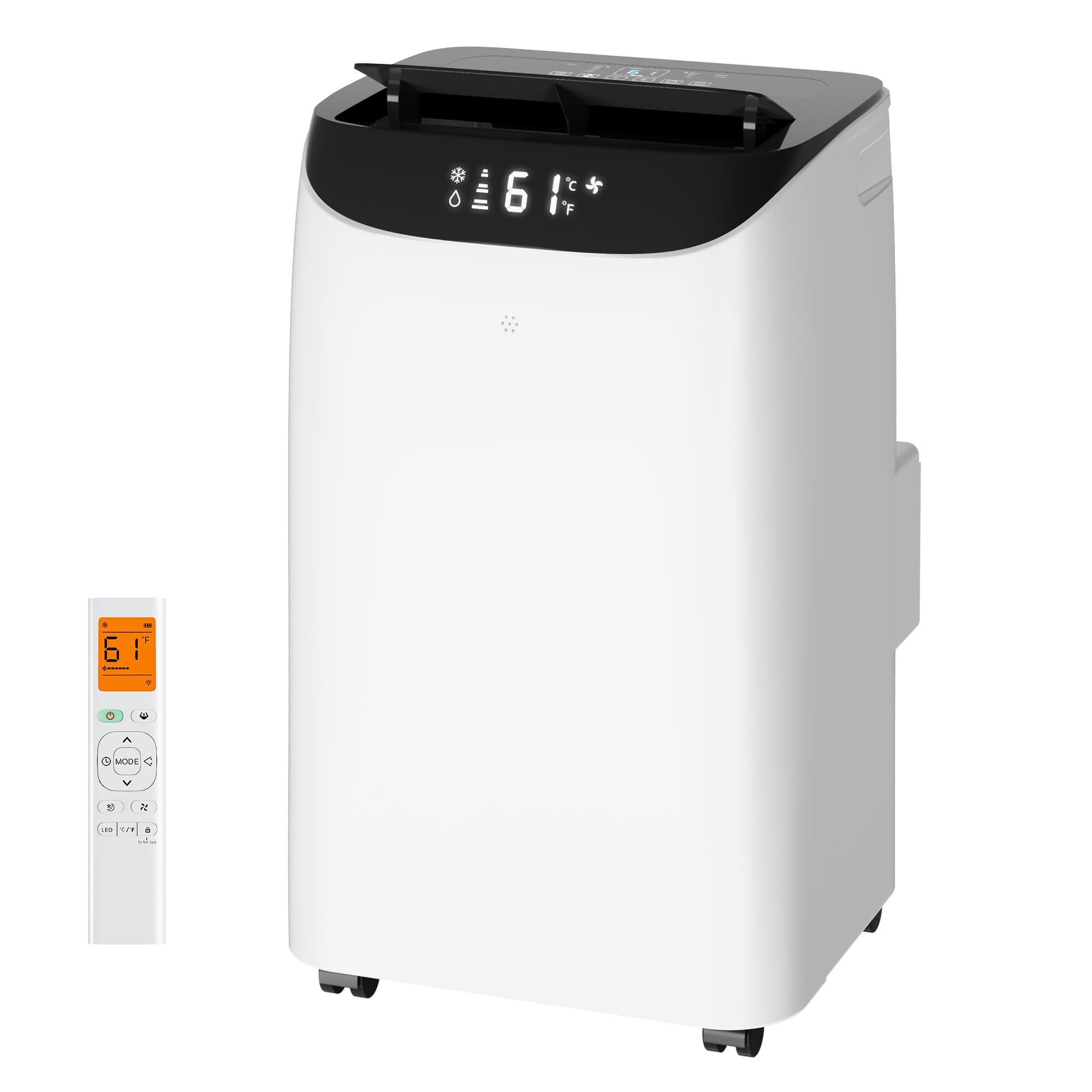
Dual hoses and an inverter compressor aimed at the biggest rooms on the list — up to 850 sq. ft.
Two picks here run dual hoses, and this is the larger of them. The DOMANKI pairs an inverter compressor with a dual-duct design that pulls fresh air in and pushes heat out, which keeps room pressure balanced and stops outside heat seeping in. Cooling is 16,000 BTU ASHRAE — 12,000 BTU SACC — for rooms up to 850 sq. ft., with airflow up to 470m³/h and a temperature range of 61°F to 86°F. It is ETL certified and draws an estimated 650 kilowatt hours a year.
That inverter is the reason it stays steady. Owners mention it holding temperature on hot afternoons instead of letting the room drift, and one 680 sq. ft. open-plan room dropped from 82°F to 72°F in under 25 minutes, with cold air at the vent in two minutes. During the hottest hours the compressor works hard, but in steady-state cooling the fixed-speed units simply cannot match the temperature stability. Sleep mode drops to 42dB with the display dimmed.
The catch is the window kit. Owners flag it as flimsy, with one sealing gaps using weatherstripping. Budget for that small fix, or the dual-hose advantage leaks away around the frame. The other is a single report of a unit that stopped cooling after months of use — rare, but a reminder to register it and keep the receipt.
Standout for open plan: 850 sq. ft. of rated coverage and 470m³/h of airflow make this the pick for a large living space or an attic room central air cannot reach.
Where it disappoints: the window seal kit feels cheap in the hand — plan on reinforcing it with weatherstripping so the dual-hose design can do its job.
Worth it if: you have a large room, want inverter efficiency, and can give it a reinforced window seal.
Overkill if: a bedroom is all you need cooled — go smaller and quieter.
Know the Specs
BTU and the ASHRAE vs SACC gap
BTU (British thermal units) measures how much cooling a tower AC can deliver. A bigger number means more capacity, but only if you compare the same standard. ASHRAE is the older, more generous rating, and SACC is the tighter modern one, so one unit can honestly wear two very different figures — the DOMANKI, for instance, is 16,000 BTU ASHRAE and 12,000 BTU SACC. Match BTU to square footage and you avoid the classic mistake of a unit that runs flat out and never catches up.
CEER and inverter compressors
CEER is a measure of cooling output per unit of electricity — higher means less power for the same chill. The Gasbye rates 13.6 CEER, the highest here. An inverter compressor runs at variable speed instead of simply switching on and off, so it holds a steadier temperature and cuts power use; the DOMANKI is the other inverter pick. A fixed-speed compressor is cheaper up front but swings more.
Sleep-mode decibels
Decibels (dB) measure how loud the unit runs — around 40dB is a quiet library, and normal conversation sits near 50dB. Sleep-mode figures on this list run from a claimed 40dB on the Attsix up to 50dB on the Temprium. If the unit shares your bedroom, that figure shapes whether you can sleep through it far more than top fan speed does.
Self-evaporation and drainage
Self-evaporating systems reuse condensation to cool the coil and vent the rest out with the exhaust, so in normal conditions you never touch a drain pan. In very humid, poorly sealed rooms the intake of moist outside air can outrun that evaporation, and you need manual drainage. Many units include an extra drain port positioned higher on the back so you can attach a hose without lifting the whole unit.
Common Questions
Will a tower AC actually cool my room without a permanent install?
Should I buy a single-hose or a dual-hose tower AC?
What size BTU do I need for my room?
Will it fit my sliding window?
Do I have to empty a water tank every day?
How loud is a tower AC at night?
Can a tower AC replace my central air conditioning?
What is the difference between ASHRAE and SACC BTU ratings?
Do I need to let it sit upright before turning it on?
Why does my tower AC feel weaker after a few months?
The Bottom Line
For most people, the strongest tower AC on this list is the Gasbye Dual Hose 14,000 BTU. Its dual hoses and 13.6 CEER efficiency (a higher score means cheaper cooling) combine to cool a mid-size room evenly and cheaply, and 4.5+ stars across 500+ owners back that up. If you want the largest coverage and an inverter compressor for an open-plan or attic room, the DOMANKI 16,000 BTU steps up to 850 sq. ft. with dual hoses. And for a bedroom where you want quiet running and simple controls, the CARLOX 10,000 BTU delivers good cooling on a small-room footprint.
How we choose
We do not accept paid placement. Every pick is matched to a real buyer and a real use-case; we do not hands-on test units.
Sources
Specifications: manufacturer listings and product documentation. Review insights: verified customer reviews, as of October 2026. Pricing: not shown on this page (it changes often); check the current price via the retailer link.
As an Amazon Associate, Aappliancez earns from qualifying purchases. This does not affect which products we feature.