Disclosure: Some links in this post are affiliate links. As an Amazon Associate I earn from qualifying purchases, at no extra cost to you. Learn more
Specs are compiled from manufacturer listings and verified buyer reviews and can change over time — please confirm the key details on the product page before buying.
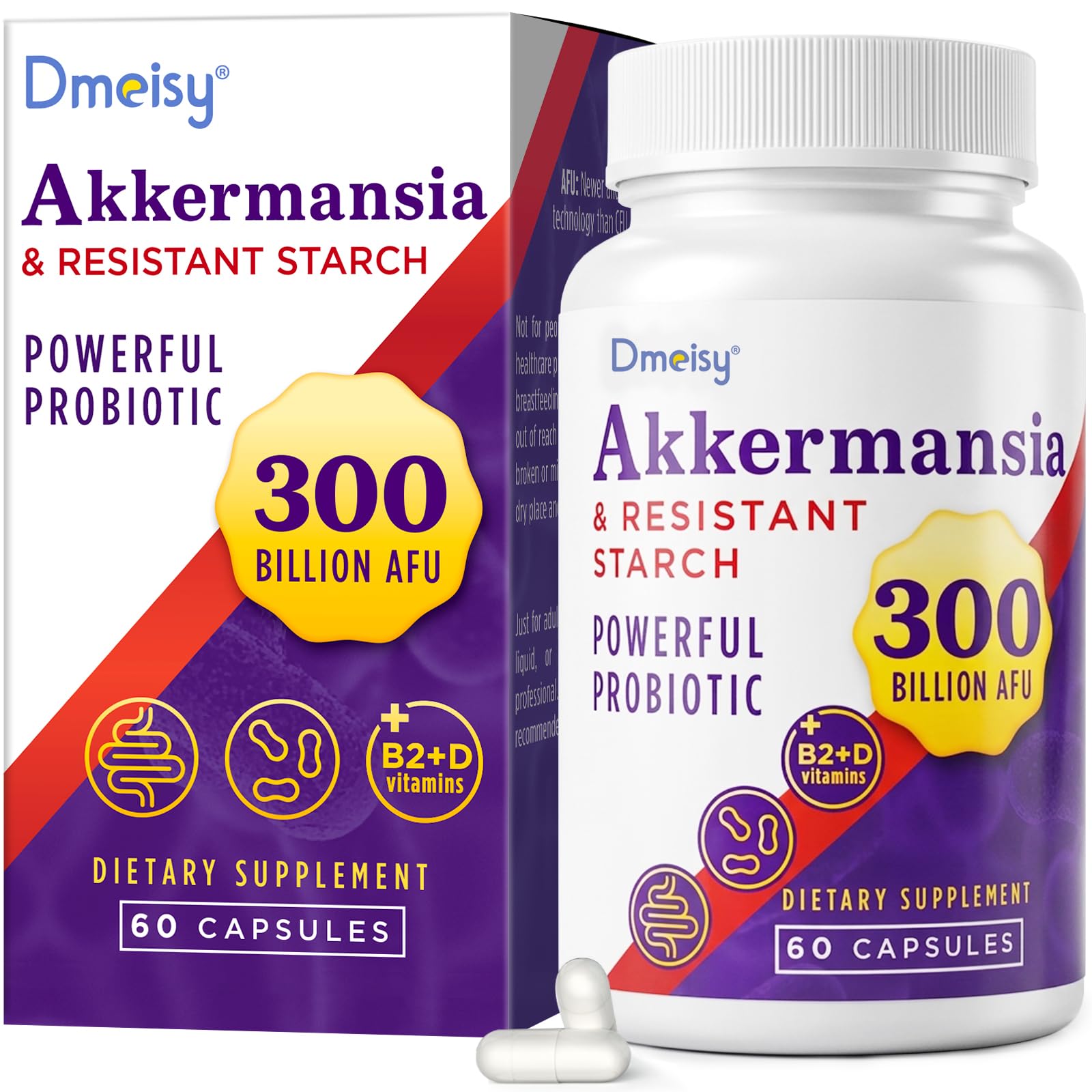
Morning, before food, with a full glass of water — that is the short answer, and it is the one most Akkermansia buyers land on. The longer answer matters more, because a capsule only helps if the bacteria inside it survive your stomach acid and reach your gut alive. A 300 Billion AFU bottle and a 100 Million AFU bottle are not the same product, and neither is a pure probiotic versus a synbiotic with inulin fiber built in. Below you will find the picks worth your time, sorted by what each one actually delivers.
This guide is built by comparing the manufacturers’ published specifications and the patterns across verified customer reviews, so you get each pick’s real strengths and trade-offs instead of marketing spin.
You will see how delivery technology, fiber pairing, and capsule count shape the daily habit, plus which formulas suit a sensitive stomach. Read on for the straight story on finding the right time to take Akkermansia.
Top Picks

How To Choose The Best Time to Take Akkermansia
Most of the timing decision is really a capsule decision. A probiotic that dissolves too early dumps its contents into stomach acid, and nothing useful survives the trip. A capsule built with delayed-release technology holds together until it reaches the intestine, which is exactly where Akkermansia muciniphila can settle. So before you argue about morning versus evening, check what the pill is wrapped in.
Look at the delivery technology first
Delayed-release capsules and slow-release capsules both aim at the same goal: get the strain past the stomach. Several picks here also ship shelf-stable, meaning the bottle sits in a cupboard rather than the fridge. That matters for a daily habit, because a bottle you have to remember to refrigerate is a bottle you stop taking.
Decide if you want fiber alongside it
Akkermansia feeds on the mucus layer of your intestine and helps break down fiber. That is why some formulas bundle in prebiotics such as chicory inulin, resistant dextrin, or psyllium husk. A synbiotic (probiotic plus prebiotic in one capsule) saves you a second bottle, but it also means more ingredients landing in your stomach at once. If your gut is easily unsettled, start with one capsule and give it a week.
Match the dose to your routine, not the label
A one-capsule serving is easier to hold to than a two-capsule serving, and a 90-count bottle outlasts a 60-count one. Work out the daily rhythm you can actually keep before you pick potency. A modest strain taken every morning beats a huge one you forget by Wednesday.
Side-by-Side Comparison
| Model | Best For | Potency | Capsules / Supply | Delivery | Amazon |
|---|---|---|---|---|---|
| 300 Billion AFU Akkermansia Muciniphila Probiotic for More GLP-1★ Best Overall | Highest potency | 300 Billion AFU per serving | 60 capsules / 30-day supply | Delayed-release, shelf-stable | Amazon |
| 300 Billion AFU Akkermansia Muciniphila Probiotics for Women MenBest Everyday Value | Everyday value | 300 Billion AFU per serving | 60 capsules / 1-month supply (2 per day) | Delayed-release, shelf-stable | Amazon |
| UpNourish Probiotics for GLP-1 Support | Sensitive stomachs | 5 Billion TFU per serving | 60 capsules | Pasteurized strain, 3 prebiotics | Amazon |
| Codeage Akkermansia Muciniphila | Longest supply | 100 Million AFU per serving | 90 capsules / 3-month supply | Synbiotic with chicory inulin | Amazon |
| GLP-1 Colon Cleanse Supplement, Berberine | Full-stack formula | Akkermansia + berberine blend | — | Includes psyllium husk and caffeine | Amazon |
Detailed Reviews
1. 300 Billion AFU Akkermansia Muciniphila Probiotic, 60 Count
Our pick — 4.5+★ from 500+ verified ratings; the strongest balance of quality and price.
A 300 Billion AFU dose in a capsule built to survive the stomach — and the crowd favorite here at 4.5+ stars across 500+ ratings.
The number that carries this bottle is 300 Billion AFU per serving — AFU being active fluorescent units, the way this maker counts live-strain particles. That is a serious dose per capsule, more than either the UpNourish or Codeage formulas deliver, and it is why this one sits at the top of the list. If you want a single capsule to do the heavy lifting for your morning routine, this is the format that makes it possible.
Delivery is the part most buyers skip over, and it is where this bottle earns its keep. The capsules use delayed-release technology, meaning they are coated to hold together through stomach acid and open further down, where Akkermansia muciniphila can actually take up residence. They are also shelf-stable and need no refrigeration, so the bottle lives in your cupboard beside your vitamins rather than behind the milk.
What wins people over is the plain steadiness of it. Reviewers most often cite steady gut-health results, and the recurring theme is consistency rather than drama — a one-capsule habit that fits a morning water routine. It is a 60-capsule bottle at one per day, so a 30-day supply, with vitamin B2 and vitamin D folded into the six-in-one blend. The catch worth naming: this label says not to use it if you are elderly, pregnant, breastfeeding, or under 18.
What earns the top slot
- 300 Billion AFU per serving — the highest potency in this lineup
- Delayed-release capsules designed to pass stomach acid intact
- Shelf-stable with no refrigeration, so the habit is easy to keep
- One capsule per day, which makes a 60-count bottle a clean 30-day supply
The honest limits
- The label excludes elderly users, pregnant or breastfeeding women, and anyone under 18
- Two capsules per day on the sibling formula stretches the same bottle count longer, so check your serving size
Go for it when: you want maximum potency from a single daily capsule and you do not want to think about the fridge.
Hold off when: you fall into the groups the label names as off-limits, or you would rather start at a gentler dose.
2. 300 Billion AFU Akkermansia Muciniphila Probiotics, 60 Count
Same 300 Billion AFU headline, a leaner bottle, and a two-capsule morning rhythm.
The serving instruction is the thing to notice: this one asks for two capsules a day, so the 60-count bottle is a 30-day month of supply rather than sixty days. It weighs 1.12 ounces against the 2.4 ounces of the UpNourish bottle, and its box measures 3.46 x 2.05 x 1.93 inches. Neither figure changes how the capsule works. They just tell you this is a smaller, lighter bottle to store.
What sets this formula apart from its 300 Billion sibling is the extras. Alongside Akkermansia muciniphila, it carries resistant starch (a fiber that feeds gut bacteria and supports glucose and lipid metabolism), green tea leaf extract, vitamin B2, and vitamin D. It also keeps the same delayed-release capsule design (the capsule releases its contents further down your gut) and the shelf-stable bottle (no refrigeration needed). So the real question is not which one is stronger at 300 Billion AFU (active fluorescent units, the maker’s live-cell count). It is if you want the six-in-one with those specific additions, or the vitamin B2 and D pairing on the other bottle.
Most of the reported experience lands around the one-month mark. Buyers describe steadier energy through the workday, meals sitting better, and faster recovery after runs. One summed it up simply: “I feel lighter after meals and my skin looks clearer.” That is the gradual, unshowy change this category tends to produce when the strain is taken daily. Plan your timing around a meal you already eat, so the dose rides along with your routine instead of fighting it.
Why it earns a place: It delivers the same 300 Billion AFU potency as the top pick, with a lighter 1.12-ounce bottle and a fuller ingredient list that includes resistant starch and green tea leaf extract.
The trade-off to size up: Two capsules per day means a 60-count bottle lasts a month, not two — a longer habit with more capsule-swallowing than the one-a-day format.
Reach for this if: you prefer a broader blend and do not mind two capsules with your morning water.
Look elsewhere if: one capsule a day is the only rhythm you will realistically keep.
3. UpNourish Probiotics, 5 Billion TFU Akkermansia Muciniphila

A pasteurized strain with three prebiotics behind it, built for guts that react to everything.
This bottle takes the opposite approach to the two 300 Billion AFU formulas above. Instead of raw potency, it leans on a pasteurized Akkermansia muciniphila strain. Pasteurized means the bacteria are heat-treated; the maker claims this is more effective as a supplement than live bacterium and will not upset a sensitive gut. The dose is 5 Billion TFU per serving. TFU is the maker’s total fluorescent units count, so treat that number as its own scale rather than comparing it directly to an AFU figure.
Behind the strain sit three prebiotics: resistant dextrin, stachyose, and mannooligosaccharides (MOS). Those are fiber types that feed the good bacteria already in your gut and work alongside the Akkermansia rather than replacing it. That pairing is the reason this one suits a delicate system — you are not dropping a huge live dose into a stomach that objects, you are feeding the lining gently over time.
Gut health and overall quality are what the formula gets credit for, and the reported picture is mostly calm, steady digestion. But the honest note on this one is the mixed side-effect feedback: while some buyers feel better, others report feeling sick to their stomach. That is a fit issue, not a flaw — if your gut reacts to new supplements, start with one capsule before committing to a full bottle.
The case for the pasteurized route: A heat-treated strain plus resistant dextrin, stachyose, and MOS prebiotic fiber (three gut-feeding fibers) adds up to a gentler daily support formula. At 2.4 ounces in a 3.74 x 2.05 x 2.01 inch box, it is also the chunkiest bottle in this group — so clear more shelf space than you would for the slim 300 Billion bottles.
What to weigh first: Stomach upset is reported by enough buyers that it belongs in your decision. If your gut is sensitive to new supplements, this is a start-slow product, not a load-up-on-day-one one.
The right fit: anyone who has tried live-strain probiotics and felt their stomach push back, and wants fiber support built into the same capsule.
Think twice if: you want the highest potency per capsule and have a gut that handles big doses without complaint.
4. Codeage Akkermansia Muciniphila, 90 Capsules

One capsule a day for three full months, with chicory root fiber riding along.
Ninety capsules at one per serving is the headline here: a full three months of daily support from a single bottle, the longest run in this lineup. That matters for a habit you are supposed to build gradually, because you are not reordering every four weeks and second-guessing the timing all over again. Just pick your slot and keep it.
The potency figure is where this one reads very differently from the 300 Billion AFU bottles: 100 million AFU per serving, AFU again meaning active fluorescent units. On paper that is a far smaller count, so if raw strain volume per capsule is what you are chasing, the two high-potency picks above lead on that measure. What you get instead is a synbiotic — Akkermansia muciniphila combined with chicory inulin, a soluble prebiotic fiber from chicory root that feeds the strain you just swallowed. The formula is vegan, non-GMO, dairy-free, soy-free, and gluten-free, made in a cGMP-certified facility.
Honest as it gets: effectiveness draws mixed reports here. Some buyers report less cravings and everyday indigestion, while others notice no change. There is also an odor note that shows up in the feedback, and a few find the capsules hard going. That is typical of a live-culture product — response varies from gut to gut. Give it a few weeks before you judge, and take it at the same time each day so you can actually tell.
Where the value sits
- 90 capsules at one per day — a full three months from one bottle
- Chicory inulin prebiotic fiber built into the same capsule
- Vegan, non-GMO, dairy-free, soy-free, gluten-free formula
- Craving control is the benefit buyers actually name
What you should know before you buy
- Effectiveness is mixed — some owners mention no benefit at all
- Odor comes up in the feedback, and a few find the capsules hard to take
- At 100 million AFU the potency count is far below the 300 Billion AFU bottles
Made for: the buyer who wants a long uninterrupted run, a prebiotic fiber partner in the same pill, and a clean ingredient panel.
Not the one if: you are set on the highest AFU count per serving — the 300 Billion bottles clear that bar by a wide margin.
5. GLP-1 Colon Cleanse Supplement, Berberine

Akkermansia, berberine, Triphala, psyllium, and green tea caffeine all in one routine.
This is not a pure Akkermansia capsule and it does not pretend to be. The formula stacks Akkermansia muciniphila and L. acidophilus with berberine, a traditional Triphala blend of Amla, Bibhitaki, and Haritaki, psyllium husk, prebiotic inulin, a DigeSEB enzyme blend, and green tea EGCG with black garlic. If you were hoping to isolate one strain and time it cleanly, this bottle is the wrong tool — there is a lot going on inside it.
The caffeine is the part that decides your timing for you. Green tea and yerba mate supply naturally occurring caffeine alongside L-Theanine, so a morning slot is the sensible one — take it late and you may pay for it at bedtime. Buyers describe the effect landing within 5-6 hours, which is a useful thing to know when you are planning your day around it. It is made in the USA in a cGMP-certified facility and is third-party tested, with no fillers, sugar, dairy, gluten, or artificial ingredients.
Here is the honest half. Digestion and bathroom use run genuinely mixed on this one. Some customers note less bloating, while others describe stomach cramping and looser stools than expected. Side-effect feedback is the loudest complaint on the listing. It acts within hours, so start with one pill and see how your gut responds. Start with one pill, keep it in the morning, and do not stack it on top of your usual coffee.
The appeal: One daily routine that covers a lot of ground — Akkermansia, berberine, Triphala, psyllium husk, and prebiotic inulin — with craving control and regularity as the reported wins.
The trade-off: The caffeine load and a fast, mixed digestive response mean timing and dosage discipline are not optional here. One pill in the morning is the sensible way in.
Best suited to: someone already running a gut and weight-management routine who wants fiber, botanicals, and the strain in a single serving.
Better to skip if: you want a clean, single-strain Akkermansia capsule you can time without thinking about caffeine.
Know the Specs
AFU and TFU Potency Counts
AFU stands for active fluorescent units, a lab count of live-strain particles in a serving. TFU means total fluorescent units and appears on the UpNourish bottle. The two labels are not the same scale, so do not compare a 5 Billion TFU figure directly against a 300 Billion AFU one and assume one is sixty times stronger. Read each number inside its own label, and treat it as one input rather than the whole decision.
Delayed-Release and Shelf-Stable Capsules
Delayed-release means the capsule is coated to survive stomach acid and open further down the digestive tract, where Akkermansia muciniphila can settle. Shelf-stable means the bottle needs no refrigeration, so it stores in a cupboard. Both features matter more to a daily habit than most buyers expect — a capsule that dissolves too early wastes the dose, and a bottle you must refrigerate is one you may forget.
Common Questions
Should I take Akkermansia in the morning or at night?
Should Akkermansia be taken with food or on an empty stomach?
Does the AFU number on the label tell me how strong a dose is?
Why do some Akkermansia supplements include chicory inulin or psyllium?
How long before I notice a difference from Akkermansia?
Can I take Akkermansia alongside coffee in the morning?
Do I need to refrigerate Akkermansia capsules?
Is pasteurized Akkermansia different from live Akkermansia?
Who should not take an Akkermansia supplement?
Why do some people feel sick or crampy when starting Akkermansia?
The Bottom Line
For most people asking time to take akkermansia, the answer starts with a capsule you will actually remember. The 300 Billion AFU Akkermansia Muciniphila Probiotic for More GLP-1 is the one to beat. It pairs the highest potency here with a delayed-release, shelf-stable capsule you can take in one go each morning. If your gut pushes back on live strains, the UpNourish Probiotics for GLP-1 Support swaps in a pasteurized strain with three prebiotics behind it. And if you want a single capsule to cover a full three months without a reorder, the chicory-inulin capsule from Codeage is the long-run pick. Whichever you choose, set the bottle next to something you already reach for at breakfast. Anchoring the dose to breakfast is what keeps the habit going.
How we choose
We do not accept paid placement. Every pick is matched to a real buyer and a real use-case; we do not hands-on test units.
Sources
Specifications: manufacturer listings and product documentation. Review insights: verified customer reviews, as of October 2026. Pricing: not shown on this page (it changes often); check the current price via the retailer link.
As an Amazon Associate, Aappliancez earns from qualifying purchases. This does not affect which products we feature.