Disclosure: Some links in this post are affiliate links. As an Amazon Associate I earn from qualifying purchases, at no extra cost to you. Learn more
Specs are compiled from manufacturer listings and verified buyer reviews and can change over time — please confirm the key details on the product page before buying.
A three-door refrigerator earns its keep by holding steady temperatures in each compartment and fitting the gap you actually have. The real problem most buyers hit is simple: the middle compartment loses cold air every time the door opens, so temperatures drift and milk spoils early. This guide lines up the models that get cooling, defrost, and footprint right, plus a few commercial units built for retail floors and prep lines.
This guide is built by comparing the manufacturers’ published specifications and the patterns across verified customer reviews, so you get each pick’s real strengths and trade-offs instead of marketing spin.
You will see which fridges suit tight counter depths and which ones are commercial prep machines, plus the specs that actually change your daily routine. Here is the honest breakdown of the three door refrigerator market, ranked by how well each one holds its own.
Top Picks

How To Choose The Best Three Door Refrigerator
Most buyers walk into this category thinking a bigger box means more room. In practice, a fridge that clears your cabinets and door swing beats one with extra cubic feet that juts into the walkway. Start with the physical footprint, then work backwards to capacity.
Counter depth versus standard depth
A counter-depth fridge sits roughly flush with your cabinets instead of jutting out past them. That means you lose some usable interior space, but you gain a walkway you can actually use in a narrow galley kitchen. A standard-depth model gives you more cubic feet for the same width.
Where the cold air goes
A three-door layout splits your fridge into a refrigerator cavity plus one or two freezer sections. Every time you open the fridge door, cold air sinks and warm air rushes in. A double-flow or multi-flow cooling system pushes air through several vents at once, so temperatures recover evenly instead of leaving a warm pocket at the top shelf.
Defrost and drainage
Frost-free and automatic defrost systems cycle a heater on a schedule, so you never chip ice off the back wall. A manual defrost system asks you to do it yourself, which is fine for a garage backup and much less fun for a family fridge.
Side-by-Side Comparison
| Model | Best For | Capacity | Annual Energy Use | Defrost System | Amazon |
|---|---|---|---|---|---|
| 60 Cu. Ft. Commercial Beverage Refrigerator★ Best Overall | High-traffic retail and office drink storage | 60 cubic feet | 3.45 kwh | Frost Free | Amazon |
| Galanz 3-Door French Door RefrigeratorBudget Pick | Tight budgets and small kitchens | 16 cubic feet | 490 kilowatt hours per year | Frost Free | Amazon |
| Sharp SJB1255GS 11.5 cu.ft. Counter DepthCompact Pick | Shoebox kitchens and tall, narrow gaps | 11.5 cubic feet | 397 kilowatt hours per year | Frost Free | Amazon |
| Ca’Lefort 30 Inch Wine and Beverage Refrigerator | Wine collections and built-in bar nooks | 6 cubic feet | — | Automatic | Amazon |
| Avanti French Door Refrigerator 17.5 Cu.Ft. | Low energy bills in a French-door footprint | 17.5 cubic feet | 327 kilowatt hours per year | Automatic | Amazon |
| Hamilton Beach HBF1662 French Door | Counter-depth looks on a mid-range budget | 16.6 cubic feet | 378 kilowatt hours per year | Frost Free | Amazon |
| KoolMore 30-Inch 18.5 cu. ft. Counter Depth | Quiet operation in an open-plan kitchen | 18.5 cubic feet | 465 kilowatt hours per year | Automatic | Amazon |
| BLACK+DECKER 16 Cu. Ft. French Door | Garage or mudroom freezer duty | 16 cubic feet | — | Frost Free | Amazon |
| Hamilton Beach HBF2067 20.3 cu ft | Extra cubic feet for larger families | 20.3 cubic feet | 378 kilowatt hours per year | Manual | Amazon |
| Kenmore 17.5 cu. ft 30″ Wide French Door | Fingerprint-resistant finishes | 17.5 cubic feet | 512 kilowatt hours per year | Frost Free | Amazon |
| Midea MRF29D6AST 29.3 Cu. Ft. Smart Refrigerator | Big households wanting app alerts | 29.3 cubic feet | — | — | Amazon |
| GE GNE27JYMFS 36″ French Door | Bulk grocery hauls and tall items | 27 cubic feet | 633 kilowatt hours per year | Electric | Amazon |
| BODEGACOOLER 72″ Commercial Prep Refrigerator | Pizzerias, salad bars, and prep stations | 20.8 cubic feet | 1200 kwh | Automatic | Amazon |
Detailed Reviews
1. 60 Cu. Ft. Commercial Beverage Refrigerator
Our pick — 4.0+★ from 300+ verified ratings; the strongest balance of quality and price.
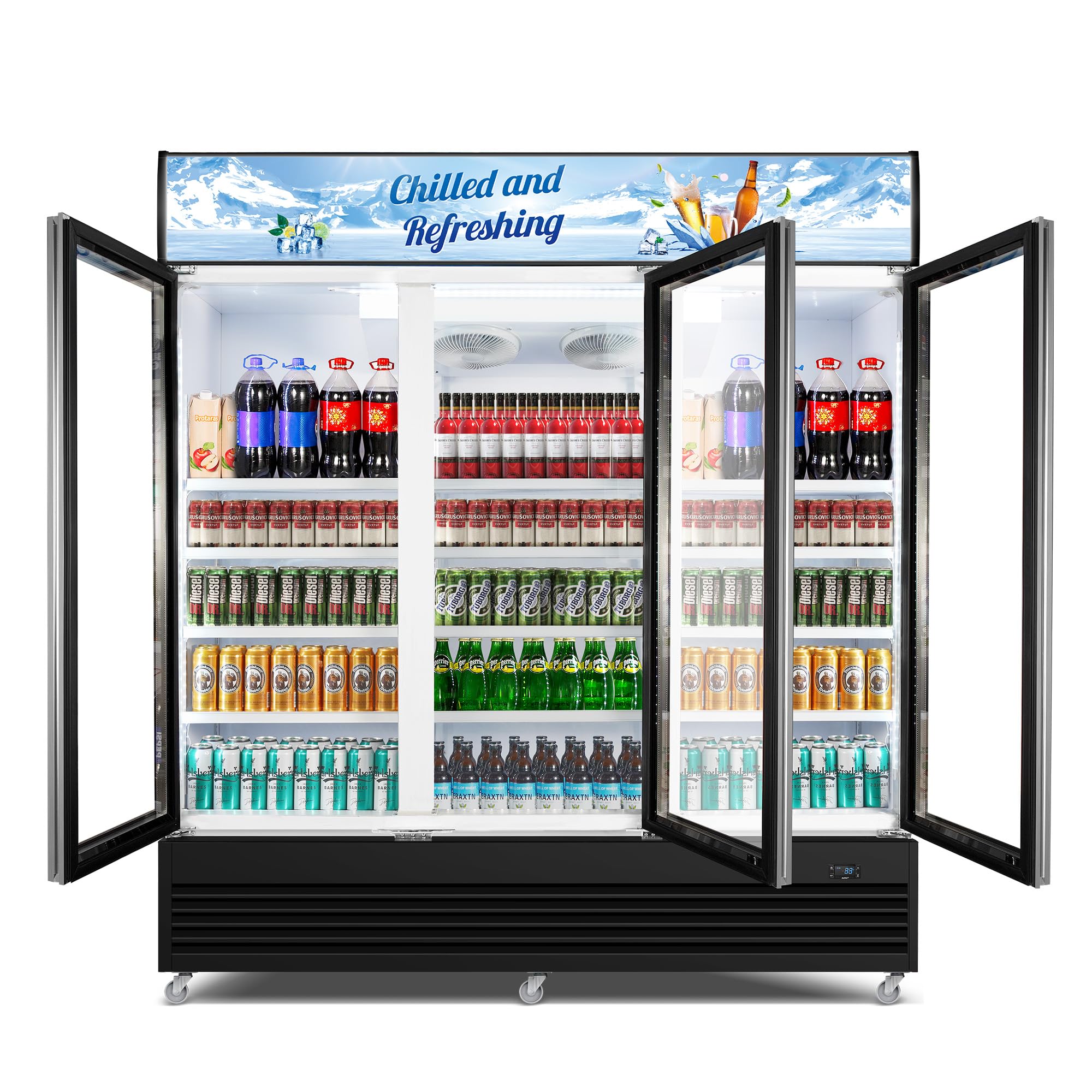
Sixty cubic feet of glass-front drink storage that lets customers see the stock before they open a door.
This Velieta unit is not a household fridge, and that is the point. It holds 60 cubic feet of beverages behind three glass doors in a 74.41-inch-tall upright body, so a café or convenience store can display stock instead of hiding it in a walk-in. The triple-glazed doors (three layers of glass that block outside heat) and the sealing strip work together to keep external heat out. The interior holds a 32-41°F range — cold enough that a can pulled at the start of a shift still tastes right at closing.
Practical details are where this one earns its place on the list. You get 8 removable wire shelves, so you can pull a shelf and stand tall bottles upright, and 6 wheels so the whole cabinet moves when the floor plan changes. The self-returning door closes itself, which matters in a busy shop where staff are carrying trays. The automatic defrost system means nobody has to chip ice off a coil on a Sunday morning. The compressor fan chills new stock fast, which is the difference between restocking before a lunch rush or during it.
What wins people over is the combination of visibility and quiet running — the blue LED lighting and the top-mounted light box make the cabinet read as a display piece rather than a utility box, and the noise stays low enough that it does not dominate a small retail floor. Buyers report it is easy to load and use: “Fits 8 bottles nicely and is very easy to use.” Just go in with realistic expectations about what it is. This is a single-temperature beverage display cooler with a full-sized, freezerless configuration — not a fridge for your leftovers, and not a place to keep ice cream. Its annual energy figure is listed as 3.45 kwh (about the same as running a small window air conditioner for a few hours).
What a shop actually gets
- 60 cubic feet across three glass doors — far more display space than a Sharp SJB1255GS at 11.5 cubic feet
- 8 removable wire shelves and 6 wheels for fast layout changes
- Self-returning door plus automatic defrost cuts daily labour
- 32-41°F, 0-5°C range holds a stable serve-cold temperature
Where it stops being the right buy
- Freezerless, single-temperature build, so no frozen stock and no ice cream
- Commercial footprint needs floor space most home kitchens do not have
- Lock and door hardware deserve a gentle hand in high-turnover settings
balance: retail counters, offices, and restaurants that need cold drinks on display and reachable fast.
Not the one for: a home kitchen that needs a freezer compartment for frozen food.
2. Galanz 3-Door French Door Refrigerator
A white three-door French-door fridge that squeezes 16 cubic feet into a footprint most galley kitchens can take.
Here is the number that decides it for a lot of people: 28.3 inches wide, 29.3 deep, 70 tall, holding 16 cubic feet. That is a genuine French-door layout in a body that does not need a wide open wall. The bottom-mount freezer slides open to two full-width drawers, so frozen stock stays organised instead of buried. Two half-width crisper drawers with humidity control handle the produce, and three full-width glass shelves slide out for wiping up a spill.
The one honest trade-off sits with long-term reliability, and there is real spread in owner experience on that front. Some units run for years without complaint, and others stop sooner and face a support process that is slow to respond. That is worth knowing before you commit, and worth pairing with a careful check of the warranty terms at purchase. Energy use is listed at 490 kilowatt hours per year, which is a step above the Sharp SJB1255GS at 397 kilowatt hours per year — worth a thought if the fridge runs year-round in a hot room.
The finish does not read as a compromise, though: white panels, an extra seal on the left door, and roomy door shelves. The white finish, the extra seal on the left door, and the roomy door shelves all read as considered rather than cheap. The digital control holds temperature steadily. The appeal here is straightforward: a 16 cubic-foot French door with a bottom freezer at a budget price, in a 28.3-inch-wide body that fits a galley kitchen.
Best described as: the practical entry point to a French-door fridge without a premium-label markup, with a footprint that fits a narrow galley and a bottom freezer that opens flat rather than swinging out.
The follow-up question: what happens if something goes wrong? Reliability is the recurring concern in owner feedback, so buy with the warranty route in mind and keep your receipt and purchase date handy.
Reach for this if: a narrow galley kitchen needs a three-door layout and the budget is the binding constraint.
Weigh it carefully if: you want a long service record and an easy support path, since those are the weak spots in the feedback.
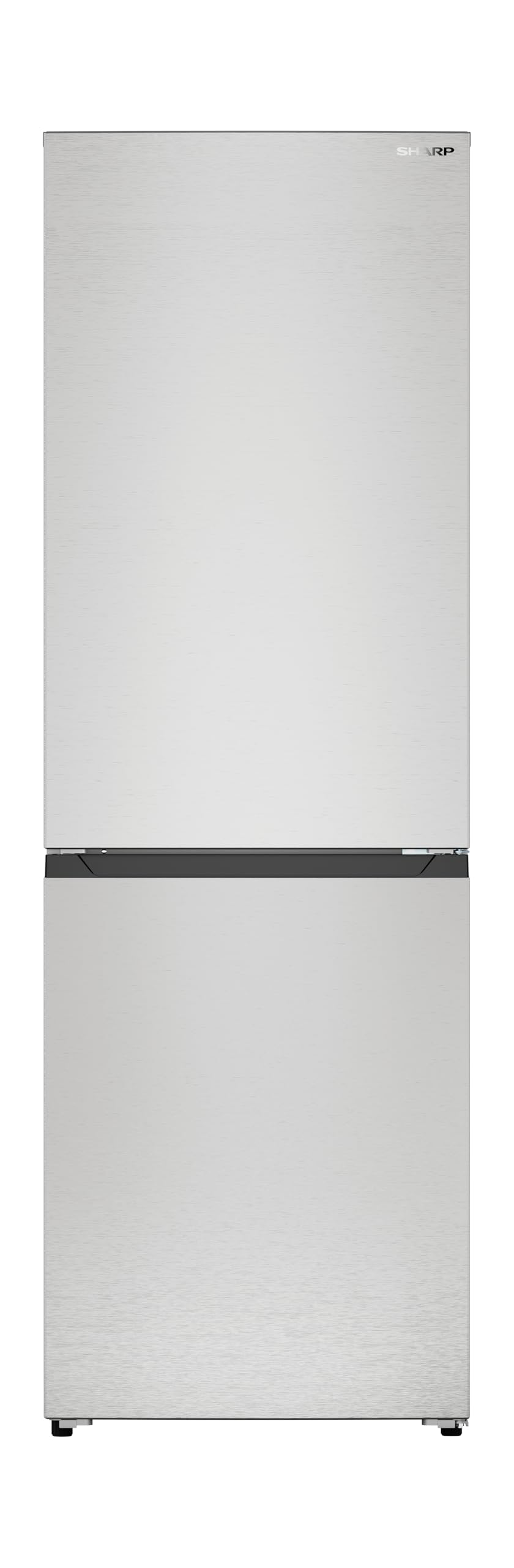
3. Sharp SJB1255GS 2 Door Refrigerator
Twenty-four inches wide and tall enough to make the most of a narrow kitchen gap.
If your kitchen has a 24-inch slot and nothing else works, this is the answer. The 11.5 cubic feet splits into a refrigerator cavity plus a 4.2 cubic-foot freezer — enough for a couple or a small household, and the reversible door swing means you can fit it into either corner. Multi-air-flow vents push cold air through both compartments at once, so the freezer and the fridge stay even without one starving the other. Annual energy use sits at 397 kilowatt hours per year, the lowest figure on this list.
Two features separate it from a generic apartment fridge. Vacation mode turns off the refrigerator cavity while the freezer keeps running, which is exactly what you want when you leave for a fortnight and still have frozen food to protect. The fresh converter drawer switches between a chiller setting for meat and a crisper setting for fruit and veg. There is also a removable wine rack, which turns an otherwise utilitarian box into something you would leave visible.
The recurring caution is size, not build. People who buy it expecting a full family fridge find it holds less than they pictured, so measure your weekly shop against 11.5 cubic feet before committing. The other note is the door reversal — a couple of deliveries have arrived with the swing fixed on the wrong side. Confirm it at order time and you sidestep the whole issue.
The case for a narrow column
- Fits a 24-inch slot, which a KoolMore 30-inch unit will not
- Vacation mode cools the freezer only, protecting frozen stock while you travel
- Converter drawer shifts between chiller and crisper duty
- Lowest annual energy figure here at 397 kilowatt hours per year
What to plan around
- 11.5 cubic feet is tight for a big family, so check capacity first
- Confirm door-swing direction at order time rather than at the kerb
- The removable wine rack takes shelf space if you do not use it
Built for: a one-bedroom flat, a garage conversion, or any kitchen where 24 inches is the whole story.
Think twice if: you need to feed four people from one fridge — this is a space solution more than a capacity one.
4. Ca’Lefort 30 Inch Wine and Beverage Refrigerator

Six cubic feet of wine and cans behind French doors that look like they cost more than they do.
The headline here is the temperature range: 36-72°F, adjustable in 1°F steps from a digital panel. That spread covers a crisp white, a cellar-temperature red, and a chilled can of soda without either arguing. The 6 cubic-foot body takes 80 cans and 33 bottles, and the removable shelves rearrange to fit whatever mix you actually buy. A power-failure memory restores your settings after an outage, which removes the one ritual of resetting the panel every storm.
Build is where the money shows. The doors are 304 food-grade stainless steel over double glazing, sealed to block UV and keep cold air in place. Three LED colours — amber, blue and white — set the mood, and the height stays below 34 inches with a front vent, so it slides under a counter as a built-in rather than standing proud. At 22.1 inches deep, 29.7 wide and 33.8 high, it tucks into a bar nook. The appearance is the thing everyone raves about, and the quiet running sits right behind it.
Two honest notes before you buy. First, bottle count depends on bottle shape — standard, Bordeaux and Burgundy fit fine, while magnums and long bottles do not, and the shelf positions are removable but not adjustable. Second, be a little patient: the maker asks for a 24-hour rest before first power-on, and the fitting is heavy enough to move with two people rather than one.
The piece that carries the room: French doors, double-glazed UV-blocking glass, and three selectable LED colours make this the one fridge on the list people would deliberately leave visible in a dining room.
One caveat worth a paragraph: the interior is a long way from a full family fridge. Six cubic feet is generous for wine and cans and inadequate for a weekly grocery haul, so treat it as a supplement rather than a main appliance.
Made for: a wine collection that has outgrown the cupboard and a bar nook with a counter above it.
Keep shopping if: you are buying milk, not Merlot — this is a drinks cabinet, not a kitchen fridge.
5. Avanti French Door Refrigerator
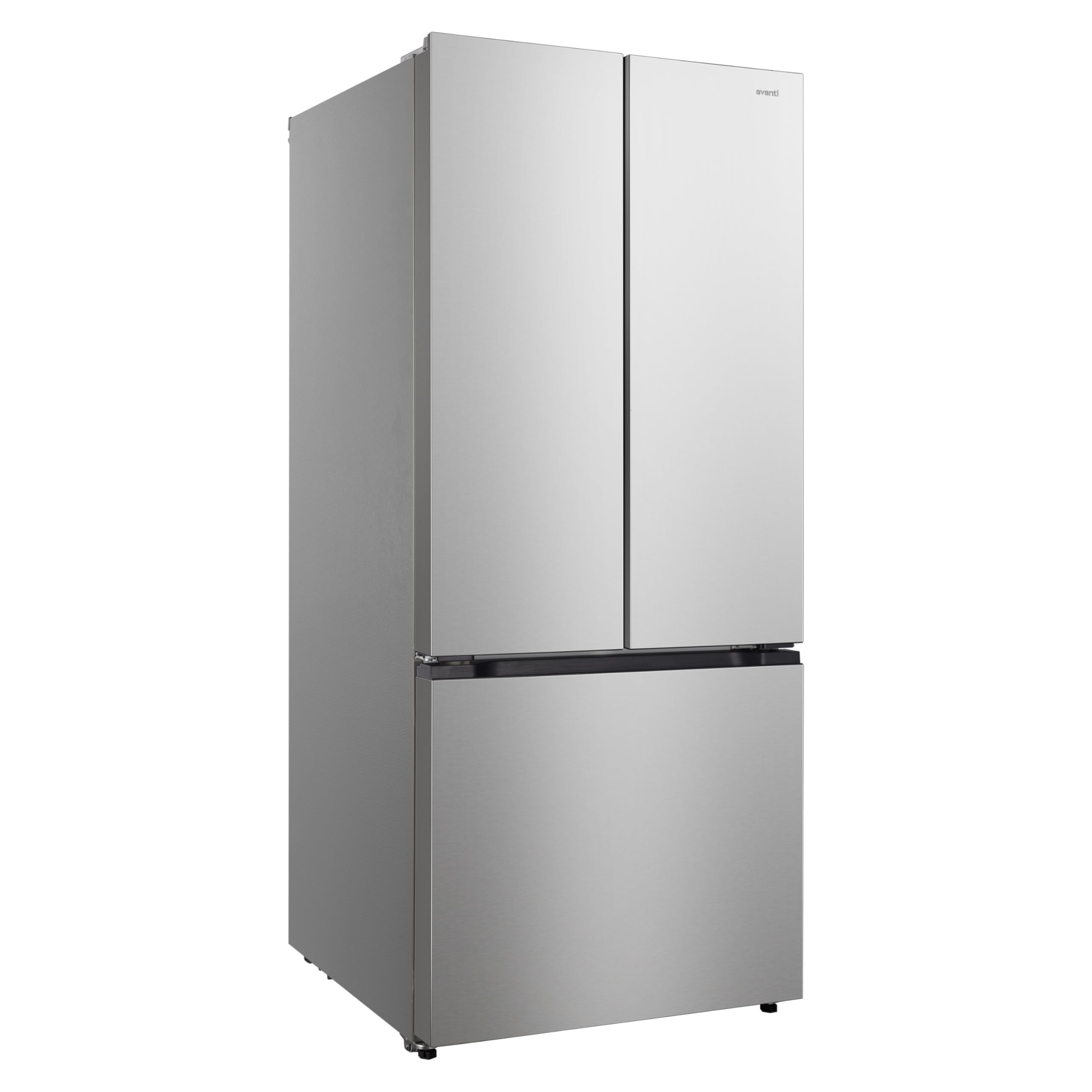
The efficiency play: 327 kilowatt hours a year inside a 17.5 cubic-foot French-door body.
At 327 kilowatt hours per year, this Avanti undercuts the Kenmore 17.5 cubic-foot model at 512 kilowatt hours per year while holding the exact same stated capacity. It is ENERGY STAR certified, and the compressor is a standard unit rather than an inverter design. For a household that leaves the fridge running eleven months of the year, that difference shows up on the bill.
The layout is conventional in the best sense. French doors open wide for a clear view of the three adjustable glass shelves, which come out when a shelf needs cleaning. Two clear-view crisper drawers hold the produce, and six door bins carry the bottles and jars that otherwise eat shelf space. The freezer holds 5.1 cubic feet across the bottom drawer, and it is ice-maker-ready if you want a compatible unit fitted later.
The honest caution here is about long-term service. There is a spread in owner experience — some units have run well past the first year, while others have needed a repair early and run into a warranty process tied to the purchase date rather than the delivery date. Confirm the coverage start point before the truck arrives, and you remove most of that risk. The other note is a measurement one: the stated height has been reported as lower than the real unit once the feet and top wiring box are counted, so measure your opening with a little headroom.
Where the money goes: straight into low running cost — 327 kilowatt hours per year at 17.5 cubic feet is the most efficient pairing on this list.
The right call when: the power bill is the number you check first and 17.5 cubic feet covers your household.
Check first: the real installed height and the warranty start date — both have bitten buyers before.
6. Hamilton Beach HBF1662 Refrigerator

Counter-depth styling without the counter-depth price, with a 4.86 cubic-foot freezer drawer underneath.
This HBF1662 puts 16.6 cubic feet into a French-door body, and gives 4.86 cubic feet of that to a pull-out freezer drawer with its own interior light. The doors carry gallon-size bins, which is the difference between a tidy fridge and one where a milk jug blocks the whole second shelf. Shelves are tempered glass and adjustable, so a tall stock pot moves from nuisance to non-issue. The stainless finish is smudge-resistant, and the recessed handles keep the front profile clean enough for a galley run.
The running cost is reasonable for the size: 378 kilowatt hours per year, matched exactly by the HBF2067 below despite that one offering more capacity. That is a point in this model’s favour if 16.6 cubic feet is enough for your household. The digital display on the door reads temperature without opening anything, and the LED interior lighting makes a late-night snack run a one-glance job.
Two things a buyer should know going in. The warranty on this unit is administered by Curtis International rather than by Hamilton Beach directly, and the claims process has been described as slow and paperwork-heavy — save your receipts and photograph the serial plate at delivery. Separately, a unit has been reported arriving that would not power on; the replacement process went smoothly, so check the plug-in the moment it lands and you are covered by the return window.
What you are buying
- 4.86 cubic-foot freezer drawer with its own light
- Gallon door bins free up the glass shelves
- 378 kilowatt hours per year keeps the running cost modest
- Recessed handles and smudge-resistant stainless read as a premium fit
The fine print
- Warranty sits with Curtis International, not the badge on the door
- Confirm power-on at delivery while the return window is open
Worth a look for: kitchens that want the flush counter-depth look and a pull-out freezer without the top-tier spend.
Before you order: read the warranty administrator’s terms, not just the brand name.
7. KoolMore 30-Inch French Door Refrigerator

The fridge buyers forget is running — a 30-inch counter-depth unit that barely makes a sound.
For an open-plan kitchen, noise is the spec nobody prints on the box and everybody notices at 11pm. Here the quiet running is the thing everyone raves about, and it is the reason this model sits near the top of the list despite a modest capacity. The 18.5 cubic feet breaks down into a French-door top with six door bins and two large freezer drawers below, and the whole body lines up with counter depth instead of standing proud of the cabinets.
Temperature control is handled by a double-flow cooling system with a digital panel. Cold air is pushed evenly through the cabinet rather than pooling at one end, so the produce drawer and the top shelf stay within a degree or two of each other. A door-left-open alarm sounds if something has not sealed, which quietly saves a lot of spoiled food over a year. Energy use is 465 kilowatt hours per year.
Two small things shape the ownership experience. The finish is stainless with no protruding handles, so fingerprints show unless you use the indented pulls and wipe with a damp cloth. And the interior light is dimmer than some would like — fine for finding the milk, less flattering for a staged kitchen photo. Neither is a reason to skip it; both are worth knowing.
Why it earns its slot: 18.5 cubic feet in a 30-inch counter-depth body, with a double-flow cooling system (two air paths that keep temperatures even) and a door alarm, at a price well under the GE and Midea options that hold more capacity but occupy far more wall.
Where it concedes: the handle-free stainless front and the modest interior lighting are the two things a fussy buyer would change, and neither affects how the food keeps.
Choose this when: the fridge sits within earshot of a sofa and you cannot hear a compressor hum during a film.
Look elsewhere if: you want bright interior lighting and a handle-free front you never have to wipe.
8. BLACK+DECKER 16 Cu. Ft. French Door Refrigerator

Sixteen cubic feet with an ice maker built in, sized for a garage wall rather than a designer kitchen.
The split here is 11.15 cubic feet of fresh food over 5.06 cubic feet of freezer, with a built-in ice maker that produces as much as 3.5 lbs. of ice per day depending on freezer temperature and how the unit is used. That is the feature that earns this one its place — a second fridge that hands you ice without a countertop machine. The digital thermostat controls each compartment separately, so you can push the freezer down and leave the fridge steady.
Energy Star certification and a high-performance compressor keep the running cost in check, and the reversible door lets you swing it either way to suit the wall. At 193 pounds it is no lightweight to move, so plan the position before the delivery arrives. The frost-free defrost system means you are not chipping ice in a cold garage in January.
Two honest trade-offs come up in the feedback. Some units run quietly and seal tightly, while a few arrive with a dented door from transport — worth a proper look at the corners before you sign. Temperature stability has been described as uneven by some, so give it a day to settle after the move. The interior LED is also dimmer than a premium fridge’s, which is fine for a garage and noticeable in a dark room.
The use case it owns: a garage or mudroom overflow fridge with icemaking built in, Energy Star certification, and a reversible door for awkward walls.
Ideal for: households adding a second fridge for bulk frozen food and a steady supply of ice.
Do this at delivery: inspect the door edges and corners before accepting — transport damage is the recurring note.
9. Hamilton Beach HBF2067 Refrigerator

Twenty cubic feet of French-door space in a body that stays under 30 inches deep.
The pitch is simple: 20.3 cubic feet in an under-30-inch-deep body, the largest capacity here that still sits flush with the countertop line. At 20.3 cubic feet in an under-30-inch depth, it gives you full-size storage without a box that juts a foot into the walkway. The spill-proof glass shelves contain a spill instead of letting it run down to the shelf below, which turns a two-hour clean into a ten-minute wipe. A full-width wire freezer shelf plus a door bin keeps frozen stock organised, and the fruit and vegetable crisper does its own job below.
Energy use is listed at 378 kilowatt hours per year. Multi-vent technology pushes air through the cabinet to hold an even temperature, and the controls are easy to reach. The door bins keep smaller items in view rather than lost behind the milk.
One spec deserves a flag before you order: this model uses a manual defrost system rather than a frost-free one. That means ice builds up over time and you clear it yourself. It is a real maintenance task, not a footnote, and it is the reason this pick sits below the automatic-defrost options above. A defective unit has also been reported failing to cool, so check it reaches temperature within the first day while the return window is open.
Sharpest read on value: 20.3 cubic feet at under 30 inches deep is the biggest counter-clearing capacity here, so it suits a family that wants space without the depth.
Good match for: a large family with an under-30-inch depth limit and room to manage a defrost schedule.
Know before you buy: the manual defrost is a hands-on job — if that is a deal-ender, take an automatic-defrost model instead.
10. Kenmore 17.5 cu. ft 30″ Wide French Door Refrigerator
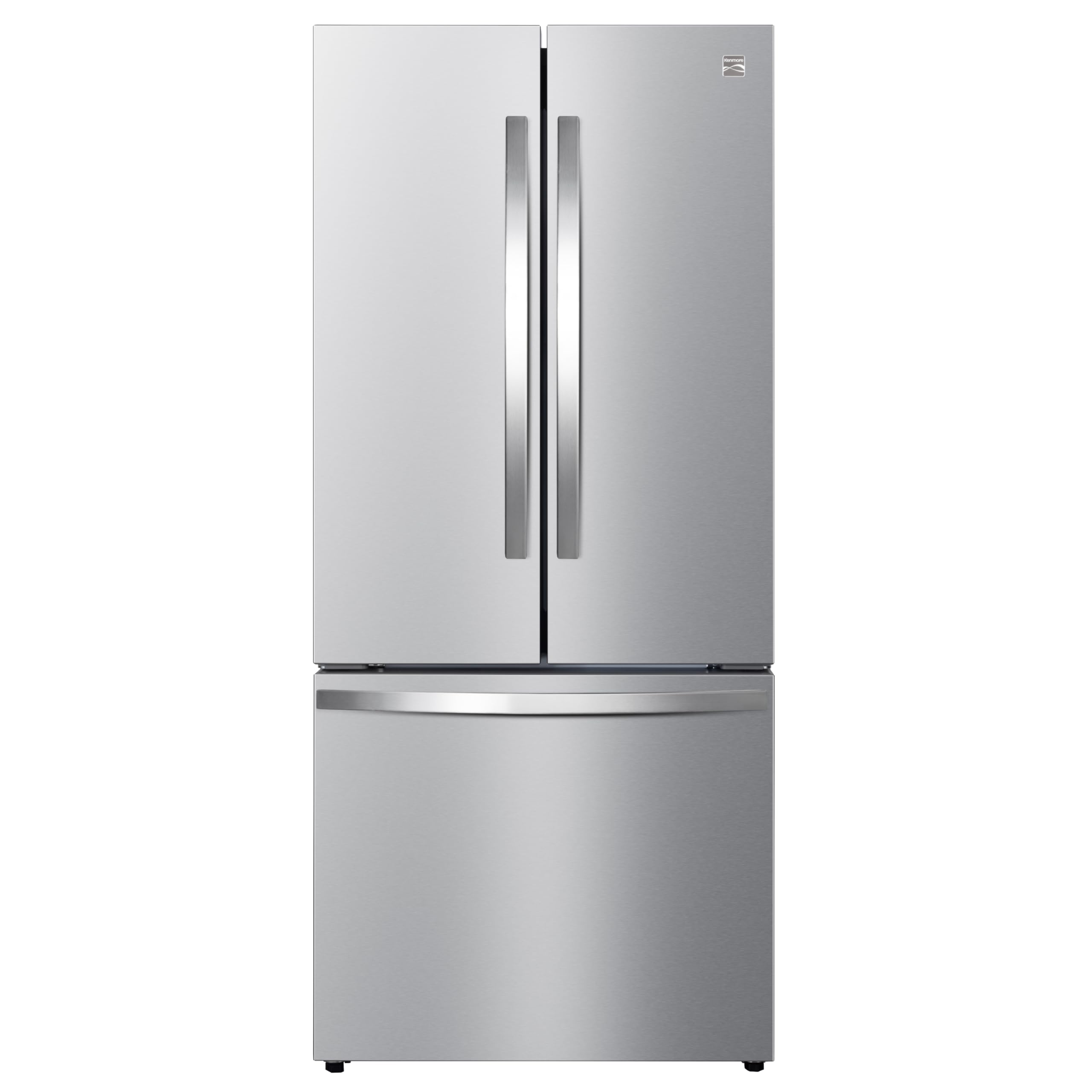
Fingerprint-resistant stainless, a built-in ice maker, and a 30-inch counter-depth body.
If you have ever wiped a stainless fridge twice a day, this finish is the feature that matters. The stainless here resists fingerprints, so a busy household with kids stops leaving a map of handprints across the doors. Inside, 17.5 cubic feet splits sensibly: six gallon-size door bins, a two-tier freezer drawer, and a dedicated chill feature for cooling a warm grocery run fast. Multi-flow air keeps the shelves even rather than cold at the back and warm at the front.
The built-in ice maker is factory installed, and the LED lighting runs bright and long. ENERGY STAR certification plus an inverter compressor is the efficiency story, though the stated annual figure is 512 kilowatt hours per year — the highest on this list outside the commercial units. That is worth factoring in if the fridge runs in a warm kitchen.
The real caution is reliability, and there is genuine spread here. Some units have run quietly for years with no trouble, while others have needed a control board or fan motor repair early on, with parts sometimes slow to arrive. If the fridge is the only one in the house, consider an extended plan. Separately, the installed height runs taller than the listed figure because of the top hinge boxes, so measure your cabinet opening with real headroom rather than trusting the spec sheet alone.
What stands out
- Fingerprint-resistant stainless that stays clean-looking through daily use
- Built-in ice maker fitted at the factory rather than added later
- Six gallon-size door bins take the bottles off the glass shelves
- Chill and multi-flow air systems cool a grocery run without waiting overnight
What to weigh
- 512 kilowatt hours per year is a high running figure for a 17.5 cubic-foot fridge
- Early component repairs have been reported, so a service plan is worth pricing
- Measure the opening including the top hinge boxes before delivery
Worth picking for: the fingerprint-resistant finish and factory ice maker, in a kitchen that needs a 30-inch counter-depth fit.
Go in aware: the running cost is high and component reliability has been uneven — price an extended plan before delivery day.
11. Midea MRF29D6AST Refrigerator
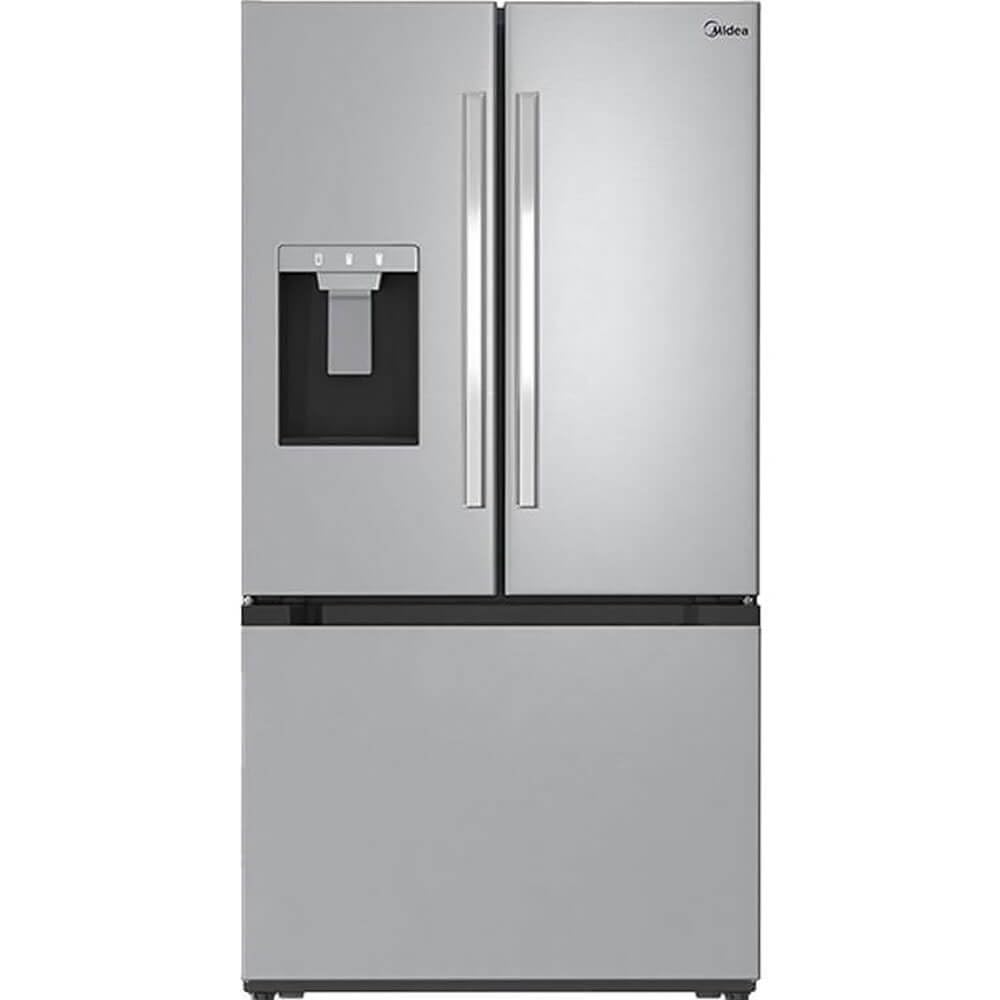
Twenty-nine cubic feet with a water and ice dispenser, plus a phone that tells you the door is open.
This is the biggest household fridge on the list at 29.3 cubic feet, and the only one with a water and ice dispenser built into the door. Two ice makers mean a busy household does not run out at dinner, and the fingerprint-resistant stainless keeps the front presentable. Interior LED lighting runs through the cabinet, and the three-door French-door layout puts the fresh food at eye level with the frozen section below.
The app is the feature that separates it from a plain big fridge. It sends an alert when a door is left open, lets you control settings remotely, and shows a real-time status check — the kind of small thing that prevents a whole weekend of warm food when a child leaves the freezer ajar. There is a dual ice maker with the dispenser, so filtered water and ice come from the same panel.
Plan for the physical realities. This unit weighs 369 pounds and measures 39 inches deep by 37 wide by 74 tall, so the delivery path needs the doorway measured first. The dispenser is the moving part most likely to need attention: there is a report of an ice maker leaking into the drawer and then failing to work. Test the dispenser and the ice maker on day one, while the return window is still open, and you will catch any transit fault early.
What the big box delivers: 29.3 cubic feet, a dual ice maker, water and ice through the door, and app alerts for a door left open.
Suits: a full house that goes through serious volume and wants the fridge to flag a door left open.
Measure first: 369 pounds and 74 inches of height need a clear delivery path and a door frame that clears.
12. GE GNE27JYMFS 36″ French Door Refrigerator, 27 cu. ft.
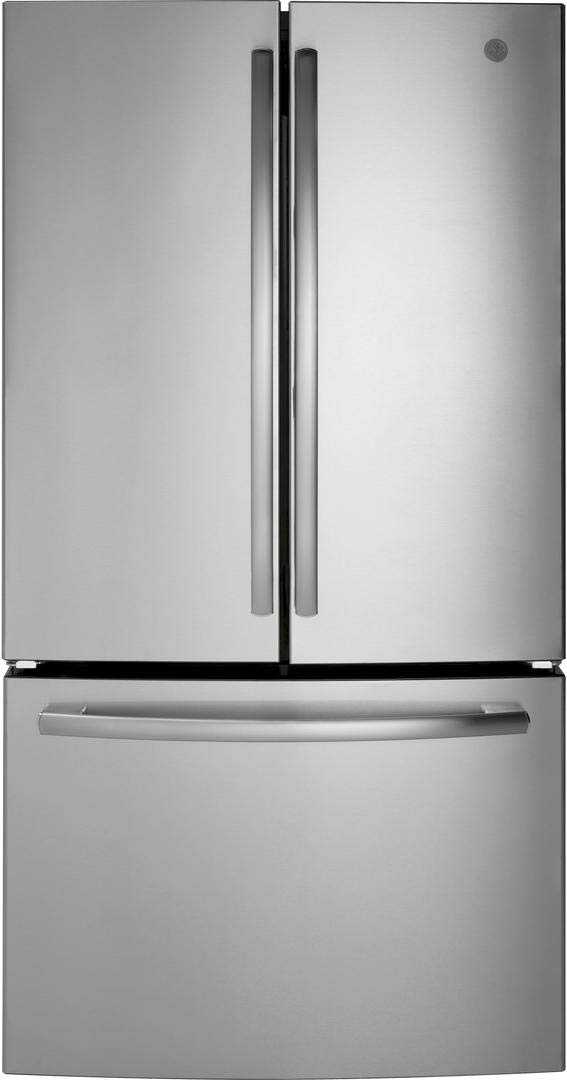
Three full-width shelves and twenty-seven cubic feet for the household that buys in bulk.
Bulk shopping lives or dies on shelf width, and this GE gives you three full-width shelves across 27 cubic feet. The Quick Space shelf slides out of the way so a tall stock pot or a tiered cake stands upright, and the LED lighting runs bright enough to read a label at the back. The internal water dispenser keeps filtered water available without breaking the door front with a chunky external panel, and the fingerprint-resistant stainless finish keeps the exterior presentable in a busy kitchen.
Running cost is the honest caveat: 633 kilowatt hours per year is the highest household figure on this list, well above the Avanti’s 327 kilowatt hours per year at a smaller capacity. You are paying for size and shelf width, and the power draw reflects that. The other note is access to the ice maker switch — it sits at the back of the freezer, so an older owner with knee trouble has flagged the reach as awkward. If turning ice on and off by hand matters to you, plan for that.
The deeper consideration is long-term service. There is a report of the cooling system giving trouble after the first year, and coverage can depend on where you live. Confirm your area is served before the truck arrives, and price an extended plan if the fridge is your only one. Quality and reliability are the two things owners praise most consistently, so the odds are good — you just want the safety net in place.
The case in one line: 27 cubic feet, three full-width shelves, a Quick Space shelf for tall items, and an internal water dispenser — the widest fresh-food shelf setup here.
Pick it when: weekly shopping comes home in bulk boxes and every extra inch of shelf matters.
Plan for: the highest household running cost here, and check that your postcode is inside GE’s service area.
13. BODEGACOOLER 72″ Commercial Refrigerator
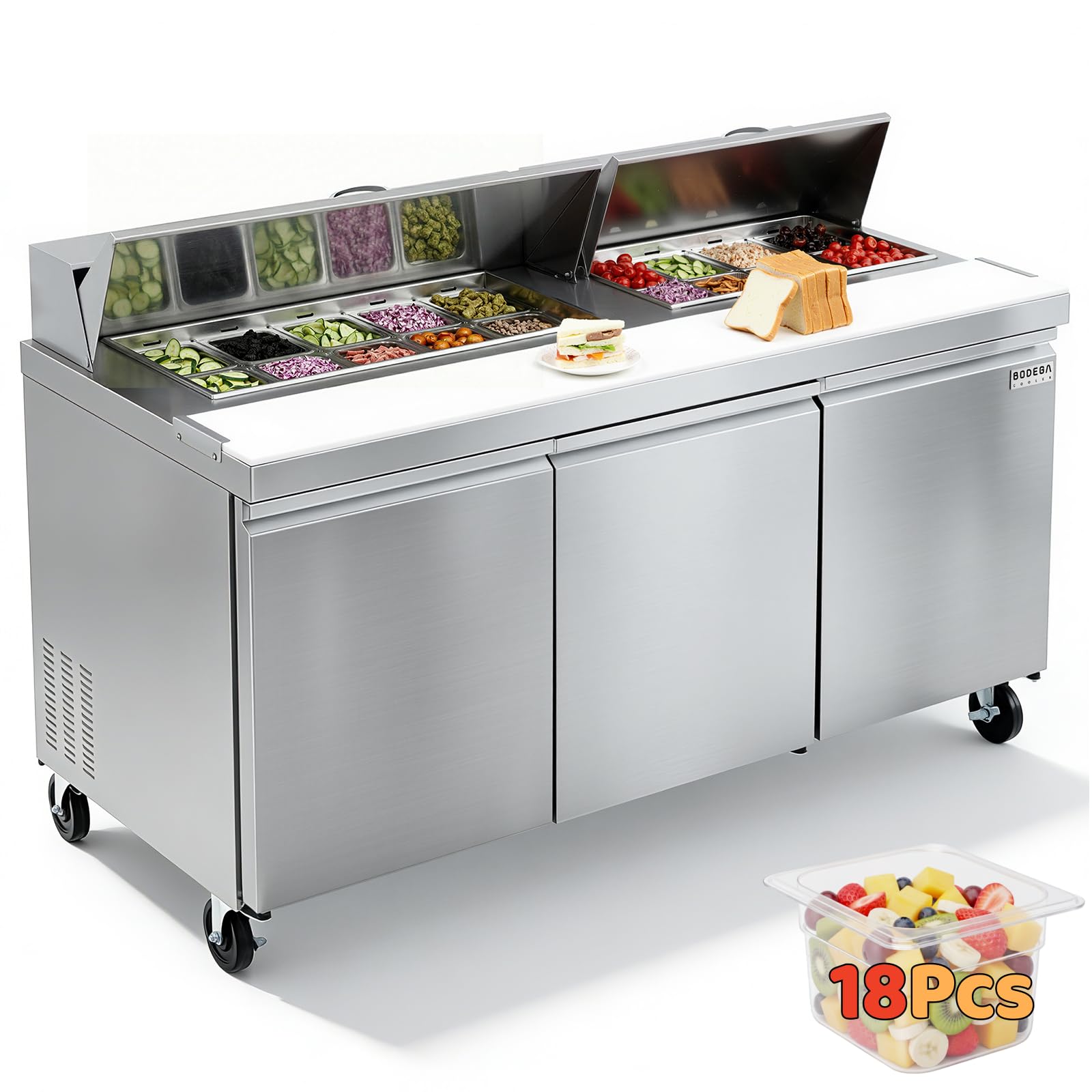
A 72-inch prep station that comes with the pans, the cutting board, and the self-closing doors already fitted.
This is not a household fridge and should not be judged as one. It is a 20.8 cubic-foot prep table with 18 GN 1/6 pans and a full-length cutting board included, which means a pizzeria or salad bar can unbox it and start service. Three adjustable heavy-duty shelves sit in the lower 16.27 cubic-foot fresh-food section, and the top pan area keeps toppings within arm’s reach. A fan-forced triple-door design holds 33°F-41°F across all three compartments, so there is no warm corner where the dressing sits.
The commercial details are what make it usable on a busy line. All three doors self-close when opened under 90°, sealing in cold air, and stay open beyond that angle when you are loading a full tray. Six heavy-duty casters with three locking wheels move a loaded unit and then hold it still. A digital child lock stops a passing elbow from changing the setpoint, and a built-in delay feature prevents rapid compressor cycling. Gaskets are tool-free removable for a warm soapy soak, and the stainless interior and exterior wipe down after a messy prep session.
The trade-off is straightforward: 1200 kwh annual energy consumption reflects a machine built to run all day in a commercial kitchen, not a home. It also takes floor space a domestic kitchen does not have. For a professional line, though, the integrated prep surface and the self-closing hardware remove a lot of small daily friction.
What a working kitchen gets
- 18 GN 1/6 pans, 3 shelves, and a full-length cutting board included
- 90° self-closing triple doors lock cold air in without a hand free
- 6 casters with 3 locking wheels hold position under load
- Tool-free removable gaskets for a routine soak-and-refit
What it demands
- 1200 kwh annual consumption rules it out of a home kitchen
- 72-inch width needs a genuine commercial footprint
- Manual defrost button asks you to schedule around service hours
Built for: pizzerias, salad bars, and buffets that need a prep surface and cold storage in the same footprint.
Wrong room if: you are furnishing a home kitchen — this belongs on a commercial line.
Know the Specs
Capacity in cubic feet
Capacity tells you how much food fits, but the number alone does not tell you whether it will fit your kitchen. Two fridges can both claim 17.5 cubic feet and have wildly different footprints — the Avanti holds 17.5 cubic feet and so does the Kenmore, yet one swallows a grocery haul more comfortably because of shelf width and door bin depth. Always pair the capacity figure with the width and depth measurements, then picture your weekly shop against it.
Annual energy consumption
This figure tells you what the fridge will cost to run over a year, and it varies far more than most buyers expect. The Avanti lists 327 kilowatt hours per year while the GE lists 633, and the BODEGACOOLER commercial prep unit lists 1200. A fridge runs every hour of every day, so a lower figure compounds over the years. If the fridge sits in a warm garage or a hot kitchen, expect it to work harder than the tested figure suggests.
Counter depth versus standard depth
Counter-depth models are built to sit close to flush with your cabinets, which keeps a walkway clear and stops the fridge from dominating the room. Standard-depth units offer more storage for the same width but stand further out. A 30-inch counter-depth fridge like the KoolMore takes less floor intrusion than a standard depth box of similar capacity. Measure the depth of your cabinets, not just the width of the gap.
Defrost systems
Automatic and frost-free systems cycle a heater to melt ice buildup on a schedule, so you never chip it off by hand. A manual defrost system, as on the Hamilton Beach HBF2067, leaves that job to you — manageable for a garage backup, less convenient for a daily-use kitchen fridge. If the appliance runs as your only fridge, automatic is the lower-effort choice.
Common Questions
How wide does a three-door refrigerator need to be to fit a standard kitchen gap?
Is a French door fridge better than a side-by-side?
What does frost free actually mean on a refrigerator?
How many kilowatt hours does a refrigerator use in a year?
Can a counter depth refrigerator hold as much as a standard depth one?
Do I need a separate water line for a refrigerator ice maker?
Why does my refrigerator door not seal properly?
Is a commercial beverage refrigerator suitable for a home kitchen?
How long should I let a new refrigerator sit before plugging it in?
What is the difference between a wine fridge and a beverage cooler?
The Bottom Line
For most buyers, the strongest all-rounder here is the Velieta 60 Cu. Ft. Commercial Beverage Refrigerator if the job is displaying and dispensing drinks in volume — three glass doors, 8 removable shelves, and 6 wheels make it a working retail cabinet rather than a box. For a home kitchen where quiet running matters most, the KoolMore 30-Inch 18.5 cu. ft. Counter Depth is the pick that earns its place on daily comfort, with a door-open alarm and a double-flow cooling system to back it up. And if the power bill is the number you check first, the Avanti 17.5 Cu.Ft. pairs 327 kilowatt hours per year with a French-door layout that most kitchens can take. One small nudge before you decide: capacity and footprint fight each other in this category, so measure your opening and your weekly shop before you click, and you will land on the right fridge in one go.
How we choose
We do not accept paid placement. Every pick is matched to a real buyer and a real use-case; we do not hands-on test units.
Sources
Specifications: manufacturer listings and product documentation. Review insights: verified customer reviews, as of October 2026. Pricing: not shown on this page (it changes often); check the current price via the retailer link.
As an Amazon Associate, Aappliancez earns from qualifying purchases. This does not affect which products we feature.