Disclosure: Some links in this post are affiliate links. As an Amazon Associate I earn from qualifying purchases, at no extra cost to you. Learn more
Specs are compiled from manufacturer listings and verified buyer reviews and can change over time — please confirm the key details on the product page before buying.
You already know the protein aisle is a wall of turbo-charged labels promising forty grams and a beach body. What you actually need to know is simpler: does a lab confirm the scoop matches the label, and can you drink the stuff every morning without dreading it? This guide answers both. Every pick here comes from brands that put their powder through independent, third-party testing, plus a flavor profile you can live with.
This guide is built by comparing the manufacturers’ published specifications and the patterns across verified customer reviews, so you get each pick’s real strengths and trade-offs instead of marketing spin.
The shortlist splits into two jobs: collagen for tendon and joint support, and whey or plant protein for muscle. Below you get straight talk on which third-party tested protein powder suits your training, your stomach, and your mornings.
Top Picks
How To Choose Third-Party Tested Protein Powder
A third-party test is simply an outside lab checking that the powder in the tub matches the label on the tub. That means the protein count is real, and no banned or unlisted substances are riding along. Here is what actually matters when you pick one.
Read the seal, not the banner
Look for a named certification printed on the tub, such as NSF Certified for Sport. That seal means the product was screened for substances banned by many athletic organizations — which matters if you compete or get drug tested at work. A vague “lab tested” badge with no certifying body named is marketing, not proof.
Match the protein type to your goal
Whey isolate delivers complete protein with all nine essential amino acids, the building blocks your body cannot make on its own. Collagen peptides are a different tool entirely — they supply collagen-building amino acids rather than a full muscle-building profile. Pick whey or plant protein for training recovery, and collagen for connective tissue support.
Do the per-scoop math
Compare protein grams per serving against calories, sugar, and carbs on the same panel. A scoop carrying 20g of protein for 130 calories reads very differently from 25g of protein with almost no fat. Both can be right — it depends whether you are cutting or just topping up your daily intake.
Plan for your stomach
Digestive comfort decides whether you finish the tub. Some formulas add natural enzymes from pineapple and papaya to help break the protein down. Others skip artificial gums, which can leave a grittier texture but often sits easier. If dairy has bothered you before, choose an isolate or a plant-based option rather than a concentrate blend.
Side-by-Side Comparison
| Model | Best For | Protein Per Serving | Certification | Sugar / Carbs | Amazon |
|---|---|---|---|---|---|
| Momentous Grass-Fed Collagen Peptides★ Best Overall | Joint and tendon support | 10 g collagen + 5 g FORTIGEL | Clinically researched formula | No fat, sugar, or cholesterol | Amazon |
| Optimum Nutrition Gold Standard WheyCrowd Favorite | Everyday muscle recovery | 24 g | Banned-substance tested | — | Amazon |
| Thorne Whey Protein Isolate | Clean-label athletes | 21 g | NSF Certified for Sport | 2 g sugar, 1 g fat | Amazon |
| Earth Fed Muscle Whey Back Vanilla | Grass-fed purists | 25 g | Irish grass-fed sourcing | — | Amazon |
| NAKED Shake Vanilla Plant Protein | Vegan and dairy-free days | 20 g | NSF Certified | 3 g sugar, 6 g carbs | Amazon |
Detailed Reviews
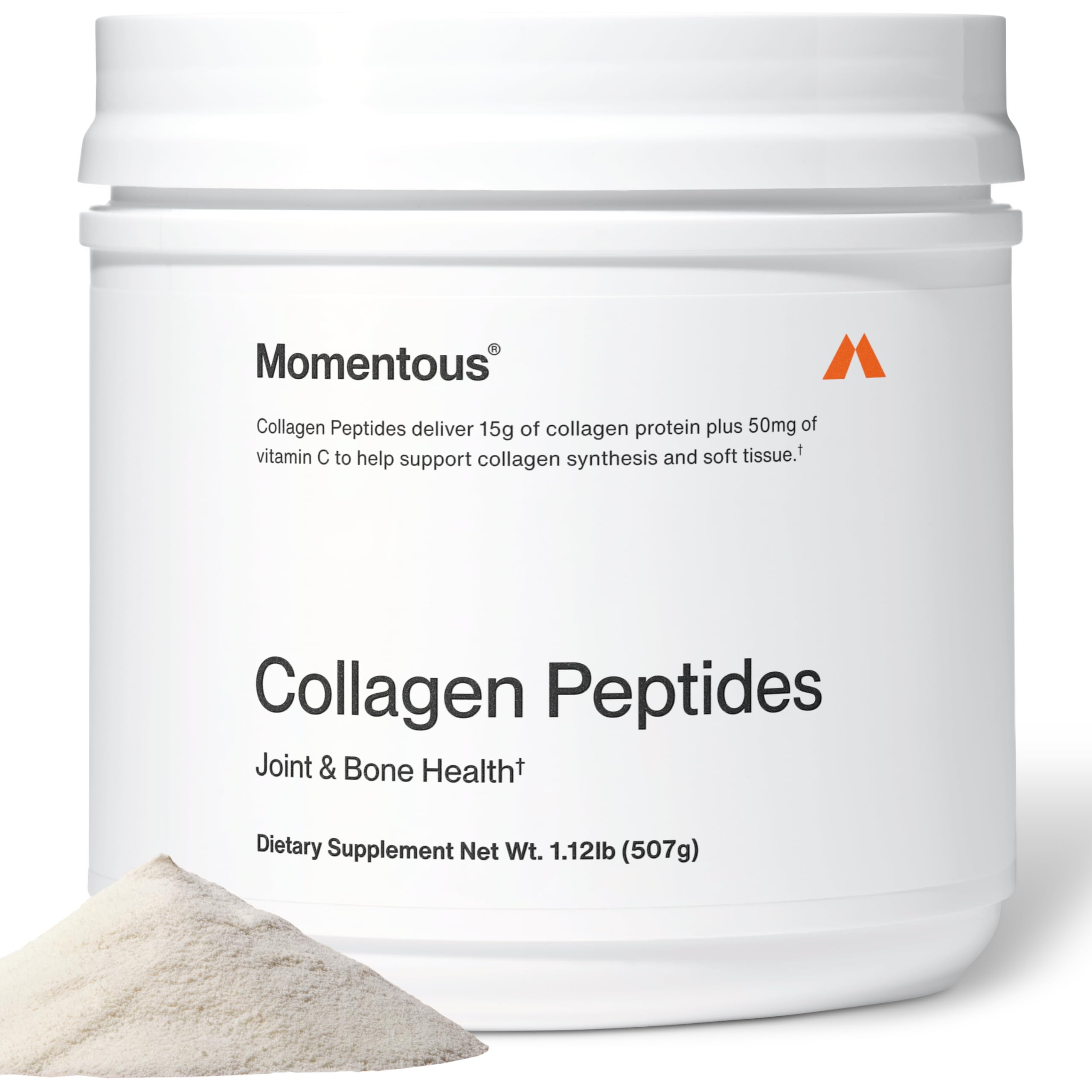
1. Momentous Grass-Fed Collagen Peptides Powder
Our pick — 4.5+★ from 750+ verified ratings; the strongest balance of quality and price.
A scoop aimed at your tendons first and your taste buds second
If your knees complain after a run and your recovery is dragging, this is the tub built for that job. Each serving carries 10 grams of grass-fed bovine collagen peptides for soft tissue support, plus 5 grams of FORTIGEL — a patented peptide researched specifically for tendons and ligaments. Vitamin C is folded in to help your body form stronger collagen. It is the only collagen pick here, aimed at connective tissue rather than muscle volume.
Buyers praise its tendon and joint support more consistently than any other pick here, reporting real improvement after weeks of steady use. It dissolves well in hot drinks, and at 1.17 pounds it is far lighter than the 2.38-pound Thorne whey tub — a tub that actually fits a desk drawer or a gym bag side pocket. The formula is additive-free, with no fat, sugar, cholesterol, or purines.
Now the honest part. Taste is the most-discussed thing about this tub, and it is not a flavour-first product — reviewers describe it as acceptable but not flavourful, and mixing it into coffee tends to wreck the cup. Cold drinks also need vigorous shaking. The recurring gripe is price for the serving count, and you have to use it consistently for at least a month before the joint payoff shows. Treat it as a daily habit, not a treat.
What lands well
- Tendon-and-ligament focus: 5 g of FORTIGEL plus 10 g grass-fed collagen per serving
- Stomach-friendly: buyers who react to other collagens report no distress with this one
- No fat, sugar, cholesterol, or purines, so it slots into a lean daily routine
- Light 1.17-pound tub travels far easier than a big whey container
Where it asks patience
- Flavour is mild at best and turns odd in coffee
- Needs vigorous shaking in cold liquid
- Premium per-serving cost for a collagen-only product
Reach for it when: your goal is joint, tendon, or connective tissue support and you will commit to a daily scoop.
Think twice when: you want a post-lift muscle protein or a powder that tastes like dessert.
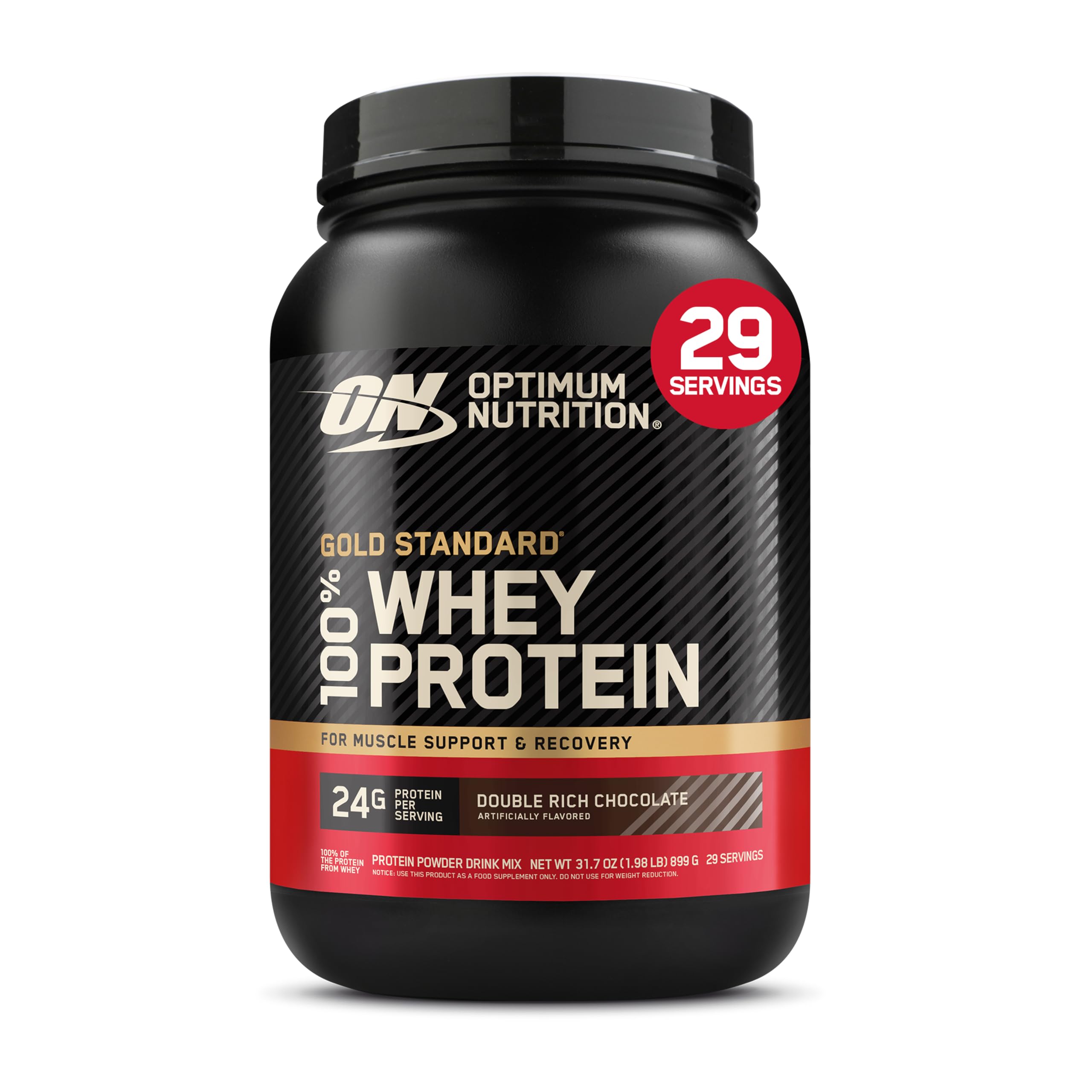
2. Optimum Nutrition Gold Standard Whey Protein 2 LB
The benchmark chocolate whey the rest of this list gets measured against
Start with the number that matters: 24 grams of protein per scoop, drawn from whey protein isolate and concentrate to support lean muscle alongside regular resistance training. Add 5.5 grams of naturally occurring BCAAs — branched-chain amino acids, the three your muscles lean on during recovery — and 11 grams of essential amino acids. That is a fuller recovery package than the 21-gram Thorne scoop delivers, and it is the widest-trusted tub on this page.
Mixing is where this one shines day after day. The instantized formula dissolves in 6–8 oz of water, milk, or whatever you blend, with about 20 seconds of shaking and no clumps. Reviewers lean on it as a meal replacement between appointments as often as they drink it post-lift. Chocolate is the flavour most reach for, and it earns the reputation — buyers call it smooth and rich without tipping into overly sweet or chalky, and it behaves in coffee and milk-based recipes too.
Here is the caveat worth your attention. The quality story rests on banned-substance testing rather than a fully published ingredient-by-ingredient verification, which is a fair knock if certificate-level proof is your bar. And flavour swings by variant — the Vanilla Ice Cream tub draws noticeably warmer words than Double Rich Chocolate does with plain water. Mix chocolate with milk rather than water and it holds up far better.
Where the value sits: 24 g protein, 5.5 g BCAAs, and an instantized mix that stays lump-free makes this the easiest daily-rotation whey on the list — and it tastes like a milkshake, not a supplement.
The one to weigh: proof of quality here means banned-substance testing, not a published ingredient audit. If a named certifying seal is non-negotiable for you, the Thorne tub below carries NSF Certified for Sport.
Buy this one if: you want reliable muscle protein that tastes good in milk and mixes in seconds.
Pass if: you need a printed NSF seal or you plan to drink chocolate with plain water only.
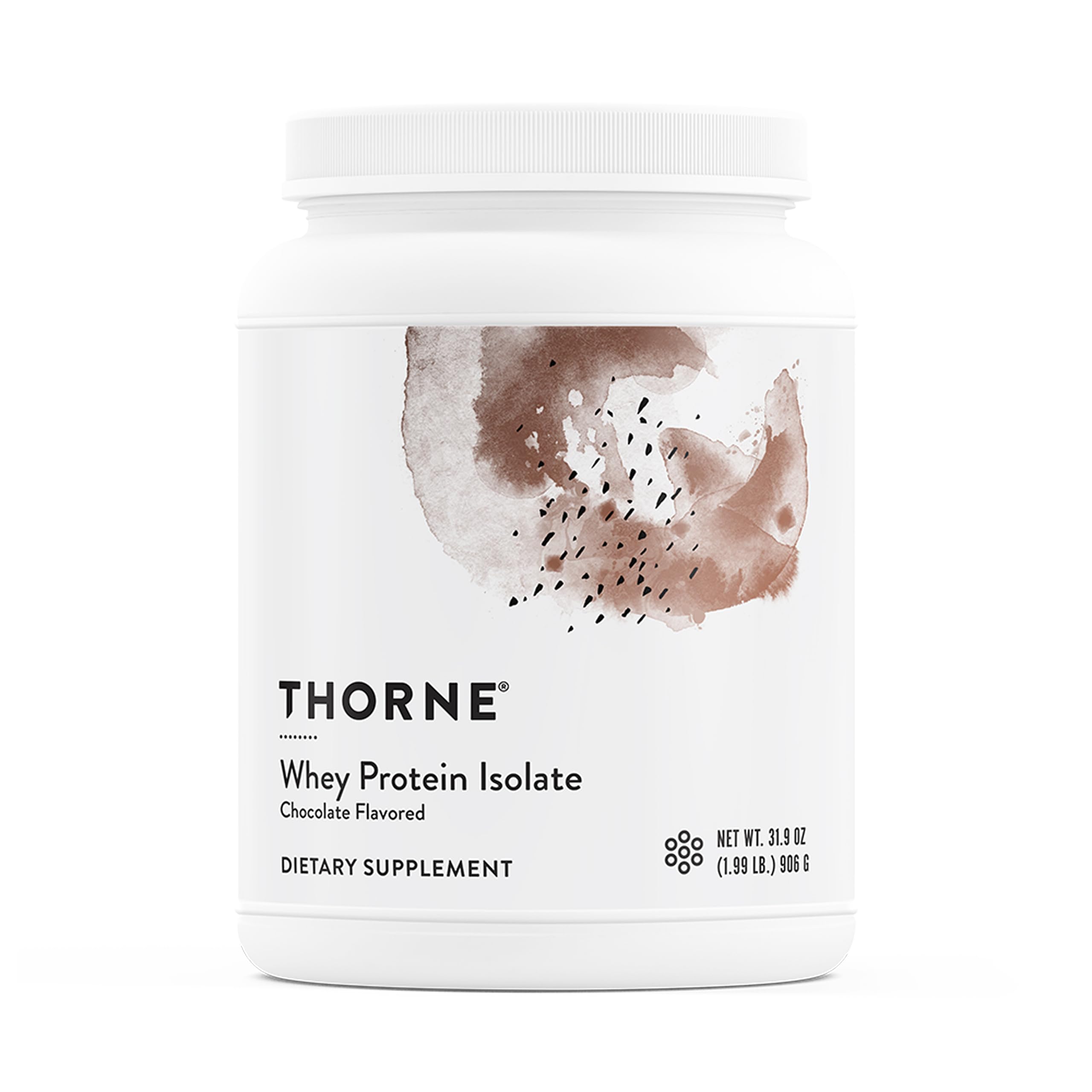
3. THORNE Whey Protein Isolate 30 Servings
For the athlete who reads the certification panel before the flavour list
This is the tub you pick when proof matters more than dessert. It carries NSF Certified for Sport, a test that checks the powder against label claims and screens for nearly 300 substances banned by many major athletic organizations. If you get drug tested for competition, that is the line worth paying for. Each serving delivers 21 grams of bioavailable protein and all nine essential amino acids, with just 100 calories, 2 grams of sugar, and 1 gram of fat.
Then there is the drinking experience, which is where this formula quietly outperforms. Chocolate is the flavour praised most here, and it does not taste like a supplement — the smooth, less-sweet profile draws comparisons to a light hot chocolate, and it mixes clump-free in a shaker without chalkiness. Natural enzymes from pineapple and papaya are added to help you digest it. Vanilla gets the same clean treatment, and the taste is the aspect that keeps people coming back.
The trade-off is simple and it is money. This is a premium cost for a 30-serving tub, and the flavour range and tub sizes are narrower than the big mainstream brands. Digestive reactions divide people a little too — some stomachs sail through, others notice a difference. At 2.38 pounds the tub is the heaviest on this page, heavier than the 1.17-pound Momentous collagen, so it lives on a shelf rather than in a bag.
The standout strengths
- NSF Certified for Sport — screened for nearly 300 banned substances
- 21 g protein at only 100 calories, 2 g sugar, 1 g fat
- Chocolate that drinks like light hot chocolate and mixes without clumps
- Enzymes from pineapple and papaya to aid digestion
What to accept going in
- Premium price for 30 servings
- Fewer flavours and tub sizes than mass-market whey
- Digestive comfort varies by person
This is your tub if: you compete, get tested, or want a certification seal you can point to on the label.
Look elsewhere if: you need the widest flavour lineup or a budget-per-scoop whey.
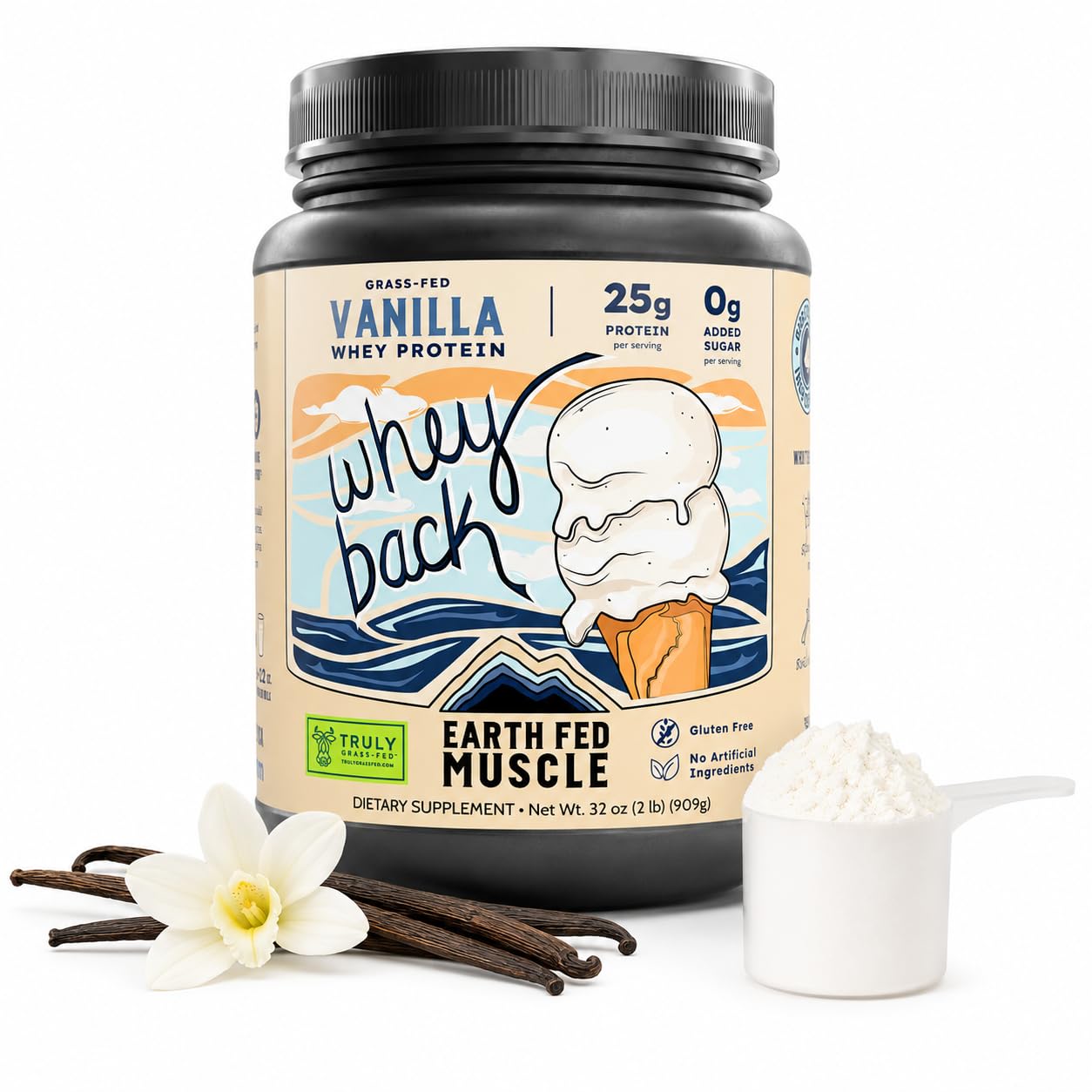
4. Earth Fed Muscle Whey Back Vanilla
Four ingredients, a Madagascar vanilla bean, and nothing to explain away
Twenty-five grams of complete protein per serving, all nine essential amino acids, 29 servings per tub, and a 90%+ protein content. Those numbers come from Irish pasture-raised, grass-fed cows, and the source is the whole pitch. The ingredient list is the real story though — real Madagascar vanilla beans and zero artificial flavours, sweeteners, or colours. Non-GMO, soy-free, gluten-free, and hormone-free with no rBST. For a label-checker, that is a short list you can recite from memory.
Cold processing is the method here, chosen to preserve the native protein structures and amino acid profile rather than hammering them with heat. In the glass, that shows up as a creamy texture that mixes smoothly in water, milk, or a smoothie and blends into yogurt without fight. Buyers report gentle digestion with none of the bloating that pushes people off cheaper whey powders. The vanilla is nostalgic rather than candy-sweet, which is exactly the intent.
What you pay for this sourcing is real, and the price is the most common grumble. There is also a small honesty point in the numbers: at 25 grams per serving it sits below a couple of the higher-protein scoops here, and if your daily target is aggressive you will feel the gap. The trade you are making is purity over raw protein volume — a fair trade, but know you are making it.
Why it earns its place: 25 g protein, 29 servings, and a four-ingredient vanilla formula with no stevia, no monkfruit, and no artificial colours. Owners mention it dissolves quickly and avoids the stomach trouble cheaper whey powders cause.
The honest limit: premium cost, and slightly less protein per serving than some rival isolates. If you chase the highest protein count per scoop, look elsewhere.
Choose it for: grass-fed sourcing, a four-ingredient label, and a creamy vanilla that sits gently on your stomach.
Skip it for: the leanest protein-per-scoop or the smallest per-serving cost on this list.
5. NAKED Shake Vanilla Protein Powder 30 Servings
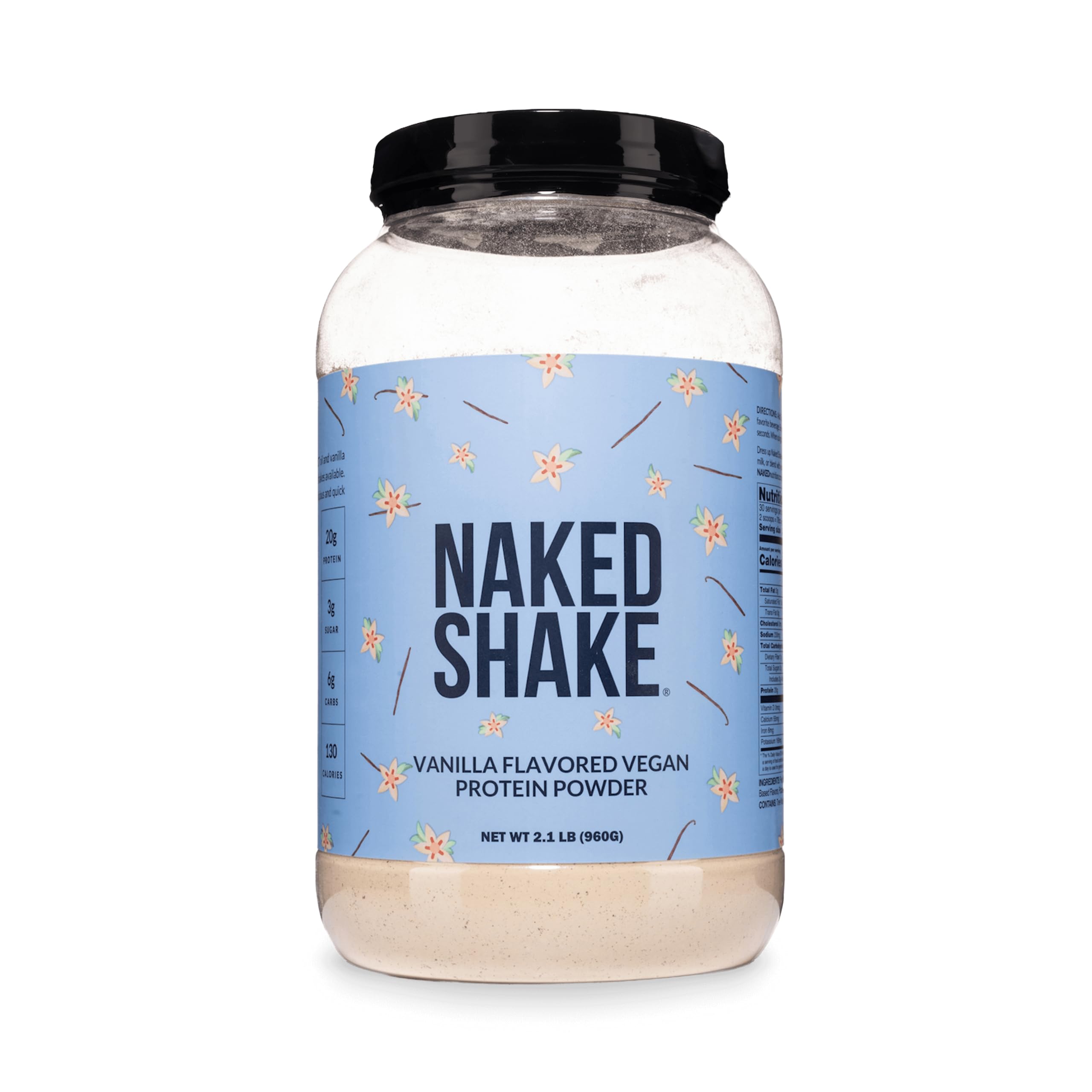
Dairy-free vanilla that earns its certification and asks for a blender buddy
For dairy-free mornings, this is the tub to start with: 20 grams of plant protein from yellow split peas grown in the USA and Canada, plus MCT oil for satiety and energy, all at 3 grams of sugar, 6 grams of carbs, and 130 calories per serving. It is NSF Certified for purity and safety and carries a complete amino acid profile, so a vegan scoop still covers the full essential set. The tub measures 5.79 x 5.79 x 10.12 inches — close in footprint to the 6 x 6 x 10-inch Thorne tub, so shelf space is a wash.
Mixing behaviour is the strongest part of this powder and it is what buyers focus on. Shake it hard and it dissolves without lumps in oat milk or alongside collagen. The vanilla reads like a vanilla milkshake — dessert-adjacent and genuinely enjoyable — and the lack of artificial gums is what wins the clean-label crowd. That same missing gum is also why the texture lands a touch gritty on its own.
Be realistic about the powder. Mixed with plain liquid only, the vanilla can taste powdery and a little too sweet, so the powder really wants a partner — frozen banana, peanut butter, oat milk, cinnamon. The lid on the tub is the one genuine friction point, occasionally arriving stuck and tough to open. It also sits at 20 grams of protein versus the 24-gram Optimum scoop, so dairy-free comes with a small protein trade.
Plant-based wins
- 20 g complete plant protein from US and Canadian yellow split peas
- NSF Certified for purity and safety
- Only 3 g sugar, 6 g carbs, 130 calories
- Dissolves lump-free in oat milk or a smoothie with a hard shake
Know before you buy
- Gritty, powdery texture when mixed with plain liquid alone
- Sweetness runs high for some palates
- Tub lid can arrive stuck and tough to open
Best match for: dairy-free drinkers who blend their powder with fruit or nut milk and want a certified clean label.
Not the one for: anyone who shakes with water only, or wants the highest protein count per scoop.
Know the Specs
What “Third-Party Tested” Really Means
A third-party test is an outside lab verifying the powder against its own label — checking protein content and screening for banned or unlisted substances. A named seal like NSF Certified for Sport indicates a real screening process for many substances banned by athletic organizations. A generic “lab tested” badge with no certifying body named is not proof of anything.
Protein Per Serving vs. Calories
Protein grams per scoop only tell half the story. Pair that number with the calorie, sugar, and fat counts on the same panel. A 21 g scoop at 100 calories and 1 g fat behaves very differently day to day than a 24 g scoop with more sugar. Choose based on whether you are cutting, recovering, or simply topping up intake.
Collagen Peptides vs. Whey Protein
Collagen peptides supply the amino acids for connective tissue support — tendons and ligaments — rather than a full muscle-building amino profile. Whey and plant proteins deliver all nine essential amino acids for muscle repair. They are different tools, and some routines use both: a collagen scoop for joints and a whey scoop around training.
Digestibility Clues On The Label
Watch for added enzymes, typically from pineapple and papaya, that help break protein down. Also check whether the formula uses artificial gums; skipping them can leave a grittier texture but often sits easier. If dairy has bothered you before, an isolate or plant-based option tends to be gentler than a concentrate blend.
Common Questions
What does NSF Certified for Sport actually check?
Is collagen powder a substitute for whey protein after a workout?
Will a plant-based protein powder give me a complete amino acid profile?
How long should I use collagen before expecting joint results?
Why does my protein powder taste powdery with water only?
Is whey isolate easier to digest than a whey concentrate blend?
How much protein per scoop should I aim for?
Can I mix protein powder into coffee or hot drinks?
What does grass-fed on a protein label actually mean?
Does the tub size tell me how many servings I get?
The Bottom Line
The winner for most readers chasing a third-party tested protein powder is the Momentous Grass-Fed Collagen Peptides, because it targets tendon and ligament support with 5 g of FORTIGEL plus 10 g of grass-fed collagen per serving — a job no whey on this list does. If you want muscle recovery with a taste you look forward to, grab the Optimum Nutrition Gold Standard Whey at 24 g protein and 5.5 g BCAAs. And if a printed NSF Certified for Sport seal is your bar, the Thorne Whey Isolate is the one to reach for. Weigh your goal first — joints, muscle, or a plant-based morning — then buy that tub, not the loudest label.
How we choose
We do not accept paid placement. Every pick is matched to a real buyer and a real use-case; we do not hands-on test units.
Sources
Specifications: manufacturer listings and product documentation. Review insights: verified customer reviews, as of October 2026. Pricing: not shown on this page (it changes often); check the current price via the retailer link.
As an Amazon Associate, Aappliancez earns from qualifying purchases. This does not affect which products we feature.