Disclosure: Some links in this post are affiliate links. As an Amazon Associate I earn from qualifying purchases, at no extra cost to you. Learn more
Specs are compiled from manufacturer listings and verified buyer reviews and can change over time — please confirm the key details on the product page before buying.
Thin winter jackets sound like a compromise until you wear a good one — they block wind, hold your body heat, and slide under a rain shell or into a carry-on without a fight. The trick is knowing which thin layers actually keep you warm below 40°F and which are just windbreakers with a puffy name.
This guide is built by comparing the manufacturers’ published specifications and the patterns across verified customer reviews, so you get each pick’s real strengths and trade-offs instead of marketing spin.
Every jacket here uses a different warmth trick — reflective linings, down fill, or recycled synthetic insulation — so the right pick depends on how cold your winter really gets. Below is what to check before you buy any thin winter jacket.
Top Picks


How To Choose The Best Thin Winter Jacket
A thin jacket earns its place by trapping heat without adding bulk. The warmth comes from one of three places: a reflective lining inside the shell, natural down fill, or synthetic insulation. The first two pack down small; the third keeps working when it gets damp.
Insulation type decides your temperature floor
Down fill is measured in fill power — a loft score, so a higher number means more warmth for the same weight. Synthetic insulation, like the recycled polyester blends here, trades a little loft for better performance in wet weather. A reflective lining is the wildcard: it reflects your own body heat back rather than generating warmth of its own, so it works best with a long-sleeve layer underneath.
Check the shell finish and the zipper
A water-repellent finish (often written as DWR — a coating that makes rain bead up and roll off) keeps light snow and drizzle from soaking in. Look at the zipper too: an internal draft flap behind the zip stops cold air from sneaking through the gap. An exposed zipper without that flap is a real weak point on a thin jacket.
Match the fit to how you layer
Thin jackets are meant to sit over a sweater or under a shell, so a little room helps. Many of these run large or true to size depending on the brand, and sizing is the most common point of disagreement in owner feedback. If you plan to wear a bulky sweater underneath, size up; if you want a sleek look over a tee, size down where the listing says it runs big.
Side-by-Side Comparison
| Model | Best For | Insulation | Water Resistance | Reported Fit | Amazon |
|---|---|---|---|---|---|
| Columbia Powder Lite II★ Best Overall | Everyday cold-weather wear | Recycled synthetic + Omni-Heat reflective lining | Rain-and-stain repellent | Roomy; some find it runs large | Amazon |
| Outdoor Ventures Long Hooded PufferLongest Coverage | Length and coverage | Puffer fill | — | Runs large for some | Amazon |
| Eddie Bauer Cirruslite | Travel and easy packing | 650-fill responsibly sourced down | Recycled shell | True; layers over a sweater | Amazon |
| Orolay Packable Down (Hooded Short) | City travel with a hood | 700+ fill down | — | Runs small for some | Amazon |
| Orolay Packable Down (Stand Collar) | Layering under a shell | RDS down | — | True to size for some | Amazon |
| Columbia Voodoo Falls 590 Turbodown II | Cold-weather performance | 590 TurboDown + 40g recycled polyester + Omni-Heat | Rain-and-stain resistant | Mixed; some say too large | Amazon |
| The North Face Junction Insulated | Everyday commutes and getaways | 100g HEATSEEKER synthetic | Non-PFC DWR finish | Mixed; true-to-size noted | Amazon |
Detailed Reviews
1. Columbia mens Powder Lite II Jacket
Our pick — 4.5+★ from 700+ verified ratings; the strongest balance of quality and price.
The everyday workhorse that traps heat with a silver lining instead of extra bulk
If you want one thin jacket that handles most winter days without looking like a sleeping bag, this is the pick. The defining feature is the Omni-Heat thermal-reflective lining — a silver inner coating that bounces your own body heat back at you, so a shell this slim still holds warmth. It is finished with a rain-and-stain repellent treatment and packed with recycled synthetic insulation.
It is the crowd favorite here, holding the highest owner score of the group across hundreds of ratings. The reflective lining is the part people feel first, and the jacket compresses small enough to stuff in a pack and is machine-washable and dryable. Columbia offers it in multiple colors and sizes, with extended and tall sizing available.
Warmth is honestly its strongest story after build quality. Owners rate it comfortable at 40°F over a long sleeve, needing a sweater at 30°F and more layers at 20°F. That is a fair read on a thin jacket — treat it as a fall-and-mild-winter layer, not a deep-freeze coat. Know before you buy: it can run large, with some owners sizing down from an XL to a large for a better fit, and it has no hood and no outer zipper wind flap.
Why owners keep it
- Omni-Heat reflective lining holds heat in a slim shell
- Rain-and-stain repellent finish for light rain or snowfall
- Light and compressible — packs into a bag or carry-on
- Multiple colors, sizes, and tall/extended sizing
- Machine-washable and dryable
Where it hits a wall
- Not built for deep freezing temps without heavy layering
- Runs large for some buyers — size-down advice is common
- No hood and no outer zipper wind flap
Grab it if: you want one reliable, packable layer for fall through mild winter and mixed outdoor errands.
Think twice if: you face sustained freezing mornings or want a hood built in — this one is layer-to-win, hood-free.
2. Outdoor Ventures Women’s Puffer Coat
The long-line hooded pick for anyone who wants coverage down past the waist
When you want a thin jacket that still covers your backside against a cold wind, this long hooded puffer is the natural fit. It brings an attached adjustable hood and a two-way zipper, so you can open it from the bottom while the top stays closed — handy when you sit down or drive. Storage is generous: two zippered hand pockets, an inner chest pocket, and a deep inner patch pocket.
The silhouette is cut slim, and the elastic cuffs keep cold air from creeping up your sleeves. Owners describe it as warm without being heavy, and the dark teal blue shade gets singled out as a favorite color. Length and warmth both land with buyers here — it clocks in as one of the longer, more protective options, unlike the shorter stand-collar picks above.
The honest catch is sizing. Fit feedback is mixed: some find it true to size while others say it runs large. If you are between sizes, plan to check the fit chart before you commit. The many pockets and the two-way zip make it a genuinely useful daily coat, though the extra length adds a little bulk versus the shorter Columbia and Orolay options.
Best for: cold-weather commutes and errands where you want length, a hood, and lots of pockets in one slim layer.
Look elsewhere if: you are between sizes or want an exact, snug fit — plan to consult the size chart first.
3. Eddie Bauer womens Cirruslite Down Jacket
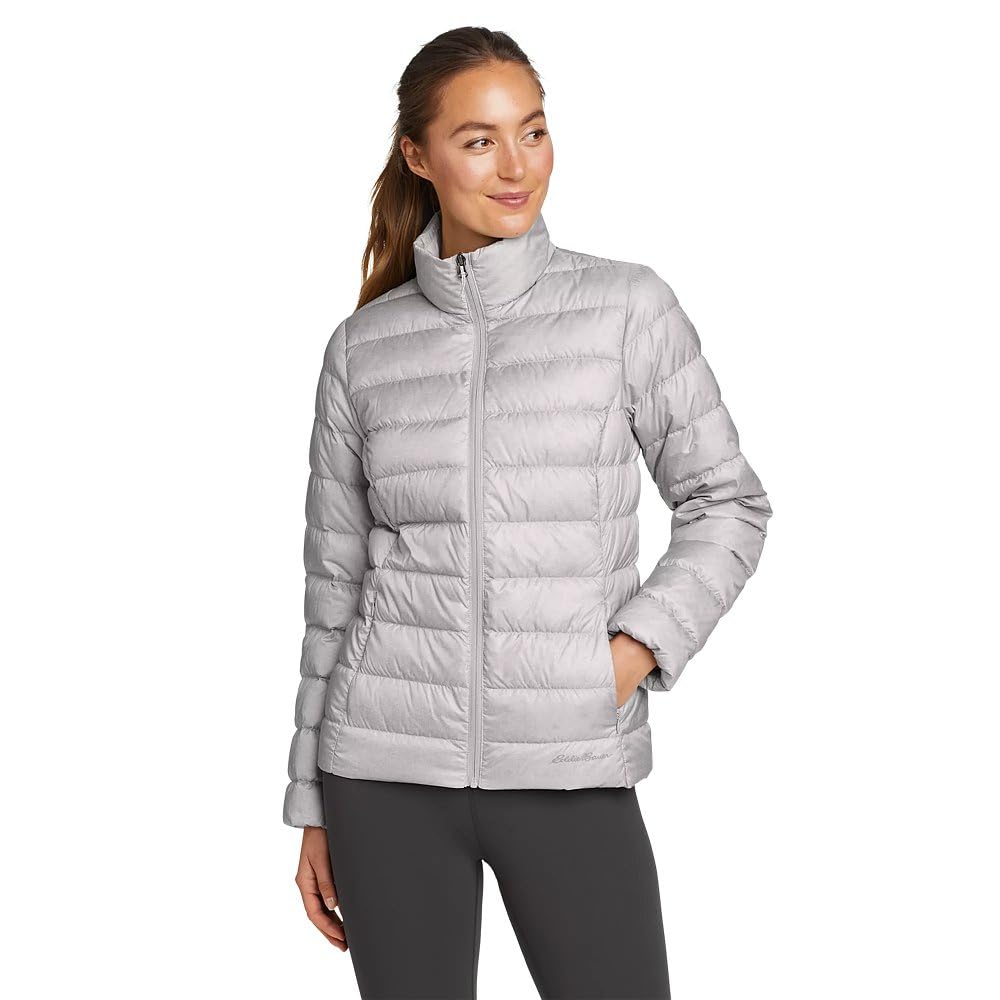
Real down fill in a jacket thin enough to vanish into a daypack
For town days and trips where every inch of suitcase space counts, the Cirruslite leans on 650-fill down — a loft score that tells you how much warmth each bit of down traps — wrapped in a recycled shell. It is built to be ultralight and easy to pack, so it disappears into a bag between wears.
This is your pick if you want the warmth-to-weight feel of genuine down rather than a synthetic or reflective build. It runs true to size, and there is enough room to layer a sweater or sweatshirt underneath, which owners appreciate on colder morning starts. Appearance lands well too — the cut reads clean and simple rather than sporty.
Downside to weigh honestly: down does not shrug off wet weather the way a treated synthetic does, so for steady rain you want a shell over it. The Cirruslite also carries the smallest owner base of the group, so you are leaning more on the spec than on a mountain of feedback. Treat it as a fine mild-winter and travel layer, not a wet-weather workhorse.
Traveler’s pick: 650-fill down keeps warmth high and pack size low — the jacket to keep in a carry-on for cool-weather trips.
If rain is the plan: reach for a treated synthetic like the North Face Junction below, which stands up to drizzle better than bare down.
Reach for it if: you want down warmth at low weight and true-to-size layering room for trips and town days.
Skip the idea of it if: you need a jacket that handles steady rain on its own — add a shell over this one.
4. Orolay Women’s Down Jacket Hooded

A chic short puffer with 700+ fill down that crushes down into a small bag
For city breaks where you want to look put-together and still travel light, this Orolay short puffer pairs 700+ fill down with a hooded, packable build. Owners rave about the styling as much as the warmth — appearance is the thing that wins people over here. It also comes with a small bag for packing, though a few note the stuff sack was missing on their unit.
Warmth and portability make a strong pair: it slots into a backpack or suitcase with minimal space and handles cool city days well. Owners wear it in the upper 40s and mid 50s and stay warm and dry in the drizzle. The hood is called out as handy in damp, changeable weather.
Two caveats worth knowing before you buy. Sizing runs mixed — some find it runs small, others say it corresponds to the listed size, so check the chart. And a minority find the fabric thinner than they expected; it is a genuine thin down layer, so if you want visible puff, this is not that jacket. Weigh it as a mild-to-cool winter and travel piece.
Cross-check: the stand-collar Orolay below carries a similar down build with a different (non-hooded) cut — this hooded version is the one to choose if a hood matters to you.
Pick this if: you want a hooded, good-looking down layer that packs into a bag for city travel.
Second-guess it if: you are between sizes or expect a thicker puffer — this one is sleek and genuinely thin.
5. Orolay Women’s Down Jacket Stand Collar
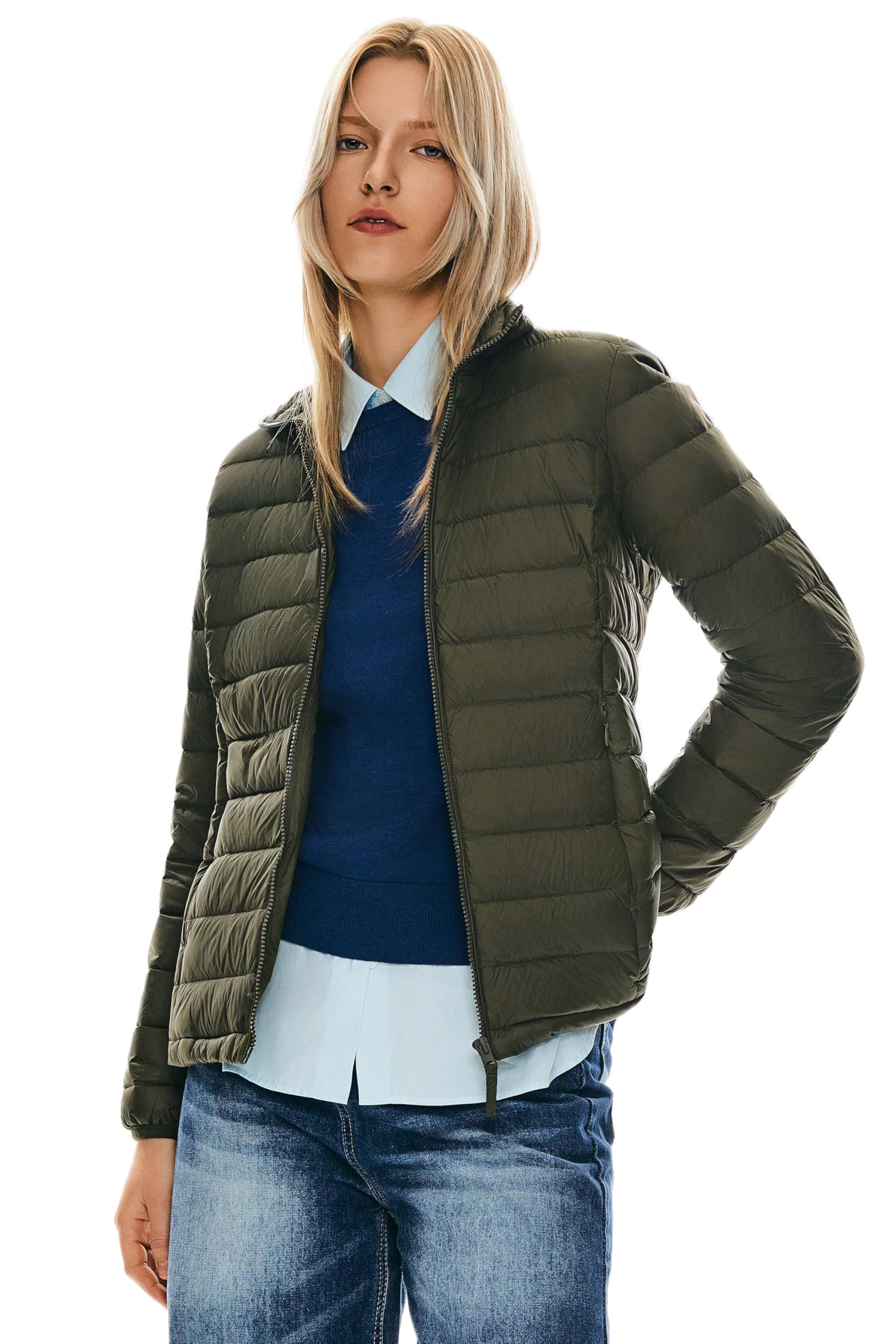
The collar-up layer for moderate cold — no hood, all the warmth-to-weight
If your winters run cool rather than brutal, this stand-collar Orolay is a smart middle layer. It uses RDS down — responsibly sourced down, per the maker — with a windproof collar that deflects gusts away from your neck and a packable bag for storage. There is an inner pocket for valuables plus side pockets for warming hands.
What wins people over is build quality: this is the kind of jacket owners come back to buy in multiples. It suits spring and fall weather especially, works at lower temps with a wool sweater underneath, and looks sharp with jeans or a skirt. Owners call it good down to 40°F but not for freezing temperatures.
The one honest limit lives in the name — thin. A small number of buyers find the fabric thinner than they wanted and treat it as a light layer rather than a real coat. Sizing runs mixed, with some saying true to size and others saying it runs small. For a genuinely cold snap, layer it up rather than counting on the down alone.
Moderate-cold specialist: ideal for windy 30°F-plus days, daily wear on a fall Europe trip, or under a raincoat when the weather turns.
Not your deep-winter coat: pair it with a wool sweater for colder days and size up if you want that room.
Suits you if: you want a light, packable down layer for spring, fall, and moderate winter days with a windproof collar.
Keep looking if: you need a hood or a genuinely thick puffer — this is a thin layer by design.
6. Columbia Women’s Voodoo Falls 590 Turbodown II Jacket
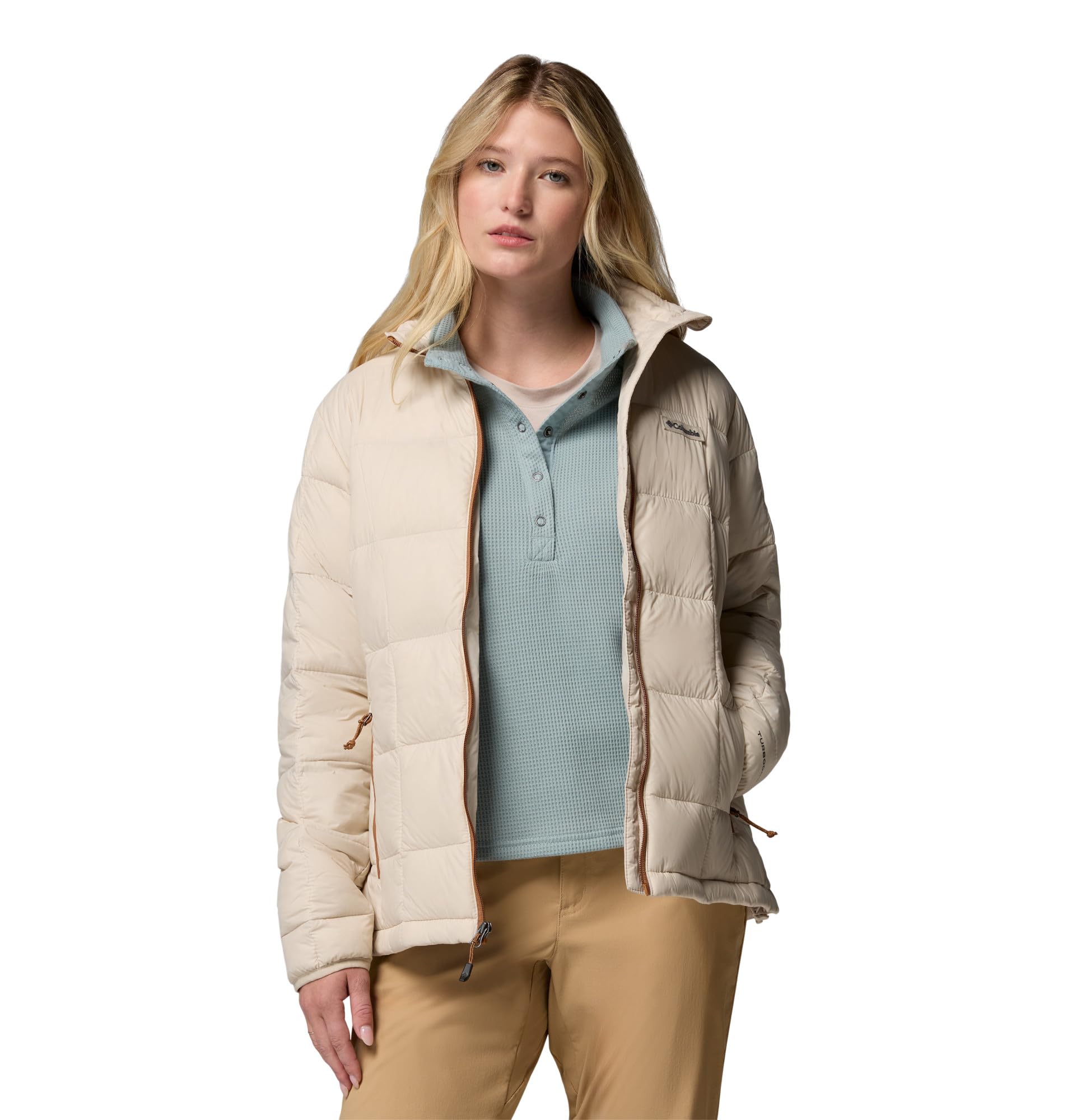
Dual-layer warmth — real 590 down plus a reflective lining in a jacket cut thin at the waist
This is the performance play in the lineup: Columbia stacks 590 TurboDown fill with 40g of recycled polyester fill and adds its Omni-Heat thermal-reflective lining on top. That combination is why it retains body heat so efficiently while staying one of the lighter and softer jackets here. It is finished with a rain-and-stain resistant shell for winter weather.
Owners describe above-average warmth for cold weather and a comfortable cut, and the thin construction is a plus rather than a drawback for them — it hits right at the waist. The details hold up too: zippered side pockets, an internal security pocket, a drawcord adjustable hem, and snug cuff binding to seal out drafts. It comes in multiple colors and sizes with extended sizing available.
The recurring gripe is size — some find it perfect, others find it too large. If you are between two sizes, size down. Compared with the Powder Lite II, this one adds real down fill to the reflective recipe, which is what pushes its warmth up a notch for colder days. Ideal when you want a dressier, waist-length cold-weather layer that still packs small.
Choose it if: you face colder winter days and want down plus reflective warmth in a slim, waist-length jacket with secure pockets.
Consider the fit first: watch the sizing — some say it runs large, so size down if you are on the fence.
7. THE NORTH FACE Women’s Junction Insulated Jacket

The do-it-all commuter jacket with recycled build and all-day HEATSEEKER warmth
For city commutes and weekend getaways that blur into each other, the Junction is the versatile all-rounder. It is stuffed with 100g of HEATSEEKER synthetic insulation made from post-consumer recycled polyester, using hollow-core fibers for compressible comfort. The shell is a recycled polyester plain weave finished with a non-PFC (fluorine-free) durable water-repellent finish, and it earns the brand’s sustainable-product badge for using 75% or greater recycled or responsibly sourced materials by weight.
Owners praise the insulation for snowy days through late fall and early winter, and comfort and light weight come up often. The detailing is thoughtful: secure-zip hand pockets, stretch binding on the collar and cuffs to seal drafts, an internal locker loop at the back of the neckline, and an embroidered logo on the left chest. Plus sizing and a smoked pearl color option are both available.
The honest scorecard is fit. Sizing feedback is mixed — the brand’s own fit-to-size sentiment reads true, but some buyers still find it off, so try the size chart. Compared with the hooded Orolay above, this one trades the hood for a cleaner quilted city look and a fluorine-free water-repellent finish. It covers the office and the trailhead in one layer.
What earns the spot
- 100g HEATSEEKER recycled synthetic insulation for all-day warmth
- Non-PFC DWR finish repels light rain and snow without fluorine
- Recycled polyester shell with stretch-bound collar and cuffs
- Secure-zip hand pockets and an internal locker loop
- Standard and plus sizing available
What to keep in mind
- Fit runs mixed — check the size chart before ordering
- No hood, unlike the long Outdoor Ventures pick
- Everyday warmth, not a deep-freeze coat
Made for: commuters and weekenders who want one recycled, water-repellent layer that works from desk to trail.
Not for: hood lovers or anyone who wants a thicker puffer — this is a clean, thin everyday jacket.
Know the Specs
Down Fill Power
Down fill is scored by fill power — a loft number, so a higher value traps more warmth for the same weight. The Eddie Bauer Cirruslite uses 650-fill down, and the Orolay packable down here uses 700+ fill. Higher fill power packs smaller, which is why these jackets disappear into a suitcase. The trade-off: bare down soaks up moisture, so pair it with a shell in steady rain.
Reflective Lining
A reflective lining, like Columbia’s Omni-Heat, is a metallic inner coating that bounces your own body heat back at you rather than adding insulation weight. It lets a thin shell hold warmth with less fill. To get the most from it, wear a long-sleeve layer underneath so there is heat to reflect — that is exactly how owners describe getting the best out of these jackets.
Synthetic Insulation
Synthetic insulation uses polyester fibers, often recycled, to trap heat without down. The North Face Junction blends 100g of HEATSEEKER synthetic insulation; the Columbia picks use recycled synthetic and TurboDown blends. Synthetic keeps you warm when damp better than down, which is why it is a solid call for mixed or wet winter weather and daily commuting.
Common Questions
Will a thin winter jacket actually keep me warm below 40°F?
Is down or synthetic insulation better for a thin jacket?
Do these jackets run true to size?
Which thin jacket packs down the smallest for travel?
Can I wear a thin winter jacket under a raincoat?
What does a water-repellent finish like DWR actually do?
Should I get a hooded or a stand-collar thin jacket?
Are these thin jackets machine washable?
What is 590 TurboDown versus regular down?
The Bottom Line
For most people, the thin winter jacket winner is the Columbia Powder Lite II because its reflective lining and recycled insulation deliver reliable warmth in a slim, packable, machine-washable shell at a mid-range value. If you want genuine down for travel, grab the Orolay hooded packable down with its 700+ fill. And for colder days that call for down plus a reflective lining in a waist-length jacket, the Columbia Voodoo Falls 590 Turbodown II is the one to reach for.
How we choose
We do not accept paid placement. Every pick is matched to a real buyer and a real use-case; we do not hands-on test units.
Sources
Specifications: manufacturer listings and product documentation. Review insights: verified customer reviews, as of October 2026. Pricing: not shown on this page (it changes often); check the current price via the retailer link.
As an Amazon Associate, Aappliancez earns from qualifying purchases. This does not affect which products we feature.