Disclosure: Some links in this post are affiliate links. As an Amazon Associate I earn from qualifying purchases, at no extra cost to you. Learn more
Specs are compiled from manufacturer listings and verified buyer reviews and can change over time — please confirm the key details on the product page before buying.
You know the drill. You lace up a court shoe that looks right in the box, take two steps onto the hard court, and your pinkie toe starts sending up flares. For men with wide feet, most tennis shoes are built for one foot shape only, and it is not yours. The fix is a model sold in genuine wide and extra-wide widths, with a toe box cut to match your foot shape — and this guide ranks the seven that do it best. The standouts are the ones with real width options plus court-ready stability, so you get room without losing the grip and support that hard stops demand.
This guide is built by comparing the manufacturers’ published specifications and the patterns across verified customer reviews, so you get each pick’s real strengths and trade-offs instead of marketing spin.
Court shoes live or die on their last (the foot-shaped mould the shoe is built around), and a wide last changes everything about how you move. Below you will find the picks ranked, the specs that matter explained in plain terms, and the honest fit notes that save you a return. These are the tennis shoes for men with wide feet that earn their place by width first, everything else second.
Top Picks
How To Choose The Best Tennis Shoes for Men With Wide Feet
The single biggest mistake wide-footed players make is buying a standard shoe one size larger and hoping for the best. Extra length does nothing for the sides of your foot. What you actually want is a shoe sold in a wide width, built on a last that gives your toes room to splay when you push off. Everything else — grip, cushioning, stability — is a bonus on top of that foundation.
Read the width code before anything else
Widths are sold in letter codes: standard, then 2E (wide) and 4E (extra wide) for men. A 2E shoe widens the whole shoe, not just the toe box, so a roomy 2E can still pinch at the front if the taper is sharp. Watch for models where buyers report the 4E fitting more like a 2E — that tells you the last runs narrow regardless of the label. The reviews below flag exactly where each shoe sits.
Stability matters more on a wide foot
A wider platform naturally gives you more contact with the court, which helps on hard stops and side-to-side lunges. Look for shoes with a firm heel counter and stable sidewalls rather than the softest cushioning you can find. A shoe that feels plush in the store but rolls sideways under a hard cut will cost you more in ankle confidence than it saves in comfort.
Break-in and durability are a trade-off
Leather uppers tend to mould to your foot over a week or two, while synthetic mesh court shoes feel broken-in almost straight away. Firmer outsoles usually mean longer wear on hard courts, but a stiffer shoe can rub at the collar until it softens. If you play multiple times a week, choose a firmer outsole and leather or firm synthetic upper, and allow a week or two of break-in. If you play once a week, a softer mesh or synthetic upper feels comfortable from the first session.
Side-by-Side Comparison
| Model | Best For | Width Options | Court Type | Build | Amazon |
|---|---|---|---|---|---|
| New Balance Men’s 608 V5★ Best Overall | Everyday wide-foot comfort | Extra Wide available | Cross trainer / court | Leather upper | Amazon |
| New Balance FuelCell 796 V5Widest Fit | Widest fit for pickleball | 2E and 4E | Tennis / pickleball | FuelCell midsole | Amazon |
| K-Swiss Court Express 2 | Entry-level court stability | Standard wider toe box | Hard court tennis | AOSTA II rubber outsole | Amazon |
| FitVille Wide Pickleball Shoes | Wide toe box on a budget | Wide toe area | Pickleball / racquetball | Non-slip rubber sole | Amazon |
| ASICS Gel-Dedicate 8 | All-round tennis and pickleball | Standard width | Tennis / pickleball | Gel cushioning | Amazon |
| K-Swiss ST329 CMF | All-day wear and walking | Wide available | Tennis / walking | Leather upper | Amazon |
| ASICS Gel-Challenger 15 | Serious hard-court play | Standard width | Hard court tennis | TRUSSTI PROPEL cushioning | Amazon |
Detailed Reviews
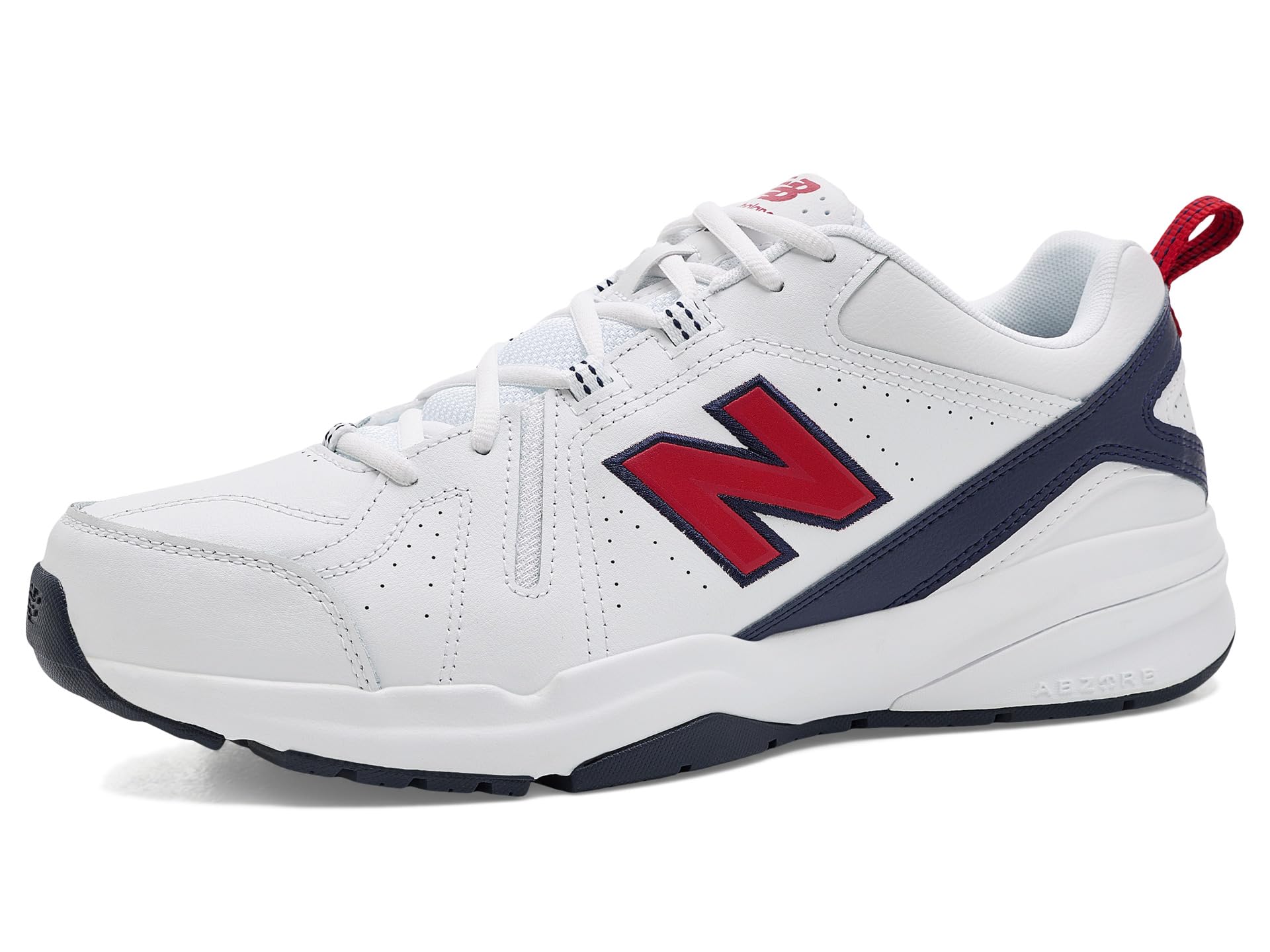
1. New Balance Men’s 608 V5 Casual Comfort Cross Trainer
Our pick — 4.5+★ from 89,500+ verified ratings; the strongest balance of quality and price.
The extra-wide leather trainer that treats roomy feet as the default, not the exception.
The 608 V5 is the pick here for one blunt reason: it is sold in an Extra Wide width and it actually uses it. The padded collar and tongue (the cushioned rings that sit around your ankle and across the top of your foot) wrap rather than clamp. A pull tab at the heel lets you haul the shoe on without crushing the back of the shoe down. The leather upper holds its shape over months instead of sagging the way thin mesh can. Build quality is what wins owners over — thousands single it out, and it shows in the stitching and in how the leather upper keeps its shape through daily rotation.
For daily wear and casual court time, the arch support is the quiet hero. Men who have struggled for years with sandals and barefoot styles describe sliding into a Wide here and finding the fit they had given up on. One buyer summed up the whole appeal: “Extra Wide fits well with real arch support; consistent availability in 608 V5, many colors.” That consistency matters — when a shoe works, you want to be able to buy it again in a different colour six months later. The seller keeps it available across a range of colourways, which is more than many wide-fit court shoes can say.
The catch is sizing and cushioning, and both are worth knowing before you click. Some owners find it runs narrow even in the extra-wide build, so do not size up to chase width — buy your normal length and let the width code do the work. A few find it less cushioned from the start than softer competitors, which makes it better for serious mileage than for lounging. Heavy users report the outsole wearing through in roughly six months of constant wear. And the laces are cut long and thick, so you may want to swap or tuck them.
What earns it the top spot
- Genuine Extra Wide width with real arch support built in
- Leather upper that holds shape and cleans up easily
- Padded collar and tongue plus a heel pull tab for easy on-off
- Wide colour range and steady availability for repeat buyers
Where it asks you to compromise
- Runs narrow even in extra wide for some feet — do not size up
- Firmer and less cushioned from the start than plush alternatives
- Long, thick laces that flop unless you tuck or swap them
- Heavy daily wear can wear it out in around six months
Reach for this if: you want one wide-fit shoe that works for the court, the gym, and the school run without a second thought.
Look elsewhere if: you need maximum plush underfoot for long matches — the cushioning here is supportive rather than soft.
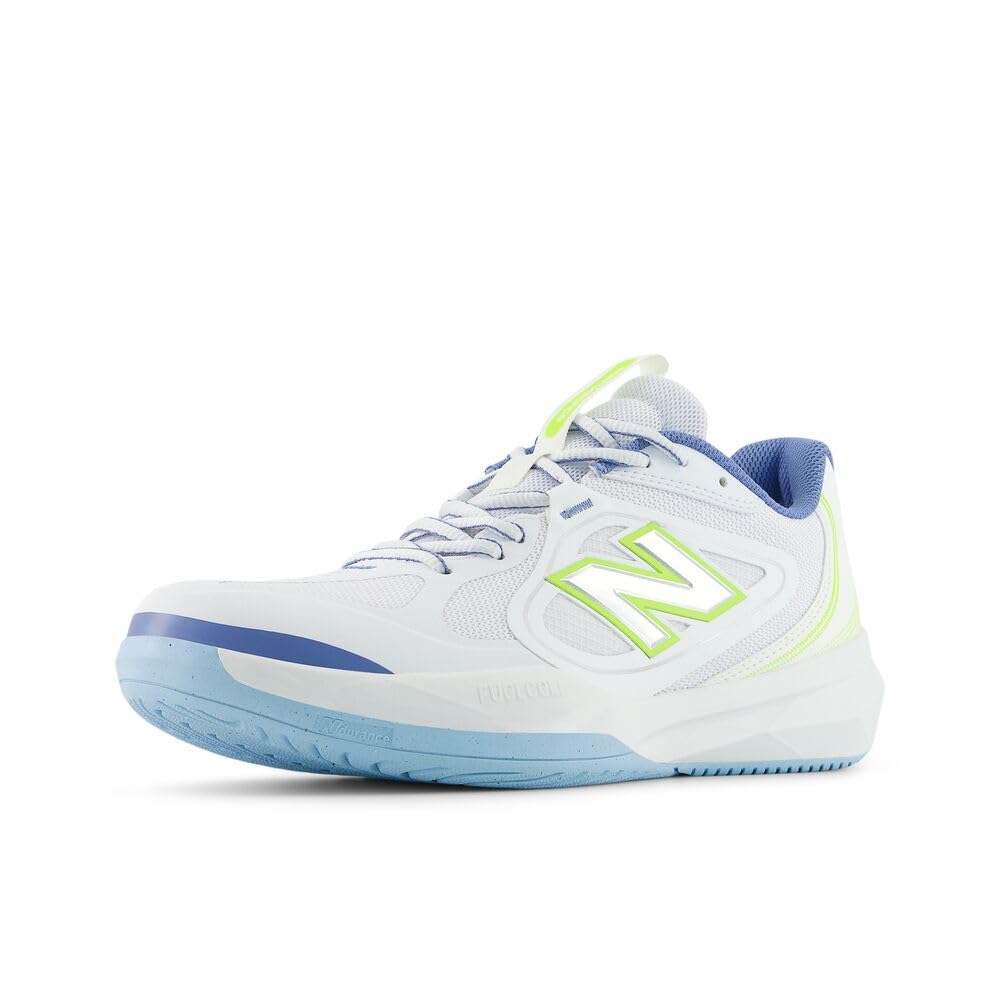
2. New Balance Men’s FuelCell 796 V5 Tennis Shoe
Built for the player who needs the squarest toe box on the court, not just a wide label.
Here is the difference that matters: the 796 V5 is offered in a genuine 2E and 4E width, and the toe box is cut square rather than tapered. The FuelCell midsole (a foam layer designed to spring back and push you forward) gives a lively ride on fast rallies. A durable rubber outsole handles the hard stops and side lunges that shred softer shoes. The breathable upper keeps air moving through long matches. Quality is the strongest thread across the reviews — owners rate it above every other aspect, and the shoe’s build backs that up.
Pickleball players have adopted this one in particular. The wide 2E toe box gives room for players who want space without swimming in an oversized shoe. Compared with the 608 V5 above, this one is a dedicated court shoe rather than a cross trainer — you get a stiffer, more stable outsole and a more locked-in feel when you cut. As buyers put it: “The widest fit fits well on my wide feet. I went a half size up than I normally do along with the widest fit available and my feet feel don’t feel the pinch or friction anymore.”
The honest catch: the 4E does not always behave like a true 4E. Several owners say the extra-wide fits closer to a 2E, so if your foot is genuinely broad you may need to treat the 4E as a wide-and-a-half. Some also note a firmer structural element inside the toe box that can press during quick movement. Cushioning splits opinion too — plenty love it, others find it lacking under the heel. If you need the absolute most cushioning, the ASICS Gel-Challenger 15 further down is the more padded court option.
Best use case: a wide-footed pickleball or tennis player who wants a stiff, stable outsole and a roomy square toe box, and is prepared to go a half size up to lock in the fit.
The real limit: the 4E width runs snug compared with what the label promises, so a truly extra-wide foot may find it a compromise rather than a perfect match.
Who it beats: anyone torn between court grip and width should start here — the 796 V5 leads on outsole stiffness for side-to-side play.
Who should look on: if you need a plush, deeply cushioned ride, the cushioning here is the trade-off.
3. K-Swiss Men’s Court Express 2 Tennis Shoe
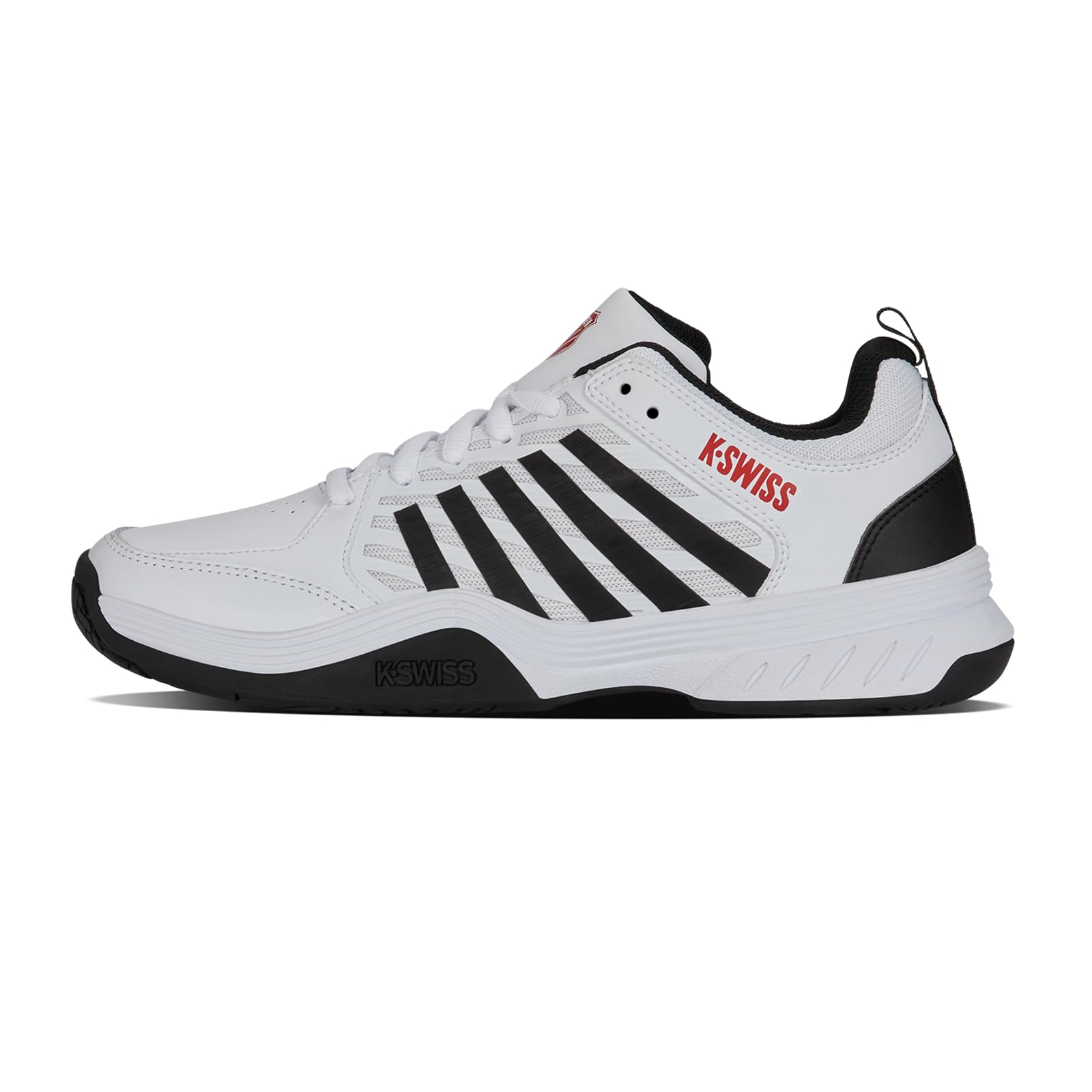
A firm, stable hard-court shoe with a wider toe box that rewards patience through the break-in.
The Court Express 2 is a performance-focused court shoe with a wider toe box than most in its price tier. The AOSTA II high-density rubber outsole (a dense rubber compound meant to resist wear) is built for regular training and match play. Support during lateral movements is where owners give it the most credit — the shoe holds your foot steady when you push off sideways. The styling is classic K-Swiss, and the laces stay tied through a rally, which sounds small until you have stopped mid-point to retie.
Fit is the first thing to solve. K-Swiss themselves recommend going up half a size to a full size for extra toe room, and that advice is worth taking — the shoe has a sleek, close cut despite the wider toe box. One player who moved up from an 8.5 to a 9 found the fit right, though the sole delaminated after several months despite decent tread remaining. A different wide-footed owner found it roomier than expected but not quite as wide as the Wilson Pickle Pro. The takeaway is simple: this is a wider toe box, not a dedicated 4E last.
The trade-off is stiffness. The shoe needs a break-in period — expect a firm feel for the first few sessions, and some owners fixed collar rub and heel friction by swapping in thicker insoles. Once it softens, owners describe stable footing and reliable traction on hard courts. It is heavier than a mesh shoe, though players say that weight disappears on court. If you want plush cushioning from the first step, look elsewhere; if you want a firm, stable platform for hard-court tennis, this delivers.
Why court players like it
- Wider toe box than most shoes at this level
- Firm AOSTA II rubber outsole built for regular play
- Solid lateral support that holds the foot steady
- Laces that stay tied and classic, tidy styling
What you should know
- Stiff from the start — needs a break-in period
- Runs close even with the wider toe box, so size up per K-Swiss advice
- Sole separation has been reported by some after months of use
- Collar rub can appear until you swap insoles or soften it up
Best for: a hard-court player on a tight budget who wants firm stability and does not mind a short break-in.
Think twice if: you want a genuinely wide, plush shoe straight from the box — this one asks for patience.
4. FitVille Men’s Wide Pickleball Shoes
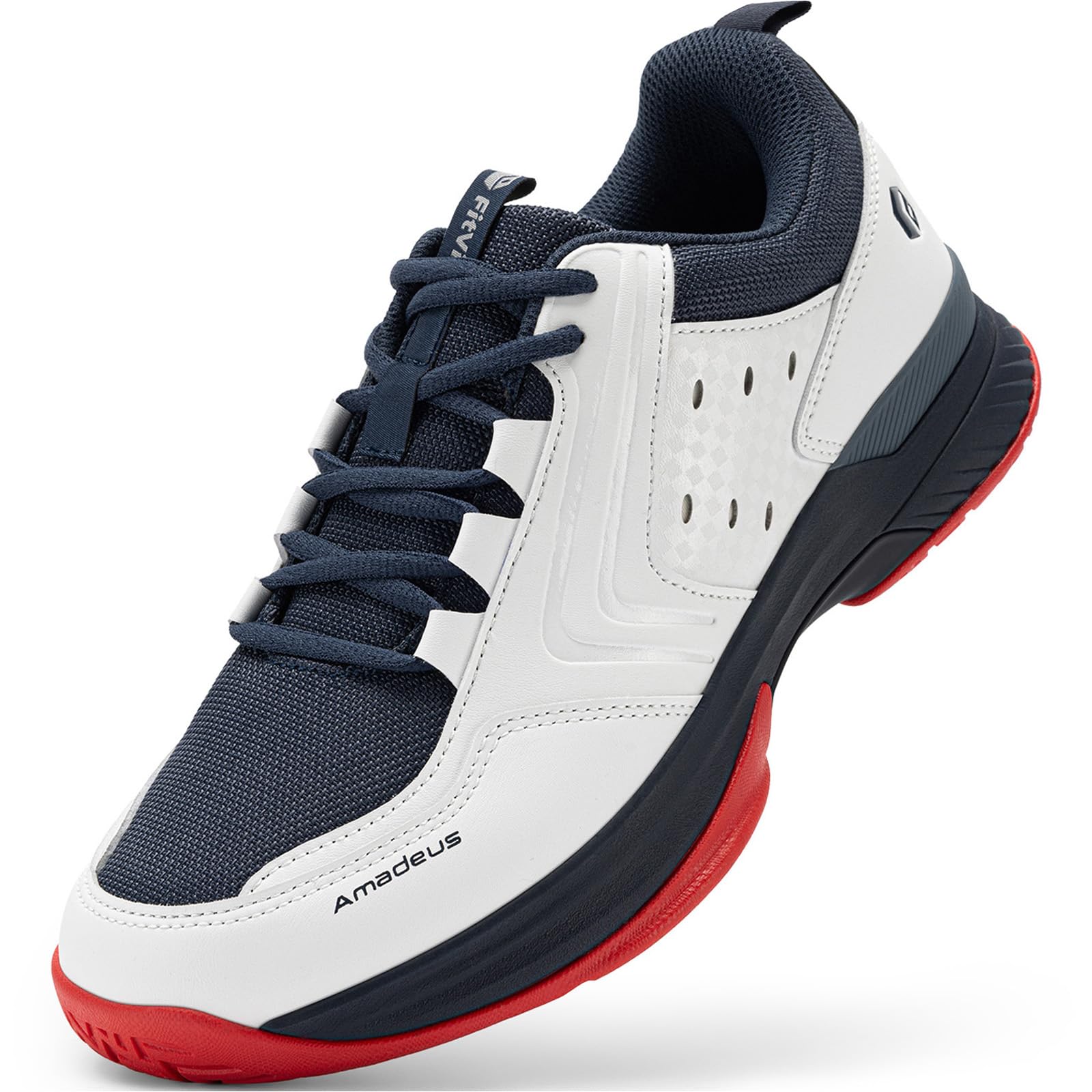
The budget pick that puts toe room first, with a non-slip sole that holds on court.
FitVille’s pitch is straightforward: a wide toe area at a budget-friendly price. The non-slip rubber sole keeps you planted on hard courts, and the shoe has been pressed into service for pickleball, tennis, and racquetball. Foot support and toe width are the details owners call out most, and plenty say they no longer need to add arch support inserts. One rave puts the whole case plainly: “The moment i slipped these on. I knew. Wide toe area!! Lightweight but solid base.”
At its budget price, the FitVille holds its own against big-name court shoes on grip and toe room. Owners say it performs as well as big-name court shoes, looks sharp enough to wear with slacks, and costs less. The styling earns compliments, and the non-slip bottoms are a recurring point of praise. If your main frustration is a tight toe box squeezing your toes on court, this is a direct answer to that problem without a brand-name markup.
The width is not as radical as it sounds, though — the midsole is wide, but a few owners find the toe box narrower than a standard non-wide tennis shoe. Fit is the thing to test before you commit. Durability is the other split: plenty get a good run from them, while a minority report stitching and sole wear after a month or so of heavy daily pickleball. Treat these as a budget-friendly rotation shoe rather than a buy-it-and-forget-it pair, and keep an eye on the seams.
The value read: if you want wide toe room, a non-slip sole, and a look that dresses up or down, this delivers at a budget tier most performance court shoes cannot touch.
One fit warning: the wide midsole does not guarantee a wide toe box — owners on the extreme end of extra-wide should check the return policy and try them on indoors first.
Grab these if: your budget is tight and your main pain is a cramped toe box, not a collapsing heel.
Pass if: you play daily and want a shoe that will survive a full season of hard-court abuse.
5. ASICS Men’s Gel-Dedicate 8 Tennis Shoes
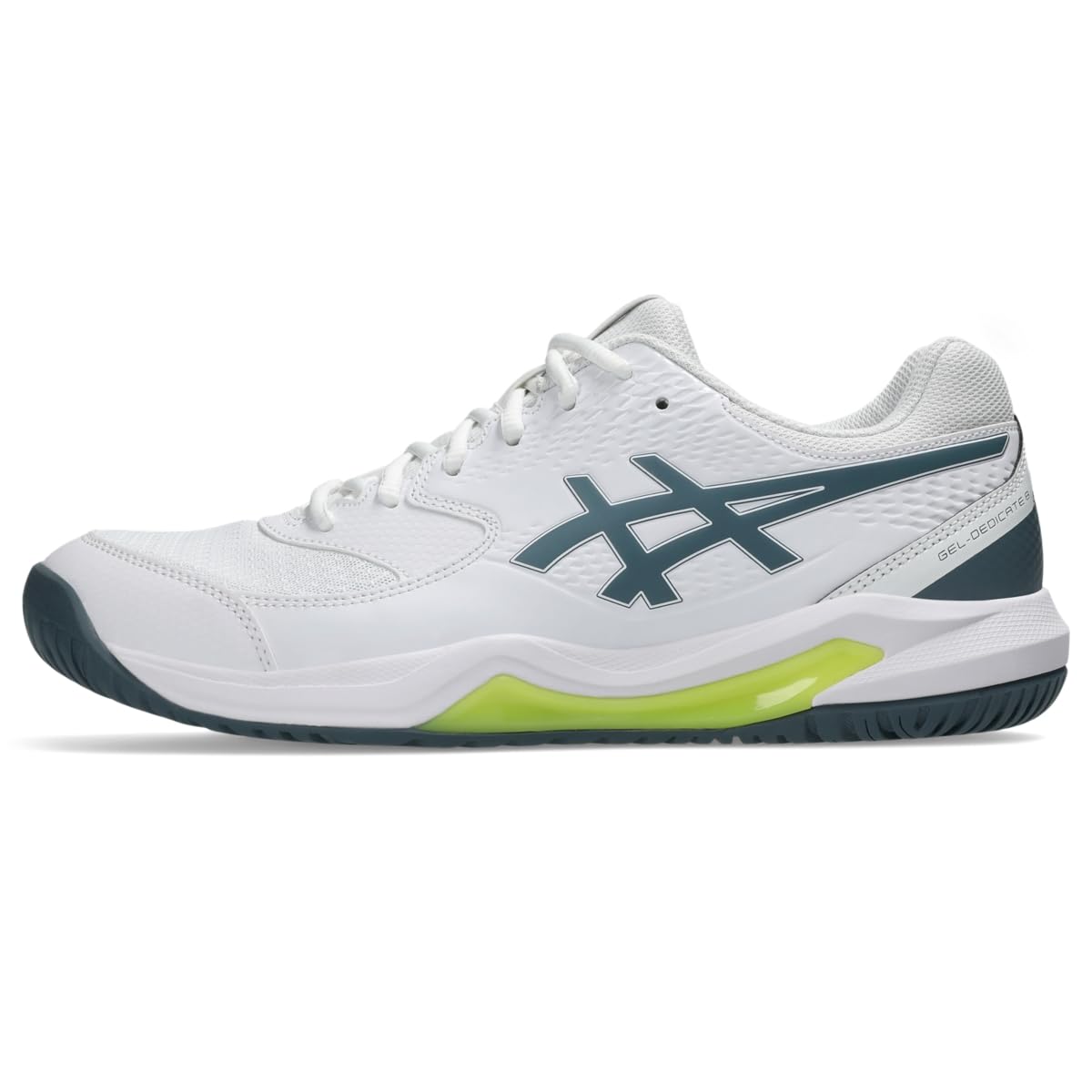
The all-court standard that keeps feet locked in during play and doubles as a walking shoe.
The Gel-Dedicate 8 is the workhorse of this list. It uses gel cushioning (a soft insert that absorbs impact) to take the sting out of hard landings, and the upper holds your foot firmly during play. It suits pickleball and tennis alike, and a large share of owners consider it good value. Quality and comfort are the strongest notes across the board, and the shoe holds up over weeks of regular play without losing its shape.
Where it stands out is day-to-day versatility. Owners wear it for walk-heavy days as well as court sessions — one player logged 12+ hours a day in it, found it a touch restrictive at first even after a half-size bump, and reported it comfortable after a week of break-in with the fabric and stitching still sound after four months. The shoe also takes arch support inserts without pinching. Against the 796 V5 above, this is the softer, more forgiving ride; the FuelCell is the stiffer, firmer court shoe.
Width is the honest sticking point here. This model is not sold in a dedicated wide width, and fit draws mixed notes — some players find it roomy enough with inserts, others report it runs small in both length and width. Players logging long, hard sessions describe toe pain in a tight toe box, and the cushioning can fade with heavy use while the forefoot outsole wears down. If your feet are genuinely wide, this is one to try on with inserts rather than assume.
Strengths that show up on court
- Gel cushioning softens hard landings
- Firm support that holds the foot during play
- Roomy enough to take arch support inserts
- Comfortable for daily walking as well as tennis
Limits worth weighing
- No dedicated wide width offered
- Runs small in width and length for some players
- Forefoot outsole wears down with frequent play
- Tight toe box for players logging long sessions
Pick this when: you want one shoe for tennis, pickleball, and everyday walking, and your feet are moderately wide rather than truly extra-wide.
Keep shopping if: you need a dedicated wide width — this model does not offer one.
6. K-Swiss Men’s ST329 CMF Sneaker

A leather classic that has barely changed in years, and that is exactly why wide feet trust it.
The ST329 CMF is the shoe on this list that people buy over and over. The all-leather upper (real leather, not a synthetic imitation) softens and conforms to your foot over the first week. A comfortable toe box and heel cup keep the fit balanced front to back. The look is understated and sharp, and the exceptional traction handles both court and street. It suits tennis and walking in equal measure, which is rare for a leather court shoe.
What has kept it on shelves for years is consistency. Owners describe walking onto a mountain in a brand-new pair with no break-in and finishing without a single blister. Another loyal buyer wears a couple of pairs a year, most days, and says they feel great on wide feet. The arch support is real, not decorative, and you can size true in most cases. Against the Court Express 2 above, this is the more comfortable, more versatile sibling — softer underfoot and better for all-day wear, though less built for hard-court punishment.
Durability is where you should set expectations. Most owners find it sturdy, but a minority report the sole separating from the upper over time. The other thing to know up front: this is not water-resistant. One owner notes they are not good on a wet wooden step or a mopped floor after rain. If you play outdoors in damp conditions or commute through puddles, that matters. Dry-court players will never notice it.
The loyalist case: people who find one shoe that fits their wide feet tend to buy it for life — this is that shoe for a lot of owners, and the leather wears in rather than out.
What to plan around: no water resistance and a small risk of sole separation down the road — neither is a reason to avoid it, but both are worth knowing before you commit to daily wear.
Choose it if: you want a leather wide-fit shoe that works for tennis, walking, and errands without looking like gym kit.
Not for you if: you play in the rain or need a shoe built for wet surfaces.
7. ASICS Men’s Gel-Challenger 15 Tennis Shoes
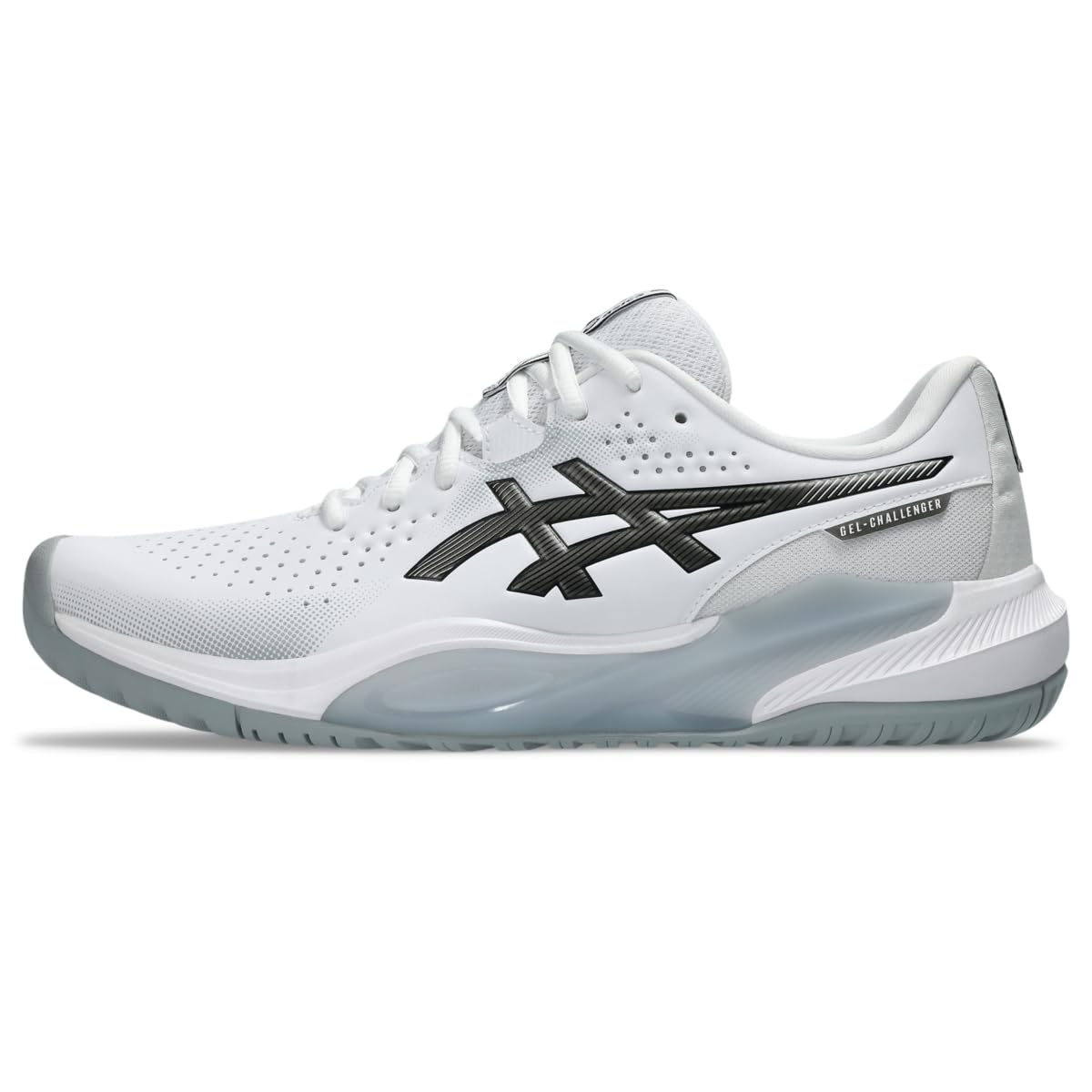
A stability-first hard-court shoe with a thicker collar and sidewalls built for hard cuts.
The Gel-Challenger 15 is the most serious court shoe on this list. WINGWALL technology in the sidewall (a reinforced panel that stiffens the side of the shoe) keeps your foot from rolling during side-to-side movement, so you can step into your shot with confidence. TRUSSTI PROPEL cushioning (a foam tuned to spring back) helps create powerful jumps and softer landings. The full-length outsole with separated grooves spreads contact across the court for steadier landings. A thicker collar wraps the ankle more fully than the Gel-Dedicate 8 above.
Quality and comfort are what owners praise most here, and the support is noticeable the moment you cut. Players describe immediate comfort and great grip on a first two-hour session, and the shoe holds up over months of twice-a-week play. Arch support is tangible rather than advertised. Against the wider New Balance picks above, this one is built for performance on hard courts first — the trade-off is that the width is standard, not a dedicated wide last.
Fit is the thing to watch. Several owners find the toe box too narrow, and a few report it runs narrow even against a typical ASICS fit, so wide feet should be cautious. Sizing is inconsistent too — some players find it runs about a half size larger than true, which can leave the foot sliding. If you have moderately wide feet and want a stable, cushioned shoe for hard-court tennis, it delivers. If your feet run genuinely wide, the FuelCell 796 V5 above is the better bet on width.
The performance verdict: for stability and cushioning on hard courts, this is the strongest shoe in the group — the WINGWALL sidewalls and TRUSSTI PROPEL foam earn their keep on every hard cut.
The width caveat: it is not sold as a wide-fit shoe, and the toe box runs narrow for some players, so wide-footed buyers should size carefully or look to the New Balance wide options instead.
Best suited to: a competitive hard-court player with average-to-moderately-wide feet who wants maximum stability and cushioning.
Not the pick if: your foot is genuinely wide — the standard last here will not give you the room.
Know the Specs
Width Codes (2E and 4E)
Men’s shoes are sold in letter widths, and 2E marks a wide fit while 4E marks an extra wide one. A wider last gives your foot more room side to side, which matters most at the toe box where a wide foot spreads when you push off. The label alone is not a guarantee, though — some 4E shoes taper at the toe, so always look at how the toe box is cut, not just the letter. A genuinely wide shoe lets your toes lie flat without rubbing the sides.
Court Outsole and Grip
The outsole is the rubber bottom of the shoe, and its compound determines how well it grips and how long it lasts on hard courts. Dense rubber like the AOSTA II resists wear through repeated lateral movement, while softer rubber grips more but wears faster. A full-length outsole with separated grooves spreads contact across more of the court for steadier landings. For weekly pickleball or tennis on hard surfaces, a firmer compound is the safer bet over time.
Cushioning and Stability
Cushioning is the foam or gel layer that softens impact, and stability is how well the shoe keeps your foot from rolling during fast side-to-side moves. Wide-footed players need both, but stability usually matters more on court. Look for reinforced sidewalls and a firm heel counter rather than the softest possible ride. A plush shoe that folds under a hard cut will cost you confidence on every lunge. A firmer shoe with good grip keeps your foot locked in.
Break-In and Upper Material
The upper is the top part of the shoe, and its material changes how quickly it conforms to your foot. Leather uppers like the 608 V5 and ST329 soften and shape to your foot over a week or two but start firm. Mesh and synthetic uppers feel broken-in almost right away but can sag over time. If you play multiple times a week, a leather or firm synthetic build gives you more months of wear. If you play once a week, a softer shoe is easier from day one.
Common Questions
Will an extra-wide tennis shoe actually fit a very wide foot?
Should I size up or buy a wide width instead?
How long do wide tennis shoes last with regular play?
Are wide court shoes good for pickleball as well as tennis?
Do wide tennis shoes need a break-in period?
Can I wear wide tennis shoes as everyday walking shoes?
Why do some 4E shoes still feel narrow?
Do wide tennis shoes cost more than standard ones?
Is a cross trainer better than a dedicated tennis shoe for wide feet?
The Bottom Line
For most wide-footed men, the tennis shoes for men with wide feet winner is the New Balance 608 V5 because it pairs a genuine Extra Wide width with leather support, real arch support, and the kind of build that survives daily rotation. If width is your absolute priority and you want a dedicated court shoe, the New Balance FuelCell 796 V5 in 2E or 4E is the one to try. And if you want a leather shoe that doubles as an everyday walker with wide room built in, the K-Swiss ST329 CMF is the pick to reach for.
How we choose
We do not accept paid placement. Every pick is matched to a real buyer and a real use-case; we do not hands-on test units.
Sources
Specifications: manufacturer listings and product documentation. Review insights: verified customer reviews, as of October 2026. Pricing: not shown on this page (it changes often); check the current price via the retailer link.
As an Amazon Associate, Aappliancez earns from qualifying purchases. This does not affect which products we feature.