Disclosure: Some links in this post are affiliate links. As an Amazon Associate I earn from qualifying purchases, at no extra cost to you. Learn more
Specs are compiled from manufacturer listings and verified buyer reviews and can change over time — please confirm the key details on the product page before buying.
Most gym shoes fail you in one quiet moment: you go into a lunge and your foot slides inside the shoe. The fix is a flatter, more stable base and a toe box that actually holds your foot. This guide separates real training shoes from running shoes that only look the part, so you can pick the pair that stays planted through squats, rope work, and short sprints.
This guide is built by comparing the manufacturers’ published specifications and the patterns across verified customer reviews, so you get each pick’s real strengths and trade-offs instead of marketing spin.
You will see which uppers breathe, which soles grip a rubber gym floor, and which heels stay locked under load. These are the tennis shoes for gym workouts worth shortlisting if you want stability first and comfort second.
Top Picks
How To Choose The Best Tennis Shoes for Gym Workouts
A running shoe is built to roll you forward. A gym shoe is built to keep you planted while you push. Mixing them up is why so many people feel unstable under a barbell or slide on a leg-press sled.
Sole flatness and firmness come first
A flat, stable base keeps your weight evenly spread through the whole foot, so you are not rocking forward mid-squat. A thick, soft foam midsole feels lovely on a treadmill and terrible under a loaded bar, because it compresses and your balance drifts.
Lateral support for side-to-side work
Lunges, skater hops, and banded side steps load the outside edge of the shoe. Look for a molded heel clip or an external heel counter — a stiff cup around the back of the heel that stops your foot rolling over. A full-rubber outsole that wraps a little up the sides adds grip on those moves.
Toe box room versus heel lock
You want space at the front so your toes can spread and push, but a snug fit around the heel so the shoe does not lift. These pull in opposite directions, which is why fit is the complaint that shows up most across training-shoe reviews.
Match the shoe to your main discipline
If your session is lifting and short bursts of cardio, a flatter cross-trainer covers it. If you squat heavy, a raised heel helps your ankle mobility. If your gym floors are rubber and your sessions run long, a breathable mesh upper keeps your feet cooler than a stiff leather one.
Side-by-Side Comparison
| Model | Best For | Upper | Sole Build | Width Notes | Amazon |
|---|---|---|---|---|---|
| New Balance Men’s 608 V5★ Best Overall | Wide feet, all-day wear | Leather | Slip-resistant, firmer sole | Extra Wide available | Amazon |
| Nike Women’s Free Metcon 5Best for HIIT | HIIT and cardio-to-lift swaps | Breathable fabric | Rubber outsole | True to size, narrow forefoot | Amazon |
| Nike MC Trainer 3 | General gym work | — | Flat, stable base with flex grooves | Narrower toe box than usual Nike | Amazon |
| Nike Men’s Flex Train | Lifting plus light cardio | Mesh | Full-length foam midsole | Runs slightly large in toe box | Amazon |
| adidas Powerlift 5 | Heavy squats and deadlifts | — | Sturdy inclined sole | Runs narrow at the toes | Amazon |
| Under Armour TriBase Reign 6 | Wide feet plus heavy lifting | TPU mesh | Dual-density midsole, low profile | Ample toe room | Amazon |
| Reebok Nano X5 | CrossFit and mixed sessions | Flexweave knit | High-traction outsole with heel clip | Runs small; narrower than the Nano X | Amazon |
Detailed Reviews
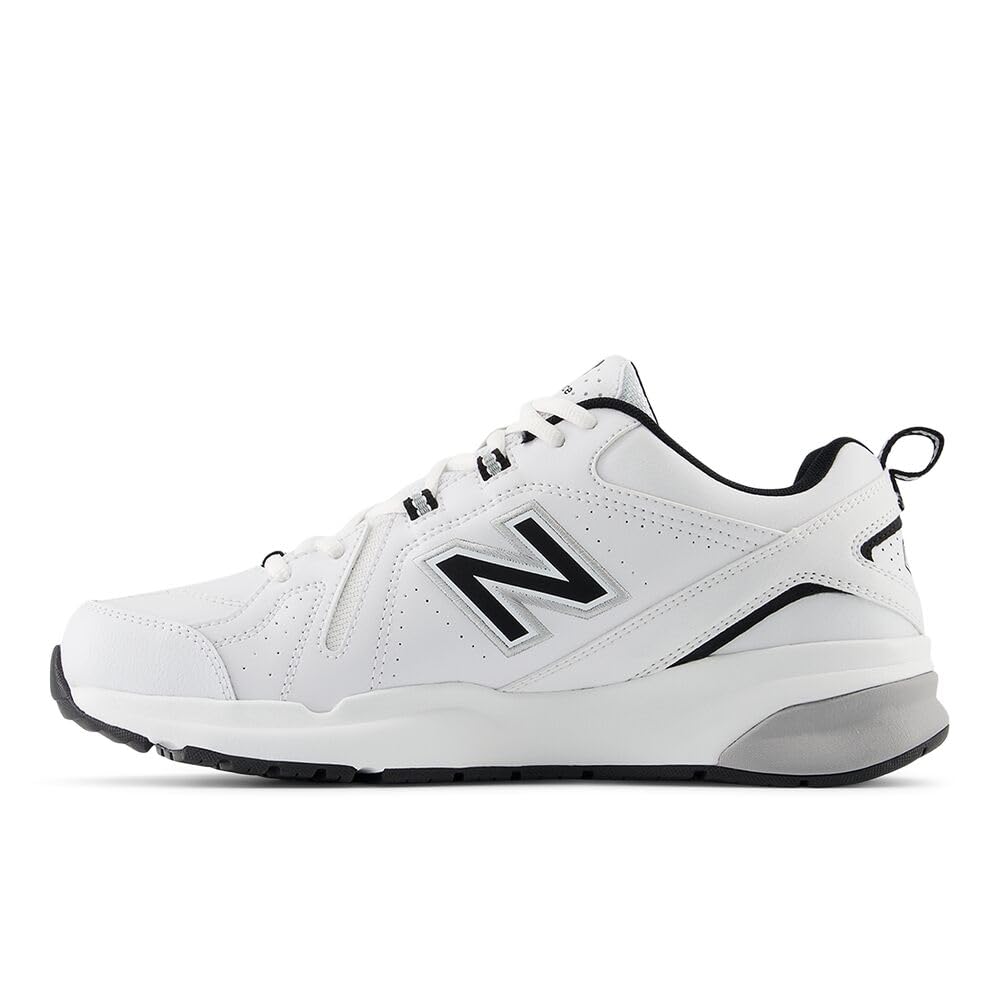
1. New Balance Men’s 608 V5 Casual Comfort Cross Trainer
Our pick — 4.5+★ from 89,500+ verified ratings; the strongest balance of quality and price.
The wide-foot champion that ends the hunt for a gym shoe that actually fits.
If your feet are wide, this is where the search usually stops. The 608 V5 comes in an Extra Wide size that people with genuinely broad feet describe as “genuinely wide” rather than a token stretch. The leather upper is padded at the collar and tongue, and there is a pull tab at the heel so you are not fighting the shoe on the way in.
What wins people over here is a real arch-support story rather than a marketing one. The stabilizing build and the firm, durable sole make it feel planted for power walking and long days on your feet, and One buyer with a foot defect bought it on a podiatrist’s recommendation and came back for several pairs. The sole is noticeably harder and more supportive than the softer foam of a typical casual trainer.
Here is the honest part: the same firm sole that gives you stability makes this a poor running shoe, and the laces are long and thick enough that some find them fiddly to snug. Durability opinions split, with some wearing them well and others reporting a shorter life under heavy daily use. This is a walk-and-stability shoe, not a sprint trainer.
What Works In Your Favor
- Extra Wide sizing is the standout feature — a real fit option for broad feet.
- Firm, slip-resistant sole and stabilizing support keep you planted.
- Leather upper with padded collar and tongue plus a heel pull tab.
- Comfortable from day one with no break-in period.
Where It Falls Down
- A walking and stability shoe, not a running shoe — the firmer sole works against you on the treadmill.
- Laces are thick and long, so snugging them takes effort.
- Durability reports are mixed under heavy use.
Made for wide feet: if standard gym shoes squeeze your toes and you want stability you can feel on day one, this is the pair.
The honest catch: treat it as a lifting and walking shoe, not the one you lace up for a run.
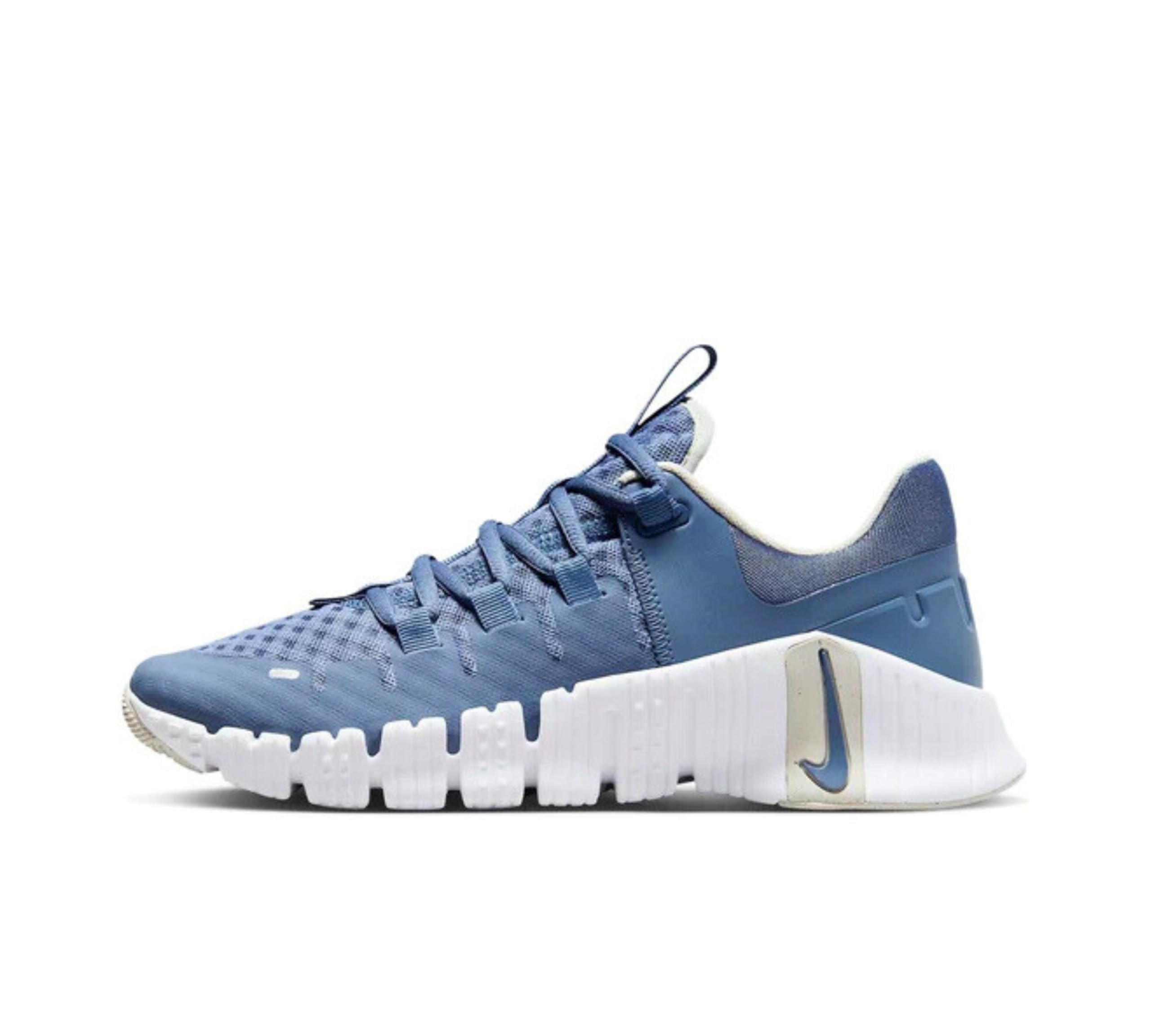
2. Nike Women’s Free Metcon 5 Workout Shoes
Built for the woman who hops between a barbell and a jump rope without changing shoes.
This is the pair for a mixed session. The rubber outsole gives you grip in lateral movements, while the breathable fabric upper and moisture-wicking build keep your feet from cooking during a long circuit. It is lightweight and cushioned enough to wear all day, and the lace-up closure lets you dial in the fit.
The upper holds up where it counts. Support can be felt around the heel and forefoot during exercise, and the sole grips well through side-to-side work. Wearers describe these as “comfortable, lightweight, and perfect for workouts,” and several keep a separate walk-only pair rather than wearing them out on pavement.
The forefoot runs a little narrow for some, so if you have a wide front foot, this could be the fit mismatch you hit. One other thing worth knowing: some pairs arrive in damaged packaging, though the shoes themselves turn out fine. Pick yours with the sizing in mind and you get a flexible, stylish crossover trainer.
Grip and support: the rubber outsole and heel-to-forefoot support make HIIT, lifting, and jump rope feel controlled rather than wobbly.
Fit warning: true to size generally, but the forefoot runs narrow — wide-footed women may need to size up.
Reach for these if: you want one shoe for weights, cardio, and the walk home.
Look elsewhere if: your forefoot is broad and you cannot tolerate any front-of-shoe squeeze.
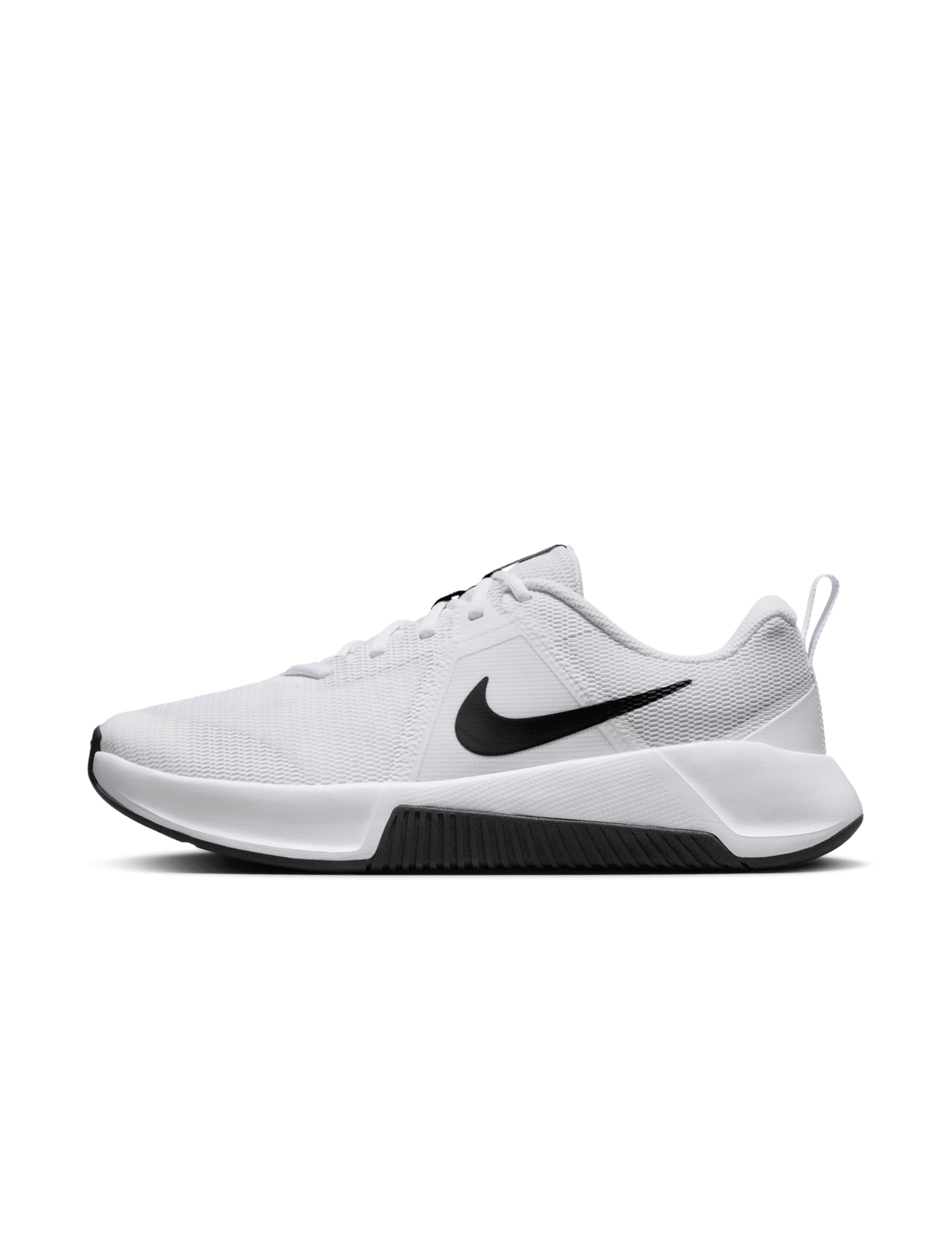
3. Nike MC Trainer 3
A flat, grounded base with just enough flex to let your foot do its job.
The MC Trainer 3 is built around stability. A high, flat base keeps you grounded during lateral movements, and the foam midsole holds a secure fit through rigorous work. Forefoot flex grooves give you moderate flexibility where you need it, so you can push off without the whole shoe feeling stiff.
Fit is where the conversation lands. The rigid sole adds the stability that active movement needs, and buyers outgrow these in kids’ sizes rather than wearing them out — the quality holds up. What surprises people is the toe box: it is roomier than a typical Nike, which helps if you assumed all Nike trainers run tight.
The catch is the first try-on. These can feel slightly small before they break in, though roughly an hour or two of wear settles most of that. If you are between a tight toe box and a wide one, this sits closer to the wide end and rewards a short break-in over sizing up blind.
The stability read: a flat, high base plus a rigid sole means lateral moves and lifting feel controlled rather than tippy.
Fit caution: feels slightly small on day one and needs an hour or two to loosen up.
Best for: gym-goers who want a flat, steady platform with a friendlier toe box than most Nikes.
Consider another: if you refuse to do a break-in period or want a shoe that feels roomy from the start.
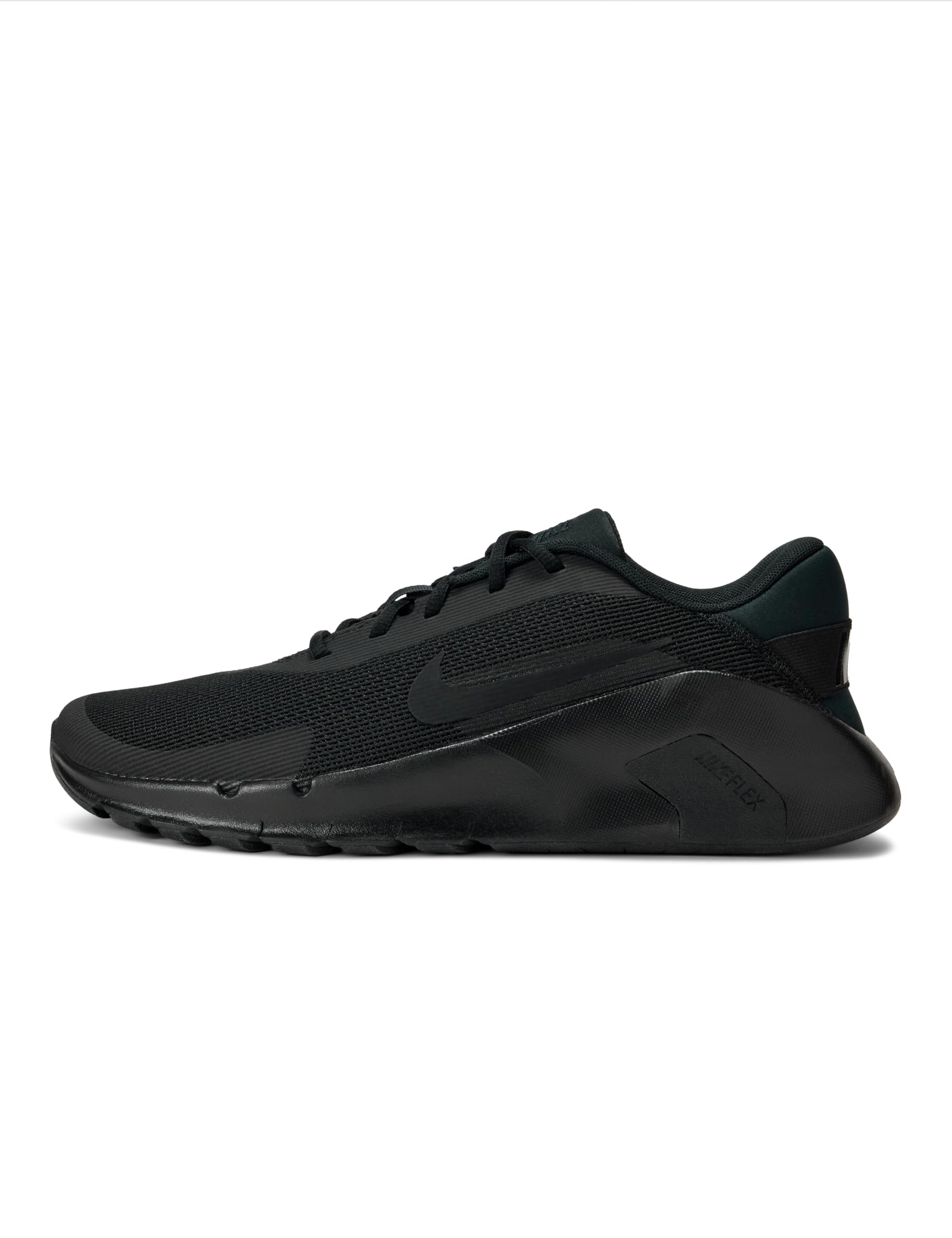
4. Nike Men’s Flex Train Workout Shoes
A breathable mesh trainer that earns its keep through long, sweaty sessions.
The Flex Train breathes. A soft, lightweight mesh upper keeps air moving, which matters when your gym session runs past the hour mark. The full-length foam midsole adds cushioning, and the rubber outsole has built-in cutouts that let the sole flex with your foot instead of fighting it.
Comfort is the headline — the shoe earns most of its praise there. It is stable and light enough for lifting and workouts, and one long-time Nike wearer at size 12 found it adequate for power walking and light running too. The look gets compliments, which helps if you wear it straight from the gym to the car.
Fit is the variable. The toe box is wider and rounder, so the shoe can run slightly large for some, and one wearer at size 14 found the fit too slender for a bigger frame. Durability has a minority report of stitching failing early. Try your usual size first and size down if it feels roomy.
Why It Earns a Slot
- Mesh upper keeps feet cool through long workouts.
- Full-length foam midsole for cushioning and comfort.
- Flexible rubber outsole with cutouts for natural foot movement.
- Works for lifting, workouts, and everyday wear.
Where It Might Miss
- Runs slightly large thanks to a wider, rounder toe box.
- Can feel slender on bigger frames.
- A few note stitching issues early on.
Pick this if: you want a breathable, flexible trainer for lifting and light cardio.
Try another size or model: if you have a bigger frame and need a roomier, more substantial fit.
5. adidas Unisex Adult Powerlift 5 Weightlifting Shoes
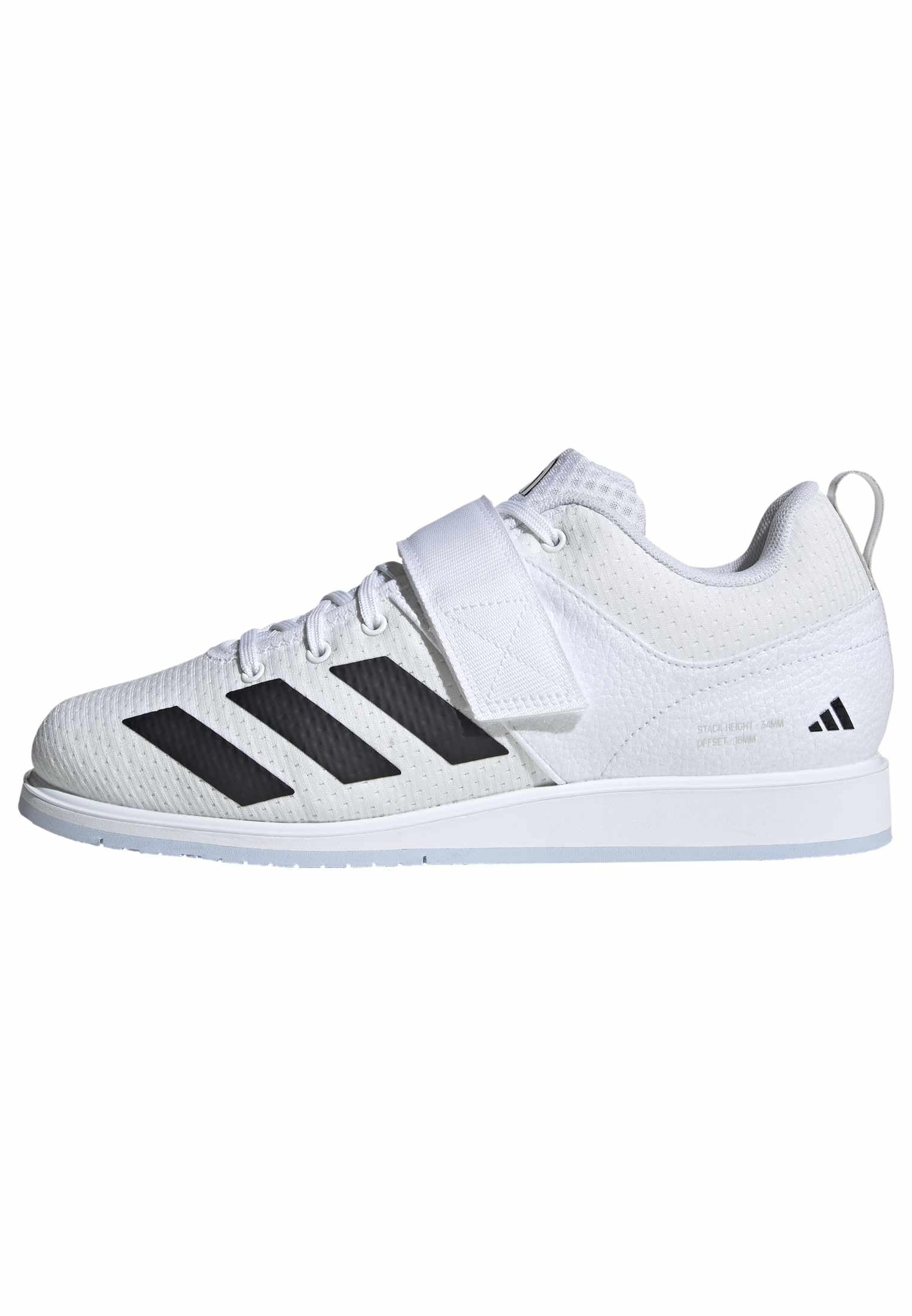
The squat shoe that fixes your balance by raising your heel and hardening the sole.
This is a pure lifting shoe, and it does not pretend otherwise. A sturdy inclined sole lifts the heel so your ankle can flex deeper, and a tight grip around the foot creates a more stable squat. The raised heel also makes squatting more comfortable for people who usually fight tight ankles.
Where it shines is ground contact. A flexible yet solid sole gives firm contact with the floor, so balance stops drifting the way it does in soft running shoes. The build quality is solid at a low price, and one owner reports theirs still strong after a year of heavy use. Squats, deadlifts, and TRX all feel more planted.
The fit is the trade-off. Sizing runs narrow at the toes, and several find the toe box too tight — ordering up a half size is the common fix. Women should note the sizing runs large and size down. Those narrow toes are the reason this sits behind the wider options if you have broad feet.
The lift it gives you: the inclined sole and tight foot grip make squats and deadlifts feel locked in and balanced.
The fit to plan around: narrow toe box — order half a size up; women should size down.
Go with these: if squats and deadlifts are your main work and you want a raised heel for better ankle mobility.
Not for: broad-toed lifters who cannot tolerate a narrow front, or anyone wanting one shoe for cardio too.
6. Under Armour Men’s TriBase Reign 6 Trainer Shoes
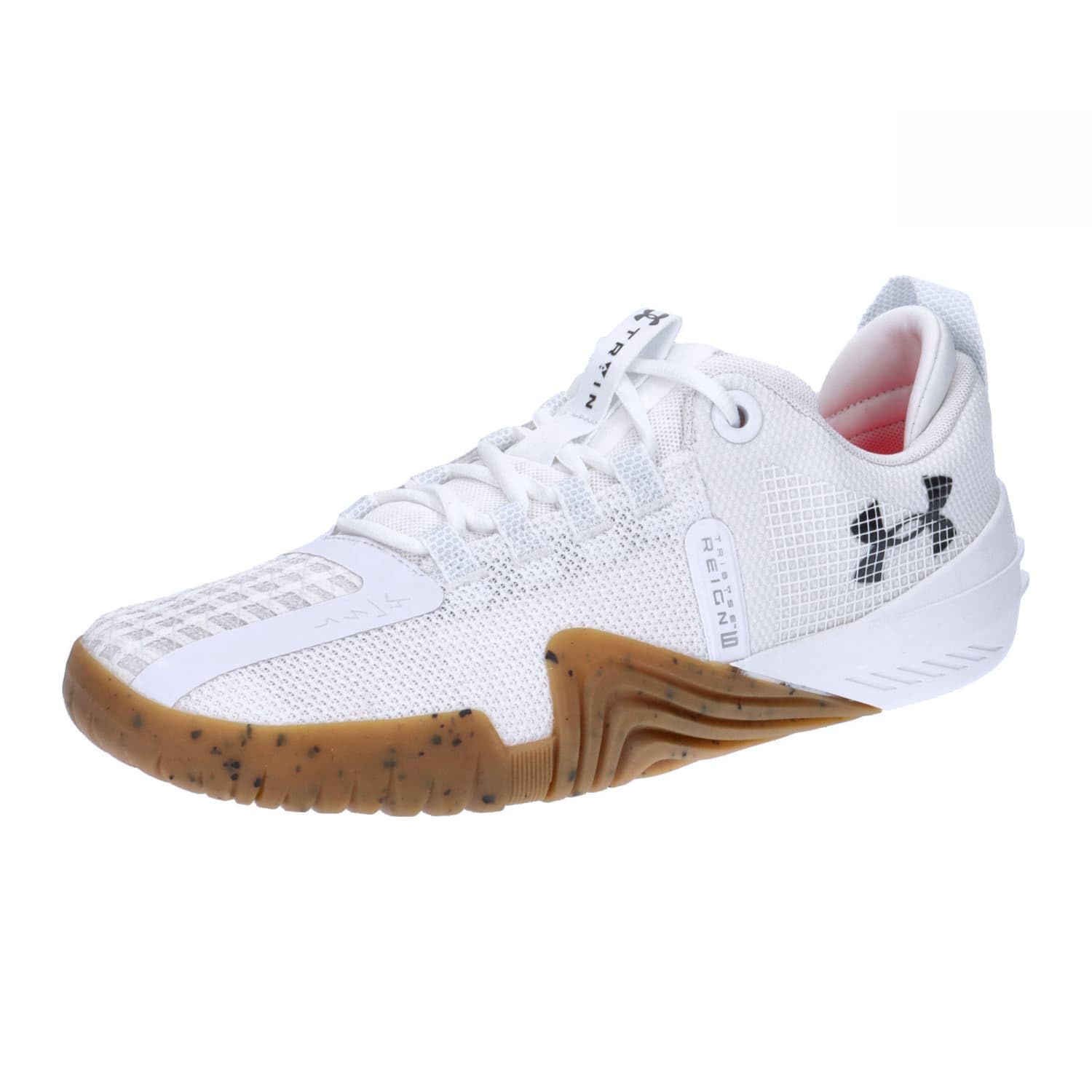
Three points of ground contact and a wide toe box — the heavy-lifter’s wide-foot pick.
What sets the TriBase Reign 6 apart is the base under your foot. Three points of ground contact with a low-to-the-ground build give you feel and power transfer, and a dual-density midsole is softer in the forefoot and firmer in the heel. The result is support where you load and comfort where you move. The UA WARP upper uses TPU mesh for durability and breathability, and an external heel clip plus internal heel counter add stability.
The wide-foot crowd gets real attention here. The toe box is ample enough that a 5’11”, 280 lb lifter with flat, wide feet found the arch support ideal and no heel slip. Reviewers switching from running shoes report less foot soreness and cramping in HIIT classes, and no ankle pain during lifting and bodyweight work. Expect a stiff feel at first that loosens after about five sessions.
Two honest notes. The shoe is heavier than some gym shoes, which you notice on a long cardio block. And the white colorway shows dirt fast, with laces going dingy within months. If you lift, jump, and lunge and want one solid pair, this covers it.
Ground feel and grip: the low build and full-rubber outsole with a medial rope grip give you control for lifts and rope work.
Wide-foot friendly: an ample toe box and heel lock suit broad feet without heel slip.
Trade-off: heavier than other gym shoes, and the white version gets dirty quickly.
Suits you when: you have wide feet and want a stable, durable shoe for lifting, jumping, and lunging.
Worth skipping if: a light shoe matters more than a planted one, or you want to keep it spotless.
7. Reebok Nano X5
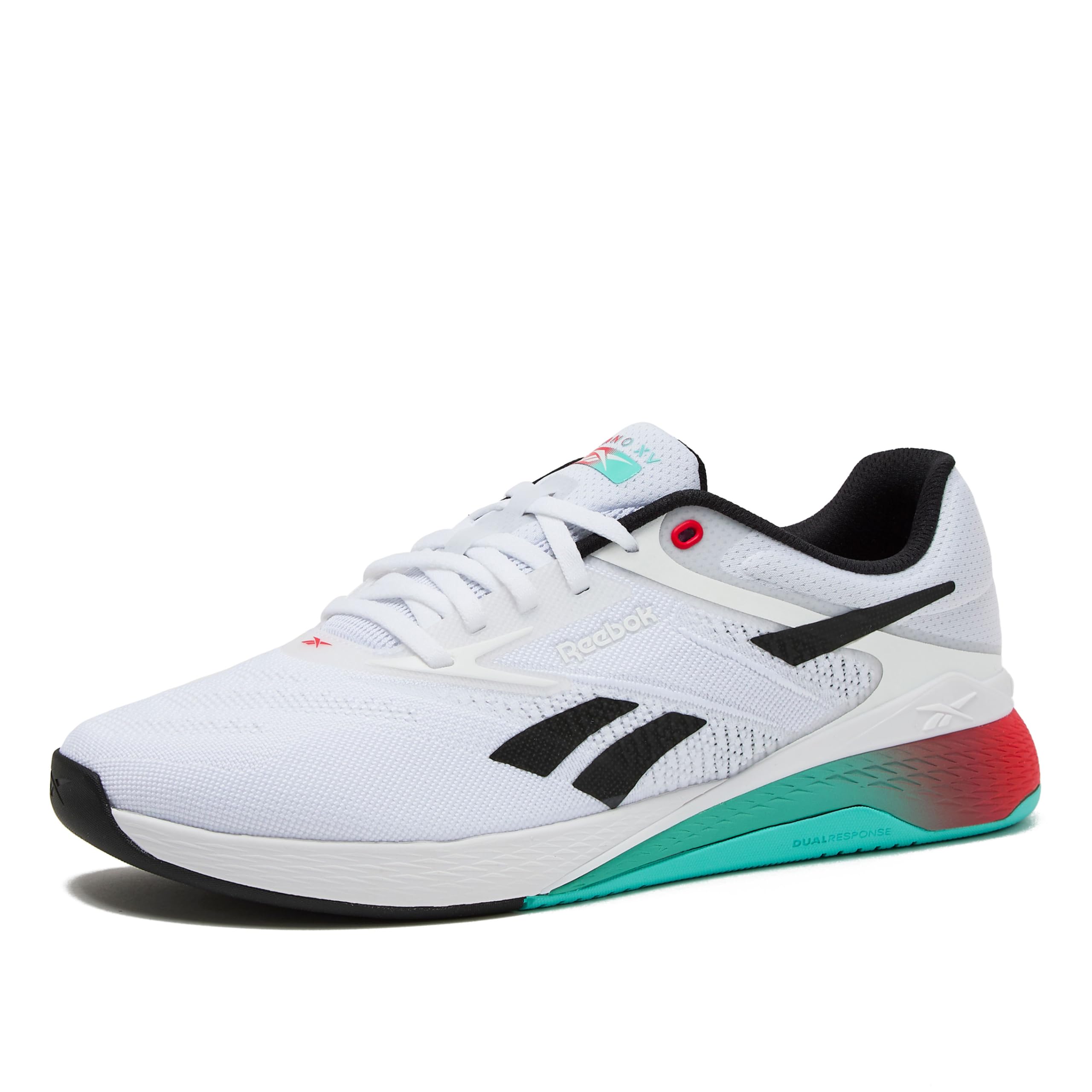
The hybrid trainer built for CrossFit chaos — grip, pivot, and a breathable knit all in one.
The Nano X5 is built for someone who changes direction a lot. A high-traction outsole gives grip, and a molded heel clip plus a plush foam collar hold your heel steady through lateral movement. The Flexweave knit upper stays soft and breathable while keeping the toughness your training needs. Sizes run 7 through 14 in both bold colors and classic black or white.
The flat sole with a minimal toe spring and a wide toe box gives strong ground contact, and the side grip helps with lateral drills. It is lightweight and absorbs shock well — which is why rope-jumping fans love it. Wearers call the quality amazing and the flexibility excellent, and the color gets its share of compliments.
Now the honest side. This is a lifter-friendly trainer that does not love to run — long joggers and heavier frames report weak support for jogging, and squats are not its strongest move. Sizing runs about a half size small, and the width is narrower than the earlier Nano X, so wide-footed buyers should size up half a size. The laces also come undone readily, which is why so many just double-knot them.
Where The Nano Wins
- High-traction outsole and side grip for lateral drills and pivots.
- Molded heel clip and foam collar lock the heel in place.
- Flexweave knit upper is breathable but tough.
- Shock-absorbing sole and light build suit rope jumping.
The Fine Print
- Runs about a half size small — size up if in doubt.
- Narrower than the earlier Nano X, so wide feet need a half size up.
- Poor support for long jogs; strong lifters may want a dedicated squat shoe.
- Laces come undone easily — double-knot them.
Choose it for: CrossFit-style sessions where you lift, pivot, and jump in the same workout.
Think twice if: you run distance, squat heavy, or have wide feet without room to size up.
Know the Specs
Heel Drop and Raised Heel
A raised heel, like the inclined sole on the adidas Powerlift 5, tilts your foot forward slightly so your ankle can flex deeper in a squat. That extra flex helps if your ankles are tight and balance usually drifts. A flat sole, by contrast, keeps you level for deadlifts and lateral moves, which is why cross-trainers tend toward flat bases.
Dual-Density Midsole
A dual-density midsole uses two firmness levels in one footbed — softer at the front and firmer at the back, as on the TriBase Reign 6. The soft forefoot cushions push-off, while the firmer heel gives a planted platform under load. It is a way to get comfort and stability without choosing one over the other.
Heel Clip and Heel Counter
A heel clip is a stiff cup or molded piece around the back of the shoe that holds your heel in place. An internal heel counter does the same job from inside. Both stop your foot rolling over during side-to-side moves like lunges and skater hops — the difference between a locked-in feel and a shoe that lets your ankle wobble.
Toe Box Width
The toe box is the front chamber where your toes sit. Room matters because toes spread and grip for balance. Too tight and you get pressure points; too loose and your foot slides. If reviews say the fit runs narrow, it usually means the toe box, which is where a half-size adjustment helps most.
Common Questions
Can I wear running shoes instead of training shoes in the gym?
How do I know if a training shoe runs narrow or wide?
Do weightlifting shoes with a raised heel help with squats?
How long do gym shoes take to break in?
Should I size up or down in training shoes?
What is a heel clip for in a gym shoe?
Are these shoes good for both lifting and cardio in one session?
Will a breathable mesh upper help during long gym sessions?
Are wide-width training shoes really roomier than standard ones?
The Bottom Line
The safest first pick for most gym-goers is the New Balance 608 V5, because it pairs a firm, stabilizing sole with an Extra Wide option that actually fits broad feet — and it is comfortable on day one. If your sessions mix weights and cardio, the Nike Free Metcon 5 and the Reebok Nano X5 handle that steady switching. For heavy squats with a raised heel, the adidas Powerlift 5 is the dedicated choice. Match the fit to how you actually train and the rest falls into place.
How we choose
We do not accept paid placement. Every pick is matched to a real buyer and a real use-case; we do not hands-on test units.
Sources
Specifications: manufacturer listings and product documentation. Review insights: verified customer reviews, as of October 2026. Pricing: not shown on this page (it changes often); check the current price via the retailer link.
As an Amazon Associate, Aappliancez earns from qualifying purchases. This does not affect which products we feature.