Disclosure: Some links in this post are affiliate links. As an Amazon Associate I earn from qualifying purchases, at no extra cost to you. Learn more
Specs are compiled from manufacturer listings and verified buyer reviews and can change over time — please confirm the key details on the product page before buying.
You want to know which paddleboard vest lets you actually paddle — arms free, torso cool, and nothing riding up your ribs after an hour. Short answer: a close-fitting Type III foam vest is the safest and most comfortable choice for flatwater and surf SUP, and the Airhead Gnar Neolite is the pick we’d hand a first-time buyer. It is USCG-approved as a Type III (the standard recreational vest class that keeps you face-up in calm water) and it is built for a full day on the board.
This guide is built by comparing the manufacturers’ published specifications and the patterns across verified customer reviews, so you get each pick’s real strengths and trade-offs instead of marketing spin.
Below you’ll find seven vests sorted by how you actually paddle, from budget foam to inflatable belt-style PFDs. Every number comes straight from the maker’s spec sheet and the review pages, so you can size right the first time and end up with the best sup life jacket for the water you ride.
Top Picks

How To Choose The Best SUP Life Jacket
The hardest part of buying a paddleboard vest is admitting that the bulky orange thing from a boat rental will ruin your stroke. Four things separate a board-worthy vest from a boxy leftover: closure design, back panel height, venting, and foam thickness.
Closed sides vs. open sides
Closed sides mean the foam wraps around your ribs and buckles shut — the vest stays put when you move. Open-side vests feel cooler but shift more when you reach for a paddle stroke. Paddlers who want a locked-in fit should look for closed sides.
Back panel height and seat clearance
A tall foam back panel pushes against a kayak seat and rides up your neck on a SUP. A high-cut or mesh lower back keeps you free to bend at the waist through the catch and reach phases of the stroke. This is the spec most beginners ignore, and it is the one that ruins a paddle session fastest.
Venting and fabric
Mesh panels in the front and a mesh lower back let heat escape on a hot afternoon. Neoprene and nylon shells resist water absorption; quick-dry neoprene is the softer option against bare skin. If you paddle in warm water without a rash guard, fabric feel matters more than foam thickness.
Buoyancy and approval type
Foam Type III vests are the default for SUP. Inflatable Type V PFDs (which inflate automatically on water immersion) pack down to almost nothing and offer higher buoyancy ratings, but they require a CO2 cylinder and a bit more care — the cylinder needs replacing after any deployment.
Side-by-Side Comparison
| Model | Best For | PFD Type | Closure | Weight / Fit | Amazon |
|---|---|---|---|---|---|
| Airhead Gnar Neolite Kwik-Dry★ Best Overall | All-around paddling and family use | USCG Type III | Zipper plus double buckle | Youth / adult sizing, quick-dry neoprene | Amazon |
| Onyx MoveVent TorsionBest for Pockets | Kayak and SUP paddlers who want pockets | USCG Type III | Zipper | 1.5 lb, XL/2XL fit | Amazon |
| Bradley Adult Life Jacket | Fishing, hunting, calm inland water | USCG Type III, UL listed | Buckle | Large-X-Large, polyester shell | Amazon |
| Hardcore Water Sports Adult Vest | Big-and-tall paddlers and river floaters | USCG Type III, UL listed | Buckle | 1.6 lb, Adult 4X/6X | Amazon |
| Yukon Epic Paddle Life Vest | Long SUP and kayak sessions | USCG approved | Zipper | 400D nylon oxford shell | Amazon |
| BLUESTORM Cirrus26 | Minimalist paddlers and kayak anglers | USCG Type V (Type III performance) | Buckle | 16 oz, universal fit | Amazon |
| BLUESTORM Stratus 35 | Offshore and rough-water paddlers | USCG Type II | Buckle | Universal, fits 30″–56″ chest | Amazon |
Detailed Reviews
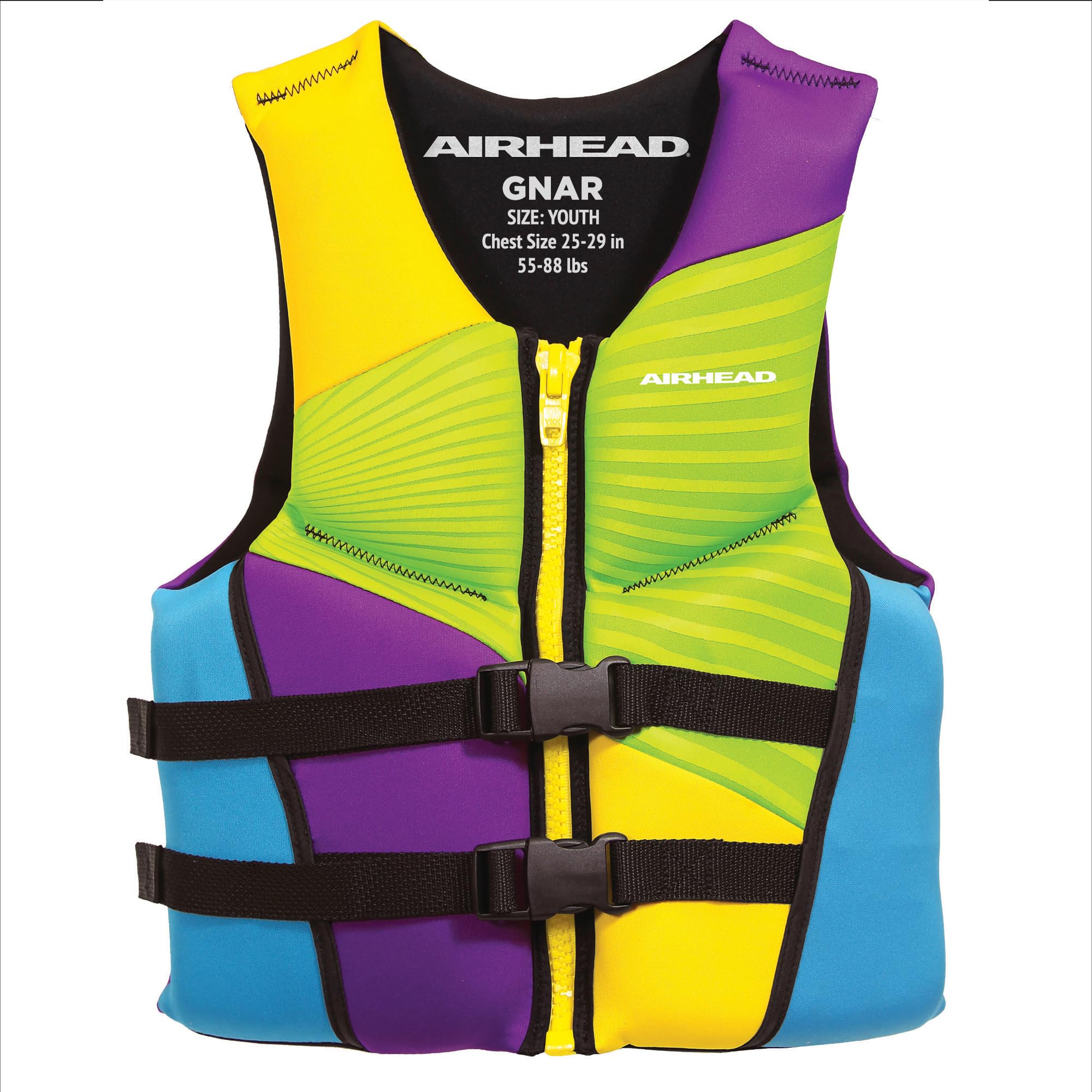
1. Airhead Gnar Neolite Kwik-Dry Life Jacket
Our pick — 4.5+★ from 1,500+ verified ratings; the strongest balance of quality and price.
The board-shorts of PFDs — segmented foam, quick-dry soft shell, and a fit that follows your stroke.
If you want one vest that works for flatwater cruising, tubing, and a beginner lesson at the lake, this is where to start. It is USCG-approved as a Type III (the standard recreational class for calm water where fast rescue is likely), and the segmented, hinged foam lets your torso rotate through the paddle stroke instead of locking you upright. The quick-dry Neolite shell — a moisture-wicking, water-shedding synthetic fabric that stays soft against bare shoulders — makes it wearable in midday sun without a rash guard.
What wins people over is the fit. The closed sides plus a zipper and double-buckle closure keep the vest snug and centered no matter how hard you brace on a turn. Comfort comes in second and it feels earned: the Neolite shell stays soft against the skin and the light segmented panels follow you rather than fight you. The Neolite shell keeps its color season after season, and the closed sides hold the vest down around a child’s ribs instead of letting it ride up to the ears.
The honest catch is sizing. Airhead’s own sheet warns the Neolite can feel snug and run slightly small — the brand’s advice is to size up if you are between sizes. That means ordering one size above your usual and living with slightly more bulk than you pictured. The other trade-off is that this is a foam vest, so it will feel warmer than an inflatable on a still afternoon. Neither issue should stop you buying it — they are just the parts to plan around.
Why it wins the crown
- USCG Type III approval for calm-water paddling — the class boarders and boaters actually buy
- Segmented, hinged foam lets your torso twist through the stroke
- Quick-dry Neolite shell wicks moisture and stays soft against skin
- Closed sides plus zipper and double buckle keep the vest centered
- Works across boating, tubing, and paddling — one vest, many uses
The parts to plan around
- Sizing can run snug — the brand advises sizing up when between sizes
- Foam construction gets warmer than an inflatable on still afternoons
Reach for this if: You want one USCG-approved vest for the whole family trunk, paddling flatwater and tubing all summer.
Think again if: You’re strictly a long-distance flatwater paddler who wants the coolest possible back — an inflatable or a dedicated paddle vest will breathe better.
2. Onyx MoveVent Torsion Life Jacket X-Large/XX-Large
Built for the paddler who wants a phone, keys, and a snack without another bag on the deck.
The MoveVent uses mesh panels in the front and a mesh back to move heat off your chest and keep a kayak seat comfortable under the vest. Six adjustment straps are the most on this list, so you can cinch the vest down to a locked paddle fit on a SUP or loosen it for a slow drift. It is USCG and Transport Canada approved as a Type III — the standard recreational class for calm water.
The large zippered front pocket, with drain holes built in, is the feature that earns it a spot here. It has drain holes built in so water pours out, and it swallows a modern phone plus keys and snacks. The reflective material on the vest is SOLAS-grade — the high-visibility marine standard used for rescue gear — so you show up on a boat’s running lights after dark. Quality is the aspect paddlers praise most here, with build and stitching noted again and again.
The trade-off is twofold. The vest zips up a slightly unusual way that takes a few tries to get used to — one paddler’s exact words were “It zips up odd, but it does not get in the way and floats you well.” And the pocket, while big, is not waterproof — use a zip bag for your phone. Neither is a deal-breaker, but the zip feel is a real thing to test on day one.
Where it stands out: Mesh venting and a drain-holed cargo pocket make this the vest for warm-weather paddlers who carry gear. SOLAS-grade reflectivity adds visibility that matters if you paddle near boat traffic.
One honest note: The zipper pulls in a way that takes some familiarizing, and the pocket is not sealed — plan for a waterproof bag.
Worth a close look if: You carry a phone and keys on the water and want them on your chest, not rolling around the board.
Look elsewhere if: You need a waterproof pocket by default or you paddle cold water where an inflatable’s low profile would serve you better.
3. Bradley Life Jackets for Adults
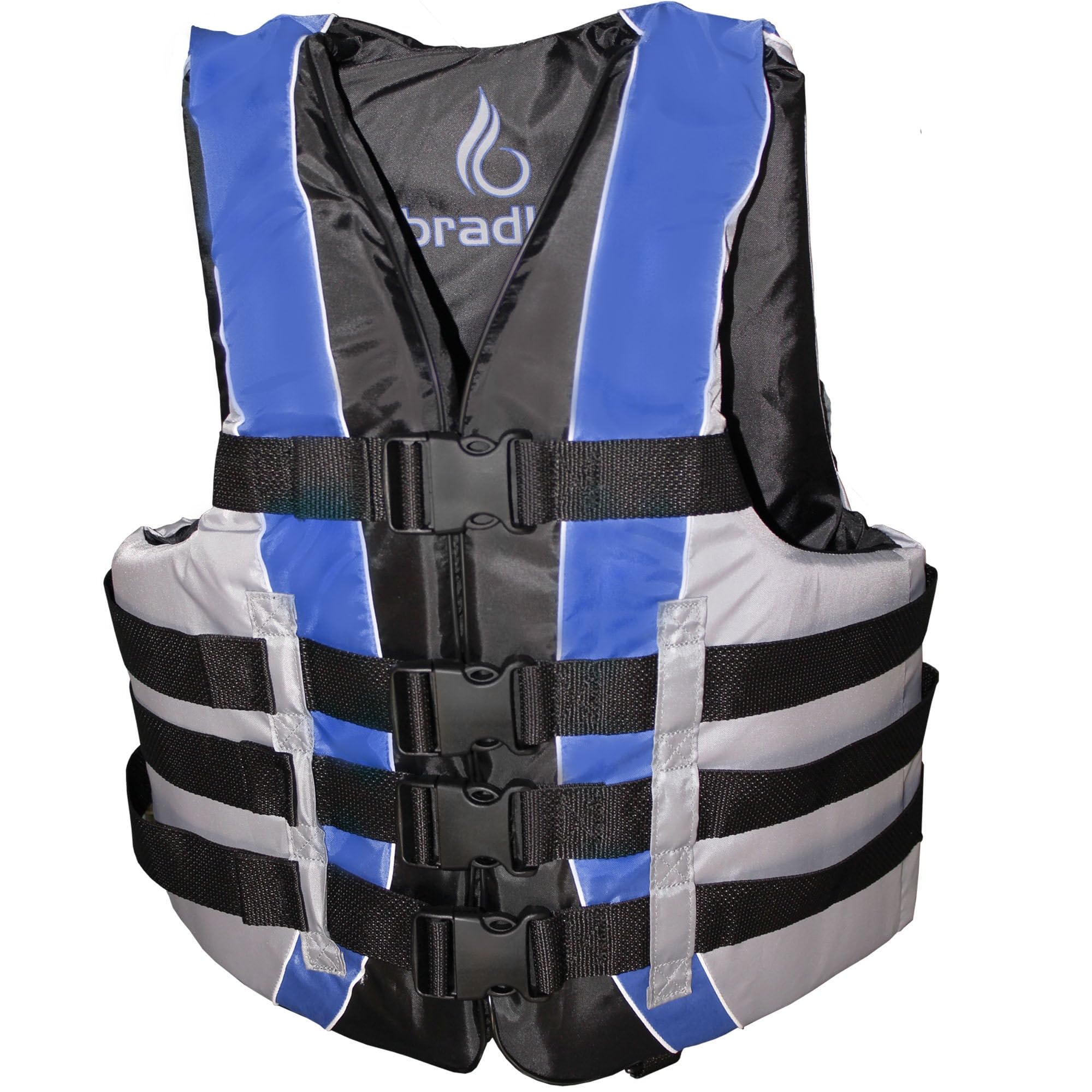
A blue-water workhorse with enclosed sides, a Cordura shell, and no-fuss buckles.
Bradley’s adult vest is built for the kind of paddling where you sit low and cast rather than stand and stroke. It is a USCG Type III and UL-listed PFD — designed to float a wearer face-up in calm water with head tilted back, which is the posture kayak anglers and duck hunters actually want. The shell is polyester Cordura fabric over closed-cell PE foam, a combination chosen for scuff resistance rather than sleekness. Two-inch adjustable straps with quick-release buckles let you cinch it for a secure fit even over a jacket.
What earns it a place here is fit and durability — the enclosed sides cut chafing during long sits, and the Cordura shell takes scuffs from a boat deck. The enclosed sides reduce chafing under the arms during long sits, and the marine blue colorway was chosen deliberately because it does not attract insects and matches everything on the water. One paddler put it plainly: “Life jacket seems well made, comfortable and easy to put on and take off.” It is a vest you pull on without thinking, which is exactly what you want at 5 a.m. on the ramp.
The catch is sizing. This vest is cut for a fuller build — the sizing runs generously by current standards, so a medium handles a body up to around 185 pounds and a small will not stretch to a heavy frame. That is a fit quirk, not a flaw: it falls into the right shape for the right body. For a paddler built closer to the lean side, you will want to check the size chart carefully or drop a size.
The fishing read: A UL-listed Type III with a scuff-ready Cordura shell, dual 2-inch buckle straps, and a colorway that won’t spook fish or collect bugs. It sits comfortably under waders and layers.
The sizing reality: Cuts run generous — treat the chart as guidance for a fuller build and size down if you are lean.
For the sit-and-cast crowd: Kayak anglers, duck hunters, and calm-water paddlers who want a durable vest with no inflatable maintenance.
Not for you if: You are small-framed or prefer a close-cut athletic fit — the generous cut will swim on you.
4. High-Performance Hardcore Adult Life Vest
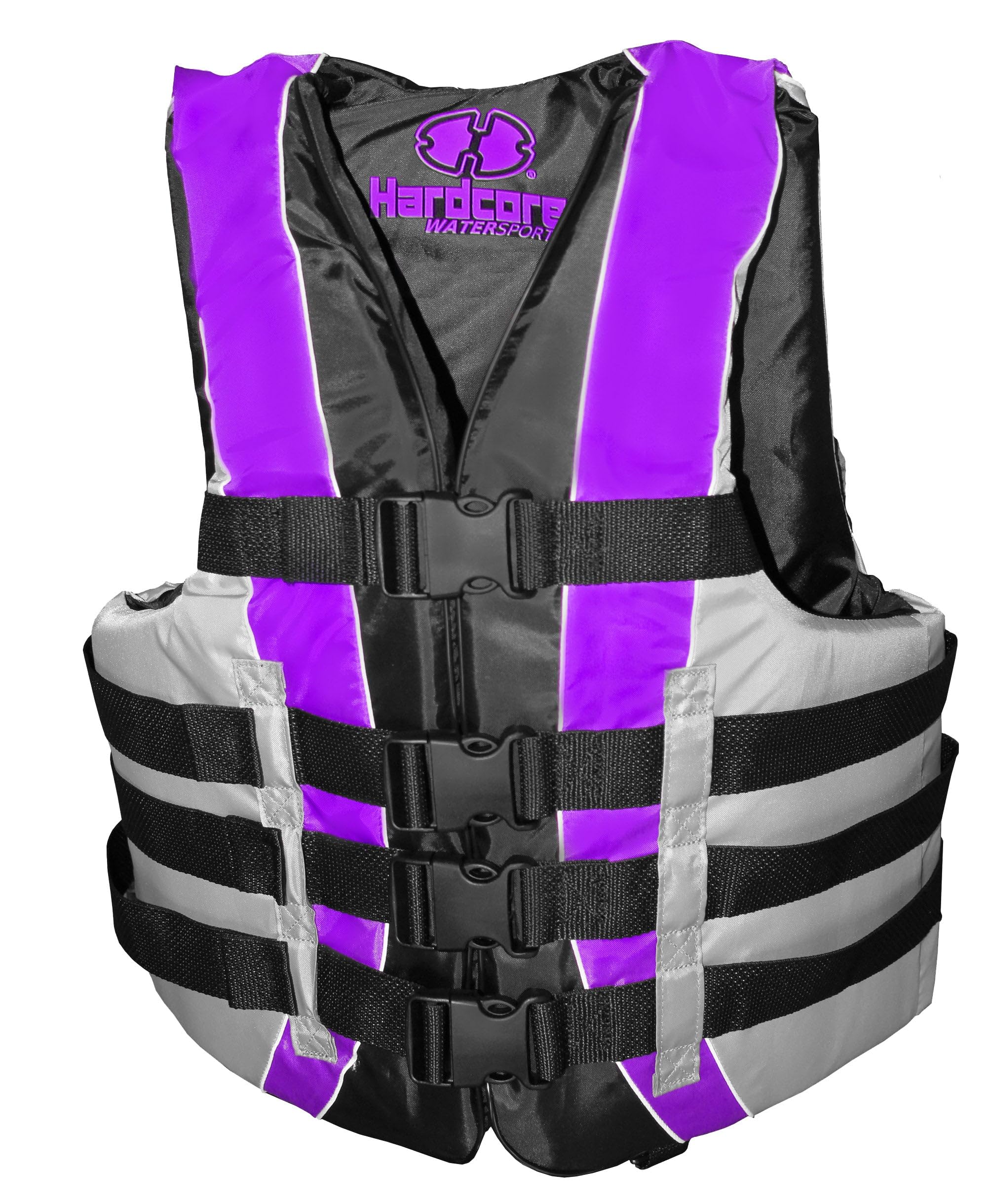
A fully enclosed vest cut large enough to fit a chest that most PFDs pretend doesn’t exist.
Hardcore Water Sports built this vest for adults who fall off the sizing chart — the Adult 4X/6X runs work for a wide chest and shoulders without the vest riding up. It is a USCG-approved, UL-listed Type III PFD with fully enclosed sides, 2-inch webbing and buckles, and a bright purple colorway that does what high-visibility color is supposed to do on the water. The shell is polyester Cordura over closed-cell PE foam, the same workhorse pairing used by most serious foam vests.
Quality is the theme here, from the stitching to the buckle feel. The purple shell keeps its vividness after a season on the river, and the 2-inch adjustable straps cinch the enclosed sides tight around a barrel chest. It paddles well for river tubing and lazy float trips where the vest mostly needs to stay on and out of the way.
The one honest issue is sizing. For some buyers the tail fits perfectly; for others, it comes up too big — the fit is genuinely generous rather than trimmed. That is the entire honest critique from an otherwise well-received vest, and it is easy to plan around by checking your chest measurement against the size chart before you click buy. On the paddling side, remember this is a foam vest with a closed cut — it is not the airiest option on a standup board in July.
What earns its keep
- Adult 4X/6X sizing covers bigger frames that most SUP vests skip
- USCG Type III, UL-listed PFD with fully enclosed sides
- 2-inch webbing and quick-release buckles resist slipping
- Polyester Cordura shell holds up to river use
- Bright colorway makes you easy to spot on the water
Worth planning for
- Cut runs generous — check the size chart carefully
- Fully enclosed foam gets warm on hot, still afternoons
A strong fit for: Big-and-tall paddlers, river floaters, and anyone whose chest measurement has been turned away by standard vests.
Before you buy: Measure your chest, then size down if you are at the top of the range — the cut is roomier than the number suggests.
5. Yukon Epic Paddle Life Vest

The one built like a paddling vest, not a boat vest — segmented, breathable, and cut for arm swing.
Yukon’s Epic is a purpose-built paddle vest: a segmented hinged body that moves with you, a breathable mesh lower back that clears a kayak seat, and neoprene shoulder pads that stop the shoulder rub a long paddle session causes. The shell is rugged 400-denier nylon oxford — dense, scuff-resistant fabric that shrugs off board-deck scraping and holds its shape season after season. Entry is through a “Radical EZ pull” side zipper, so you pull it on over your head rather than wrestling a front zip.
What paddlers praise is fit, and it earns that in a real way. On a three-hour kayak run, one paddler reported the vest did not ride up and allowed full range of motion. The high back helps keep your lower back against the seat, and the front pocket takes small gear while reflective shoulders and pocket detailing add visibility. This is the single best pick on the list for a paddler who wants a dedicated SUP or kayak vest — the arm swing room is exactly what makes a paddleboard session feel like paddling instead of lugging.
The honest trade-off is the zipper. The Radical EZ pull side zip is smart in concept, but several paddlers find it needs a bit of practice — the large-tooth offset teeth sometimes need two hands and a firm pull the first few times. The front zip is also not waterproof, so a phone goes in a dry bag if you carry one. Nothing else in this vest gets in your way.
What the water tells you: Three hours of paddling with no ride-up and full arm swing — the vest does what a dedicated SUP vest is supposed to do. The mesh lower back clears a seat while the 400D nylon shell handles scraping against a board deck.
One thing to expect: The Radical EZ pull zipper needs a bit of getting used to; test it before you commit to a rough-water trip.
The right call for: Standup paddlers and kayakers who log serious hours and want arm swing, mesh venting, and a seat-clearing back.
skip it if: You want a pull-on-and-go vest with a standard front zip — the side entry takes some practice.
6. BLUESTORM Cirrus26 Inflatable PFD

Forget you’re wearing it — until the water says otherwise.
If you hate the feel of foam against your chest on a hot paddle, the Cirrus26 changes the whole experience. It is a USCG-approved Type V PFD with Type III performance — meaning it inflates on immersion and delivers the buoyancy of a recreational vest, but packs down to a collar and waist belt. A replaceable CO2 cylinder triggers automatically on water contact; a “jerk to inflate” cord and a back-up oral tube give you manual options if the auto-trigger doesn’t fire. It carries 26 pounds of buoyancy, the same figure as a full foam vest, in a fraction of the footprint.
What paddlers rave about is quality and comfort in a single breath — this is the inflatable that finally stops the “bulky normal life vest” complaint. It wears like a collar with a chest strap, so your paddle stroke is untouched. The mesh upper back strap pulls the collar away from your neck, and the long shell puts the waist belt in a more comfortable position on the body. One paddler on a kick-boat put it best: “I use it every time I’m out in my kickboat. Don’t even know it’s there!”
The honest catches are real but manageable. The auto-inflate trigger is very sensitive to water — one paddler reported theirs deployed in the rain — so the manual-only conversion cap matters for paddleboarders and anglers who get splashed. That cap lets you lock the vest into manual mode so it won’t fire on a wave or a wet paddle. You will also want a spare CO2 cylinder on board; one comes in the box but no spare. And the vest counts as an on-board life jacket only while you are wearing it, so don’t stash it under the bungee.
The invisible-vest pitch: Auto/manual inflation, 26 lbs of buoyancy, mesh upper back strap, and an internal pocket for a spare CO2 cylinder — a genuinely packable PFD that does not restrict your paddle.
The catch to know: Auto-inflation is sensitive to water; use the manual-only cap when you’ll be splashed, and plan to carry a spare cylinder.
Buy this if: You paddle warm water, want a barely-there vest, and will keep a spare CO2 cylinder on board.
Think twice if: You want zero maintenance or you’ll be in heavy splash zones without the manual cap — foam is simpler.
7. BLUESTORM Stratus 35 Inflatable Life Jacket

The inflatable for paddlers who want the highest buoyancy on the list under a shirt-like collar.
Where the Cirrus26 targets warm-water minimalists, the Stratus 35 is built for open water and rough conditions. It carries 35 pounds of buoyancy — the highest figure on this list and well above a foam vest — in a USCG Type II PFD that requires you to keep your head tilted back in the water. Auto-inflate on immersion, a manual ripcord, and a back-up oral tube give you three ways to stay safe.
The everyday feel is why paddlers like it. The ultra-breathable soft polyester collar wicks moisture off the neck, and the T-strap back keeps heat from building up — one paddler noted that it does not overheat like a foam shoulder cover. A 2-inch waist belt and large adjustment slider get a secure fit, and a zippered front pocket takes sunglasses, pliers, sunscreen, or a license. It fits a chest from 30 inches up to 56 inches, which covers adult small through XXL. The lightweight build means you won’t be dragging extra ballast on a long offshore paddle.
The honest caveats start with the type. A Type II is designed to keep you face-up in calm water, which is fine for most SUP sessions but not a substitute for an offshore Type I in rough chop. The auto-trigger is also sensitive to water, so lock it into manual mode when you’ll be splashed. And like all inflatables, you must be wearing it for it to count as an on-board vest.
The offshore argument
- 35 lbs of buoyancy — the highest on this list
- USCG Type II PFD for calm-water face-up flotation
- Three inflation methods: auto, ripcord, and oral tube
- Ultra-breathable polyester collar keeps the neck cool
- Large zippered front pocket for gear and license
- Fits 30″–56″ chest, adult S through XXL
The fine print
- Type II approval is for calm water, not offshore chop
- Auto-trigger is water-sensitive; use the manual mode when splash is likely
- Counts as on-board only while worn
The pick for open water: Paddlers heading further from shore want the 35 lbs of buoyancy and the three-way inflation system that a Type II inflatable delivers.
Not for you if: You want pull-on simplicity with no cartridge maintenance, or you paddle ocean chop where a Type I vest is the safer call.
Know the Specs
USCG approval types (I, II, III, V)
The type number on the label tells you where the vest is built to keep you safe. Type I is offshore, Type II is calm-water face-up, Type III is recreational calm water where fast rescue is likely, and Type V is a specialty vest that usually meets the performance of another type — like the Cirrus26, which is a Type V with Type III performance. On a paddleboard on a lake or bay, a Type III foam vest is the everyday choice.
Buoyancy in pounds
Buoyancy is the upward force the vest supplies, stated in pounds. Foam SUPs vests usually carry a certain amount; inflatables state theirs explicitly — the Cirrus26 offers 26 lbs, and the Stratus 35 offers 35 lbs. More buoyancy handles rougher water better, but higher-buoyancy vests can feel bulkier to wear. Match the number to your water, not just to the spec sheet.
Closure: closed sides vs. open sides
Closed sides wrap the foam around your ribcage and buckle shut, so the vest stays put through a paddle stroke. Open sides feel cooler but shift more when you reach. A zipper plus a buckle is the most secure and takes an extra tug to don; a buckle-only vest is faster on and off but relies on strap tension to stay snug.
Mesh venting and breathability
Mesh panels in the front or lower back let heat escape and stop the vest from pooling sweat on your chest. A mesh lower back also clears a kayak seat and lets you bend at the waist through the stroke. For hot-climate paddling, venting is more important than foam thickness.
Common Questions
Do I legally need to wear a life jacket on a paddleboard?
Is an inflatable PFD safe for paddleboarding?
Will a SUP life jacket restrict my paddle stroke?
What is the difference between Type III and Type V PFDs?
How do I size a life jacket for paddleboarding?
Can I use a kayak PFD on a paddleboard?
How long does a SUP life jacket last?
Can I wear a SUP life jacket while swimming or snorkeling?
The Bottom Line
For most paddleboarders on calm water, the sup life jacket worth buying is the Airhead Gnar Neolite — USCG Type III approved, segmented foam that moves with your stroke, and a quick-dry shell that stays comfortable on bare skin. If you carry gear and want a pocket on your chest, the Onyx MoveVent Torsion gives you the most storage and the most adjustment straps on this list. And if you want the highest buoyancy and don’t mind keeping a CO2 cylinder on board, the BLUESTORM Stratus 35 offers 35 lbs of buoyancy in a nearly invisible package. Grab your tape measure, pick the fit that matches your water, and get out there.
How we choose
We do not accept paid placement. Every pick is matched to a real buyer and a real use-case; we do not hands-on test units.
Sources
Specifications: manufacturer listings and product documentation. Review insights: verified customer reviews, as of October 2026. Pricing: not shown on this page (it changes often); check the current price via the retailer link.
As an Amazon Associate, Aappliancez earns from qualifying purchases. This does not affect which products we feature.