Disclosure: Some links in this post are affiliate links. As an Amazon Associate I earn from qualifying purchases, at no extra cost to you. Learn more
Specs are compiled from manufacturer listings and verified buyer reviews and can change over time — please confirm the key details on the product page before buying.
If your legs ache, swell, or throb by mid-afternoon, the fix is usually the compression level, not the brand. Varicose veins happen when the valves inside your leg veins stop pushing blood back up toward your heart, so it pools and bulges. Compression stockings squeeze hardest at the ankle and ease off as they climb, which helps that pooled blood keep moving. Buy the wrong pressure rating and you either get a sock that does nothing or a sock you cannot stand wearing. This guide sorts the real differences between the top picks so you can choose the right pair the first time.
This guide is built by comparing the manufacturers’ published specifications and the patterns across verified customer reviews, so you get each pick’s real strengths and trade-offs instead of marketing spin.
If your legs ache and swell by the end of the day, the fix usually depends on one number: the mmHg (millimeters of mercury, the pressure rating printed on the box). The guide below breaks down five genuinely good options for stockings for varicose veins, ranked so you can match the right one to your legs.
Top Picks


How To Choose The Best Stockings for Varicose Veins
Almost every disappointed buyer of compression stockings made the same mistake: they picked the wrong size, not the wrong brand. Get the fit right and the compression level right, and the rest of the decision gets easy.
Match the mmHg rating to your day, not the label
The mmHg number is the pressure the stocking puts on your leg. Mild support sits at 8-15 mmHg, moderate at 15-20 mmHg, and firm support at 20-30 mmHg. Moderate is the common starting point for tired, aching legs and travel. Firm is what many people reach for once swelling is a regular companion. Higher does not automatically mean better — a stocking you dread putting on gets left in the drawer.
Measure your calf and thigh before you order
Every pair here fits by measurement, not by your usual clothing size. A size small in one brand can behave like a size large in another. Write down your ankle, calf, and thigh circumference, then match those numbers to that specific brand’s chart. When you land between two sizes, read that brand’s own guidance, because some tell you to size down and others tell you to size up.
Pick your length by where the swelling sits
Knee-high stockings cover the calf and stop below the knee. Thigh-high stockings run the full length of the leg and stay put with a silicone band. Pantyhose-style tights cover the whole leg and the waist, which suits anyone who wants no gap between garments. If swelling reaches above your knee, a knee-high will not touch it.
Toes and bands are the two features people notice most
An open toe is easier to check on your circulation and kinder to swollen or sensitive toes. A closed toe adds pressure across the foot. A silicone dot band at the top is what keeps a thigh-high from sliding down your leg during the day.
Side-by-Side Comparison
| Model | Best For | Compression | Style | Toe | Amazon |
|---|---|---|---|---|---|
| Compression Pantyhose Stockings for Women Men★ Best Overall | All-day 20-30 mmHg support | 20-30 mmHg | Pantyhose | Closed | Amazon |
| beister Medical Compression StockingsBest Grip Band | Thigh-high hold with a grip band | 15-20 mmHg | Thigh-high | Closed | Amazon |
| Doc Miller Thigh High Open Toe | Warm weather and swollen toes | 15-20 mmHg | Thigh-high | Open | Amazon |
| Medical Graduated Compression Tights | Firm support with a high waist | 20-30 mmHg | Pantyhose | Footless | Amazon |
| Wellow Knee High Compression Socks | Soft bamboo fabric you forget about | 18-25 mmHg | Knee-high | Closed | Amazon |
Detailed Reviews
1. Compression Pantyhose Stockings for Women Men, 20-30 mmHg
Our pick — 4.0+★ from 1,000+ verified ratings; the strongest balance of quality and price.
Firm 20-30 mmHg pressure from ankle to waist, in one piece you pull on like tights.
If swelling climbs above your knee and you want one garment to cover the whole leg, this is the pick. The pressure rating is 20-30 mmHg, which is the firm-support band — noticeably stronger than the 15-20 mmHg thigh-highs below, and that difference is the whole point. Working people describe managing 12-13 hour shifts in these and noting their legs still feel fine at the end. The all-in-one cut means no silicone band digging in and no gap where a thigh-high can migrate.
Sizing is where you need to read carefully, and the brand tells you so itself: measure your thigh and calf and choose the smaller size if your waist falls between two sizes. The people who get that right tend to report the fit they wanted. People who order by their normal clothing size are the ones who end up exchanging. The fabric is also sheer and light, so plan on wearing these under pants or as a base layer rather than on their own.
Put this next to the beister thigh-highs and you can feel the gap. These run 20-30 mmHg against the beister’s 15-20 mmHg, so if a clinician pointed you toward firmer support, this is the one to start with. They are also the crowd favorite of the group. Just go in knowing they take some effort to pull up, and that a footless tights style reads very differently on the leg than a thigh-high does.
Where they win
- Firm 20-30 mmHg pressure, the strongest rating in this lineup
- One-piece pantyhose cut with no top band to slip or pinch
- Body-fits well with no red marks when the size is right
- Light enough to wear under a normal pair of pants
Where they fall short
- Sizing chart runs loose against real body measurements
- Sheer, see-through fabric — not a standalone look
- Getting them on takes real effort
- Tight enough that daily all-week wear wears you down
The right call if: you want steady, firm, full-leg pressure and you are willing to measure properly before ordering.
Think twice if: you want something you can slip on in seconds — a knee-high or open-toe thigh-high will be easier.
2. beister 15-20 mmHg Medical Compression Stockings
Thigh-highs with a silicone dot band that holds the top in place all day.
For anyone who has had a thigh-high roll down mid-morning, the beister’s whole case is the band. The construction is 80% nylon, 15% spandex, and 5% silicone, and that silicone sits in dots around a wider cuff to grip the thigh. The pressure is graduated 15-20 mmHg, highest at the ankle and easing toward the heart, which is the moderate band most people start with for aching, tired legs. The fabric blend includes medical-grade fabric from Germany, and owners describe it as soft, smooth, and odorless.
The reviews are unusually clear about both sides. Quality is what gets praised most, and comfort follows close behind — the softness of the fabric comes up again and again. What is genuinely mixed is getting them on. People who wore hospital-brand stockings after knee replacement describe these as easier to pull on and snug without being punishing. Others find the same pair fiddly and report the top migrating. That split has less to do with the stocking than with matching the size to your own leg.
Two fit notes are worth hearing before you buy. The width suits a lot of leg shapes, but the length is built generous — anyone on the shorter side may find the top riding higher than expected. And the closed toe adds pressure across the foot. If a constant squeeze on your toes bothers you, step over to the Doc Miller open-toe pick below. Set against the pantyhose option in first place, the beister runs at 15-20 mmHg versus 20-30 mmHg — one full firmness step lighter.
What the fit really means: a wider cuff with silicone dots (small rubbery bumps that grip your skin) is the simple reason these hold better than a plain elastic top, so they stay up through a full work shift. If you feel the grip pressing on circulation, the brand’s own fix is a simple flip of the band.
Made for: taller frames and anyone who has fought a sliding thigh-high before.
Skip past if: you need the firmest pressure available, or you have sensitive toes that dislike a closed-toe squeeze.
3. Doc Miller Thigh High Open Toe Compression Stockings

Open toes and S-to-4XL sizing for legs that run hot or run long.
The open-toe cut is the reason to look here first. Your toes stay free, which suits swollen toes, sensitive feet, and warm weather, and it lets you check your own circulation at a glance without pulling the stocking off. Sizing runs from Small all the way to 4XL, which is the widest range in this group. The compression is a graduated 15-20 mmHg, the same moderate band as the beister, and the material is moisture-wicking and soft against the skin.
What owners single out most is the compression itself, closely followed by how comfortable the fabric feels. People recovering from vein surgery describe the material as soft but strong, and long-haul travelers report the stockings holding snug without pinching. There is a real pattern worth knowing about, though: the size chart suggests a smaller size than a lot of legs actually need. Multiple buyers describe sizing up and landing on a perfect fit, which is unusually useful guidance in a category where most people guess wrong the other way.
The honest catch is staying power. For some, these hold exactly where you put them through a full day of walking. For others, particularly taller wearers, the stocking slides down toward the knee within minutes of moving around. That is the one thing to plan around — wear them if you are mostly seated or standing, and consider a grippier hybrid like the beister above if you are pacing a hospital floor.
Why it earns a spot: the open-toe design, the S-to-4XL range, and a size chart that people find runs generously down rather than up. That rare combination is why it holds a place here for anyone with hard-to-fit legs.
Reach for this: if your toes swell, you run warm, or you have struggled to find a stocking that fits the full length of your leg.
Look elsewhere if: you want a stocking that grips hard against movement — this one is happiest on a seated or standing day.
4. Medical Graduated Compression Tights 20-30 mmHg

A high waist and footless cut, built for firm support you can wear under real clothes.
This is the firmest full-coverage option in the group, and it is the one people come back to. The blend is 75% nylon and 25% spandex, and it compresses at 20-30 mmHg with the pressure strongest at the ankle and easing up the leg. The footless design means no squeeze across your feet and no toe seam, which matters if you have ever had a closed toe dig in by hour six. The high waist features a wide elastic waistband that stays put and adds light support across the abdomen, which is where this design stands apart from a straight thigh-high.
The reviews read like a long-running relationship rather than a first date. Repeat buyers describe replacing a worn pair every several months of frequent wear, then ordering again. Compression is the trait that gets picked out most, with comfort close behind. People managing swelling from vein issues and post-surgery recovery both report real relief. The recurring gripe is care, not wear: these want hand washing, and over time the fabric can pill and snag, so a rotation of two pairs keeps the stretch fresher longer.
Be aware that these are opaquer and warmer than a sheer closet-stock stocking, and the thigh can run snug on some builds. Fit shapes vary by height too — shorter wearers report the leg running long, so the size chart matters here as much as anywhere. If you want maximum coverage with a waist that stays put, this is your pair.
The long-owner read: a 4th-purchase pattern is the clearest signal a compression tight can send — people buy, wear, replace, and buy again. The tear-resistant, snag-proof build and reinforced gusset are what make that repeat worth doing.
The one to grab: if you want firm 20-30 mmHg support across the whole leg, a waist that never rolls, and a footless cut your toes will thank you for.
Look right past it if: you refuse to hand-wash, or you want a lighter, sheerer garment for summer.
5. Wellow Knee High Compression Socks
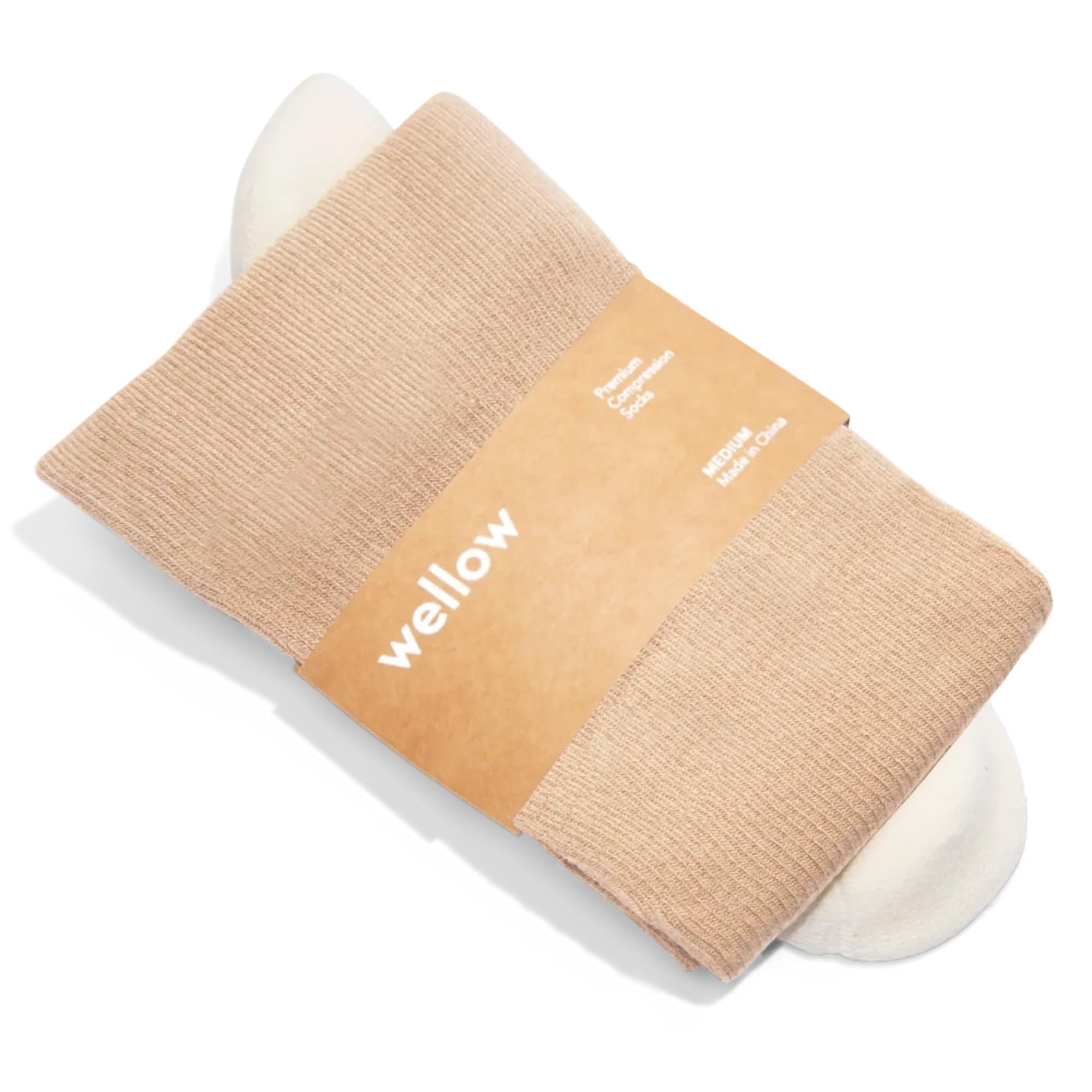
A knee-high in moisture-wicking bamboo viscose that skips the slippery, synthetic feel.
Not every aching leg needs a full thigh-high. If your swelling lives below the knee, this is the lightest way to handle it. The compression is 18-25 mmHg, which Wellow describes as a moderate level — the brand is upfront that medical grade requires 30 mmHg or higher, so this is not that. What it does offer is a graduated squeeze at the ankle that stays steady through the calf, in a fabric made from moisture-wicking viscose from bamboo that keeps feet dry through a long day.
Fabric is the headline here, and it earns it. Buyers keep coming back to how thick and soft these feel compared with the slick, synthetic options out there. The most convincing thing they describe is a 12-hour flight ending with no swelling, even though the socks did not feel tight. They are also machine washable on cold, gentle — a genuine convenience most compression garments cannot claim while protecting the odor-resistant finish.
Two honest trade-offs. The compression is the gentlest of the group and it thins out at the foot, so a firm squeeze at the ankle is not what this sock delivers. And sizing runs large, especially for women — go by the measurements, not your usual shoe size, or the sock will sit loose. A careful purchaser who measured first lands in the right place. Those who guess often end up with a sock that swims on them.
The real-world case: softness, wearability, and a machine-washable finish. If you have ever put on a pair of compression socks and pulled them straight off, this is the one that stays on your feet long enough to help.
Best fit for: calf-level swelling, post-workout recovery, and anyone who wears compression for the ache rather than for a firm squeeze.
Skip over it if: swelling reaches above the knee, or you need the strong 20-30 mmHg pressure the pantyhose picks deliver.
Know the Specs
What 15-20 mmHg versus 20-30 mmHg actually feels like
The number is the pressure the stocking puts on your leg, measured in millimeters of mercury. At 15-20 mmHg you get moderate support — enough for long days of sitting, standing, or travel, and the level people tend to start with. At 20-30 mmHg you get firm support, which is what most people move to when swelling is part of the daily picture. It is a real jump in pressure, so going up a step should be a deliberate choice rather than a reflex.
Why graduated compression matters more than the number alone
Graduated means the stocking squeezes hardest at the ankle and eases as it climbs toward your heart. That falls in line with how your veins already work, so the pattern helps rather than just squeezes. Stockings that apply even pressure are doing something different. That is why the mmHg alone does not tell the whole story — graduation is what makes the squeeze effective.
Silicone dot bands versus plain elastic tops
An elastic top stays put because it squeezes the thigh. A silicone dot band grips the skin directly, and that is why it can hold a thigh-high in place all day without needing to be tighter. If a silicone band ever feels like it is pressing on circulation, the fix is usually to adjust the fold at the top rather than to go down a size.
Open toe, closed toe, and footless cuts
A closed toe adds pressure across the whole foot and feels more like a thick sock. An open toe frees the toes and makes it easy to check circulation. A footless tight covers the leg and stops at the ankle, so your feet stay in their own socks or shoes. Which you want depends on how your feet react — some like the extra coverage, others cannot tolerate anything tight across the toes.
Common Questions
What mmHg do I need for varicose veins?
Do I measure my calf or my shoe size to pick a size?
How long can I wear my compression stockings in a day?
Why do my thigh-high stockings roll down?
Can I wear compression stockings during exercise?
Are 20-30 mmHg stockings better than 15-20 mmHg?
How long should a good pair of compression stockings last?
Can I wear compression stockings to bed?
Are open-toe stockings easier to put on than closed toe?
How should I wash compression stockings to keep them working?
The Bottom Line
For most people buying stockings for varicose veins, the winner is the Compression Pantyhose Stockings for Women Men, 20-30 mmHg because it combines the strongest pressure rating here, a full-leg one-piece cut, and a fit that holds up through a full work shift. If you want your thigh-high to actually stay put, grab the beister Dot Silicone Band pair with its grippy top and moderate 15-20 mmHg hold. And if you want a pair soft enough to forget you are wearing it, the Wellow Knee High in bamboo viscose is the one to reach for. Match the mmHg to your day and measure before you order.
How we choose
We do not accept paid placement. Every pick is matched to a real buyer and a real use-case; we do not hands-on test units.
Sources
Specifications: manufacturer listings and product documentation. Review insights: verified customer reviews, as of October 2026. Pricing: not shown on this page (it changes often); check the current price via the retailer link.
As an Amazon Associate, Aappliancez earns from qualifying purchases. This does not affect which products we feature.