Disclosure: Some links in this post are affiliate links. As an Amazon Associate I earn from qualifying purchases, at no extra cost to you. Learn more
Specs are compiled from manufacturer listings and verified buyer reviews and can change over time — please confirm the key details on the product page before buying.
White oak fights back when you try to color it. Its tight grain and natural yellow-green undertone can turn a stain orange or patchy if you pick the wrong formula. Gel and water-based products built for hardwoods give you the even, controllable result you actually want. The picks below cover oil-based gels, water-based stains, and stain-and-sealer combos, sorted so you can match the right one to your project instead of guessing.
This guide is built by comparing the manufacturers’ published specifications and the patterns across verified customer reviews, so you get each pick’s real strengths and trade-offs instead of marketing spin.
Some formulas flood the grain with too much pigment, others dry before you can wipe them back, and a few seal and color in one step. The right, best stain for White Oak depends on how much control you want and how deep you need the color to sit.
Top Picks


How To Choose The Best Stain for White Oak
White oak is dense and its grain is tight, so the color you see on the lid is not always the color you get on the board. The formula matters more here than on softer woods. Pick the wrong type and you fight blotching, drying too fast, or a shade that swings orange the moment it hits the surface. Three things decide the outcome: the base, the color control, and what you still have to apply afterward.
Gel versus water-based versus oil-based
A gel stain is thick, so it sits on the surface and gives you time to wipe it back for even color — good when you want to control depth on tight grain. A water-based stain soaks in faster, cleans up with soap and water, and carries low odor, which suits indoor work. An oil-based stain penetrates deeper and gives a richer, longer-working finish, but it takes longer to dry and cleanup needs mineral spirits.
Coverage and how far a can goes
Coverage tells you how much surface a single container handles, and on white oak that number matters because hardwoods drink less stain than softwoods. A quart covers small furniture with room to spare, but a full set of cabinets or a garage door will drink it up fast. Match the container size to the job before you start.
Prep, topcoat, and dry time
Sanding and cleaning the wood controls whether the stain lands even or patchy. Some of these products need a separate finish on top, while a few color and seal in one step. Dry time determines how fast you can move and whether dust settles into a tacky surface, so read the label before you plan your work window.
Side-by-Side Comparison
| Model | Best For | Base | Volume | Coverage | Amazon |
|---|---|---|---|---|---|
| Old Masters Int/Ext Gel Stain Spanish Oak Quart★ Best Overall | Metal and fiberglass as well as wood | Oil-based | 32 fluid ounces | High | Amazon |
| Varathane White Oak Wood StainBest Value | Indoor cabinets and countertops | Water-based | 32 fluid ounces | Up to 100 sq ft per quart | Amazon |
| 16 Oz Wood Stain and Sealer in One, Transparent, with Tools | One-step color and seal on decks and fences | Water-based | 16 fluid ounces | Up to 200 sq ft per 0.5 liters | Amazon |
| All-in-ONE Gel Stain – Toasted Oak | Cabinet refinishing over existing finish | Oil-based | 16 fluid ounces | 16 Fl Oz | Amazon |
| General Finishes Water Based Wood Stain, Whitewash | Whitened farmhouse and lightened oak | Water-based | 1 quart | 50-75 sq ft | Amazon |
Detailed Reviews
1. Old Masters Int/Ext Gel Stain Spanish Oak Quart
Our pick — 4.5+★ from 950+ verified ratings; the strongest balance of quality and price.
The thick gel you can wipe back to exact depth on stubborn oak
This is the one to reach for when you want real control over how dark your white oak goes. It is an oil-based gel, meaning the pigment sits thick on the surface and gives you working time before it sets — so you can wipe the excess back and dial in the shade instead of watching color run away from you. It reads as a Spanish Oak, a warm medium-to-dark tone that many buyers report can be layered to reach the depth they want.
The thing everyone raves about is the coverage. One quart spreads across big, uneven surfaces with room to spare, and a quart covered 2 single plus 1 double garage door. The versatility is real too: it bonds to wood, fiberglass, primed metal, and composition surfaces, which is why it shows up on both fine furniture and metal garage doors. At 32 fluid ounces it holds 2.0x the volume of the 16-ounce combo stain in this lineup, so large jobs stretch further. Weighing 2 pounds and measuring 8.75 x 8.75 x 5.5 inches, it stores like a standard quart can.
Here is the catch a beginner should know. The finish is semi-gloss to gloss, so it leaves a slight shine that some buyers find too much for a natural raw look, and it sets quickly — owners mention it needs careful work out of direct sun and thorough prep beforehand. The color also runs darker than the label suggests for a few people. As owners put it: “very dark. Comes out almost black.” None of that is a defect; it just means you should test a small patch first and work in the shade. What wins people over is that the coverage is generous — the most-praised feature by a wide margin — and it performs on surfaces most stains cannot touch.
Where it earns its keep
- Thick gel gives you working time to wipe back and control depth
- Bonds to wood, fiberglass, primed metal, and composition surfaces
- 32 fluid ounces at 2 pounds goes far on large, uneven jobs
What to plan around
- Semi-gloss to gloss finish leaves a shine a raw-look fan may not want
- Sets quickly, so direct sun and slow work can leave it uneven
- Some find the color lands darker than expected
Grab it if: you are coloring oak, fiberglass, or primed metal and want a gel that lets you wipe the shade to your target depth.
Test first if: you want a fully flat, matte raw look — the semi-gloss sheen here shows.
2. Varathane White Oak Wood Stain
Water-based color that cleans up with soap and water, not spirits
If you are working indoors on a cabinet or countertop, this is the friendly pick. It is a water-based stain, so the odor is low and you clean your tools with plain soap and water rather than mineral spirits. It lays down rich, even color in one coat on most surfaces, and extra coats deepen the shade. Its main job — coloring wood effectively and evenly — is the thing owners praise most.
A little spreads further than you would expect. That is a lot of surface from a single 32-fluid-ounce quart. Because it is water-based, the finish dries almost clear with only a slight tint, and customers note it will not yellow over time the way some oil finishes can. It weighs 2.5 pounds and measures 4.25 x 4.25 x 4.88 inches, so it handles like a compact quart can you can stash on a shelf.
The honest trade-off is color predictability. Reviews run mixed on shade — some love the deep bourbon result, while others find it skews too light or too white for what they pictured. Drying speed splits the same way: some report it dries almost instantly, others say it stays tacky. The practical fix is to work fast, keep your rags ready, and test a patch on a scrap of your actual oak. Compared with the gel stain above, this one trades the wipe-back control for easier cleanup and a lower odor indoors.
The indoor advantage: low odor and soap-and-water cleanup make it the easiest of the group to use inside a kitchen or workshop, and the coverage is generous.
Read before you buy: color and dry time draw mixed feedback, which is a signal to test on scrap oak first and work in small sections.
The fit: indoor cabinet, countertop, and furniture projects where easy cleanup and low odor matter most.
Look elsewhere if: you need a guaranteed deep shade on the first coat — test it on your own oak before committing.
3. 16 Oz Wood Stain and Sealer in One, Transparent, with Tools
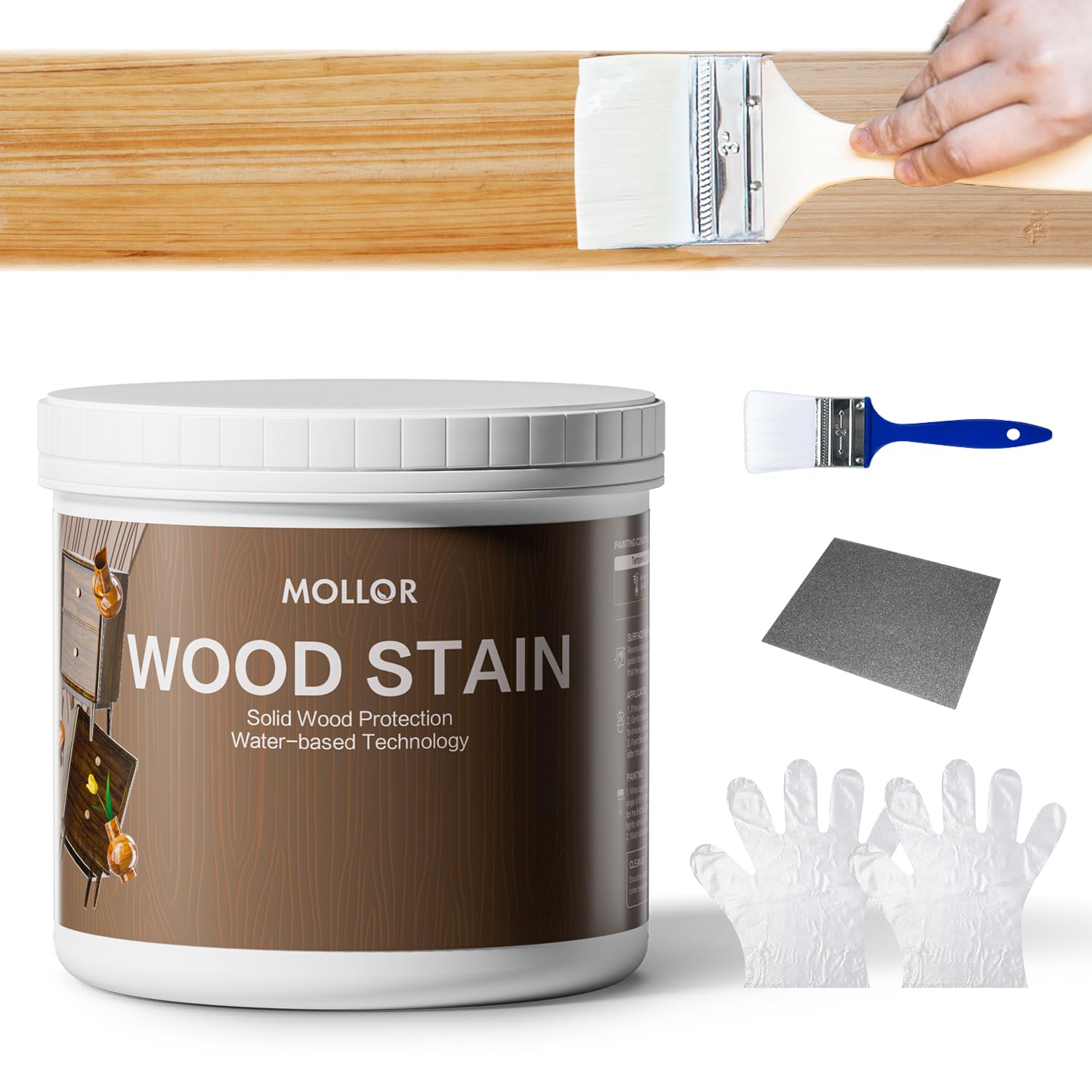
Color and seal in a single step, tools in the box
This is the shortcut pick for anyone who does not want to buy a primer, a stain, and a separate topcoat. It is a stain and sealer in one, meaning it colors the wood and forms a protective film at the same time — no separate primer or clear coat required. It is water-based and low odor, so you can use it indoors on kitchen cabinets or furniture, or outdoors on a deck or fence without harsh fumes.
The two things buyers cheer about most are drying speed and how easy it is to apply. It reaches surface-dry in about 4 hours and full performance in 7 days, and reviewers point out the included brush bottle applies it smoothly and evenly. Coverage runs up to 200 square feet per 0.5 liters, so one 16-ounce can covers a surprising amount of fence or furniture. At 1.1 pounds, it is the lightest of the group, sitting 2.3x lighter than the 2.5-pound Varathane quart. Outside, its film is built to stand up to rain, frost, and UV exposure.
The trade-off is transparency. This is a transparent finish, so it tints rather than fully recolors — it will not turn golden oak into a deep espresso. Coverage also draws mixed feedback: some find the 16-ounce can runs short on a large outdoor project, with one common note being that a single bottle covered the average job, so measure your surface before you commit. On the plus side, it is the easiest of the group to buy again in multiples, and shoppers say grabbing double packs for unfinished furniture and still having half a bottle left.
Why it wins on weekends
- Stain and sealer in one step saves a coat of primer and topcoat
- Surface-dry in about 4 hours with tools included in the box
- Water-based and low odor, safe to use indoors
The fine print
- Transparent finish tints rather than fully recoloring the wood
- 16-ounce size can run short on a large outdoor job
- Coverage feedback is mixed depending on the surface
Choose this when: you want color and protection in one pass on furniture, crates, or a fence, and prefer water cleanup.
Size up instead if: you are covering a big deck — measure first, because the 16-ounce can may not reach the end.
4. All-in-ONE Gel Stain – Toasted Oak (Faux raw Wood) – 16oz
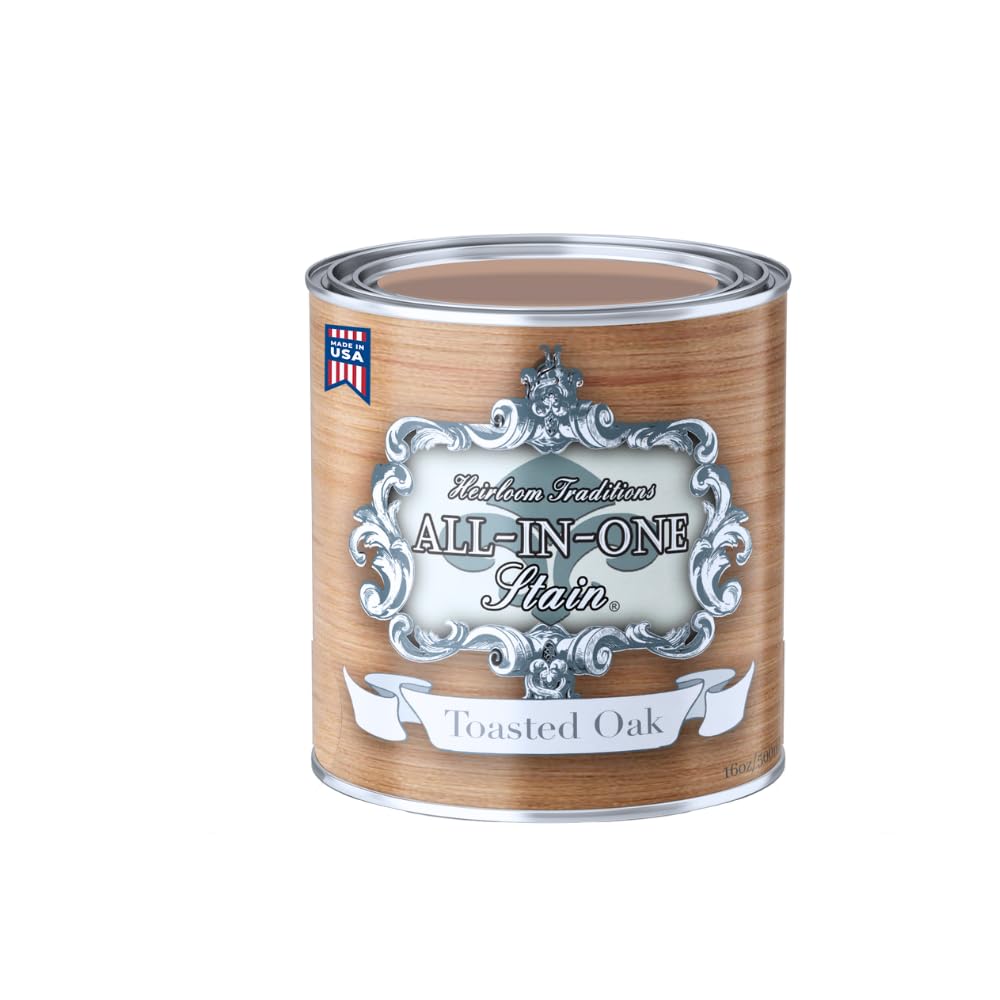
The cabinet-refinisher gel that skips sanding and topcoat
For refinishing kitchen or bathroom cabinets over an existing finish, this gel earns its spot. It is an oil-based gel stain that goes over wood, metal, and even leather, and it is built to work without sanding — even over varnish — and without a separate top coat. It resists chipping and peeling on refinished cabinets, and a 16-fluid-ounce jar covered a bar cabinet and a bathroom cabinet in two coats with plenty left over.
The shade is the whole point. Toasted Oak is designed as a faux raw-wood tone, and buyers report it completely covers red and orange wood cabinet colors, turning honey oak into a neutral, modern finish. Apply it with a chip brush plus a lint-free cloth wipe, in two to three coats, for the cleanest result. Because it is oil-based, though, you clean up with mineral spirits, and you should protect your clothing, hands, and surroundings before you start.
Where this one demands honesty is consistency. It is best treated as a translucent paint rather than a classic wipe-off gel — reviewers who expected it to wipe back like a traditional gel found it splotchy over golden oak and laborious to correct. It also carries a strong odor, and the drying time is mixed, with some reporting it starts to dry within seconds. The color is the most divisive part: some see a warm toasted oak, others report it going gray or too pink. Test a patch on the back of a cabinet door first, and always check the maker’s color card, since screens vary.
The cabinet case: no sanding, no topcoat, and strong coverage make it a genuine time-saver for taming orange-toned kitchen cabinets.
Know going in: it behaves like translucent paint, not a wipe-off gel, and the oil base needs mineral spirits and patience with the color.
Reach for it if: your goal is turning honey-oak cabinets into a lighter faux raw look without stripping or sanding.
Skip if: you want a predictable, mess-free water-based job — the strong odor and fast-set behavior will test you.
5. General Finishes Water Based Wood Stain, 1 Quart, Whitewash

The whitewash that lightens oak while letting the grain show through
When you want white oak to look lighter — a soft, milky, farmhouse tone rather than a dark stain — this is the pick to compare the others against. It is a water-based wood stain in a Whitewash shade, with high-quality pigments the maker says produce rich, dark colors that you can hand-apply or spray. It is formulated for workability similar to an oil-based stain, but it cleans up with water and is noncombustible.
What wins people over here is pigment quality and how little product the job takes. It creates a whitened look that still shows the wood grain, which is exactly what a raw-oak look needs — enough white to read as intentional, not so much that the oak disappears. It is easy to work with, and one quart covers 50 to 75 square feet — enough for a table or a bunk bed build. It weighs 2.2 pounds and takes a matte finish, so the surface reads flat rather than shiny.
You wipe it back within minutes so the pigment sits in the grain rather than smearing over it, and you work in sections because it dries fast. The recurring gripe is that speed: it can dry quickly enough in the bucket that it needs straining before you finish, so keep a strainer handy and work in small areas. For projects that need a lighter natural shade on previously dark or orange oak, diluting per the instructions and wiping immediately lightens the wood just enough.
Made for: farmhouse-style furniture, bunk beds, and any white oak project where you want a whitened, grain-showing finish rather than a dark stain.
Keep in mind: it sets fast, so plan to work in sections and strain it — slow, careful application is what makes the whitewash look even.
Know the Specs
Coverage per container
Coverage is the surface area a single can or jar handles, and on dense white oak it is the number that decides whether you buy one container or two. A quart can cover up to 100 square feet on a water-based stain, while a gel leaves a film over the surface rather than soaking in, so a little spreads across large surfaces. Always compare coverage to the square footage of your actual project before you commit to a size.
Base type and cleanup
The base is what the pigment is carried in. Water-based stains clean up with soap and water and carry lower odor, which suits indoor work. Oil-based and gel stains penetrate deeper and give a richer finish, but they set with mineral spirits cleanup and a stronger smell. Your base also decides dry time — water-based stains tend to dry fast, which means you work in smaller sections to keep the color even.
Finish and topcoat needs
The finish type describes how the surface looks once it cures, from matte to semi-gloss to gloss. Some stains need a separate protective topcoat over them, while stain-and-sealer products build the protection in so you skip that step. Check the finish you want — a flat raw look versus a slight sheen — and whether the product already seals, because that changes how many coats your project really takes.
Dry time and work window
Dry time tells you how long before the surface can be handled and how fast you must work. Fast-drying stains can tack up before you wipe them back, so you apply in sections and keep rags ready. Slower products give you more time to even out the color but stretch the whole job. Plan your work window around the dry time on the label so dust and tacky spots do not ruin an otherwise clean finish.
Common Questions
Do I need to sand white oak before staining?
Will a water-based stain raise the grain on oak?
How far does a quart of stain go on white oak?
Do I still need a topcoat after using a stain-and-sealer?
Why did my white oak stain come out orange or patchy?
Can I use these stains on metal or fiberglass as well as oak?
How long should I wait before applying a topcoat over stain?
Is a gel stain easier than a liquid stain for a first-timer?
What is the difference between a whitewash and a clear oak stain?
Do I need to seal the stain if it is used outdoors?
The Bottom Line
For most white oak projects, the stain for white oak that does the most work is the Old Masters Int/Ext Gel Stain Spanish Oak Quart, because its wipe-back gel formula gives you control over depth and it bonds to wood, fiberglass, and primed metal alike. If you want an easy indoor job with low odor and soap-and-water cleanup, grab the Varathane White Oak Wood Stain. And for a lighter, grain-showing farmhouse look, the General Finishes Whitewash is the one to reach for. Whichever you pick, test a scrap of your actual oak first — that single step is what turns a good stain into a great result.
How we choose
We do not accept paid placement. Every pick is matched to a real buyer and a real use-case; we do not hands-on test units.
Sources
Specifications: manufacturer listings and product documentation. Review insights: verified customer reviews, as of October 2026. Pricing: not shown on this page (it changes often); check the current price via the retailer link.
As an Amazon Associate, Aappliancez earns from qualifying purchases. This does not affect which products we feature.