Disclosure: Some links in this post are affiliate links. As an Amazon Associate I earn from qualifying purchases, at no extra cost to you. Learn more
Specs are compiled from manufacturer listings and verified buyer reviews and can change over time — please confirm the key details on the product page before buying.
An exterior wood door stain has to hold color against UV and seal the end grain where doors crack and swell. This guide compares seven exterior door stains and flags which suits a fiberglass garage door, which suits a cedar front door, and which to skip.
This guide is built by comparing the manufacturers’ published specifications and the patterns across verified customer reviews, so you get each pick’s real strengths and trade-offs instead of marketing spin.
Doors take a harder beating than decks: they sit vertical, catch splashback at the bottom rail, and swing into weather daily. Below are the coverage numbers, dry times, and finish types that decide how a door ages, plus the best stain for an exterior wood door.
Top Picks
How To Choose The Best Stain for Exterior Wood Door
A door is vertical, so stain runs down the face instead of leveling like it does on a deck. That is why thick gels and self-leveling formulas dominate door projects. A thin stain that levels on a deck drips down a door edge and leaves a streak. This is why gel and thick-bodied stains show up so often in door projects, and why you should read the finish type before the color name.
Transparent, Semi-Transparent, or Gel
A transparent stain lets you see the texture of the wood but hides the grain itself. A semi-transparent stain hides the grain while still letting the natural texture show. A gel stain is thick, more like pudding than paint, so it stays where you brush it and gives you far more control on vertical faces.
That control matters most when the door has raised panels, deep moulding, or a big glass insert you need to cut around. Thin stains run into those grooves and pool in the recesses. A gel grabs the surface instead.
Coverage and How Much You Actually Need
Coverage is written as square feet per gallon, and that number decides whether one can finishes the job. A single door face usually falls between 20 and 36 square feet, so a gallon often covers several doors and a quart can still finish two or three. Buy for the whole job, not just the front door you have in mind today.
Check the second-coat guidance separately from the first-coat number, because some brands cover far more on a recoat. Wait times matter too — recoating too early is the most common reason a door finish goes tacky or streaky.
Side-by-Side Comparison
| Model | Best For | Base | Coverage | Finish | Amazon |
|---|---|---|---|---|---|
| Old Masters 80604 Gel Stain★ Best Overall | Metal and fiberglass garage doors | Oil-based | Interior and exterior wood, fiberglass, primed metal | Gel, brown tone | Amazon |
| Thompson’s WaterSeal TransparentBest for Garage Doors | Doors and trim you want lightly tinted | Wood-based | 150 – 400 ft²/gal | Flat, transparent | Amazon |
| Thompson’s WaterSeal Semi-Transparent | Porch doors and swing-set wood | Water-based | 150 – 400 ft²/gal | Smooth, semi-transparent | Amazon |
| Ready Seal Exterior Wood Stain | Doors you cannot babysit while drying | Oil-based | 125 sq. ft. per gallon | Matte, semi-transparent | Amazon |
| KILZ Waterproofing Semi Transparent | Fences, siding, and long-run door jobs | Acrylic | 250-500 sq. ft. | Satin, semi-transparent | Amazon |
| General Finishes Oil Based Penetrating | Color-matched trim and door saddles | Oil-based | 180-200 sq.ft. | Flat, penetrating | Amazon |
| TWP 1501 Cedartone Low VOC | Cedar, cypress, and log-home doors | Wood | 350 square feet | Matte or textured | Amazon |
Detailed Reviews
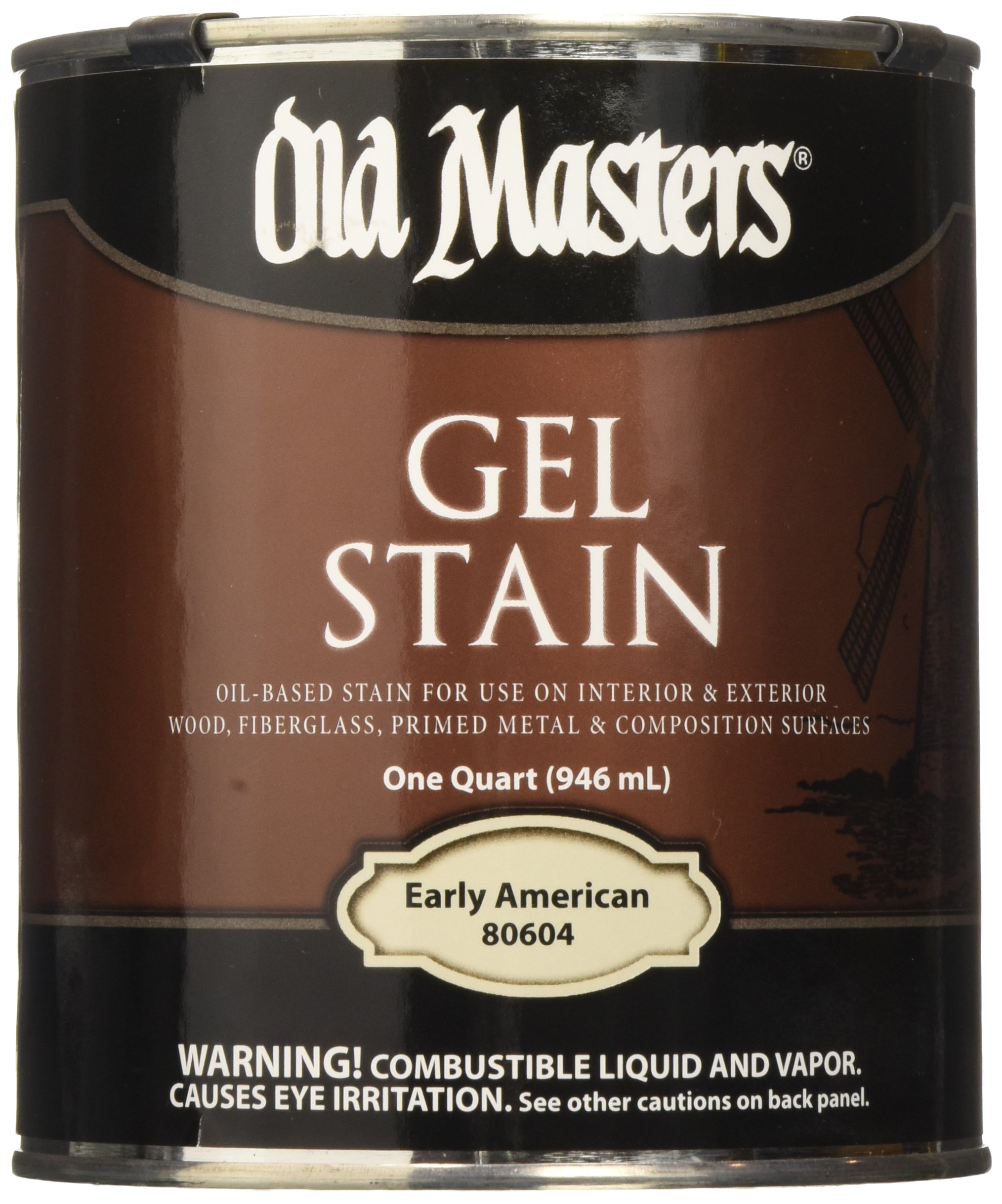
1. Old Masters 80604 Gel Stain Early American
Our pick — 4.5+★ from 950+ verified ratings; the strongest balance of quality and price.
The thick gel that stays where you brush it, even on a vertical door face.
Start here if your door is not plain wood — this is an oil-based gel stain built for wood, fiberglass, primed metal, and composition surfaces, which makes it the rare pick that works on a fiberglass or metal garage door as well as a timber front door. The 32 fluid ounce quart weighs 16 ounces in the can, so it is a dense, slow-moving product that clings rather than drips. For anything with raised panels or glass inserts, that cling is the whole reason to buy it.
What wins people over is control. The gel lets you layer color to reach the shade you want instead of gambling on one pass, and it needs no separate pre-stain or post-product to work, so a first-timer can get a rich result without a shelf of extra cans. The coverage figure backs that up — one buyer reports that a single quart covered two single garage doors plus one double. Compare that to the Thompson’s Transparent can at 6.63 x 4.19 x 10.25 inches against this one at 8.75 x 8.75 x 5.5 inches, and you are looking at a squatter, wider container built around that gel body. It is also manufactured in the United States.
The honest catch is color drift. Early American runs considerably darker than the swatch suggests, and a light-colored door can end up nearly black in one coat if you load the brush. Work in thin layers and stop before you think you are done. Two other mixed points show up again and again: the odor is strong while it cures, and the thickness means it can feel slow to level. It still finishes beautifully on metal and fiberglass garage doors, where thinner stains struggle to hold.
Where It Wins
- Gel body clings to vertical door faces instead of running
- Works on wood, fiberglass, primed metal, and composition surfaces
- Layers to build the shade you want
- No pre-stain or separate topcoat product needed to start
Where It Asks More
- Color reads far darker than the swatch — apply thin coats
- Strong odor during application and cure
- Thick texture feels slower to smooth out
- Needs thorough surface prep and a water-based finish over it
Reach for this if: you are staining a fiberglass or metal garage door, or a panel-heavy front door where a thin stain would streak.
Look elsewhere if: you want a pale, barely-tinted finish — this formula delivers deep color and a strong smell while it cures.
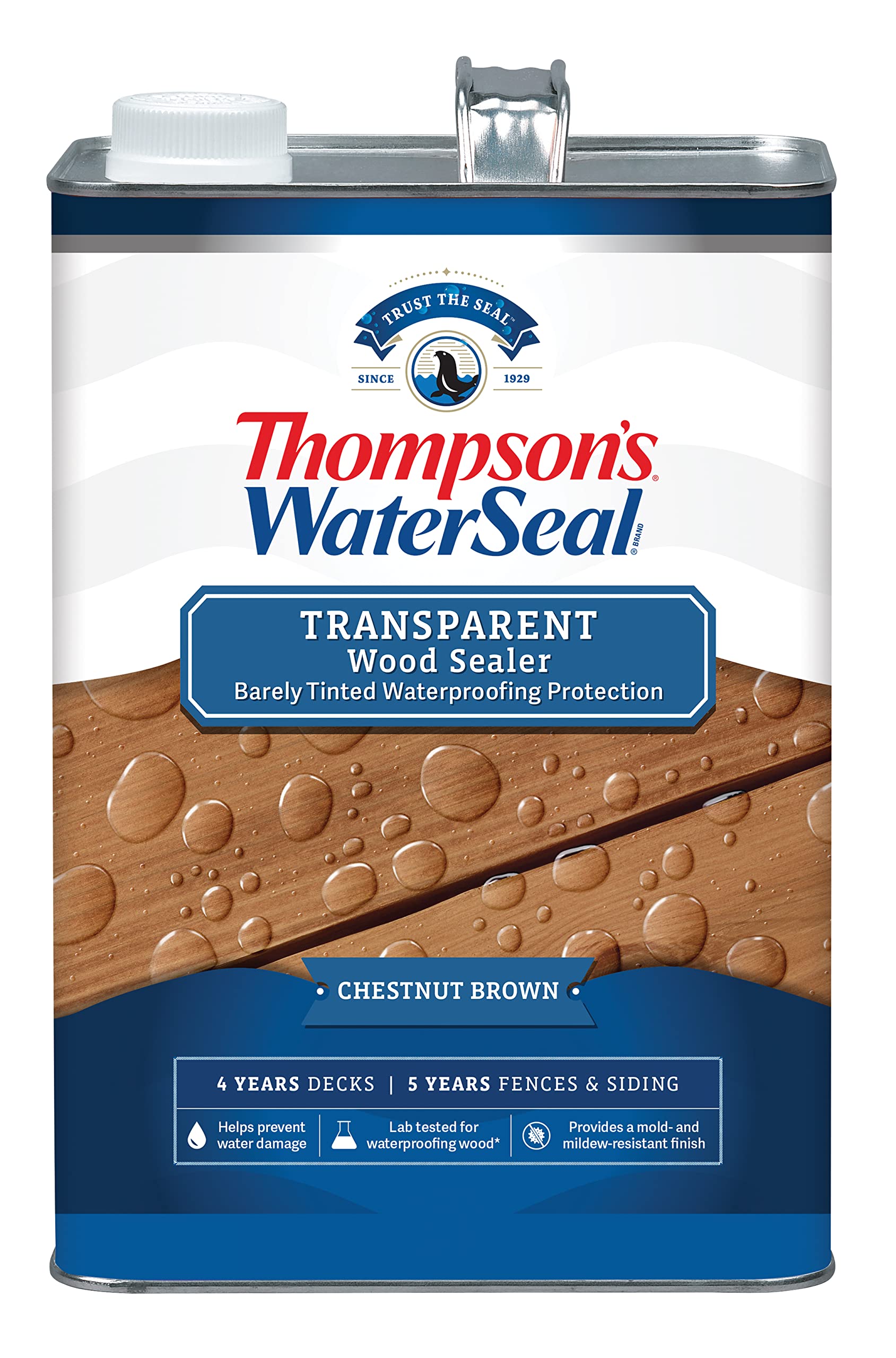
2. Thompson’s WaterSeal Transparent Wood Stain Chestnut Brown
A transparent coat that tints the door without hiding the grain underneath.
Water worries drive most door failures, and this can is aimed squarely at that. Thompson’s rates this waterproofing wood stain against Industry Standard ASTM D-4446, the benchmark used to measure how well a coating keeps water out of wood. The transparent finish adds bold Chestnut Brown color while still letting the wood texture show through, so a cedar or mahogany front door keeps its character instead of going flat brown under paint. Advanced polymers in the formula resist fading and UV damage, which is what keeps that color from washing out after a season in the sun.
Coverage is where this can pulls ahead of a quart. Thompson’s publishes 150 to 400 square feet per gallon, so one can realistically handles a door plus the surrounding trim and then some. The 6.63 x 4.19 x 10.25 inch container also stores on a shelf easily between coats. The color is what draws the strongest reaction, followed by how straightforward it is to brush or roll on, and it can go onto damp or dry wood, which is a real advantage if you are racing an afternoon shower on a humid day.
Two things to know before you pour. The pigment settles in the can, so you have to stir it thoroughly — skip that and the first coat goes on washed-out while the last goes on heavy. It also hides the wood grain by design, so pick a semi-transparent can instead if grain is the look you are after. Surface prep still decides the outcome here, same as any exterior coating.
The waterproofing angle: measuring against ASTM D-4446 gives you a defined standard rather than a vague waterproof label, and the 150 to 400 square feet per gallon is genuinely generous for door work.
Stir before every coat: the settled pigment is a recurring gripe, and stirring costs you thirty seconds versus a stained door that patches out unevenly.
Buy this one: if UV fade and water intrusion are your concerns and you are happy for the grain itself to be covered while the texture stays.
Pick a different can if: you want to look through the finish and see the wood grain — the transparent label means it hides grain, not that it turns clear.
3. Thompson’s WaterSeal Semi-Transparent Wood Stain Sedona Red

A water-based stain your hands, brush, and driveway all forgive easily.
Doors get stained on porches, in driveways, and over drop cloths that never quite cover everything. That makes cleanup a real decision point, and this water-based Thompson’s is the simplest of the group to live with — soap and water does it, no mineral spirits required. The semi-transparent finish hides the grain while still showing the wood texture, and the Sedona Red color is the headline: it lands as a warm redwood tone that brightens porches and steps, which is exactly what it is bought for.
The coverage matches the transparent can at 150 to 400 square feet per gallon, and it also clears Industry Standard ASTM D-4446 for waterproofing. Application is flexible — brush, roller, or pump and paint sprayer all work, and it goes onto damp or dry wood. Two coats is the common recommendation, and the cured film beads water visibly rather than soaking it in. It also holds up without fading under sun, and it grips the wood rather than sitting on top of it.
What to watch is color consistency from the can. Sedona Red has arrived in the wrong tint before, and the formula itself is thin, so it runs on a vertical surface if you load the brush. New, unweathered fences have also stayed redder than the label suggests. On a door, the fix is simple: stir well, go light on the brush, and put a throwaway sheet under the threshold.
It also sticks well and resists sun fading.
Go two coats: a single coat works on well-weathered wood, but the second coat is what gives you the color depth and the even water beading.
The right can for: porch doors, swing sets, railings, and anyone who would rather clean a brush under a tap than in a jar of spirits.
Not the one for: deep-paneled doors where a thin, water-based stain will run into the recesses — stir every time, because the tint has arrived off before.
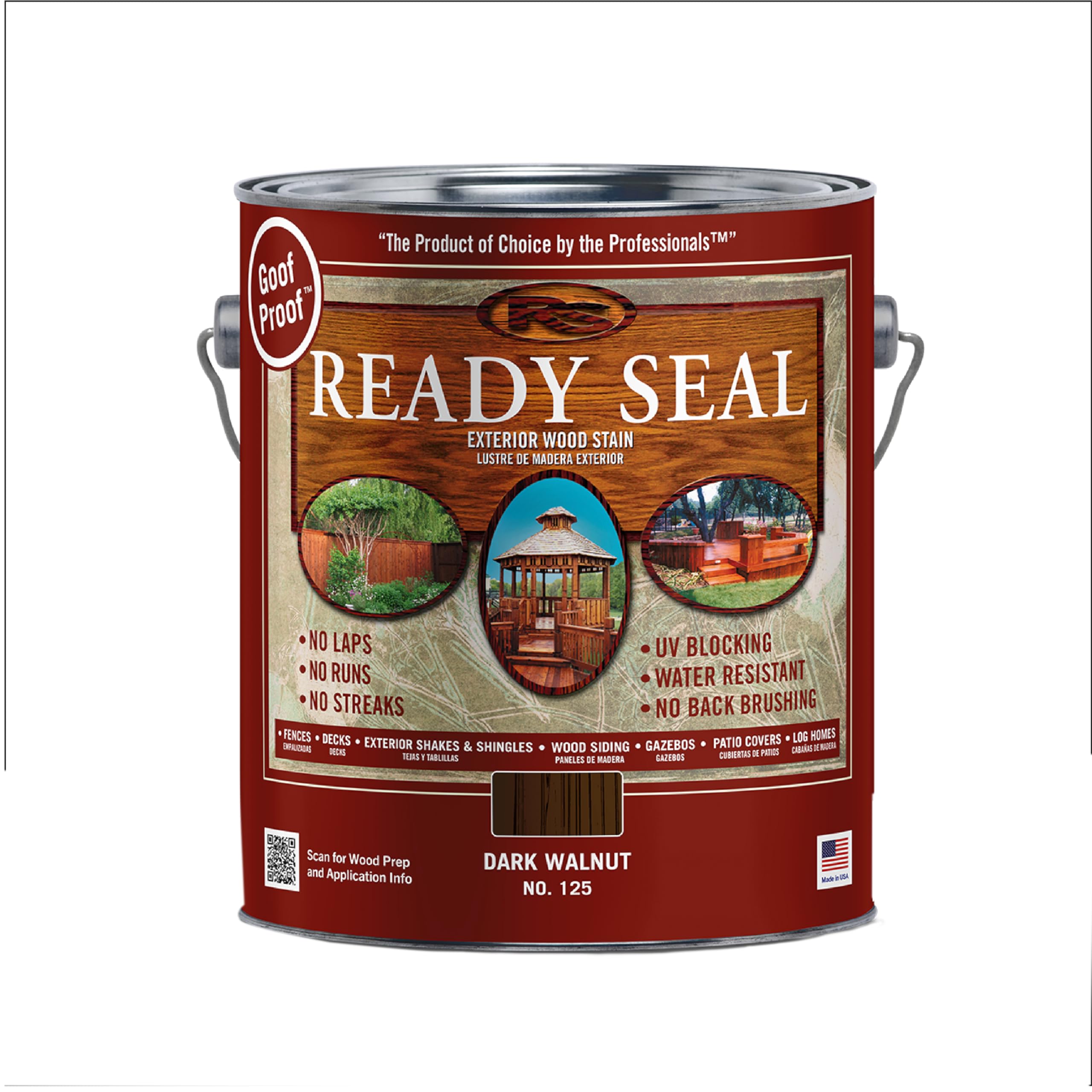
4. Ready Seal Exterior Wood Stain Dark Walnut
A goof-proof oil formula you can spray, walk away from, and let level itself.
Some doors need a finish that cooperates with a schedule, and this is that can. The formula needs no back brushing, leaves no laps, runs, or streaks, and blends itself as it dries — which matters on a door face where a lap mark is right at eye level every time you walk up the steps. It goes on in direct sunlight, applies in any temperature range, and the manufacturer states it can withstand rain within minutes of application. If you live somewhere the forecast changes hourly, that last point alone changes your weekend.
This is an oil-based semi-transparent in a matte Dark Walnut finish, and it needs no primer and no sanding or stripping to reapply later. Sprayer, roller, or brush all work. It soaks in well, and the thing people praise most is the overall quality of the result — projects coming out looking like fresh lumber — with ease of use a close second. The recurring positive is coverage that penetrates rather than sitting on the surface, which is what you want on a door bottom that sees splashback.
Two mixed signals to plan around. Color is the most debated point — some cans land a different tint than expected, so buy all your stain for the job at once and mix cans together in a bucket. Drying time also draws mixed reports, so give it the full window rather than closing the door onto a tacky edge. The coverage of 125 square feet per gallon is the leanest here, so a large double door with trim may take more than one can.
Why Pros Use It
- No laps, runs, or streaks and no back brushing needed
- Blends itself — mistakes disappear as it cures
- Applies in direct sunlight and in any temperature range
- No sanding or stripping to recoat later
Plan Around This
- 125 sq. ft. per gallon is the leanest coverage on this list
- Tint varies between cans — mix them together first
- Drying time divides opinion, so allow the full cure
- Oil base means mineral spirits for cleanup
Built for: anyone spraying a big door-and-frame job solo, in full sun, with rain in the afternoon forecast.
Budget accordingly if: your door and surround run large — at 125 square feet per gallon this is the shortest reach of the seven.
5. KILZ Waterproofing Semi Transparent Wood Stain Cedar Naturaltone

One gallon, two door-and-fence passes, and a written warranty to back it.
If you have more than one door to finish, this is the can that stretches. KILZ publishes roughly 250 to 300 square feet on the first coat and 500 to 600 square feet on the second, so the gallon keeps working long after the singleton jobs are done. It is a 100% acrylic semi-transparent with a satin finish in Cedar Naturaltone, and it goes onto properly prepared new through moderately weathered, unsealed exterior wood in the 0 to 10 year exposure range — which covers decks, siding, fences, railings, shingles, and patio furniture as easily as it covers a door.
The coverage advantage is over the Thompson’s cans at 150 to 400 square feet per gallon, and it is not the only one. This formula carries fade-resistant, mildew-resistant, rainproof, and UV-resistant properties, and it is warrantied up to 3 years on decks and up to 5 years on fences and siding. Wait 1 to 2 hours between coats, and the fully cured finish can be washed after 72 hours — handy on a door bottom that picks up dirt fast. The 9.3 pound can is heavier than the oil options, but it has a smaller footprint than the 8.75 x 8.75 x 5.5 inch Old Masters tub. Cleanup is soap and water.
The trade-off is real but narrow. The 72-hour cure before washing is a genuine wait, and the acrylic needs the right weather window, since the formula is built for variable outdoor conditions rather than cold snaps. On prepped wood, though, it holds — this one is chosen by people who want a finish that does not thin out or wear off under real weather.
What Earns The Gallon
- 250-300 sq. ft. first coat, 500-600 sq. ft. second
- Warrantied up to 5 years on fences and siding
- Soap and water cleanup with an acrylic base
- Fade, mildew, rain, and UV resistant properties in one formula
The Fine Print
- Wait 1-2 hours between coats, and 72 hours before washing
- Needs proper surface prep and a suitable weather window
- Heaviest can on the list at 9.3 pounds
- Coverage varies with how thirsty your wood is
Worth your can budget if: you are staining a door plus fence panels, siding, or railings in one go and want the finish to keep going.
Only real cost: the 72-hour cure before you can wash the surface, so plan the job around decent drying weather.
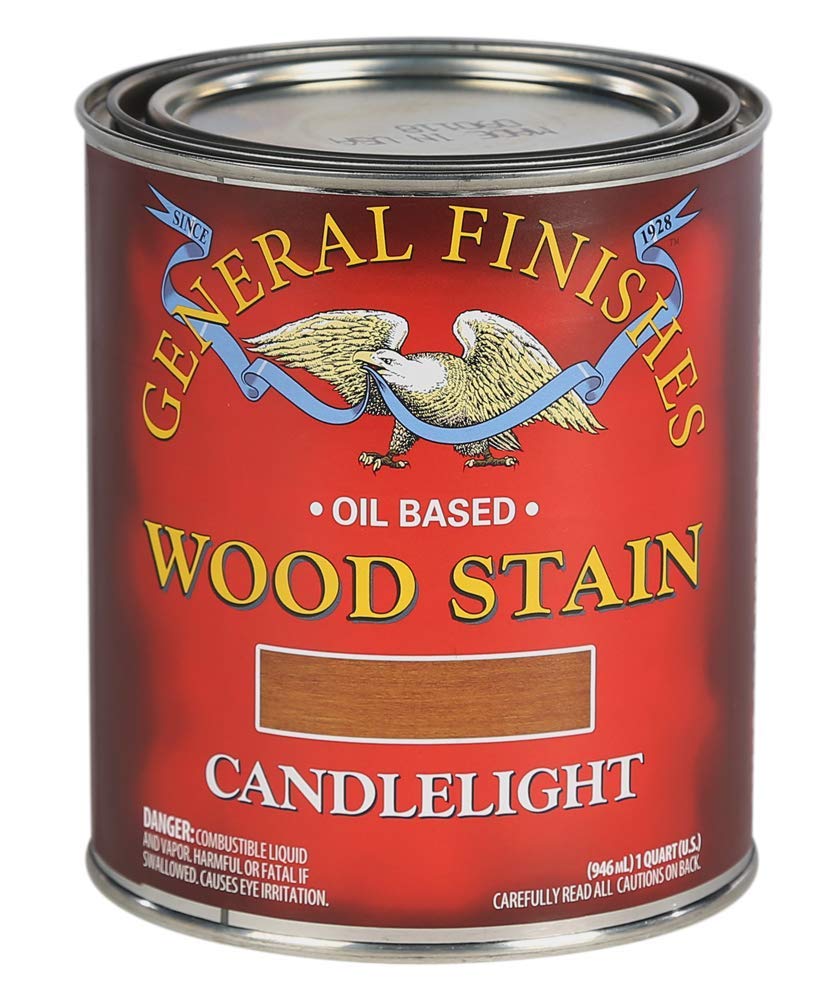
6. General Finishes Oil Based Penetrating Wood Stain Candlelight
A penetrating oil stain for matching new trim to the wood already there.
This is the pick for repair jobs rather than whole new doors. If you have replaced a threshold, a door saddle, or a strip of trim and need it to disappear into the existing finish, a penetrating oil stain like this gives you a better chance than a surface coating ever will, because it sinks into the grain instead of laying color on top. It is applied brush on, wipe on with a clean rag, wipe off, and cleanup is mineral spirits. It penetrates the grain to promote even acceptance of color, which prevents the streaking and blotching that ruin door trim.
The color reaction here is overwhelming and specific — the finish reads as beautiful and the match is described as perfect. One buyer used it on an easel specifically to get a waxy surface that wipes clean, and another matched a newly installed door saddle to the existing wood floor exactly. Candlelight is a warm tone, so if you are staining pine, expect a yellower result than a photo suggests; a lighter grey wash is the usual next sample for that grain.
The catch is the price per ounce. This is a quart at 180 to 200 square feet of coverage, and one long-time buyer did not hold back on the cost of buying it by the quart, finding it considerably cheaper elsewhere with free shipping. That criticism is about the size of the can, not the results. For a whole door you would want a larger format; for touch-up work on trim and saddles, a quart goes a long way. It also needs a topcoat with an oil or water-based product afterward.
Why It Matches So Well
- Penetrates the grain for even color acceptance
- Prevents streaking and blotching on trim
- Brush on, wipe on, wipe off application
- Pairs with oil or water-based topcoats
Think About First
- Quart-only format will not finish a large door project
- Mineral spirits needed for cleanup
- Needs a separate topcoat to protect the finish
- Candlelight runs yellower on pine than photos suggest
Perfect for: matching a new door saddle, threshold, or trim strip to wood that is already finished in the house.
Wrong tool if: you are coating a full exterior door — this is a quart of penetrating oil, and it needs a topcoat over it.
7. TWP 1501 Cedartone Low VOC Wood Preservation Stain, 1 Gallon

A registered preservative stain for cedar doors you need to keep for decades.
Real cedar and cypress deserve better than a decorative coat, and this jug is the most serious product on the list. TWP 1500 Series, including 1501, is an EPA registered wood preservative under EPA number 51578-1, designed to prevent structural damage and wood decay. The formula is low VOC for use in low VOC states, so it clears those rules without asking you to compromise on protection. Coverage is listed at 350 square feet, the second highest here, and it is built for new and old exterior wood, decking, fencing, siding, and log homes alike.
Quality and application are what carry the reputation, and coverage backs them up. On vertical surfaces it penetrates quickly and covers a large area — one user reports two gallons handling a 16×20 deck plus a 5×16 section. It dries in about 48 hours and soaks deep into cypress. Photographers and builders will recognize the wet-on-wet pad method producing that rich, classy look on new cedar porch posts.
Three honest downsides keep this from being a blind buy. The odor is strong and can linger well past a week. The cedartone color dries darker than expected, and mixing every can you own together before you start is the only way to avoid a patchwork finished door. And while the surface sheds water for years, it stays slick when wet and takes days to fully cure, so keep traffic off it and expect leaves and dust to cling until it sets. Thin as it is, it also wants a suitable pad or sprayer rather than a cheap brush.
The protection argument: an EPA registration number and a low VOC formula are two facts you can check, and the 350 square feet of coverage is right behind the KILZ can.
Prep is not optional: soft-wash the wood first if it has mildew or cobwebs, and plan around the long cure — this is a preservative, not a quick coat.
The one to choose if: you are sealing cedar, cypress, or log-home doors where long-term protection is the point, not decoration.
Hold off on this and grab the Thompson’s instead if: you want a fast turnaround on a warm afternoon, because this one needs days to cure.
Know the Specs
Coverage
Coverage is the square footage one can handles, usually written as square feet per gallon. On a door, that number decides whether you finish the job or drive back for another can. A door face runs roughly twenty to thirty-six square feet depending on width and glass, so a gallon can often take several doors while a quart may cover just a couple. The listed figure is usually a range because thirsty, weathered wood drinks more than a sealed surface. Buy for the whole project, not the one door in front of you.
Base Material
The base is what the color and protection are carried in, and it changes how the stain behaves. Oil-based stains need mineral spirits for cleanup and usually a longer cure. Water-based and acrylic stains clean up with soap and water and often re-coat faster, which is easier for a door you need back in service. Some exterior wood stains are wood-based formulations. What matters is matching the base to a surface it can actually hold: acrylic and oil both grab wood, but only some formulas also take to fiberglass, primed metal, or composition door faces.
Finish Type
Finish covers how much wood you see after the coat dries. A transparent finish hides the grain but shows the texture, so the door still reads as wood. A semi-transparent finish does the same with lighter tint in the color. A gel or penetrating oil finish behaves differently again, laying color down where you brush it or sinking into the grain rather than sitting on top. Vertical doors reward finishes that stay put, which is why thick gels and self-leveling formulas are so common on door projects.
UV and Water Resistance
UV resistance is what keeps the color from graying, and water resistance is what keeps wood from swelling and splitting. Look for specific claims rather than vague ones. Some cans name a standard, like ASTM D-4446 for waterproofing. Others state fade, mildew, rain, and UV properties, or carry a written warranty. A registrated preservative may list an EPA number, which points to protection against decay rather than just color. On a south-facing door, fade resistance is the property that decides whether you repaint next spring or three springs from now.
Common Questions
Can I stain an exterior wood door that is already finished?
How much stain does one exterior door actually need?
Is a gel stain better than a liquid stain on a vertical door?
Do I need a topcoat over an exterior door stain?
Can I apply exterior door stain in direct sunlight?
How long should I wait between coats on a door?
Will these stains work on a fiberglass or metal door?
Why does my exterior stain color look darker than the swatch?
What does an EPA registration number mean on a wood stain?
How do I clean up after staining a door?
The Bottom Line
If your door is fiberglass, metal, or covered in raised panels, the Old Masters 80604 Gel Stain is the one to put in the cart — it clings where thin stains run, and a single quart has covered two single garage doors plus one double. If the door is cedar or cypress and you care about decades rather than a season, the TWP 1501 Cedartone is the registered preservative to reach for. And if you simply want a water-based can you can clean up under a tap, the Thompson’s Semi-Transparent in Sedona Red does that job well. Whichever you pick, buy all the stain for the job at once and stir every can before you pour.
How we choose
We do not accept paid placement. Every pick is matched to a real buyer and a real use-case; we do not hands-on test units.
Sources
Specifications: manufacturer listings and product documentation. Review insights: verified customer reviews, as of October 2026. Pricing: not shown on this page (it changes often); check the current price via the retailer link.
As an Amazon Associate, Aappliancez earns from qualifying purchases. This does not affect which products we feature.