Disclosure: Some links in this post are affiliate links. As an Amazon Associate I earn from qualifying purchases, at no extra cost to you. Learn more
Specs are compiled from manufacturer listings and verified buyer reviews and can change over time — please confirm the key details on the product page before buying.
A stability tennis shoe does one job: it stops your foot from rolling sideways when you plant and change direction. That sideways roll — the ankle-twisting moment that follows a hard lateral cut — is the real reason you are shopping for this shoe rather than a running shoe.
This guide is built by comparing the manufacturers’ published specifications and the patterns across verified customer reviews, so you get each pick’s real strengths and trade-offs instead of marketing spin.
What matters most is the chassis under your heel, not the colour on top. A wide forefoot keeps your toes from pinching, and a durable court outsole saves you a mid-season replacement. This page breaks down the stability tennis shoes worth a second look this season.
Top Picks
How To Choose The Best Stability Tennis Shoes
Buying a court shoe is not the same as buying a walking shoe, and most people find that out the hard way on their first hard lateral stop. You want a shoe that resists sideways roll, keeps your toes roomy enough to spread, and grips a hard surface without sliding. Here is what to weigh before you buy.
Start with the chassis, not the cushioning
A chassis is the stiff structural piece built into the midsole that wraps under your heel and arches. It is the part that stops your foot from rolling over the side when you push off. On the Wilson Ace it is called the 4D Support Chassis, and it runs heel-to-toe at an asymmetrical angle to limit the twisting motion known as supination and torsion. On ASICS court shoes you will see a unit called TRUSSTIC® doing similar work in the midsole. If a shoe advertises cushioning but says nothing about lateral structure, it is built for comfort, not for cutting.
Treat the toe box as a fit decision, not a size decision
A toe box is simply the front compartment of the shoe where your toes sit. Too narrow and your toes pinch on every step; too deep and your foot floats. The Wilson Rush Pro Ace runs more spacious up front than the Rush Pro 4.0, and the Skechers Viper Court Pro is described with a wide, high toe box. If you wear a bunion or a wide forefoot, the toe box is the single spec that decides whether the shoe is wearable for you. Ordering a half size up does not fix a narrow toe box — it just makes the whole shoe longer.
Match the outsole to the surface you actually play on
The outsole is the rubber bottom layer that touches the court. A hard-court outsole is built thicker and harder to survive abrasive acrylic surfaces; that is why the Wilson Ace uses an all-court Duralast outsole designed for hard court use. A softer outsole grips beautifully on an indoor surface but wears down fast on concrete. If you play three times a week on outdoor hard courts, outsole wear is the number that will decide how often you replace your shoes.
Side-by-Side Comparison
| Model | Best For | Weight | Stability Feature | Court Surface Focus | Amazon |
|---|---|---|---|---|---|
| WILSON Men’s Rush Pro Ace★ Best Overall | Wide-footed recreational players | — | 4D Support Chassis | Hard court (Duralast outsole) | Amazon |
| ASICS Men’s Gel-Resolution XBaseline Control Pick | Baseline control players | 1.44 pounds | DYNAWALL™ heel extension | Baseline lateral coverage | Amazon |
| ASICS Women’s Gel-Dedicate 8 | Narrow-footed pickleball players | 1.69 pounds (package) | TRUSSTIC® support unit | Side-to-side pickleball movement | Amazon |
| adidas Courtjam Control 3 | Sharp directional cuts | 2.43 pounds | Adituff toe drag wrap | Hard surface (Adiwear outsole) | Amazon |
| WILSON Rush Pro 4.5 | Powerful all-court hitters | — | Lateral stability build | All-court | Amazon |
| ASICS Men’s Game FlyteFoam | Occasional all-court players | 1.44 pounds | TRUSSTIC® midsole tech | Indoor and outdoor courts | Amazon |
| Skechers Viper Court Pro | High-arch players wanting support | 1.5 pounds | Podiatrist-certified arch support | Pickleball and tennis (Goodyear Gold outsole) | Amazon |
Detailed Reviews
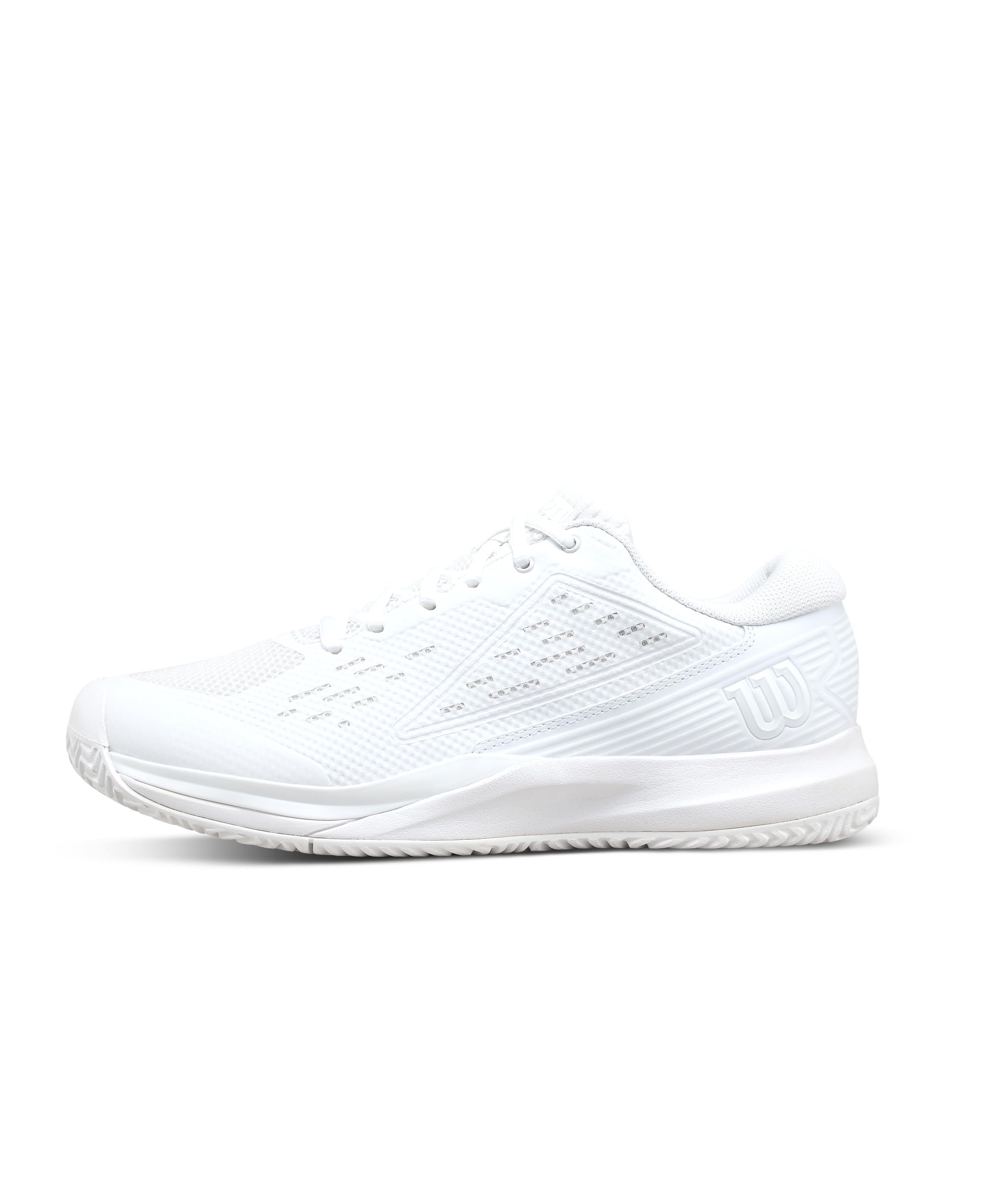
1. WILSON Men’s Rush Pro Ace Tennis Shoes
Our pick — 4.0+★ from 750+ verified ratings; the strongest balance of quality and price.
The roomy-footed all-rounder that quietly handles the cuts other shoes squeak through.
If your feet run a touch wide and you play recreational tennis or pickleball two or three times a week, this is where I would start. The Rush Pro Ace took over from the Rush Pro 3.0 and 3.5 line and keeps the same outsole, so the grip you get underfoot is a proven design rather than a fresh gamble. Wilson then built the 4D Support Chassis into it — an asymmetrical heel-to-toe structure that resists the sideways twisting your ankle tries to do when you plant for a stroke. In plain terms, it keeps your foot from rolling over the edge of your own sole.
Where it genuinely separates from the pack is fit. The Cushioning under the heel comes from R-DST+ — a highly compressed EVA foam that rebounds and cushions through the landing — paired with the breathable mesh upper that balances airflow against support. The toe box is noticeably wider than the Rush Pro 4.0. Owners do not need a cushion insert; they need elbow room for their toes. And they get it without a long break-in period, which is why this shoe’s fit is what wins people over more than any single stat.
The honest catch is outsole wear. The all-court Duralast outsole was designed for hard courts, but frequent players have watched the tread flatten and hole within a matter of months of twice-weekly play — and while some buyers report the shoe has held up well over years, others report the tread wearing out the same way it does on any tennis shoe. Owners mention: “Comfortable and durable, although they only lasted me two years.” If you play hard and often, budget for a replacement sooner than the model number suggests. If you play casually, that same durability is a non-issue.
What you feel on court
- The 4D Support Chassis holds your foot steady on lateral pivots, so you can set up for a power stroke without your ankle giving.
- A genuinely spacious toe box compared to the Rush Pro 4.0, which is the difference between comfortable and pinched on wide feet.
- No break-in period worth mentioning — you can play the day they arrive.
- R-DST+ cushioning absorbs landing impact under the heel without making the shoe feel soft and vague.
Where it asks for patience
- Outsole tread wears down faster than the upper for frequent players, so twice-a-week hitters replace these sooner than they would like.
- The midsole can break down before the shoe looks worn, which shows up as general foot soreness rather than a visible hole.
- The factory insole is thin — a cushioned replacement is a common upgrade.
Reach for these if: you want a wide, forgiving court shoe with real lateral structure for recreational tennis or pickleball, without paying premium money.
Think twice if: you play five days a week on an abrasive outdoor hard court and need an outsole you can count on for a full season — this one asks for patience there.
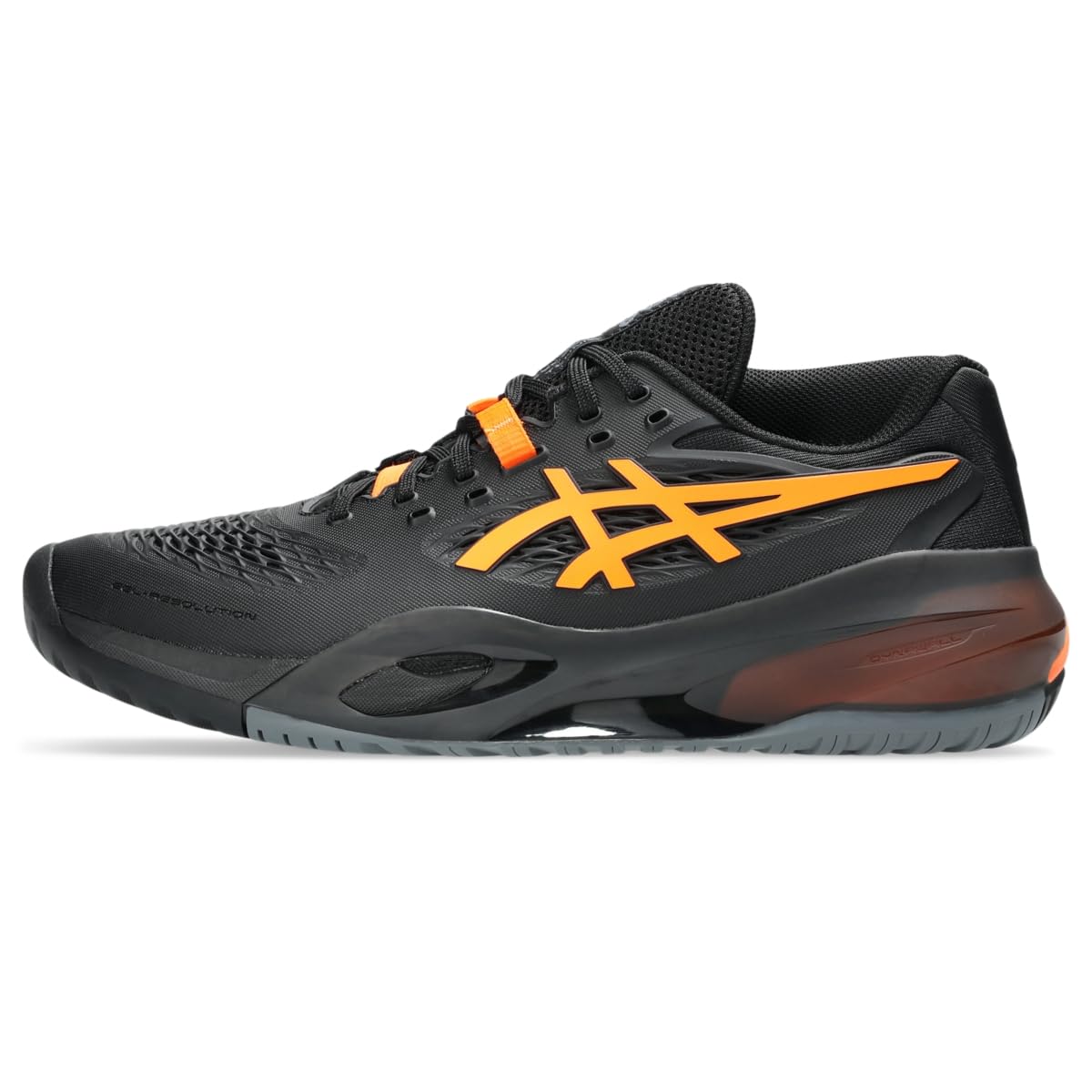
2. ASICS Men’s Gel-Resolution X Tennis Shoes
The baseline grinder’s ally, where heel stability counts more than feather weight.
The GEL-RESOLUTION X was built for the player who wins from the back of the court — the one covering both corners of the baseline and sliding into wide forehands. ASICS designed it around a two-piece midsole that improves stability the moment your foot lands, plus DYNAWALL™ technology that now extends into the heel to keep you steady during lateral movement. DYNALACING™ works alongside that to keep the shoe locked onto your foot during abrupt transitions. There is also a genuine trade-off you already feel: this shoe weighs 1.44 pounds, and the adidas Courtjam Control 3 comes in at 2.43 pounds. If you want the lighter of the two on your feet for three sets of chasing, this is the one that gives you that.
What works here is craft. The one-piece feel and consistent construction won out in owner feedback; the fit also leans generous. The mid-foot runs wide, so if you have a slim foot, you may find yourself ratcheting the laces tighter than you expect.
Two things to weigh honestly. First, the stiffness: this shoe is built with a firm structure, and that firmness earns its place on lateral stops but can feel unforgiving on the first few uses before the shoe softens. Second, the fit is genuinely mixed — plenty of players find it comfortable for pickleball, while others find it too wide through the middle of the foot. If you know your foot runs narrow, order carefully or accept that the shoe may be roomy in the middle while feeling right everywhere else. That is a sizing question, not a quality one — the shoe itself is well made.
The stability payoff: a heel-to-toe build that extends the DYNAWALL™ into the heel means you get support precisely where a baseline slide puts the most stress on your ankle.
The sizing wrinkle: the mid-foot runs wide, so a snug-footed player should size with care rather than assuming a standard fit applies.
My read: the right choice if you grind from the baseline and want a lighter shoe with genuine heel stability.
Not your shoe if: you have a slim mid-foot and want a snug, one-piece fit straight from the box.
3. ASICS Women’s Gel-Dedicate 8 Pickleball Shoes
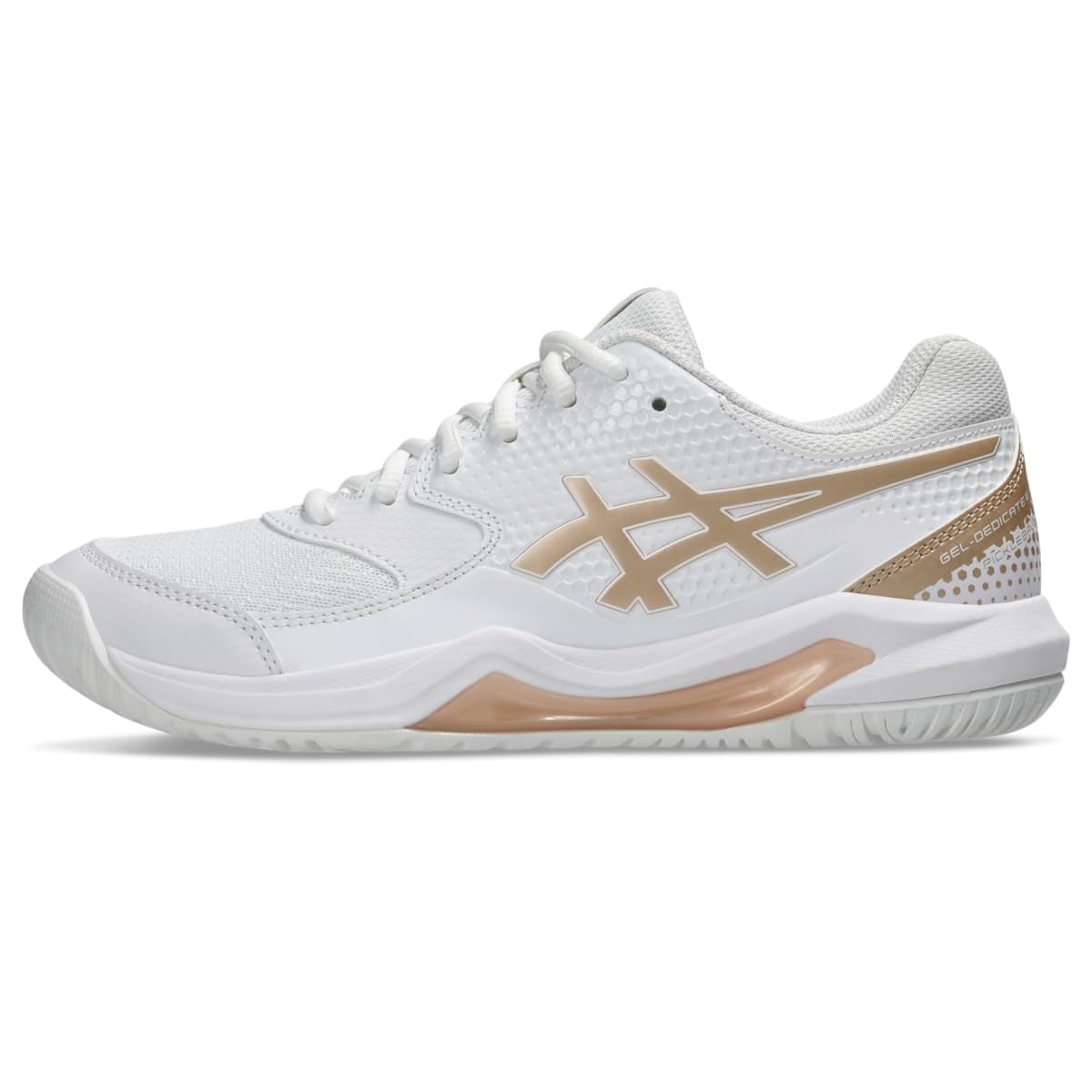
A narrow-footed pickleball shoe that keeps you locked in through side-to-side rallies.
Pickleball is mostly a side-to-side game, and that is exactly where the GEL-DEDICATE 8 does its work. Synthetic leather overlays across the upper hold your foot in place when you switch direction, while a TRUSSTIC® support unit and a wrap-up outsole keep the shoe stable without freezing your feet in one position. If your foot runs narrow, this is the design brief you want.
The comfort is the real story. One owner bought a first pair, wore them roughly twice a week — and got four years out of them before replacing with the same style: “One owner got four years out of a first pair playing roughly twice a week.” That is an unusually loyal customer. It also tells you this is a shoe people come back to once the shape works for their foot.
The honest caveat is fit variance. Some women find them true to size; others find the toe box too narrow and go up a half size. If you have a bunion or a wide forefoot, this is a shoe to size carefully rather than assume. The padding is also not as plush as some ASICS court models for a small number of players. For a narrow, true-to-size foot, though, the shoe simply works — and it looks good enough to get asked about.
Why it makes the cut
- The TRUSSTIC® support unit combined with the wrap-up outsole keeps you steady through repeated side-to-side rallies.
- The shoe is light and the grip is dependable, so you can move confidently without feeling like you are skating.
- Outstanding value in the women’s pickleball shoe space.
- Available in a bright blue and other colours that owners single out.
What to weigh
- Toe box is narrow for some feet, even at true-to-size order — wide forefeet should consider sizing up.
- The sole wears faster than owners of a four-year-old pair would expect on a fresh purchase.
- The padding is less than some ASICS court shoes, so if cushioning is your priority, try before you buy.
The verdict: for a narrow-footed pickleball player who wants genuine side-to-side stability, this is one of the cleanest picks on the list.
Less ideal for: wide forefeet or anyone who needs a plush underfoot feel — the narrow toe box and lighter padding will not suit everyone.
4. adidas Mens Courtjam Control 3 Tennis Sneakers Shoes – White
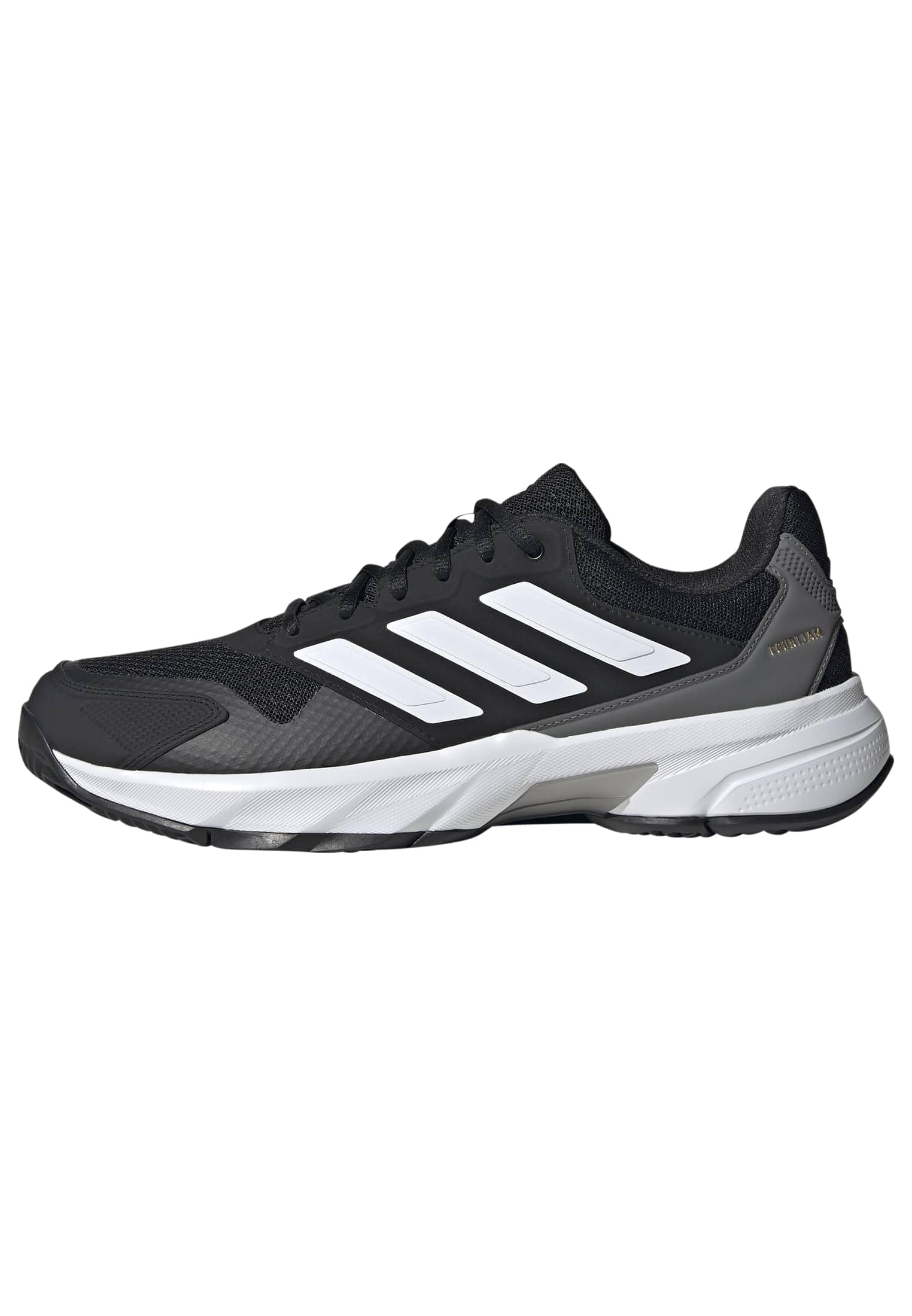
Built to survive aggressive toe drag and reward the player who lives on sharp cuts.
Toe drag is what kills a court shoe early. The Courtjam Control 3 solves that with Adituff wrapping the toe area, and it pairs the protection with a mesh upper designed to feel light and airy. Cushioning comes from a light bounce midsole that helps the shoe absorb direction changes, while the Adiwear outsole is built to stay planted on hard surfaces through high-tempo matches. This is a shoe for the player who slides into shots rather than easing into them.
The trade-off is weight. At 2.43 pounds, this is noticeably heavier than the ASICS Gel-Resolution X at 1.44 pounds. That extra mass buys you the toe protection and the structured feel, and plenty of players find it comfortable for casual tennis. But if you notice shoe weight over a long match, the lighter ASICS shoe is the better fit for that preference.
The other honest note is that this shoe runs narrow at the bridge of the foot. Some buyers find it true to size, others find it pinches across the mid-foot and at the toes. If your foot is average-to-narrow, this is a comfortable shoe with a sturdy, stable platform for side-to-side work. If you have a wide bridge, choose your size carefully, because there is not much give here. The Adiwear outsole itself holds up reasonably — one player logging three sessions a week got ten to eleven months out of a pair.
Toe protection in focus: Adituff wraps the front of the shoe specifically to resist the drag that wears a hole through the toe of less protected court shoes.
The mid-foot question: the fit narrows at the bridge, so this is a shoe to size around your foot shape rather than assume it is a universal fit.
Pick this if: you drag your toe on serve and want a durable, stable, hard-surface shoe that can take that punishment.
Look elsewhere if: your foot runs wide through the bridge — the narrow mid-foot here will fight you.
5. WILSON Rush Pro 4.5
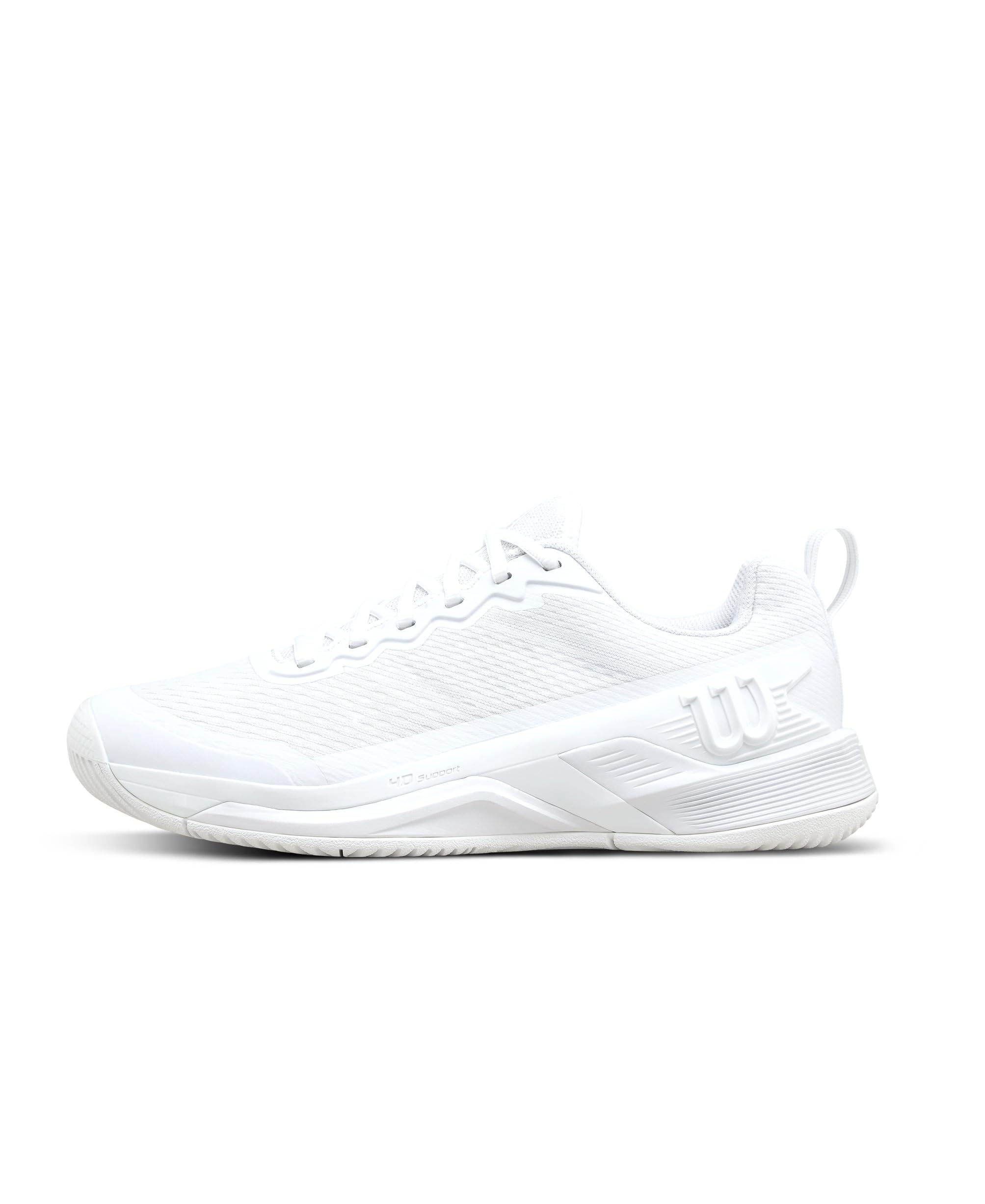
A stiff, precise weapon for the player who wants responsiveness over plush comfort.
This is Wilson’s answer for the powerful all-court player who wants lateral stability, responsiveness, and durability in one package. The build is deliberately firm — this is not a shoe that bends easily under your foot. What wins people over is the combination of sturdy balance and lateral support: owners describe strong side-to-side stability and excellent grip on court, and the overall quality draws the strongest praise of any aspect of this shoe.
Two things separate this from the other Wilson pick on this page. First, the fit runs narrow in the forefoot, so unlike the Rush Pro Ace with its spacious toe box, this one hugs closer through the front. Second, the cushioning is minimal and rigid by design. One owner described the shoe as having little impact protection and relegated it to a backup as a result. If you want a soft, cushioned feel underfoot, this is not it — this is a shoe that wants to communicate the court to your foot.
It needs a break-in period. Several owners note the shoe feels tight at the toes when flexing through the first few sessions before it settles. That is normal for a structured court shoe, but it is worth knowing before you judge it on day one. For players who play mid-to-intense hardcourt tennis or pickleball and want a shoe that stays stable when they slide and cut, the payoff is real. For players who want immediate comfort from the start, patience is required.
What earns it a spot
- Lateral stability holds firm when you slide, and the hindfoot support is remarkably steady under stress.
- Durable outsole and breathable construction make it a sound choice for regular court play.
- Solid grip and balanced weight suit the player who wants responsiveness over softness.
- Holds up under heavy use — one owner’s pair still looked nearly new after four weekends of intense hardcourt play.
Straight talk
- Cushioning is minimal and rigid, so it will feel unforgiving if you want plush impact protection.
- The forefoot runs narrow, and the “Wide” version is still built on a standard-width base with a roomier toe box rather than a true wide fit.
- Needs a break-in period before the toes feel settled when flexing.
Worth it if: you play mid-to-intense hardcourt matches and want a stiff, precise shoe with real lateral stability.
skip it if: you need soft cushioning immediately or your forefoot runs genuinely wide — the rigid feel and narrow base will disappoint you.
6. ASICS Men’s Game FlyteFoam Tennis Shoes

A featherweight, breathable court shoe that suits the player who values movement over armour.
The GAME FF is built for the all-court player who wants to move quickly and stay cool. ASICS focused this version on ventilation and flexibility: an open mesh upper keeps air moving across your foot, synthetic leather overlays and a PU film add support when you make abrupt transitions, and TRUSSTIC® in the midsole keeps you steady while FLYTEFOAM™ provides lightweight cushioning. It weighs 1.44 pounds, which matters if you want to move fast without feeling like you are hauling a boot around the court.
On court, the traction is the highlight. It grips indoor and outdoor surfaces well, and owners use it comfortably for both pickleball and tennis. The stiffer body relative to ASICS running shoes is deliberate — it is what gives you support for side-to-side movement rather than the soft forward-only flex of a road shoe.
The caveat is durability, and it is the most-flagged issue across the shoe’s own reviews. One player cracked and yellowed the soles within a year of occasional wear. Another walked away after about a month of tennis use, finding the shoe was not built for the court at all. Those extreme cases are not the majority experience, but the pattern of complaints about longevity is consistent enough that this is best seen as a shoe for the weekly casual player who wants a light, grippy shoe rather than a workhorse for someone logging heavy hours. If your game runs long and hard, the durability questions are worth taking seriously before you commit.
Where it shines: a lightweight 1.44-pound build and open mesh upper keep your feet quick and cool through a full session of pickleball or casual tennis.
The honest caveat: outsole and midsole cracking shows up in some long-term owner reports, so this is a shoe to buy for casual use rather than as a season-long tournament workhorse.
Best for: the occasional all-court player who wants a light, breathable, grippy shoe at a fair price.
Not your match if: you play hard and often and need a shoe that resists wear for a full season.
7. Skechers Women’s Viper Court Pro Pickleball Shoe
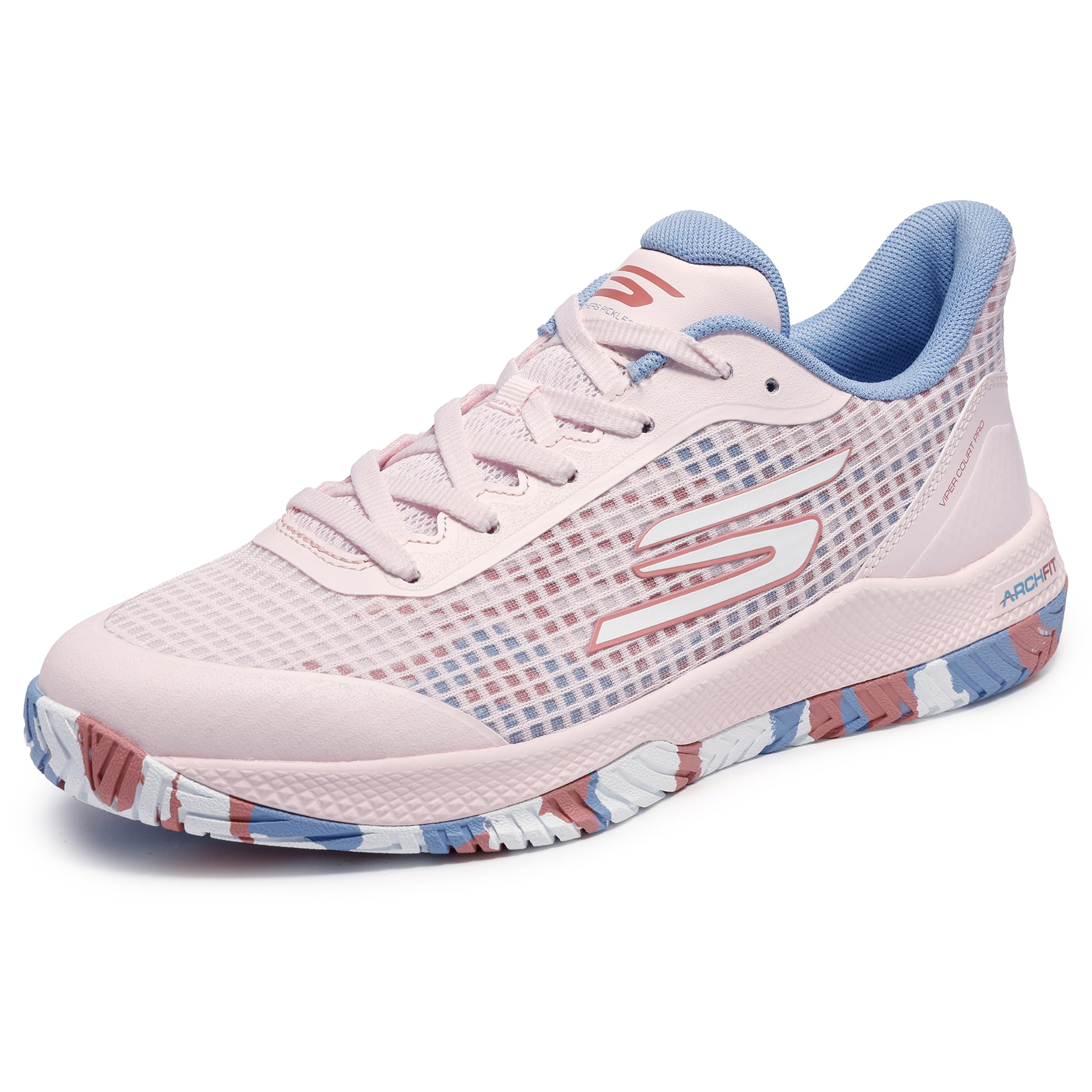
The pickleball shoe that puts arch support first, with a wide, high toe box to match.
For a woman who wants a wide, high toe box and real arch support, this is the pair to look at first. The Viper Court Pro combines a supportive mesh upper with synthetic overlays, durable ULTRA FLIGHT cushioning for the midsole, and a Goodyear Gold compound outsole offering grip and durability on court. The wide toe box is the fit feature owners come back to most often — it is the difference between toes that spread naturally and toes that pinch every time you plant.
On court, the shoe is stable through stopping and running, holds up to five days a week of play, and stays airy. Owners with high arches say the arch support holds up through five-day-a-week play. If your feet ache in flatter court shoes, this arch support is the reason to pay up.
Two honest notes. The toe box is wide on most feet but not on all of them, so some players still find it snug — try it with your own socks if you can. And the toe box can wear through inside over months of play, so this is not a shoe that will look fresh forever. It is a workhorse for regular play, not a shoe you tuck into a bag for special occasions. For the player who needs arch support more than they need a pristine look, it earns its place on this list.
What makes it stand out
- Goodyear Gold compound outsole delivers grip and durability where it matters on pickleball courts.
- The high toe box and cushioned ULTRA FLIGHT midsole make long sessions comfortable.
- Wide toe box fits feet that struggle with standard-width shoes.
- Looks good enough to draw comments from other players.
The fine print
- The toe box is wide for most, but not all feet, so fit it carefully if your foot runs truly wide.
- The upper inside can wear through within a year of regular play, so plan on replacement over time.
- The sole break can be uneven depending on your footstrike.
My call: the best fit on this list for a woman who needs wide toe box room and genuine arch support on the pickleball court.
Worth reconsidering if: you need a sleek, narrow court shoe — the wide, high toe box here is the opposite of that.
Know the Specs
Stability, Explained Plainly
Stability in a tennis shoe means how well the shoe resists your foot rolling sideways when you cut and stop. It comes from a structural chassis (the stiff midsole piece wrapping your heel and arch), a wider base under the forefoot, and a midsole that does not mush down sideways. The Wilson Ace uses its 4D Support Chassis to limit supination and torsion; the ASICS Gel-Resolution X extends DYNAWALL™ into the heel for lateral movement; ASICS also uses TRUSSTIC® units on the Gel-Dedicate 8 and Game FF. A shoe with soft cushioning but no structural component will feel comfortable and roll over on you the first time you cut hard.
Why Fit Still Decides Everything
You can buy the most stable shoe on the market and still have a bad time if the toe box pinches your foot. Toe box width and mid-foot fit vary enormously between brands and models — the Wilson Rush Pro Ace runs wider than the Rush Pro 4.0, the adidas Courtjam Control 3 narrows at the bridge, and the Skechers Viper Court Pro has a wide, high toe box. Narrow feet tend to do well in the ASICS Gel-Dedicate 8; wide feet do well in the Wilson Ace or Skechers. Check your foot shape before you check the badge.
Reading the Outsole
The outsole is the rubber layer that touches the court, and its design tells you what surface it was made for. A hard-court outsole is dense and built to survive abrasive acrylic surfaces, which is why the Wilson Ace uses an all-court Duralast outsole designed for hard court usage. The adidas Courtjam Control 3 uses an Adiwear outsole for hard surfaces, and the Skechers Viper Court Pro uses a Goodyear Gold compound. If you play mostly indoors on a softer surface, a less aggressive outsole will feel grippier. Match the compound to the court, and you will replace fewer shoes.
Weight and Court Type
Weight matters more on clay and grass, where you slide and need to reposition quickly, than on a hard court where you are planted. A 1.44-pound shoe moves faster than a 2.43-pound one, but it may also give up some of the protective mass that helps on a concrete-like surface. The ASICS Gel-Resolution X and the ASICS Game FF both weigh 1.44 pounds; the adidas Courtjam Control 3 weighs 2.43 pounds. If you want light and quick, that difference is worth noticing. If you want durable and protective, the heavier shoe usually feels better on hard courts.
Common Questions
What actually makes a tennis shoe a stability shoe?
Should stability tennis shoes fit tighter or roomier than running shoes?
How long should a stability tennis shoe actually last?
Is a stability shoe better than a regular court shoe for pickleball?
Do wide feet need a different stability shoe than narrow feet?
What does a midsole chassis or support unit actually do for my ankle?
Can I wear stability tennis shoes for everyday walking?
Which outsole compound is best for hard courts?
Are higher-priced stability tennis shoes always more durable?
Do I need insoles with a stability tennis shoe?
The Bottom Line
For most players, the stability tennis shoes winner is the Wilson Rush Pro Ace — the widest, roomiest option here with the 4D Support Chassis keeping your foot steady through cuts, and no break-in period to get through. If you need the lightest shoe on the list and play from the baseline, reach for the ASICS Gel-Resolution X with its 1.44-pound weight and extended heel stability. And if you are a woman who wants a wide, high toe box with genuine arch support for pickleball, the Skechers Viper Court Pro is the one to start with.
How we choose
We do not accept paid placement. Every pick is matched to a real buyer and a real use-case; we do not hands-on test units.
Sources
Specifications: manufacturer listings and product documentation. Review insights: verified customer reviews, as of October 2026. Pricing: not shown on this page (it changes often); check the current price via the retailer link.
As an Amazon Associate, Aappliancez earns from qualifying purchases. This does not affect which products we feature.