Disclosure: Some links in this post are affiliate links. As an Amazon Associate I earn from qualifying purchases, at no extra cost to you. Learn more
Specs are compiled from manufacturer listings and verified buyer reviews and can change over time — please confirm the key details on the product page before buying.
The short answer: real sourdough and low-carb bread rarely live in the same loaf. Traditional sourdough is wheat flour and water, so it lands high in carbs. The loaves below solve that by keeping the tang and chew while cutting the carb count — and one of them is a genuine live-starter sourdough at 3g net carbs per slice. If you want bread you can toast and sandwich while staying in a deficit, start with the Dr. B’s Frankie loaf.
This guide is built by comparing the manufacturers’ published specifications and the patterns across verified customer reviews, so you get each pick’s real strengths and trade-offs instead of marketing spin.
Carb counts, fiber and slice size decide whether a loaf helps or hurts your day, so each pick below is judged on those numbers rather than on the label’s promises. Here is the practical shortlist of the sourdough bread for weight loss.
Top Picks
How To Choose The Best Sourdough Bread for Weight Loss
Bread can stay in your diet — but the loaf you pick decides whether a sandwich costs 3 grams of carbs or 30. Three numbers on the label do almost all the work: net carbs per slice, fiber per slice, and calories per slice. Read those before you read anything on the front of the package.
Start with net carbs, not total carbs
Net carbs are total carbs minus fiber — the fiber passes through you largely undigested, so it does not count the same way. A slice listing 6g total carbs and 3g fiber lands at 3g net. That is why a high-fiber loaf can look carb-heavy on paper and still fit a low-carb day. Compare loaves on net carbs per slice, not per package, because slice weights vary a lot between brands.
Check fiber and protein per slice for fullness
Fiber and protein are what keep a burger from leaving you hungry an hour later. One bun in this lineup carries 22g of dietary fiber and 11g of protein in a single serving, which is a serious amount of staying power for a bread product. A loaf with 3g net carbs but almost no fiber will not hold you the same way.
Decide if you want real sourdough or a low-carb stand-in
True sourdough is leavened by a live starter and a long fermentation, which gives it the tang and chewy crumb people actually crave. Most low-carb breads get there with modified flours and added fibers instead. Neither is wrong — but if the sourdough flavor is the whole reason you are shopping, a loaf made with a live starter is the one that will satisfy the craving.
Plan for the freezer
These loaves ship in multipacks, and fresh bread without artificial preservatives does not sit on the counter forever. Sliced bread freezes cleanly, so portion it the day it arrives and pull slices as you need them. That single habit prevents the most common complaint in this category — buns going green before the bag is empty.
Side-by-Side Comparison
| Model | Best For | Net Carbs | Calories | Pack Size | Amazon |
|---|---|---|---|---|---|
| Jovial Organic Einkorn Whole Wheat Flour★ Best Overall | Baking your own lower-carb loaves | — | — | 3 x 32 oz bags | Amazon |
| Dr. B’s Frankie Low Carb Keto SourdoughAlso Great | Real sourdough flavor on a low-carb plan | 3g net carbs per slice | 60 per slice | 2 x 20 oz loaves | Amazon |
| Hero Classic Hamburger Buns | Fiber and protein per serving | 1g net carbs per bun | 90 per serving | 16 buns, pack of 2 | Amazon |
| Mestemacher High Fiber 3-Flavor Bundle | Dense rye loaves with long shelf life | — | — | 3 loaves, 17.6 oz each | Amazon |
| Keto Culture Baking Hamburger Buns | Everyday burgers and sandwiches | 1 net carb per bun | — | 2 x 12.5 oz | Amazon |
Detailed Reviews
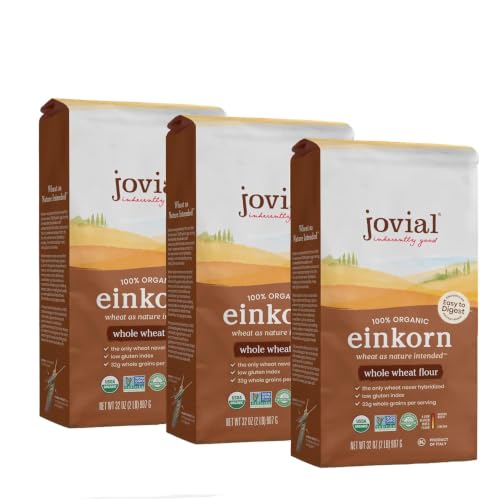
1. Jovial Organic Einkorn Whole Wheat Flour 3 Pack
Our pick — 4.5+★ from 950+ verified ratings; the strongest balance of quality and price.
The whole-grain route: bake your own lower-carb loaves from scratch.
Buying flour is a different move than buying bread, and it is the one to make if you want control over every gram. Einkorn is the original wheat — never hybridized, USDA Certified Organic and Non-GMO Project Verified. Its gluten is weaker and easier to digest than modern wheat, but it is still wheat — not safe for celiac disease. The flavor is nutty and silky with a buttery yellow color, and it bakes a more flavorful loaf than standard whole wheat.
On the weight side, be clear: einkorn is still wheat flour, so this is a swap for better flour, not a low-carb shortcut. You cut carbs by mixing it into high-fiber recipes — blend whole grain einkorn 50/50 with whole wheat, and one buyer called the result the healthiest, best-tasting breads and rolls. Thin pumpernickel-style rolls also freeze well, so you can control portions. For scale, the three-bag bundle runs 96 ounces total across 2 pounds of packaged weight, which gives you multiple baking sessions before you run out.
The catch is effort and consistency. You are the baker here, so the carb count of the finished loaf depends entirely on your recipe and how thin you slice it. Quality is the most-praised trait — the flour is fresh, organic and reliable in the oven — but value is contested, because einkorn costs more than commodity flour. If you bake weekly, it earns that premium back in flavor alone.
Why bakers keep it stocked
- USDA Certified Organic and Non-GMO Project Verified, never hybridized
- Weaker gluten than modern wheat, which is easier to work with and digest
- Nutty flavor and buttery yellow color that make whole-grain baking taste good
- Free of milk, eggs, peanuts, tree nuts, shellfish, fish and soy
- Three 32 oz bags, 96 ounces total, enough for repeated baking
What you take on
- It is still wheat flour — the low-carb result depends on your recipe and slice thickness
- Costs more per bag than standard whole wheat, and some buyers find that steep
- Not safe for anyone with celiac disease, as the package itself states
For the baker: someone happy to weigh flour and control the loaf end-to-end rather than trust a label.
For the fast lane: if you want bread today, buy a finished loaf — this is raw material, not lunch.
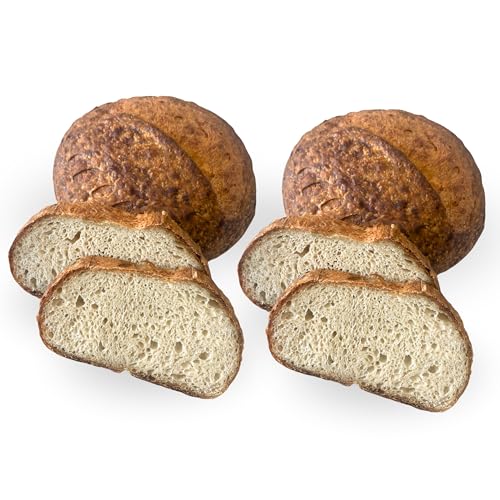
2. Dr. B’s Frankie Low Carb Keto Sourdough Bread 2x20oz
Genuine live-starter sourdough that still lands at 3g net carbs a slice.
If sourdough is the specific thing you miss, this is the loaf to buy. It is leavened only with a live sourdough starter and a long, slow fermentation, which is what produces that moderate tang and chewy crumb you cannot fake with modified flour. A slice carries 3g net carbs and 6g total carbs. With no added sugar, no seed oils and no sugar alcohols in the ingredient list, the carb reduction comes from fiber- and protein-rich flours rather than from chemistry.
Per slice you get 6g of protein and 60 calories — real sandwich numbers rather than a thin cracker pretending to be bread. That protein count is the part that earns its place on a weight-loss shelf: it turns a sandwich into something that holds you past lunch. The crumb is sturdy enough for avocado toast and grilled cheese, and the crust crisps back up when toasted. Two 20 oz loaves arrive pre-sliced, so portioning and freezing takes one pass with a freezer bag.
The catch is price and shelf life. Fresh bread baked in small batches without artificial preservatives is not a pantry staple you forget about, so slice and freeze it on day one. The recurring gripe is cost — the flavor wins people over, but the value question keeps coming up. If you want a cheap everyday loaf, this is not it. If you want sourdough that tastes like sourdough while you stay low-carb, nothing else here comes close.
What earns it the top spot
- Leavened only with a live sourdough starter and a long fermentation, so it carries a real moderate tang and chewy crumb
- 3g net carbs and 6g total carbs per slice, with no resistant starches, modified flours or sugar alcohols
- 6g protein and 60 calories per slice — enough substance to actually fill a sandwich
- Vegan, sugar free, nut free, low sodium and low FODMAP, made with non-GMO ingredients and olive oil
- Two 20 oz pre-sliced loaves with a sturdy crumb that holds up to toasting
Where it asks more of you
- Cost is the repeated sticking point — this is a treat-tier loaf, not an everyday budget buy
- Baked fresh in small batches without artificial preservatives, so it needs freezing rather than counter storage
- It has fewer reviews than several picks here, though those it has are glowing
Buy this one if: sourdough flavor is the craving you are trying to satisfy without blowing your carb budget.
Think twice if: you want a loaf you can leave in the bread box for two weeks — freeze this one the day it lands.
3. Hero Classic Hamburger Buns 16 Buns Pack of 2
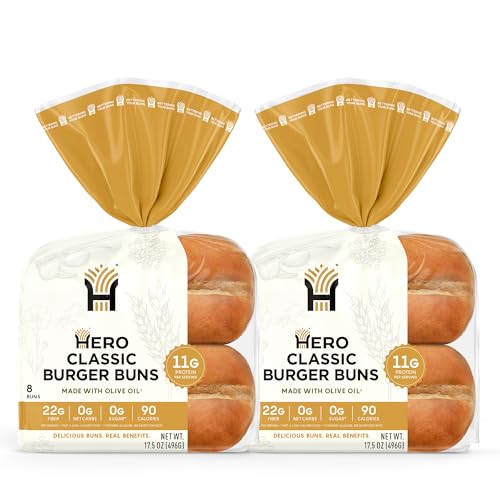
A burger bun carrying 22g of fiber and 11g of protein in one serving.
Most low-carb buns simply remove the carbs and leave a hollow roll behind. Hero goes the other direction: each bun delivers 22g of dietary fiber and 11g of protein alongside 1g net carbs, 0g sugar and 90 calories. That fiber load is the single most useful number for weight loss here, because fiber is what turns a burger into a meal that lasts. It is made with olive oil and plant-based ingredients, and the texture holds soft enough to toast.
Compare the pack weight and it is clear this is a denser build than Keto Culture’s buns — 1.21 pounds versus 12 ounces — which lines up with the fiber and protein it packs in. Hero’s own guidance is to eat within ten days of arrival or freeze for up to 6 months, and that freezer window is generous for a fresh bun. The flavor is the part that wins people over; the buns read like a regular burger bun rather than a diet compromise.
Value is the honest sticking point. The buns are not cheap for a bread product, and the cost per serving is the most-discussed caveat. Size also draws the occasional note from people expecting a wider bun. Still, for a bun that hits 22g fiber without tasting like cardboard, the trade is easy to justify for most low-carb eaters.
The fiber math: 22g dietary fiber and 11g protein per bun against just 1g net carbs is a rare combination in burger bread, and it is the reason this pick sits near the top.
The honest read: flavor earns the most praise of anything about these buns, but value draws the most argument — expect to pay for the fiber.
Reach for these if: you want a burger night that actually fills you up rather than one that leaves you hunting the pantry an hour later.
Look elsewhere if: you need a loaf for sandwiches — these are round buns, not sliced bread.
4. Mestemacher Natural High Fiber Bread 3 Flavor Variety Bundle
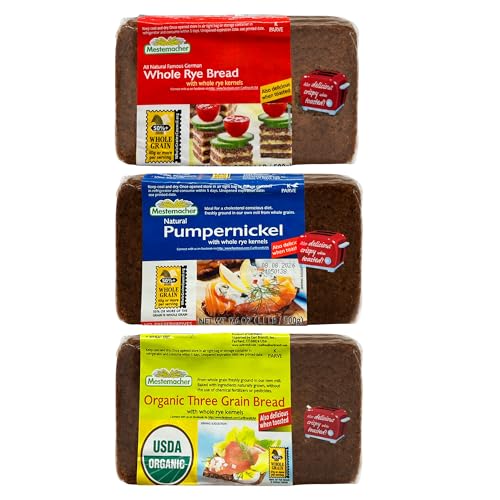
Three dense German rye loaves that outlast almost any fresh bread.
This is not a soft sandwich loaf and it never pretends to be. You get three 17.6 oz bricks of whole-grain rye — Organic Three Grain, Pumpernickel and Whole Rye — each sliced, moist and heavy in the hand. The ingredient lists are short and readable: whole kernel rye, water, wholemeal rye flour, salt, oat fiber, yeast, plus malt extract in the pumpernickel and organic oat, barley, flax and sesame in the three grain. No artificial preservatives, yet the loaves keep for months, which is the reason this bundle earns a slot.
Nutrition is where it shines for a weight-loss pantry. Whole-grain rye is dense with fiber, so a thin slice goes a long way toward filling you, and the pumpernickel is the most intense of the three while the three grain is the most versatile. Toast it — it needs a higher toaster setting than soft white bread, and the slab shape will not drop into a standard slot, so plan on a toaster oven or a wide-slot model.
The trade-offs are real and specific. The texture is dry and crumbly by design; a fully crumbling loaf is the recurring complaint, and a rough delivery can leave slices breaking apart in the bag. Taste divides people hard — some find it authentic and excellent, others expect western white bread and are thrown. Go in knowing it is dense European rye and the odds are good you will be pleased; go in expecting a soft loaf and you will not.
Why it belongs on the list
- Three distinct rye flavors in one bundle, each 17.6 oz and pre-sliced
- Whole-grain rye with a short, clean ingredient list and no artificial preservatives
- Long shelf life — the loaves keep for months, so nothing goes to waste
- Dense and filling, so a single thin slice carries a meal
What to expect before you buy
- Dry, crumbly texture that can break apart in transit
- Strong rye flavor that does not resemble soft white bread at all
- The slab shape will not fit a standard toaster slot
The right buyer: someone who already likes dense European rye and wants a pantry loaf that will not spoil in a week.
The wrong buyer: anyone hunting a soft, mild sandwich bread — this is a different food entirely.
5. Keto Culture Baking Hamburger Buns, 2 Pack (2 x12.5 oz)

A soft, golden bun at 1 net carb — the everyday burger answer.
Where Hero leans on fiber and protein, Keto Culture leans on restraint: 1 net carb, zero sugar and no added sugar anywhere in the recipe. Net carbs, by the package’s own definition, are total carbs minus fiber. The buns come soft and fluffy inside with a golden brown crust, and they brown and toast like a normal bun. For a low-carb eater who just wants a burger on a Saturday, that is the whole pitch.
You get 16 buns across two 12.5 oz packages, and they freeze and reheat well — a short stint in the oven brings them back. Taste is the thing that wins people over, and that matters because a lot of keto bread turns rubbery the moment it hits heat. These do not, and the size is close enough to a standard bun that you are not eating a slider by accident.
Two honest limits. First, you have to buy two packages at once, and the buns arrive on a delivery timeline that can leave the last few going moldy before you reach them — freeze half on arrival and the problem disappears. Second, cost per bun runs high, which is the most-argued point about them. Size also draws a mild note from bigger eaters, though they are not tiny.
Taste is the headline: flavor is the most-praised quality here, and for a 1-net-carb bun that is the whole ballgame — a rubbery low-carb roll gets thrown out, this one gets reordered.
Storage is the homework: split the two bags, freeze one, and the freshness issue that shows up in the negative reviews never becomes your problem.
Worth grabbing if: you want a soft, normal-tasting burger bun on a low-carb day without paying fiber-premium prices.
Skip the multipack if: you live alone and eat burgers rarely — freeze the second bag or you will be throwing buns away.
Know the Specs
Net Carbs per Slice or Bun
Net carbs are total carbohydrates minus fiber. Fiber is the part of a carb the body does not fully digest, so it is subtracted from the tally. A slice with 6g total carbs and 3g fiber lands at 3g net carbs; a bun with 1g net carbs and 0g sugar is even leaner. Always compare net carbs per single serving rather than per package, because slice and bun weights differ between brands and a small bun at 1g can beat a large slice at 3g if you eat two.
Fiber and Protein per Serving
Fiber and protein are the two numbers that control how full a slice of bread leaves you. A bun with 22g of dietary fiber and 11g of protein per serving behaves like a meal component. A swap that only strips carbs can leave you hungry within the hour. For weight loss, aim for a bread where the fiber line is meaningful, not a rounding error.
Calories per Serving
Carb count is not the whole story. A 60-calorie slice and a 90-calorie bun behave differently over a week of sandwiches. If you eat bread daily, the calorie line compounds fast, and choosing the lower figure per slice keeps your daily total in check without cutting bread out entirely.
Freshness and Storage Window
Low-carb breads are usually baked without artificial preservatives, which means a short counter window and a long freezer one. Some loaves are built to keep for months, while softer fresh buns may last ten days on the shelf. Read the storage guidance on the package and freeze portions on arrival — this is the practical fix for almost every spoilage complaint in this category.
Common Questions
Is sourdough bread actually good for weight loss?
What does net carbs mean on a bread label?
How do I stop my low-carb buns going moldy before I finish the pack?
Is einkorn flour lower in carbs than regular flour?
Does low-carb bread raise blood sugar?
Can I eat sourdough bread on keto?
How many slices of low-carb bread can I eat a day?
Is Hero or Keto Culture better for a low-carb burger?
Does Mestemacher rye bread need to be refrigerated?
Why is low-carb bread more expensive than regular bread?
The Bottom Line
For the best balance of real sourdough flavor and a genuinely low carb count, the Dr. B’s Frankie Low Carb Keto Sourdough is the pick — a live-starter loaf at 3g net carbs and 60 calories per slice that toasts and sandwiches like the real thing. If a filling burger matters more than a slice, reach for the Hero Classic Hamburger Buns with 22g of fiber and 11g of protein per bun. And if you would rather control the loaf yourself, the Jovial Einkorn Flour turns your own kitchen into the carb-counting tool.
My honest advice: buy one loaf, freeze what you cannot eat in a week, and let taste decide the rest. A low-carb bread you actually enjoy gets eaten; a grim one goes in the bin, and that is the waste that matters.
How we choose
We do not accept paid placement. Every pick is matched to a real buyer and a real use-case; we do not hands-on test units.
Sources
Specifications: manufacturer listings and product documentation. Review insights: verified customer reviews, as of October 2026. Pricing: not shown on this page (it changes often); check the current price via the retailer link.
As an Amazon Associate, Aappliancez earns from qualifying purchases. This does not affect which products we feature.