Disclosure: Some links in this post are affiliate links. As an Amazon Associate I earn from qualifying purchases, at no extra cost to you. Learn more
Specs are compiled from manufacturer listings and verified buyer reviews and can change over time — please confirm the key details on the product page before buying.
If you want your stock 350 to sound like something, the camshaft is the part doing the talking — not the muffler. A tight-lobe-separation hydraulic flat tappet grind gives you that lumpy, choppy idle, and most of these kits install in-car without pulling the engine. This guide covers seven cams that fit a Gen 1 small block Chevy 350, sorted by what they actually do to your exhaust note and how they behave on the street.
This guide is built by comparing the manufacturers’ published specifications and the patterns across verified customer reviews, so you get each pick’s real strengths and trade-offs instead of marketing spin.
Short answer first: the Edelbrock 2102 is the safest way to wake up a tired stock 350, while the COMP Cams Thumpr kit delivers the loudest personality — and every pick below is judged on sound, street manners, and lift numbers you can verify. This breakdown of the sounding cam for stock 350 keeps each spec and trade-off in plain terms.
Top Picks

How To Choose The Best Sounding Cam for Stock 350
The sound you are chasing comes from one number more than any other: lobe separation angle, or LSA. It is the spread in degrees between where the intake lobe and the exhaust lobe peak. A tight LSA — think 107 or 108 degrees — pushes the two events closer together and creates that rough, thumping idle you hear at a car show. A wide LSA around 112 to 114 degrees smooths the idle out and makes the engine easier to live with in traffic.
Match the cam to your converter, not to a video clip
A choppy idle and a stock torque converter are not always friends. Cams with a lot of duration and a tight LSA tend to want more stall speed so the engine can clean out at low rpm. Some grinds are explicitly built to keep the factory converter, and those are the ones that stay pleasant on a daily commute. Read the operating rpm range on each listing — a cam that starts making power at 2,000 rpm will feel lazy below that.
Check the fit list before you fall in love with the sound
Most of these cams fit Chevrolet GEN 1 small blocks from 262 up to 400 cubic inches, which includes your 350. The catch is the later stuff: factory roller small blocks built from 1985 and newer, plus LT1 and LT4 engines, need a different cam entirely. If your 350 came out of a mid-eighties truck with a roller block, confirm the part number before ordering. Getting this wrong turns a weekend job into a return shipment.
Plan for break-in like it is part of the install
A flat tappet cam lives or dies in its first thirty minutes. The standard procedure holds the engine around 2,000 to 2,500 rpm for roughly half an hour with a proper break-in oil, and plenty of builds use a zinc-rich additive for extra insurance. Skipping this step is the single most common reason a new cam goes flat. Budget the time and the oil before the parts ever arrive.
Side-by-Side Comparison
| Model | Best For | Duration @.050″ | Valve Lift | Lobe Separation | Amazon |
|---|---|---|---|---|---|
| Edelbrock 2102 Performer-Plus★ Best Overall | Reviving a tired stock 350 | 204 / 214 deg | 0.42″ / 0.442″ | 112 deg | Amazon |
| COMP Cams 12-242-2 Xtreme EnergyTop Performer | Street machines with a stall converter | 224 / 230 deg | — | 110 deg | Amazon |
| COMP Cams K12-600-4 Thumpr | Loudest muscle-car idle | 227 / 241 deg | 0.479″ / 0.465″ | 107 deg | Amazon |
| Texas Speed CHOPacabra | LS truck engines wanting chop | 214 / 222 deg | 0.550″ / 0.550″ | 108 deg | Amazon |
| JEGS Hydraulic Flat Tappet | Broad 262-400 fitment | 234 / 234 deg | 0.488″ / 0.488″ | 114 deg | Amazon |
| Howards Cams 198035-09 | LS roller conversions | — | — | — | Amazon |
| JAMSI MC1730 SBC 350 RV Cam | Budget RV-style torque | — | 420 / 433 | — | Amazon |
Detailed Reviews
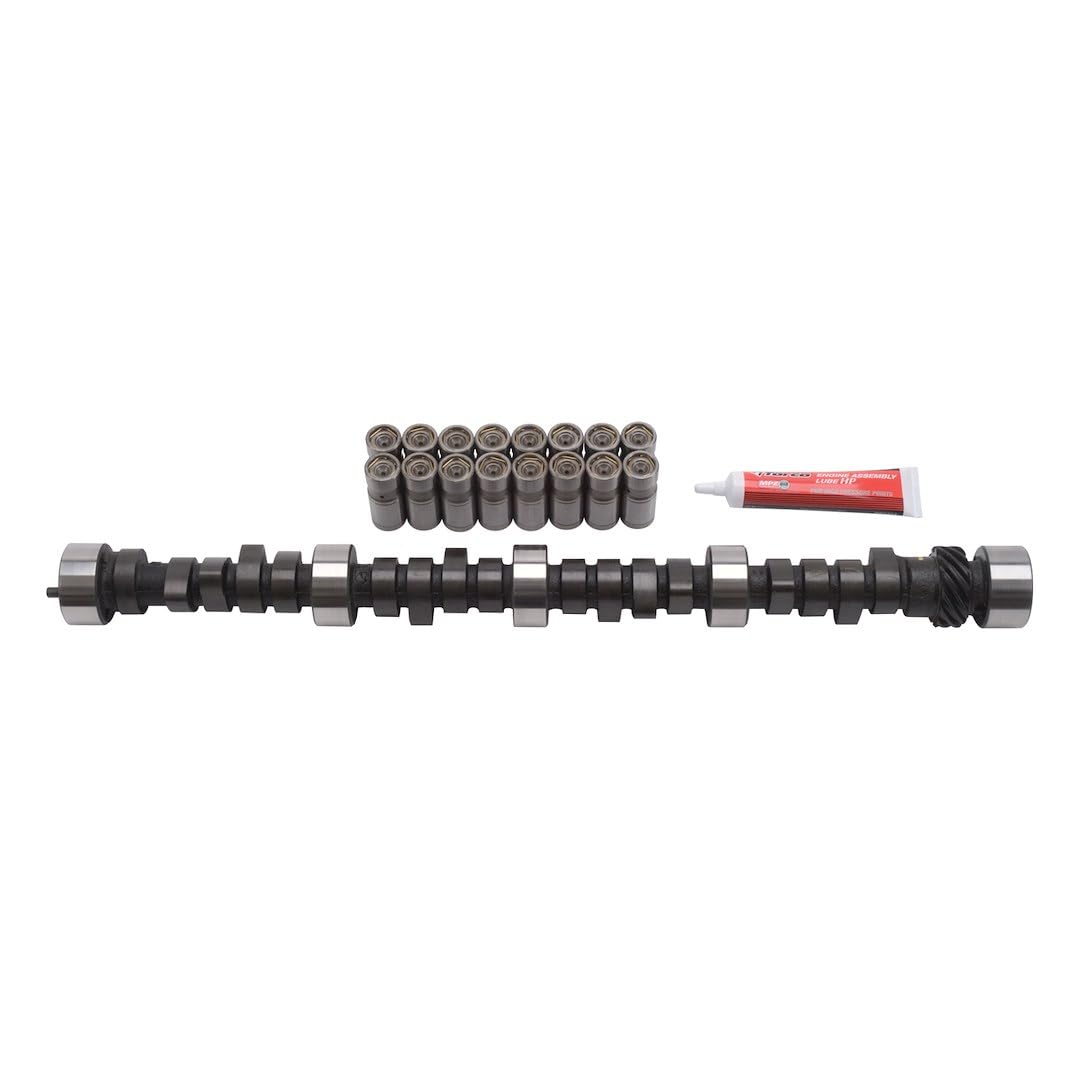
1. Edelbrock 2102 Performer-Plus Camshaft and Lifter Kit
Our pick — 4.0+★ from 100+ verified ratings; the strongest balance of quality and price.
The mild-mannered upgrade that finally makes a worn-out stock 350 feel alive again.
This is the pick for the owner with a tired old 350 that needs a reason to feel new. The numbers stay conservative on purpose — 204 degrees of intake duration and 214 on the exhaust at.050″, which is the industry-standard measurement point for how long each valve stays open. Intake lift sits at 0.42″ and exhaust at 0.442″, and the lobe separation is a wide 112 degrees. That wide gap is exactly why the idle stays polite and the vacuum stays high, so a stock torque converter and power brakes both keep working the way they should.
The install is a two-part job: the cam goes in, then the hydraulic lifters that come in the kit. Cast cam, hydraulic lifter type — that combination is the classic stock-replacement recipe for a small block Chevy. The lift figures also mean you are not chasing spring upgrades or worrying about piston-to-valve space. Where the Thumpr further down this list wants a looser converter and more gear, the Performer-Plus asks for nothing beyond a clean install and a proper break-in procedure.
What wins people over here is plain build quality, and it is not subtle — 15 separate mentions cluster around that one trait. That lines up with how the kit is put together and the fact that it pairs cleanly with a matching intake and carb on a small Chevy. As buyers report of a 1978 Camaro 350 with wiped lobes: “Everything went well but the mandated 2500 RPM for 30 minute break-in was a bit scary on a freshly rebuilt motor. Car seems to run much better now.” The trade-off is the 204/214 duration and 112-degree LSA: they keep the idle polite, so there is no heavy lope for sound-chasers. It sharpens the exhaust note and adds real low and mid range pull, but anyone hunting that hard, loping race idle will find it too tame.
Where The 2102 Delivers
- 204/214 duration and a wide 112-degree LSA keep the idle smooth and vacuum strong
- 0.42″/0.442″ lift works without upgrading springs on a stock build
- Kit ships cam and hydraulic lifters together, so you are not hunting parts
- Noticeable jump in low and mid range torque over a stock cam
What To Set Your Expectations On
- The change is mild — no heavy lope for the sound-chasers
- The 2,500 rpm break-in period is non-negotiable and demands patience
- Flat-tappet wear is a real risk if break-in oil and procedure slip
The right call for: a daily-driven or weekend stock 350 that needs a quality revival without converter changes.
Think twice if: you want the loudest, choppiest idle on the block — this grind deliberately stays civil.
2. COMP Cams 12-242-2 Xtreme Energy 224/230 Hydraulic Flat Cam
A step up in attitude that still respects a stock converter and a street-driven 350.
At 24.2 inches long and 2.9 inches wide, this is a compact stick of a cam that weighs in at 8.6 pounds — noticeably less mass than the 14-pound JAMSI kit later in this list. The grind is the headline: 224 degrees intake and 230 exhaust duration at.050″, a 110-degree lobe separation angle, and an operating range listed from 1,600 to 5,800 rpm. Against the Texas Speed CHOPacabra’s 214 intake duration, the COMP offers a longer intake event — 224 versus 214 — so it carries its power higher up the tach.
COMP designed this profile with quicker opening lobes, and they say that delivers more area under the lift curve, which is engineer-speak for the valve getting to full lift fast and staying useful. The company also notes the vacuum characteristics let them stretch duration without wrecking power brakes — a detail that matters on a car still running a brake booster off manifold vacuum. The listing calls it the largest cam for a stock converter, and it gets better with a 2,000+ stall. Aftermarket intake, headers, and lower gears are where it shines brightest.
Buyers describe it as noticeably more aggressive than the previous grind they ran, even at the same part number — a small quality-of-life warning that no two production runs feel identical. Fitment is the Gen 1 small block family from 262 through 400, and it pointedly does not fit LT1, LT4, or factory roller blocks from 1985 and newer. Treat that exclusion seriously: a roller block owner needs a different cam entirely, not this one.
The power-band read: a 1,600-5,800 rpm operating range means the idle is choppier than the Edelbrock above, yet the engine still pulls from low down. That is the balance a street car wants.
The catch: that same aggression means you really should feed it an aftermarket intake and headers, otherwise you are leaving the cam’s extra lift curve on the table.
Go here if your 350 already has a free-flowing intake and you want a rowdier idle without swapping the converter.
Keep shopping if your block is a 1985-or-newer roller or an LT1/LT4 — this one will not fit.
3. COMP Cams K12-600-4 Thumpr 227/241 Hydraulic Flat Cam K-Kit
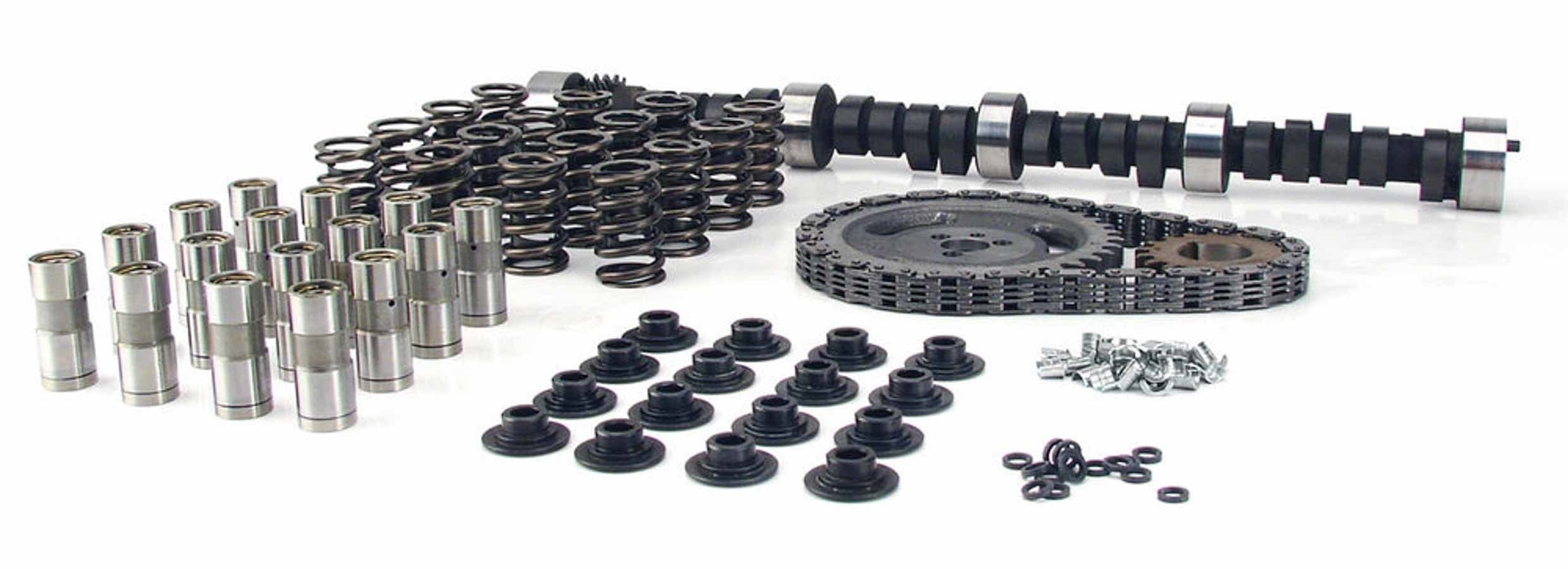
The full kit built for one job: making your 350 announce itself before it rounds the corner.
Here is the sound-first pick in its purest form. A 107-degree lobe separation angle is the tightest on this list, and alongside 227/241 duration at.050″ it bakes in the early intake opening and long exhaust duration that COMP says creates optimum overlap. Overlap is simply the moment both valves sit open at once — that is the burble, the shake, the thumping exhaust note at idle. Valve lift runs 0.479″ intake and 0.465″ exhaust, and the operating range is 2,000 to 5,800 rpm.
Being a K-Kit means it arrives as a package rather than a bare cam. The listing notes these kits vary, but generally include the camshaft, a set of lifters, valve springs, retainers, locks, valve seals, a timing set, assembly lubricant, decals, and instructions. That breadth is why a 350 build can go from stock to snarling without three separate orders. The manufacturer also calls it a great fit for muscle cars and street rods, and stock converter operation is listed as acceptable — though it is openly better with a 2,000+ converter and deeper gears.
The customer voice settles the argument on that point. As one owner of this kit puts it bluntly, the recommended stall is a touch conservative and you really want a 2800 stall or higher converter to run it happily on a street car. Others report a gnarly muscle-car lope and plenty of head turns, with parts measuring within spec from the start. The fair warning is that this is a flat tappet grind — the break-in matters enormously, and the included break-in lube comes in a small packet that is easy to miss in the box.
The sound payoff: 107-degree LSA and 241 degrees of exhaust duration at.050″ produce the heaviest idle chop here — that is the entire reason to buy it.
The trade-off: that same tight overlap wants a looser converter and more rear gear, so a completely stock driveline will feel restrained.
Built for the muscle car or street rod owner who wants maximum attitude and is willing to pair it with a converter.
Pass on it if your 350 is a daily commuter on a factory converter and you value a calm idle.
4. Texas Speed TSP CHOPacabra Cam Kit

A snarling LS truck cam that keeps the factory converter and still delivers the chop.
Straight from the listing: this is “a nasty little beast of cam.” The specs read 214 intake and 222 exhaust duration at.050″, 0.550″/0.550″ lift, a 108-degree LSA, and a 106-degree intake centerline. That centerline is the part that forces the idle into that rough chop. It fits 4.8, 5.3, 5.7, and 6.0 LS engines equipped with cathedral port heads, spanning 1999 through 2013 Vortec applications. A note for the newer trucks: 2007-to-2013 LS engines need a timing gear and lifter swap to run it.
It bundles 0.560″ lift beehive springs, valve seals, and OE replacement pushrods, so the valve train comes together in one shot. Texas Speed lists an operating range of 1,200 to 6,500 rpm and cites dyno testing showing gains of 65+hp and 25+ft lbs of torque at the crank. Drivability is called great, and the converter stays factory. What everyone raves about is the sound — 8 separate mentions land on that trait, ahead of the 5 for performance, and the review pages sum it up as a cam that works well and sounds great.
Real builds back that up in big numbers: one owner used it in a DOD delete on a 6.2L swapped into a 2012 4×4 Tahoe and, after tuning, saw 390 whp on the dyno while still towing a full car trailer with ample passing power. That owner also flags the smart follow-up — budget quality lifters, head bolts and gaskets, and a tuner to finish the job. One owner installing it in a 6.0L LS2 called the sound badass and was very satisfied. Do not mistake this for a stock-350 flat tappet kit, though: it is an LS roller cam, and the earlier 108-degree chop comes from a different engine family entirely.
Why it earns its spot: 108-degree LSA plus a 106-degree ICL on an LS gives you a genuine idle lope with the factory converter — rare in one package.
The fine print: newer 2007-2013 LS engines need a timing gear and lifter change, and a tune is what open up the dyno gains, so factor those in.
A match for LS truck owners in a 4.5+, 5.3, 5.7, or 6.0 who want chop, springs, seals, and pushrods in one box.
Not your cam if you are running a Gen 1 small block 350 — that calls for a flat tappet grind from this list instead.
5. JEGS Hydraulic Flat Tappet Camshaft & Lifters
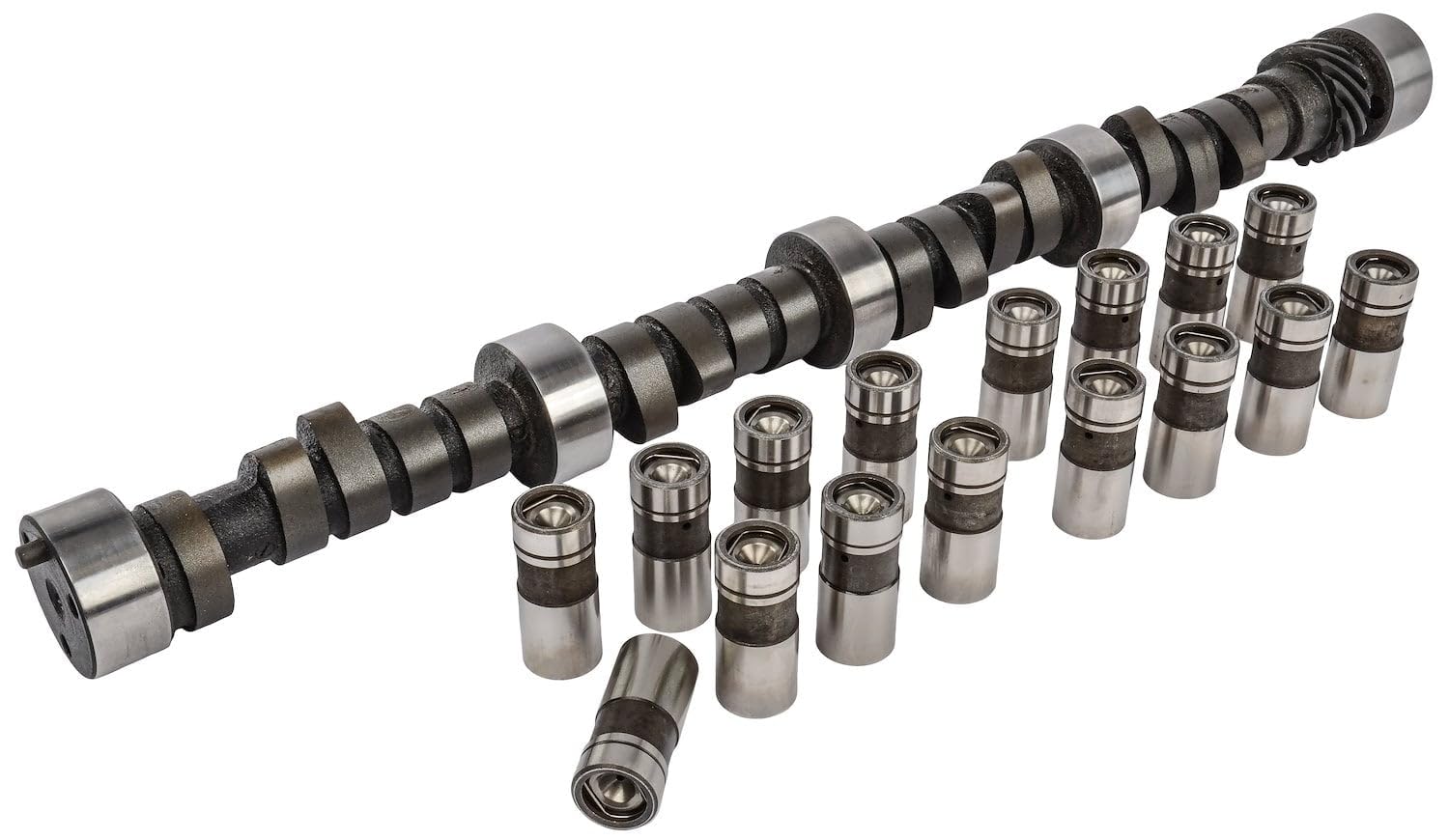
The widest engine-coverage grind here, with equal lift on both sides and a real power band.
Start with the shape of it: 31.4 x 5.3 x 3.1 inches, and 12.9 pounds in the box. The valve events are symmetrical and big — 0.488″ intake and 0.488″ exhaust lift, 234 degrees duration at.050″ on both sides, and 292 degrees advertised duration. Lobe separation is a wide 114 degrees. That symmetry is the fingerprint of a cam meant to breathe evenly and hold a broad torque curve rather than chase a narrow peak. The power band is listed at 3,000 to 6,200 rpm.
Compared against the Edelbrock 2102, the lift is the separation: 0.488″ versus 0.42″ intake, and 0.488″ versus 0.442″ exhaust. More lift means the valve opens further, so the engine pulls harder in its upper range. The JEGS listing promises increased peak horsepower and a broader torque range over stock, and the 114-degree LSA keeps that idle from getting genuinely wild. Fitment is unusually generous — 262, 283, 307, 327, 350, 383 stroker, 400, and other small blocks from 1957 through 1985.
The one warning worth taking seriously is lifter quality. A dead miss traced back to a completely collapsed lifter that stopped building after roughly two months and about four hours of run time, and it wore the lobe down and ruined a brand-new cam. That is a single failure, not a pattern, but it points straight at the thing every flat tappet build needs — clean break-in, good oil, and a careful look at the lifters before they go in. The payoff when it holds together is a nice sounding lope, which is what most 350+ owners came for.
The lift argument: 0.488″/0.488″ clears the Edelbrock’s 0.42″/0.442″ by a visible margin and covers nine engine sizes across a 1957-1985 span.
The caution: lifter reliability is the weak link in flat tappet kits like this one, so inspect each lifter and never rush the break-in.
Worth your attention if you own an early small block outside the plain 350 and want one cam that covers the family.
Look elsewhere if your block is a 1985-or-later roller or an LS — the fit list stops there.
6. Howards Cams LS-Series Hydraulic Roller 198035-09
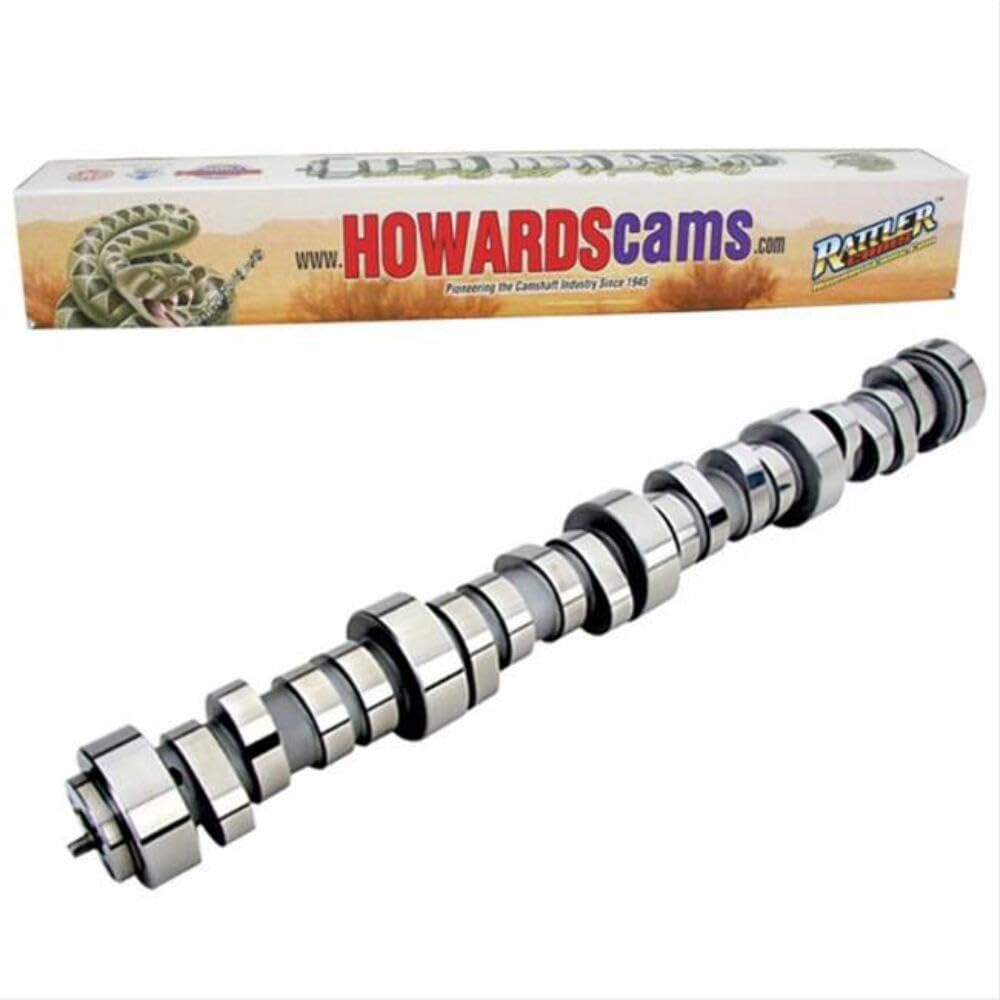
A roller cam for the LS crowd that values smooth, reliable valve motion over a wild idle.
This one is a different animal, and it needs to be said plainly: it is a hydraulic roller for the LS series, not a flat tappet for a Gen 1 350. A roller lifter rides on a wheel rather than sliding a face across the lobe, which is the whole reason modern engines tolerate more aggressive profiles without the break-in anxiety that haunts flat cams. The package measures 24.5 x 3 x 2.7 inches and ships as a single unit. The manufacturer lists the item weight at 10.11 pounds.
Where does sound fit? A roller grind like this is about durability and clean valve motion first, and that makes it the right companion for anyone stepping up from a flat tappet setup and refusing to repeat the break-in gamble. The trade-off is that the listing itself is thin — the valve event specs are not published here the way they are for the COMP and Texas Speed cams. If you are matching a cam to a specific converter and gear, you will need to pull those numbers from the maker directly before you commit.
The roller case: no flat-tappet break-in ritual means less risk of a wiped lobe on a fresh build, and the Howards name carries real weight in the LS world.
No numbers to lean on: with no duration, lift, or lobe separation listed in the product data, this needs a direct confirmation call before you buy.
Pick this for an LS build where you want roller durability and a domestic-made part.
Hold off if you need published duration and lift figures to match a converter, or if your engine is a Gen 1 350.
7. JAMSI Chevy SBC 350 Cam & Lifters Kit MC1730

The entry-level kit that puts a cam, lifters, and hardware in one low-cost box.
At 14 pounds, this JAMSI kit is the heaviest cam package in this comparison, and it arrives as a complete set — a Chevy SBC 350 5.7L lift kit with installation hardware and a single item count. The appeal is straightforward: one purchase that covers the whole swap for a build on a shoestring. It is listed with a vehicle-specific fit type, so the first move is confirming your engine matches before the order goes in.
Buyer experience here is far less settled than with the COMP or Edelbrock kits above, and the reviews that exist report wiped lobes and metal-contaminated oil. There is a report of a 350 running rough just 15 minutes after a proper install and break-in, with five lifters ground down and the camshaft damaged and all bearings in a new motor ruined. Another describes lifters mushroomed inside the engine and oil contaminated with metal shards. It is fair to read these as a sign this kit demands maximum care — carefully verify the parts, follow break-in to the letter, and inspect everything before it goes together.
The budget draw: cam, lifters, and installation hardware in one kit at the entry tier, with a 350-specific fitment.
The real risk: documented failures — flattened lobes from break-in — mean the savings only hold if your install and break-in are flawless.
Consider it only if you are experienced with flat tappet break-in and are disciplined about oil, priming, and inspection.
Better served elsewhere if this is your first cam swap or you want the track record of the picks above.
Know the Specs
Duration at.050″
The number tells you how many crankshaft degrees the valve stays open once the lifter has moved.050 of an inch off its seat. Bigger numbers mean a longer valve event, which shifts power higher and roughens the idle. That is why 227/241 duration sounds choppier than 204/214.
Lobe Separation Angle
LSA is the spread in degrees between the intake and exhaust lobe peaks. A tight 107-degree LSA stacks overlap and gives you a thumping idle; a wide 114-degree LSA smooths things out and keeps vacuum up for power brakes.
Valve Lift
Measured in inches, lift is how far the valve opens. More lift lets in more air and fuel, but it also demands springs that can handle the extra travel. That is why the Texas Speed kit bundles 0.560″ beehive springs with its 0.550″ cam.
Operating RPM Range
This is where the cam makes its best power, not the redline. A 3,000-6,200 rpm range means the engine wakes up when the tach climbs past 3,000 — down low in traffic, it feels tamer.
Common Questions
Which cam gives the loudest idle chop on a stock 350?
Will a Thumpr cam work with a stock torque converter?
Do I need to change valve springs when swapping cams on a 350?
How long does the cam break-in take?
Will a new cam make my 350 louder or just different?
Can I install a cam without pulling the engine?
Is a flat tappet cam reliable in a modern rebuild?
What should I check before ordering a cam for my 350?
Does a bigger cam hurt fuel economy?
The Bottom Line
The strongest all-around answer for a sounding cam for stock 350 is the Edelbrock 2102 Performer-Plus, because it delivers a genuine improvement in sound and low-end pull without demanding a converter or spring upgrade — the crowd favorite with the most consistent quality reputation here. If you want the loudest, choppiest idle and will pair it with a stall converter, the COMP Cams Thumpr K-Kit is the one built for that job. And if you want a street-friendly attitude bump without giving up your stock converter, the COMP Cams 12-242-2 Xtreme Energy blends a rowdier idle with a 1,600-5,800 rpm band that keeps the engine usable everywhere.
How we choose
We do not accept paid placement. Every pick is matched to a real buyer and a real use-case; we do not hands-on test units.
Sources
Specifications: manufacturer listings and product documentation. Review insights: verified customer reviews, as of October 2026. Pricing: not shown on this page (it changes often); check the current price via the retailer link.
As an Amazon Associate, Aappliancez earns from qualifying purchases. This does not affect which products we feature.