Disclosure: Some links in this post are affiliate links. As an Amazon Associate I earn from qualifying purchases, at no extra cost to you. Learn more
Specs are compiled from manufacturer listings and verified buyer reviews and can change over time — please confirm the key details on the product page before buying.
Black glass on a wood stove is the most common reason people go hunting for a soot cleaner — and the fix is usually simpler than the crust suggests. The trick is picking a formula matched to what you are actually cleaning: baked-on glass haze, sticky creosote inside the firebox, or smoke film on a painted wall. This guide sorts the options by the job each one is built for, so you can grab the right bottle first time.
This guide is built by comparing the manufacturers’ published specifications and the patterns across verified customer reviews, so you get each pick’s real strengths and trade-offs instead of marketing spin.
Some of these formulas are made for glass, some for metal and paint, and one is a full restoration kit — so the right bottle depends on where the soot actually sits. Below you will find the practical differences between each soot cleaner, from spray-and-wipe glass gels to concentrated wall washes.
Top Picks

How To Choose The Best Soot Cleaner
Soot is not one substance. The black film on stove glass is baked-on carbon and smoke residue. The sticky brown tar inside a firebox is creosote, a different problem with a different chemistry. And the grey shadow on a wall above a fireplace is smoke film mixed with household grease. A cleaner built for one of those three jobs will underperform on the other two. So the first decision is not brand — it is which surface you are attacking.
Match the formula to the surface, not the label
A glass cleaner is formulated to loosen baked carbon without scratching the transparent ceramic pane. A creosote remover is built to chemically change sticky tar into dry ash you can brush away. A wall wash is diluted and designed to lift smoke film off paint without eating the finish. Buying a firebox product for your glass, or a glass gel for your painted drywall, is the single most common mismatch.
Check how the product activates
Some formulas work cold: you spray, wait, and wipe. Others are heat activated, meaning the chemistry only kicks in once the surface reaches a certain temperature — a warm stove does the work for you. A heat-activated creosote remover suits a stove you run daily. A cold spray gel suits a cold stove on a Saturday morning before you light it.
Watch the dwell time, not the scrubbing
Almost every soot cleaner on this list works by sitting on the deposit for a short window and breaking it down. Too short and nothing lifts. Too long and a strong formula can start eating paint or finish. Read the dwell window before you spray, and keep a clean damp cloth on hand for the rinse pass — several of these formulas leave a residue if you skip it.
Side-by-Side Comparison
| Model | Best For | Volume | Form | Primary Surface | Amazon |
|---|---|---|---|---|---|
| MEECO’S RED DEVIL 702 Glass Cleaner Refill★ Best Overall | Stove glass and built-in doors | 64 fl oz | Spray | Wood, pellet & coal stove glass | Amazon |
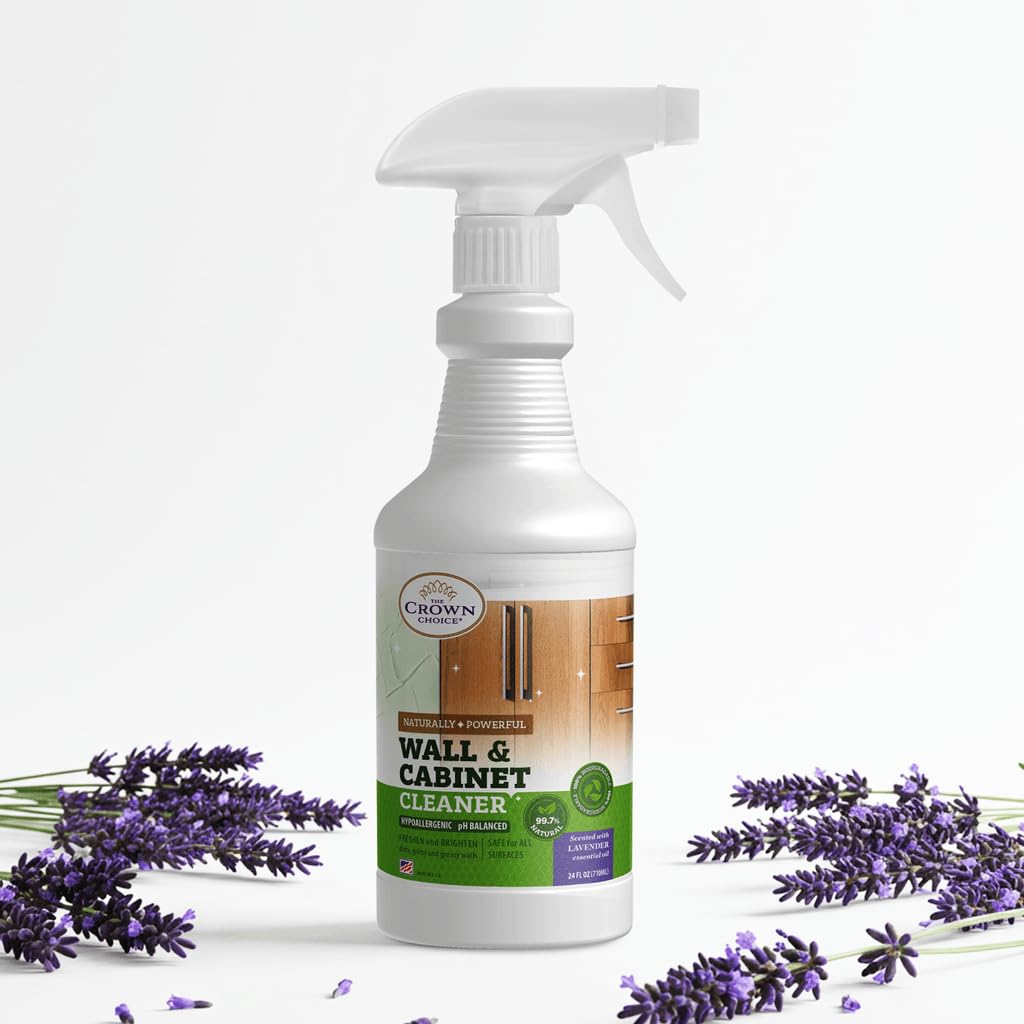
| Wall & Cabinet Cleaner, 99.7% NaturalBest for Painted Surfaces | Painted walls, cabinets and sealed wood | — | Spray | Paint, drywall, wood, steel | Amazon |
| Rutland Liquid Creosote Remover | Firebox walls and flue-side creosote | 32 oz | Liquid spray | Firebox, wood fuel & pellets | Amazon |
| Wall Wash with Biosolv | Whole-room smoke damage cleanup | 1 gallon | Liquid concentrate | Walls, hard surfaces, paint prep | Amazon |
| Furniture Clinic Stove Care Kit | Restoring faded black stove metal | — | Spray + restorer | Glass and metal, incl. cast iron | Amazon |
Detailed Reviews
1. MEECO’S RED DEVIL 702 Wood Stove Glass Cleaner Refill
Our pick — 4.5+★ from 700+ verified ratings; the strongest balance of quality and price.
The 64-fluid-ounce refill that turns black stove glass back into a window.
If you own a wood, pellet, or coal stove, this is the bottle that solves the problem you look at every evening. It comes as a 64 fluid ounce spray refill — four times the size of a typical 16-ounce trigger bottle — so one jug covers a whole heating season of glass cleanings. It is made in the USA by MEECO MFG CO INC and carries the model number 702.
What wins people over is raw effectiveness on baked-on deposits. The formula lifts creosote, soot, smoke residue and plain dirt off the glass pane, including on built-in stove doors where you cannot remove the pane to soak it. The review pages describe sprays that loosen heavy all-day oak-fire crust so the blackest sections wipe away without hard scrubbing. Owners with years on a pellet stove who had cycled through several other cleaners keep coming back to this one. As buyers put it: “Steps awesome let it sit for a few seconds and a lot of paper towels works marvelous!”
The honest catch is the smell. It carries a coconut scent and a strong chemical bite that lingers while you work, which is the trade-off for a formula strong enough to cut real creosote. The other hard limit is written on the label: keep it off gas stove glass. This is a wood, pellet, and coal product, and using it on a gas appliance is outside what it is built for.
Where It Earns Its Keep
- 64 fluid ounces per refill means far fewer reorders than a small trigger bottle
- Dissolves baked creosote and smoke film on wood, pellet and coal stove glass
- Works on built-in doors you cannot take off to soak
- Made in the USA and labeled eco-friendly
What To Know Before You Spray
- Noticeable coconut-and-chemical scent while cleaning
- Not for gas stove glass — wood, pellet and coal only
- Heavy deposits still need a dwell period and several paper towels
Reach for this if: you want the largest bottle of proven glass cleaner for a wood or pellet stove you run hard all winter.
Look elsewhere if: your appliance is gas — the maker says this formula is not meant for gas stove glass.
2. Wall & Cabinet Cleaner
The lighter-touch bottle for smoke film and scuffs on paint, not for chiseling tar.
When soot has drifted onto the wall above a fireplace rather than onto the glass, you want a milder spray. This one is a 1.5-pound bottle measuring 8.3 by 2.7 by 3.3 inches — small enough to tuck into a cabinet or a cleaning caddy. It is a general wall and surface cleaner for painted walls, ceilings, baseboards, sealed wood, cabinets and stainless steel, and the label describes it as 99.7 percent natural. For comparison, the Rutland Creosote Remover is a 2.27-pound bottle, so this one is the lighter of the two in the hand.
The standout here is the scent. It is scented with lavender essential oil at a deliberately light level — owners describe it as fresh and aired-out rather than a heavy perfume, and it helps neutralize odors in showers, kitchens and living spaces. It is also formulated to be used around kids and pets when used as directed, which matters if you are wiping down a nursery wall or a kitchen cabinet run. The method is quick: spray, let it sit 15 to 30 seconds, then wipe with a microfiber cloth or sponge. Textured walls want a soft brush, and no rinse is required.
Set your expectations to match its size. As buyers report: “This works for small areas on a wall, not intended to actually clean entire walls.” It dries fast, which suits spot work and scuffs but makes big wall runs awkward. On paint, the results are split — plenty of owners mention no damage on cabinets and dark painted walls, while others could not lift certain stains. Test a hidden patch first, as the label itself advises.
Where it shines: spot-cleaning hand smudges, scuffs and everyday grease on painted walls, sealed wood and cabinets, with a light lavender scent that does not overwhelm the room.
Where it stops: heavy soot and tar are beyond it, and full-wall cleaning is not what the spray is built for.
Suits you if: you need a gentle, good-smelling surface spray for paint and wood trim around the fire.
Not your bottle if: you are chasing thick creosote — this is a spot and surface cleaner, not a tar remover.
3. Rutland Liquid Creosote Remover

Chemistry that turns sticky tar into dry powder instead of a chisel job.
This is the pick for the inside of the stove, not the glass. The Rutland formula penetrates sticky, tar-like creosote and converts it into a loose, powdery, non-adhering ash you can brush away. You spray it on the firebox walls, the wood fuel, or pellets.
The mechanism is the selling point. The chemistry is heat activated at 265°F, so it does its work while the stove is running rather than while you stand over it with a rag. It is safe for all types of chimneys, fireplace inserts, wood stoves, airtight stoves and free-burning fireplaces, and the maker states it will not harm catalytic converters. The most convincing proof comes from long-term use — ten years on a wood stove, a habit of spraying each new log, and a 3-wall stainless chimney that stopped needing monthly sweepings. That is a behavior change, not just a cleaner.
The trade-off is volume and direction. Heavy users go through the jug quickly, and a 12-year-old Harman pellet stove owner found the directions unclear until they sprayed the firebox and warmed it with a hair dryer to get the creosote to flake. A mask is sensible, and treating the pellets themselves risks auger damage on some setups, so keep it to the firebox and fuel with care.
The case for it: it changes the chemistry of creosote rather than scraping at it, and heat activates the work so your burning stove does most of the effort.
The honest limit: it burns through bottles fast in heavy winter use, and unclear directions mean you may need to experiment with warming the firebox first.
Pick this when: creosote is building up inside the firebox or flue and you want to treat it as part of your burning routine.
Skip it when: all you need is a clean glass pane — a purpose-built glass cleaner does that job with less fuss.
4. Wall Wash with Biosolv, Smoke Damage Degreaser, 1 Gallon
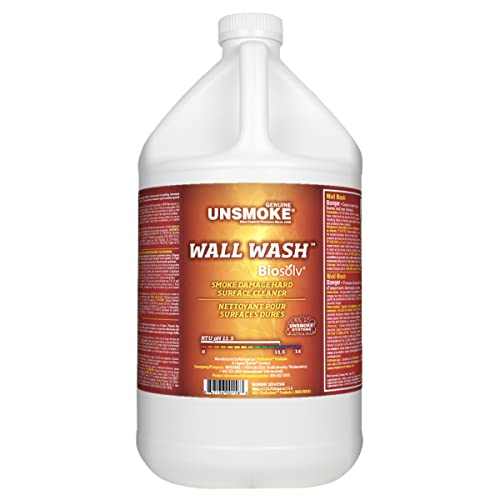
A gallon of concentrated degreaser for when smoke film covers a whole room.
This is the heavy-duty, whole-surface option. It comes as a 1 gallon jug — 128 fluid ounces — of concentrated liquid, and it weighs 8.5 pounds. That volume is the point: you mix it down rather than spraying it neat. A verified method is 1 quart of product to 3 quarts of hot water, applied with a rag in three passes — a fresh batch for the second pass and a clean damp towel for the third. At that ratio, a single gallon covered 350 square feet of RV interior.
The strength here is smoke tar. It melts yellow smoke residue and handles cooking smoke and oil stains that ordinary degreasers leave behind. It is a multisurface cleaner for both commercial and residential smoke-damaged spaces, and it doubles as a paint prep cleaner. Spray it on, wait about 20 seconds, and wipe with a damp cloth for perfect results — that short window is deliberate, because leaving it on for more than 5 minutes can eat through paint.
Two things catch people out. First, the rinse: skip the clean-water pass and you can get streaks in the finish, so do not cut that step. Second, strength on some surfaces — this is a concentrate that will strip paint if you leave it parked too long. It carries a mild citrus scent rather than a harsh chemical smell, and gloves are wise given how strong it is.
Why It Stands Out
- 1 gallon of concentrate mixes down for large areas and stretches far
- Cuts yellow smoke tar and cooking oil stains other degreasers leave behind
- Leaves no sticky residue when you do the rinse pass
- Pleasant mild scent, not a harsh chemical cleaner smell
The Fine Print
- Over-soaking beyond 5 minutes can damage paint
- Requires a clean-water rinse or you risk streaks
- An 8.5-pound gallon jug is heavy to haul and pour
Best for: post-fire cleanup, rental turnovers and any room where smoke film has settled across the walls.
Think twice if: you only have a few scuffs to handle — this concentrate is more firepower than a small touch-up needs.
5. Furniture Clinic Stove Care Kit

Two jobs in one box — cut the soot, then put the black back into faded metal.
Most soot cleaners only remove. This kit cleans and restores. It pairs a Stove Glass & Metal Cleaner with a Stove Restorer, plus the applicators to use both. The cleaner cuts through soot and dirt on glass or metal — spray it on and wipe with a clean cloth, and for stubborn glass marks you use an abrasive pad with the spray. The restorer is the second half: rub it into the metal, polish it off, then light the stove to cure. For comparison with the Rutland bottle, this kit weighs 1.9 pounds versus Rutland’s 2.27 pounds.
The restorer is the real differentiator. It is a non-toxic, non-flammable, low-odor alternative to stove paint that covers faded and worn metal in one application, and once dry (10 minutes) it will not flake or peel and withstands very high temperatures. It works on all types of metal, including cast iron, on black log burners, stoves, fireplaces, grates and fireside accessories. Owners of antique and tiny wood stoves describe the finish as looking beautiful afterward, and the routine — spray the cleaner, wipe soot from hinges and corners, apply the polish with a sponge to a light sheen — is easy to follow.
Be clear about what the effectiveness feedback really says: it is mixed. Some owners find it works exactly as described, while others report it does not work as advertised.
What it delivers: a complete clean-and-restore routine in one box, with a low-odor restorer that brings faded cast iron and black metal back without stove paint.
What to keep in mind: the restorer needs a heat cure after application, and the cleaning results are judged mixed — it is best treated as a maintenance kit, not a heavy tar solution.
Choose it for: sprucing up a tired cast-iron or black metal stove so it looks sharp again as well as clean.
Pass on it for: deep creosote removal inside a firebox — reach for a dedicated creosote remover instead.
Know the Specs
Spray vs. Concentrate
A spray bottle arrives ready to use: point, spray, wipe. A concentrate is meant to be diluted with water before use, which stretches a jug across large areas but demands you follow a mixing ratio. A 1 gallon concentrate mixed down can cover far more square footage than a pre-mixed spray of the same volume — but only if you measure. Get the ratio wrong and you either waste product or risk damaging the surface.
Heat-Activated Chemistry
Some creosote removers only work once the firebox reaches a specific temperature — the Rutland bottle lists heat activation at 265°F. That means the product sits on the deposit and does its work while the stove is running, converting sticky creosote into dry ash. A cold spray gel, by contrast, works at room temperature on baked carbon. Knowing which type you have decides whether you clean a cold stove or a warm one.
Dwell Time and Rinse
Dwell time is how long you let the cleaner sit before wiping. Too short and the deposit has not broken down; too long and a strong formula can begin attacking the finish beneath. Several products specify a window — around 20 seconds for a spray-and-wipe wall wash, or 15 to 30 seconds for a gentle surface spray. Read it before you spray, and always follow the rinse instruction, because many formulas leave a residue that streaks if you skip the damp-cloth pass.
Surface Compatibility
The label naming what a formula is safe on is the most important spec on the bottle. A wood, pellet and coal glass cleaner is not formulated for gas stove glass. A 99.7 percent natural surface spray is built for paint and sealed wood, not tar. A restorer is meant for cast iron and black metal. Match the formula to the surface before it touches anything, and test a hidden patch on paint or finish first.
Common Questions
Can I use a wood stove glass cleaner on a gas stove?
What is the difference between a soot cleaner and a creosote remover?
How long do I leave a soot cleaner on before wiping?
Do I need to rinse after using a smoke damage degreaser?
Will a wall cleaner damage the paint above my fireplace?
How much does the Rutland creosote remover actually use?
Is the Furniture Clinic kit safe on cast iron?
Can I spray creosote remover directly on my firewood?
Does a bigger jug actually save me money on soot cleaner?
How do I keep creosote from building up in the first place?
The Bottom Line
For most people chasing black stove glass, the soot cleaner winner is the MEECO’S RED DEVIL 702 Refill, because its 64-fluid-ounce size and proven creosote-cutting power handle a hard-working wood or pellet stove all season. If the sticky tar lives inside the firebox rather than on the glass, grab the Rutland Liquid Creosote Remover, which is heat activated at 265°F and turns tar into brushable ash. And for smoke film across a whole room after a fire, the Wall Wash with Biosolv gallon concentrate is the one to reach for.
How we choose
We do not accept paid placement. Every pick is matched to a real buyer and a real use-case; we do not hands-on test units.
Sources
Specifications: manufacturer listings and product documentation. Review insights: verified customer reviews, as of October 2026. Pricing: not shown on this page (it changes often); check the current price via the retailer link.
As an Amazon Associate, Aappliancez earns from qualifying purchases. This does not affect which products we feature.