Disclosure: Some links in this post are affiliate links. As an Amazon Associate I earn from qualifying purchases, at no extra cost to you. Learn more
Specs are compiled from manufacturer listings and verified buyer reviews and can change over time — please confirm the key details on the product page before buying.
You want an alarm that screams at real smoke, not at your toast. That single demand is what separates a decent smoke detector from a nightly nuisance, and it is the whole reason this list exists. The picks below were chosen because their sensing tech, hush controls, and interconnection behavior are built to keep quiet during normal cooking and shower steam. Every unit here covers smoke detection, and a few fold in carbon monoxide for one device on the ceiling instead of two.
This guide is built by comparing the manufacturers’ published specifications and the patterns across verified customer reviews, so you get each pick’s real strengths and trade-offs instead of marketing spin.
Some designs fight nuisance alarms with a photoelectric-only sensor (it reads smoldering smoke rather than fast flames), some add a hush button, and one links your whole house so a far-off alarm still reaches you. Below you get the full breakdown of the smoke detectors that don’t false alarm, sorted so you can pick in minutes instead of hours.
Top Picks

How To Choose The Best Smoke Detectors That Don’t False Alarm
A false alarm is rarely random. It usually comes from the sensor type, its placement near a stove or bathroom door, or a unit drifting out of calibration late in its life. Match the detection tech and the silence control to your kitchen, and most of the 3 a.m. surprises disappear.
Sensor type is the first lever
Photoelectric sensors look for visible smoke particles from a smoldering fire, which is why they tend to stay calm around steam and light cooking fumes. Ionization sensors react to fast-flaming fires but are more easily tripped by cooking. Dual-sensor alarms aim for both; the trade-off is you need to understand what each sensor is reacting to.
Hush and silence buttons earn their keep
A hush button temporarily mutes a known nuisance — searing a steak, a steamy shower — without disabling the alarm. A one-button design that handles both test and hush keeps you from fumbling at the ceiling. That matters more than most spec-sheet features.
Interconnection versus standalone
A standalone unit only alerts the room it sits in. A wireless or hardwired interconnected system sounds every linked alarm when one triggers, so a basement fire reaches the second-floor bedroom. Wireless interconnect needs no new wiring; hardwired systems need the right wiring and compatible units.
Battery strategy and lifespan
A sealed 10-year lithium battery means no annual swaps and no low-battery chirp at 3 a.m. — the alarm simply reaches end of life and tells you to replace the whole unit. A replaceable 9V battery gives you a fresh cell each year but demands the yearly check. Both approaches are valid; pick the maintenance style you’ll actually keep up with.
Side-by-Side Comparison
| Model | Best For | Sensor Type | Power Source | Alarm / Interconnect | Amazon |
|---|---|---|---|---|---|
| X-Sense SC06-W 6-Pack★ Best Overall | Whole-home smoke and CO coverage | Photoelectric + electrochemical (CO) | 10-year sealed lithium battery | 85 dB, wireless interconnect | Amazon |
| Kidde P3010BBest Value | Simple single-room smoke guard | Photoelectric | 10-year lithium battery | Test-Hush button, standalone | Amazon |
| SITERWELL GS509A | Tight ceilings and small rooms | Photoelectric | 9V battery | 85 dB, mute button, standalone | Amazon |
| First Alert SMI105-AC | Replacing hardwired alarms | Smoke (Precision Detection) | Hardwired with 10-year battery backup | Interconnect with compatible alarms | Amazon |
| First Alert SMICO100 | Battery-only smoke plus CO | Smoke and CO (Precision Detection) | Battery powered | Test/silence button | Amazon |
| X-Sense SC06 | One-room smoke and CO combo | Photoelectric + electrochemical (CO) | 10-year sealed lithium battery | Standalone | Amazon |
| Kidde i12040 | Large hardwired interconnected systems | Ionization | Hardwired with 9V battery backup | Up to 24 devices interconnected | Amazon |
Detailed Reviews
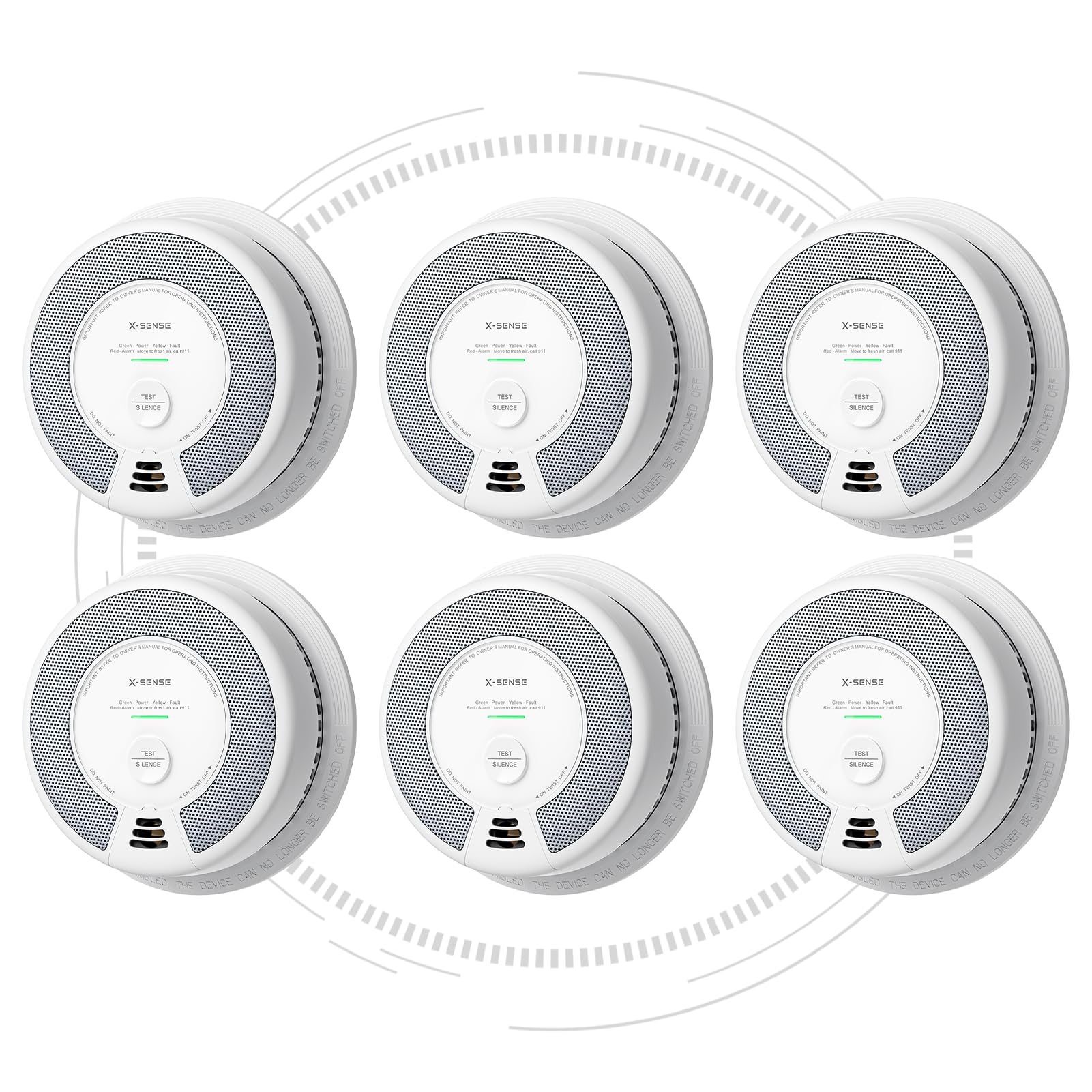
1. X-Sense 6-Pack Interconnected Smoke and CO Detector, SC06-W
Our pick — 4.5+★ from 3,000+ verified ratings; the strongest balance of quality and price.
One alarm sounds, all six follow — the whole-house answer in a single box.
If your worry is a fire starting in the basement while you sleep on the second floor, this six-pack solves it in one purchase. Each unit is a 2-in-1 smoke and carbon monoxide alarm, so you cover both hazards on one ceiling mount instead of hanging two separate devices. When any detector triggers, all of them sound — a wireless link that needs no new wiring. The kit holds six units, versus one for the Kidde P3010B, and each one runs on a sealed 10-year lithium battery.
Setup is genuinely beginner-friendly. All six are pre-paired from the start, and the included bracket, screws, and anchor plugs mount to any wall or ceiling. One push of the test/silence button tests or silences every unit in the system at once. The 85 dB siren is loud enough to wake you from deep sleep, and every unit monitors CO in real time. Voice alerts and battery-status notifications round it out.
What wins people over is the build quality and the interconnection — the two most-praised parts of this system. As one owner put it: “The wifi connection works perfectly. I have 6 detectors installed spread out between a basement, 1st and 2nd floor. Activation of any detector triggers the others.” The catch is the sealed battery’s fixed decade: when it expires, the unit is replaced, not re-batteried. A handful of owners also report units failing around the one-year mark, so treat the 5-year quality warranty as your safety net and register the purchase. Cooking smoke can still trip the sensor; it stays calmer around steam.
What earns the top spot
- Six interconnected smoke and CO alarms on one wireless link
- 85 dB siren and real-time CO monitoring on every unit
- Pre-paired from the start — no wiring, no software setup
- One button tests or silences the entire system
Where it asks patience
- Sealed battery means full replacement at ten years, not a swap
- Some long-term units have failed early — keep the warranty handy
- Cooking smoke can still set it off
Built for: Households that want smoke and CO covered across multiple floors from one box.
Think again if: You need only one alarm, or you’d rather swap a fresh 9V each year than replace the whole unit at end of life.
2. Kidde Smoke Detector 10-Year Battery
The quiet replacement that slides straight onto an old base and skips a decade of battery checks.
Photoelectric sensing is the reason this one earns its keep in a kitchen-adjacent hallway. It looks for visible smoke particles from a smoldering fire rather than the fast-flame signature, so everyday cooking steams trip it less often. The Test-Hush button lets you test the alarm or silence a nuisance from cooking or shower steam in one press. Power comes from a 10-year lithium battery, and the alarm runs even when the house power drops.
Where it stands out is the fit-and-forget install. The alarm activates automatically when it clicks onto the mounting bracket, and long-time owners of the earlier model describe the swap as a twist-in job. This unit is slimmer than the X-Sense SC06-W — 1.6 inches deep against 2 inches — so it hugs the ceiling closer. At 9.6 ounces it is also heavier than the SITERWELL at 7.04 ounces, a small sign of the denser battery and housing.
An end-of-life chirp tells you when replacement is due, which is the sealed battery’s honest trade-off: no annual battery run, but a new unit at the ten-year mark. A rare unit can false-alarm early and be awkward to silence when it does, and the mounting plate changed on this model number, so a few owners needed a short reinstall. For the price, though, it is the easy smoke-only choice for a bedroom or hallway.
Best used for: A one-alarm bedroom or hallway where you want photoelectric calm and no yearly battery ladder work.
Honest friction: The sealed battery locks you into full replacement at ten years, and a defective unit can be fussy to quiet — test it the day it goes up.
Go for this if: You want a single low-maintenance smoke alarm that won’t chirp for a decade.
Choose another if: You need carbon monoxide coverage or house-wide interconnection.
3. SITERWELL Smoke Detector Fire Alarms 9V Battery Operated
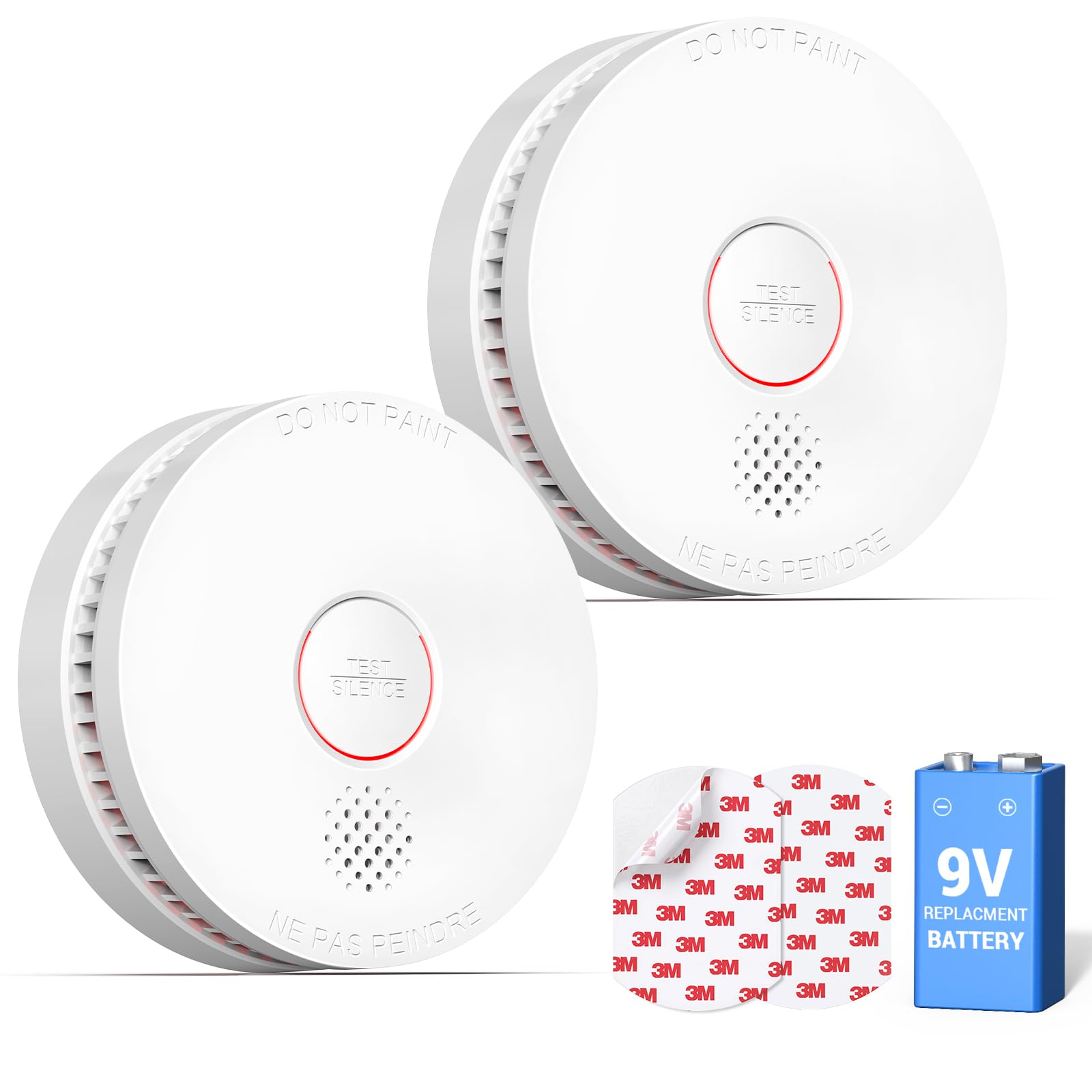
A palm-sized photoelectric alarm that slips onto tight ceilings where full-size units crowd.
Small rooms and awkward ceiling spots are where this one fits best. The body measures 3.93 inches across and 1.37 inches deep — noticeably smaller than the 5.22-inch Kidde — so it slots into a hallway nook or utility closet without looking bulky. It is also the lightest unit here at 7.04 ounces, well under the 9.6-ounce Kidde. Photoelectric sensing targets slow, smoldering fires that give off light smoke and little heat, which is exactly the failure mode that catches people off guard at night.
A 9V battery powers it, and the design allows continuous use over a ten-year product life with battery swaps along the way. The mute button silences a known nuisance, and a low-battery signal warns you before the cell dies. The siren runs above 85 dB so it carries through a closed bedroom door. Owners consistently rate the size and build quality high — compact footprint is the trait most mentioned after quality overall.
The sticking point is mounting. The magnetic fastening kit is advertised, but some units ship with only double-sided tape, and the tape can let go on a textured ceiling. If you want the magnetic hold, confirm the kit is in the box before you climb the ladder, or plan to screw the bracket instead. Battery life is a replace-yearly affair, not a decade, so this is the hands-on option.
Fits the bill for: Tight ceilings, utility rooms, or anywhere a full-size alarm looks out of place.
Hands-on upkeep: You’ll swap the 9V on a yearly rhythm, and the mounting method needs checking on arrival.
Worth grabbing when: A compact footprint and easy battery access matter more than a sealed decade battery.
Look past it if: You want a set-and-forget sealed unit or whole-house interconnection.
4. First Alert Hardwire Smoke Alarm with 10-Year Battery Backup

Hardwired protection that keeps watching through an outage, tuned to cool it on cooking smoke.
This one is aimed squarely at the homeowner replacing old wired alarms. It taps your home’s existing wiring, so it never needs battery-only upkeep, and a 10-year battery backup carries it through a power cut. First Alert’s Precision Detection sensing is designed to meet newer industry standards for cutting cooking nuisance alarms while still warning early. An alarm indicator on the initiating unit tells you which device started the noise, which matters in a multi-unit house.
Installation earns the most praise after raw functionality — owners describe it as a straight swap onto standard existing wiring, with owners replacing alarms that had served well past their ten-year interval. The early-warning interconnect sounds all compatible units together when one triggers. An end-of-life warning tells you when replacement is due. It weighs 11.2 ounces, making it the heaviest single unit on this list.
Two wrinkles worth knowing. The interconnect works between compatible alarms, so all units on the loop need to match; mixed brands can leave a gap. And the baseplate mounting can make the test-button position awkward on some ceilings. At 5.6 inches across and 2 inches deep, it matches the X-Sense footprint but is a hardwired unit, so the install depends on your existing wiring.
Why wired owners like it
- Uses existing hardwired connections — no battery-only compromise
- 10-year battery backup rides out power outages
- Precision Detection is designed to cut cooking nuisance trips
- Alarm indicator shows which unit fired first
The wiring fine print
- Interconnect only links compatible alarms — match your loop
- Baseplate can put the test button in a cramped spot
- Requires existing hardwired infrastructure
Pick this if: Your home already has hardwired alarms and you want a matching no-fuss replacement.
Not for you if: You have no existing wiring or want a purely battery-powered unit.
5. First Alert Battery Combination Smoke & Carbon Monoxide Alarm

Battery-only smoke and CO in one mount, no wiring and no second device on the ceiling.
For renters or anyone who cannot touch the wiring, this combo covers smoke and carbon monoxide from a single battery-powered mount. Its Precision Detection sensing is tuned to cut cooking nuisance alarms, and one button handles both testing and silencing. A replaceable battery — this is a 9V-style unit — means you can refresh the cell instead of retiring the alarm, which some owners prefer over a sealed design. An end-of-life warning still tells you when the whole unit should go.
What earns it praise is the build quality and dead-simple install, with the 2-in-1 combination an added draw for campers and cabin owners. There is no wiring required, and it goes up on a wall or ceiling with the included hardware. At 5.6 inches across and 2 inches deep, it matches the hardwired First Alert and the X-Sense SC06-W for a tidy ceiling presence.
The honest note is reliability. It’s the most-discussed theme overall, and the feedback is genuinely split — some units perform exactly as promised, while a rare one can be slow to sound in a real smoke test. Treat the test button as a baseline check and confirm with actual smoke when you first install. The mounting bracket also demands a firm twist to lock, which can take a couple of tries.
The draw: Smoke and CO from one battery-only unit, with easy installation and a replaceable cell.
The watch-point: Reliability is the mixed theme here — test it with real smoke, not just the button, on day one.
Reach for this if: You want smoke plus CO coverage with zero wiring, or a compact unit for a cabin.
Pass on it if: You need house-wide interconnection or a hardwired setup.
6. X-Sense Smoke & Carbon Monoxide Alarm, SC06, 1-Pack
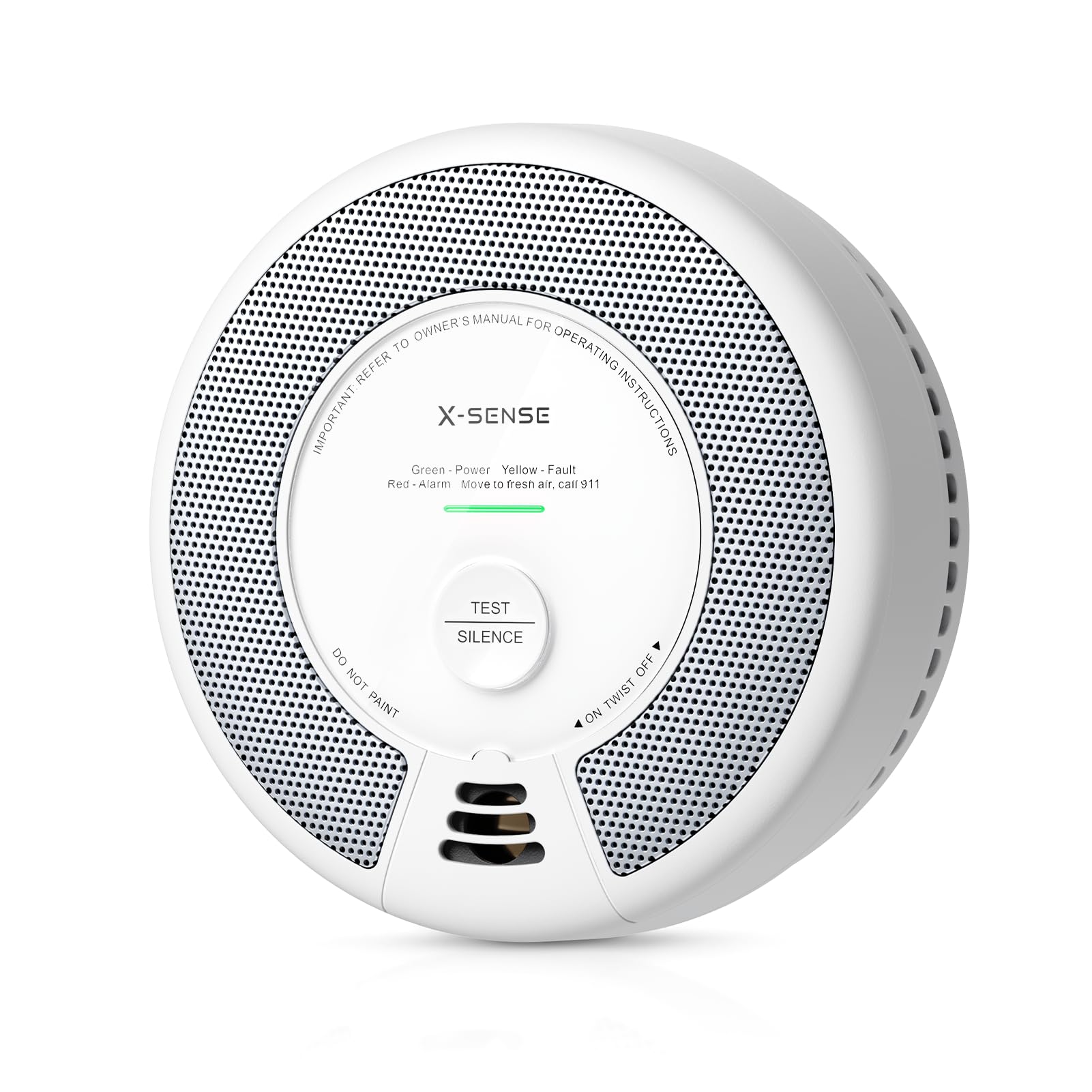
Dual sensors that watch for smoldering smoke and silent CO, on a battery you never touch.
This is the single-unit version of the top pick, and its dual-sensor lineup is the selling point. A photoelectric smoke sensor reads smoldering fires with fewer cooking false alarms, while an electrochemical CO sensor watches for invisible, odorless carbon monoxide. It is certified to UL 217 for smoke and UL 2034 for CO detection. Power is a built-in lithium battery rated for 10 years — no swaps, no low-battery beeps at night, no ladders.
Installation is by bracket, screws, and anchors, with no rewiring — owners consistently name easy install and quality as the standout strengths, with the tidy look and the loud siren close behind. It shares the top pick’s 5.7-inch round, 2-inch-deep housing, so it looks the same on the ceiling. The one thing to be clear about: this SC06 is a standalone unit — no wireless interconnect, no Wi-Fi, no base station. If you want the house-follows-alarm behavior, that’s the SC06-W six-pack.
The catch is durability. Sealed battery means the unit is retired at the decade mark, and the mixed reliability signals suggest a few units fall short before then. This is a buy-one-for-the-bedroom or hallway pick, not the way to wire a whole home. For a single room where you want both hazards on one device with zero battery errands, the dual sensors earn it.
Its strong suit: Photoelectric smoke plus electrochemical CO on one sealed 10-year battery, certified to UL 217 and UL 2034.
The fine print: Standalone only — no interconnect — and the sealed battery can’t be refreshed if the unit goes early.
Ideal for: One room that needs both smoke and CO coverage with no battery chores.
Wrong pick if: You want alarms to talk across the house — go with the six-pack instead.
7. Kidde AC Hardwired Interconnect Smoke Detector Alarm i12040
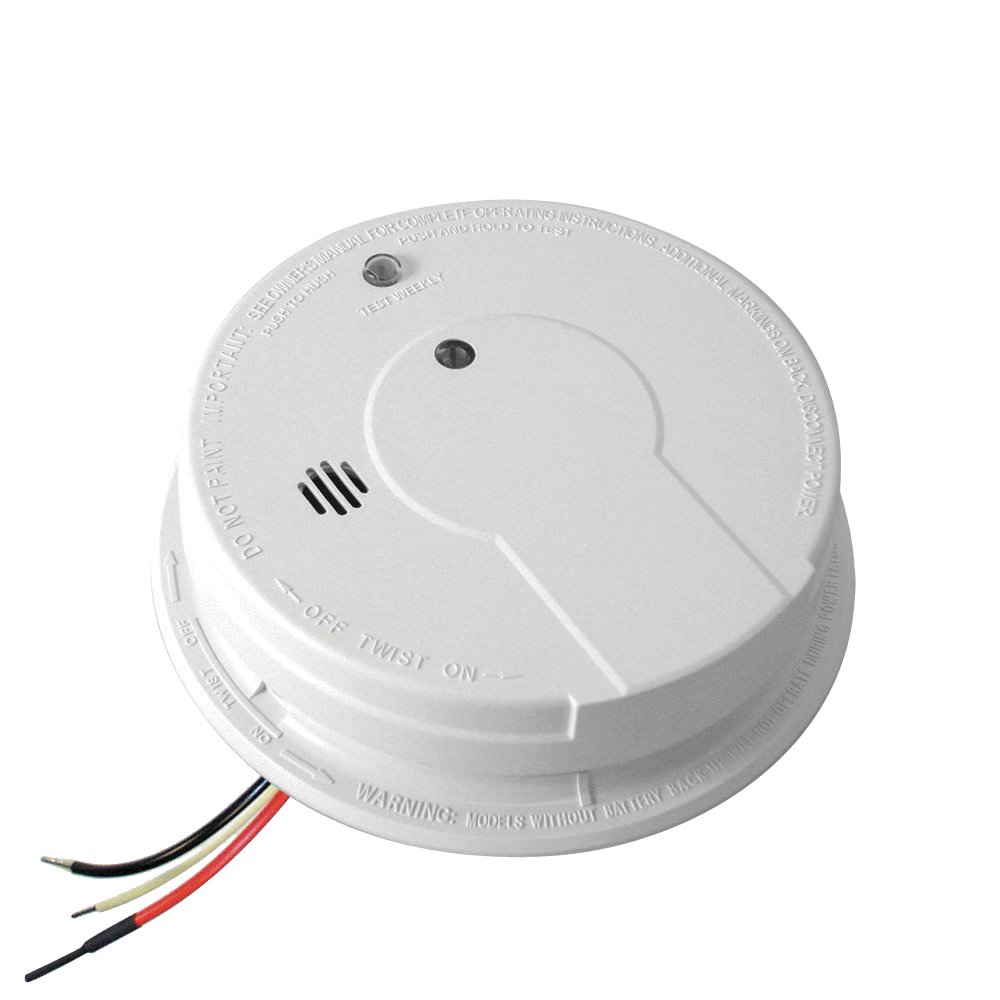
The hardwired hub that links up to 24 alarms and swaps onto old Kidde plugs.
For a large wired home, the interconnect capacity is the headline: this one links up to 24 devices, of which 18 can be initiating, including smoke, CO, and heat alarms. It is a direct replacement for older Kidde models, and the older 3-prong plugs fit — buyers report swapping a full six-unit system in about an hour. It runs on AC power with a 9V battery backup included, so a power outage doesn’t leave you blind. A dust cover protects the sensor during construction, which is a neat touch if you’re finishing a build.
The one-button design handles both hush and test, reducing the fumbling that confuses multi-button units. An alarm-memory feature flashes a red LED to show which unit started the chain, so you’re not hunting room to room. A front battery pull tab activates the backup without pulling the alarm off its bracket. Compared with the photoelectric picks, this is an ionization sensor — faster on flaming fires, but more easily tripped by cooking smoke, so placement away from the stove matters.
The real caution is sensor type. Ionization responds more slowly to smoldering fires than photoelectric, so a kitchen or bedroom near soft furnishings benefits from a mixed approach or a photoelectric unit nearby. The other note is lifespan — these are built to a replacement interval, and hardwired units tie their clock to the AC wiring. Treat it as the network backbone, not the sole alarm in a sleeping area.
Where the i12040 shines
- Links up to 24 devices — 18 can initiate — across smoke, CO, and heat
- Swaps onto older Kidde 3-prong plugs with a direct-replacement fit
- One-button hush and test, plus alarm-memory red LED
- 9V battery backup keeps it live during outages
Shop with eyes open
- Ionization sensor is more easily tripped by cooking smoke
- Needs hardwired AC infrastructure to do its job
- Not a photoelectric choice for a smoldering-fire-prone room
Best for: Big hardwired homes that need a wide interconnected network and a matching replacement for old Kidde units.
Skip if: You want photoelectric sensing in a kitchen or you have no AC wiring to power it.
Know the Specs
Sensor Type: Photoelectric, Ionization, or Dual
Photoelectric sensors spot visible smoke from a smoldering fire and tend to stay calmer around steam and light cooking — the reason most picks here lead with it. Ionization sensors react faster to flaming fires but are more easily tripped by cooking smoke. Dual-sensor units combine a photoelectric smoke sensor with an electrochemical CO sensor, so one device covers two hazards. If you want the fewest false alarms near a kitchen, lean photoelectric or dual.
Interconnection: Wireless vs. Hardwired
Wireless interconnect uses radio signals to link units, with no new wiring — the X-Sense six-pack pairs straight from the start. Hardwired interconnect runs over your home’s existing alarm wiring and can link large systems like the Kidde i12040’s up to 24 devices. The rule: match interconnect units to each other, since mixed brands and models can leave gaps. Interconnection is what turns a single alarm into a house-wide warning.
Common Questions
Will a photoelectric smoke detector really stop false alarms from cooking?
Can I mix different brands on the same interconnected system?
How often do I have to replace a sealed 10-year battery smoke alarm?
What does the hush or silence button actually do?
Does a wireless interconnected alarm need Wi-Fi?
Is ionization or photoelectric better for a bedroom hallway?
Can a smoke and CO combo alarm replace two separate devices?
How loud is the alarm and will it wake me up?
Do these alarms work during a power outage?
How do I test a smoke alarm properly instead of just pressing the button?
The Bottom Line
For most homes, the smoke detectors that don’t false alarm winner is the X-Sense SC06-W six-pack because it covers smoke and CO on every floor and links them so one alarm sounds all six — rated 4.5+ stars across 3,200+ ratings. If your priority is one simple, photoelectric unit that stays quiet near a kitchen, the Kidde P3010B delivers that with a 10-year battery. And for a large hardwired home that needs a wide network, the Kidde i12040 links up to 24 devices and swaps onto old Kidde plugs — just keep a photoelectric unit near the sleeping areas. Whichever you choose, install it away from the stove and run a real-smoke test on day one.
How we choose
We do not accept paid placement. Every pick is matched to a real buyer and a real use-case; we do not hands-on test units.
Sources
Specifications: manufacturer listings and product documentation. Review insights: verified customer reviews, as of October 2026. Pricing: not shown on this page (it changes often); check the current price via the retailer link.
As an Amazon Associate, Aappliancez earns from qualifying purchases. This does not affect which products we feature.