Disclosure: Some links in this post are affiliate links. As an Amazon Associate I earn from qualifying purchases, at no extra cost to you. Learn more
Specs are compiled from manufacturer listings and verified buyer reviews and can change over time — please confirm the key details on the product page before buying.
You know the problem the moment the credits roll on a night scene: the “black” of space turns milky grey, and the shadows swallow half the detail. Fixing that is mostly about one thing — how well a TV shuts down the light behind each pixel, either by switching pixels off entirely (OLED) or by steering thousands of tiny LEDs in tight zones (Mini-LED). Every set below handles that job in a different way, and this guide tells you plainly which one suits your room, your budget tier, and what you actually watch.
This guide is built by comparing the manufacturers’ published specifications and the patterns across verified customer reviews, so you get each pick’s real strengths and trade-offs instead of marketing spin.
Some panels go completely dark pixel by pixel, while others use tight dimming zones to keep a night scene from turning grey. Below, you’ll find a straight breakdown of the smart tvs with accurate blacks that hold their depth.
Top Picks
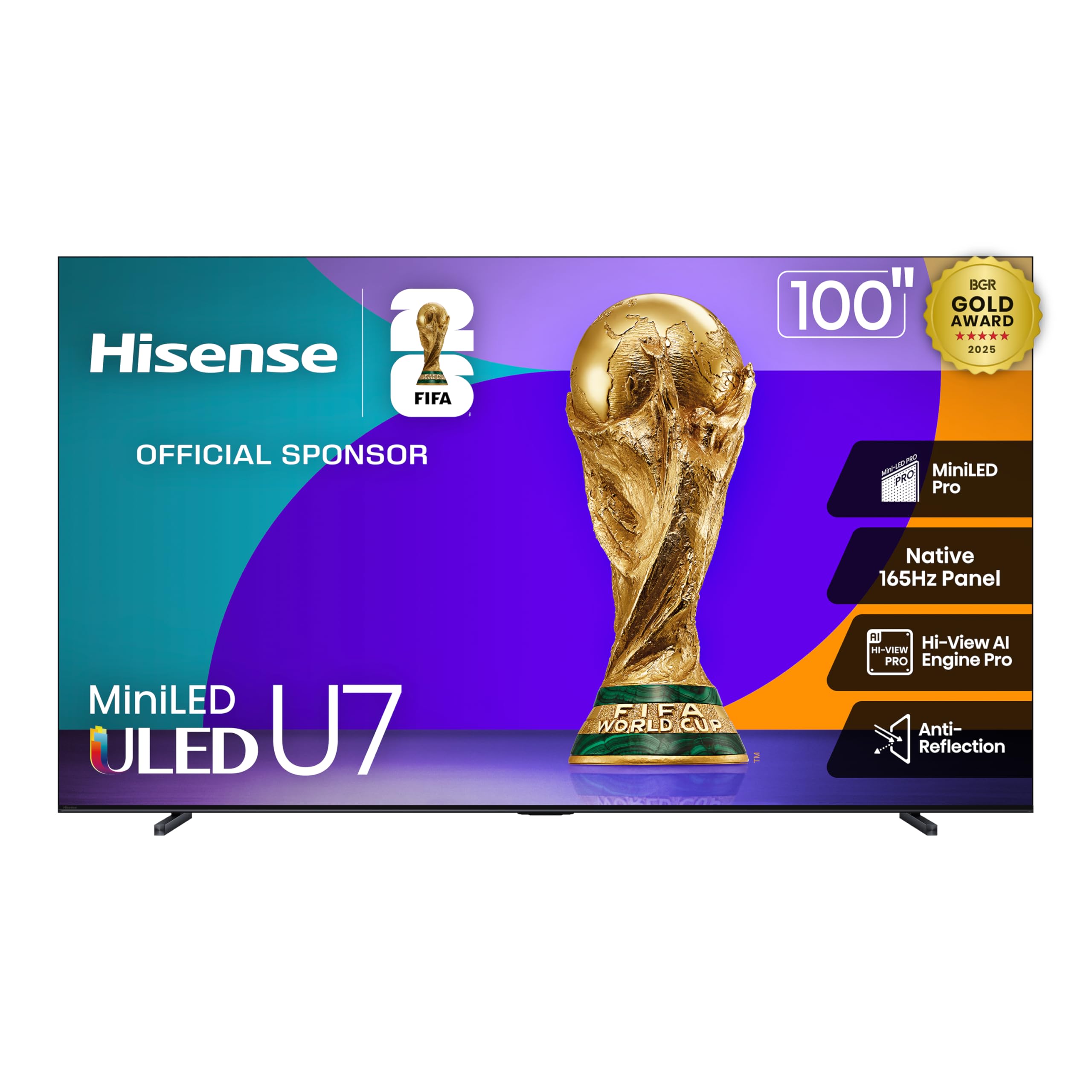


How To Choose The Best Smart TVs With Accurate Blacks
Deep blacks are not one feature — they are the result of how a panel produces light, how it dims that light, and how well the screen fights the room around it. Get those three right and a night scene looks inky instead of foggy.
OLED versus Mini-LED: two routes to the same dark
You get true black when each pixel can switch off by itself. An OLED panel lights every pixel individually, so a black pixel simply turns off — that is why OLED sets such as the LG G4 and Sony A80L show black with no glow at all (often called “pure black” or “infinite contrast”). A Mini-LED set uses one backlight split into local dimming zones — small patches of LEDs that can darken on their own — so a bright object on a dark background can leave a faint halo, called blooming. Mini-LED fights back with raw brightness, which keeps blacks looking deep in a sunlit room where an OLED may struggle.
Local dimming zones and blooming
More zones mean tighter control of the light, which shrinks the halo around a bright object. The Hisense U8 pairs up to 5600 local dimming zones with its Mini-LED backlight, while the TCL Q7 works with up to 200+ zones. Zone count is not the whole story — the processing that drives those zones matters just as much — but a higher count usually means less glow bleeding into a dark corner.
Peak brightness in nits, and why it matters at noon
Brightness is measured in nits (a unit of screen luminance). In a bright room, a dim panel’s blacks look washed out because the room’s own light reflects off the screen — so high peak brightness is your defense. The Hisense U8 tops out at up to 5000 nits, the Hisense U7 at up to 3000 nits, and the TCL Q7 at up to 1,000 nits. In a dark room, that order flips in importance: a panel that can go truly black wins.
HDR formats and room-aware tone mapping
Dolby Vision IQ and HDR10+ Adaptive are HDR formats that read the light in your room and adjust the picture on the fly, which keeps shadow detail visible when the sun is out. If you watch a lot of movies in a mixed-light living room, a set that supports both is worth prioritizing over one that only handles the basics.
Side-by-Side Comparison
| Model | Best For | Panel Type | Peak Brightness | Native Refresh | Amazon |
|---|---|---|---|---|---|
| Hisense 100″ U7 Mini-LED (100U75QG)★ Best Overall | Bright rooms and big-screen gaming | Mini-LED QLED | Up to 3000 nits | 165Hz | Amazon |
| Panasonic Z95 Series 65″ (65Z95AP)Home Cinema Pick | One-box living-room cinema | OLED (micro-lens array) | — | 144Hz | Amazon |
| LG 55″ OLED evo G4 (OLED55G4SUB)Wall-Hug Pick | Wall-hung movie room | OLED evo | — | — | Amazon |
| TCL 85″ Q7 QLED (85Q750G) | Big screen on a tighter tier | QLED with Full Array Local Dimming | Up to 1,000 nits | 120Hz | Amazon |
| Hisense 85″ U8 Mini-LED (85U8QG) | Maximum brightness and zone count | Mini-LED QLED | Up to 5000 nits | 165Hz | Amazon |
| Samsung 77″ S95C OLED (QN77S95C) | Slim design with QD-OLED black | QD-OLED | — | — | Amazon |
| TCL 98″ QM6K Mini-LED (98QM6K) | Huge screen, halo control | QD-Mini LED | — | 144Hz | Amazon |
| LG 65″ OLED evo G5 (OLED65G5WUA) | Pure black in a bright room | OLED evo | — | 120Hz | Amazon |
| Sony 65″ BRAVIA 9 (K-65XR90) | Glare-heavy rooms, wide seating | Mini-LED QLED | — | — | Amazon |
| Samsung 83″ S90F (83S90F) | Big OLED with AI upscaling | OLED | — | 144Hz | Amazon |
| Sony 83″ BRAVIA XR A80L (XR83A80L) | Large-format OLED for film | OLED | — | — | Amazon |
Detailed Reviews
1. Hisense 100U75QG Mini-LED ULED 4K Google TV
Our pick — 4.0+★ from 700+ verified ratings; the strongest balance of quality and price.
A hundred inches of screen that stays deep-black while daylight pours in.
Start with the zone count: up to 3000 local dimming zones means the backlight is carved into up to 3000 patches that darken on their own, so a candle flame on a night battlefield glows without a grey cloud around it. Add up to 3000 nits of peak brightness (a measure of how much light the screen throws) and this set keeps its contrast even with the curtains open. Anti-Reflection cuts the glare that would otherwise bleach your shadows in an afternoon-lit room.
Gamers get the fastest panel on this list: a native 165Hz refresh rate, meaning the screen redraws 165 times a second, with Variable Refresh Rate running from 48Hz to 165Hz so a fast pan stays smooth. That beats the Panasonic Z95’s 144Hz here, and AMD FreeSync Premium Pro with Auto Low Latency Mode trims controller lag. The Hi-View AI Engine Pro chipset reads the content and tunes depth and color on the fly, and Bluetooth 5.3 means you can run earbuds and the TV speakers at once without lip-sync drift.
Picture quality across movies and sports is what wins people over — deep contrast and sharp 4K detail come up again and again — and the set’s brightness genuinely competes with a sunlit room. Setup is quick and the Google TV interface is easy to navigate. The honest catch: this is a very large, heavy panel, and a handful of buyers have hit a panel failure months in. As one buyer put it, the “TV failed ~4 months after purchase (July 10 to mid-November).” That is a small slice of a widely liked set, but it is the reason to keep your receipt and your warranty close.
Where it pulls ahead
- Up to 3000 dimming zones plus up to 3000 nits keeps blacks deep in a bright room
- Native 165Hz with VRR from 48Hz to 165Hz — the fastest panel here
- Anti-Reflection coating protects shadow detail from window glare
- Google TV setup is quick and the interface is easy to learn
What to weigh first
- Enormous and heavy — plan a two-person wall mount with heavy-duty anchors
- Built-in sound is decent, not cinema-grade; a soundbar does the Dolby Atmos justice
- An occasional panel failure has shown up months into ownership
Take this one if: you have the wall space for 100 inches and want Mini-LED brightness without losing black depth.
Think twice if: you cannot get a second set of hands for the install — this panel is not a solo lift.
2. Panasonic 65Z95AP OLED 4K Fire TV
An OLED built to look like a plasma and sound like a small speaker array.
For a dark-room film buff, the appeal is simple: the Z95’s OLED panel with micro-lens-array technology turns each pixel into its own light source, so a black pixel produces nothing at all. Picture depth is what carries this set — deep blacks, rich color and a detailed image are the steady theme in owner reports. The HCX Pro AI Processor MKII handles the tone mapping, and every major HDR format is onboard: HDR10, HDR10+, Dolby Vision and HLG, with HDR10+ Adaptive and Dolby Vision IQ adjusting the picture to your room’s light.
Sound is a real part of the pitch — 360 Soundscape Pro tuned by Technics uses an integrated front-array with upward and side-firing speakers and Dolby Atmos, so dialogue and effects come from around the screen rather than below it. Gamers get HDMI 2.1, a 144Hz refresh rate, VRR, AMD FreeSync Premium and NVIDIA G-SYNC. That 144Hz sits just under the Hisense U7’s 165Hz, so the Hisense leads on raw refresh; the Panasonic leads on per-pixel black.
Two trade-offs to size honestly. Value and reliability show up as the most debated points in owner feedback — this is a premium set and some wonder whether it earns the outlay. And the Fire TV software ties it to Amazon’s world: buyers report the set is “unusable without Amazon servers,” with always-on Alexa and a 100Mbps Ethernet port that can stutter on high-bitrate 4K files. If you want to stay offline or run your own media server, budget for an external streaming box.
Black-room verdict: for pure blacks and built-in Atmos in a compact wall-mount setup, this is the film-first pick — picture and sound performance are what buyers praise most.
The caveat that decides it: Fire TV’s reliance on Amazon’s servers and a 100Mbps wired port is fine for streaming apps and awkward for a local Plex library.
Reach for this if: you want one box doing serious OLED picture and real surround sound in a small media room.
Look elsewhere if: your library lives on a home server or you refuse an always-on voice mic.
3. LG 55-Inch Class OLED evo G4 Series Smart TV (OLED55G4SUB)
Eight million pixels that each switch off for black, in a frame that nearly touches the wall.
LG’s trick with the G4 is over 8 million self-lit pixels — every one turns off individually, so black is genuinely black and the transition to bright highlights happens with no halo at all. The 100% Color Volume and 100% Color Fidelity figures speak to keeping color rich even in the darkest part of a scene, and Brightness Booster Max magnifies each pixel to lift daytime viewing. The One Wall Design leaves virtually no gap when hung, and when the set is idle it can display paintings or photos instead of a black rectangle.
Around the picture, the A11 AI Processor runs AI Super Upscaling and AI Director Processing, and Multi View splits the screen into four views. Dolby Vision and Dolby Atmos are both present, Filmmaker Mode shows films as the director cut them, and the webOS Re:New program promises software refreshes for 5 years. For gaming it lists AMD FreeSync and NVIDIA G-SYNC support. What people keep coming back to is the picture: infinite contrast with deep blacks and bright whites, and a panel that runs cool.
The recurring friction is the webOS interface — it is not as instantly obvious as some rivals, though software updates have softened that. LG’s own listing describes the G4 with its stand, so confirm the stand or mount setup you need before ordering. What it delivers, though, is the cleanest black-to-bright handoff on this list — no zones, no blooming, just pixels.
Why it earns its slot: over 8 million self-lit pixels make black a true off-state, which is the whole point of a set bought for dark-scene accuracy.
Small snag to plan for: webOS takes a few evenings to feel natural if you are coming from another platform.
Best fit: a wall-hung movie room where the TV doubles as art when it is off.
Not the one for: buyers who want the simplest possible remote-and-menu experience from the start.
4. TCL 85-Inch Q7 QLED 4K Smart TV with Google TV (85Q750G)

Eighty-five inches of Full Array dimming without stepping into the top tier.
Full Array PRO Local Dimming gives this set up to 200+ local dimming zones, small patches of backlight that darken on their own so deep blacks hold their shape. HighBright PRO Direct LED reaches up to 1,000 nits of peak brightness, enough to keep a bright room from washing the shadows grey. QLED Quantum Dot color pushes past a billion shades, and Dolby Vision IQ plus HDR10+ both adapt the image to your lighting.
For sports and consoles the 120Hz panel with Motion Rate 480 and MEMC frame insertion smooths fast pans, and Game Accelerator 240 pushes VRR up to 240Hz for responsive play. The TCL AIPQ Engine with Deep Learning AI handles upscaling of older content. The contrast is the headline: owners describe near-OLED HDR and depth that punches above the tier, with color coverage beyond 98% DCI-P3 reported — though one comparison notes a Hisense rival runs brighter at 1500+ nits versus 1k-1200.
Two things to know going in. Out-of-box settings are weak and take 15-20 minutes of tuning per input to look right — plan a setup evening. And some owners have seen a set stop working within 8 months, which is why the warranty is worth registering the day it arrives. Tune it properly and the blacks and color hold up against sets that cost far more.
What the panel gives you
- Up to 200+ local dimming zones for deep blacks and minimal blooming
- Up to 1,000 nits keeps shadow detail in a six-window room
- 120Hz native panel with Game Accelerator 240 for consoles and PC
- Near-OLED HDR depth at a big-screen size
Plan around these
- Picture needs real tuning from the start before it shines
- Screen is a little reflective of room lighting
- A minority report sets failing within 8 months
Pick it for: the biggest screen you can hang with local dimming, without swinging to the flagship tier.
Pass if: you will not spend an evening dialing in picture settings input by input.
5. Hisense 85U8QG ULED Mini-LED 4K Google TV
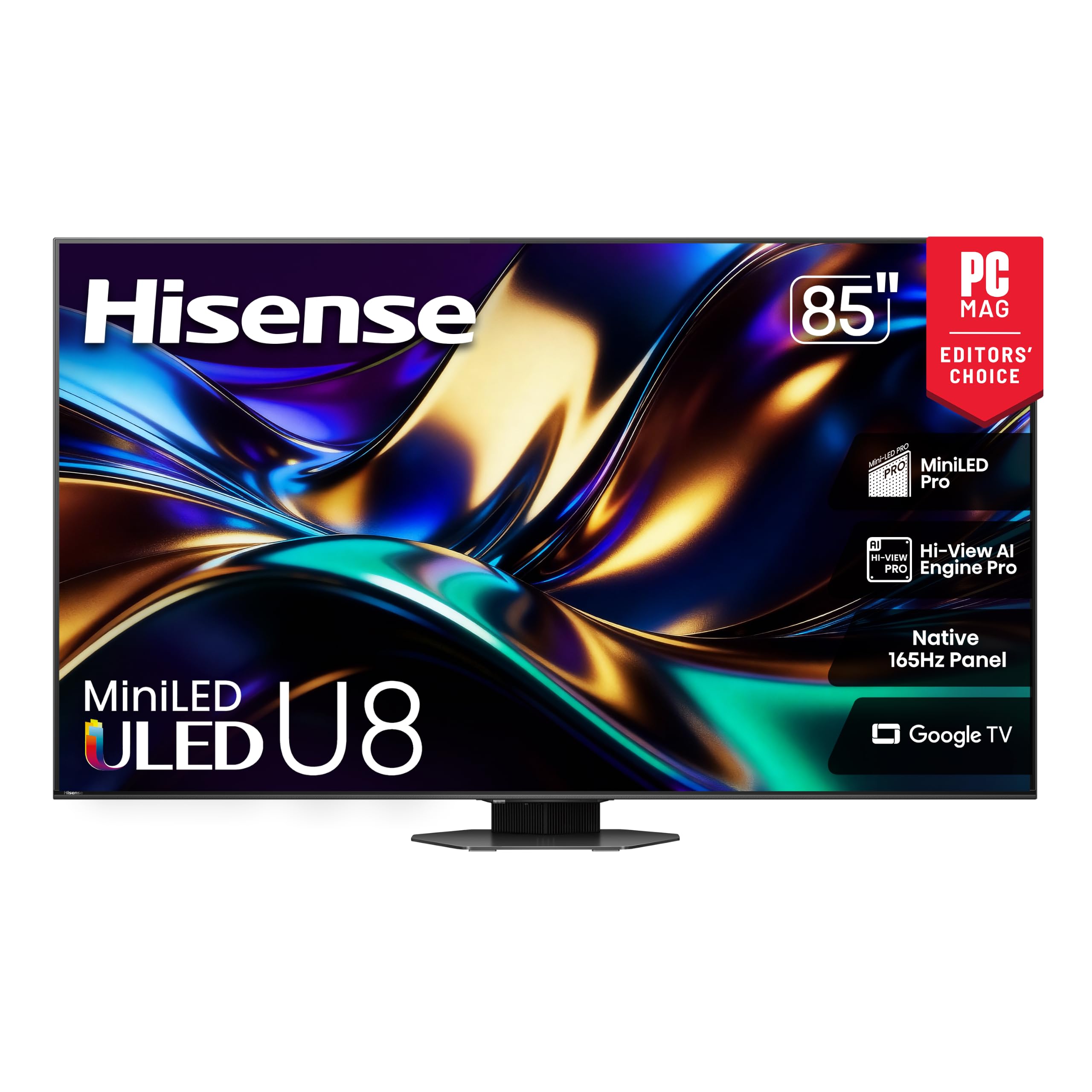
Up to 5600 dimming zones aimed at one job: ink-black shadows in a sunlit room.
Hisense stacks the numbers high here — up to 5600 local dimming zones and up to 5000 nits of peak brightness, driven by Full Array Local Dimming that darkens patches of backlight so shadows read deep and bright highlights stay clean. Anti-Reflection Pro bakes a coating into the liquid crystal layer to cut glare, which is what keeps those blacks from washing out when daylight hits the screen. The result, as owners describe it, is near-OLED contrast with vivid color on a big panel.
Gaming is close to the U7’s standard: a native 165Hz panel with Variable Refresh Rate from 48Hz to 165Hz, AMD FreeSync Premium Pro, Auto Low Latency Mode and the on-screen Game Bar. The 4.1.2-channel audio with Dolby Atmos adds a built-in subwoofer and two up-firing speakers, which is more speaker hardware than most rivals here. QLED color is Pantone validated, and the Total HDR Solution supports Dolby Vision IQ, HDR10+ Adaptive, HDR10, HLG and Advanced HDR by Technicolor for consistent black levels across formats.
The catch is physical: this is a huge, heavy panel that takes two or more people to mount safely, and a few buyers have received units damaged in delivery. Color, contrast and brightness are what people rave about once it is up. Give it a sturdy wall and a careful unboxing, and the zone count does the work.
The case for it: up to 5600 dimming zones plus up to 5000 nits is the most aggressive black-and-brightness pairing on this list.
What to expect: the built-in speakers are widely reported as weak next to the picture — a soundbar is the usual add-on.
Suits you if: your room is bright all day and you refuse to let a night scene go grey.
Rewind if: you are installing solo or want a set that runs on its own speakers alone.
6. Samsung QN77S95C OLED 4K Smart TV

Quantum-dot OLED black with a design thin enough to disappear into the wall.
Quantum HDR OLED+ tone-maps every scene for crisp whites and deep blacks, and the Neural Quantum Processor upscales HD content to 4K scene by scene. The Infinity One Design with Slim One Connect moves your inputs into a separate box so the panel itself hangs slim and clutter-free.
Picture is the reason to buy — owners consistently rank the image above a 1000-nit OLED monitor, with vivid color and deep blacks, and the Real Depth Enhancer adds a sense of three-dimensionality. Dolby Atmos with Object Tracking Sound+ and Q-Symphony 3.0 (which pairs the TV speakers with a Samsung soundbar) handle audio, and Motion Xcelerator Turbo Pro runs up to 120Hz, or 144Hz with compatible PC content. Gaming Hub lets you stream games with no console attached, and the SolarCell remote recharges from light.
The honest friction is in the box and the software. The One Connect cable runs 12ft, which may not reach a media cabinet, and its HDMI 2.1 ports are capped at 40Gbps rather than 48. Reliability is the most-discussed negative, and main-board failures have hit a small group of owners outside warranty. When it works, the contrast and color are exactly what you bought it for.
Why the picture stands out
- 8.3 million self-illuminating pixels give pure blacks with QD color
- Real Depth Enhancer adds visible depth to dark scenes
- Slim One Connect keeps the panel nearly flush to the wall
- Gaming Hub streams games with no console required
Where it trips up
- 12ft One Connect cable may not reach your cabinet
- HDMI 2.1 ports capped at 40Gbps, and Ethernet at 100Mbps
- Stock speakers distort at low frequencies
Made for: a design-led living room where the panel hangs like art and every dark frame stays pure.
Budget a plan B if: your gear rack sits far from the wall — measure the 12ft cable run first.
7. TCL 98QM6K QLED Mini LED 4K Google TV
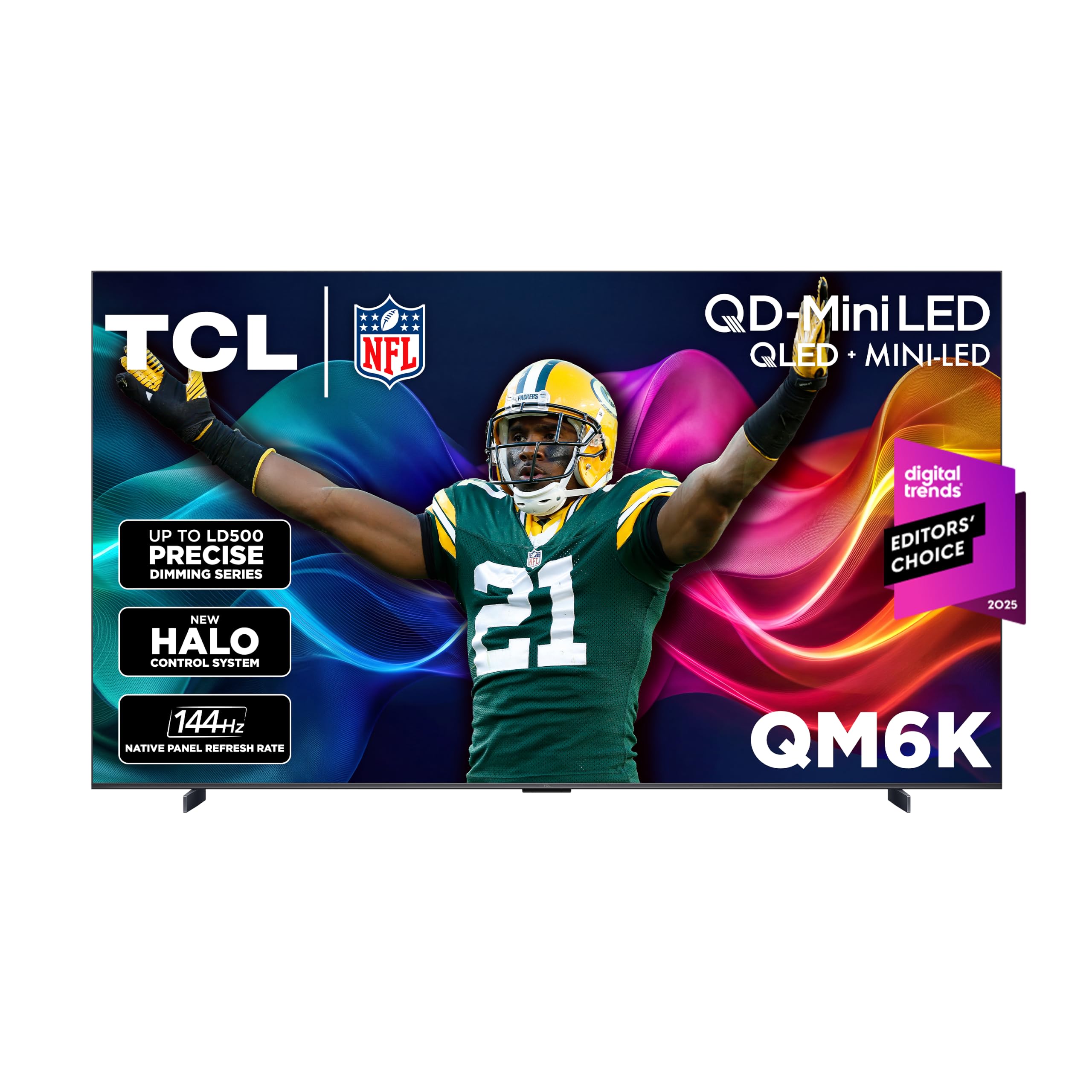
Ninety-eight inches of Mini-LED built specifically to kill the halo around bright objects.
TCL’s Halo Control System is the pitch: advanced local dimming that eliminates haloing, sharpens shadow detail and keeps dark scenes deep while bright scenes stay crisp. That is the exact job a Mini-LED set has to do for accurate blacks — darken the zone behind a shadow without smearing light into it.
A 144Hz native refresh rate with Motion Rate 480 keeps sports and fast action clean, and the 288Hz variable gaming refresh rate serves consoles. The Google TV platform runs the apps, and an Onkyo audio system handles built-in sound. Owners describe incredible clarity and resolution, with brightness that handles overhead light and direct sun, and setup that takes only minutes.
Here is the fair caveat: plain Mini-LED cannot match an OLED for off-angle black — a Sony OLED still wins on blacks and viewing angle when you sit far off to the side. In very bright rooms this panel can also look dimmer than its specs suggest. Sit more or less in front and in a controllable room, and it delivers a huge, bright, well-controlled image for the money.
What you are really buying: the Halo Control System is the differentiator — it targets blooming directly rather than just adding brightness.
The trade-off in one line: off-angle viewing and OLED-grade black depth are not its strengths; head-on viewing of a 98-inch screen is.
Great match for: a wide, straight-on seating layout and a room where the biggest possible picture matters.
Skip if: your sofa wraps around the screen — off-axis blacks soften on Mini-LED.
8. LG 65-Inch OLED evo AI 4K G5 Series Smart TV (OLED65G5WUA)

A black that stays black in a bright room — that is the whole argument for the G5.
Over 8.3 million self-lit pixels do the heavy lifting, and because each pixel switches off for black, the G5 gives you perfect black alongside perfect color with no backlight to bleed through. Brightness Booster Max magnifies each pixel, and the set is verified by UL for Discomfort Glare Free (UGR less than 22), a measure of how little glare the screen throws back at you. That combination is the trick: OLED black that still performs in a sunlit living room.
The Alpha 11 AI Processor Gen2 runs AI Picture Pro and AI Super Upscaling, while Dolby Vision, Dolby Atmos and Filmmaker Mode look after movies. Gamers get a 0.1ms response time and up to 120Hz refresh, with NVIDIA G-Sync, AMD FreeSync Premium and VRR across four HDMI 2.1 inputs, plus the LG Game Dashboard. The One Wall Design leaves virtually no gap on the wall, and webOS Re:New brings up to 5 years of software updates with over 350 free LG Channels.
The one sticking point is the remote — the motion pointer splits opinion sharply, and a poorly placed mute button has frustrated some owners. The picture, brightness and flush wall fit are what win people over. Where the Panasonic Z95 leans film-purist, the G5 leans bright-room-versatile with the same true-black foundation.
Standout strength: UL-verified glare control plus true OLED black is a rare pairing — it holds depth even with the sun out.
Honest gripe: the motion remote is a love-it-or-hate-it design that some find imprecise.
Reach for this if: your living room is bright AND your movies are dark, and you want both handled.
Consider the alternative if: you would rather have a conventional button remote than a motion pointer.
9. Sony K-65XR90 BRAVIA 9 Mini LED 4K Google TV

A Mini-LED made for the one seat problem: keeping blacks deep from every angle.
Thousands of Mini LEDs are controlled by XR Backlight Master Drive, Sony’s system for steering the backlight zone by zone to deliver authentic contrast and its brightest 4K image. XR Triluminos Pro brings billions of accurate colors, and the XR Processor enhances color, contrast and clarity in real time. The pair that matters for accurate blacks in a tricky room is X-Wide Angle with X-Anti Reflection — the picture holds with reduced glare from seats far off-center, which is where ordinary dimming zones start to fade.
Studio calibrated picture modes built for Netflix, Prime Video and Sony Pictures Core deliver the creator’s intent, and the set bundles 10 credits plus a 24-month subscription to Sony Pictures Core classics. PlayStation 5 owners get Auto HDR Tone Mapping and Auto Genre Picture Mode plus a Game Menu. Dolby Vision, Atmos, IMAX Enhanced and DTS:X round out the cinema side, and the XR Clear Image upscales HD content to bring back lost detail.
Owners rate the picture as genuinely natural rather than showy — bright colors and excellent contrast, with older broadcasts upscaled cleanly. The recurring note is price rather than performance: this sits at the premium end and some buyers hesitate at the outlay. For a sun-drenched room with guests spread wide, it is the pick that keeps the black in the corners.
what separates it
- XR Backlight Master Drive steers thousands of Mini LEDs for authentic contrast
- X-Wide Angle plus X-Anti Reflection holds blacks from wide seating
- Studio calibrated modes for Netflix, Prime Video and Sony Pictures Core
- Exclusive PS5 Auto HDR Tone Mapping and Auto Genre Picture Mode
Where it asks the most
- Premium outlay; value is the common hesitation
- Mini-LED, so it cannot match OLED’s absolute black at the pixel level
- Gaming and film features assume you are in Sony’s ecosystem
Built for: a bright, wide living room where people sit off to the sides.
Weigh first: if your budget caps lower, the Hisense U7 gets you most of the brightness for a lighter outlay.
10. Samsung 83-Inch Class S90F Smart TV (83S90F)

An 83-inch OLED where the processor rescues old, low-bitrate footage frame by frame.
The S90F’s black depth is the OLED kind — a black pixel produces no light, so contrast is effectively perfect. The NQ4 AI Gen3 processor uses 128 neural networks to upscale everything to 4K, which matters because a big 83-inch screen magnifies every soft edge in an old broadcast. It also boosts brightness and deeper contrast scene by scene, so detail in shadow stays readable.
Motion is covered for both sports and gaming: VRR gaming runs up to 4K 144Hz, and the Motion Xcelerator fast-motion handling smooths fast-moving balls and on-screen text. The AI processor also lifts standard-dynamic-range content toward HDR-like quality with brighter highlights and clearer detail. Owners describe the whites as white and the blacks as black, with contrast that reads as perfect even in a sunlit room.
Two things surface in owner experience. The glossy screen reflects in a bright room when dark content is on, so a light-controlled wall helps it sing. And some units have arrived not powering up — rare, but worth an in-home test the day it lands. Otherwise the picture, the thin flush design and the solar-rechargeable remote earn their keep.
Why it works on dark scenes: OLED black plus 144Hz VRR means no smearing across a fast pan and no grey wash in the shadows.
The one caveat: that glossy finish is unforgiving of window glare when the scene goes dark.
Pick this if: you want a big OLED that upscales old sitcoms and 4K alike, with strong console gaming.
Not ideal if: your seating faces a bright window — plan blackout or a dimmer room.
11. Sony XR83A80L BRAVIA XR A80L OLED 4K TV

Eighty-three inches of OLED where the screen itself is the speaker.
Pure black, lifelike brightness and billions of accurate colors come from the OLED panel here, driven by the Cognitive Processor XR to replicate how we see the real world. XR OLED Contrast Pro and XR Triluminos Pro handle contrast and color, so deep blacks sit beside strong peak brightness. Dolby Vision and IMAX Enhanced with Netflix Adaptive Calibrated Mode deliver the creators’ intent, and the screen genuinely reproduces detail in shadow that lesser panels smear to grey.
Sound is the distinctive part: Acoustic Surface Audio+ vibrates the screen to produce dialogue straight from where the action is on screen, backed by Dolby Atmos. Gamers get HDMI 2.1 features including 4K/120, VRR and ALLM, with PS5 Auto HDR Tone Mapping and a Game Menu that collects settings in one place. Google TV runs the apps and Apple AirPlay is supported. The XR processor also upscales older content cleanly.
Software is where the dissent lives — the Google TV layer has prompted complaints about update and ad-personalization popups and sluggish input switching. The picture and sound, though, are exactly what an 83-inch OLED should deliver, and it handles daylight through a large window better than OLEDs of a few years back.
What stands out: Acoustic Surface Audio+ makes dialogue come from the face on screen — a genuine difference for big-screen films.
Worth knowing: the smart layer runs the slickest hardware but the busiest software; a streaming box can sidestep it.
Made for: a dedicated media room where film and dialogue clarity come first.
Think twice if: you want a totally quiet smart-TV startup with no promo nudges.
Know the Specs
Local dimming and blooming
Local dimming means the backlight is split into independent zones that can darken on their own — the Hisense U8 carries up to 5600 zones, the TCL Q7 up to 200+. Blooming is the pale halo left when a bright object sits in a dark scene because the zone behind it cannot shut off completely. More zones usually shrink the halo, but the processingthat drives them matters just as much. OLED sets sidestep the issue entirely because each pixel is its own light source.
OLED versus Mini-LED black
An OLED pixel switches off for black, giving true black with no backlight to leak through — that is the foundation of the LG G5, the Sony A80L and the Samsung S90F. A Mini-LED set like the Sony BRAVIA 9 keeps one backlight but divides it into tightly controlled zones, so it can approach OLED depth while throwing far more light. Choose OLED for a dark room, Mini-LED for a bright one.
Peak brightness in nits
Nits measure how much light a screen puts out. In a sunlit room, a brighter panel keeps its blacks looking dark because the picture overpowers the room’s reflected light — the Hisense U8 reaches up to 5000 nits and the Hisense U7 up to 3000. In a dark room brightness matters far less than how completely the panel can go black.
HDR formats and adaptive tone mapping
Dolby Vision IQ and HDR10+ Adaptive read the ambient light in your room and adjust brightness and contrast on the fly, so shadow detail survives a bright afternoon. A set supporting both, like several here, keeps its black floor consistent whether you watch at noon or midnight.
Common Questions
Is OLED or Mini-LED better for accurate blacks in a bright room?
What is blooming and which TVs here reduce it?
Do I need a dark room to get accurate blacks on an OLED?
How many local dimming zones do I need for deep blacks?
Will a bright Mini-LED wash out black bars in letterboxed movies?
Does peak brightness in nits affect black levels?
Which HDR formats keep blacks accurate as room light changes?
Can a Mini-LED TV match OLED for off-angle black depth?
Will I see blooming on the Hisense U8 or the TCL QM6K?
Does a 165Hz refresh rate help black accuracy at all?
The Bottom Line
A TV with honest blacks does two things well: it lets dark scenes stay dark, and it keeps the detail inside them visible. The big decision is really OLED versus Mini-LED — and the room you watch in answers it. For the widest all-round balance, the Hisense 100″ U7 Mini-LED pairs up to 3000 dimming zones with up to 3000 nits, a native 165Hz panel and anti-reflection coating, which is why it takes the top slot. If your room has a bright window and you want OLED purity that still fights glare, the LG OLED evo G5 carries UL-verified glare control on top of true self-lit black. For a wide seating layout where guests spread out, the Sony BRAVIA 9 uses X-Wide Angle and X-Anti Reflection to hold the black in the corners.
One practical note before you commit: the picks that top the ratings here are not always the ones with the most owner feedback attached, so read the picture-and-dimming details rather than the score alone. Choose the panel that fits your room’s light and your seating, and the black bars will finally look black.
How we choose
We do not accept paid placement. Every pick is matched to a real buyer and a real use-case; we do not hands-on test units.
Sources
Specifications: manufacturer listings and product documentation. Review insights: verified customer reviews, as of October 2026. Pricing: not shown on this page (it changes often); check the current price via the retailer link.
As an Amazon Associate, Aappliancez earns from qualifying purchases. This does not affect which products we feature.