Disclosure: Some links in this post are affiliate links. As an Amazon Associate I earn from qualifying purchases, at no extra cost to you. Learn more
Specs are compiled from manufacturer listings and verified buyer reviews and can change over time — please confirm the key details on the product page before buying.
Smart sunglasses give you two things at once: shade for your eyes and sound or a camera without reaching for your phone. The hard part is that some pairs do this brilliantly and others fall apart within weeks. Below you’ll find the pairs that actually hold up, plus the honest flaws of each.
This guide is built by comparing the manufacturers’ published specifications and the patterns across verified customer reviews, so you get each pick’s real strengths and trade-offs instead of marketing spin.
Sound quality, camera specs, battery life, and fit all separate the great pairs from the frustrating ones, and this guide walks through each so you can pick with confidence. The right pair should stay put, sound clear, and last through a full day of wear.
Top Picks
How To Choose The Best Smart Sunglasses
You are really buying three things bundled into one frame: eye protection, a tiny speaker system, and sometimes a camera. Figure out which of those three you care about most, because no pair here does all three at the highest level. That single decision narrows your shortlist fast.
Camera Or No Camera
A camera adds bulk and drains the battery far quicker than audio alone. If you mainly want music and calls on a ride, a camera-free pair lasts longer and costs less. If you genuinely want hands-free photos, check the megapixel count and the video resolution before anything else.
How The Audio Reaches Your Ears
Almost every pair here uses open-ear speakers, which sit near your ear rather than inside it. That design keeps you aware of cars, other cyclists, and conversation while music plays. The trade-off is that loud volume can leak to people standing beside you.
Battery Hours Versus Charging Case
Battery figures vary wildly across this category, from short recording bursts to hours of playback. Read whether the number quoted is music time, call time, or standby time, because the three are very different. A charging case can stretch your day well beyond the glasses’ own cell.
Side-by-Side Comparison
| Model | Best For | Camera | Battery | Water Rating | Amazon |
|---|---|---|---|---|---|
| Meta Oakley Vanguard★ Best Overall | All-day outdoor wear | 12 MP | Up to 8 hours + 48-hour case | — | Amazon |
| CHAMELO Music ShieldTint Tech Leader | Cyclists wanting tint control | None | 6.5 hrs audio / 100 hrs tint | Sweatproof | Amazon |
| AI Smart Glasses with CameraTravel Companion | Travel and translation | 8 MP | 8 hrs music / 12 min video | IP65 | Amazon |
| Blackview Smart Glasses | Budget audio and calls | None | 7 hrs calls / 6 hrs music | IP65 | Amazon |
| GetD AI Glasses | Hands-free assistant use | None | 11 hrs music / 9 hrs calls | IP54 | Amazon |
| Reebok Nitrous | Music-first athletes | None | 8 hours | — | Amazon |
| Reebok Octane | Golf and racquet sports | None | 8 hours | Sweat and weather resistant | Amazon |
| Ray-Ban | Meta Headliner | Everyday style and calls | — | — | — | Amazon |
| Meta Oakley HSTN Clear | Photo and video capture | — | — | — | Amazon |
Detailed Reviews
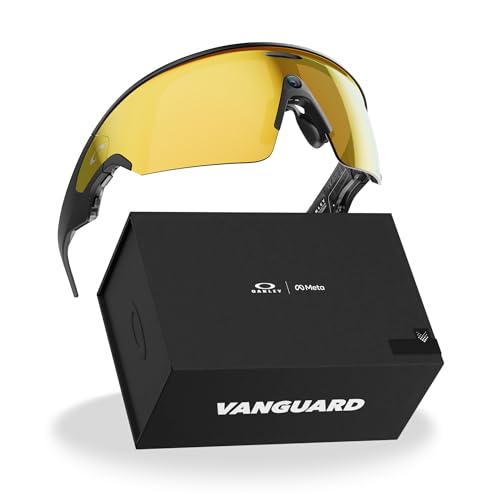
1. Meta Oakley Vanguard Smart AI Glasses Black, Prizm 24K
Our pick — 4.0+★ from 250+ verified ratings; the strongest balance of quality and price.
The highest-resolution camera here, with a 12 MP sensor that beats the 8 MP budget pairs.
Buy this pair if you want the best camera on your face and you spend your weekends on a course, a trail, or the water. The 12 MP camera (12 megapixels, a measure of photo detail) shoots 3K Ultra HD video (3K means about 3,000 pixels wide, sharper than standard HD) and grabs stills on a simple “Hey Meta” command, so you never dig a phone out of a pocket mid-activity. Against the AI Smart Glasses with Camera’s 8 MP lens, that is a 50% higher resolution figure on the spec sheet — nearly half again the pixel count of the budget camera option, so landscape shots come out noticeably sharper.
The audio side is genuinely useful, not a gimmick. Open-ear speakers (they sit near your ear instead of plugging it, so outside sound still reaches you) handle music, podcasts, and hands-free calls, and the frames pair over Bluetooth like any earbud. A full charge runs up to 8 hours of typical use, and the included charging case adds up to 48 hours of top-ups, which covers a long day trip without hunting for a wall socket. The Prizm 24K lenses handle changing light well, and the adult-size full-frame build sits at 65.2 g — heavy enough that you will notice them on your nose during hour four.
Here is the honest catch, and it is the loudest theme in the feedback: battery life in heavy camera use falls well short of the headline number, and plenty of owners question whether the price matches the experience. The quality and camera build draw the strongest praise, while value and short recording runs are the sore points. If you shoot frequently rather than occasionally, budget for shorter sessions than the spec suggests.
What Earns Its Keep
- 12 MP camera and 3K video — the highest capture spec in this group
- Up to 8 hours of use, plus a case that adds up to 48 hours of charging
- Open-ear audio for calls, music, and Meta AI answers without a phone in hand
- Prizm 24K lenses that adapt as light shifts through the day
Where It Tempts Patience
- Battery drains faster than expected once the camera is running hard
- At 65.2 g, it is a substantial frame you feel on longer wears
- Owners wrestle most with what they paid versus what they got
Made for: athletes and creators who want a real camera on their face and will trade some wear weight for it.
Think twice if: you want all-day listening battery and rarely shoot video — the audio-only pairs further down do that job for less.
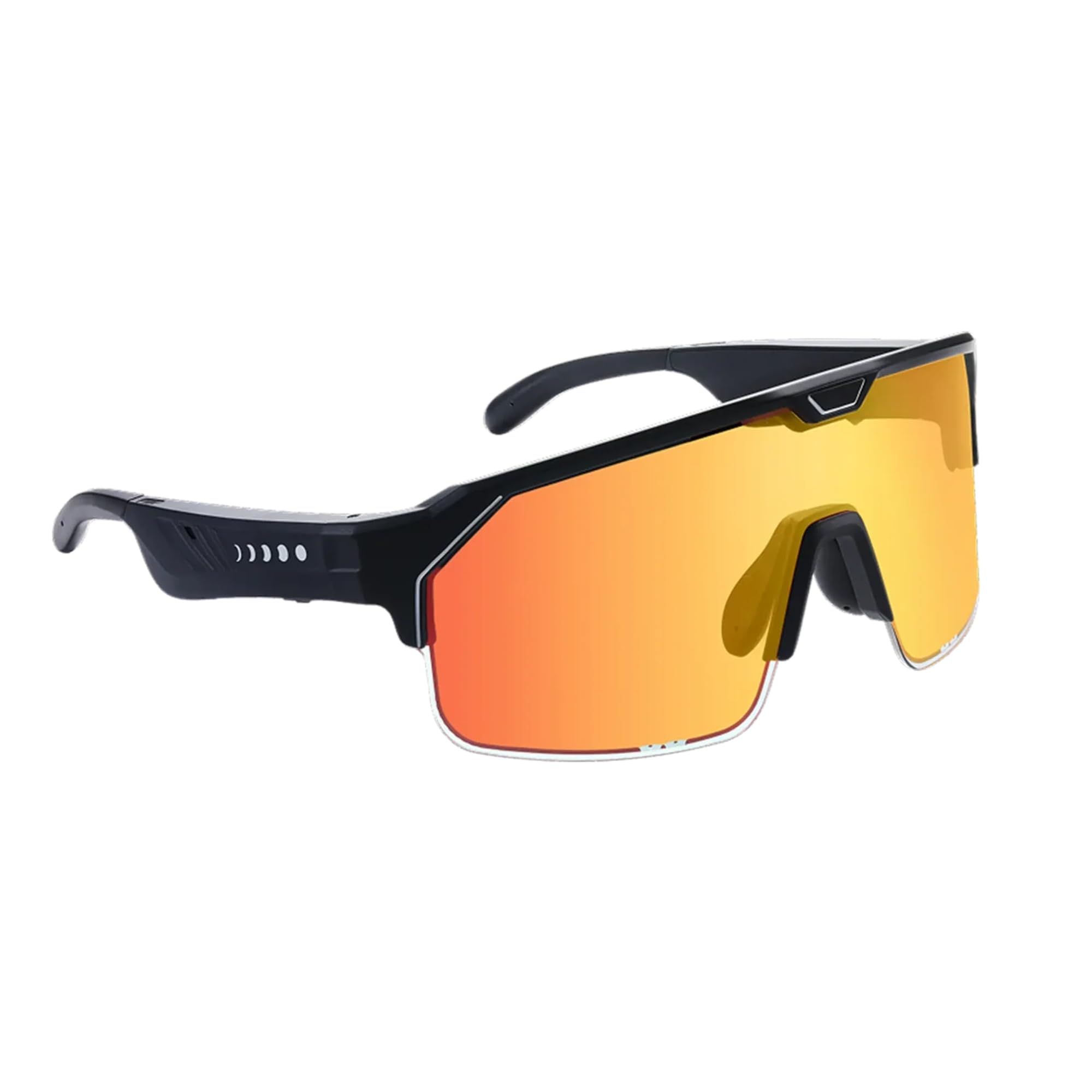
2. CHAMELO Music Shield Sports Sunglasses
Lenses that darken in under a tenth of a second, so the light never catches you off guard.
This is the pair for the rider who cannot stand fumbling with tint. The Eclipse lenses shift across a 63%-17% VLT range (VLT means how much visible light passes through, so lower numbers mean a darker lens) in under 0.1 seconds — up to 1,800x faster than ordinary photochromic lenses (lenses that darken in sunlight) that need time to react. That speed matters when you roll out of tree cover into full sun, so your eyes adjust instantly. The non-polarized design keeps depth perception natural, which is exactly what you want for judging distance on a bike or a pickleball court.
On the audio side, open-ear speakers handle music, podcasts, and calls while you stay aware of traffic. Battery numbers are split by function: up to 100 hours of tint adjustment, and up to 6.5 hours of Bluetooth audio, with an 80% top-up in just 30 minutes. The 49-gram frame is light on the bridge, and the construction is sweat-resistant with impact-resistant lenses. It ships with a travel case, pouch, and USB-C cable.
The durability story is where caution is warranted. The frame earns the most consistent praise, with sound quality close behind, but a recurring theme is the arm breaking in the case within a few months of light use. That is the genuine trade-off with a lightweight high-wrap design — treat it as a careful pack-and-carry pair, not a rough-and-tumble one.
What wins people over: build quality leads the feedback by a wide margin, with sound quality right behind it — owners rate the audio above what they expected from an open-ear frame.
The honest trade-off: the arm is the fragile point. A handful of buyers report breakage in the case within three months, so the frame rewards gentle handling.
Reach for this if: you ride or ski in shifting light and want tint that keeps pace with the terrain.
Look elsewhere if: you need a frame that shrugs off being tossed in a bag — the lightweight build wants care.
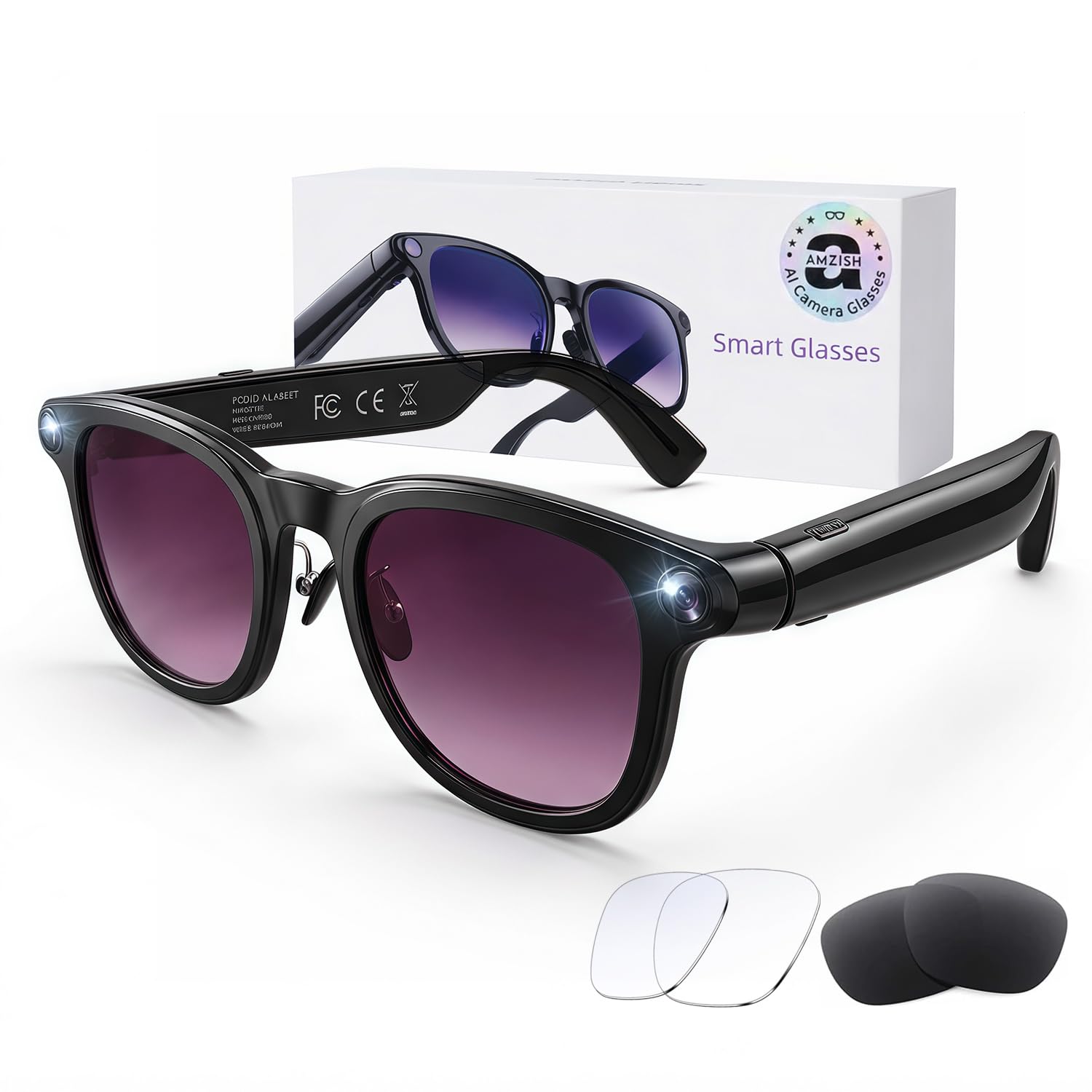
3. AI Smart Glasses with Camera
Three interchangeable lenses and a translator that handles 144 languages without a phone in your hand.
Buy this if you want one frame that works as sunglasses, clear glasses, and a translation tool on a trip abroad. The 8MP lens shoots 30fps video and 32MP stills with multi-frame noise reduction, and the interchangeable lens set covers UV protection, blue-light, and red polarizing options. It also carries the battery edge over the top pick on paper — 300 mAh and up to 8 hours of music per charge, though continuous video recording caps at 12 minutes per session.
The AI features are genuinely distinct: built-in ChatGPT and DeepSeek handle 144-language translation, voice wake-up, object recognition, and Q&A with no phone needed, over Bluetooth 5.4 and Wi-Fi. The IP65 rating holds off sweat and splashes but not swimming. When it works well, it works impressively — clear smooth video, a hands-free camera, and audio that lets you hear your surroundings. Owners call out the appearance most, with the camera quality close behind.
The risk is what happens after the honeymoon. The most serious theme in the feedback is the camera quitting within weeks — video downloads that turn into audio-only files post-return-window, and units that stop saving media entirely. The fit is also one generic size, which frustrated owners with a high nose bridge and no adjustability. Quality and battery feedback sit in mixed territory overall.
The spec that stands out: 144-language translation through ChatGPT and DeepSeek, working without pairing a phone, plus 32MP photo capture — real capabilities the audio-only pairs here simply do not have.
The risk to weigh: camera reliability is the recurring worry. Owners mention video download stopping within the first month, past the return window, and the fixed-size fit does not suit every face shape.
Perfect for: travelers who want translation, photos, and audio rolled into swappable lenses.
Not the one if: you need a camera that survives long-term daily use, or your face needs adjustability the fixed frame cannot give.
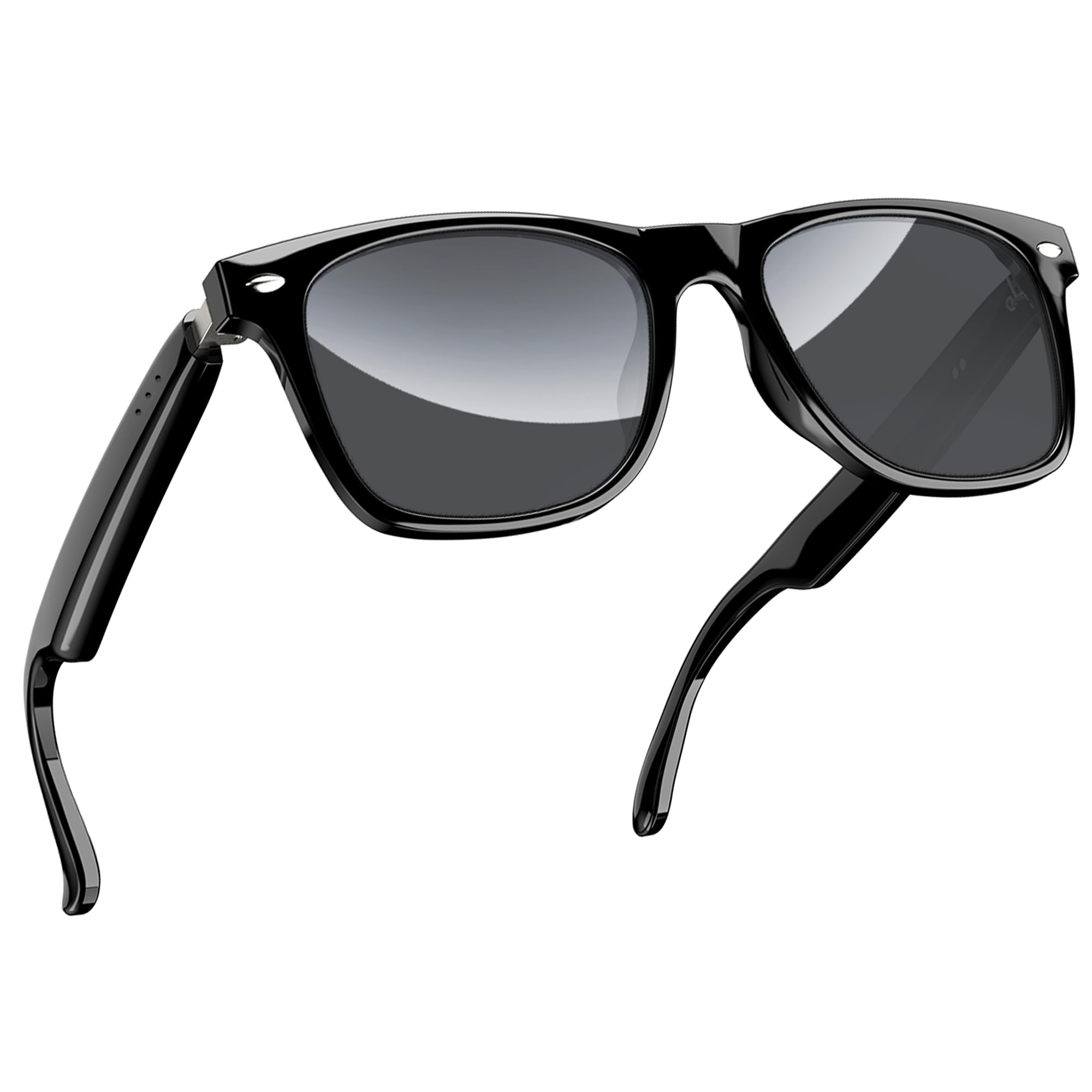
4. Blackview Smart Glasses
Budget audio glasses with 7 hours of calls and 6 hours of music per charge.
If you want music and calls without spending much, this is the pair to start with. It pairs over Bluetooth 5.3, which means a low-latency, stable connection, and once it is set up, opening the case wakes and reconnects the glasses automatically. The dual 80mAh+80mAh battery delivers roughly 7 hours of calls, 6 hours of music, and a hefty 160 hours of standby, with a recharge in about 90 minutes.
The open-ear speaker design uses a dynamic driver and an ultra-sensitive polymer diaphragm, and the microphones suppress up to 90% of background noise during calls. There are three raised dots on the touch panel so your finger finds the controls without looking. The IP65 rating fends off sweat and light rain, and the anti-glare, anti-blue-light lens adds another layer of eye comfort.
The trade-off here is audio fidelity — it is fine for podcasts and calls, less so for critical listening. Appearance leads the feedback by a comfortable margin, with value next, but sound quality and long-term reliability both sit in mixed territory. Treat it as a solid everyday commuter pair rather than a reference-grade audio device.
Where the value sits: strong appearance feedback and a solid value rating pair with genuinely long battery — the standby figure is the standout number in the budget tier.
The honest limit: sound quality draws mixed notes, and the build is not built to survive abuse. It is a commuter pair first and foremost.
The fit for: first-time buyers testing open-ear glasses without a big outlay, and call-heavy commuters.
Skip if: you expect audiophile-grade sound or heavy-duty construction — this is an everyday pair, not a tank.
5. GetD AI Glasses
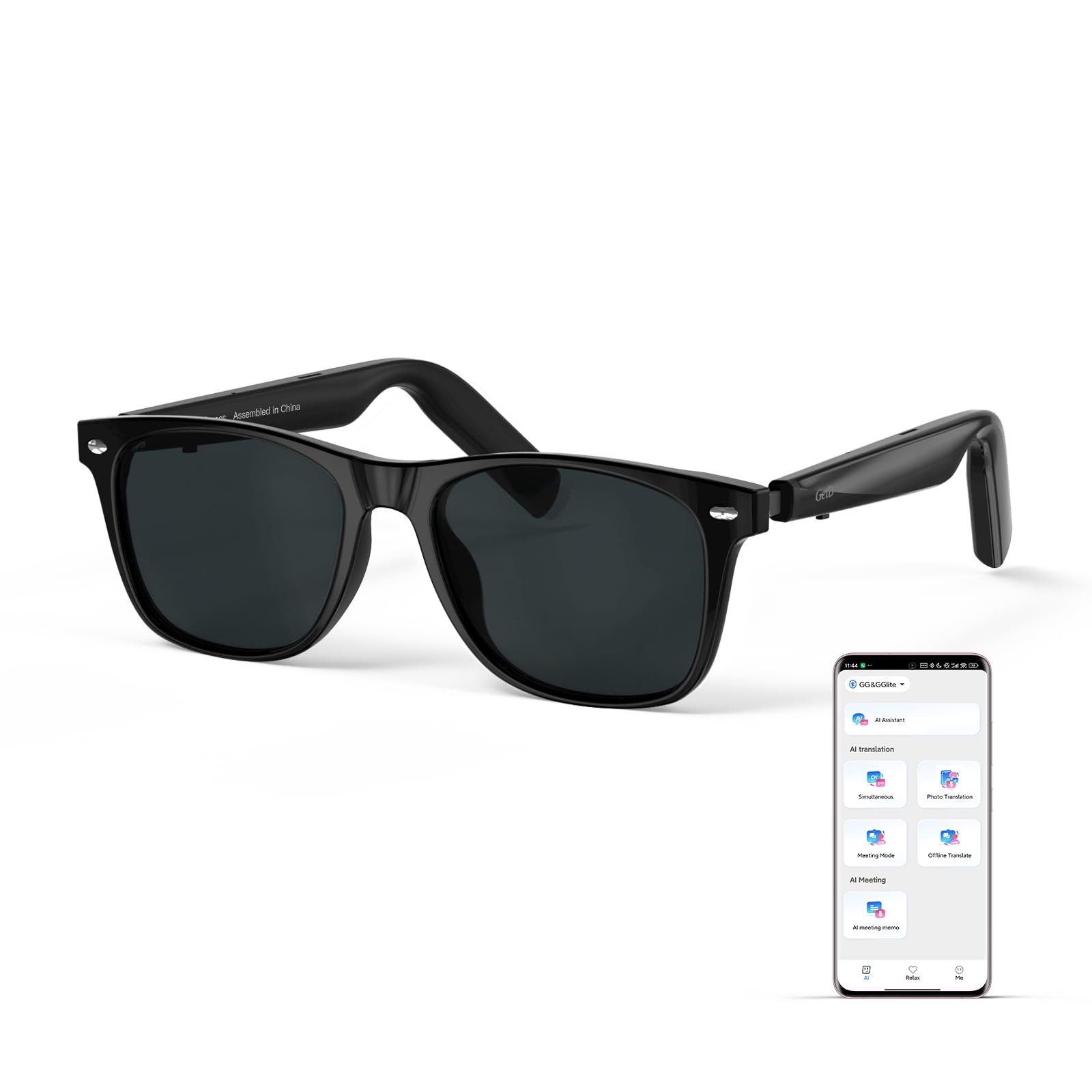
A voice assistant on your face that carries it 145 languages and never needs your phone.
Buy this if you spend your day driving, traveling, or in meetings where a hands-free assistant earns its keep. The 3-in-1 build combines a ChatGPT-and-DeepSeek-powered assistant with 145-language simultaneous translation across more than 170 countries, plus a voice recorder that turns speech into text. Two 115mAh batteries deliver 15 days of standby, 11 hours of music, and 9 hours of calling at 50% volume — and 10 minutes of charging buys an hour of use.
The open-ear directional design pairs over Bluetooth 5.4 with iOS and Android, and the lightweight TR90 frame keeps it comfortable for long days. The lenses are 100% UV-protecting and polarized, with anti-glare and impact resistance. The IP54 rating handles splashes but not submersion. It is one of the more compelling combinations of smart features and comfortable daily wear in this list.
The honest note is that the AI and translation layers are only as good as the underlying app, and the feedback splits between owners who find the assistant useful and those who call it a reskinned chatbot. Slippery fit on oily skin also comes up, and some find it necessary to add hooks. Value pricing and long battery keep it a strong all-rounder regardless.
The standout combo: 145-language translation plus a built-in voice recorder and 15-day standby is a genuinely useful hands-free toolkit for travel and driving.
The honest wrinkle: the fit can slide on oily skin and the AI layer draws mixed reactions, so test the frame feel and the assistant before committing to it as a daily pair.
Built for: drivers, travelers, and meeting-heavy users who want their assistant on their face.
Consider the trade-offs if: your face shape tends to slip glasses or you want a dedicated camera — the AI leads here, not the optics.
6. Reebok Nitrous Smart Audio Sunglasses
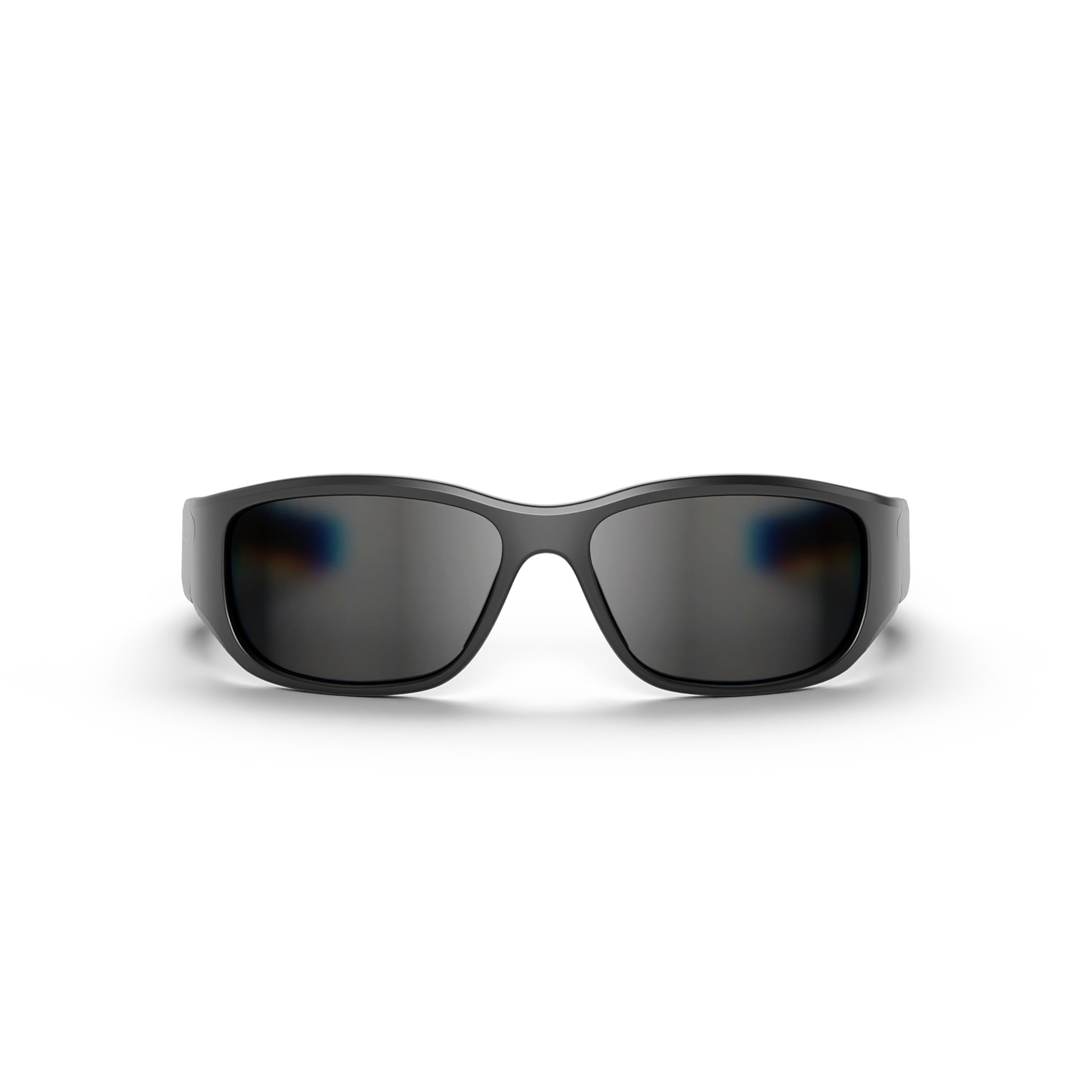
The pair to buy when HiFi sound matters more than camera or AI features.
For anyone who wants their audio to sound noticeably better than standard open-ear glasses, this is the frontrunner. The USA-tuned HiFi system (HiFi means high-fidelity, or accurate sound reproduction) delivers rich bass and clear highs, and customers note the audio is the loudest praise in the reviews. With 8 hours of battery, crisp call mics, and the same standard Base 6 frame design that works with your local optical provider for personalized lenses, it earns its place on the strength of the sound alone.
The Nitrous sits on a lightweight frame with adjustable nosepads and stays secure through biking and gym work, which owners consistently confirm. The black polarized lenses handle glare reduction and UV protection across bright outdoor and variable-light conditions. Pairing to a phone or a PC is quick, and fast magnetic charging tops it back up conveniently.
Two things to keep in mind. The gradient tint can feel distracting for the first several minutes and the lenses run too dark for indoor or evening use, so this is an outdoor-only pair. There is also no published water-resistance rating, so keep it away from pools and heavy rain. A handful of units have arrived as open-box with missing accessories, though that is a fulfillment story rather than a design one. Sound quality and build quality both earn the strongest praise by a wide margin; reliability edges into mixed territory.
HiFi Sound That Leads The Category
- HiFi audio with rich bass — the standout strength across all feedback
- 8-hour battery covers workouts through evening recreation
- Adjustable nosepads keep it stable for biking and gym work
- Base 6 frame is compatible with local optical lens services
Know Before You Buy
- Lenses run too dark indoors and at night — outdoor use only
- No published water-resistance rating, so keep it away from pools
- Tint can feel distracting for several minutes after switching environments
If audio is the mission: this is the pair — sound quality is the top-ranked strength of the Nitrous by a clear margin.
If you need all-day versatility: the dark tint and no water rating limit it to outdoor daylight sessions.
7. Reebok Octane Smart Audio Sunglasses
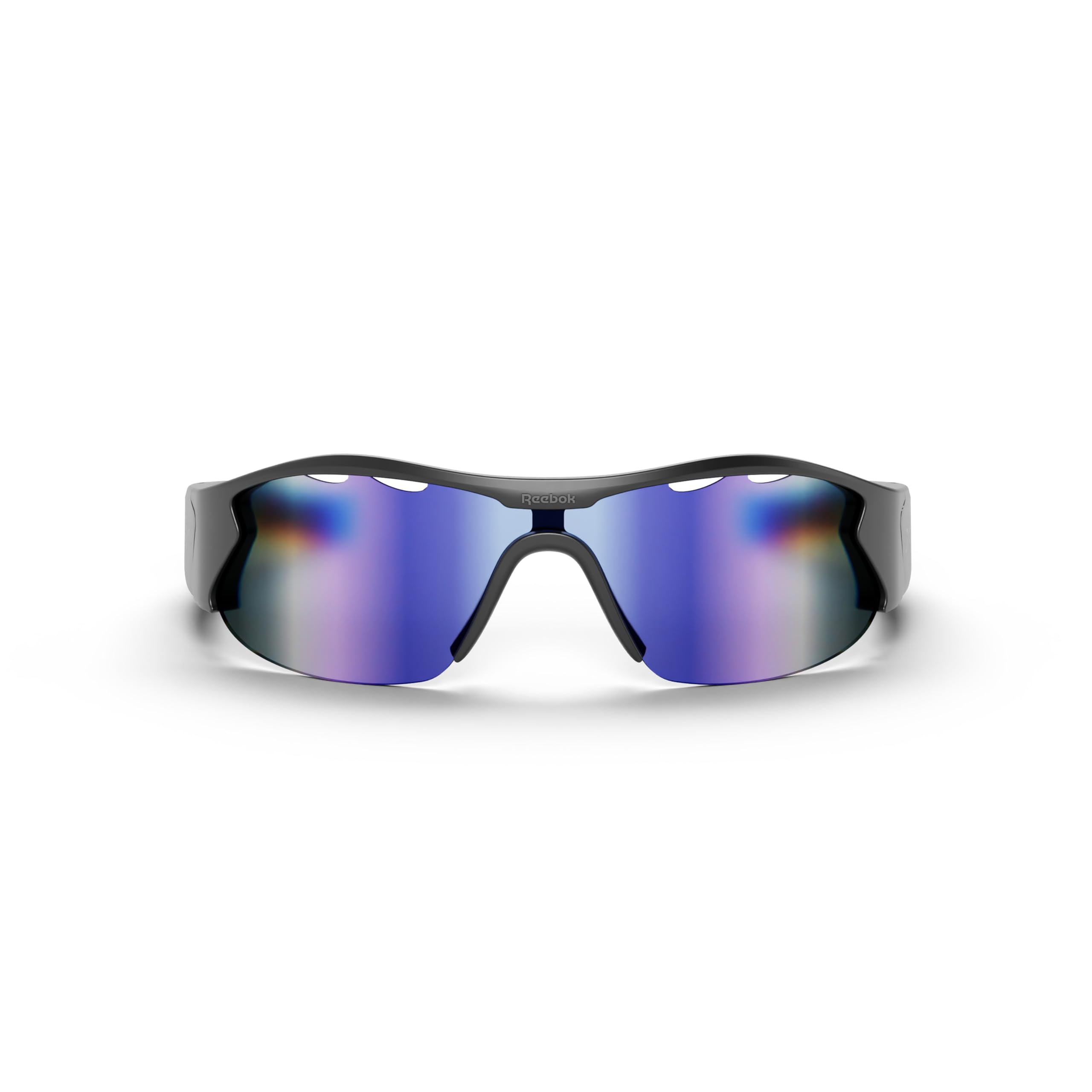
The round-frame sibling to the Nitrous, with the same 8-hour battery and HiFi audio.
If you play racquet sports or golf and want calls and music without covers, this is a strong fit. The round full-frame design with violet mirror lenses looks bold and delivers the same industry-leading acoustic engineering and 8-hour battery as its rectangular counterpart. Round frames suit narrower faces particularly well, and the lightweight construction keeps them comfortable through a round or a run.
What owners rave about most is the audio — the Octane’s sound quality and build both hit the top tiers of feedback. The noise-cancelling microphones handle calls reliably during activity, and the sweat- and weather-resistant construction performs through hot, humid sessions. It is a genuinely useful everyday pair that happens to look like a lifestyle accessory.
Two notes. The violet mirror lens is a strong statement piece — if you want something discreet, the black Nitrous is the safer call. The mirrored coating also shows fingerprints more readily than a standard tint. Reliability feedback sits in mixed territory too, so if you want maximum durability confidence, treat it as a fair-weather primary and keep a spare in rotation.
Why athletes pick it: 8-hour battery and weather-resistant construction cover a full round of golf or a long training block, with audio quality at the top of the category.
Style warning: the violet mirror lens is loud, and mirror finishes show smudges faster — go for the black Nitrous if you want something understated.
The one for: golfers and racquet-sport players who want a smooth, sporty frame with top-tier sound.
Pass if: you need a discreet look or you sweat on the mirrored lens surface — the violet finish demands upkeep.
8. Ray-Ban | Meta Headliner Low Bridge Fit (Gen 2)

The second-generation Headliner in a low-bridge fit that keeps frames from sliding down flatter noses.
This is the pick for anyone who has ever had a pair of glasses slide down their nose all day. The low-bridge fit addresses exactly that — the frames sit closer against flatter nose profiles and hold their spot. It is the one fit-focused smart pair in this list, and that single design choice solves a problem many buyers of this category do not even realize is the reason they keep adjusting.
The Gen 2 version adds longer battery life and a higher quality camera compared with the original generation. Meta AI handles photos, music control, hands-free calls, and real-time translation, all without pulling out a phone. The slim frame wears comfortably from morning into the evening, and the fit and reliability are the two areas where owners are happiest.
The honest caveat: this pair is the comfort and style story, not the spec monster. If you want the highest camera megapixel count or a specific battery hour figure, the Oakley Vanguard and the AI Smart Glasses with Camera lead those categories. Here the draw is wearing comfort and the Ray-Ban look — a valid priority if that is what you have been missing.
Right for you if: you have a lower nose bridge and sunglasses slide off your face — this fit is the reason to buy.
Differently sorted if: your priority is camera megapixels or headline battery hours in a smart glasses pair.
9. Meta Oakley HSTN – Clear

Clear-lens Oakley HSTN frames built around their photo and video capture.
Buy this if you want a low-profile frame that looks like ordinary clear glasses but secretly captures photos and video. The HSTN clear style keeps a clean, everyday look — the kind of frame that pairs with any outfit and does not scream “smart device.” Reviewers point out the video quality is consistently the standout feature, with stills and clips arriving sharp enough for real use.
The clear lens is the practical difference from the other Meta options here. Without a tint, this frame works indoors, in a car, in an office, anywhere the darker options would look out of place. That makes it the most versatile wear-anywhere pair on this list, even though it sacrifices sun protection in exchange.
The functionality story is where the user experience splits. Some owners rave that the frames work fantastically in daily use; others report the device failing completely within three months. Appearance is the strongest praise point, with the visual capture performance close behind. If you want maximum reliability confidence in a Meta pair, the Meta Oakley Vanguard holds a higher rating with far fewer complaints.
What people love: the clear-lens frame looks genuinely normal in any setting, and the appearance draws the strongest feedback of any feature.
The reliability question: long-term durability is the concern here — a portion of feedback notes the device failing within months, so it rewards careful handling.
Pick this one if: you want clear-lens smart glasses that look entirely ordinary and prioritize all-day versatility.
Look at the Vanguard instead if: long-term reliability confidence matters more than the clear-lens look.
Know the Specs
Camera Megapixels and Video Resolution
Megapixels tell you how much detail the camera can pull from a scene. An 8 MP lens captures fewer fine details than a 12 MP lens, which matters when you want a clean image of a landscape or moving subject. The video frame rate — 30fps in the pairs here — decides how smooth motion looks in the clip, and a stabilization algorithm helps reduce shake when you are moving. Higher megapixels also eat battery faster, so a camera-heavy pair trades listening hours for capture quality.
Open-Ear Audio and Battery Life
Open-ear speakers sit near your ear rather than sealing inside it, so sound travels to you while outside noise still reaches you. That design is why these glasses are popular with cyclists and runners — you can hear traffic and music at the same time. The trade-off is less bass isolation and the chance that higher volumes leak to people nearby. Battery figures need careful reading: music playback time, call time, tint-adjustment time, and standby are all quoted separately, and the number that matters depends entirely on how you use the glasses. A charging case can extend a day well beyond the glasses’ own cell.
Common Questions
Will smart sunglasses work with my iPhone or Android phone?
How long does the battery actually last on a pair of smart sunglasses?
Can I hear traffic while wearing open-ear audio sunglasses?
Are IP54 and IP65 smart sunglasses waterproof enough for swimming?
How does the camera on smart sunglasses compare to a phone camera?
Can I put prescription lenses in smart sunglasses?
How do the CHAMELO and standard photochromic sunglasses differ?
Should I buy smart glasses with a camera or without?
Will smart sunglasses work if I wear them over prescription glasses?
How should I clean and store smart sunglasses so they last?
The Bottom Line
For most people, the smart sunglasses winner is the Meta Oakley Vanguard because it pairs the category’s best camera — a 12 MP lens with 3K video — with a charging case that adds up to 48 hours of top-ups. If you want instant tint control for cycling and skiing, the CHAMELO Music Shield shifts its lenses across a 63%-17% VLT range in under 0.1 seconds. And for pure audio quality on a run or a ride, the Reebok Nitrous earns its spot with HiFi sound that owners rate above the rest. If maximum camera value on a tighter budget is what you want, the AI Smart Glasses with Camera offers an 8 MP lens with 144-language translation.
How we choose
We do not accept paid placement. Every pick is matched to a real buyer and a real use-case; we do not hands-on test units.
Sources
Specifications: manufacturer listings and product documentation. Review insights: verified customer reviews, as of October 2026. Pricing: not shown on this page (it changes often); check the current price via the retailer link.
As an Amazon Associate, Aappliancez earns from qualifying purchases. This does not affect which products we feature.