Disclosure: Some links in this post are affiliate links. As an Amazon Associate I earn from qualifying purchases, at no extra cost to you. Learn more
Specs are compiled from manufacturer listings and verified buyer reviews and can change over time — please confirm the key details on the product page before buying.
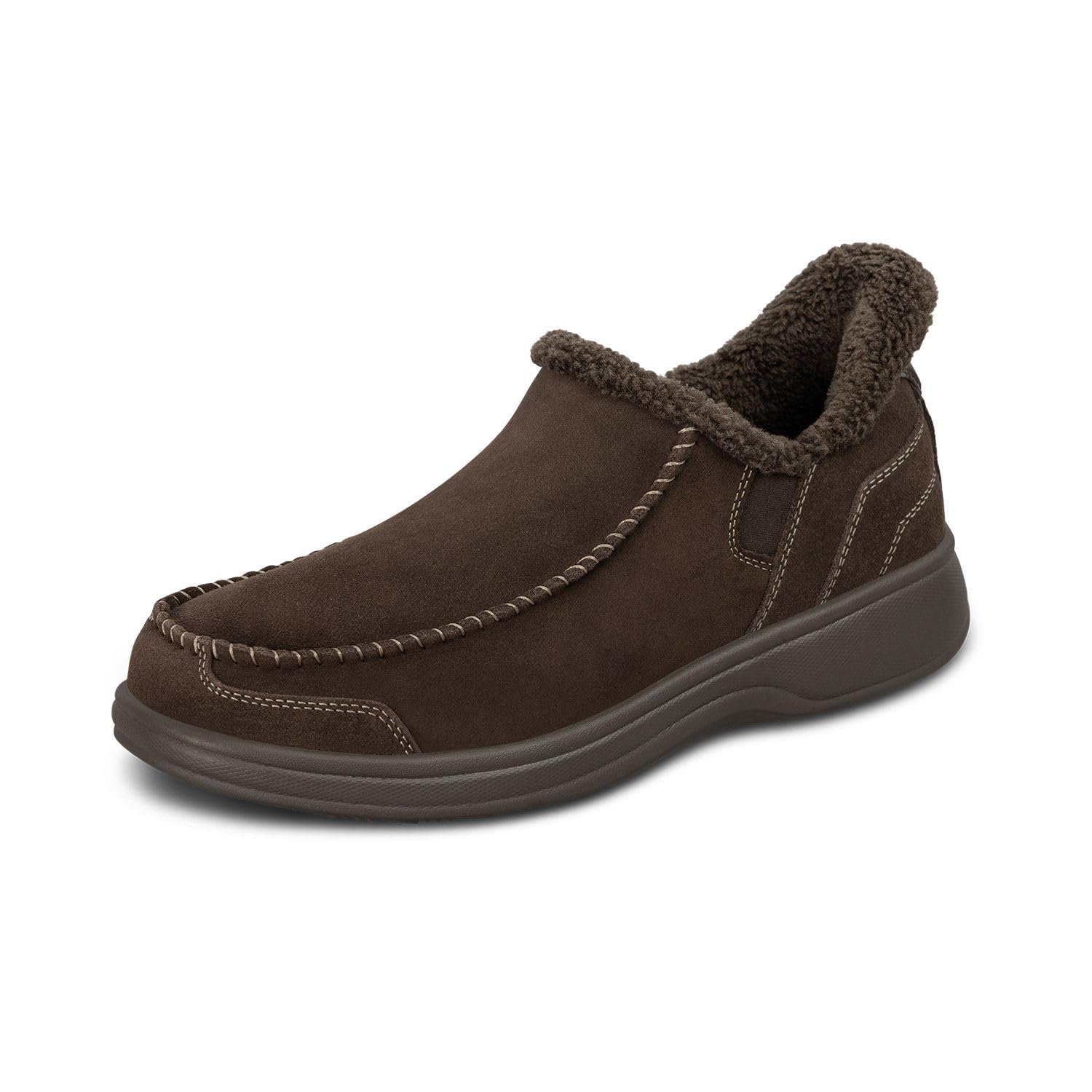
If your toes sting or go numb the moment you stand, a slipper that squeezes the forefoot makes it worse before you reach the kitchen. What helps is a wide, pressure-free forefoot over real arch support, so your toes spread instead of pinching the nerve between them. Every pair below was chosen for that specific job, and the quick answer is this: the Orthofeet Vito is the strongest all-round pick, because its removable insole and extra depth let you swap in your own orthotic or the included spacer and dial in the fit, backed by 4.5+ stars across 1,100+ ratings.
This guide is built by comparing the manufacturers’ published specifications and the patterns across verified customer reviews, so you get each pick’s real strengths and trade-offs instead of marketing spin.
You will see which pairs run narrow, which ones let you pull the insole out, and which have a firm heel that keeps the whole shoe from rolling inward. Read on for honest notes on every model and a plain-English breakdown of the fit details that matter — here is what to know about the slippers for morton’s neuroma.
Top Picks
How To Choose The Best Slippers for Morton’s Neuroma
Morton’s neuroma is a nerve that gets squeezed between two toes, usually the third and fourth. Anything that presses the sides of your foot together will set it off. So the buying decision here is not about how plush the padding feels — it is about how much room the front of the slipper gives your toes and whether your arch gets held up so weight stops rolling onto the ball of your foot.
Room at the front beats a thick sole
Look for a slipper that names a wide or pressure-free fit, or one with an adjustable strap. A strap you can loosen takes the squeeze off the sides of your toes on days when the nerve is flaring. Cushioning alone does nothing for a nerve that is being pinched between bones.
Can you pull the insole out?
A removable insole is the single most useful detail to check. If the slipper ships with a removable footbed, you can drop in the orthotic your podiatrist made, or the fitted spacer that comes in the box, and adjust the fit to your own arch. A glued-in insole locks you into one shape forever.
Heel counter, sole, and indoor-outdoor use
A firm heel counter is the stiff cup at the back that holds your heel steady, which keeps your foot from rolling inward as you walk. A slip-resistant sole matters if you pad out onto a patio or a wet garage floor. Flat felt slippers with a soft sole are the wrong tool for this job.
Side-by-Side Comparison
All three spec columns below are the same three dimensions across every row, so you can scan the trade-offs at a glance.
| Model | Best For | Arch Support System | Fit / Width Options | Sole Type | Amazon |
|---|---|---|---|---|---|
| Orthofeet Vito Orthopedic Men’s Slip-On★ Best Overall | Best Overall, men who need to swap in their own orthotic | Ortho-Cushion system with built-in orthotic insole | Removable insole, extra depth, fitting spacers, Arch Booster | Shock-absorbing, slip-resistant | Amazon |
| Vionic Women’s Relax IIBest Adjustable Fit | Best Adjustable Fit | Vionic exclusive alignment technology | Adjustable hook and loop closure | — | Amazon |
| FitVille Women’s Wide Adjustable Mules | Best for Swollen Feet | Arch support footbed | Wide fit with adjustable strap | Indoor and outdoor | Amazon |
| Men’s Slippers for Plantar Fasciitis | Best Indoor-Outdoor Utility | Arch support | — | Plastic non-marring sole | Amazon |
| PowerStep Archwear Women’s | Best Warmth for Cold Floors | Pinnacle Wool insoles in PowerStep arch shape, heel cradle | Whole sizes only; size up between sizes | Non-slip tread | Amazon |
| Orthofeet Clara Wedge | Best Wedge Silhouette | Ortho-Cushion system with built-in orthotic insole | Removable insole, extra depth | Slip-resistant heel | Amazon |
| Orthofeet Lorin | Best Plush Lining | Ortho-Cushion system with built-in orthotic insole | Adjustable arch and height | — | Amazon |
Detailed Reviews
1. Orthofeet Vito Orthopedic Men’s Slip-On Slippers
Our pick — 4.5+★ from 1,000+ verified ratings; the strongest balance of quality and price.
The pair that lets you rip out the insole and build the fit you actually need.
For a man whose foot flares when the nerve pinches, the Vito’s standout trick is that its insole comes out. That means you can drop in the orthotic your podiatrist made, or one of the fitting spacers that ships in the box, and change how the slipper sits under your arch. The extra depth — spare room built into the shoe above the footbed — gives your toes clearance instead of pressing them down.
Underneath that sits the Ortho-Cushion system: a built-in orthotic insole, a shock-absorbing sole, and a pressure-free fit working as one package. The maker also includes an Arch Booster, which is a shim you slide under the insole to raise the arch height. For this condition that matters, because lifting the arch takes weight off the ball of the foot where the nerve usually lives.
What wins people over is the comfort itself — it is the most-praised thing about this pair by a wide margin, with the build quality ranking a close second. Buyers describe being able to wear them with or without socks, and being able to adjust the arch and height to their own feet. Warmth and appearance both come up too, so they do not look like hospital footwear. If you want to swap in your own orthotic and tune the arch height, this is the pair to start with.
What earns the top spot
- Removable insole means your own custom orthotic drops straight in.
- Extra depth gives a sore forefoot room instead of pressure.
- Arch Booster shim lets you raise the arch to suit your foot.
- Firm heel counter and wide base help steady each step.
What to weigh first
- It is a men’s-specific build, so sizing runs on men’s lasts.
- The extra room inside may feel loose if your foot is on the slimmer side.
Pick this one if: you already own a custom orthotic and want a slipper you can fit around it.
Think twice if: you want a snug, close-fitting slipper — the extra depth is the whole point here.
2. Vionic Women’s Relax II Slippers, Slippers with Arch Support
A strap you can loosen by an inch on the days your toes are flaring.
Here is the honest headline up front: the Relax II is the one pick here where comfort feedback splits. Some wearers call it ideal for sore feet; others find the fabric scratchy against bare skin. That split is worth knowing before you order, because this category is unforgiving about a rough lining rubbing a tender foot.
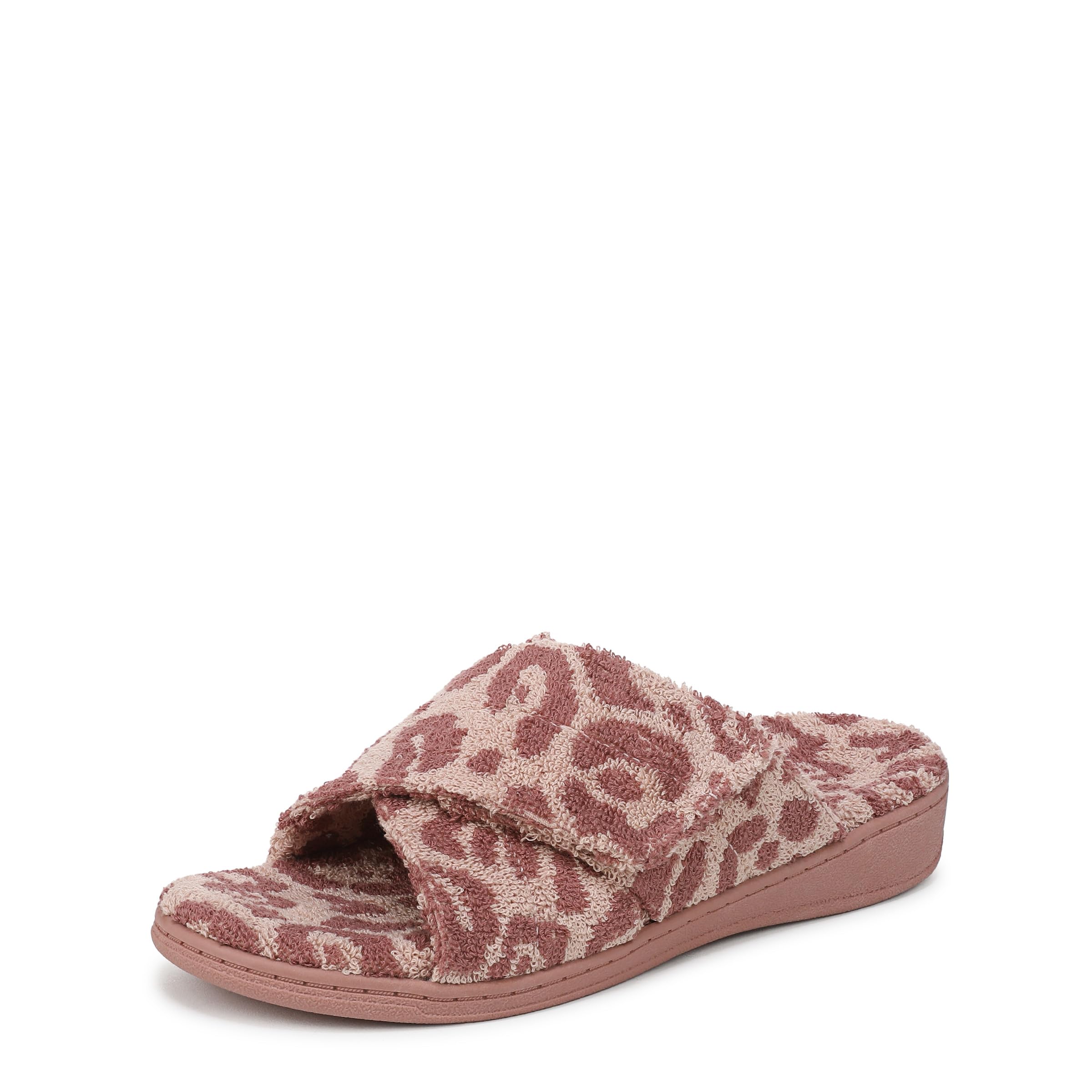
Where it earns its place is the fit control. A hook and loop closure — the velcro-style strap across the top — lets you open or tighten the slipper over the instep. That is real relief for a foot that swells by evening, because you are not locked into one fixed opening. Vionic builds it around its exclusive alignment technology, which is the brand’s term for the shaped support under the arch and heel.
Wearers warm to the looks first — it reads as a chic house slipper, not an orthopedic device — and the arch support draws steady approval too. The textured upper and soft lining are there for cosiness, but that same upper is the thing to check if your skin is sensitive. Order the size that matches your foot length rather than sizing up, since the strap gives you the adjustment instead.
The real draw: the velcro-style closure is the most flexible fit method in this group, and the alignment-shaped footbed gives your arch something to sit on.
The trade-off to own: that split comfort verdict — if scratchy fabric irritates your skin, this is the pair to pass on rather than fight.
Reach for this if: your foot changes size through the day and you want a strap to absorb that.
Look elsewhere if: you need a guaranteed soft lining against bare toes.
3. FitVille Women’s Wide Adjustable Slippers with Arch Support

Built wide on purpose, with a strap that forgives a foot that swells overnight.
FitVille’s mule silhouette is the widest starting point in this lineup, and that alone earns it a place for a forefoot that cannot tolerate squeeze. The adjustable strap over the top lets you add or remove room without buying a second pair. The slipper is listed for swollen feet, plantar fasciitis, and diabetic comfort, and it works indoors or out on the sole.
The arch support is the part that does the load-bearing work for a neuroma. When your arch is held up, the weight stops dumping onto the ball of your foot where the nerve sits. Wearers who had bunion surgery call these comfortable and easy to slip on, and the adjustability is what they credit for handling swelling. Appearance and build quality pick up praise as well, so it does not read as a medical shoe.
Its one weakness is structure: the mule has no back, so it is a slip-on you step into rather than a slipper that hugs your heel. If you want a firm heel cup for stability, the Orthofeet pairs later in this list are the better match. If you mainly need width and an open, forgiving topline, this is the one.
Worth grabbing if: your toes need maximum front-room and your instep changes size through the day.
Trade-off: a backless mule gives you less heel hold than a closed-back slipper — worth knowing if you want steadier footing.
4. Mens Slippers for Plantar Fasciitis

The house shoe you can walk out to the mailbox without changing footwear.
A plastic non-marring sole is the detail that defines this pair — it means the bottom will not scuff your floors indoors, and it holds up on a driveway or a deck outside. That versatility is why it earns a slot for a man who wants one slipper for the whole house-and-yard loop.
The arch support is the reason it lands here at all. Comfort is the most-praised quality of this shoe, with build quality right behind it, and the arch support draws strong approval in its own right. Buyers like the style and the cushioning, and the sole keeps the base tidy underfoot.
Two honest notes. Fit feedback runs mixed — some men find it true to size, others not — so measure your foot before ordering rather than guessing. And value gets a split verdict too, so decide on the arch support and the outdoor sole rather than assuming it is a bargain. It is a solid all-rounder, but the fixed shape means no strap or width adjustment.
Where it shines: the plastic non-marring sole plus real arch support makes it a genuine one-pair solution for inside and out.
Check before you commit: the fit runs mixed in the reviews, so confirm the size against your own foot length.
Suits you if: you want a slipper you can wear from the bedroom to the porch without swapping shoes.
Not your pick if: you need a strap or adjustable width — this one is fixed-shape.
5. PowerStep Archwear Women’s Orthotic Slippers

A clog with a real arch built in and faux fur wrapped around your ankle.
PowerStep made its name on insoles, and the Archwear slipper carries that forward with Pinnacle Wool insoles shaped in the brand’s own arch profile. The heel cradle is the raised cup at the back that centers your heel and steadies the foot. The upper is microfiber with a faux shearling lining and a faux fur collar, and the raised back adds a little security compared with an open mule.
Warmth is the clear winning quality for cold-floor mornings, with the arch support the second-strongest theme in the feedback. The non-slip tread gives you grip on a wet kitchen floor. One important structural note: PowerStep says these run small and come in whole sizes only, so if you are between sizes, go up.
The honest catch is the break-in. The maker itself flags that first-time wearers of orthotic footwear may need to wear these a few hours a day at first while the feet adjust. Alongside that, fit runs mixed — some find them true to size, others find them large and wide — and the sole comes across as stiff to some wearers. Treat that as the reason to size carefully, not a reason to skip a genuinely supportive clog.
Why it holds up
- Pinnacle Wool insoles shaped to a real arch profile.
- Heel cradle and raised back add stability to a clog.
- Faux shearling lining and fur collar for cold toes.
- Non-slip tread for wet floors.
Before you order
- Runs small and only comes in whole sizes — size up if you are between.
- Needs a short break-in for new orthotic wearers.
- Sole stiffness shows up in the feedback for some wearers.
Made for: cold-footed women who want a warm clog with genuine arch shape under it.
Size carefully: whole sizes only and a small cut mean going up is the safer call between sizes.
6. Orthofeet Clara Orthopedic Women’s Wedge Slippers

The one that looks like a shoe and hides its support inside a wedge.
If you want a slipper that could pass for something you would wear outside the house, the Clara is the one. It is a wedge, so the sole lifts your heel a little and gives the silhouette some shape. Underneath that shape sits the same Ortho-Cushion package Orthofeet uses across its line: a built-in orthotic insole, a shock-absorbing sole, and a pressure-free fit.
The removable insole and extra depth are what separate it from a fashion slipper. You get spare room above the footbed, so you can drop in a custom orthotic or a fitting spacer. The standout experiences here are comfort first and build quality second, with the arch support a real point of praise. Wearers find them cute and warm, and the wedge reads more dressed than a house shoe.
Two things to watch. Durability feedback splits — the pair holds up well for many wearers, while some report wear over time. And slip resistance is mixed, so treat these as house shoes, not rain footwear. If you want the look of a wedge slipper without giving up the arch, this is the one.
The styling edge: a wedge shape that clears the “I would wear this outside” bar, backed by a removable insole and extra depth.
The honest caution: wear time varies, so these are best as an indoor pair rather than a daily outdoor walker.
Buy it if: you want an arch-support slipper that looks like a proper shoe.
Keep it indoors if: you need serious grip on wet or icy ground.
7. Orthofeet Lorin Orthopedic Womens Slippers
Soft lining, slip-on ease, and an arch you can actually tune to your own foot.
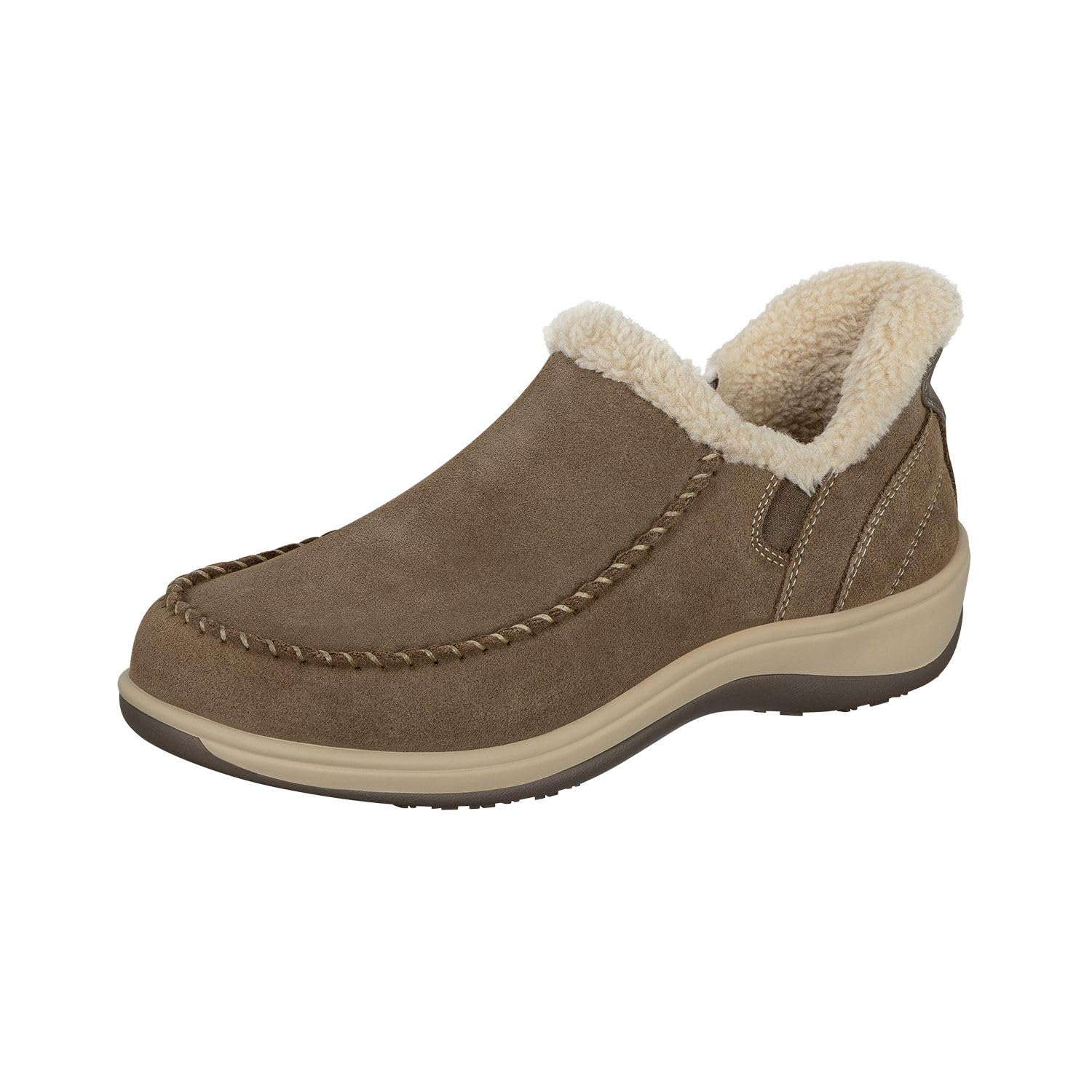
The Lorin does two things this category cares about well. It slips on without a fight, and it lets you adjust the arch and height to fit your own foot. That adjustment is the useful part — you are not stuck with a fixed shape, so you can fine-tune where the support meets your arch instead of forcing your foot to match the shoe. Ortho-Cushion support and a removable insole sit underneath.
What sells it is the plushness. Comfort is the clear favorite, with the soft lining and cushioning drawing steady praise. The arch support follows close behind, followed by the warmth in winter and the easy slip-on entry. Appearance gets a look in too. On a cold floor, the faux shearling lining and fur collar are what wearers mention most.
The one mixed signal is fit. Some wearers call it true to size; others find it runs too big. That is a sizing note rather than a build flaw, so order with your own foot measured and use the removable insole to fine-tune the feel. For a plush lining over an arch you can adjust yourself, this is a strong finish to the list.
Your pair if: you want a cushioned, easy-on slipper with an arch you can adjust yourself.
Order with care: the sizing feedback runs both ways, so check your foot length before you pick a size.
Know the Specs
Removable Insole and Extra Depth
Extra depth means the slipper has more room inside above the footbed than a standard shoe. That spare room does two things for a sore forefoot: it gives your toes clearance instead of pressing down, and it lets you swap in your own orthotic without the slipper becoming tight across the top. A removable insole is the key that open up this — you can pull out the stock one and put in your own, or use the fitting spacers and Arch Booster that come with some models to fine-tune the arch height.
Arch Support and Heel Cradle
Arch support means a raised, shaped footbed that holds up the middle of your foot. For a neuroma the benefit is simple: held-up arch keeps weight from rolling onto the ball of the foot, where the nerve usually sits. A heel cradle is the cupped shape at the back that centers your heel, and a firm heel counter is the stiff back of the slipper. Together they stop your foot from rolling inward, so the forefoot is not squeezed against itself as you walk.
Wide Fit and Adjustable Straps
A wide fit gives you more room at the front of the slipper. An adjustable strap — either a velcro-style closure or an open mule with a loose topline — lets you open or close the slipper over the instep. That matters when your foot swells through the day or flares up. Both let you take pressure off the sides of your toes, where the nerve sits, instead of forcing your foot into a fixed opening.
Sole Type: Non-Marring, Non-Slip, and Indoor-Outdoor
A non-marring sole is one that will not scuff your floors indoors. A non-slip tread gives you grip on wet kitchen floors or a garage step. An indoor-outdoor sole means you can wear the slipper from the bedroom to the patio. None of these change the support inside — they decide where you can safely wear the slipper, so pick the sole to match where you actually walk.
Common Questions
Will slippers with removable insoles fit my custom orthotics?
Do wide-fit slippers help with Morton’s neuroma?
Should I wear slippers around the house with a neuroma, or go barefoot?
How do I pick the right size when the brand says a shoe runs small?
What is the difference between extra depth and a wide fit?
Is a backless mule or a closed-back slipper better for sore toes?
How long should I wear a new orthotic slipper before judging the fit?
Can I wear these slippers outside on a patio or driveway?
Are the plush-lined slippers too warm for year-round wear?
Do slippers for Morton’s neuroma need a firm heel or a soft cushion?
The Bottom Line
For most people chasing relief from that sting between the toes, the slippers for morton’s neuroma winner is the Orthofeet Vito, because its removable insole and extra depth let you fit the slipper around your own foot and your own orthotic, and it draws a strong, consistent pattern of praise for that support.
If you need the strap to give on a swelling foot, grab the FitVille Wide Adjustable Mule; if a warm clog with real arch shape inside is what your cold floor is asking for, the PowerStep Archwear is the pair to reach for.
One last honest point: the Vito carries fewer ratings than the Lorin, but it holds the higher score at 4.5+ against 4.0+. That gap is small enough to treat both as strong options and choose on fit — removable insole and extra depth for a custom orthotic on the Vito, adjustable arch and a plush lining on the Lorin. Match the slipper to your foot’s shape — width, depth, and arch — and the comfort follows.
How we choose
We do not accept paid placement. Every pick is matched to a real buyer and a real use-case; we do not hands-on test units.
Sources
Specifications: manufacturer listings and product documentation. Review insights: verified customer reviews, as of October 2026. Pricing: not shown on this page (it changes often); check the current price via the retailer link.
As an Amazon Associate, Aappliancez earns from qualifying purchases. This does not affect which products we feature.