Disclosure: Some links in this post are affiliate links. As an Amazon Associate I earn from qualifying purchases, at no extra cost to you. Learn more
Specs are compiled from manufacturer listings and verified buyer reviews and can change over time — please confirm the key details on the product page before buying.
If you spend your shift on wet tile, oily concrete, or a hospital corridor, the SAS Guardian is the pick built to keep you upright and your arches supported by hour eight. It is the most expensive pick here, but it is also the one with a sole rated against wet and oily slips and a footbed you can actually pull out. Below you will find seven pairs sorted by what they genuinely do well, so you can match one to your floor, your feet, and your shift length.
This guide is built by comparing the manufacturers’ published specifications and the patterns across verified customer reviews, so you get each pick’s real strengths and trade-offs instead of marketing spin.
Some shoes grip better than they cushion, and some cushion better than they grip. The trick is matching the shoe to what your shift actually demands. This breakdown of slip resistant orthopedic shoes covers grip, arch support, and width so you can choose once and stop guessing.
Top Picks

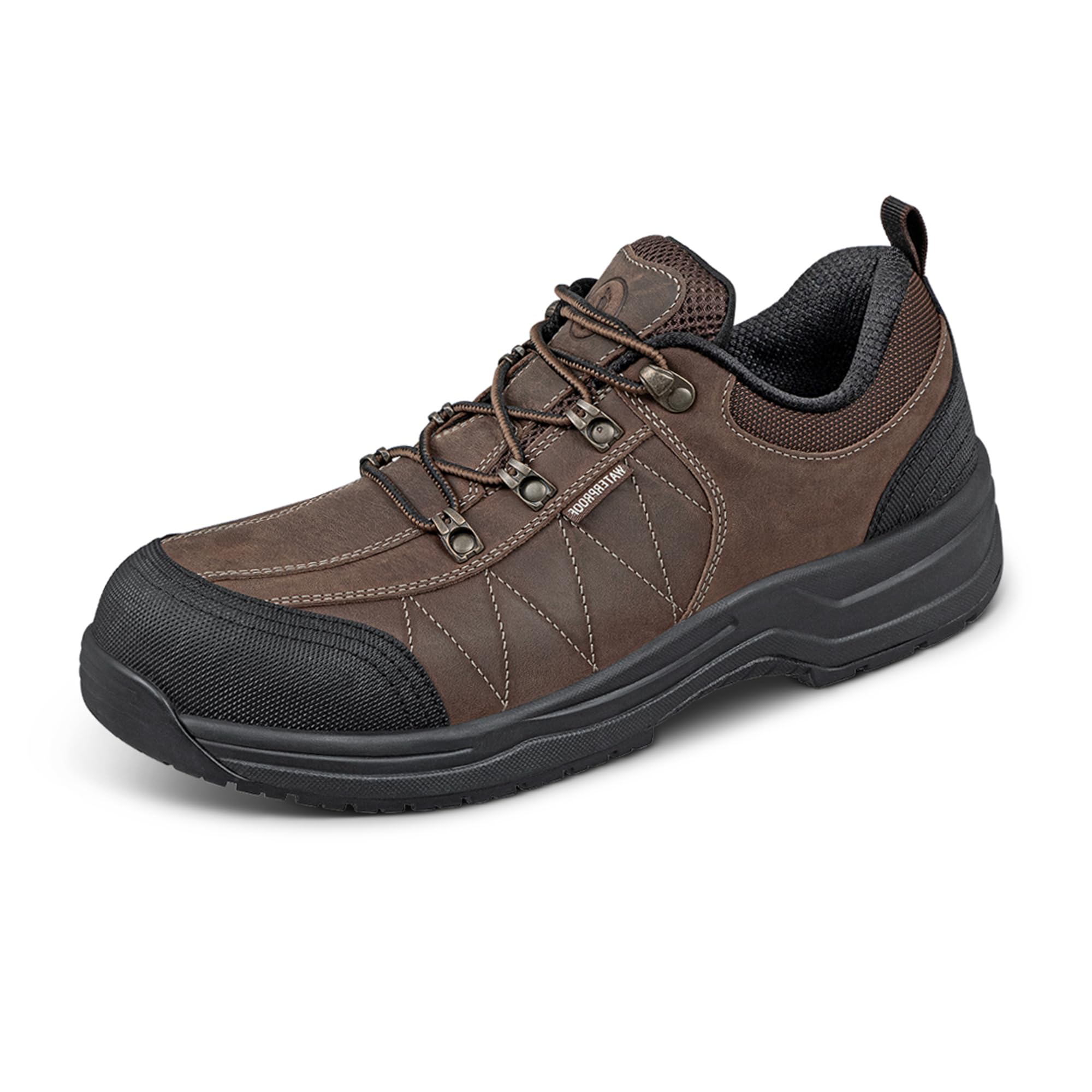
How To Choose The Best Slip Resistant Orthopedic Shoes
Start with your floor, not your feet. A hospital corridor, a restaurant kitchen, and a warehouse of oily concrete each punish a shoe differently. Get the outsole compound right first, then work backward to cushioning, width, and insole depth.
The Slip Rating Is Not the Same as a Tread Pattern
A deep tread looks grippy but says nothing about the rubber itself. The SAS Guardian carries an X-Tra Grip Sole that the maker says meets or exceeds the Mark II testing method for wet and oily conditions — that is a real test of the rubber on slippery surfaces. Look for that kind of stated method, not just a picture of a lug pattern.
Removable Insoles Are the Hidden Buying Decision
A shoe is only orthopedic to you if your own insert fits inside it. A removable footbed, plus extra depth in the shoe, is what lets you drop in a custom orthotic or a thicker arch support. Several picks here spell that out — the Orthofeet pairs include a removable insole and extra depth for most custom orthotics, and the SAS Guardian’s CoolStep footbed and Tripad cushions both lift out.
Width and Toe Box Decide Whether You Actually Wear Them
If you have a bunion, a hammer toe, or a wide forefoot, a narrow toe box will rub no matter how soft the cushion is. A roomy toe box spreads the pressure across the whole foot instead of one hot spot. The SKECHERS and Orthofeet picks both lean toward a wider, pressure-free fit, which is why people with damaged or sensitive feet keep landing on them.
Side-by-Side Comparison
| Model | Best For | Slip Resistance | Insole / Orthotic | Fit / Width | Amazon |
|---|---|---|---|---|---|
| SAS Guardian Lace Up★ Best Overall | Wet and oily floors | X-Tra Grip Sole (Mark II method) | Removable CoolStep + Tripad cushions | Lace-up, widths up to XX | Amazon |
| Orthofeet Basalt SafetySteel-Toe Pick | Steel-toe jobs | Slip-resistant sole | Built-in orthotic insole, removable | Wide toe box, extra depth | Amazon |
| OrthoComfoot Women’s Loafers | House and casual wear | — | Orthotic arch insole | Slip-on, runs wide | Amazon |
| Shoes For Crews Everlight | Food service shifts | Non-slip outsole | — | Stretch slip-on sneaker | Amazon |
| OrthoComfoot Men’s Loafers | Dress-casual wear | Non-slip tread | Orthotic insole with arch support | Slip-on, runs loose | Amazon |
| SKECHERS Glide-Step Pro | Long kitchen shifts | Slip-resistant outsole | Air-Cooled Memory Foam insole | Hands-free slip-in, 1.5 lb | Amazon |
| Orthofeet Wichita | Cobblestone and travel | Slip-resistant sole | Removable arch support + spacers | Deep, extra depth | Amazon |
Detailed Reviews
1. SAS Guardian Slip-Resistant Comfort Lace Up
Our pick — 4.0+★ from 400+ verified ratings; the strongest balance of quality and price.
The one shoe here that names a real wet-and-oily slip test on its sole.
You get a sole the maker says meets or exceeds the Mark II testing method for wet and oily conditions — meaning the rubber is tested on slick floors, not just dry tile. The uppers are Waterguard water-resistant leather, so a mop bucket splash or a rainy walk in does not soak through to your socks.
Under your foot sits a removable CoolStep footbed with an anti-friction lining, plus Tripad cushions that lift out to sit under the inside ball, outside ball, and heel. That is the three-point pressure map you feel at hour nine on concrete. Lace-up closure means you can cinch the shoe snug to your instep, which matters for high arches where a slip-on can flop loose.
Buyers who stand on cement all shift call these the best work shoes for the job, and many have worn SAS for 30+ years. One reviewer’s line lands the point: the shoes are well worth the price; my feet don’t hurt as much while working anymore. The honest catch is value. Which widths you find matters too — the maker builds W, WW, and WWW, but a buyer sizing a 13W found Amazon’s listing tops out at WW, so a true triple-wide foot may need an in-store fitting. The color run stays black, and a kitchen worker who stands all shift on wet tile still needed an aftermarket cork insole to keep them comfortable.
Where it earns its keep
- X-Tra Grip Sole rated for wet and oily conditions
- Removable CoolStep footbed and Tripad cushions at all three pressure points
- Water-resistant Waterguard leather uppers
Where it asks patience
- Premium-tier cost for a work shoe
- Only black in this listing
- Break-in still wants a cushioning insole for some wearers
Made for: long shifts on wet tile, oily kitchen floors, or hospital corridors where grip is the whole job.
Think twice if: your budget is tight or you want a lighter, cheaper shoe you can replace often.
2. Orthofeet Basalt Orthopedic Men’s Safety Work Shoes
A steel toe that still leaves room for a bunion, an orthotic, and a 12-hour shift.
This is the pair to reach for when the job needs a steel toe but your feet need the orthopedic treatment. The Ortho-Cushion system bundles a built-in orthotic insole, a shock-absorbing sole, and a pressure-free fit — three things that usually mean three separate purchases. A wide base and a firm heel counter round out the stability side, which matters if you feel unsteady on your feet.
Your feet get room to spread out, even with a badly damaged foot or an unfused bunion that needs extra-wide shoes. One buyer with exactly that problem praised the steel toe and all-day comfort, then wore them four days straight at a conference booth and finished with feet, legs, and back comfortable. The removable insole and extra depth let your custom orthotics fit inside. Water-resistant uppers keep your feet dry in light rain, and a slip-resistant outsole grips wet floors.
Now the trade-offs, sized honestly. The wide toe box is generous, and that is also why it feels roomy to a foot that does not need the width. These run heavy and bulky, so they are a work-boot feel, not a light sneaker. A chef-style review of the fit praised the support while calling the cushion slightly firm from the start. Wear them with a padded sock for the first week and they settle in.
The honest read: The extra-wide room and custom-insole depth are what separate these from a plain steel-toe shoe. If your foot needs that space, you will feel the difference on the first shift; if not, the bulk may feel like too much shoe.
Your match if: you have wide or damaged feet, a bunion, or an orthotic that needs a deep, roomy steel-toe work shoe.
Size down if: your foot is a standard width and you want a snug fit without socks taking up the slack.
3. OrthoComfoot Women’s Orthopedic Slip On Loafers
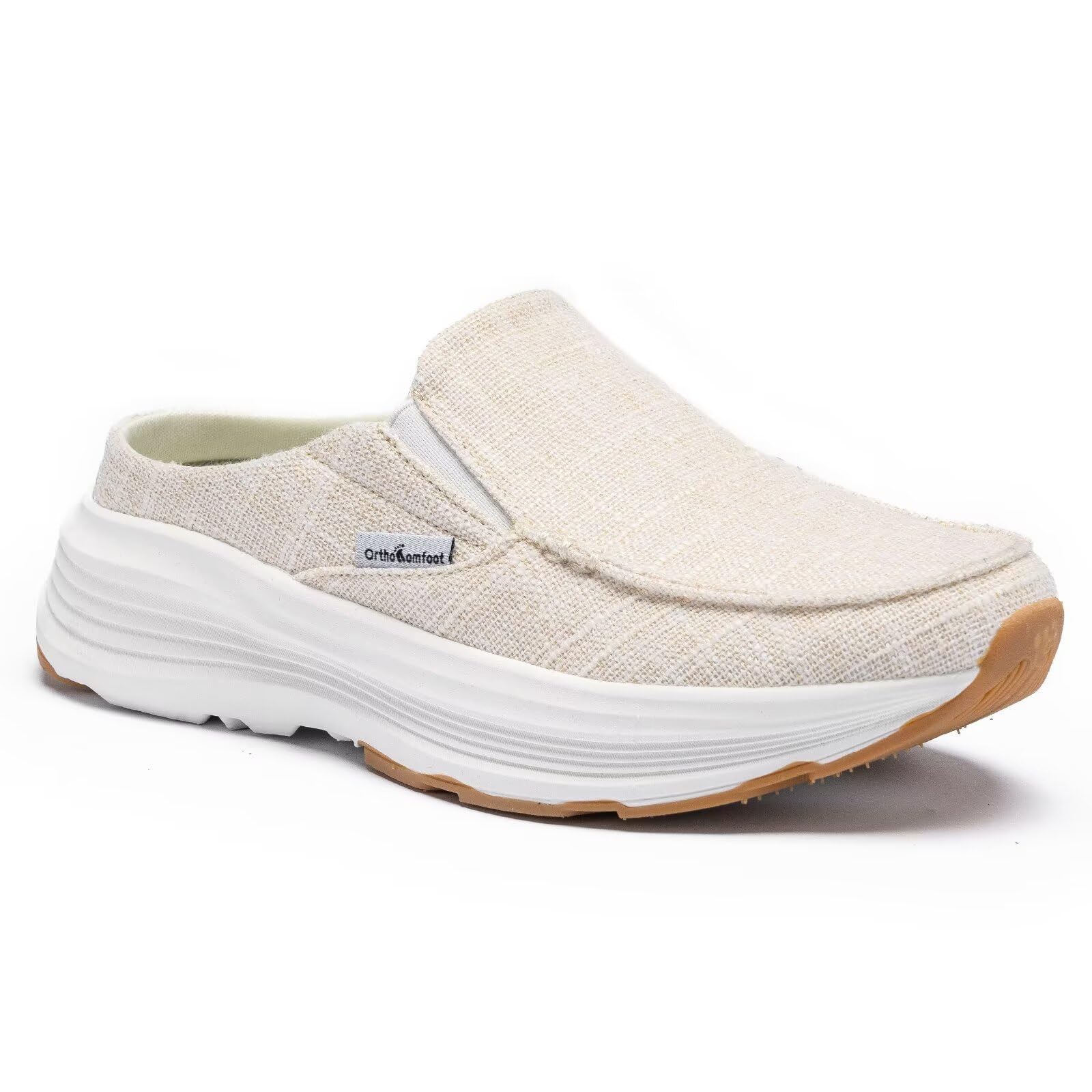
A soft, affordable slip-on for padding around the house on a sore heel.
Arch support is the point here. The insole carries a firm arch that many wearers say supports the foot well, and the slip-on cut means you can step in and out hands-free when you are making coffee or checking the mail. The fabric upper reads very summer-like and breathable — good for warm floors, not for a wet walk outside.
The sizing is worth planning around. These run a little wide and a little roomy, so your usual size may feel loose. One buyer sized a 6M and found them roomy without sliding off or causing blisters; another with a narrower foot found the width a touch too generous. If you have a square-shaped, wide forefoot, the room works in your favor.
Here is the part that matters for house shoes: the cushion softens up fast, which feels great at first. After about four months, one pair stretched loose enough that a foot could twist inside, which is the point where you stop wearing them for stairs. The soles also squeak on some floors, so a quiet house may find that annoying. For the price and the arch support, they are a fair house and casual shoe — just do not count on the same fit a year in as on day one.
Reasons owners gravitate to them
- Firm arch support built into the insole
- Hands-free slip-on for house and errands
- Budget-friendly price tag
The honest limits
- Runs wide and roomy — size down for a snugger fit
- Uppers soften and stretch over months of wear
- Soles can squeak on hard floors
Grab them for: house wear and quick errands when you want arch support without lacing up a shoe.
Skip them for: a wet workplace or long outdoor walks where a stiffer, grippier sole is needed.
4. Shoes For Crews Everlight Women’s Slip-On Sneaker

The stretch sneaker that lets bunion-prone feet into a non-slip work shoe.
A stretchy knit upper (the shoe’s top fabric) wraps around your foot, so bunions fit without pressure. One supermarket produce worker who stands all day called them among the most comfortable pairs of non-slip shoes she has owned. They feel like socks on your feet, and the slip-on design means you can put them on fast before a shift.
Traction is a genuine selling point — one buyer compared them to cheaper shoes of the same style and found these genuinely slip-resistant, especially on the wet floors of delis and bakeries. They are also light. The whole sneaker weighs almost nothing, which helps on an eight-hour food service shift.
The catch is fit and long-term wear. Sizing skews generous: a buyer who took a size 8 found a 1.5-inch gap at the toe and had to exchange for a 7.5. The stretch feels great but can loosen over long shifts, and the front can start separating after heavy use. If you are between sizes, go down rather than up, and be ready to swap these after a season of hard floor work.
The verdict: Light, breathable, and genuinely grippy on slick restaurant floors. The stretch that makes them bunion-friendly is also what makes the fit drift, so buy your true size and treat them as a wear-out-and-replace pair rather than a lifetime shoe.
Great for: deli, bakery, or restaurant work where you want a featherweight slip-on that sheds water and grips slick floors.
Look elsewhere if: you have very wide feet or want a shoe that holds its shape tight for years.
5. OrthoComfoot Men’s Orthopedic Slip On Loafers

A loafer you can wear to the office that still carries an orthotic insole.
Most orthopedic shoes look like orthopedic shoes. This one leans toward the look of a dress loafer while keeping an orthotic insole with arch support underneath. The black faux-suede upper reads dressy enough for an office and easy to wipe clean, and the tread underneath is grippy rather than slick.
For buyers chasing real pain relief, this loafer is the one that over-delivers. One wearer got more walking relief than from a pricier New Balance plus insoles, wore them all day at work instead of minutes in other shoes, and planned a backup pair. The slip-on cut also makes them easy on and off for anyone who has trouble with laces.
Two honest caveats. The fit runs a little loose — a buyer who normally wears a size 9 found it generous — so plan around that if you are between sizes. And there is no padding at the back of the ankle, which sent one wearer looking elsewhere because he wanted cushion at the heel. The suede look also is not waterproof, so rainy days are best saved for another shoe. For a dressy, supportive loafer at a mid-range price, it earns its spot.
What makes it a favorite
- Dress-loafer look with an orthotic insole and arch support
- Easy slip-on and off for stiff or sore feet
- Grippy tread and easy-clean uppers
What to plan around
- Fit runs a little loose
- No padding at the back of the ankle
- Suede look is not built for wet weather
Reach for these if: you want a supportive shoe that passes for a dress loafer at work.
Choose another if: you need a waterproof shoe or want a snug ankle wrap.
6. Skechers Men’s Slip-Resistant Glide-Step Pro Slip-ins

Slip in without bending down, then stand in them for twelve hours.
Hands-free slip-in is the hook, and it is done with a molded heel panel and a Heel Pillow that hold the foot in place once it is in. For anyone whose back or knees complain about bending to tie shoes, that is a real difference on a rushed morning. Underneath, an Air-Cooled Memory Foam insole stays cool, and a Glide-Step midsole rolls the foot forward through each step.
Kitchen and concrete workers are the core audience. The slip-resistant outsole is tested on wet surfaces, and the upper is water-repellent mesh, so a spill beads off rather than soaking in. One chef on his feet all day called the comfort heaven on his feet. A 20-year kitchen veteran summed up the fit, comfort, and lightweight feel in a few plain words: the shoes are perfect.
The one thing to watch is the no-lace fit. Without laces to cinch, the heel can pop up and down on a foot that does not fill the shoe snugly — a fast-paced worker sent a pair back for exactly that reason. The mesh upper also breathes, which is great in a kitchen but not warm on a winter commute. If you like a snug, locked-in feel, tie-free may not be your style.
Standout spec: The molded Heel Pillow and slip-in heel panel mean zero bending, so the shoe works for anyone who struggles to reach their own feet. Pair that with a water-repellent mesh upper and a slip-resistant sole and it covers the fundamentals for a kitchen or warehouse shift.
Best for: long kitchen and warehouse shifts where you want to slip in without bending and keep grip on wet floors.
Not for: anyone who wants a tightly laced fit — the no-lace heel can feel loose.
7. Orthofeet Wichita Orthopedic Women’s Casual Shoes
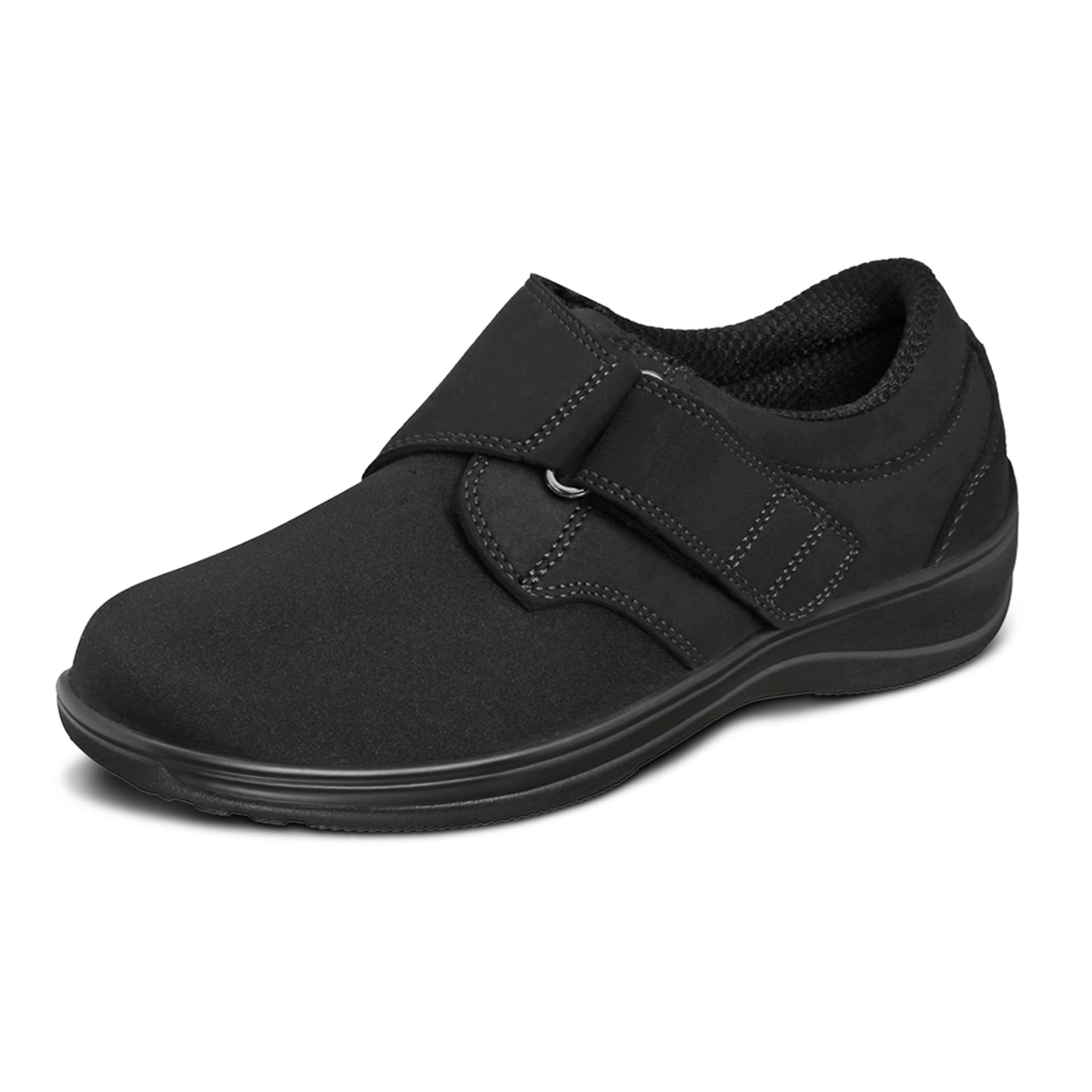
Deep enough for an AFO plate, and sturdy enough for a cobblestone walking tour.
What sets this pair apart is the depth and the customization. You get the Ortho-Cushion system — a built-in orthotic insole, a shock-absorbing sole, and a pressure-free fit — plus a removable arch support with fitting spacers you can trade to dial in the fit. The fabric uppers have a bit of give, so they can accommodate a foot that needs extra room at the top.
Real wearers put the depth to work. One buyer after 4 months reported the uppers fit an AFO foot plate comfortably. A wearer with diabetic neuropathy found them solid, supportive, and lightweight, with stretchy neoprene that prevents blisters and a deep cut that holds inserts. A nurse who spent decades on cement floors praised the toe space and the arch support with room to raise the arch even more.
The fit is where the caution lives. These run roomy — some buyers report size down, and the included spacers help tighten a too-big toe box. The supplied arch supports are modest, so if you need serious lift, plan to swap in your own insert. Travelers on cobblestone streets found them comfortable, and the casual look does not read as a medical shoe.
Why it works for travel and daily wear
- Extra depth fits an AFO plate or custom orthotic
- Removable arch support plus fitting spacers for a dialed-in fit
- Casual look that does not shout medical shoe
Where to pay attention
- Runs roomy — often needs sizing down
- Included arch supports are modest
- Deep cut is not for everyone
The travel-friendly choice: a deep, roomy shoe for cobblestone streets and long days when you need custom-insole space.
Buy your true size: sizing can run large, and the fit spacers are the adjustment that saves it.
Know the Specs
The Slip-Resistance Rating
Slip resistance is about the rubber compound, not the tread depth alone. Lab methods test how a sole holds on wet or oily surfaces. SAS states its X-Tra Grip Sole meets or exceeds the Mark II test method for wet and oily conditions, which is the clearest rating on this list. When a listing only says “slip-resistant” with no method named, treat it as a claim rather than a tested figure.
Insole Removability and Depth
A removable insole is the difference between a shoe and your shoe. If you wear a custom orthotic, you need the original footbed to come out and enough depth in the shoe to fit your insert back in. Several picks here spell out a removable insole and extra depth for most custom orthotics — check that before you buy if you depend on your own arch support or an AFO plate.
Common Questions
Do slip resistant orthopedic shoes work on oily kitchen floors?
Can I put my own custom orthotics inside these shoes?
What is the difference between a slip resistant shoe and an orthopedic shoe?
How do I know if I need a wide toe box?
Are slip resistant shoes safe to drive in?
How long should slip resistant orthopedic shoes last?
Should I size up or down in orthopedic shoes?
Do these shoes work for plantar fasciitis?
Can I wear orthopedic work shoes all day without an extra insole?
The Bottom Line
Grip is the first thing to get right, and the SAS Guardian delivers the clearest evidence of it with an X-Tra Grip Sole rated for wet and oily floors plus a removable, pressure-point footbed. For a steel-toe job with wide or damaged feet, the Orthofeet Basalt gives you the room and the orthotic depth. And if you work a wet deli or bakery shift and want a light, stretchy slip-on, the Shoes For Crews Everlight is the one to slip on. The SAS Guardian is the most expensive pick here, but nothing else on this list names a wet-and-oily sole test — if the floor is the risk, that is the upgrade that matters.
How we choose
We do not accept paid placement. Every pick is matched to a real buyer and a real use-case; we do not hands-on test units.
Sources
Specifications: manufacturer listings and product documentation. Review insights: verified customer reviews, as of October 2026. Pricing: not shown on this page (it changes often); check the current price via the retailer link.
As an Amazon Associate, Aappliancez earns from qualifying purchases. This does not affect which products we feature.