Disclosure: Some links in this post are affiliate links. As an Amazon Associate I earn from qualifying purchases, at no extra cost to you. Learn more
Specs are compiled from manufacturer listings and verified buyer reviews and can change over time — please confirm the key details on the product page before buying.
Silver turns black, and that is the whole problem. Tarnish is not dirt sitting on top of your silver — it is a chemical film that forms when the metal meets air and sulfur. That is why a plain soapy wash does nothing, and why picking the right remover matters more than scrubbing harder. The good news: the five winners below each attack that film a different way, from a polish-impregnated cloth you can keep in a drawer to a foaming wash for heavy black buildup.
This guide is built by comparing the manufacturers’ published specifications and the patterns across verified customer reviews, so you get each pick’s real strengths and trade-offs instead of marketing spin.
Match the format to the metal and the job, and dull heirlooms come back bright. That is the simple logic behind every pick in this list of the silver cleaner options worth your money.
Top Picks

How To Choose The Best Silver Cleaner
Start with one plain question: how dark is the tarnish? Light yellow-brown film and heavy black crust need two different tools. A treated polishing cloth handles the light film in seconds, while a wash or foam is what you reach for when silver has sat in a drawer for years. Buying the wrong format is the most common reason a cleaner seems not to work.
Cloth, liquid, cream, or foam
A polishing cloth has the cleaner built into the fabric, so there is no liquid, no spray, and no rinsing — you rub and you are done. It is the fastest option for a quick touch-up on a ring or bracelet. A liquid wash or a cream works deeper into engraving and patterned surfaces, because it flows where a flat cloth cannot reach. A foam sits between the two: it clings to the surface so it keeps working while you work, and it rinses away with warm water.
What the formula must not do
Two words decide whether a cleaner is safe for your piece. The first is “abrasive” — gritty particles scratch silver, and scratches dull the shine you are trying to restore. The second is “ammonia” — a harsh chemical that can hurt gemstones and pearls. If your collection includes diamonds, gemstones, or pearl-topped bracelets, look for a formula that states it is free from harsh abrasives or is ammonia-free, and follow any warning to avoid the pearls.
Side-by-Side Comparison
| Model | Best For | Format | Size | Metals | Amazon |
|---|---|---|---|---|---|
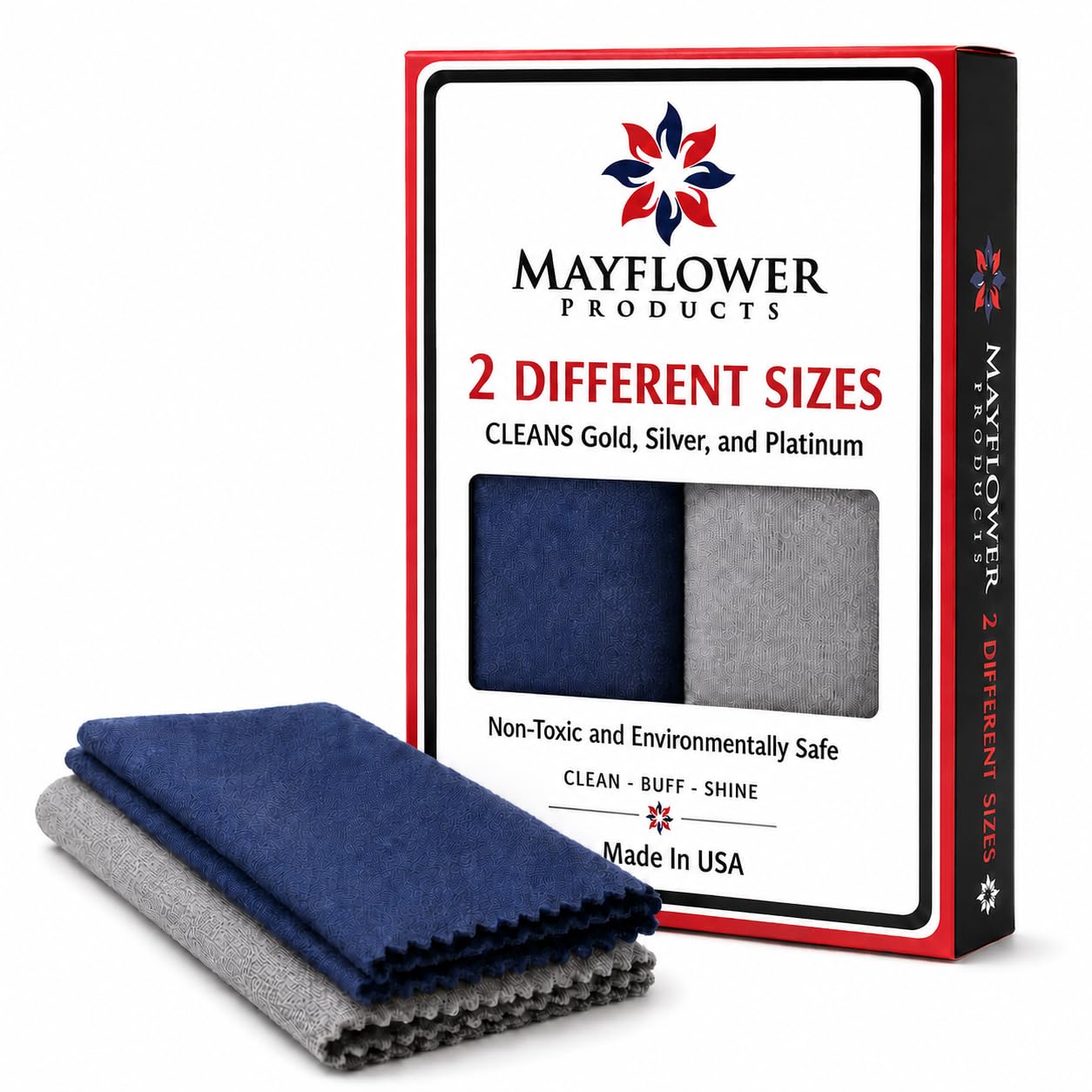
| Jewelry Polish Cleaning Cloth for Silver & Gold★ Best Overall | Fast everyday touch-ups | Treated polishing cloth | 11″ x 14″ and 8″ x 6″ | Gold, silver, platinum | Amazon |
| Twinkle Silver Polish KitBest Value | Antique silverware and bangles | Anti-tarnish cream | 2 x 4.38 oz | Silver | Amazon |
| Hagerty Silversmith’s Silver Wash | Heavily blackened heirlooms | Liquid wash | 8 oz | Sterling, silver-plate, gold-plate | Amazon |
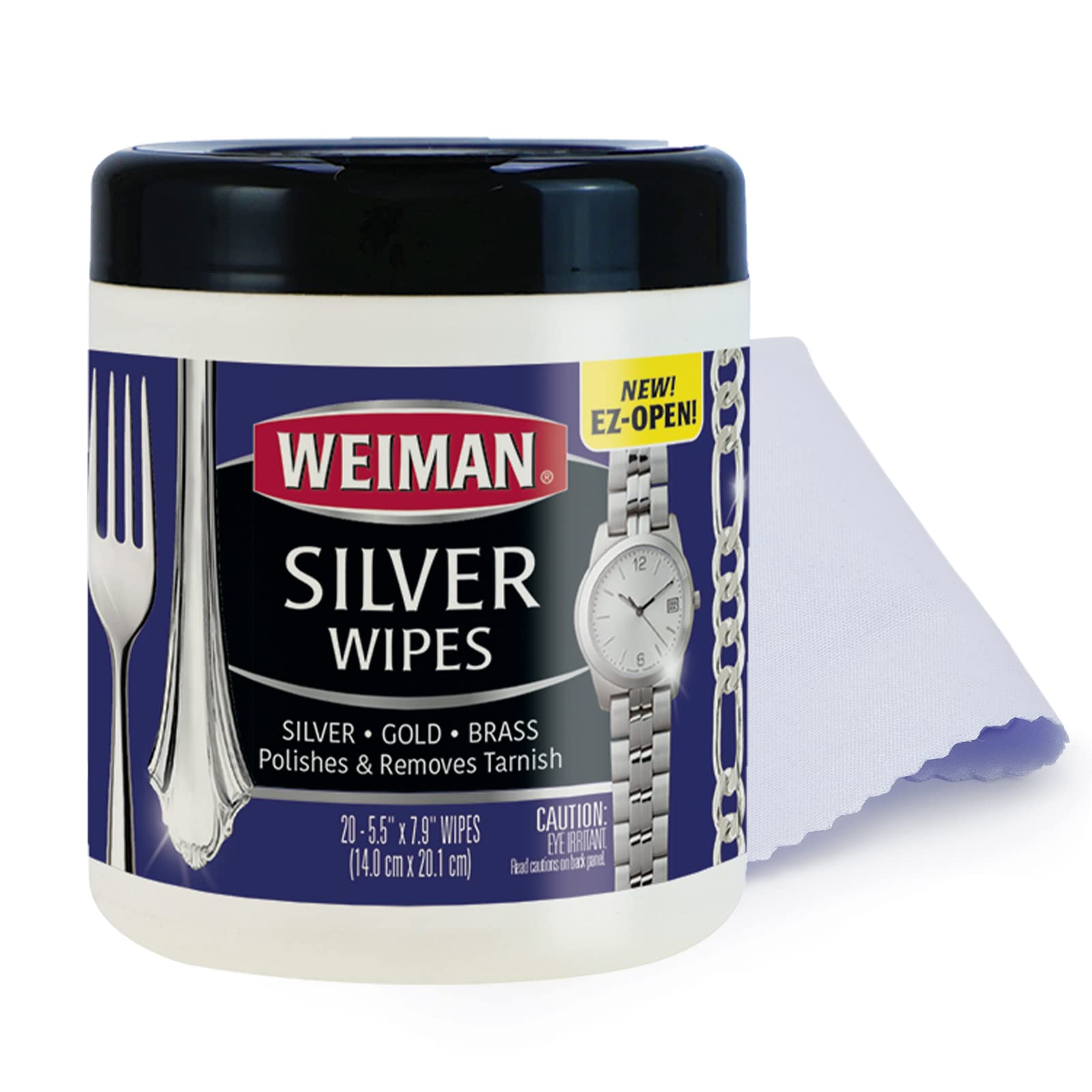
| Weiman Jewelry Polish Cleaner and Tarnish Remover Wipes | Mess-free travel and small jobs | Pre-moistened wipes | 20 count | Silver, gold, brass, copper, aluminum | Amazon |
| Northern Lab-Goddards Goddard’s Long Shine Silver Foam | Large pieces and deep tarnish | Foam | 18 fl oz | Silver | Amazon |
Detailed Reviews
1. Jewelry Polish Cleaning Cloth
Our pick — 4.5+★ from 1,500+ verified ratings; the strongest balance of quality and price.
Two cloths, one drawer, and seconds between dull and bright
If your silver pieces are only lightly hazy — a ring you stopped wearing last month, a chain that sat in a jewelry box — this is the pick that gets used the most, because it takes zero setup. The polish is built directly into the cloth, so there is no bottle, no paste, and no rinsing. You rub the piece on the treated inner layer, then buff it on the ultra-soft outer layer, and you are finished. Owners describe it as the fastest way to buff a tarnished ring back to a shine, with one happy buyer putting it plainly: ” I liked that it comes in three ply.”
What makes this the top pick across the whole list is how little it asks of you. You get a generous 11″ x 14″ cloth for large jobs — necklaces, bracelets, silverware, serving pieces, antiques — and a compact 8″ x 6″ cloth that drops into a handbag, jewelry box, luggage, or travel case for touch-ups on the go. That portability is the thing that beats a bottle every time: a cream or wash stays home in a cupboard, but a folded cloth travels with you, so you can fix a dull clasp in a restaurant bathroom or before a photo.
The formula is where the value really shows, because one cloth is doing three jobs — silver polish, jewelry cleaner, and tarnish remover in a single piece of fabric. It is safe across gold, silver, and platinum, so sterling silver, 14K and 18K gold, platinum, diamonds, engagement rings, wedding bands, and watches all get the same treatment. The system is non-toxic and made to be gentle on skin and delicate surfaces, with no harsh chemical smell and nothing abrasive to scratch the metal. It also carries a bit of heritage — made in the USA since 1985 by a family-owned American business with decades of jewelry-care experience. Buyers report it works on older designer pieces too, and one sharp tip from the review pages is worth following: keep it away from pearl bracelet tops, exactly as the instructions say, since pearls want a gentler touch than metal.
The catch is the format itself. A cloth is built for light tarnish and surface film — fingerprints, oils, everyday buildup — and it will not rescue silver that has gone deep black and crusty. That kind of piece needs a wash or a foam, which is why the heavier-duty picks sit further down this list. Even so, owners rate the cloth’s functionality far above everything else they talk about, and it also gets steady praise for the actual polishing and the shine it leaves behind. The value-for-money and size notes follow close behind — the two-size setup earns its keep.
Where it earns its place
- Cleaner is built into the fabric — no liquid, no spray, no rinsing
- Two sizes cover large silverware and pocket-sized touch-ups
- Safe on gold, silver, and platinum, and gentle enough to use bare-handed
- No abrasive scrubbing and no harsh chemical odor
Where it hits a wall
- Light tarnish and surface film only — heavy black buildup needs a liquid or foam
- Pearl bracelet tops should be avoided, as the instructions advise
Reach for this if: you want the quickest shine on jewelry you wear often and silver that is only mildly dull.
Look at a wash or foam instead if: the piece has been sitting untended for years and the tarnish has gone black.
2. Twinkle Silver Polish Kit
Two tubs of cream for grandmother’s flatware and the bangles you forgot about
Antique silver is a different job than everyday jewelry, and this is the pick built for it. You get two 4.38 oz boxes of gentle cream — a format that clings to the surface instead of running off it, so it stays put on patterned bangles, beaded edges, and the sculpted handles of old flatware. Owners describe the payoff in heirloom terms: years of tarnish lifting away with a soft rag and a bit of elbow grease, leaving antique bangles looking new enough to hand down. The quality of the cream is what buyers talk about most, with its raw effectiveness right behind.
What makes the cream worth keeping in the cupboard is the anti-tarnish ingredient, which stays behind to keep silver beautiful longer. That means you are not back with a rag every few weeks — the protection slows the black film from reforming, which is the part most people forget until the shine fades again. It is easy to apply, contains no phosphorus, and washes off cleanly, so there is no residue left to fight with.
Against the treated cloth at the top of this list, this cream asks for more work but reaches further. A cloth is a few seconds against light film; the cream is a few minutes against set-in tarnish on pieces with texture the fabric cannot grip. Buyers who spend the extra effort report it pays off on the specific stubborn jobs — salad bowls and wine coolers both come up as pieces it handled. One long-running theme on the review pages is patience: let the cream sit and do its work rather than scrubbing hard, and the silver comes back glowing with a soft buff afterward.
The honest limit is level of tarnish. Owners note it works best on light tarnish, and if your silver has gone heavy black, you want a wash or foam that lifts more in one pass. For the mid-weight jobs — dull, yellowed, not yet crusted — this pair of tubs is the balance for the money.
Two tubs, long protection: anti-tarnish ingredients in a gentle cream that stays where you put it on textured bangles and flatware.
What you give up: set-in black tarnish is beyond its reach — that is heavy-buildup territory.
Best for: restoring heirloom silverware and old jewelry where the tarnish has set but not blackened.
Think twice if: you are dealing with a piece that has gone deeply black and crusted.
3. Hagerty Silversmith’s Silver Wash

The abrasive-free wash that takes on silver black enough to look ruined
When the tarnish has gone beyond dull and into solid black, this is the one that earns the deep-clean label. It is a liquid wash built around an R-22 agent — a premium silver formula made to penetrate and lift embedded tarnish out of cutlery and ornament — and it is free from harsh abrasives, so it cleans without scratching the delicate surfaces underneath. Buyers describe blackened sterling coming back to a warm, even sheen without losing its patina, which is exactly what you want on an older piece: clean, not stripped. The quality of the formula is what wins people over most, with its cleaning performance right behind.
One detail separates this from every other pick on the list, and it is worth reading twice. It is a wash, not a cream: you mix it with warm water into a foam, apply it, and buff with a microfiber cloth. Going in expecting a paste is the single reason some buyers find it fiddly — but the ones who follow the mixing step report it rinsing clean with no residue and handling even heavy black tarnish from an old sterling compact, given extra foam and rubbing. It also goes a long way on a rag, so the 8 oz bottle stretches further than the size suggests.
The gentleness story is what makes it the safe choice for a mixed collection. It is safe for sterling silver, silver-plated, and gold-plated valuables, and it is Kosher-certified, so you are not guessing about what is in the bottle. It is also the only wash here that freely crosses between real silver and plated pieces, which matters if you are not sure what an inherited tray actually is. Shine, ease of cleaning, and gentleness all come up as praise, though gentleness is the one place opinions split — some owners find it takes more patience to work than a wipe. That patience is the trade for a deeper clean that does not harm the metal.
Set it beside the Twinkle cream and the difference is working time versus depth. The cream is a quick bite at light tarnish; this wash is a slower, deeper pass that gets silver looking like new when nothing else will. Both land in the same place on finish, but only one is built to handle a piece that has been untended for a decade.
The confident call: an abrasive-free wash for heavily tarnished sterling and heirlooms you want cleaned without stripping.
One caveat: it must be mixed with warm water into a foam — go in treating it like a cream and you will fight the format.
4. Weiman Jewelry Polish Cleaner and Tarnish Remover Wipes
Pre-moistened wipes that skip the paste, the buffer, and the mess
For a small jewelry collection you want to keep bright without owning bottles and rags, this is the no-mixing, no-rinsing option — 20 pre-moistened wipes plus a polishing cloth, ready to use with no mixing and no paste. The formula is ammonia-free, which is the detail that matters most if your pieces include diamonds or gemstones, because you get a cleaner that can touch stone-set jewelry without the worry that comes with harsher chemicals. What buyers notice most is simply that the wipes work — the effectiveness of the formula is the quality owners call out again and again, with the actual tarnish removal close behind.
What sets these apart from the cloth and the creams above is the coating left behind. After the wipe lifts the tarnish, it lays down a protective layer that slows new tarnish from forming, and the non-scratch formula means the polish does not gouge the surface while it works. That combination makes each wipe do double duty: one pass cleans, the residue guards. Silver that looked almost new afterward is a recurring note, and it is faster than going through the setup of a liquid or cream.
The honest caveats here are real but small. Twenty wipes is a fixed supply, so on a large collection you will run out faster than you would with a wash or a cream. The foil seal on the container can fight back when you try to open it, and a wipe can start out feeling a little dry before the working tarnish comes off — both of which owners mention. It also helps to wash your hands or pull on disposable gloves while using one, since the wipe carries moisture and polish that you do not want spreading. None of that changed the verdict on most buyers’ pieces: the wipes still delivered quick results.
Where this beats the rest is portability and range. It is the only pick here stated for silver, gold, brass, copper, and aluminum, so you can use one wipe on a brass candlestick and a silver chain in the same sitting. It is also the only one you can tuck in a travel case without worrying about leakage, which makes it the leak-free travel companion to the polishing cloth in first place.
Clean and protect: ammonia-free wipes that leave an anti-tarnish coating behind so the shine holds longer after each use.
Room to grow: the 20-count supply runs out sooner than the bottles, so keep a wash or cream for the bigger jobs.
Best for: gemstone jewelry, brass and copper decor, and anyone who wants zero setup and a wipe that travels.
Consider a larger container if: you are cleaning a whole household of silver in one go.
5. Northern Lab-Goddards 707087 Goddard’s Long Shine Silver Foam

The big-container foam for punch bowls, trays, and silver no one has touched in years
Large silver is its own headache — a punch bowl or a serving tray has too much surface to wipe by hand and too many curves for a flat cloth. That is the job this 18 fluid ounce foam is built for. It clings in a layer rather than running off, so it keeps working across a wide surface while you move, and it is non-abrasive, so it cleans without risking the metal underneath. Owners describe heavy tarnish coming off in a pass or two and large pieces looking brand new, and the effectiveness of the foam is what buyers praise most.
The application itself is straightforward once you know the rhythm: moisten the included sponge with hot water, work it into the foam, apply to the silver, then rinse with warm water and repeat if needed. Owners mention the sponge is sturdy and holds up without falling apart, and that leaving the foam on longer gets a cleaner result — patience does the work here rather than pressure. The 18 ounce container is the largest format on this list, which is exactly what you want when a big piece is the target.
Two things to plan around. The smell lands differently for different people — some owners detect nothing harsh, while others find it strong enough to warrant a window open and a pair of gloves, so treat good ventilation as part of the routine. And on finely etched or engraved silver, the foam alone will not reach into every groove; a liquid polish plus a soft brush handles the fussy detail work better. Those are format notes, not faults — the same cling that makes it great on a bowl is what makes it less ideal in a filigree pattern.
It also earns a reputation for being safe on silver that lesser polishes could ruin. Customers note it works on pieces that have sat unpolished for years without damaging the metal the way some liquid polishes can, and it is gentle enough on hands to use comfortably. Since the formula is non-abrasive and stated for silver, it is a fair choice for a collection you actually care about preserving rather than just brightening.
Built for big, tarnished pieces: an 18 fl oz foam that clings to a surface and rinses clean, so trays and bowls get restored with less elbow grease.
The one thing to plan for: the odor is noticeable, so crack a window and keep ventilation in the routine.
Best for: large silver pieces, deep or heavy tarnish, and anyone who wants the biggest container available.
Add a liquid polish too if: the piece has finely etched or engraved detail the foam cannot reach on its own.
Know the Specs
Format: cloth, cream, liquid, or foam
The format decides how much work you do and how deep the clean goes. A treated cloth is fastest for light film because the cleaner is already in the fabric. A cream stays where you put it, so it suits textured bangles and flatware handles. A liquid wash flows into engraving and patterned surfaces a cloth cannot reach. A foam clings to wide surfaces so it keeps working on a big tray or bowl. Match the format to the piece and the tarnish level, not to habit.
Volume and size: how far one container goes
The stated size tells you how many jobs a container covers. A pair of 4.38 oz tubs or an 8 oz bottle handles several sessions on a modest collection, while a single 18 fl oz foam is sized for large pieces. Wipe counts work the same way — 20 wipes is a fixed supply, so a big household will finish a pack quickly. Buying the largest container when you only have a few rings means the rest dries out or sits unused. Size up only when the pieces are big or the shelves are full.
Anti-tarnish ingredients and protection
Anti-tarnish ingredients are what stop the black film from coming back so fast, and they are the difference between cleaning once and cleaning every few weeks. Not every format includes them — a wash focuses on the deep clean, while a cream or a wipe can leave a protective layer behind. If your silver lives in a display case or a drawer and tarnishes repeatedly, a formula with anti-tarnish protection saves you repeat sessions. Read the bottle for the words “anti-tarnish” and “protects” before you buy.
Abrasive-free and ammonia-free safety
Abrasive-free means there are no gritty particles to scratch the metal — and scratches are what permanently dull the shine you spent effort restoring. Ammonia-free means the formula is safer around diamonds and gemstones, since harsh chemicals can harm some stones. If your collection mixes metal with pearls, gemstones, or diamonds, put safety ahead of strength and choose a formula that states what it leaves out. A stronger cleaner that risks a stone is a bad trade.
Common Questions
How do I choose between a polishing cloth, a cream, and a silver wash?
Can I use a silver cleaner on jewelry with gemstones or pearls?
Will a tarnish remover damage real sterling silver?
How long does the shine last before tarnish comes back?
Can I use one cleaner on silver, gold, brass, and platinum?
Do I need to mix a silver wash with water, or can I use it straight?
How many pieces will one container actually clean?
Does a foam polish work on finely engraved or etched silver?
Should I wear gloves and ventilate the room when polishing silver?
Is a silver polish the same thing as a silver tarnish remover?
The Bottom Line
For most people, the silver cleaner that ends up in the drawer and gets used is the Jewelry Polish Cleaning Cloth for Silver & Gold, because it needs no mixing, no rinsing, and no setup — you rub, you buff, and jewelry you wear often stays bright. That is why it takes the top spot: it is the one you can grab and use without setup. If you want a cream with anti-tarnish protection for old flatware and bangles, grab the Twinkle Silver Polish Kit. And for a heavily blackened heirloom or a large tray that has sat for years, the Hagerty Silversmith’s Silver Wash or the Goddard’s Long Shine Silver Foam is the one to reach for.
How we choose
We do not accept paid placement. Every pick is matched to a real buyer and a real use-case; we do not hands-on test units.
Sources
Specifications: manufacturer listings and product documentation. Review insights: verified customer reviews, as of October 2026. Pricing: not shown on this page (it changes often); check the current price via the retailer link.
As an Amazon Associate, Aappliancez earns from qualifying purchases. This does not affect which products we feature.