Disclosure: Some links in this post are affiliate links. As an Amazon Associate I earn from qualifying purchases, at no extra cost to you. Learn more
Specs are compiled from manufacturer listings and verified buyer reviews and can change over time — please confirm the key details on the product page before buying.
Your feet are the first thing to quit on a long shift, and the right pair buys you hours of relief. The shoes below are the ones worth putting on before a concrete floor, a wet kitchen line, or twelve hours of standing — and each one is here for a specific reason.
This guide is built by comparing the manufacturers’ published specifications and the patterns across verified customer reviews, so you get each pick’s real strengths and trade-offs instead of marketing spin.
What follows is a plain-English read of seven work shoes, from a steel-toe hiker to a laceless slip-in. If you want the shortest possible answer, the CAT Invader Hi carries the strongest overall case among these shoes for work men.
Top Picks

How To Choose The Best Shoes for Work Men
Most buyers pick a work shoe by looks and pay for it in week two. The better approach is to match three things to your day: the toe type, the sole grip, and the shoe’s weight.
Toe type decides how the shoe feels after lunch
A steel toe is a metal cap over your toes that shrugs off dropped boxes and rolling carts. It shrugs off dropped boxes and rolling carts, but adds weight at the front of the shoe. A composite toe uses a non-metal cap instead, which is why the KEEN Kenton feels closer to a sneaker than a boot.
Sole grip is the difference between walking and worrying
If your floor goes wet, greasy, or icy, the tread pattern matters more than anything printed on the box. The Florsheim Crossover carries a MaxTRAX tread pattern built for slippery ground, and the Skechers Glide-Step Pro is aimed squarely at kitchen floors.
Electrical hazard protection matters if you work near live circuits
EH stands for electrical hazard — a rating that means the shoe is built to reduce the risk of a path to ground through your feet. The CAT Invader Hi and the Florsheim Crossover both carry EH protection, so both suit electricians and maintenance crews.
Weight per shoe decides how your legs feel at clock-out
A heavy boot protects your toes and tires your calves. Lighter shoes are easier on your legs but generally less armored. This is the single biggest trade-off in the category, and weighing it honestly is most of the buying decision.
Side-by-Side Comparison
| Model | Best For | Toe Type | Weight | Slip-On | Amazon |
|---|---|---|---|---|---|
| CAT Men’s Invader Hi Steel Toe★ Best Overall | All-day standing on hard floors | Steel | 4.2 lb | No | Amazon |
| Timberland PRO Intercept Steel Safety ToeMost Comfortable | Athletic sneaker feel with a steel cap | Steel | — | No | Amazon |
| Florsheim Crossover MaxTrax Steel Toe | Office-to-plant crossover wear | Steel | — | No | Amazon |
| Skechers Cankton Ebbitt Steel Toe | Fast on-and-off in a dirty job | Steel | 2.4 lb | Yes | Amazon |
| Skechers Glide-Step Pro Slip-ins | Wet kitchen floors and long concrete shifts | — | 1.5 lb | Yes | Amazon |
| Timberland PRO Pit Boss 6 Inch | Heavy trades and rough terrain | Steel | 1.83 lb | No | Amazon |
| KEEN Utility Kenton Mid Composite Toe | Light-duty work that looks like a sneaker | Composite | 18.3 oz per shoe | No | Amazon |
Detailed Reviews
1. CAT Men’s Invader Hi Steel Toe
Our pick — 4.5+★ from 950+ verified ratings; the strongest balance of quality and price.
A chunky steel-toe hiker that owners say carries a full shift on concrete without complaints.
If you stand in one spot for most of your day, start here. This 4.2 pound steel-toe boot carries an EH rating (electrical hazard protection, which reduces the risk of a path to ground through your feet) and a rubber outsole that grips dusty floors. The chunky hiker shape looks like a boot, not a sneaker, so your work shoe reads as work.
What wins people over is the build quality, and the fit follows close behind. It is the crowd favorite here — 4.5+ stars across 900+ ratings — and the volume of happy long-term owners is the reason it takes the top slot.
The catch is the weight and one recurring durability question. At 4.2 pounds this is the heaviest boot on the list — noticeably heavier than the Skechers Cankton Ebbitt at 2.4 pounds — so if you cover miles rather than stand still, your calves will feel that heft. Some owners also report the upper tearing up over long use, the honest trade-off for a leather build at this level. Order your normal size unless you plan to wear thick socks, then go up half a size.
Where it earns its place
- EH protection plus a steel toe covers both drop hazards and live-circuit risk
- Rubber outsole keeps grip on concrete and dust-covered floors
- Buyers report no break-in period — comfortable from the first shift
- Long-term owners mention it holds up through a year of daily standing
What to weigh first
- At 4.2 pounds it is the heaviest option here — a standing shoe, not a walking shoe
- The upper has torn on some owners after extended use
- Runs snug with thick socks; size up if you double up
Built for: anyone who spends the shift in one place — warehouse floors, production lines, shop counters — and wants a boot that looks the part.
Think twice if: your job is a walking route, because the 4.2 pound build will cost you energy by the end of the day.
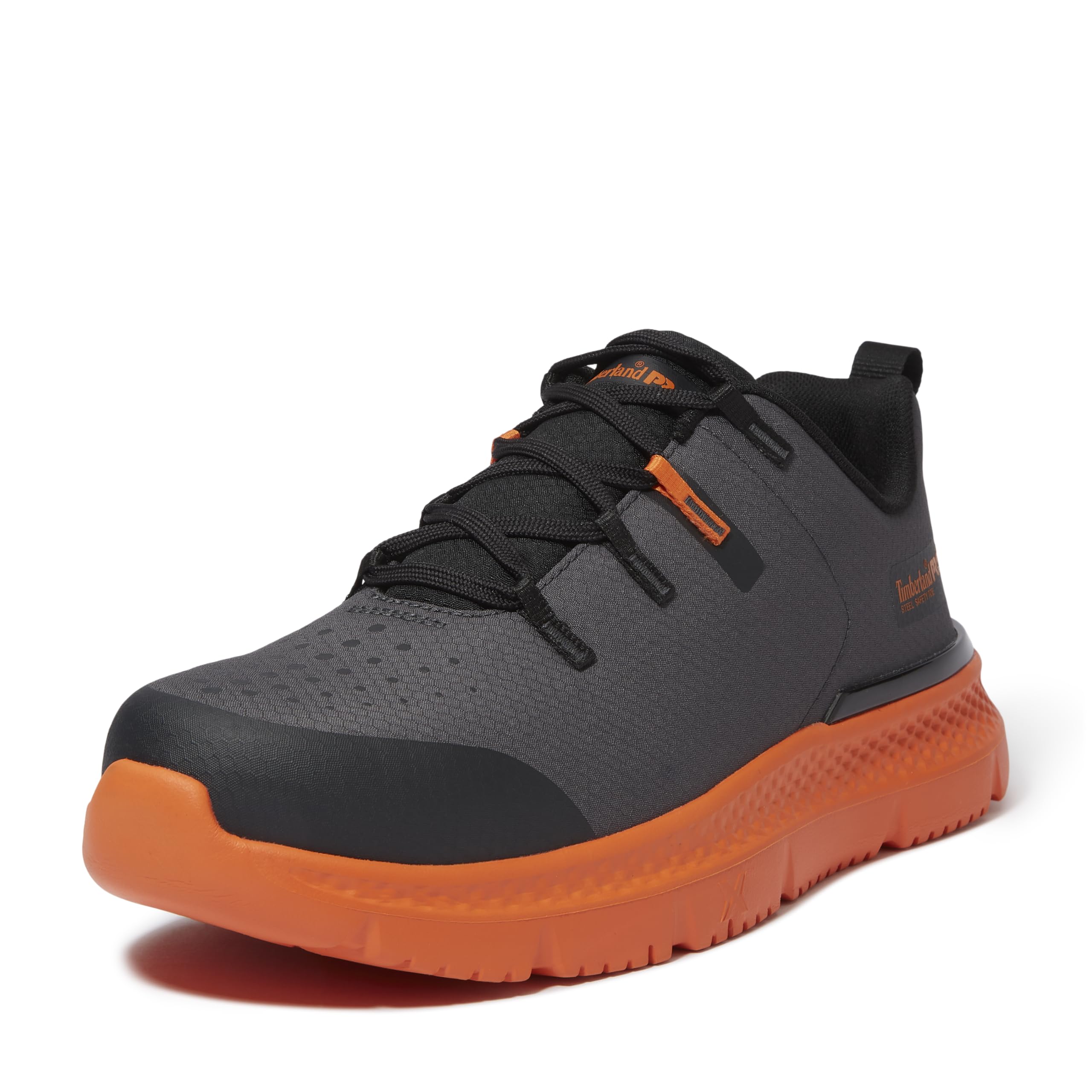
2. Timberland PRO Intercept Work Shoes
An athletic sneaker that hides a steel cap and cushions every step.
This one is for the buyer who wants sneaker comfort but cannot skip the toe protection. The upper is ripstop nylon — a woven fabric that resists rips and abrasion — so it breathes far better than leather over a long shift. Underfoot, Timberland’s 24/7 Comfort System uses suspension technology to support your arch and cushion each step, which is the part that matters by hour eight.
Comfort is the thing everyone raves about here, and it is not a vague feeling. The lining is ReBOTL fabric made with at least 50% recycled plastic, which wicks moisture instead of trapping it. The outsole is injection-molded EVA — a lightweight foam — with flex grooves cut into it, so the shoe bends with your foot rather than fighting it. Customers note: “I’ve been wearing these now for a month and so far they are holding up nice. I work at a very demanding job at a shipyard. I do 9 miles a day on my feet.” Nine miles a day is a real test for a steel-toe shoe, and that report says a lot.
Here is the thing to sort out before you order: sizing is genuinely inconsistent. Feedback splits down the middle, with some buyers going true to size and others needing half a size down because the wide fit runs big. The toe cap also dents if you catch it, and the materials feel lighter-duty than the rugged upper suggests. Get the size right and this is the easiest shoe on the list to wear for a full shift.
The real-world read: 9 miles a day on a shipyard floor in a steel-toe sneaker is about as tough as work-shoe duty gets, and this one asks for no break-in cushioning period.
The one snag: the fit runs half a size big in wide sizes, so try a half size down before you commit to your usual number.
Reach for this if: you want the feel of an athletic shoe with a steel cap up front and electrical hazard protection.
Look elsewhere if: you need armor against heavy drops — a dented toe cap shows this is protection without bulk.
3. Florsheim Mens Crossover Work MaxTrax Lace to Steel Toe SRO

The steel-toe shoe that slips past security and into a dinner reservation.
Some jobs put you on a plant floor in the morning and in front of a client by afternoon. This shoe is built for exactly that split. It carries ASTM F2413-18 M/I/C EH compliance — the standard marking that confirms it meets impact, compression, and electrical hazard requirements — wrapped in a leather upper that reads as a dress shoe rather than a safety boot.
A rubber wedge outsole with Flexsole forefoot and a MaxTRAX slip-resistant tread pattern handles the grip side. Reviewers point out: “First pair lasted ~2 years.” That is the number to hold onto, because a work shoe that survives two years of daily wear is doing its job. The removable Comortech footbed with Rebound Foam and the moisture-wicking nylon mesh lining are what let it cover 8-12 hour shifts, and the design draws compliments rather than questions.
The honest catch is the tongue. On some feet it bunches right at the crease behind the steel toe and presses on the top of your foot — a fit issue, not a build one, and annoying enough to try before a long shift. A few buyers also find the steel toe lighter-duty than a full plant job demands. Treat this as the office-and-light-manufacturing crossover, not a construction boot.
Why it hangs around
- Two years of wear from a first pair is the durability benchmark here
- MaxTRAX tread pattern holds on wet and greasy floors
- ASTM F2413-18 M/I/C EH compliance covers impact, compression, and electrical hazard
- Leather upper passes as business casual, so no mid-day shoe swap
Before you commit
- The tongue can bunch behind the steel toe and press on the top of the foot
- Not armored enough for heavy construction work
Made for: the manager, inspector, or field rep who moves between a plant and a meeting without changing shoes.
Skip if: your day involves dropped steel or heavy loads on the toe — this crossover protects, but it is not a heavy-duty boot.
4. Skechers Mens Cankton Ebbitt Steel Toe Construction Shoe

No laces, 2.4 pounds, and a steel toe — the fastest shoe to get on here.
Clock in with dirty hands and this shoe makes sense instantly. The slip-on design means no lacing, no bending, no tying with gloves on. At 2.4 pounds it is the lightest steel-toe option on the list — a full 1.8 pounds lighter than the CAT Invader Hi at 4.2 pounds, a difference you will feel by the end of a shift on your feet.
The build side is sensible: a leather, synthetic, and mesh upper, Memory Foam cushioning underfoot, a shock-absorbing midsole, and a high-traction rubber outsole. Owners put serious miles on these. One reported averaging tens of thousands of steps a day through harsh chemical and wet environments and getting about two years out of a pair — and reordering three times. That tells you the comfort and protection hold up to a genuinely rough job.
Two things to know. The fit is roomy, which some buyers love and others find too loose, so wide feet will be happy and narrow feet may want to size down. And the insole is the weak point — it breaks down over months, and a heel-lining wear issue has turned up for a small number of buyers. For a budget-tier steel toe that you can replace without flinching, that math still works out.
Why buy it: steel-toe protection, Memory Foam comfort, and a hands-free entry, all at the budget end of the list.
Know this going in: plan on replacing the insole after a few months of heavy use — buy a pair of aftermarket insoles with the shoes.
Best for: the worker who wants to step in and step out, in a job where laces are a hassle and a budget steel toe is enough.
Not the one if: you have narrow feet — the roomy fit will swim on you.
5. Skechers Glide-Step Pro Work Sneaker
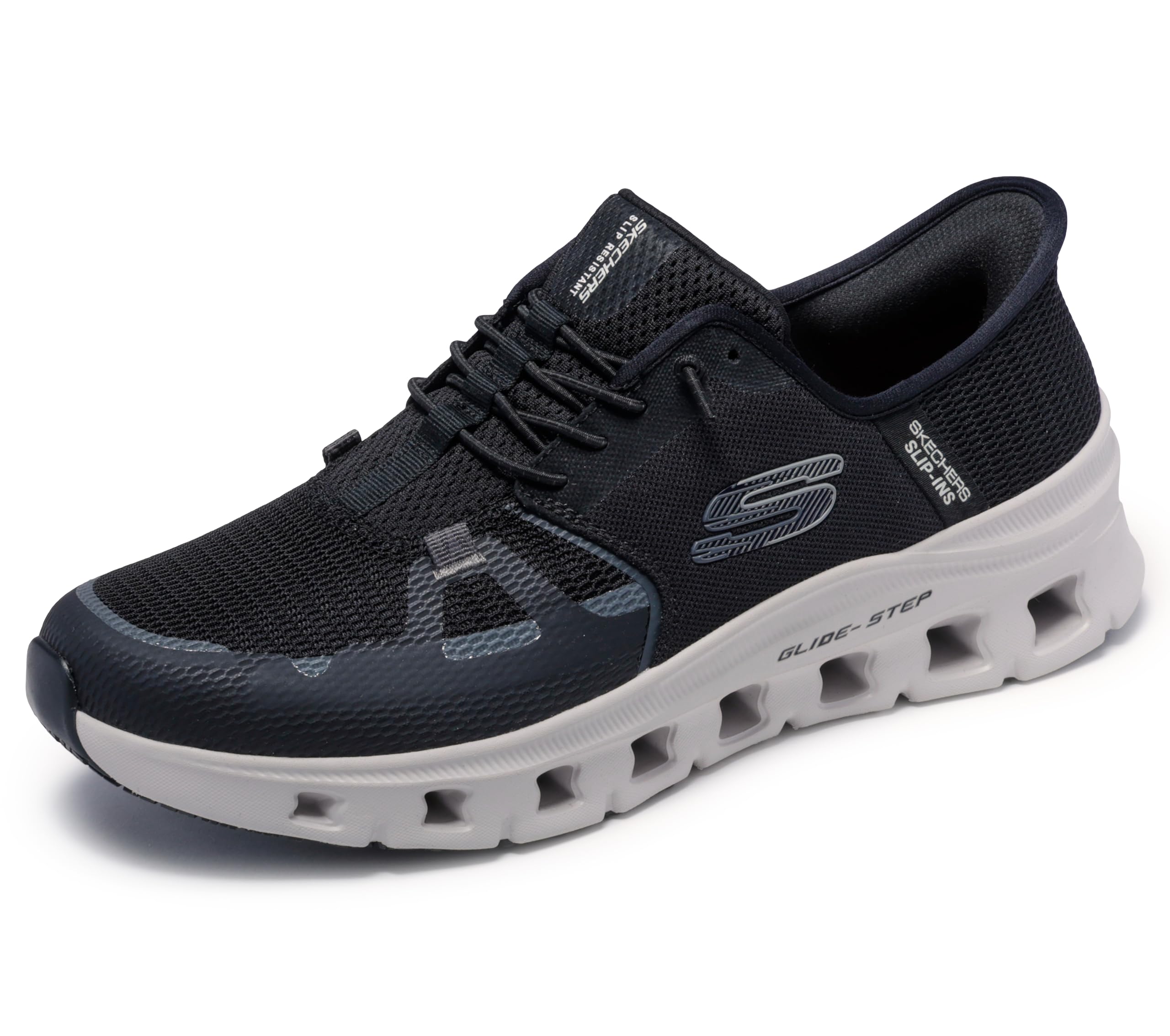
1.5 pounds, no laces, and a sole built to hold a wet kitchen floor.
If you work behind a counter, a grill, or a mop bucket, this is the one to look at. The slip-resistant outsole is the headline, and the upper is a water-repellent mesh that keeps splashes from soaking straight through. Underfoot sits Air-Cooled Memory Foam, and the entire shoe weighs 1.5 pounds — the lightest thing on this list by a wide margin, which matters when you are circling a station for ten hours.
Skechers’ Hands Free Slip-in technology is the other half of the story. A molded heel panel and a Heel Pillow hold the shoe on without laces, so you step in and go. The Glide-Step midsole adds a rolling cushioning motion underfoot, which owners describe as taking the sting out of concrete. Chefs and kitchen veterans rate this one highly — restaurants with wet tile are its home turf.
The honest trade-off is that laceless fit. The heel can lift slightly as you walk, and in a fast-paced kitchen that small movement gets noticed. The all-black colorway is the one to pick if you need it to pass as a dress shoe. If you want a locked-down fit for heavy lifting, go laced; for standing and walking on slick floors, this one is built for it.
Pick this one if: you are in foodservice, hospitality, or any job where the floor stays wet and your hands stay full.
Consider a laced shoe instead if: you need a tight, immovable fit and heavy lifting is part of the work.
6. Timberland PRO Pit Boss 6 Inch Work Boot

A 6-inch steel-toe workhorse that shoppers say lasting about five years per pair in hard trades.
For electricians, mechanics, and anyone standing on wet or slippery ground with live equipment nearby, this is the serious protection pick. The steel toe meets ANSI safety standards with a roomier toe box than most boots, and electrical hazard protection keeps you clear of open circuits. Nylon shock-diffusion plates run through the sole for support and torsional rigidity — the sole resists twisting, so your ankle stays steady on uneven ground.
Longevity is the real selling point here. Owners who keep logging hard hours report getting about five years out of a pair, and reordering without shopping around. One mechanic sized down half a size and found a snug, stiff fit that broke in over roughly three days, then held on. Another reported that after 30+ days, an 83-pound bar barely tore the leather and the treads were barely worn. That is a boot that takes abuse.
The honest notes are a stiff break-in, a bulky feel compared to the photos, and laces that wear out before the leather does. It is also not waterproof — buyers who need that protection treat the leather themselves. If you want a shoe that disappears onto your foot, this is not it. If you want a boot that outlasts the cheap pairs you would have burned through, this is it.
The case for the Pit Boss
- Buyers report about five years per pair in hard trades
- Nylon shock-diffusion plates add support and resist sole twisting
- Steel toe meets ANSI standards with a wider toe box than most
- Electrical hazard protection covers live-circuit work
The part nobody mentions
- Stiff from the start with a break-in of about three days
- Not waterproof — leather needs treating if you work wet
- Bulky and heavier in the hand than the product photos suggest
Choose this when: you need maximum toe armor, ankle support, and a boot that survives year after year of abuse.
Not worth it if: you want sneaker-like lightweight feel — this is a boot that protects first and disappears never.
7. KEEN Utility Men’s Kenton Mid Composite Toe Work Sneakers

A skate-shoe silhouette with a composite toe and 18.3 ounces per shoe.
Light-duty work in assembly, maintenance, warehousing, or distribution is where this shoe lives. It uses a composite toe (a non-metal safety cap) rather than steel, which is why it feels like a sneaker on your foot — 18.3 ounces per shoe, built off KEEN’s wider footwear form, so it suits a broader foot from the start. The removable insoles swap out for your own pair without fighting the fit.
What lands first is how little it weighs, and the ventilation follows. On a mid-top sneaker this light, you can move through a shift without the dead-weight drag of a leather boot. The removable insoles and wider form help here too — a broad foot does not have to fight the upper. A skate-shoe look that passes for street wear is the bonus.
The honest caveats are sizing and long-haul durability. Sizing is inconsistent — some buyers go true to size, some need a half size down, and one buyer found a pair two sizes off. And while the uppers and soles hold up, some owners mention the upper failing inside a year and the stock insole losing support around three months. This is the light, low-armor pick, not the heavy-duty one — treat it as light-duty work that lives in dry conditions.
Where it shines: light-duty jobs where a sneaker look and a composite toe beat a heavy leather boot.
The honest limit: not waterproof or water resistant, and sizing runs inconsistent — plan to try a half size down.
Right for: warehouse, assembly, and maintenance work where you want a sneaker feel and a composite toe.
Wrong for: wet weather or heavy-duty floor work — this shoe is built light and dry.
Know the Specs
Steel vs. composite toe
A steel toe is a metal cap over your toes that takes impact from dropped loads and rolling carts. A composite toe does the same protective job with a non-metal cap, which tends to make the shoe lighter and lets it feel more like a sneaker. The trade is usually armor versus weight — steel for heavy-duty floors, composite for lighter indoor work.
EH and ASTM ratings, in plain words
EH means electrical hazard — the shoe is built with a barrier to reduce the risk of a path to ground through your feet, which matters if you work near live circuits. ASTM F2413-18 is the safety standard marking for work footwear, with M/I/C covering impact and compression resistance plus electrical hazard performance.
Slip resistance and tread pattern
Slip resistance comes from the sole material and tread pattern, not from a single rating. A rubber outsole with a deep tread pattern is what holds on wet tile, oily concrete, or freezer floors. The MaxTRAX tread pattern and the Skechers slip-resistant outsole are two examples that are built specifically for slippery ground.
Weight per shoe
Weight is listed per shoe or per pair and it drives how tired your legs feel by hour ten. Lighter shoes are easier to move in but usually carry less protection. The Skechers Glide-Step Pro is the lightest at 1.5 pounds, and the Skechers Cankton Ebbitt at 2.4 pounds is the lightest steel-toe option.
Common Questions
Are steel-toe shoes comfortable enough for a 12-hour shift?
Should I size up or down for a steel-toe work shoe?
What does EH mean on a work shoe?
Are these shoes slip resistant enough for a kitchen floor?
How long should a good pair of work shoes last?
Do I need a steel toe or a composite toe?
Can I wear work shoes with my own insoles?
Are these shoes waterproof for outdoor work?
Which work shoe is best for someone with foot pain?
How much does shoe weight matter on a long shift?
The Bottom Line
For most people buying shoes for work men, start with the CAT Invader Hi Steel Toe. It pairs a steel toe, EH protection, and a rubber outsole with the strongest owner satisfaction in this group — 4.5+ stars across 900+ ratings — and long-term customers note it still holding up after a year of daily standing.
If you want sneaker comfort with a steel cap, the Timberland PRO Intercept gets you there for 9-mile days. If wet floors are the problem, the Skechers Glide-Step Pro Slip-ins is the one to reach for. And if you want a boot that outlasts a decade of abuse, the Timberland PRO Pit Boss is the tougher answer.
How we choose
We do not accept paid placement. Every pick is matched to a real buyer and a real use-case; we do not hands-on test units.
Sources
Specifications: manufacturer listings and product documentation. Review insights: verified customer reviews, as of October 2026. Pricing: not shown on this page (it changes often); check the current price via the retailer link.
As an Amazon Associate, Aappliancez earns from qualifying purchases. This does not affect which products we feature.