Disclosure: Some links in this post are affiliate links. As an Amazon Associate I earn from qualifying purchases, at no extra cost to you. Learn more
Specs are compiled from manufacturer listings and verified buyer reviews and can change over time — please confirm the key details on the product page before buying.
Warehouse floors are unforgiving — bare concrete, constant turns, and ten to twelve hours on your feet — so the right shoe is less about looks and more about what your heels feel like at clock-out. The picks below cover every job on the floor: concrete standers, forklift drivers, cold-room crews, and anyone who needs a safety toe but refuses to wear a brick. Each one earns its spot on real specs — toe type, weight, slip outsole, and support — not marketing language.
This guide is built by comparing the manufacturers’ published specifications and the patterns across verified customer reviews, so you get each pick’s real strengths and trade-offs instead of marketing spin.
You’ll see which toe construction protects without the weight, how slip resistance differs between rubber and foam outsoles, and why break-in time matters more than any single number on the box. By the end, you’ll know exactly which pair belongs on your feet for the next twelve-hour shift. These are the best shoes for warehouse work when comfort and safety both have to show up.
Top Picks


How To Choose The Best Shoes for Warehouse Work
Your feet face five demands on a warehouse shift. You need protection from dropped loads, grip on a floor that might have a spill, cushioning against concrete, a weight your legs can carry for ten hours, and a fit that doesn’t rub a hot spot raw by lunch. Get any one of those wrong and the shoe fails the job even if the price tag looked right.
Toe protection: know what your floor actually requires
Steel toe gives you the hardest barrier, but it adds weight and can trip metal detectors. Composite and alloy toes protect the same way with less bulk — a composite toe is non-metallic, so it won’t set off security gates, and it doesn’t conduct electricity the way steel can. Some warehouses only require a soft toe; if yours does, you save real weight and gain flexibility. Check your site’s policy before you buy, because a great shoe in the wrong toe class won’t get past the door.
Slip resistance: rubber versus foam
A slip-resistant outsole channels liquid away from under your foot so the tread stays in contact with the floor. Rubber outsoles — like the GripMax style on Timberland PRO models — tend to hold grip on oil and grease longer than lightweight foam soles. If your shift involves wet floors, coolant, or food spills, treat the outsole compound as seriously as the toe.
Cushioning and support for concrete
Concrete doesn’t give, so the midsole has to. A cushioned removable insole lets you swap in your own arch support later, and a midsole built with shock-absorbing foam softens each step. Buyers who walk miles per shift consistently favor shoes with cushioning they can replace rather than a glued-in bed they’re stuck with.
Weight and break-in time
Every extra ounce is one you lift thousands of times a shift. Lightweight work sneakers exist because warehouse crews asked for them — the trade is usually less armor around the upper. Break-in matters too: leather boots often need a week or two before they soften, while suede and mesh sneakers usually feel ready on day one. Neither is wrong; it’s about if you want a shoe that molds to you or one that’s ready immediately.
Fit details that decide your shift
Many safety shoes run large because the toe cap takes up room, so a half size down is common. A wide toe box helps if you have broad feet, and a removable insole lets you add support if your arches need it. Try to size against the specific model’s own fit notes rather than assuming your sneaker size carries over.
Side-by-Side Comparison
| Model | Best For | Toe Type | Weight | Key Feature | Amazon |
|---|---|---|---|---|---|
| ARIAT Men’s Turbo 6” Waterproof Carbon Toe Work Boots★ Best Overall | All-day concrete comfort with a waterproof barrier | Carbon (composite) toe | 3.1 pounds | DRYShield waterproof leather | Amazon |
| KEEN Utility Men’s Sparta 2 Low Alloy Toe Work ShoesLightest Alloy Toe | Wide-footed crews on light industrial lines | Aluminum alloy toe | 15.9 oz / 451 g per shoe | KEEN.ReGEN midsole | Amazon |
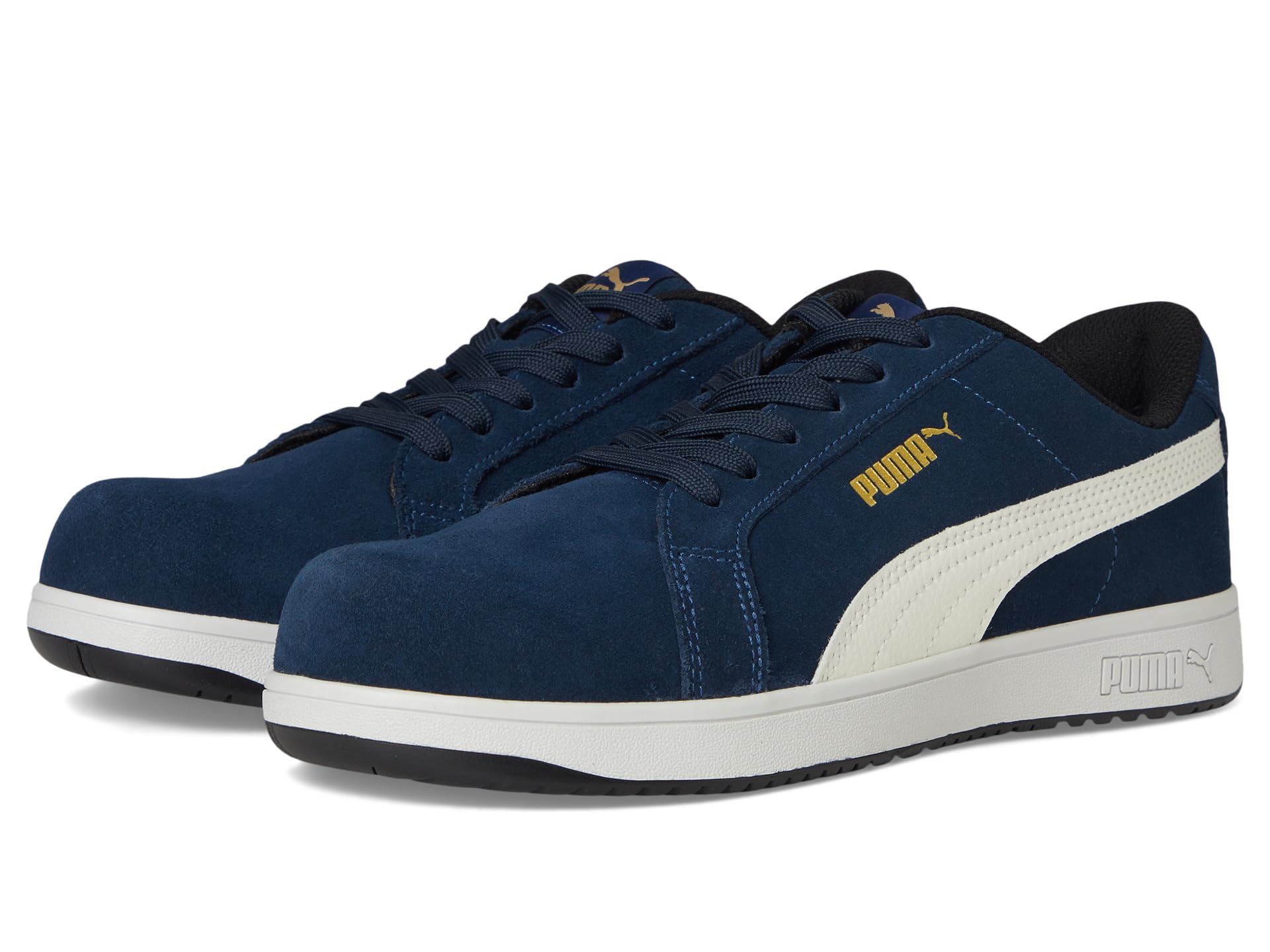
| Puma Men’s Iconic Suede Low ASTM SdStreet-Style Safety | Looking like a sneaker, working like a safety shoe | Composite/steel toe cap | 1.5 pounds | EVERCUSHION RELIEF footbed | Amazon |
| Carhartt Men’s Force 3″ EH Nano Toe Work Sneaker | Hot factory floors where breathability wins | Nano composite toe | — | Neoprene interior lining | Amazon |
| SUREWAY 6in Waterproof Work Boots | Wet-weather warehousing and outdoor dock work | Soft toe (non-safety) | — | Waterproof Crazy Horse leather | Amazon |
| Timberland PRO Men’s Power Shift Ripstop Nylon Soft Toe | Kitchen-adjacent and wet-floor shifts | Soft toe | — | GripMax rubber outsole | Amazon |
| Timberland PRO Intercept Steel Safety Toe | Long-walk shifts with hard steel toe demands | Asymmetrical steel toe | — | 24/7 Comfort System | Amazon |
| Skechers Men’s Hands Free Slip-ins Tilido Fletchit Comp Toe | Fast on and off between shifts | Composite toe | 1.4 pounds | Hands-free slip-in design | Amazon |
| ROCKROOSTER Gammon 6″ Steel Toe Chelsea Boots | Pull-on convenience with a hard steel barrier | Steel toe (ASTM F2413-18) | — | Water-resistant oiled leather | Amazon |
| Reebok Men’s Fusion Flexweave Work Safety Toe | ESD-sensitive and clean-room environments | Composite toe (XTR) | — | Floatride Energy foam midsole | Amazon |
| ARIAT Work Men’s Outpace Composite Toe Safety Shoe | Sneaker feel for long indoor shifts | Composite toe | — | Slip-resistant outsole | Amazon |
Detailed Reviews
1. ARIAT Men’s Turbo 6” Waterproof Carbon Toe Work Boots
Our pick — 4.5+★ from 800+ verified ratings; the strongest balance of quality and price.
Waterproof leather, a carbon safety toe, and enough cushioning to keep your heels quiet through a full shift on concrete.
The Turbo puts a non-metallic carbon toe on a full-grain leather upper — and because the toe is composite rather than steel, it walks through metal detectors without slowing you down. DRYShield waterproof construction layers an impermeable barrier inside that leather, so a wet dock or a spilled pallet doesn’t soak your socks. The Energy Max insole is removable and built to fight fatigue, and the sole carries oil- and slip-resisting ratings plus a hot-contact pass at 150°C/302°F.
What wins people over is comfort — it’s the thing this boot is known for above anything else — and the boots earn a name for quality right behind it. The weight sits near 3.1 pounds, which is a real number and one honest caveat: this is not a feathered sneaker. Owners describe break-in as short or nonexistent, while a handful find the leather at the toe runs thin and swap in their own insoles. Long-term reports back the build: one buyer at 15 months reported the boot still holding up with all-day comfort after switching to a supportive insole, and only the lace cover wearing down.
If you want a boot that shows up waterproof on day one and holds its shape a year later, this is the safe pick. It won’t feel like a running shoe from the start, and the genuine leather upper asks you not to treat it like a canvas sneaker. Buyers have kept these boots in rotation across 900+ ratings, and the crowd verdict lands where a work boot should: comfortable and built to last.
What earns the top spot
- DRYShield waterproof leather keeps feet dry on wet floors and outdoor docks
- Carbon toe is non-metallic, so it passes metal detectors and adds no steel weight
- Removable Energy Max insole lets you swap in custom arch support
- Oil- and slip-resisting sole with a 150°C/302°F hot-contact pass for heat-prone floors
Where it asks something of you
- At 3.1 pounds it is a genuine boot, not a featherweight sneaker — you’ll feel it late in a shift
- A few buyers find the toe leather thin and swap in their own insoles straight away
- Leather needs care — it rewards you, but it isn’t maintenance-free
Reach for this if: your warehouse has wet floors or outdoor dock exposure and you want a waterproof boot that still feels comfortable on concrete.
Look elsewhere if: you’re chasing the lightest possible shoe for a twelve-hour walking shift — the 3.1-pound build is substantial.
2. KEEN Utility Men’s Sparta 2 Low Alloy Toe Work Shoes
A featherweight low-top built on KEEN’s wider form, with a non-metallic alloy toe that keeps the front of the shoe honest.
The Sparta 2 uses an aluminum alloy toe — non-metallic, so it stays off the metal-detector conversation and weighs less than steel. KEEN builds this shoe off its wider footwear form, which is why wide-footed crews tend to come back to it. Each shoe weighs 15.9 oz / 451 g, and the KEEN.ReGEN midsole is the cushioning engine underfoot. KEEN also uses a natural, probiotic-based technology that breaks down odor in sweat, and sources its leather from tanneries certified by the Leather Working Group. The insole is removable.
Comfort is the headline here — it draws more attention in owner feedback than any other trait — and quality sits right beside it. The fit draws its own steady praise, with buyers reporting they can wear their regular wide size without guessing. But durability is the honest trade: the toe area and fabric can begin to tear after half a year of heavy wear. A crew member who wore these on concrete eight hours a day, six days a week for a year reported no blisters, arches intact, and life still left in the shoes.
This is the pick for someone who wants a light, wide safety shoe and understands it won’t take a decade of abuse. The alloy toe is a smart middle ground — lighter than steel, still protective. If you’re on your feet on an assembly line or distribution floor and want your regular wide sneaker fit with a safety cap, this delivers.
The owner consensus: comfort and quality are what keep people coming back — repeat buyers describe this as a second or third pair. The lower-profile alloy toe keeps the shoe from feeling like a hard work boot at the front.
The honest limit: the toe and fabric are where wear shows first, and a few buyers have found the underfoot feel firmer than expected. Give the insole a chance to pack down or drop in your own support.
Suits wide feet and light-industrial shifts: manufacturing, assembly, warehousing and distribution work where a non-metallic toe is welcome.
Trade-off to weigh: the toe-zone fabric is the weak point, so expect to replace these sooner than a heavy leather boot.
3. Puma Men’s Iconic Suede Low ASTM Sd
The safety shoe that looks like a sneaker — suede, gum soles, and an EVERCUSHION footbed for standing all shift.
Suede is the whole pitch here: this upper is durable and takes no break-in, so the shoe feels ready on day one. The rubber outsole covers slip, oil, and abrasion resistance, and EVA cushion material sits in the forefoot and heel to soak up the shock of hard flooring. Add the EVERCUSHION RELIEF footbed and you get the comfort-on-concrete combination Puma built this around. At 1.5 pounds it’s one of the lighter options on this list — compare that to the Ariat Turbo’s 3.1 pounds and it’s a different league of weight on your feet.
Quality is what buyers cite most, with comfort close behind, and style rounds out the top tier — this shoe gets compliments from people who don’t realize it has a safety toe. The composite toe won’t squish your toes. Weight is the mixed bag: the same shoe feels light to some and heavy to others, so if you’re used to an ultralight runner, size your expectations. Durability holds up for a full year of work for many, and the fit runs roomy — a few buyers size half a size down for it.
The catch is arch support on long concrete days — a buyer who does a lot of standing may want a gel insole underneath. If you want a safety shoe that doesn’t look like one and you’re on your feet in a retail-adjacent warehouse or a shop floor, this is the one that keeps your feet and your image both intact.
Why people keep buying it: the suede-and-gum-sole look is the draw, and the no-break-in build means you can wear them the same week they arrive.
What to plan around: the footbed is comfortable but not a full arch-support system, and sizing runs roomy — expect to size down half a size or add your own insole.
Ideal for: warehouse or shop-floor workers who want safety-toe protection in a shoe they’d wear off the clock too.
Skip the guesswork on size: this runs roomy and a little narrow at once, so try half a size down if in doubt.
4. Carhartt Men’s Force 3″ EH Nano Toe Work Sneaker

A breathable low-top with a nano composite toe and a neoprene-like interior that keeps feet cool when the floor is hot.
The nano toe is the defining piece — a composite cap that gives you protection without the steel bulk, and the electrical-hazard rating (EH) means the shoe is built to resist current the way a standard sneaker isn’t. The interior has a neoprene-like lining that keeps feet cool in a hot factory, which matters if your building is climate-controlled on the thermostat’s terms, not yours. A durable rubber sole underfoot holds tread well: one long-term wearer reported 95% of the tread remaining after a year.
The fit is the other strong suit. The wide toe box gets called out specifically, and the shoe doesn’t look like orthopedic footwear. Owners buy it in pairs and multiples. But the honest limits are there: the upper’s toe plastic can bubble and the heel can loosen after a year of hard use, and a few buyers find the toe box tight or the shoe heavy compared to a running-sneaker. One reviewer noted the top digging into the upper heel — a spot that’s more about fit than a defect.
Carhartt’s brand means durability, and this sneaker mostly lives up to it for a light-duty warehouse floor. It dries fast — a wet canoe trip reportedly left it no worse for wear — which is a useful trait if your dock or break room sees spills.
The standout spec: the nano composite toe keeps the front light and non-metallic, while the neoprene-style lining is what lets your feet breathe on a hot floor.
Where it falls short: the upper’s cosmetic wear — bubbling toe plastic, a loosening heel — appears after a year of heavy use, so it’s not the pick for the roughest job on the floor.
Pick it up if: you work in a warm factory or warehouse and want a breathable safety sneaker with a wide toe box.
Think twice if: you need a shoe that still looks new after a year of scrapes and drops.
5. SUREWAY 6in Waterproof Work Boots for Men

Rugged Crazy Horse leather, real waterproof protection, and a soft toe for jobs that don’t need armor.
No safety toe means zero bulk and full freedom of movement — that’s the design logic here, and it makes the SUREWAY a genuinely comfortable boot for roofing, landscaping, and warehouse work where a hard cap isn’t required. The waterproof Crazy Horse leather develops a patina over time, and the lining keeps the wet out in any weather. A professional-grade outsole gives grip on slippery metal roofs and uneven ground, and the cushioned insole and moisture-wicking lining work to reduce leg and foot fatigue. A 180-day warranty backs the purchase.
Quality and comfort are the two things buyers mention most, and durability lands right beside them — one long-time construction worker wore these 12 hours on day one and called them the most comfortable boots in a long time. Value rounds out the praise. The friction point is the fit: it runs slightly wider than some buyers expect, and the tongue can press against your leg when you lace tightly. Water resistance is mixed, with most staying dry but a few finding moisture after heavy exposure. One buyer mentioned the tongue being the source of discomfort.
The real value here is a waterproof leather boot without the premium leather price. It flexes where a hard boot won’t, and it looks like a work boot rather than a hiking shoe. Just know that a soft toe means no impact protection if something heavy drops — that’s the trade you’re making for the flexibility.
What stands out in owner reports: the break-in is minimal and the leather is soft enough to wear all day, which is unusual for a full-leather boot.
The soft-toe reality: there’s no cap over your toes, so keep this out of zones where a dropped load is a real risk — and note the tongue can bite against your shin when laced tight.
Best for: warehouse and outdoor maintenance crews who want waterproof leather comfort and don’t need a safety toe.
Only if your site allows it: check whether your floor requires a protective cap, because this boot doesn’t have one.
6. Timberland PRO Men’s Power Shift Ripstop Nylon Soft Toe
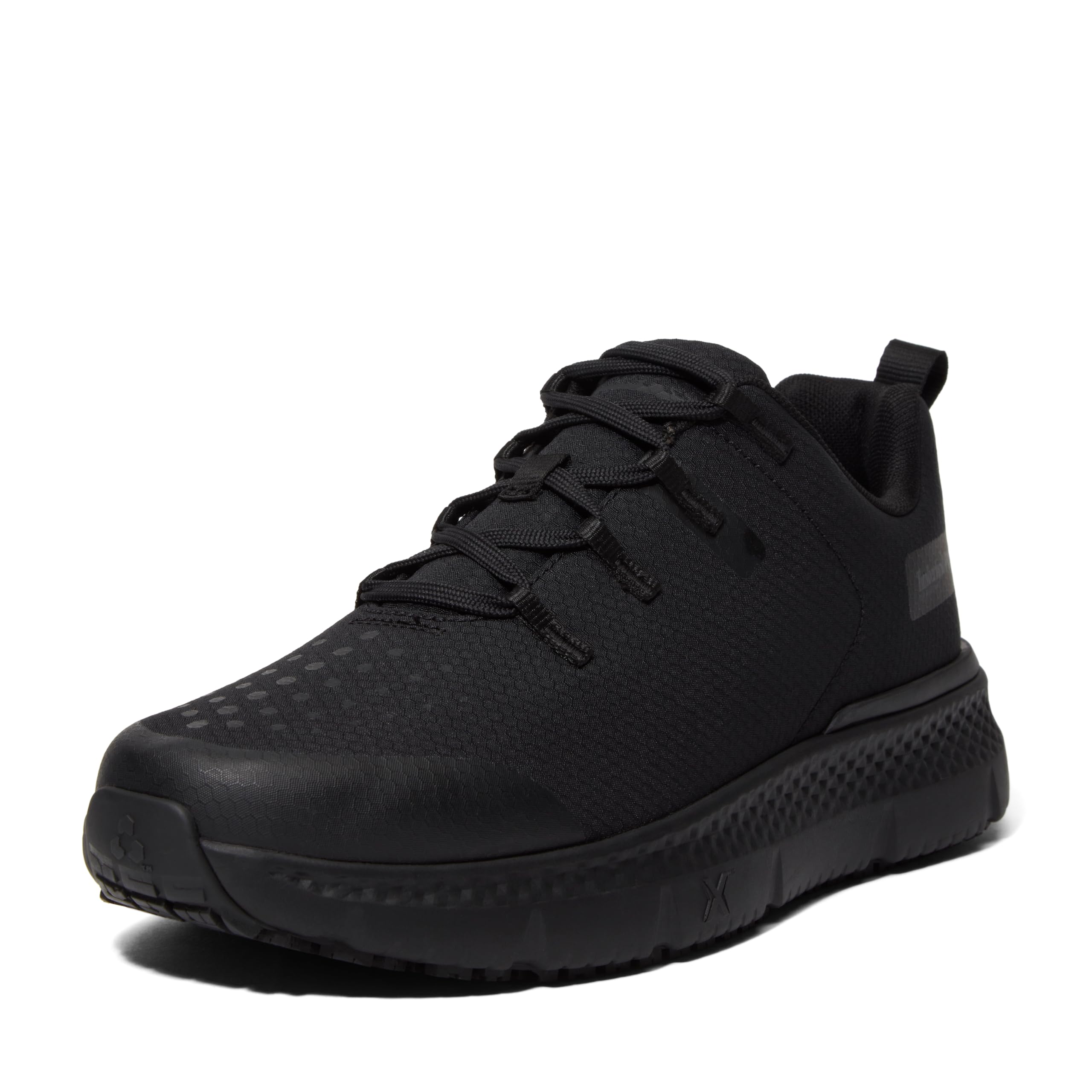
A breathable ripstop upper treated to repel liquids, riding on GripMax rubber that channels oil and water away underfoot.
GripMax is the feature to understand first: this rubber outsole is built to route liquids like oil, grease, and water away from the contact patch, so your foot stays planted on a wet surface. The ripstop nylon upper is treated with 3M Scotchgard fabric protector to repel liquids and block stains, and the metal-free construction means nothing metallic in the shoe. Hover Spring foam midsoles add cushioning and flexibility, and the Timberland PRO 24/7 Comfort System is designed to support your arch and soften each step.
Comfort and quality are what buyers cite most here — people who spend shifts on their feet describe the cushioning as supportive. The lightweight build gets its own share of praise. But traction is the honest mixed note: some owners are delighted by the slip resistance, while others on genuinely slippery kitchen floors find it doesn’t grip as promised. If your floor is greasy concrete rather than wet tile, this is a better fit; if it’s a commercial kitchen with the regular oil film, size your expectations. Durability also shows mixed feedback — a handful report breakdown, but most wear it long without issue.
The stain-repelling treatment is an underrated extra for warehouse work — a dropped jug of something dark rinses off instead of staining. Between the breathable upper and the liquid-channeling sole, this is the choice for crews who spend the day near spills.
The feature worth knowing: the GripMax rubber sole and 3M Scotchgard-treated ripstop are a one-two for liquid repellency — grip underfoot and stain resistance up top.
What to weigh honestly: traction reports split between delighted and disappointed, so it’s best on wet concrete rather than heavy kitchen grease.
Right for: warehouse crew who regularly work around water, oil, and everyday spills and want a breathable, metal-free shoe.
Not the one for: a heavy commercial kitchen where oil film is constant, based on split traction reports.
7. Timberland PRO Intercept Steel Safety Toe Work Shoes

A hard steel toe built for the crew that walks miles of warehouse aisles a shift and still wants ankle support.
The Intercept takes the safety-toe job seriously: an asymmetrical steel toe and electrical-hazard protection handle the hard requirements, and the Timberland PRO 24/7 Comfort System works to reduce foot fatigue by supporting your arch and cushioning each step. The upper is abrasion-resistant ripstop nylon — mutilation-free, in Timberland’s phrasing — and the breathable, moisture-wicking mesh lining is made of ReBOTL fabric containing at least 50% recycled plastic. Outsole traction comes from slip- and abrasion-resistant injection-molded EVA with Timberland PRO FLEX Technology flex grooves.
Comfort is what carries this model — the reported all-day comfort is its biggest strength — and quality is the close second. One owner covered nine miles a shift at a shipyard, including dozens of stairs, and reported the shoes held up. The fit is the honest issue: reports split between true to size and half a size too big, and wide sizes run large enough that some buyers sized down two widths. Durability also divides opinion — some report quarter-year life before the toe area wears, while others log a year of steady wear.
If your warehouse has a hard steel-toe rule and your shift is measured in steps, this is the combination of protection and cushioning you’re after. Size down if you’re between widths, and accept that the fabric front may dent or scuff sooner than a leather boot would.
The defining spec: asymmetrical steel toe plus electrical-hazard protection — the hard-protection combination that warehouses with strict policies demand.
What to plan for: sizing runs inconsistent, and a few owners see the toe front wear faster than expected, so order carefully and treat the front with care.
Choose this if: your site mandates a steel toe and you cover serious mileage across a warehouse floor each shift.
Look elsewhere if: you need reliable sizing in wide widths — many buyers had to drop a size or two.
8. Skechers Men’s Hands Free Slip-ins Tilido Fletchit Comp Toe

Step in without bending over — a stretch-lace slip-on with a composite toe and a memory foam footbed.
The hands-free entry is the whole point: an engineered mesh upper with a stretch-lace front lets you step into the shoe without tying, which is gold when you’re changing between boots and break-room shoes mid-shift. Air-Cooled Memory Foam cushions the footbed, and the composite toe adds protection without the weight penalty of steel. The slip-resistant outsole is built for workplace floors. At 1.4 pounds it’s a true lightweight.
Comfort is the standout — the report is that the shoe stays comfortable for long hours and even 24-hour shifts — and durability matches it for everyday warehouse work. Buyers compare it to heavier safety shoes they’ve owned and come back to the Skechers for the lightness. But the slip-on design has a trade: with no laces, the fit is loose. Sizing runs large, so a men’s 14 may need a 13. A few buyers found the stock insoles uneven or unglued and swapped them out — one noted that switching to a better insole changed the feel entirely.
The hands-free build makes this the pick for crews moving quickly between zones, or for anyone who has trouble bending to tie shoes. The composite toe and slip-resistant sole mean it still does the safety job. Just order a size down and budget for a better insole.
The defining spec: the stretch-lace, hands-free entry is unique on this list — no bending, no tying, no wasted minutes.
The trade-off: without laces the fit runs loose, sizing runs wide, and the stock insole may need replacing — plan a size down and an insole upgrade.
Great for: crews who swap shoes often, or anyone who wants a composite-toe safety shoe without bending to tie it.
Size down if: you’re between sizes — the loose slip-on fit means you’ll want the smaller option.
9. ROCKROOSTER Gammon 6″ Steel Toe Chelsea

A Chelsea boot you can yank on in three seconds, with a steel toe rated to ASTM F2413-18 and oiled leather that shrugs off scuffs.
Pull-on convenience is the reason this boot exists — the elastic-sided Chelsea build means no laces to tie and no crouch-and-fumble at the start of a shift. Under the oiled Crazy Horse leather upper sits a steel toe rated ASTM F2413-18 I/75 C/75 and electrical-hazard resistance, plus a non-slip rubber outsole. Inside, Coolmax wicking fabric, Poron XRD shock absorption, and a nylon shank for stability. The boot is water-resistant rather than fully waterproof, which is a distinction note if you’re on wet ground.
Comfort takes first place in owner feedback, with quality right behind it and durability close third — one buyer with two years of shop and farm work reported dry feet and a sole that resists nails. The convenience of stepping in and out is a recurring point of praise. The friction is fit: sizes run large and even the width can feel loose, and a few owners noticed the ankle leather rubbing against the shin before it softened. Weight runs heavier than a sneaker, which is expected for a steel toe.
This is the pick when you want a real steel toe and the speed of a pull-on, with serious arch support built in. The oiled leather develops character rather than looking tired, and the ASTM rating covers the protection requirement. Size down if you’re between sizes, and give the ankle collar a week to break in.
What it delivers: steel-toe protection plus a pull-on leather build, with arch support that gets real praise and wicking that keeps feet dry.
The fit reality: sizes run large and the ankle collar can rub until broken in — size down and give it a week.
Good fit for: workers who want a steel-toed Chelsea they can pull on at the door, with solid arch support and breathable materials.
One thing to expect: these run large, so order a size down or be ready to exchange.
10. Reebok Fusion Flexweave Safety Toe Work Shoe

A breathable Flexweave upper on a Floatride Energy foam midsole — built for the ESD-controlled clean room.
The static-dissipative rating (SD 10 with dual resistor) and 100% non-metallic construction are the features that set this apart: this is a shoe made for environments where static has to be managed and metal has to stay out. The Floatride Energy foam midsole is lighter and more responsive than traditional EVA, and the composite XTR toe cap meets or exceeds ASTM F2413 standards. The moisture-wicking nylon mesh lining and removable EVA cushion footbed handle the comfort side.
Fit is what earns this shoe its most attention — it earns more praise on fit than anything else — with comfort and lightweight design next. The shoe gets described as the closest thing to a cushioned sneaker that still passes safety-toe requirements. Breathability gets its own praise, and it’s less slick on polished concrete than heavier shoes. But durability is the caveat: reports of the sole separating from the foam after as few as six wears, and the shoe is softer and less armored than a heavy boot. That’s the cost of the cushioning.
The upside is a shoe that feels like a running sneaker and still clears safety gates. If you’re in a clean room or an ESD-sensitive warehouse floor and want comfort first, this is the closest thing on this list to a proper athletic shoe with a safety toe.
Why it earns its spot: the SD 10 static-dissipative build and 100% non-metallic construction open doors that other sneakers can’t, and the Floatride foam keeps it light.
The durability trade: sole separation is the recurring complaint — this is a light-duty shoe, not a rugged boot.
Best for: ESD-controlled clean rooms, electronics warehouses, and anyone who needs a non-metallic shoe that feels athletic.
Not the one for: heavy-duty floor work where a rugged, armor-like sole is required.
11. ARIAT Work Men’s Outpace™ Composite Toe Safety Shoe
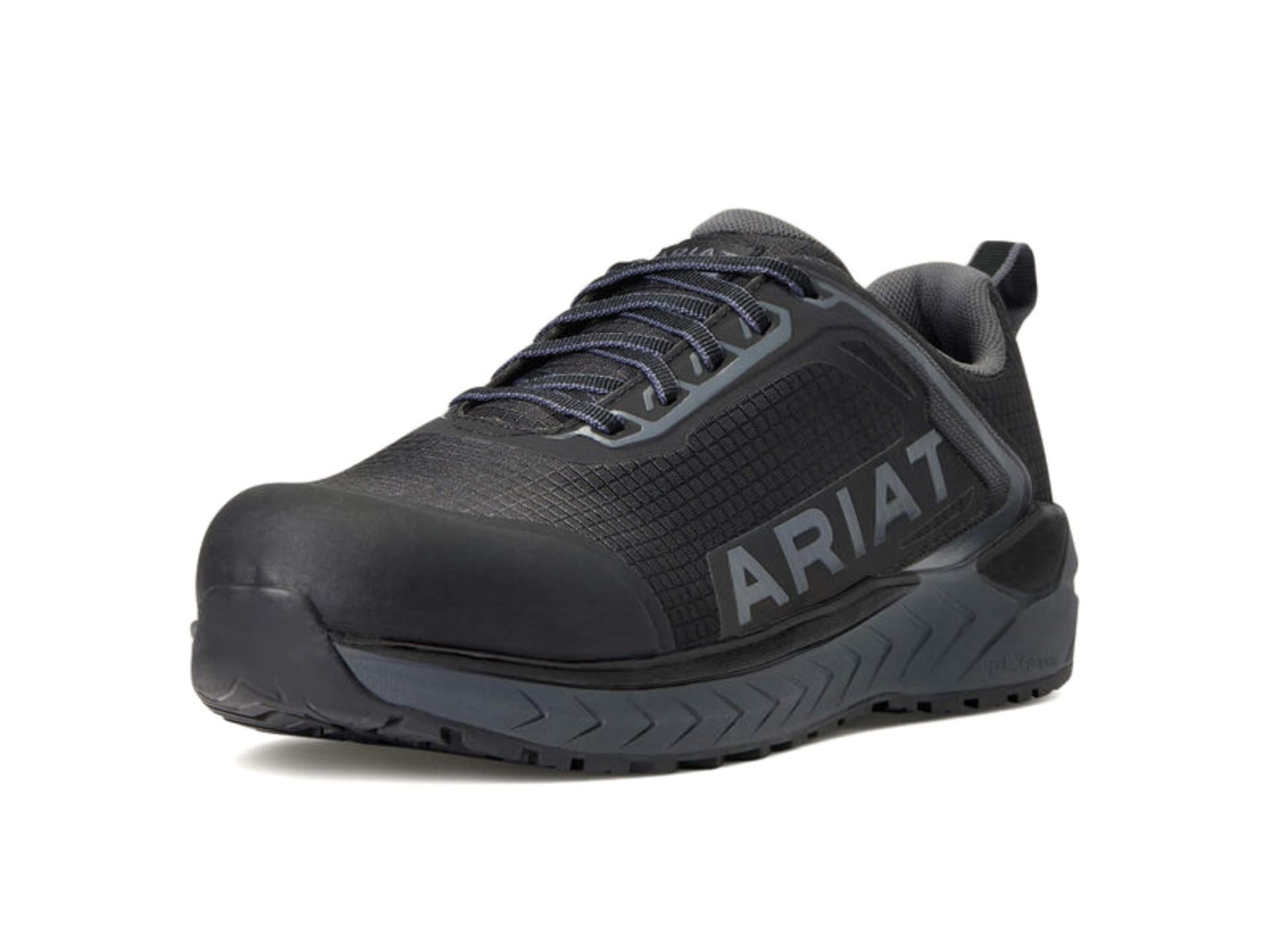
A composite safety shoe that feels like a sneaker, made for the long indoor shift on hard floors.
The Outpace is described as built for indoor environments — a slip-resistant outsole and long-lasting cushioning are the two load-bearing specs. The composite toe keeps it non-metallic and lighter than a steel cap, and the sneaker platform means it doesn’t feel like you’re wearing a boot. This is the shoe designed around the idea that an eighty-hour week on a warehouse floor deserves a cushion underfoot.
Quality leads the owner consensus — it’s the single trait that gets the most praise — with fit right behind and comfort, appearance, and traction following close. One buyer switched from heavier work boots to this shoe and reported it still looking new after a month, with slip resistance holding up. Another reported the cushioning is solid and the arch support good, with no break-in needed. But durability is the split: some owners see the shoe come apart after a month of heavy wear, while others get a full year out of a pair. The insole is the other common complaint — a few owners swap it for a supportive third-party insert.
If your warehouse floor is indoor and hard, and you want a safety shoe that feels closer to your running shoes than to a boot, the Outpace delivers. The genuinely soft cushioning is what makes it worth a look for long standing shifts, so long as you accept that the sole is the part that wears first.
Where it shines: composite toe plus sneaker-like cushioning and slip resistance for indoor hard floors — the combination that makes a twelve-hour shift tolerable.
What to plan for: durability and insole support split opinions, and the underfoot cushion may need upgrading for heavy standing.
Pick it if: your warehouse floor is indoor, hard, and you want a soft-cushioned composite-toe safety shoe that feels like a sneaker.
skip it if: your job involves heavy wear and you need the sole to outlast a year of hard use.
Know the Specs
Toe Type: Steel vs. Composite vs. Soft
A steel toe uses a steel cap to protect your toes; it’s the hardest barrier, but it adds weight and can set off metal detectors. A composite or alloy toe uses non-metallic materials to deliver the same protection at a lighter weight and without metal — a big advantage in warehouses with security gates and electrical exposure. A soft toe offers no cap at all and is only appropriate where your site doesn’t require protective footwear. Match the toe to your site’s actual policy and the real drop risk on your floor.
Slip Resistance: Outsole Compounds
A slip-resistant outsole is engineered to shed liquid rather than let it pool underfoot. Rubber compounds — like GripMax — tend to hold their grip on oil and grease longer than lightweight EVA foam soles, which favor cushioning over chemical resistance. If your floor is wet or greasy, prioritize the rubber outsole; if it’s dry concrete, the foam sole’s cushioning usually wins.
Weight and Shift Fatigue
Every ounce you carry for eight or twelve hours multiplies into real leg fatigue by the end of a shift. Work sneakers can sit far lighter than leather boots — the Ariat Turbo’s 3.1-pound build is a genuinely different experience from the Puma Iconic’s 1.5 pounds when your feet spend the day moving. Lighter shoes typically trade some upper armor for that comfort, so decide which matters more for your specific floor.
Cushioning and Insole Swaps
Concrete has no give, so the midsole and insole do the shock absorption. A removable insole lets you replace worn padding or add arch support without buying a new shoe — a trait worth checking if you have flat feet or high arches. Foam midsole materials designed for responsiveness, like Floatride Energy or KEEN.ReGEN, are built to stay cushioned longer than a basic flat footbed.
Break-In Period
Leather boots often need a few days to a couple of weeks before they mold to your foot, and the payoff is a custom fit that lasts. Sneakers with suede, mesh, or ripstop uppers usually feel ready on day one. Neither is inherently better — it’s about if you want a shoe that’s comfortable immediately or one that gets more comfortable over time.
Compliance Ratings Worth Knowing
ASTM F2413 is the safety-footwear standard that covers impact and compression protection for a toe cap. Electrical-hazard (EH) protection means the shoe is built to resist current, which matters if you work near live circuits. Static-dissipative (SD) shoes manage static buildup, important in electronics and clean-room environments. Check which of these your workplace requires before you buy.
Common Questions
Do I need a steel toe for warehouse work, or is composite enough?
Will composite or alloy toe shoes set off a metal detector?
How long should warehouse work shoes last on concrete?
Do safety shoes run true to size or should I size down?
Can I wear warehouse work shoes without socks?
Is a soft toe boot safe for warehouse work?
What is the difference between EH and SD rated work shoes?
Can I replace the insole in these work shoes?
Are slip-on work boots as safe as lace-up shoes?
Do work shoes need break-in time before they feel comfortable?
The Bottom Line
For most warehouse crews, the winning pick is the ARIAT Men’s Turbo 6” Waterproof Carbon Toe Work Boots — a non-metallic carbon toe, DRYShield waterproof leather, and a removable Energy Max insole cover the wet-floor, long-shift, safety-toe combination in one boot, and buyers have kept them in rotation across 900+ ratings. If you want the lightest safety option with a wide fit, reach for the KEEN Utility Sparta 2. And if you need a non-metallic, static-dissipative shoe for a clean room, the Reebok Fusion Flexweave is the one built for that job.
One nudge if you’re on the fence: start with the pick that matches your site’s toe requirement first, then let comfort decide — that’s the order that keeps you safe and still happy at clock-out.
How we choose
We do not accept paid placement. Every pick is matched to a real buyer and a real use-case; we do not hands-on test units.
Sources
Specifications: manufacturer listings and product documentation. Review insights: verified customer reviews, as of October 2026. Pricing: not shown on this page (it changes often); check the current price via the retailer link.
As an Amazon Associate, Aappliancez earns from qualifying purchases. This does not affect which products we feature.