Disclosure: Some links in this post are affiliate links. As an Amazon Associate I earn from qualifying purchases, at no extra cost to you. Learn more
Specs are compiled from manufacturer listings and verified buyer reviews and can change over time — please confirm the key details on the product page before buying.
Wet grass is the quiet killer of a good walk. It looks harmless at 7 a.m., then soaks through a mesh upper within fifty steps and leaves you squelching for the rest of the morning. The fix is simple: you want a shoe with a real waterproof membrane (a sealed inner lining that blocks water while letting sweat vapor escape) and an outsole with enough bite to hold a slick lawn. Below are eleven pairs that genuinely handle dew, drizzle, and saturated turf — sorted so you can pick in minutes.
This guide is built by comparing the manufacturers’ published specifications and the patterns across verified customer reviews, so you get each pick’s real strengths and trade-offs instead of marketing spin.
Not every waterproof shoe survives a soaked field, so the picks here lean on sealed membranes and grippy rubber rather than water-repellent sprays. Read on for the shoes for walking in wet grass that keep your feet genuinely dry.
Top Picks

How To Choose The Best Shoes for Walking in Wet Grass
The mistake most buyers make is treating “waterproof” and “water-resistant” as the same word. They are not. A water-resistant shoe shrugs off a light spray and gives up the moment you stand in soaked grass for twenty minutes. A waterproof shoe has a membrane stitched inside the upper that blocks liquid water from coming in at all. For a morning dog walk across a dewy field, that difference is the whole ballgame.
Look for a named membrane, not a vague claim
The brands that do this well put a name on the technology: GORE-TEX on the Brooks and Merrell picks, Outdry on the Columbia shoes, KEEN.DRY on the Targhee. A named membrane is a signal the upper was built around a sealed liner rather than dipped in a coating that wears off after a few wet walks. If a listing only says “water resistant” with no membrane named, treat it as a dry-weather shoe.
Outsole grip decides whether wet grass is safe
Wet turf is slippery in a specific way — the blades flatten and the ground underneath turns slick. You want rubber with actual lugs (the raised bumps and ridges on the bottom) rather than a flat fashion sole. Deeper, angled lugs bite into soft ground; softer rubber compounds hold better on damp concrete and polished paths. A shoe with aggressive tread is the difference between a confident stride and a cautious shuffle.
Breathability keeps the membrane from cooking your feet
A sealed shoe traps heat, and that is the honest trade-off of every waterproof pick here. Membranes let some vapor out, but on a warm day your feet will run hotter than in a mesh trainer. If you walk in summer humidity, look for shoes that pair the membrane with a breathable mesh or ripstop upper so the heat has somewhere to go. For cold, wet mornings this matters far less.
Side-by-Side Comparison
| Model | Best For | Waterproofing | Terrain Focus | Foot Shape | Amazon |
|---|---|---|---|---|---|
| Columbia Konos TRS Outdry★ Best Overall | All-round wet-weather walking | Outdry waterproof upper | Trail and wet surfaces | True to size | Amazon |
| Brooks Ghost 16 GTXBest for Big Miles | Long daily walking miles | GORE-TEX lining | Road and uneven ground | Runs narrow | Amazon |
| Columbia Facet 75 OutdryBest Wet Traction | Technical trails and golf | Outdry waterproof-breathable upper | Technical trails | True to size | Amazon |
| ULTIANT Spikeless Golf Shoe | Dew-covered fairways | Waterproof upper | Golf course and grass | Runs large | Amazon |
| Columbia Novo Trail | Women’s daily trail walks | Water-and-stain resistant upper | Trail and street | True to size | Amazon |
| Brooks Women’s Divide 4 | All-day standing and walking | Water resistant | Trail and road | Runs about a quarter size large | Amazon |
| Merrell Accentor 3 | Hot, humid trail days | Water-resistant suede and mesh | Hiking trails | True to size | Amazon |
| Columbia Crestwood Mid | Day hikes in wet weather | Waterproof (mixed reports) | Hiking | Runs small | Amazon |
| ALTRA Lone Peak 8 | Wide-footed trail walkers | Water resistant | Trail and rucking | Roomy toe box | Amazon |
| KEEN Targhee 4 Low | Wide feet and bunions | KEEN.DRY membrane | Hiking | Original Fit (wider) | Amazon |
| Merrell Moab 3 GTX | Serious wet-trail hiking | GORE-TEX | Rocky, muddy trails | True to size, size up for thick socks | Amazon |
Detailed Reviews
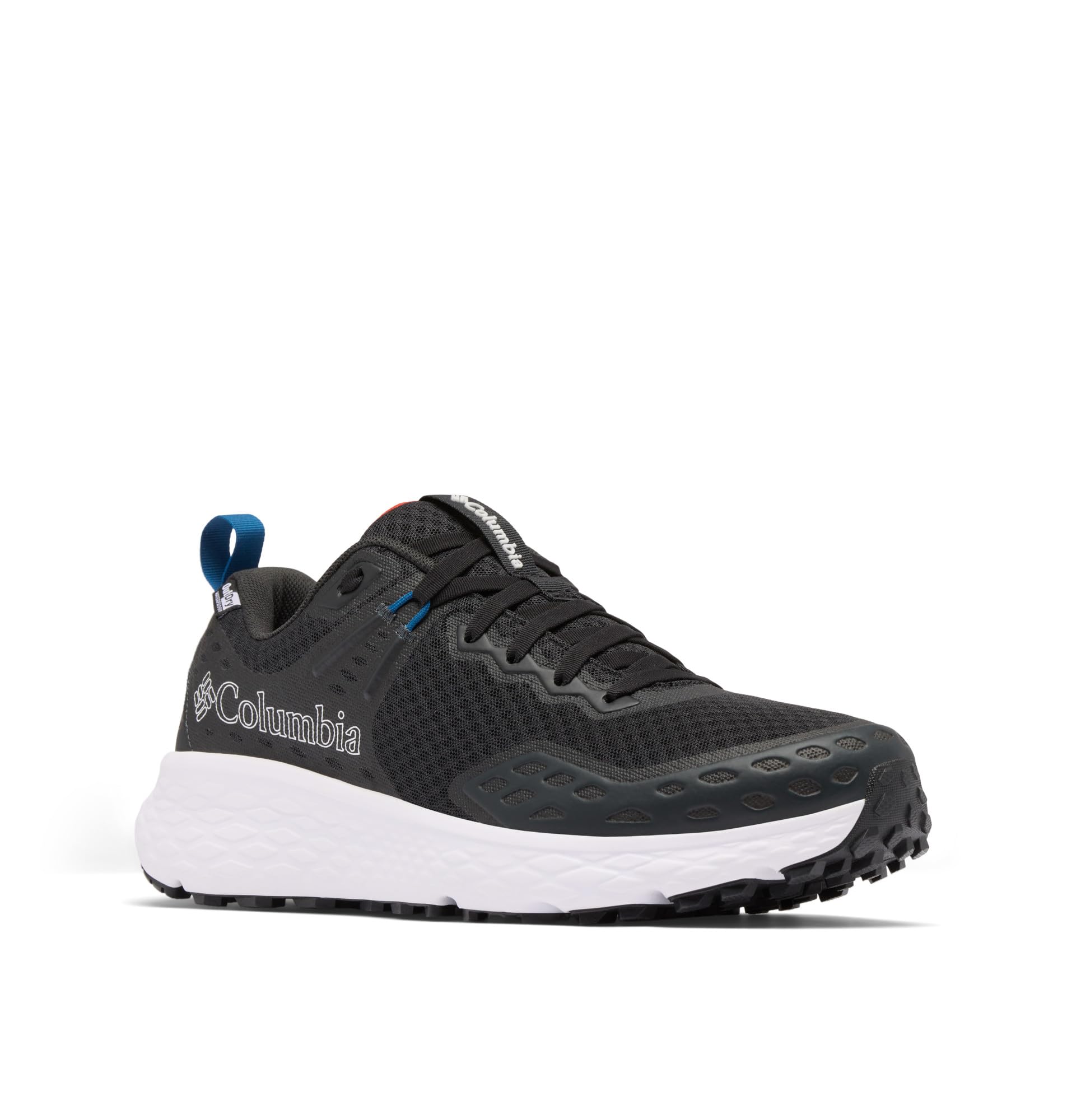
1. Columbia Men’s Konos TRS Outdry Waterproof Shoe
Our pick — 4.5+★ from 600+ verified ratings; the strongest balance of quality and price.
The pair that treats a dew-soaked lawn like a dry sidewalk and never complains about it.
What you are really paying for is the membrane (the thin waterproof layer inside the shoe). Columbia’s Outdry system bonds that layer directly to the inside of the upper instead of hanging a loose bootie inside it, so water cannot pool between the layers. Buyers report the waterproofing “holds up in drizzle and steady heavy rain (3+ hrs standing/walking), feet stayed dry.” Three hours of standing in rain is a far harsher trial than any morning field crossing.
The outsole is the second half of the story. This shoe uses Columbia’s wet-dry traction rubber and an underfoot system built for cushioning plus stability, so you get a planted feel on slick surfaces rather than the skittery slide a flat trainer gives you on damp grass. It also cushions big gravel without turning mushy — the same shoe handles a park path, a trailhead, and a muddy shortcut across the field. One runner even reports doing miles in it with a 20-pound weight vest and coming home with legs that did not ache.
The honest catch is fit and heat. Some buyers had to go up half a size, and the sizing chatter is mixed enough that trying your normal size first is smart. Several also warn it runs warm in summer, which is the price of a sealed upper — fine for wet spring mornings, less fun in August humidity. Treat it as a three-season wet-weather shoe rather than a summer trainer.
Where It Wins
- Outdry bonding keeps water out for hours of standing and walking in rain.
- Wet-dry traction rubber holds on slick grass, trails, and gravel.
- No break-in needed — comfortable from the first wear.
- Cushioning handles long walks and even weighted runs.
What To Weigh First
- Sizing runs mixed — some buyers needed a half size up.
- Runs warm in hot weather, a trade-off of the sealed upper.
- Value is debated; a few feel the quality sits below the tier it is placed in.
Reach for this if: you want one pair that handles wet grass, mud, trail, and the gym without switching shoes.
Think twice if: you walk in summer heat — the sealed upper traps warmth.
2. Brooks Men’s Ghost 16 GTX Waterproof Neutral Running Shoe
A GORE-TEX road shoe for the walker who clocks ten thousand steps before lunch.
GORE-TEX (the best-known waterproof membrane) earns its reputation here. The sealed lining keeps water out in light rain and puddles while letting some vapor escape, so your feet stay dry without turning into a swamp. Owners describe it as the pair they reach for in poor weather, and the comfort holds up for hours — one long-distance walker calls it “good for day in/day out 15k-20k walking for a daily routine or on vacation.”
What separates this from the Columbia above is where it is designed to run. The Ghost 16 GTX is a road-biased neutral shoe, so it shines on pavement, concrete, and packed paths rather than rocky trails. Its cushioning is tuned for repeatable miles, and the durability of the GTX sole and lining is what owners bring up again and again. If your wet-grass walk starts and ends on a sidewalk with a damp park crossing in the middle, this is a natural fit.
Sort out width before you buy, because this shoe runs narrow. Buyers with wide feet flatly warn against it — one says directly: “these are definitely NOT for anyone with wide feet.” A few found it ran short too, so try your usual size and go up half a size for thick socks. Get the fit right and the ride is forgiving all day.
Sixty thousand steps of proof: the GORE-TEX lining and the neutral cushioning blend make this a road shoe you can live in, and the dry-foot performance holds through puddles and drizzle. It is the strongest long-mileage pick here for pavement-heavy walks.
The squeeze to plan around: narrow and slightly short. Wide-footed buyers should look at the KEEN Targhee 4 or ALTRA Lone Peak 8 instead.
Make it yours if: you log serious daily mileage on roads and want dry feet without giving up cushioning.
Leave it be if: your foot is wide — this one will pinch the midfoot.
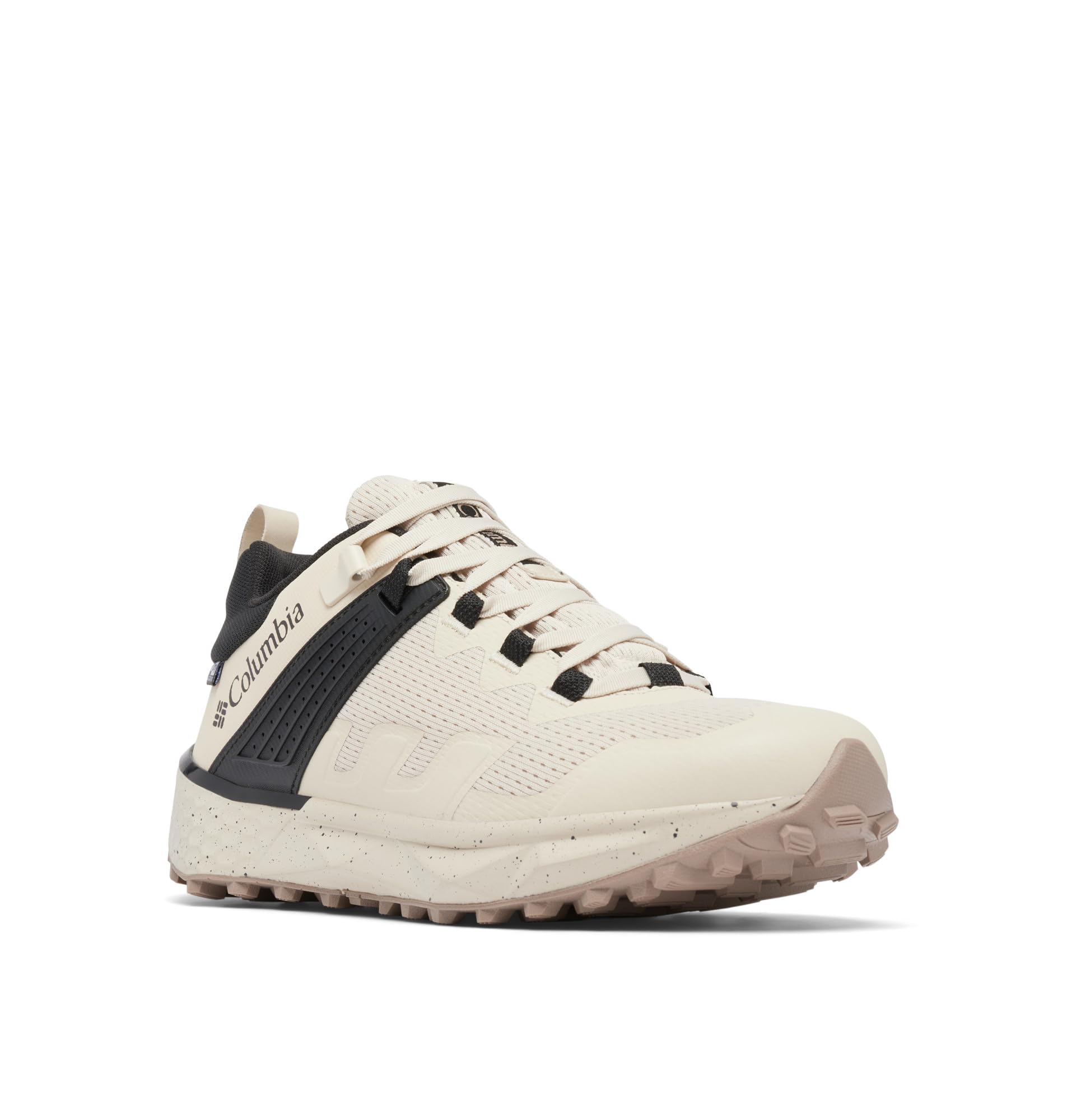
3. Columbia Facet 75 Outdry
Bought by a golfer, kept because the dew never got through.
This one earned its place on a fairway, which tells you more about wet-grass capability than any spec sheet. A size-10 buyer wore it for repeated rounds and reported: “Feet stayed dry in the heavy early morning wet grass all day.” Early morning grass is the hardest test there is — soaked from the night, cold, and clinging — and this shoe does not let it in.
The Outdry upper is bonded waterproof-breathable, and the outsole uses wet-dry traction rubber that stays confident on soft, slick ground. Owners also like that it needs no break-in, with no rubbing or blisters reported on the first long walk. It looks neutral enough to wear with normal clothes, so it works as a wet-weather daily shoe as well as a trail shoe.
There are two honest limits. A few people question long-term waterproofing, with one dissenting voice saying it is “barely water resistant” — the overwhelming majority report the opposite, so treat that as an outlier rather than a pattern. And longevity is not yet proven for everyone; one buyer flags concern about the sole overmold. Buy it for the next few wet seasons and you will get your value.
Fairway-tested waterproofing: all-day dry feet through heavy morning dew, a wide comfortable fit with no break-in, and outstanding grip for pivoting on wet turf.
The wrinkle: a lone dissenter on water resistance and some questions about sole life. Both are rare, not defining.
Pick it when: your walk crosses real soggy grass and you want the driest feet with zero break-in period.
Pass if: you need a multi-year track record before you commit — this model is still building one.
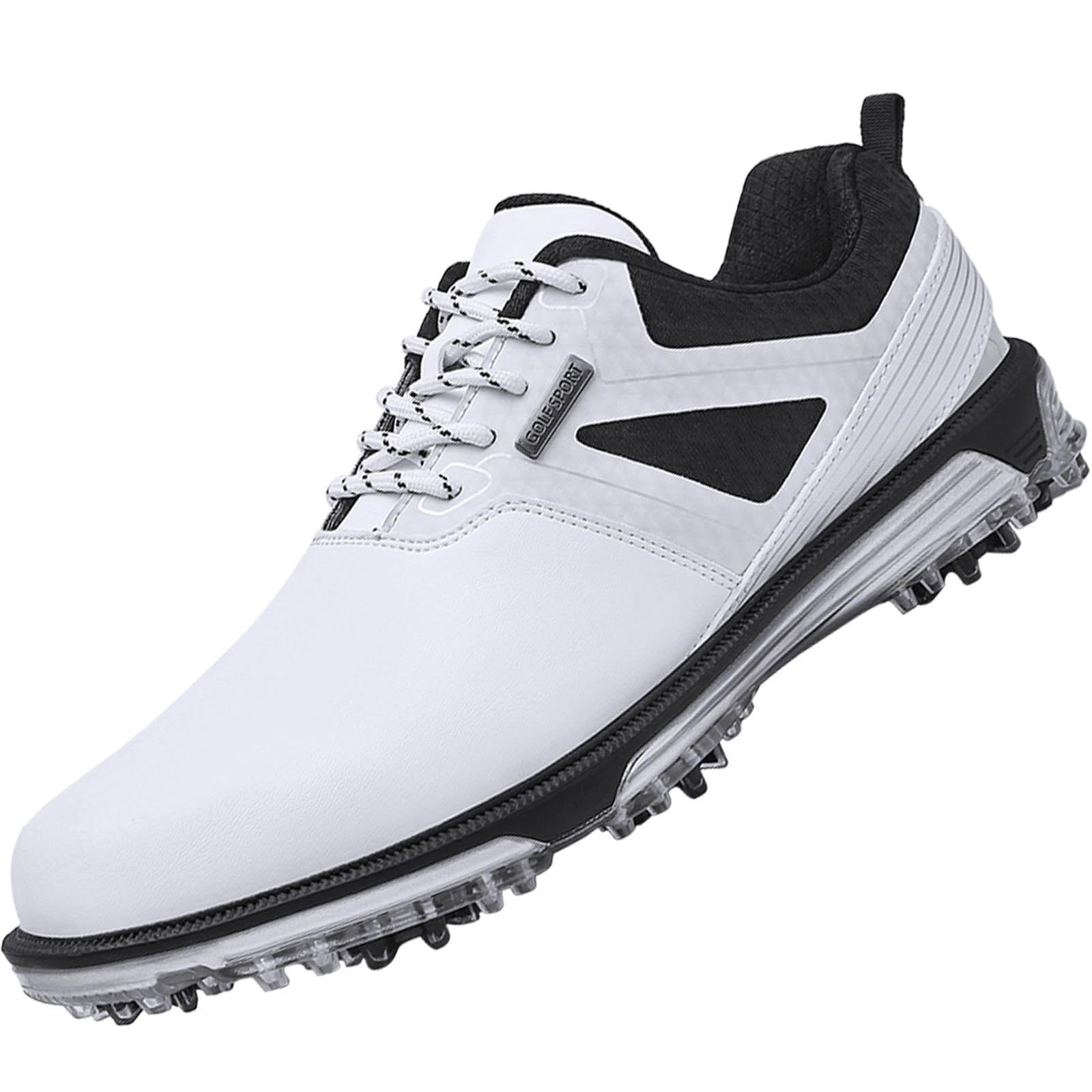
4. ULTIANT Men’s Golf Shoes
The budget golfer’s answer to a soaked course, proof that dry socks do not always cost much.
Dew-covered fairways are wet grass at its worst, and this pair handles them. Owners mention the waterproofing is “proven over 5+ rounds in wet fields; socks stay dry even in morning dew.” For an entry-level golf shoe, that is the whole point — you get out of the cart in the morning, walk eighteen, and your socks are still dry at the turn.
The fixed spikeless outsole gives you grip across turf without the maintenance of replaceable spikes, and the shoe is light enough to walk a full round without dragging. It also looks sharper than the tier suggests; owners say it resembles a far more expensive shoe. If you play a handful of rounds a month and walk wet grass at dawn, it does the job.
Two trade-offs are worth knowing. The spikes are molded into the sole and cannot be replaced, so once they wear flat the shoe is done — and the outsole can run aggressive, leaving deep marks on soft greens. Sizing also splits both ways, running large for some and true for others, so measure your foot before you order. A few note the material feels plasticky, which is the cost of keeping it so budget-friendly.
What Buyers Keep Praising
- Waterproofing holds through multiple rounds of wet fields and morning dew.
- Lightweight and comfortable enough to walk a full course.
- Looks like a far pricier shoe.
- Strong second-year durability reported by heavy users.
Where It Gives Ground
- Spikes are molded in and cannot be replaced.
- Aggressive tread can imprint soft greens.
- Fit splits — some find it runs large.
- Material feels plastic-like for a few buyers.
It fits you if: you want dry feet on the course without spending premium-shoe money.
Look past it if: you replace spikes regularly — this shoe is built to be replaced whole.
5. Columbia Novo Trail™

A women’s trail sneaker that treats a rainy four-mile walk as a normal Tuesday.
Note the wording on the upper before you buy: Columbia lists it as water-and-stain resistant rather than fully waterproof. That makes it a great shoe for a damp path, light drizzle, and a quick cross of wet grass, but not the pick for standing in a soaked field for an hour. Set your expectation there and it is a genuinely comfortable daily shoe.
Where it shines is the fit and cushioning. The comfort zones are shaped for women’s feet, the heel foam hugs your foot, and the impact absorption softens the landing on hard pavement. Owners call it comfortable right from the start with no break-in, and a wide toe box that leaves your toes room to spread. It is also light, and the traction adapts from slick trail to street without complaint.
Durability is the mixed part — most pairs hold up well, a few do not last as long as hoped. The open mesh upper also lets in fine sand and runs warm on hot days. If you want a light, pretty trail shoe for wet spring and fall walks, this delivers; if you need a hard-wearing field shoe for every day of the year, look at the KEEN or Merrell picks.
The women’s fit advantage: comfort zones built around the female foot, a heel that hugs, and impact absorption that softens hard pavement — no break-in needed.
The caveat: water-and-stain resistant, not waterproof. Light wet is fine; deep standing water is a step too far.
Buy it for: damp trail walks, drizzle, and everyday wear where comfort matters most.
Choose something else if: you will be standing in truly soaked grass for long stretches.
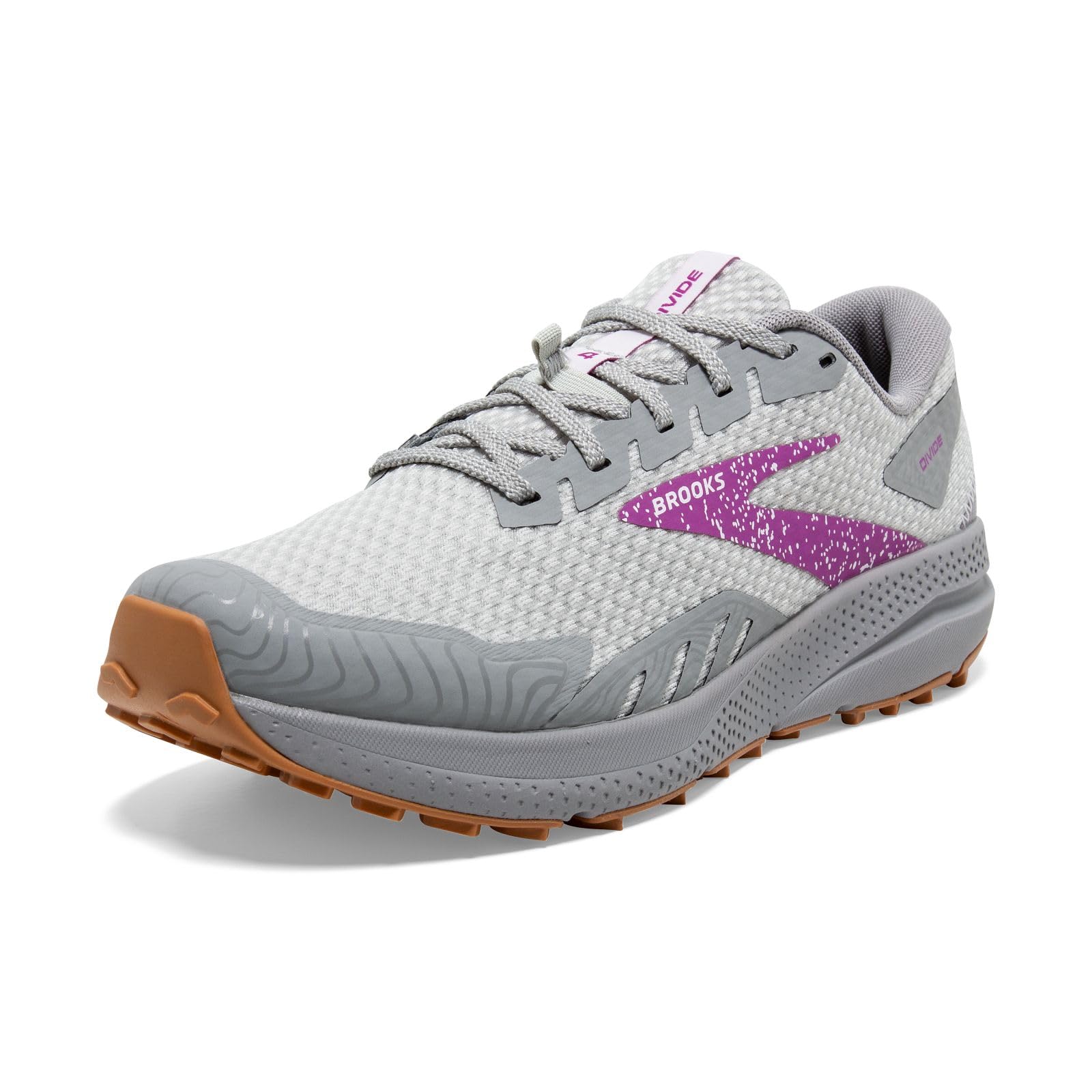
6. Brooks Women’s Divide 4 Running Shoes
For the teacher, nurse, or server who never gets to sit down and still hits wet grass on the way in.
The Divide 4 is a trail running shoe by design, but what owners love it for is the all-day stand. The arch support is the standout, and the traction holds up on uneven ground and after rain. One buyer notes it is “supportive and water resistant in wet grass,” which is exactly the use case — a damp walk to the car or a dewy park crossing, not a creek wade.
The toe box gets its own applause for the room it gives your toes, and the blocked, rounded toe shape avoids the sharp pinch some shoes give on the big toe. Comfort is the headline: people in jobs where they are on their feet all day report no foot pain by the end of the shift. It is light, well made, and easy to wear from morning into evening.
The trade-offs are honest. Sizing runs about a quarter size large, so try going down half a step if you are between sizes. Water resistance is real but not the full membrane treatment, so it is not the shoe for a flooded field. And one model-year note: Brooks discontinued this exact model, so availability will tighten over time if you fall in love with it.
All-day support, all-day wear: arch support and a roomy toe box make this a strong pick for standing shifts and trail walks after rain.
Watch the sizing: runs a touch large and needs a half-size adjustment for many buyers. Availability may shrink since the model is discontinued.
Choose this if: you need a women’s shoe for standing all day that also handles a wet walk to work.
Don’t choose it if: you need full waterproofing for a soaked field or flooded trail.
7. Merrell Men’s Accentor 3 Hiking Shoe
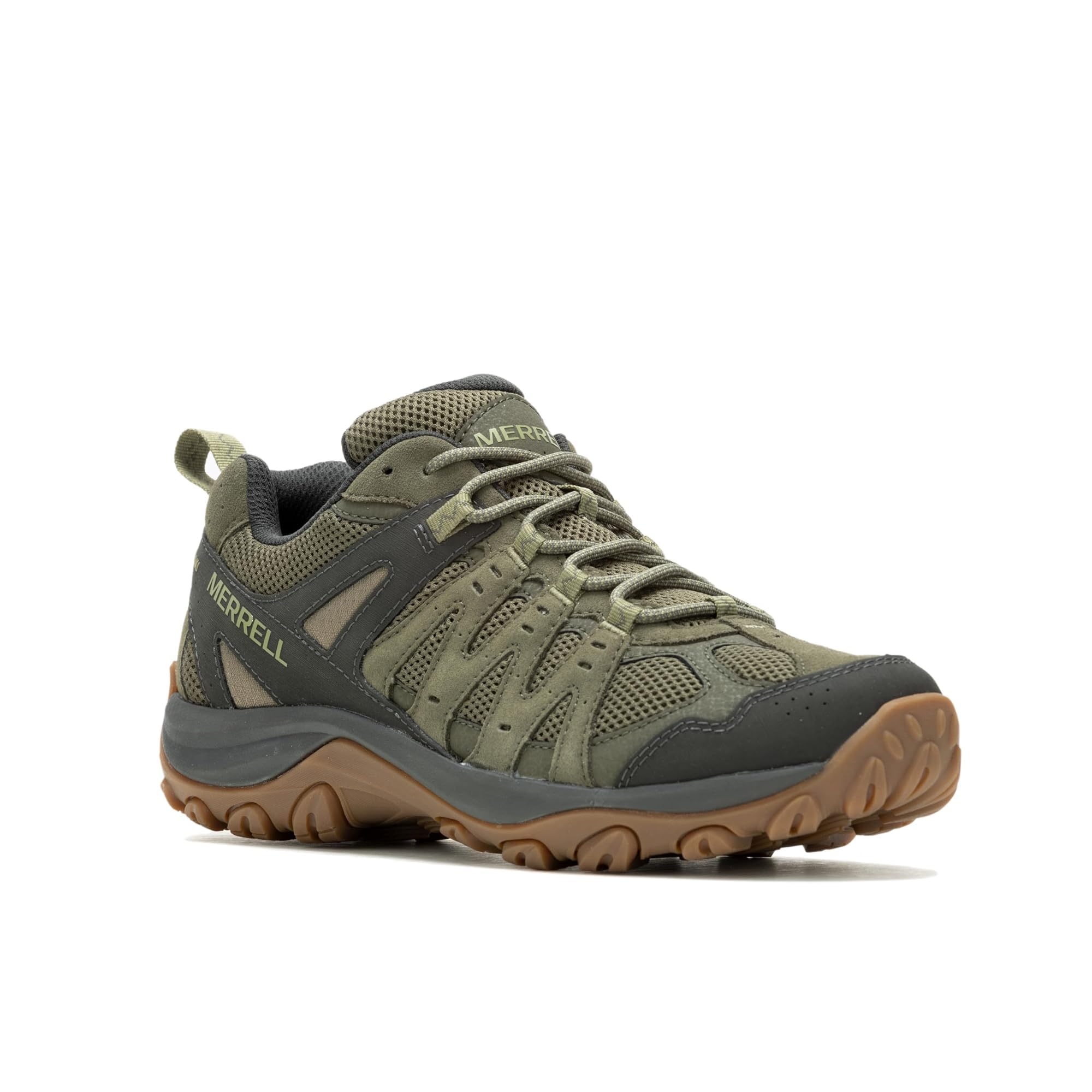
Built for humid trails, it shrugs off wet grass while keeping your feet cooler than a sealed hiker.
Merrell designed the Accentor 3 for hot, humid terrain, and the upper reflects that goal. The suede and mesh construction is water resistant rather than fully sealed, so it handles damp grass, a dewy path, and light rain without turning your feet into a furnace. An Aegis antimicrobial treatment inside keeps the shoe from getting funky on long, sweaty days — a small detail that matters when the shoe lives on your feet every morning.
Traction is a genuine strength. The aggressive tread pattern handles rough ground and soft trail, and owners say the grip holds on slopes and wet dirt. The fit is comfortable right from the start with no break-in, true to size, and a wide toe box that lets your foot relax. Longtime wearers get years out of a pair, which is why the next pair tends to be the same model.
The one flaw to know is the lacing system. The nylon straps that hold the laces can snap after about a year of heavy use — a real weak point that has pushed some owners away. That said, the uppers outlast the treads for most people, and the shoe itself is tough. It is a warm-weather hiking shoe, so plan your cold-season walking around it.
Why It Earns Its Spot
- Water-resistant suede and mesh handle damp grass without overheating.
- Aggressive tread grips rough trails and slick ground.
- True to size with a roomy toe box and no break-in.
- Long service life reported on repeated pairs.
The Honest Downsides
- Nylon lace straps can break after about a year of heavy wear.
- Not fully waterproof — water can sneak in above the sole.
- Built for warm weather; less suited to winter walking.
Suits you when: you hike or walk in humid weather and want breathability with real wet-grass resistance.
skip it if: you need a fully sealed waterproof hiker for standing water or snow.
8. Columbia Men’s Crestwood Mid Waterproof Hiking Boots
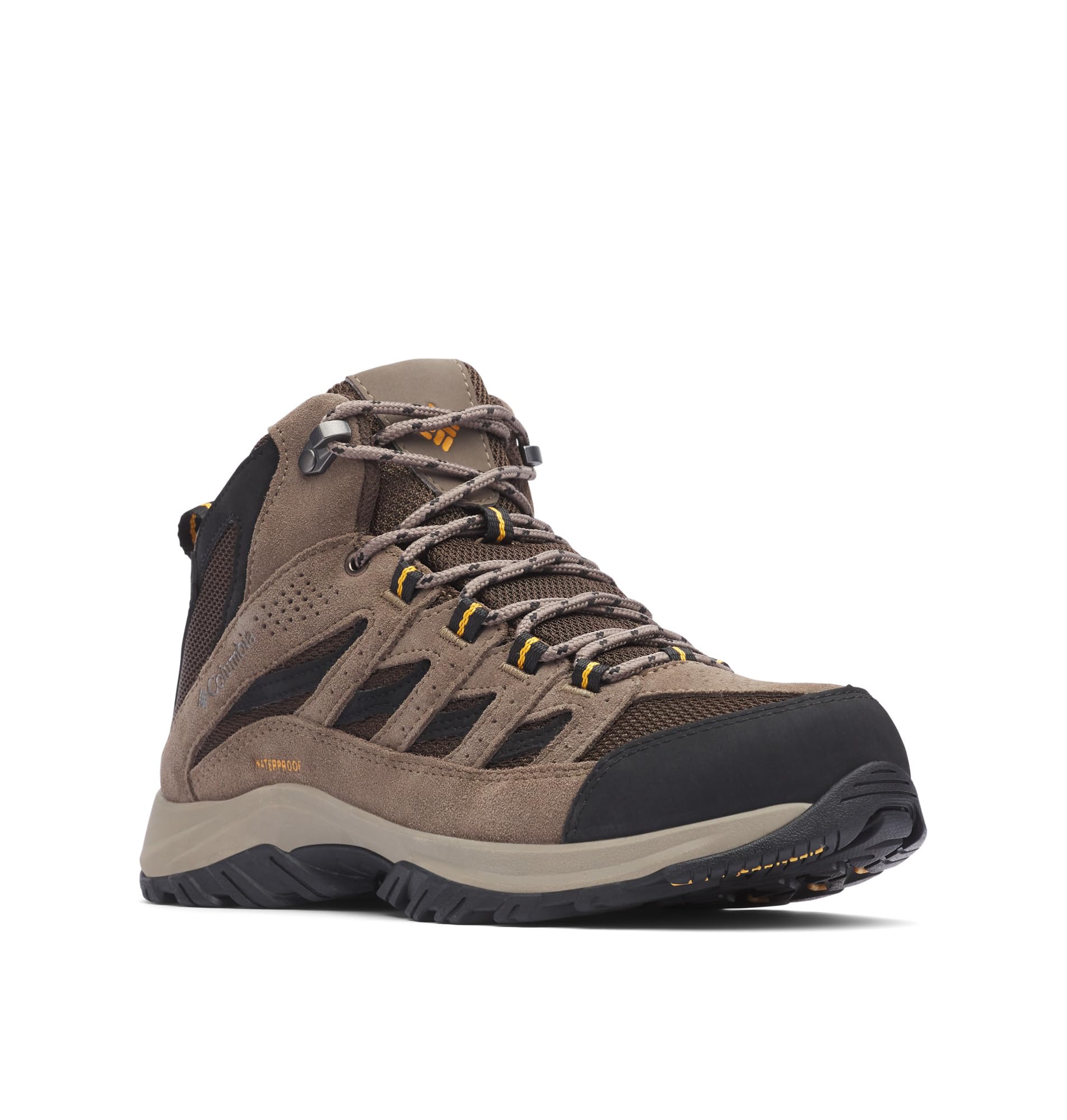
An affordable mid-cut boot that stays light on your feet even when the ground is soaked.
The Crestwood Mid is built as a day-hike boot, and that is where it performs best. The waterproof upper keeps wet grass and damp trail on the outside, and the mid-height collar adds ankle coverage that a low shoe cannot offer. What surprises buyers is the weight: this boot does not feel like wearing a brick, which is a welcome trait in a wet-weather boot you might keep on for hours.
Construction is solid for the tier, and the comfort is there from the first wear. A buyer who logged roughly 50 miles across muddy flats and rocky mountains reported the grip held and the boots still looked nearly new. Long-day walks are fine, and the boot suits someone who wants ankle support without going heavy.
The sizing is the main thing to prepare for — it runs small and narrow, so plan to size up. Water resistance also splits; for some it is reliable, for others water can find a way in. Treat it as a capable three-season day boot for wet grass and muddy paths rather than a mountaineering boot for deep wading, and it works hard for the money.
Light boot, real protection: waterproof upper, mid-ankle coverage, and a lightweight feel that suits long day hikes in wet weather.
A note on fit: sizing runs small and narrow, so go up for comfort and thick socks.
Good fit for: day hikers who want ankle coverage and a dry foot without a heavy boot feel.
Not the one for: wide-footed buyers or anyone facing truly deep water crossing.
9. ALTRA Men’s Lone Peak 8 Trail Running Shoe
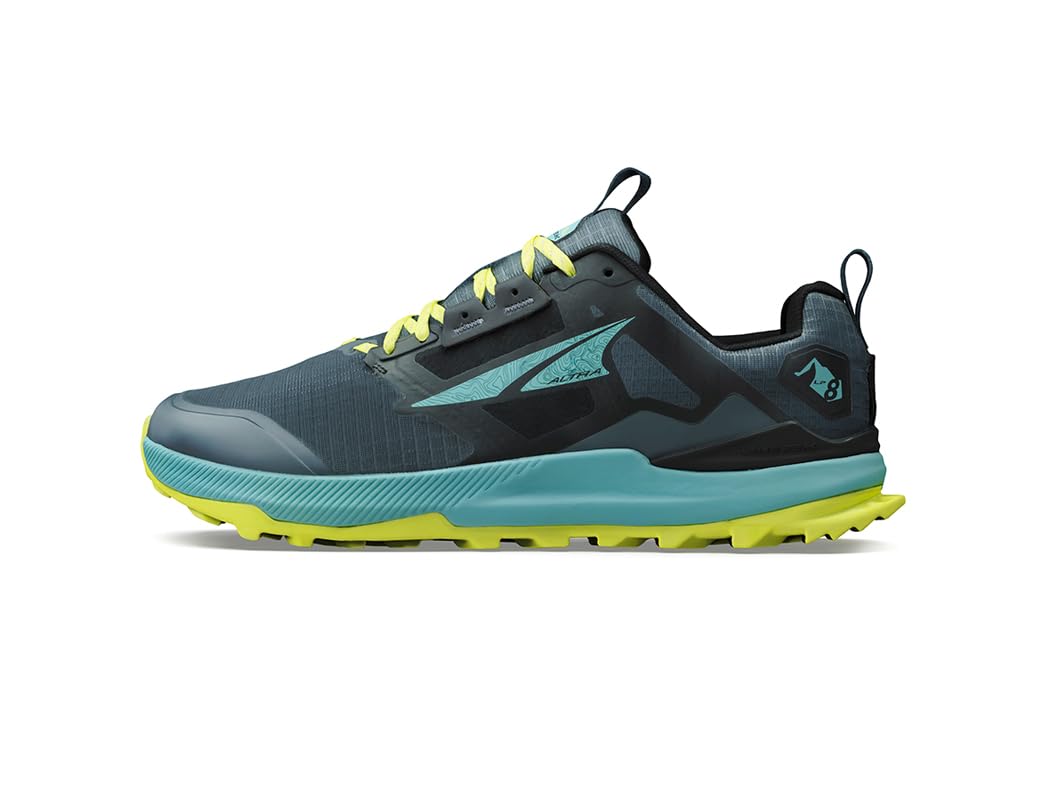
The widest toe box here, built for feet that have been squeezed one pair too many.
If your last pair pinched your toes, start here. ALTRA builds the Lone Peak 8 around a FootShape toe box that is the roomiest in this guide, plus a zero-drop platform (heel and forefoot sit level) and balanced cushioning. The ripstop mesh upper (a tough, woven fabric) keeps the shoe light and airy, and the MaxTrac outsole with TrailClaw lugs (rubber treads that bite into ground) grips soft, wet, uneven ground — the exact surface that turns a flat sole into a slip hazard.
Owners love it for walking as much as running. It handles dirt, gravel, and rain-soaked paths while staying comfortable all day, and the grip holds on slick pavement too. It is light enough for long miles and protective enough for rocky ground underfoot. For a 225-pound walker doing three- or four-mile loops on gravel, it stays supportive without collapsing.
Two caveats. First, weather protection here is water resistance, not a full membrane — it handles wet grass and drizzle but not standing water. Second, durability is mixed: the sole wears faster than some rival shoes, and the mesh can tear at bony spots. For pure wet-day walking in a squeeze-free fit, though, this is hard to match.
The Case For It
- Roomiest toe box in this group, ideal for wide or sensitive feet.
- MaxTrac rubber and TrailClaw lugs grip soft, wet, uneven ground.
- Zero-drop, balanced platform for a natural stride.
- Lightweight yet still supportive on long gravel walks.
The Trade-Off
- Water resistance only — not a full waterproof membrane.
- Sole durability is mixed; heavy use wears it faster.
- Ripstop mesh can tear at toe or heel pressure points.
This is the one for: wide-footed walkers who need toe room and grip on sloppy trails.
Look past it if: you need a fully waterproof shoe for saturated ground and standing water.
10. KEEN Men’s Targhee 4 Low Waterproof Hiking Shoes

A wide, roomy waterproof hiker that gives bunions and flat feet the space they never get.
The Targhee 4 Low is built on KEEN’s Original Fit last, which runs wider than most hiking shoes, and the room is the reason buyers keep coming back. It suits flat feet, broad forefeet, and bunions without the squeeze. The KEEN.DRY membrane inside keeps water out, and the outside has a water-repellent finish, so wet grass and rainy days are covered. The KEEN.FUSION bond holds the sole to the upper without glue, so it resists the delamination that plagues many hiking shoes over time.
The outsole uses KEEN.RUGGED rubber, which the maker says is twice as abrasion-resistant as ordinary rubber — and that trait shows up in long-term wear reports. The fit is roomy without feeling sloppy, there is no break-in needed, and the shoe handles daily winter wear, field walks, and hard surfaces with all-day comfort. It is a serious wet-weather shoe that still feels like a sneaker.
Two things to know. First, the traction on polished surfaces can be slick until the tread layer wears in a bit — give it a few walks before you trust it on wet concrete or smooth wood. Second, the round laces slip and need double-tying. Both are minor quirks in a shoe that otherwise earns its price with years of tough daily wear.
Room where it counts: a genuinely wide last, waterproof KEEN.DRY protection, and a glue-free sole bond that holds up over seasons of hard use.
The small irritations: slick footing on polished surfaces until the tread wears in, and laces that need double-tying.
Your match if: you have wide feet, bunions, or flat feet and want waterproofing plus long-term durability.
Step aside if: you need instant grip on polished indoor floors or wet smooth tile.
11. Merrell Mens Moab 3 GTX

The premium pick for anyone who hikes wet, steep, muddy ground and wants to stop thinking about their feet.
The Moab 3 GTX is the most expensive shoe here, and what you pay for is the combination of a GORE-TEX liner and a hiking-grade outsole. The liner keeps water out while letting vapor escape, and owners put it through 30+ miles of rocky, muddy, steep terrain with no blisters or hot spots. One comment captures the experience: it is “completely waterproof and breathable,” and the grip holds on both dry and slick surfaces.
what separates it is comfort without break-in. You lace up and go — no tender first week, no hotspots to manage. It also fits a wide foot with a narrow heel well, a hard combination to get right. Longtime Moab wearers replace seven-year-old pairs with the same model because the fit and support stay consistent., and many size up half a step for thicker socks in cold weather.
The premium tier is not for every budget — this is the most expensive pick in this guide, and one dissenting buyer felt the current model ran less comfortably than the older version. Still, for anyone serious about wet trails, wet grass, and variable ground, the build quality and waterproofing make it the buy-once choice.
What the premium buys you: GORE-TEX protection, an outsole that grips dry and slick ground, zero break-in, and a seven-year replacement pattern that justifies the price for heavy walkers.
The honest catch: it is the priciest shoe here, and long-time Moab wearers may notice a comfort difference versus older versions.
Buy it when: you walk wet, difficult ground and want the strongest combo of waterproofing, grip, and durability.
Skip it when: your walks stay on dry sidewalks and a mid-range shoe already covers your needs.
Know the Specs
Waterproof Membranes
A membrane is a thin, sealed layer built into the upper that blocks liquid water while letting sweat vapor travel outward. Named versions — GORE-TEX, Outdry, KEEN.DRY — are the real deal. A listing that only says “water resistant” typically uses a surface coating that wears away with use. For a wet-grass walk of twenty minutes or more, go with a named membrane.
Outsole Lugs and Rubber
Lugs are the raised bumps and ridges under the sole; deeper, angled lugs bite into soft, wet ground. Rubber compound matters too: softer rubber grips damp concrete better, while harder rubber lasts longer. On wet grass, an aggressive outsole is the difference between walking confidently and sliding sideways.
Common Questions
Are water-resistant shoes enough for walking through wet grass?
How do I stop my feet getting sweaty in waterproof shoes?
Will these shoes grip on wet grass or will I slip?
Do I need to size up for wet-weather walking shoes?
Which shoe is best for wide feet and bunions?
Can I wear waterproof hiking shoes for everyday walking?
How long does a waterproof membrane actually last?
Can I use these shoes for golf in morning dew?
Do waterproof shoes need a break-in period?
What is the difference between GORE-TEX and Outdry?
The Bottom Line
For most walkers facing wet grass, the shoes for walking in wet grass winner is the Columbia Konos TRS Outdry because it blends a bonded waterproof upper with wet-dry traction rubber and no break-in — a combination that handles dew, drizzle, and mud without complaint. If your walks are long and road-heavy, the Brooks Ghost 16 GTX is the natural upgrade, provided your foot is not wide. And for wide feet or bunions that need real room plus a sealed membrane, the KEEN Targhee 4 Low is the one to reach for.
One last nudge: the Columbia Facet 75 Outdry is the sleeper pick here — it earned 4.5+ stars across 800+ ratings, and owners keep reporting dry feet after heavy morning dew.. If you want the driest start on a dewy field without spending premium money, that is the pair to grab.
How we choose
We do not accept paid placement. Every pick is matched to a real buyer and a real use-case; we do not hands-on test units.
Sources
Specifications: manufacturer listings and product documentation. Review insights: verified customer reviews, as of October 2026. Pricing: not shown on this page (it changes often); check the current price via the retailer link.
As an Amazon Associate, Aappliancez earns from qualifying purchases. This does not affect which products we feature.