Disclosure: Some links in this post are affiliate links. As an Amazon Associate I earn from qualifying purchases, at no extra cost to you. Learn more
Specs are compiled from manufacturer listings and verified buyer reviews and can change over time — please confirm the key details on the product page before buying.
Sciatica starts in your lower back and shoots down one leg, and the wrong pair of shoes makes every step worse. What you actually need is a shoe that softens the ground your heel hits, spreads pressure across a wide base, and keeps your foot stable so your body stops compensating. That is the whole job. Below are nine pairs that do it, sorted by real owner experience and the specs that matter.
This guide is built by comparing the manufacturers’ published specifications and the patterns across verified customer reviews, so you get each pick’s real strengths and trade-offs instead of marketing spin.
Shoes alone will not cure a nerve problem, but the right pair can soften the heel strike on your daily walking and standing. Read on for the practical picks and the fit details that make the difference in shoes for sciatica pain.
Top Picks

How To Choose The Best Shoes For Sciatica Pain
Your leg pain gets louder when your stride lands hard. So the shoe you pick should do two jobs at once: absorb the moment your heel hits the ground, and keep your foot from rolling inward or sliding around. Below is what actually changes the way a shoe behaves underfoot.
Cushioning and heel impact
A thick, high-rebound sole spreads the landing force over a longer moment — the cushioning gives, then pushes back. That softer landing is what owners describe when they say a cushioned midsole feels like walking on pillows. Look for a cushioned midsole and a heel that does not collapse on contact.
The rocker sole and your stride
A rocker sole is curved at the front so your foot rolls forward instead of bending hard at the toes. That rolling motion can let you walk without flexing a painful toe joint. Gravity Defyer builds this into the Mighty Walk, and OOFOS uses a rocker-bottom in the Oomy Stride. Expect a few days to adjust to the feel.
Arch support and a stable base
Contoured arch support holds up the middle of your foot so it does not flatten under load. A wide base and a firm heel counter keep your ankle from wobbling sideways. Both help you stay steady when nerve pain makes you feel unsteady on your feet.
Toe box room and depth for insoles
A wide toe box lets your toes spread instead of pressing together. Extra depth means the shoe has room for a removable insole plus your own custom orthotic underneath. If you already wear prescription inserts, check that the insole lifts out before you buy.
Side-by-Side Comparison
| Model | Best For | Type | Cushioning Focus | Orthotic Friendly | Amazon |
|---|---|---|---|---|---|
| Brooks Women’s Glycerin Max★ Best Overall | All-day standing and walking | Neutral running/walking | Plush, high-rebound | — | Amazon |
| Gravity Defyer Mighty WalkRocker Relief | Rocker-sole heel relief | Rocker walking shoe | Impact absorption | Fits inserts | Amazon |
| Vionic Walk Strider 001Arch Anchor | Flat feet and arch control | Performance walking | High rebound | Removable insert | Amazon |
| Orthofeet Relay | Custom orthotic wearers | Orthopedic running | Shock-absorbing sole | Removable + spacers | Amazon |
| OOFOS Oomy Stride | Recovery and arch relief | Recovery sneaker | Cushy rocker sole | — | Amazon |
| Orthofeet Tilos | Slip-on support for men | Orthopedic slip-on | Ortho-Cushion system | 4 inserts included | Amazon |
| OrthoComfoot Women’s Trail | Outdoor and uneven ground | Wide trail shoe | Orthotic insoles | Multiple insoles | Amazon |
| Orthofeet Naya | Hands-free easy wear | Orthopedic step-in | Lightweight cushioning | Extra depth | Amazon |
| OrthoComfoot Wide Running | Budget wide-toe comfort | Wide orthopedic sneaker | Soft padding | Fits custom orthotics | Amazon |
Detailed Reviews
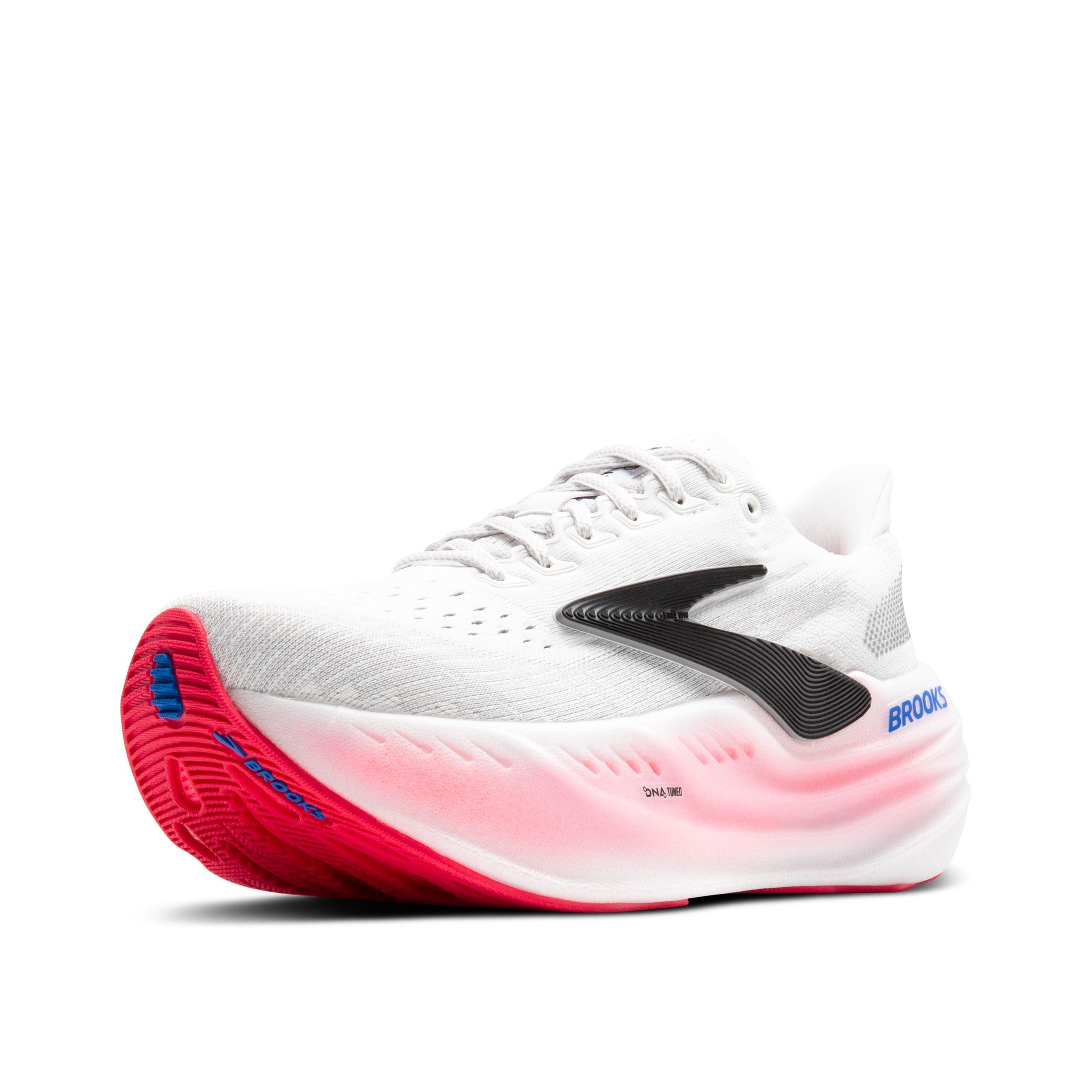
1. Brooks Women’s Glycerin Max Neutral Running & Walking Shoe
Our pick — 4.5+★ from 600+ verified ratings; the strongest balance of quality and price.
The plush neutral trainer that turns hard floors into soft landings
If your leg pain flares after hours on your feet, this is the pair to start with. The Glycerin Max is built around a thick, high-energy cushioning layer that gives under your heel and pushes back on the next step. It is a neutral shoe — meaning it does not force your foot in either direction — with a roomy toe box and zero break-in period. Nurses and healthcare workers who stand all shift are the crowd here, and it is the highest-rated pick on this list at 4.5+ stars across 600+ owners.
The cushioning is the headline, but the durability story is the one that sticks. A distance runner with a history of shin splints and stress fractures put 500 miles on a pair against a usual 300-350 — that longer life is what softens the premium tier for daily wearers. It also has a non-slip sole and a breathable fabric upper, so it works as a walking shoe and a work shoe in the same week.
The catch is fit. Some owners find the sizing drifts, and if you have very high arches or need firm correction, the neutral platform will not push your foot back into line the way a supportive walking shoe can. It is built for cushioning, not for correcting pronation. And while the cushioning is generous, some buyers find the value question fair at this tier.
What earns its place up top
- Plush yet stable cushioning that absorbs heel impact all day
- Roomy toe box with no break-in period
- 500 miles reported by a distance runner versus a usual 300-350
- Non-slip sole and breathable upper for work and walking
Where it asks you to compromise
- Fit feedback is mixed — try your true size first
- Neutral platform offers no firm arch correction
- Premium-tier cost for a shoe you will replace with mileage
Made for: anyone who logs long standing or walking days and wants the ground to feel softer under a painful leg.
Think twice if: you need a firm, corrective arch and your feet roll inward — a stability shoe serves you better.
2. Gravity Defyer Mighty Walk Walking Shoes
A curved sole that rolls your stride forward instead of pounding the heel
When standing on concrete all shift makes your leg throb, a rocker sole changes how you land. The Mighty Walk is curved at the front so your foot rolls heel-to-toe instead of bending hard at the toes. That smoother transition is the reason it keeps showing up for people who spend 10-plus hours on their feet. It comes in three widths — M for standard, W about ¼ inch wider, and XW about ½ inch wider — so a genuinely wide forefoot has room.
The trade-off is an adjustment period. The maker suggests wearing them 1-2 hours daily for the first 3-5 days while your body adapts to the rocker feel, and starting on flat surfaces before stairs. Once you settle in, buyers report the cushioned heel takes the pressure off. It also has a roomy toe box, breathes well, and fits inserts.
Where it stumbles is fit consistency between shoes and widths. One dissatisfied buyer found the extra-wide tight in the midfoot with toes rubbing the ends, and the arch support sits too high for some flatter-footed wearers. The toe area also is not always as wide as the extra-wide label suggests. Get the width right and most of these complaints disappear.
The rocker advantage: a curved sole that promotes a natural heel-to-toe gait, plus a cushioned heel designed to reduce the impact of each step.
The honest snag: sizing between widths and even between left and right shoes can vary, so try them on before a long walk and give yourself the first few days to adapt.
Reach for this if: your pain spikes on hard floors and you want a shoe that rolls your step forward to ease the heel strike.
Look elsewhere if: you need a very wide toe end — the extra-wide here runs snugger than the name implies.
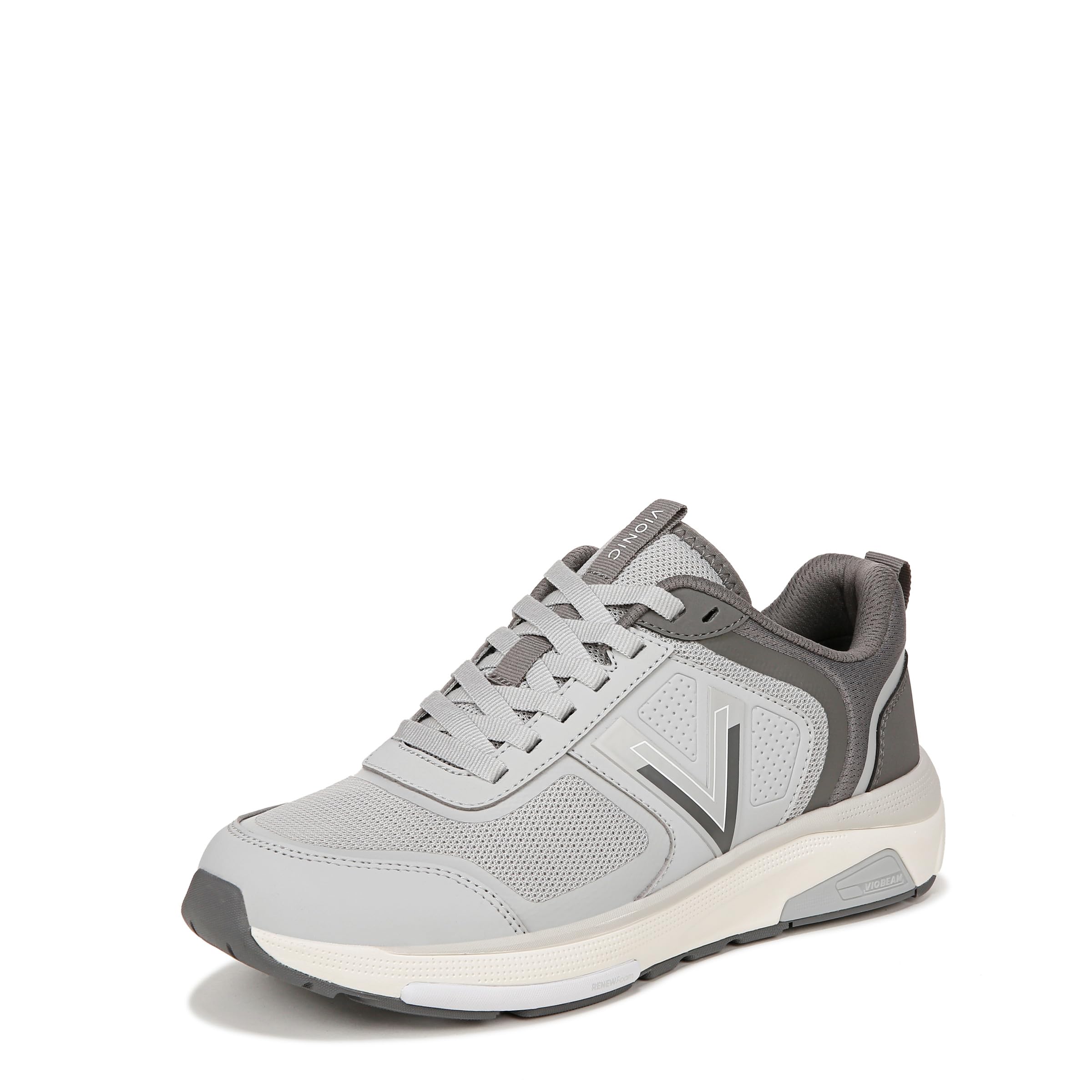
3. Vionic Womens Walk Strider 001
The technical walker that holds a flat foot steady without squish
If your feet are flat and your ankles roll inward, stability matters more than plushness. The Walk Strider is built for performance walkers, with anti-roll and lateral rigidity constructs that keep the shoe from tipping sideways. Its built-in VIO MOTION footbed has a contoured arch and a deep heel cup. The cushioning is firm rather than squishy, so it supports instead of sinking. Flat-footed owners describe walking all day without the throbbing that used to follow.
Vionic’s own 1st Ray Technology sits in the forefoot to help it flex and move through your gait more efficiently. The upper is breathable mesh and synthetic, and the removable EVA insert means you can swap in your own orthotic. The platform height is 1.125 inches, which lifts you slightly off hard floors.
The main friction point is durability at the small parts. One owner had the laces go poor and an eyelet rip out after roughly four months, and some find the insole too firm from the start. Vionic itself suggests wearing new pairs a few hours at a time so your feet adapt to the support. Treat the laces as consumable and the shoe lasts longer.
Why flat-footed walkers like it: the anti-roll construction and deep heel cup keep the ankle from tipping, and the contoured arch fills the gap under a flat middle.
One real annoyance: the laces and eyelets are the weak point — a couple of months of hard wear can wear them out before the sole does.
Worth it for: flat or wide feet that need firm arch filling and a stable base for long walks.
Consider the alternative if: you want cloud-soft cushioning — this one is deliberately firm.
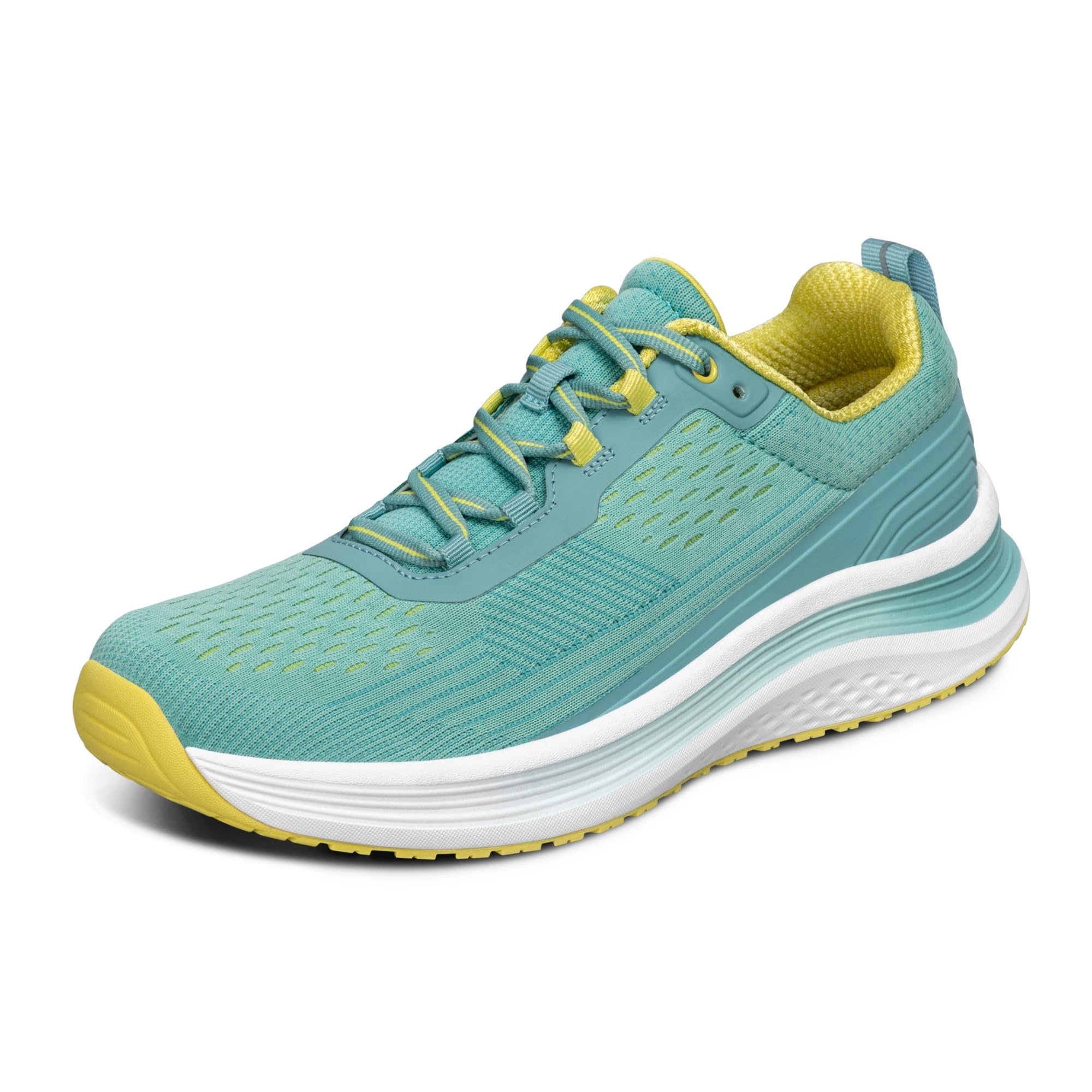
4. Orthofeet Relay Orthopedic Women’s Running Shoes
Built to swallow your custom orthotics without pinching your toes
If you already wear prescription inserts, the Relay is engineered around them. The Ortho-Cushion system pairs a built-in orthotic insole with a shock-absorbing sole, and the insole lifts out so your own orthotic fits in the extra depth. The box even includes fitting spacers and an arch booster in most styles, so you can fine-tune how much lift sits under your arch. It weighs 2.2 pounds, which is light enough for long walks.
What people notice is the room. The toe box is wide enough that toes sit without folding, and the shoe forgives a little extra length — a comfortable fit for people with flat feet, rheumatoid arthritis, and general foot pain. The heel cup is sculpted, the sole absorbs impact, and the looks avoid the heavy orthopedic look.
The fit is the wild card. Sizing across colors and widths is reportedly inconsistent — a white 10 wide can run long and slightly tight, while a black 10 extra-wide can come narrower and shorter. Some wearers find the top lacing grommets sit high and the tongue feels thin. Ordering your true size and trying before a full day is the smart move.
What works when it fits
- Insole lifts out and extra depth holds custom orthotics
- Roomy toe box and sculpted heel cup
- Includes fitting spacers and an arch booster
- Shock-absorbing sole that softens each step
What to plan around
- Sizing varies across colors and widths
- Top grommets sit high and thin tongue bugs some wearers
- No narrow width option
Match for you: custom-orthotic wearers who need a deep shoe that will not fold the toes.
Keep looking if: you have a narrow foot — there is no narrow width, and a standard pair may run too wide.
5. OOFOS Womens Oomy Stride
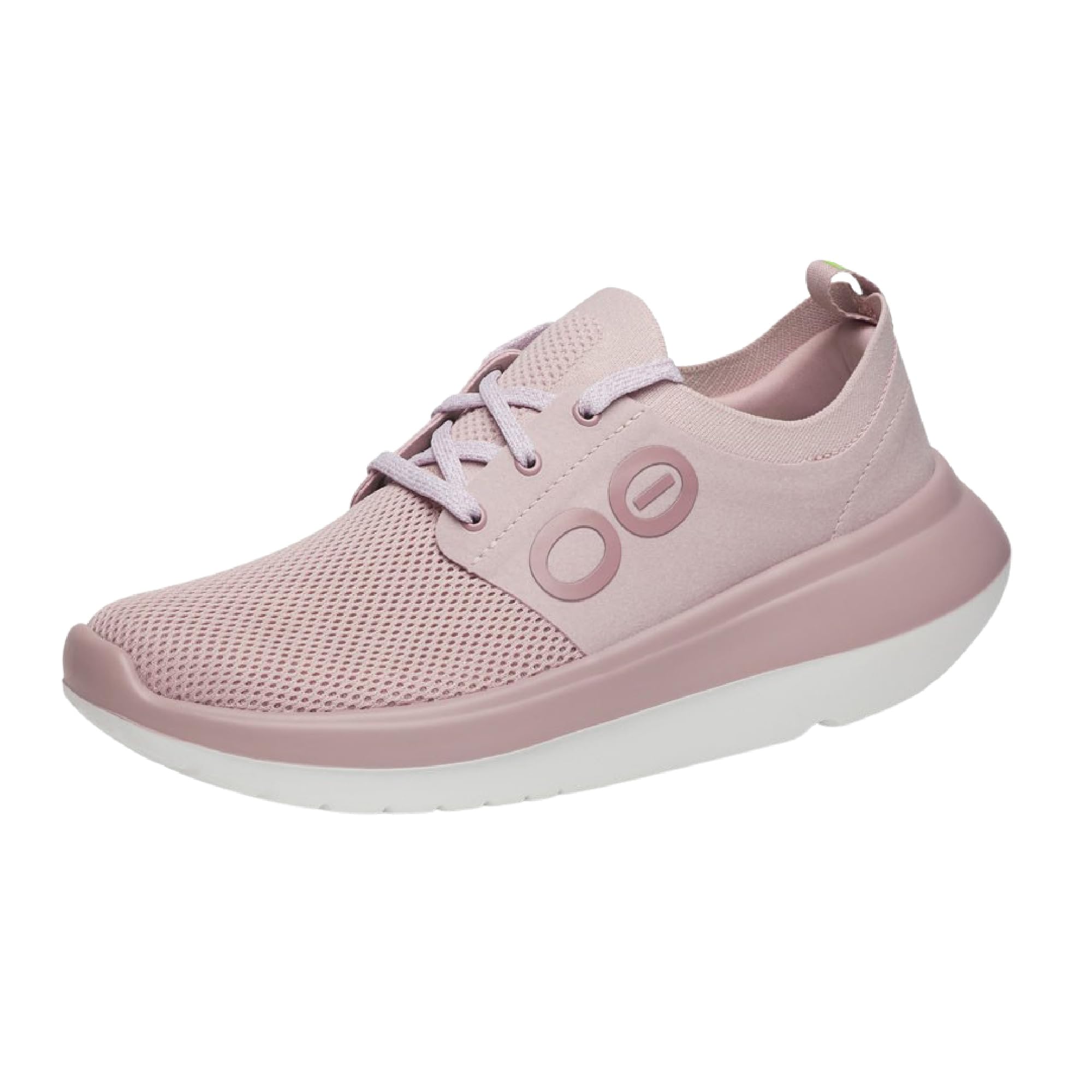
A cushiony recovery sneaker that feels like a sock with a soft sole
Recovery footwear is a whole category, and OOFOS built the Oomy Stride to relieve pressure on your feet and legs with support under the arch. The top feels like a sock, the sole is cushy, and the base is wide enough that owners describe feeling stable. One walker who averages 3 miles a day found the wide toe area helped a bunion and the cushioned sole helped plantar fasciitis.
Owners say physical therapists and orthopedic doctors pointed them to this shoe, and the rocker bottom is what draws their attention for knee and heel issues. It also makes a light, breathable daily shoe for gym classes and 8-hour shifts.
Durability is the recurring note. The foam is light and can wear faster than expected, with one account of soles worn through in a couple of months of light walking. Complaints about the foam wearing out are a small share of reviews, but they are real. The elastic tongue bothers some wearers with neuropathy around the ankle top. If you want a shoe for recovery days rather than a marathon, the cushioning earns its keep.
The comfort case
- Cushy sock-like upper with a cushioned, wide-based sole
- Supports the arch to relieve pressure on feet and legs
- Rocker bottom helps a forward, rolling stride
- Lightweight and breathable for all-day wear
The durability note
- Foam can wear through sooner than expected on hard surfaces
- Elastic tongue bothers wearers with ankle neuropathy
Pick this if: you want a soft recovery shoe for the days after hard walking, when standing still hurts.
Look past it if: you need a single pair to survive months of concrete at work — the foam here trades lifespan for softness.
6. Orthofeet Tilos Orthopedic Men’s Sneakers

The men’s orthopedic sneaker that slips on and lets you stack in support
For a man who wants to put the shoe on without bending and tugging laces, the Tilos is the practical answer. The Ortho-Cushion system layers a built-in orthotic insole, a shock-absorbing sole, and a roomy pressure-free fit. It ships with up to four inserts and an arch booster, so you can dial in exactly how much support sits under your foot. A 73-year-old with type 2 diabetes in a size 13 extra-wide called the deep toe box the best feature.
Owners who stay on their feet all shift — nurses in scrubs, long commuters — report the heel discomfort and nearly all the back pain ease once the inserts are dialed in. It is very light, wears like a slip-on once the laces are converted, and holds up at a few weeks of daily wear.
Two things to know. It runs about a half to full size big, so you may need to size down or use the included risers. Some wearers find the styling plain. The 76-year-old who bought a second pair for a walking trip mentioned the shoes squeak — but inserting the plastic arch booster stopped it.
Customizable support: up to four inserts plus an arch booster let a high or low arch find its own level, and the extra-wide deep toe box keeps toes from touching the end.
Fit honesty: expect to run a half to full size big and use the risers to firm up the height.
Best for: men who want slip-on ease with adjustable, stacked support and a deep toe box.
Not for: uneven ground — the flatter sole is happier on streets and floors than trails.
7. OrthoComfoot Women’s Orthopedic Trail Shoes
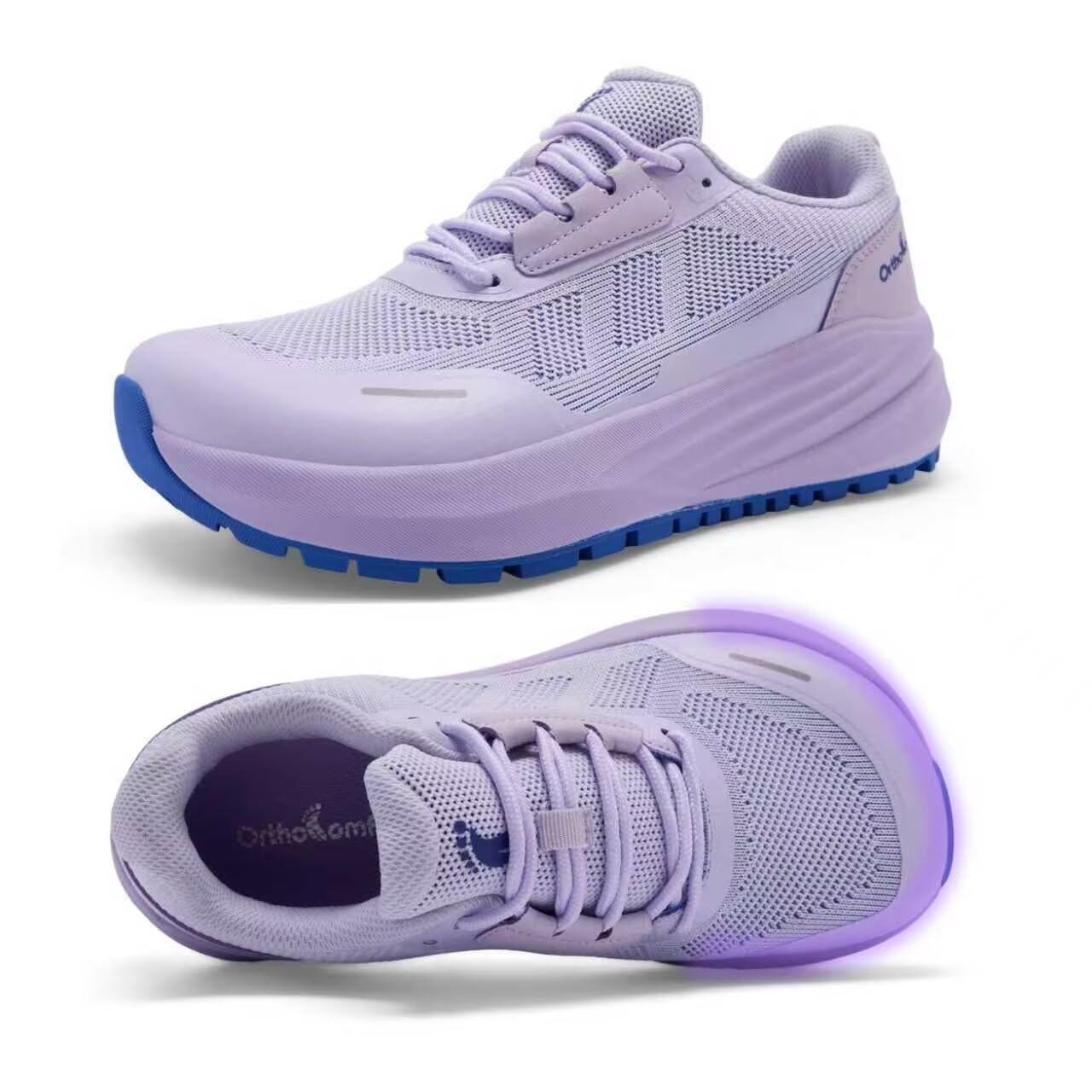
Wide-toe trail shoes with grip for uneven ground and long shifts
Most orthopedic sneakers hate gravel and roots. This one is built for it, with non-slip grip tread and a wide toe box that keeps toes spread on uneven surfaces. It comes with multiple insoles so you can pick your cushion level, and the wide design fits various foot shapes. A CNA working 12-hour shifts and 10 miles a day reports it stays comfortable all shift against the pricier Brooks.
The comfort story is the strongest part: a spongy, cushioned feel underfoot and a toe area with real room. It is built for walking, hiking, and long days on your feet.
Sizing is the risk. If your foot is only wide at the toe, size down — the shoe is wide everywhere, and a 7.5 wide can fit a whole-number foot with hammertoes. The lace loops are fragile enough to break within a week for some wearers, and the heel can feel loose like a flip-flop. For plantar fasciitis, this is not the strongest pick on the list; it is more of an all-terrain comfort shoe.
Terrain-ready: non-slip grip, multiple insoles, and a wide toe box make it the most outdoor-capable shoe here.
Fit warning: it is wide throughout, so a narrow heel can slip and laces need a careful first tie.
Choose this for: trail walks, gravel paths, and long shift work where grip and toe room matter most.
Skip if: you need rock-solid heel lockdown for plantar fasciitis — the heel here is roomier than some want.
8. Orthofeet Naya Orthopedic Women Walking Shoes
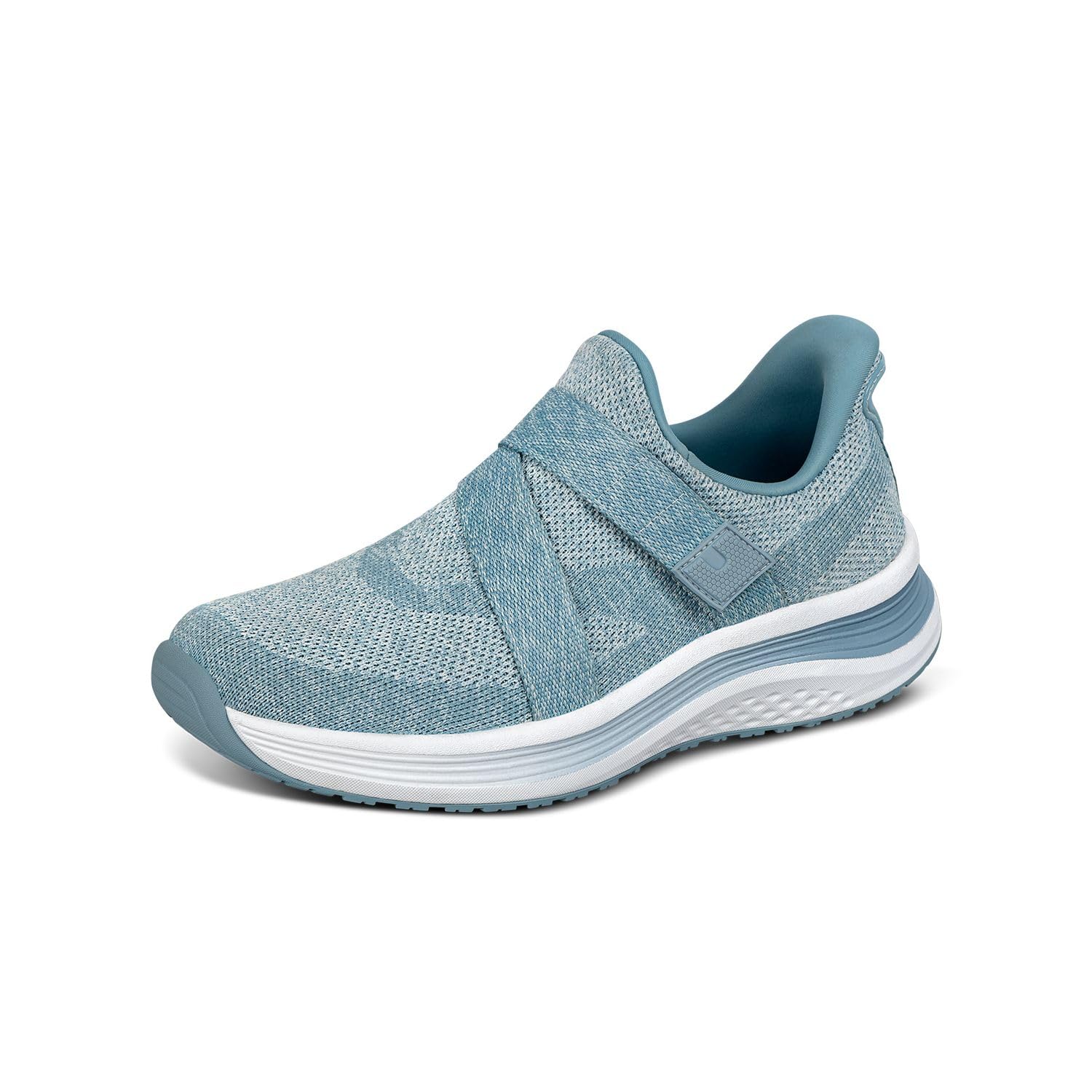
Step in without hands, with a deep footbed and a rocker that rolls you forward
If bending to tie shoes has become its own pain, the Naya is a step-in that skips the laces entirely. It uses a criss-cross adjustable band across the top instead, plus the Ortho-Cushion system with a built-in orthotic insole and anatomical arch support. The extra-depth design and roomy toe box ease pressure on bunions, hammer toes, and swollen feet. One owner two years into a pair with arthritis and bad knees calls it a godsend that keeps her balanced and reduces fall risk.
The soles are near-rigid with a rocker front, which lets you walk smoothly without bending a painful toe joint — good after big-toe surgery. The traction is solid on floors, and owners mention it machine-washes without falling apart. The heel cushioning is soft enough that owners describe sinking into a pillow.
Fit is the mixed part. The foot opening runs a little small for larger ankles, and one wearer found the shoe runs smaller than the size indicates with a high arch. Some find the foam compresses noisily in the sole. Ordering a half size larger in a wide width worked for multiple buyers.
The easy-wear perks
- Hands-free step-in with an adjustable cross band
- Extra depth and roomy toe for bunion and hammer toe relief
- Rocker front lets you walk without bending the toes
- Machine-washes and keeps its shape
Where it can pinch
- Foot opening runs small for larger ankles
- Some units squeak or compress noisily underfoot
Tailored to: anyone who cannot bend to tie shoes and needs a deep, roomy fit with a rolling stride.
Size up if: you have larger ankles — the step-in opening is the one spot that runs snug.
9. OrthoComfoot Women’s Orthopedic Diabetic Wide Running Shoes
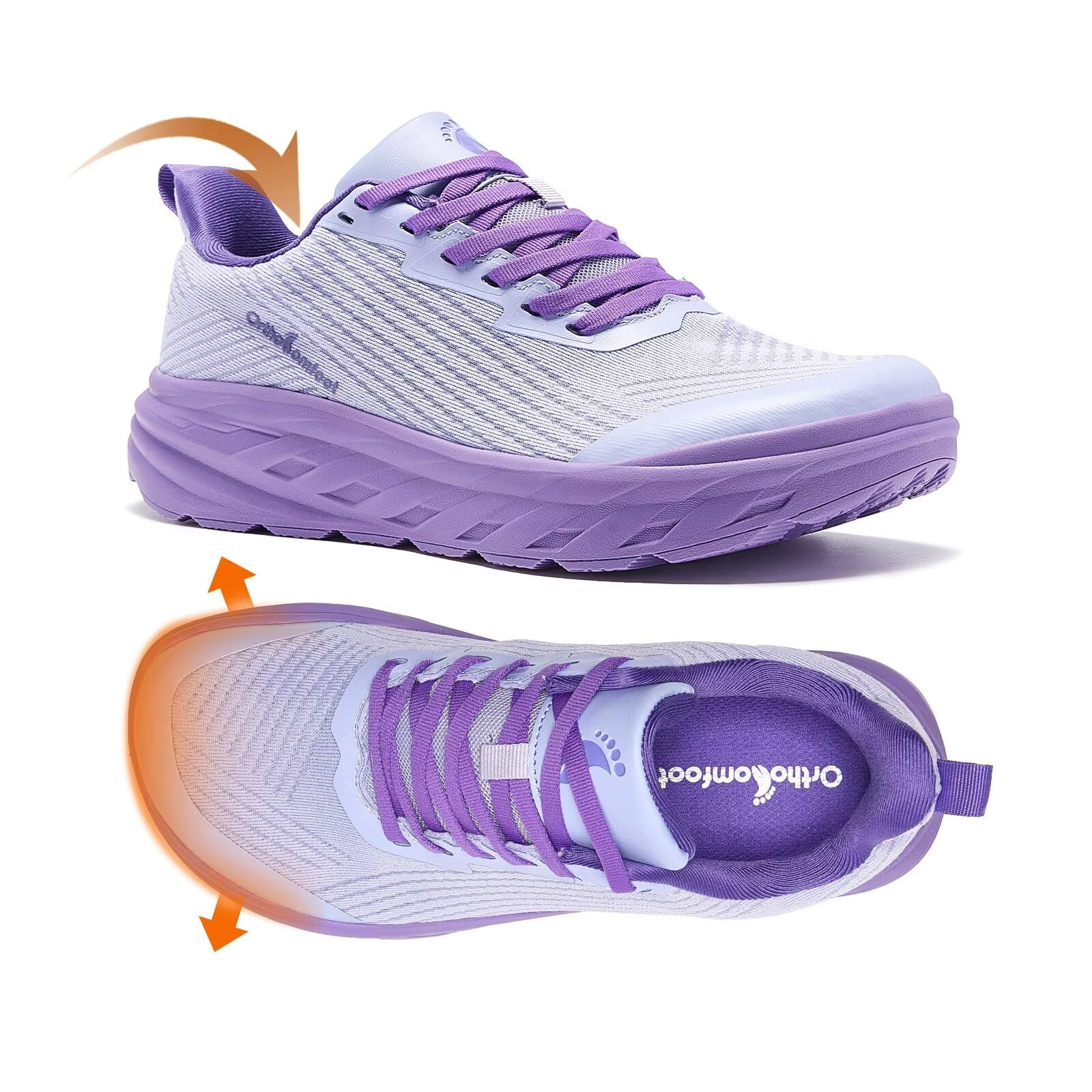
The widest toe box comfort here, at the friendliest entry into the category
This is the pair to look at first if budget matters and your issue is toe pressure. The OrthoComfoot wide runner gives you a genuinely roomy toe box and soft padding, and it fits a custom orthotic. Buyers describe the soft padding as feeling like walking on pillows, and one 7.5 extra-wide owner with a Morton’s neuroma excision found it padded from the first step with no extra insole needed.
It works as a casual shoe, a work shoe for 12-hour CNA shifts, and a comfortable everyday sock-and-shoe for school and errands. The arch support makes owners feel stable, and the breathable upper keeps feet cool. For a wide-footed buyer on a budget, it covers the basics that serious arch support needs.
The sizing is the wild card again. Some find the shoe too big, so a half-size up works for one buyer while a true-to-length foot may float. The wide toe box can read as bulky or clownish to some eyes, and the black sole edge has marked white floors. Build quality feels light enough that a rough daily wearer might see glue or fabric split sooner than on the pricier picks.
Why it is the entry point: a roomy toe box, soft padding, and arch support that fits custom orthotics, at a budget-friendly place in the category.
The trade-off: wide through the whole foot and light in build, so fit and long-term durability are the two questions to weigh.
Good starting point if: wide toes are your main problem and you want in without a premium bill.
Watch the fit if: your foot is narrow at the heel but wide only at the toes — this shoe runs wide all over.
Know the Specs
Cushioning and energy return
Cushioning is the foam under your foot that compresses when you land, then rebounds. More of it softens the heel strike; a higher-rebound foam pushes your step forward. The Brooks Glycerin Max is the softest of these, while the Vionic Walk Strider is firm by design. Pick your softness based on whether your leg pain spikes on hard floors or on long walking distances.
Rocker sole geometry
A rocker sole is curved at the toe so your foot rolls through the step instead of bending at the joint. That can ease walking after toe surgery or when bending hurts. The catch is adjustment — most makers suggest wearing rockers a couple of hours a day for the first few days and starting on flat ground before stairs.
Arch support and insole depth
Arch support holds the middle of the foot up so it does not collapse under load. A removable insole and extra depth mean you can replace the factory insert with a prescription orthotic and still have room for toes. Check that the insole lifts out if you already own custom inserts.
Toe box width and heel stability
A wide toe box spreads your toes and eases bunion and nerve pressure. A firm, sculpted heel cup keeps the heel from sliding and the ankle from rolling. Both matter here: a loose heel cancels the support of a wide toe, and too much width in the wrong place turns support into sliding.
Common Questions
Will a rocker-sole shoe help my sciatica or my leg pain?
How do I know if I need a neutral shoe or a stability shoe?
Can I wear my own custom orthotics in these shoes?
Should I size up or down in these orthopedic shoes?
Will a wide toe box help if my leg pain comes from nerve pressure in the foot?
How long does a pair of these shoes last with daily wear?
Is a slip-on better than a lace-up for someone with back or leg pain?
Can I use these as work shoes if I am on my feet for 12-hour shifts?
Do the firmer shoes like the Vionic need a break-in period?
Will a wider shoe make my foot roll or slip inside?
The Bottom Line
For most people dealing with leg pain on long standing or walking days, the shoes for sciatica pain answer starts with the Brooks Glycerin Max, because its plush high-rebound cushioning softens the heel strike and it tops the list at 4.5+ stars across 600+ owners. If a rocker sole is what your heel needs, the Gravity Defyer Mighty Walk rolls your step forward for concrete floors. And if you simply need a wide, roomy toe box without the premium bill, the OrthoComfoot Wide Running is the smart entry point.
How we choose
We do not accept paid placement. Every pick is matched to a real buyer and a real use-case; we do not hands-on test units.
Sources
Specifications: manufacturer listings and product documentation. Review insights: verified customer reviews, as of October 2026. Pricing: not shown on this page (it changes often); check the current price via the retailer link.
As an Amazon Associate, Aappliancez earns from qualifying purchases. This does not affect which products we feature.