Disclosure: Some links in this post are affiliate links. As an Amazon Associate I earn from qualifying purchases, at no extra cost to you. Learn more
Specs are compiled from manufacturer listings and verified buyer reviews and can change over time — please confirm the key details on the product page before buying.
Most sneakers fight your orthotics. The footbed is glued in, the toe box is shallow, and your custom inserts push your heel up until it slips. The fix is simpler than most people think: buy a shoe with a removable insole, real depth under the foot, and a firm heel counter. This guide covers seven pairs that give your inserts somewhere to live — and tells you which ones actually hold up.
This guide is built by comparing the manufacturers’ published specifications and the patterns across verified customer reviews, so you get each pick’s real strengths and trade-offs instead of marketing spin.
You will see which pairs take a custom insole without squeezing your toes, which ones suit wide feet, and which ones need a half size up. The short version is that shelling out for shoes for orthotics works only when the shoe leaves room for the insert.
Top Picks
How To Choose Shoes That Fit Your Orthotics
The rule that decides everything: if the factory insole is glued in, your orthotic has nowhere to sit. A shoe with a glued-in footbed stacks your insert on top of padding you did not ask for, and the whole fit shifts.
Check the depth under your foot
Depth is the space between your heel and the inside of the shoe. A deep shoe swallows a bulky orthotic without lifting your heel out of the collar. A shallow shoe pushes your foot up and your heel starts to ride. Look for a maker that lists extra depth or ships fitting spacers — the Orthofeet Tilos is the clearest example here.
Match the drop to your insert
Heel-to-toe drop is the height difference between the heel and the ball of your foot. The Ryka Devotoin X Max lists a 10 mm drop, which is a moderate tilt that many walking shoes share. A big drop plus a thick insert can tip you forward; a flat shoe plus a thick insert pushes your heel up. Buy the shoe built around the footbed you actually wear.
Give your toes real room
A wide toe box keeps your forefoot from pressing against the upper. That matters more once you add an orthotic, because the insert eats width as well as depth. Several picks here come in wide fittings, and the OrthoComfoot is built wide from the start. If you have a bunion or a neuroma, start wide and stay wide.
Side-by-Side Comparison
| Model | Best For | Removable Insole | Width Options | Stated Weight / Drop | Amazon |
|---|---|---|---|---|---|
| Skechers Women’s Arcade See Ya There★ Best Overall | All-day wearing with a built-in arch | — | Wide available | — | Amazon |
| Vionic Women’s Walk Max SneakerTop Performer | Walking with a contoured footbed | — | — | 1.8 inch heel height | Amazon |
| Dr. Scholl’s Be True Sneaker | Wide toe box on a budget | — | — | — | Amazon |
| Ryka Devotoin X Max Walking Shoe | Fitness walking with shock absorption | — | — | 244 g / 8.6 oz per shoe; 10 mm drop | Amazon |
| Dr. Scholl’s Time Off Win Sneaker | Travel and long walking days | — | Wide available | — | Amazon |
| OrthoComfoot Orthopedic Wide Running Shoes | Wide, deep fit with extra insoles | Yes — extra insoles included | Extra-wide up to 7.5 EW in reviews | — | Amazon |
| Orthofeet Tilos Orthopedic Men’s Sneakers | Custom orthotics and deep toe box | Yes — removable, extra depth | Up to 13 extra-wide in reviews | — | Amazon |
Detailed Reviews
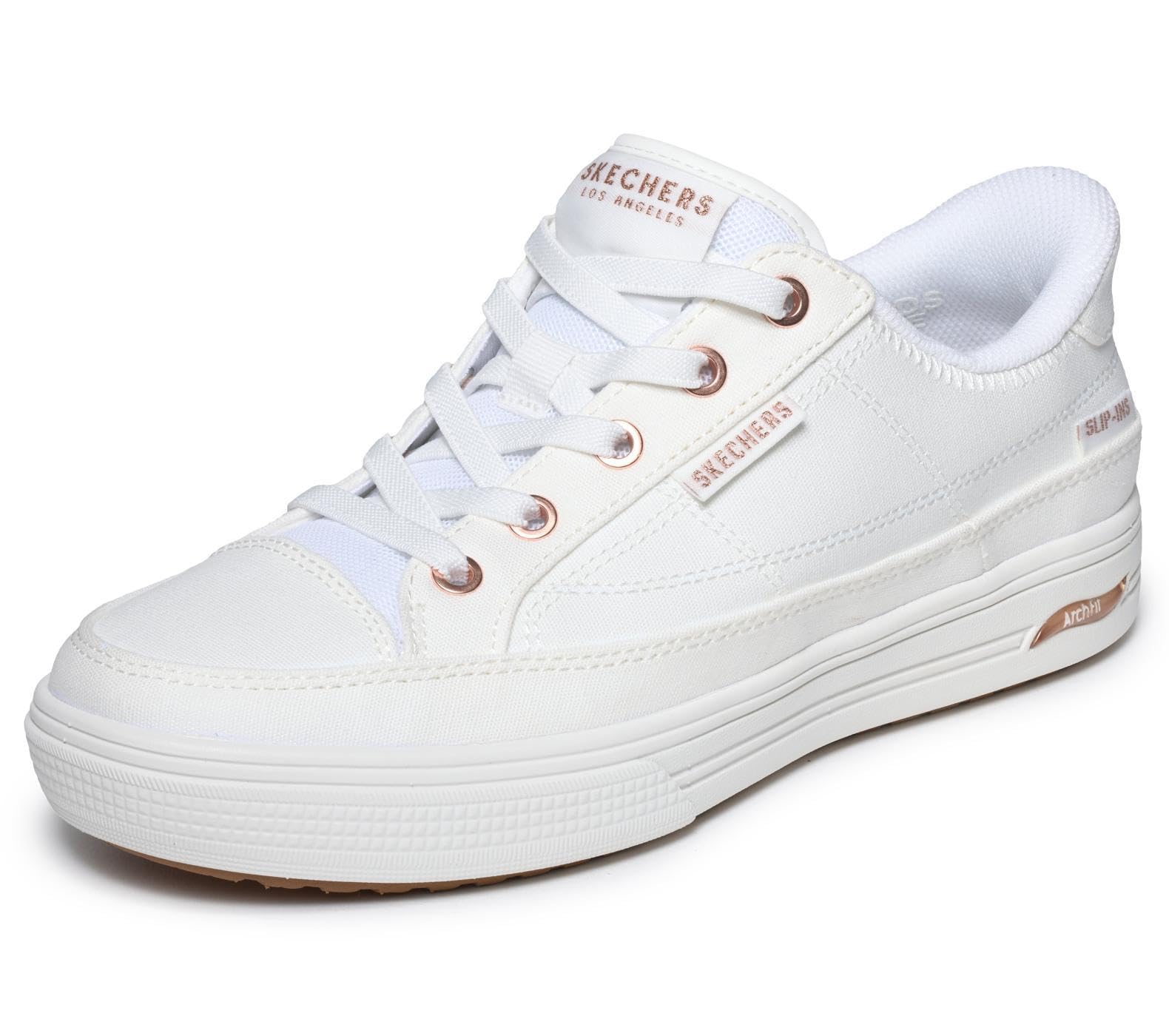
1. Skechers Women’s Arcade See Ya There
Our pick — 4.0+★ from 1,000+ verified ratings; the strongest balance of quality and price.
The slip-on you can kick off at the door and still wear all day.
What wins people over here is the comfort, and the arch support is the reason it earns the top slot. Skechers builds the Arcade with an Arch Fit footbed already shaped under the foot, so you get a supported base the moment you slide in. Owners describe walking and standing for whole days without the end-of-day ache. That is the crowd favorite in this lineup at 4.0+ stars across 1,100+ ratings.
The slip-in entry is the second thing people love. You step down and the heel settles without you bending to tug it on — useful when you are carrying groceries or holding a leash. It also comes in wide, which is the fitting that matters if your orthotic adds bulk across the forefoot. As buyers report, one wide-fitting owner sized down to an 8.5 Wide for length and found the wide cut genuinely wide.
The catch is sizing. Skechers runs this model large and the fit pulls in both directions — some find it too big, some find the upper snug across the top of the foot. A few describe a heel that wants to lift at first. The practical move is to try them indoors for a few hours before you commit, because the upper softens as you wear it.
Where the Arcade pulls ahead
- Arch Fit footbed gives built-in support with no extra insert needed
- Slip-in heel lets you step in without bending down
- Comes in wide, so a thicker orthotic has somewhere to go
- Owners mention full days of walking without foot soreness
Where buyers hit friction
- Runs large — expect to size down, especially in wide
- Upper starts stiff and needs a short break-in
- Some find the top of the foot tight before it loosens
Reach for this if: you want a supported shoe you can step into hands-free and wear from school run to errands.
Try something else if: you need a shoe that swallows a thick rigid insert — the depth here is not listed as extra.
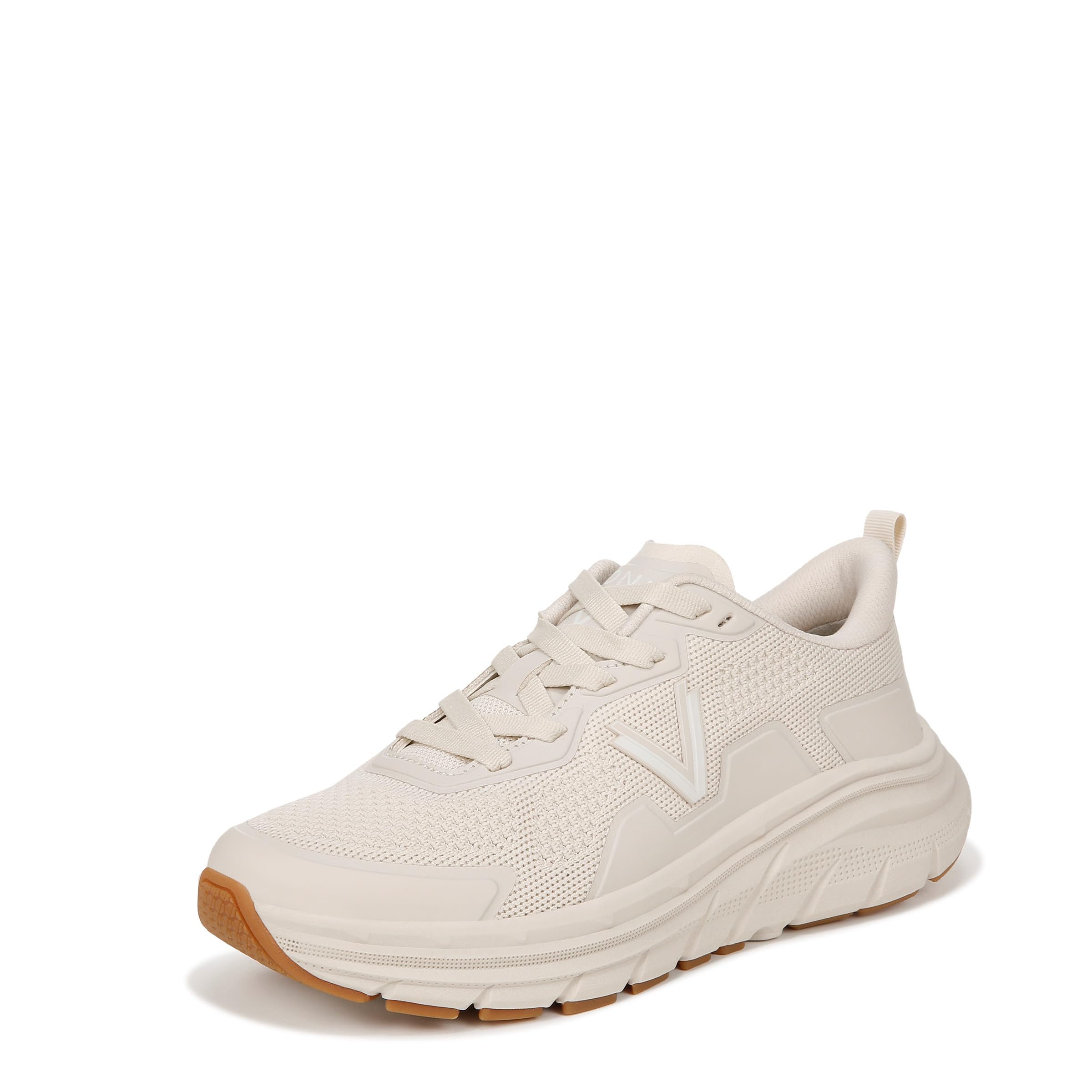
2. Vionic Women’s Walk Max Sneaker
A walking shoe with a contoured footbed already built in — no insert required.
Vionic hangs its whole pitch on one piece: the VIO MOTION footbed, a contoured arch support built into the shoe with forefoot flexibility. The maker says the contoured arch helps correct pronation and promote full-body alignment, all on a 1.8 inch heel height. If your orthotic is thin or you sometimes leave it at home, this footbed carries you. The comfort count here beats every other Vionic stat, and the arch support follows close behind.
Under all that sits a nitrogen infused midsole — the maker calls it their lightest yet, built for high rebound to push your walking motion along. The upper is breathable mesh, and the whole shoe is treated with a water repellent coating so drizzle beads off on contact. There is a perforated heel in the Vio-Flex footbed for airflow, and the maker notes it takes one to two weeks for your feet to adapt to the shaping.
Honesty time: this is a 4.0+ star shoe with real mixed feedback on fit and build. The consistent note is that it runs large, so a half size down is odds-on the right call. Cushioning splits opinion too — some find it plush, some want more under the forefoot. If you are between sizes or want a snug glove fit, size deliberately.
The walking-motion maths: a rebounding midsole under a contoured footbed is a genuinely different build from the Skechers above, which relies on its Arch Fit shape rather than a compression midsole.
The honest caveat: construction complaints exist, and the shoe rewards a careful size pick more than most. Fit it right and it walks well.
Best for: walkers who want arch support baked into the shoe and rarely wear a separate insole.
Size down if: you sit between two sizes — the fit runs generous.
3. Dr. Scholl’s Shoes Women’s Be True Sneaker
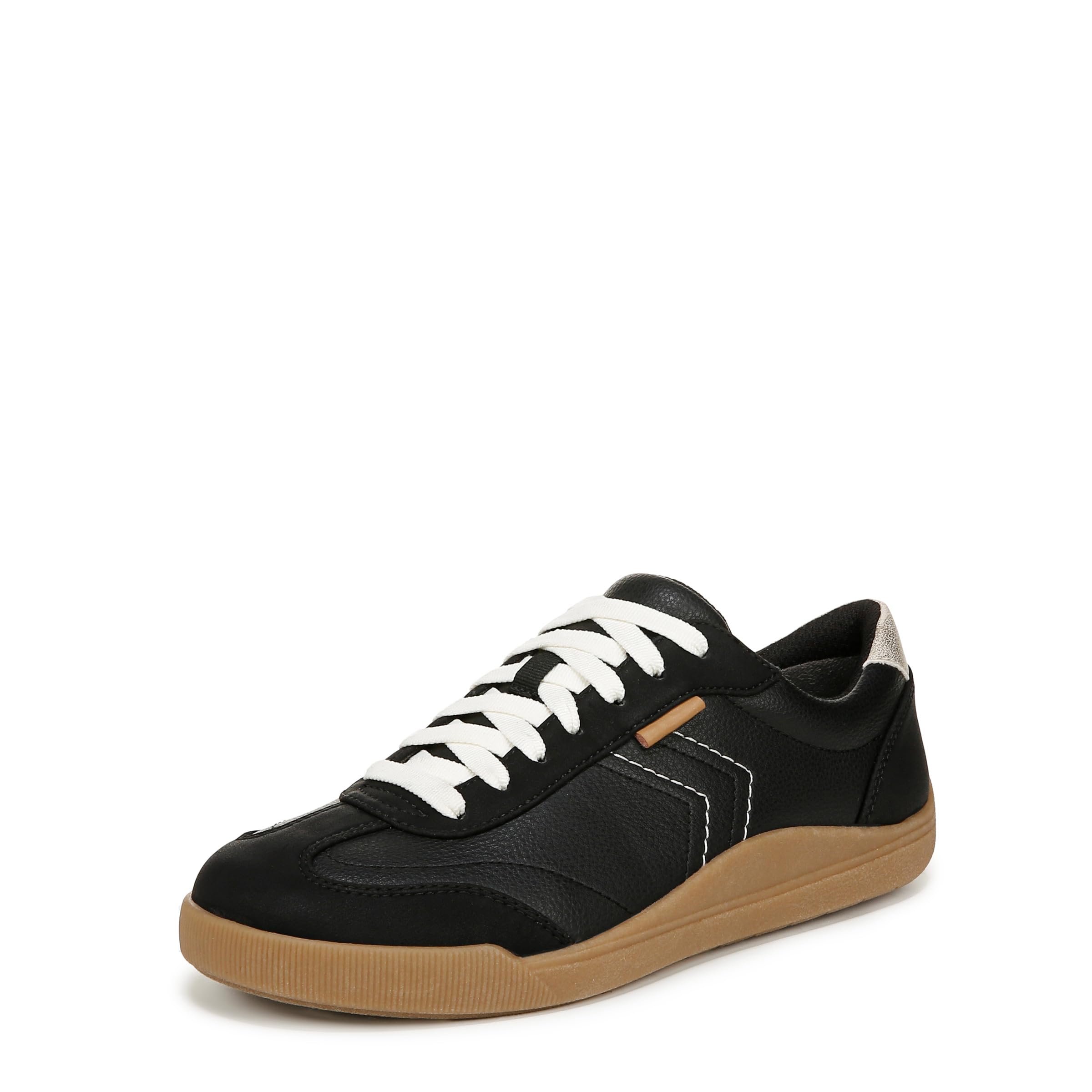
The budget pick that gives bunion-prone toes somewhere to spread.
Start with the shape, not the price. The Be True runs on a wide toe box that owners keep coming back to — one buyer with a tailor’s bunion found the box and cushioned insole suited her feet where narrower shoes had not. That same wide front makes it a natural fit for a forefoot orthotic, because the insert has width to sit in without pinching.
Second win: these go in the washing machine. Customers note two wash cycles and the shoes coming out clean and holding together. That is rare at any price and genuinely useful for a light-coloured pair you wear daily. As owners put it, one described the feel as “like wearing socks but with strong support.”
The sizing is the one thing to get right. The fit is not consistent across sizes — some lengths run long with the width fine, others run tight across the width with length good. A 4-star buyer kept a pair to break in and still found it snug weeks later. Order your usual size first and be ready to swap.
What earns its place
- Wide toe box suits bunions and a spread forefoot
- Cushioned insole underfoot without a stiff, clunky sole
- Machine washable — reviewers point out it survives repeat cycles
- Versatile enough for jeans, slacks and dresses
The trade-offs to weigh
- Fit swings between sizes — long in some, tight in others
- Light colours show dirt quickly
- Not listed as extra depth for rigid orthotics
Worth it for: a wide-forefoot wearer who wants a washable everyday sneaker that takes a slim insert.
Look elsewhere if: you need deep fitting room for a thick rigid orthotic — this is not built for that.
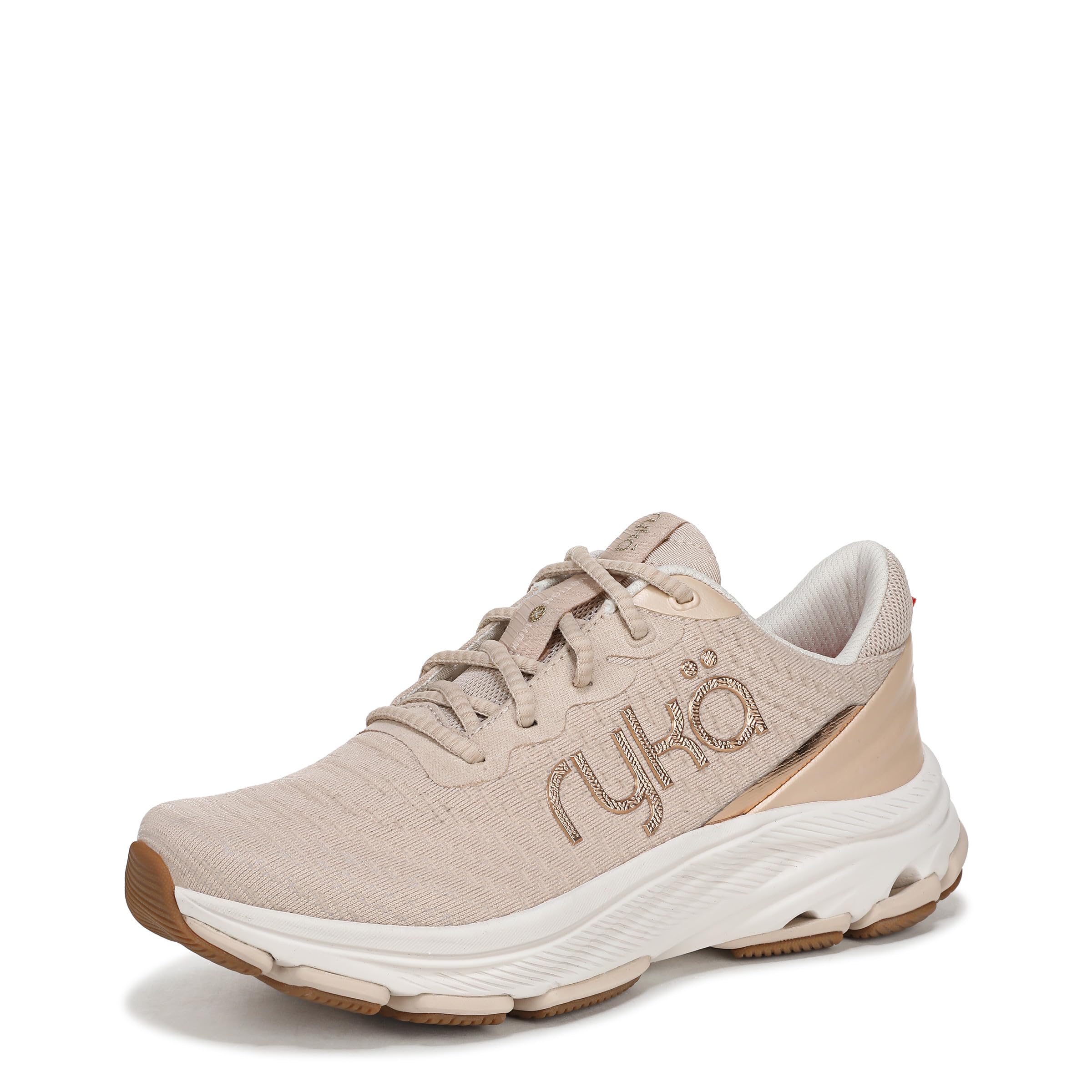
4. Ryka Women’s Devotoin X Max Walking Shoe
A walking shoe with shock absorption built for pounding the pavement.
The number to know is 244 g — 8.6 oz per shoe — which keeps this one of the lighter builds in the lineup. Underfoot is a full-length RE-ZORB responsive cushioning layer, plus RE-ZORB LITE pads in the forefoot and heel for shock absorption. The maker says lab testing showed low braking and impact forces with very high perceived cushioning. The insole is anatomical, with extra arch support and a heel cup, set on partially recycled EVA.
The heel-to-toe drop sits at 10 mm, which is a moderate tilt that suits a walking stride. Owners who walk daily report it holds up over 4 to 6 mile routes, and the padded tongue and heel collar keep the fit secure without rubbing. Breathable air mesh keeps the upper light, and a durable molded heel overlay stiffens the back of the shoe — helpful if you want a heel counter that secures the ankle while your insert does the arch work.
Two honest notes. One shortlisted wearer with thick custom orthotics found this style too narrow even though she loves the brand — so if your inserts are bulky, order a wide or go to the Orthofeet below. And a few long-time Ryka owners say the newer generations feel less cushioned than older models.
What it does well: shock absorption at a genuinely light 8.6 oz, with a 10 mm drop that suits walking rather than sprinting.
The limit to know: narrow build for thicker orthotics — this is one to buy in wide if your insert is anything but slim.
Pick this for: long daily walks where your knees and heels want the impact taken out.
Skip the standard width if: your orthotic is thick — go wide or size up.
5. Dr. Scholl’s Shoes Women’s Time Off Win Sneaker
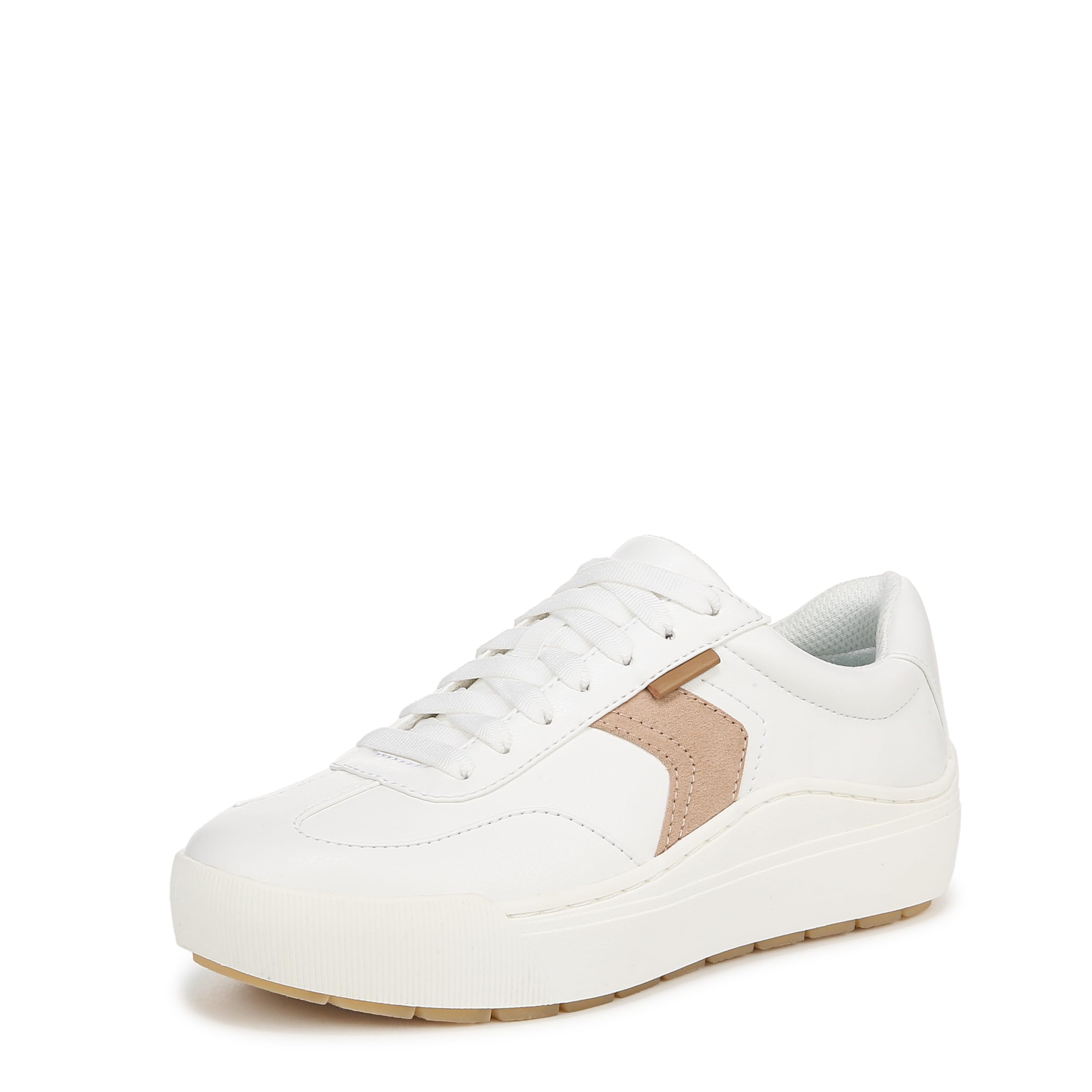
The retro-looking pair that survives a full week of city miles.
Comfort runs this shoe, and the quality count sits right behind it — this is the pair owners reach for on trips. One buyer walked a week through Ireland in them without a single issue, and another called them perfect Europe walking shoes with no blisters and no tired feet after miles. The insole carries arch support, which flat-footed wearers in the reviews said served them fine.
The look is the draw if you want a shoe that reads more fashion sneaker than trainer. It is not bulky and does not overstate a larger foot, and it pairs with everything from shorts to dresses. Wide sizing is available, so a slim orthotic has a better chance of fitting in the wide cut.
Here is the thing to plan for: this model runs a full size small. Multiple buyers went up a size, including one who normally wears a 7 and needed an 8. The ankle collar also sits high enough to rub an ankle bone on some feet. Sizing up fixes the length; whether the collar suits you depends on your ankle shape.
Get this if: you want a travel sneaker that looks like fashion but walks like a support shoe.
Go up a size: this model runs a full size small, and the high collar needs checking against your ankle.
6. OrthoComfoot Women’s Orthopedic Wide Running Shoes
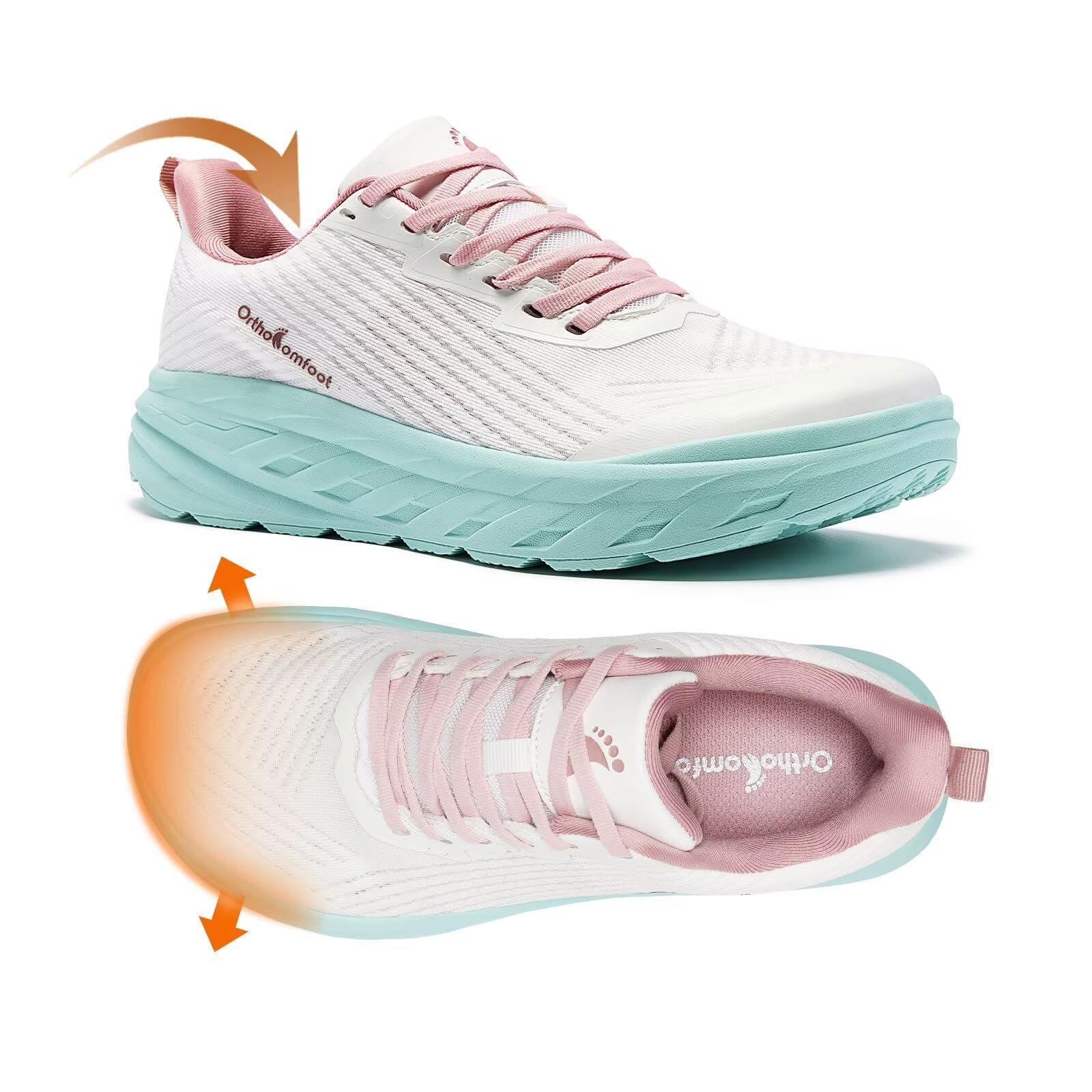
Comfort-first build that ships with spare insoles for a custom fit.
If your orthotic is thick, start here. The OrthoComfoot is built wide from the outset, with an extra-wide 7.5 fitting that one buyer with a Morton’s neuroma excision described as having ample toe room and needing no extra insoles. The shoe also ships with a spare set of TPU insoles — the maker’s trick is that those go under the original insole for a loose fit, not in place of it.
Cushioning is the other headline. Shoppers say it feels like walking on pillows, with soft supportive padding and a roomy toe box that keeps toes spread. One wearer who works 12-hour hospital shifts credits that toe spread with helping prevent ingrown nails. Breathable uppers keep it light for long wear.
The compromise is looks and build. The wide toe box reads a little shy of fashionable — one buyer called it clown-shoe territory and chose comfort anyway. And at 4.0+ stars the build quality is the mixed note: some expect the glue and fabric to split over time. Expect soft comfort rather than a shoe you will pass down.
Why it works for inserts
- Extra-wide fitting with a roomy toe box
- Spare TPU insoles included for a firmer or looser fit
- Soft, pillow-like cushioning underfoot
- Ideally suited to long standing or walking shifts
Trade-offs to know
- Wide toe box looks bulky, not fashionable
- Build quality draws mixed notes — treat it as a comfort-first pick
- The sole left some black scuff marks on light floors for one buyer
Best for: wide feet and thick orthotics that need deep, roomy comfort over looks.
Not for: anyone wanting a sleek silhouette or a long-lifespan build.
7. Orthofeet Tilos Orthopedic Men’s Sneakers
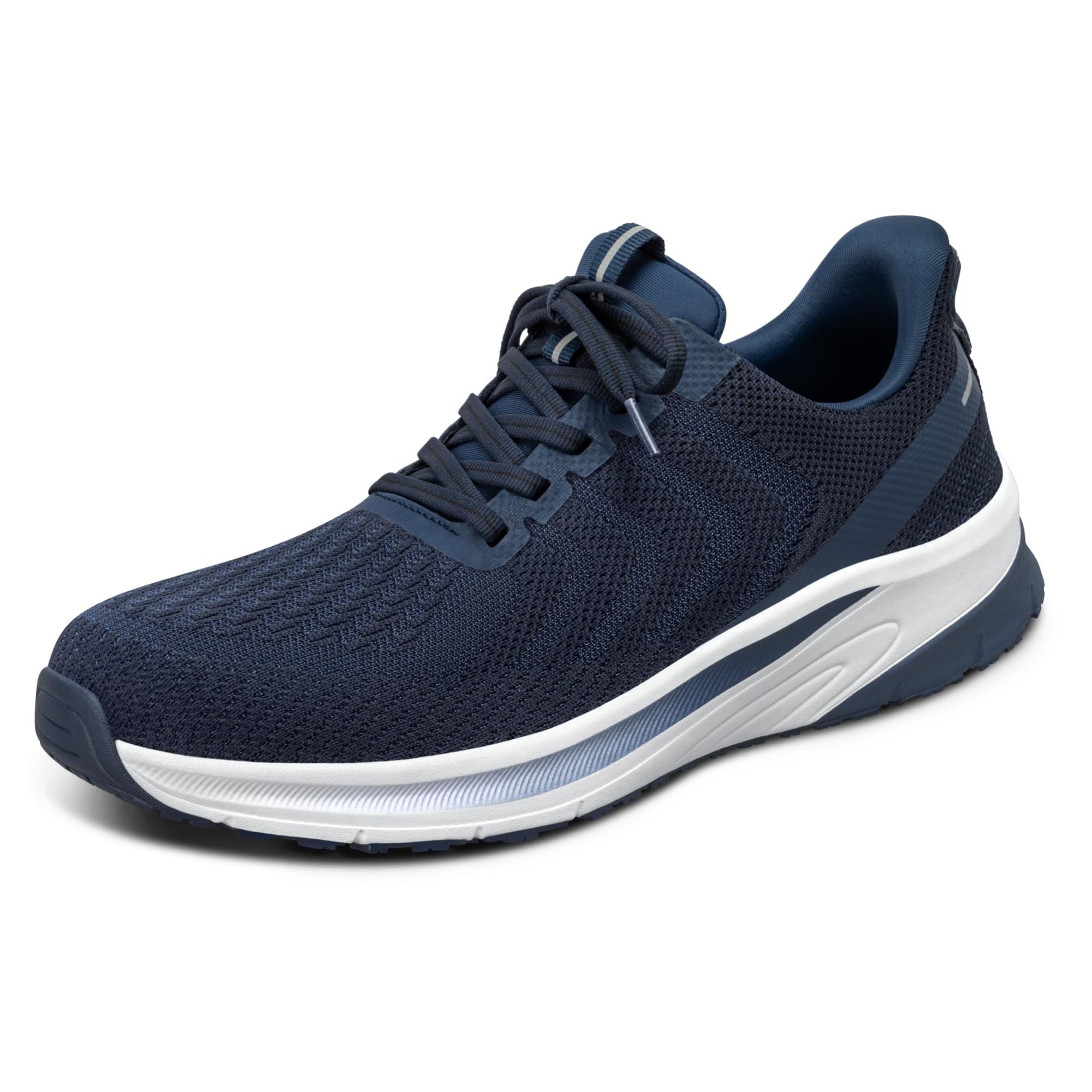
Built from the insole up to hold a prescription orthotic — extra depth included.
This is the one designed around the footbed you bring. The Ortho-Cushion system pairs a shock-absorbing sole with a built-in orthotic insole, and the insole is removable with extra depth to accommodate most custom orthotics. Orthofeet also ships fitting spacers and an Arch Booster, so you can tune the fit as you go. It is the clearest orthotic-ready build in this lineup, and the reviews back the intent — one wearer with prescription insoles said they show little wear after 3 months.
Comfort and quality are the two top ratings here, and review after review mentions the adjustability. A size 9 2E buyer found the fit loose and used the included 1/8 and 1/16 risers, two sets of each, for a firmer hold. The laces convert to slip-on wear. An extra-wide 13 wearer with type 2 diabetes called the deep toe box the best feature. Comfort is the number that leads the feedback, with quality directly behind.
The honest notes: the styling is plain, and at 4.0+ stars the fit is the one thing owners disagree on. Some find it runs a half to a full size big, so start by dialling in the risers before you assume it is wrong. The soles also squeak on hard floors for some, though the arch booster insert quiets that. Splash out here if a prescription insert has to fit cleanly.
The build that matters: a removable insole with extra depth, fitting spacers and an Arch Booster — this is the only pick here built expressly around custom inserts.
The one gripe: sizing runs generous, and the squeaky sole is the recurring note. Both are easy to work around.
Choose it when: you wear a prescription orthotic and need depth plus adjustability to seat it properly.
Start with the risers: the fit runs big, and the included spacers are how you land it.
Know the Specs
Removable insole and extra depth
Removable insole means the factory footbed lifts out so your orthotic can sit flush against the shoe. Extra depth is the room underneath that footbed. When a shoe has both, your insert sits low instead of stacking on padding — so your heel stays inside the collar and your toes are not crowded. The Orthofeet Tilos lists exactly this: removable insole, extra depth, and fitting spacers to fill any slack.
Heel-to-toe drop
Drop is the height difference between heel and ball, measured in millimetres. A drop of 10 mm, like the Ryka Devotoin X Max, gives a slight forward tilt that suits a walking stride. A big drop under a thick insert can push you onto your toes; a very flat shoe can lift your heel against the insert. Match the drop to what your orthotic already does to your foot.
Toe box width and volume
The toe box is the front cavity where your toes sit — its width and height decide whether your forefoot can spread. A wide toe box, like the one on the OrthoComfoot, keeps toes from pressing the upper. That matters more with an orthotic, because your insert takes up width and depth. If you have a bunion or a neuroma, buy wide from the start.
Heel counter and stability
The heel counter is the stiffened cup that wraps the back of your heel and keeps the foot from rolling. A firm heel counter plus a wide base gives you a steadier step, which is why Orthofeet pairs its wide base with a slip-resistant sole. Once your arch is supported by an insole, the heel counter is what stops your foot shifting around on top of it.
Common Questions
Will my custom orthotics fit inside Orthofeet Tilos sneakers?
Do I need to size up when wearing orthotics in these shoes?
Which shoes for orthotics are best for wide feet?
Can I use my own orthotics instead of the shoe’s built-in footbed?
How long should I wear new orthotic-ready shoes each day?
Are these shoes machine washable?
What is the difference between a built-in arch support and a removable orthotic insole?
Which shoe here is best for a deep, wide toe box?
Can I wear these shoes for long shifts on my feet all day?
Do these shoes help with pressure points under a thick orthotic?
The Bottom Line
Here is the practical answer. If you want a supported shoe you can step into without bending down and wear all day, the Skechers Arcade See Ya There is the pick — arch support built in, wide sizing available, and a slip-in heel that does the work for you. If you wear a prescription orthotic and need depth and adjustability to seat it, reach for the Orthofeet Tilos. And for a wide forefoot on a budget, the Dr. Scholl’s Be True delivers a wide toe box and a washable build without over-spending.
How we choose
We do not accept paid placement. Every pick is matched to a real buyer and a real use-case; we do not hands-on test units.
Sources
Specifications: manufacturer listings and product documentation. Review insights: verified customer reviews, as of October 2026. Pricing: not shown on this page (it changes often); check the current price via the retailer link.
As an Amazon Associate, Aappliancez earns from qualifying purchases. This does not affect which products we feature.