Disclosure: Some links in this post are affiliate links. As an Amazon Associate I earn from qualifying purchases, at no extra cost to you. Learn more
Specs are compiled from manufacturer listings and verified buyer reviews and can change over time — please confirm the key details on the product page before buying.
That sharp burn on the outside of your knee that shows up a few miles into every run has a name, and the shoe on your foot can make it better or worse. The short answer: you want a shoe that keeps your foot from rolling inward too far, because that inward roll is what tugs on the tissue running down the outside of your thigh. The picks below all lean stable, cushioned, and roomy enough that your foot lands the same way every stride.
This guide is built by comparing the manufacturers’ published specifications and the patterns across verified customer reviews, so you get each pick’s real strengths and trade-offs instead of marketing spin.
Stability shoes come in three flavors — firm posting, wide-base geometry, and zero-drop roomy fits — and each one changes how your knee tracks. The best shoes for it band syndrome match your foot strike, your mileage, and how much cushion your joints actually want.
Top Picks

How To Choose The Best Shoes for IT Band Syndrome
The band of tissue that travels from your hip down the outside of your thigh controls how your knee bends and straightens. When your foot rolls too far inward on each stride, that band rubs against the bony ridge on the outside of your knee, and the friction is what you feel as a burn or ache. The shoe you wear can change how much inward roll your foot produces, so the choice matters more than most buyers realize.
Look for medial support before anything else
Medial support means there is a firmer patch or a raised sidewall on the inner side of the midsole — the part of the shoe under your arch. That firmness slows your foot as it rolls inward, which reduces the twisting that pulls on the band. Labels like GTS, Guide, and Wave Inspire all signal some version of this design. If your knee pain is worst on longer runs, this is the single feature to prioritize.
Match the cushion depth to your miles
Cushion depth is measured as stack height — the amount of foam between your foot and the ground, given in millimeters. More foam means softer landings and less shock traveling up through your knee and hip on pavement. If you log long road miles or stand on hard flooring all day, a deeper stack pays off. If you want to feel the ground under you for balance work, a moderate stack is enough.
Toe box width and heel drop change your mechanics
Heel drop is the difference in height between the heel and the toe of the shoe, also in millimeters. A low or zero drop places your foot closer to flat, which can reduce the braking force on your knee and encourage a fuller range of motion through your ankle. A wide toe box lets your toes splay as you push off, which gives you a more stable base. Buyers with wide feet or bunions usually notice the difference within the first walk.
Consider the rocker geometry
A rocker sole curves upward at the toe, so your foot rocks forward instead of bending hard at the ball. Shoes with centerline geometry or a rocker shape ease the transition from heel to toe and keep your foot centered in the shoe. That centering matters when your knee pain flares on downhills or on tired late-run strides.
Side-by-Side Comparison
| Model | Best For | Rating | Stability Feature | Fit Note | Amazon |
|---|---|---|---|---|---|
| New Balance Men’s 608 V5★ Best Overall | Everyday walking and all-day standing | 4.5+/5 | Slip-resistant stabilizing support | Wide and X-wide options available | Amazon |
| Brooks Women’s Glycerin GTS 23Best for Knee Support | Women wanting plush cushion with knee support | 4.0+/5 | GTS guidance system | Roomier toe box than Adrenaline GTS | Amazon |
| Mizuno Men’s Wave Inspire 21Top Performer | Runners chasing stability at speed | 4.5+/5 | Secure medial support with ENERZY NXT heel | Connected forefoot outsole | Amazon |
| ASICS Men’s Gel-Cumulus 27 | Neutral runners wanting deep cushioning | 4.5+/5 | PureGEL shock absorption + FluidRide outsole | Extra toe room, true to size | Amazon |
| ASICS Women’s Gel-Cumulus 27 | Women who want lightweight max cushion | 4.0+/5 | PureGEL softness + FF BLAST PLUS foam | Reported to run about half a size large | Amazon |
| Saucony Men’s Guide 18 | Older runners wanting centered stability | 4.0+/5 | Center Path Technology keeps foot centered | Wide toe box | Amazon |
| ALTRA Women’s Torin 8 | Women with wide feet wanting zero drop | 4.0+/5 | FootPod outsole for natural flexibility | Signature FootShape roomy toe box, zero drop | Amazon |
| Saucony Women’s Guide 19 | Overpronators and walkers with knee issues | 4.0+/5 | Softer PWRRUN blend with enhanced forefoot flex | Larger-than-average toe box | Amazon |
| Hoka Men’s Bondi 9 | Max cushion for standing, travel, and recovery | 4.5+/5 | MetaRocker geometry eases knee and back pressure | Buy the Wide (EE) if feet swell | Amazon |
Detailed Reviews
1. New Balance Men’s 608 V5 Casual Comfort Cross Trainer
Our pick — 4.5+★ from 89,500+ verified ratings; the strongest balance of quality and price.
The everyday trainer that people keep buying again once the first pair wears out.
The 608 V5 is the most-proven shoe here — 4.5+ stars across 89,000+ ratings. The leather upper wraps the midfoot snugly and the padded collar and tongue sit soft against your ankle, so you can lace it up and stand on concrete all day without the shoe shifting around. The stabilizing support built into the midsole keeps your foot tracking straight down the road, which is exactly what you want when IT band pain flares on longer walks.
Buyers talk about arch support more than anything except overall quality, and you notice it most in the wide fit. One warehouse worker said it simply: “I work in a warehouse so I’m on my feet most of the day. They have good cushion so when I go home my feet don’t hurt.” The 608 V5 also comes in Extra Wide, and reviewers with genuinely wide feet say the wide version actually feels wide — not just a little more room.
This shoe is versatile in a different way than a running trainer — it works as a walking shoe, a casual sneaker, and a shift shoe all at once. Pair it with jeans or slacks and it disappears into the outfit. It is not a rocker sole and it will not feel like a marshmallow. If you want a squishy long-mileage ride, you are shopping in the wrong tier — look higher up this list at the Hoka Bondi 9 or the Saucony Guide 18.
Where the 608 V5 wins
- Extra wide sizing that buyers report actually delivers on the “wide” promise
- Real arch support built into the midsole, not just a soft insole
- Leather upper with padded collar and tongue for a locked-in ankle feel
- Slip-resistant outsole gives extra grip on wet floors and polished concrete
What to know before you buy
- Laces run long and thick — several buyers swap them out
- Heavy daily wear can push the sole toward the six-month mark
- Firm underfoot, not a plush long-distance feel
Reach for this if: you want a proven all-day walking shoe with real arch support and a wide option that actually fits wide.
Look elsewhere if: you want a super-soft, deep-cushion ride for long road miles — this one is firm and durable instead.
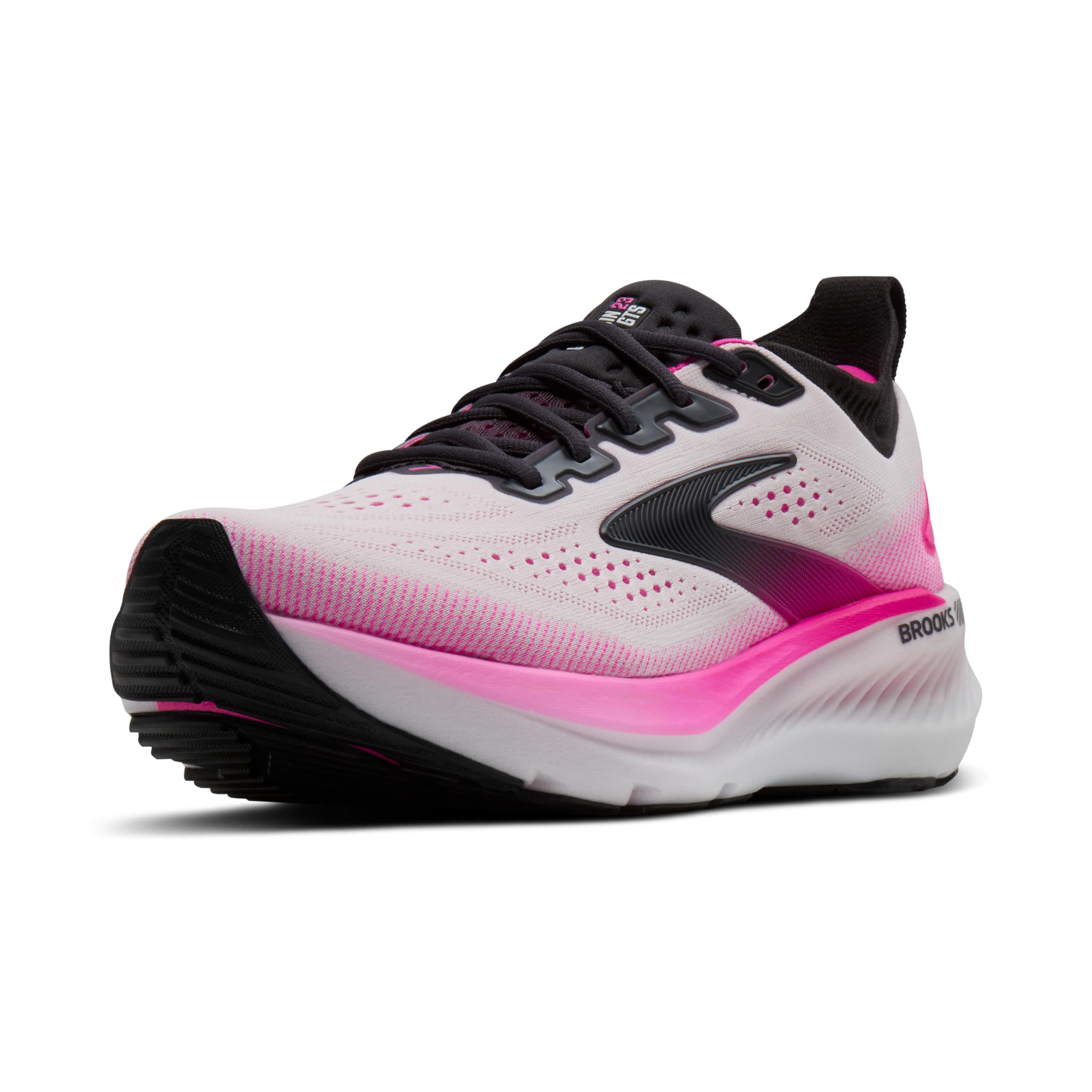
2. Brooks Women’s Glycerin GTS 23 Running Shoe
Plush underfoot but tuned to guide, made for the runner whose knee has been the loudest voice.
Brooks builds the Glycerin GTS with a guidance system rather than a hard wedge, so your foot gets a gentle nudge back toward center instead of a stiff correction. The toe box is roomier than the Adrenaline GTS, which is what pulls long-distance runners over. The cushioning under the ball of your foot stays springy enough that pushing off still feels energetic — 4.0+ stars on a small but committed base of reviewers.
Reviewers keep returning to how this shoe holds up on repeat long runs without the little hot spots that turn into blisters. One owner who switched from the Adrenaline GTS says the roomier front end means no blisters and no sore toenails. Another, returning from knee surgery, jogs and jumps pain-free and calls the fit light, airy, and smooth with no rubbing or slipping. That kind of feedback matters more than any lab number when your goal is simply to run without wincing.
The GTS 23 also looks the part — the colorway options read as a lifestyle sneaker as much as a running shoe, so it slides into everyday wear without looking clinical. The caveat is durability at the very top end of its use. A small number of owners mention the sole separating after around 14 wears, so if you are pushing four-plus runs a week this shoe may wear out sooner than you expect. Treat the GTS 23 as a cushion-first shoe with a support bonus, not a heavy-duty trainer.
What just works: the combination of a roomier toe box and a guidance system, which is a rare pairing in women’s stability shoes.
The honest catch: it runs close to half a size larger in the wide version and the durability stories are split — some pairs last for years, a few do not.
For the cushion fan with a cranky knee: this one.
Size down: if you normally wear a wide — the regular width is reportedly roomy enough for most.
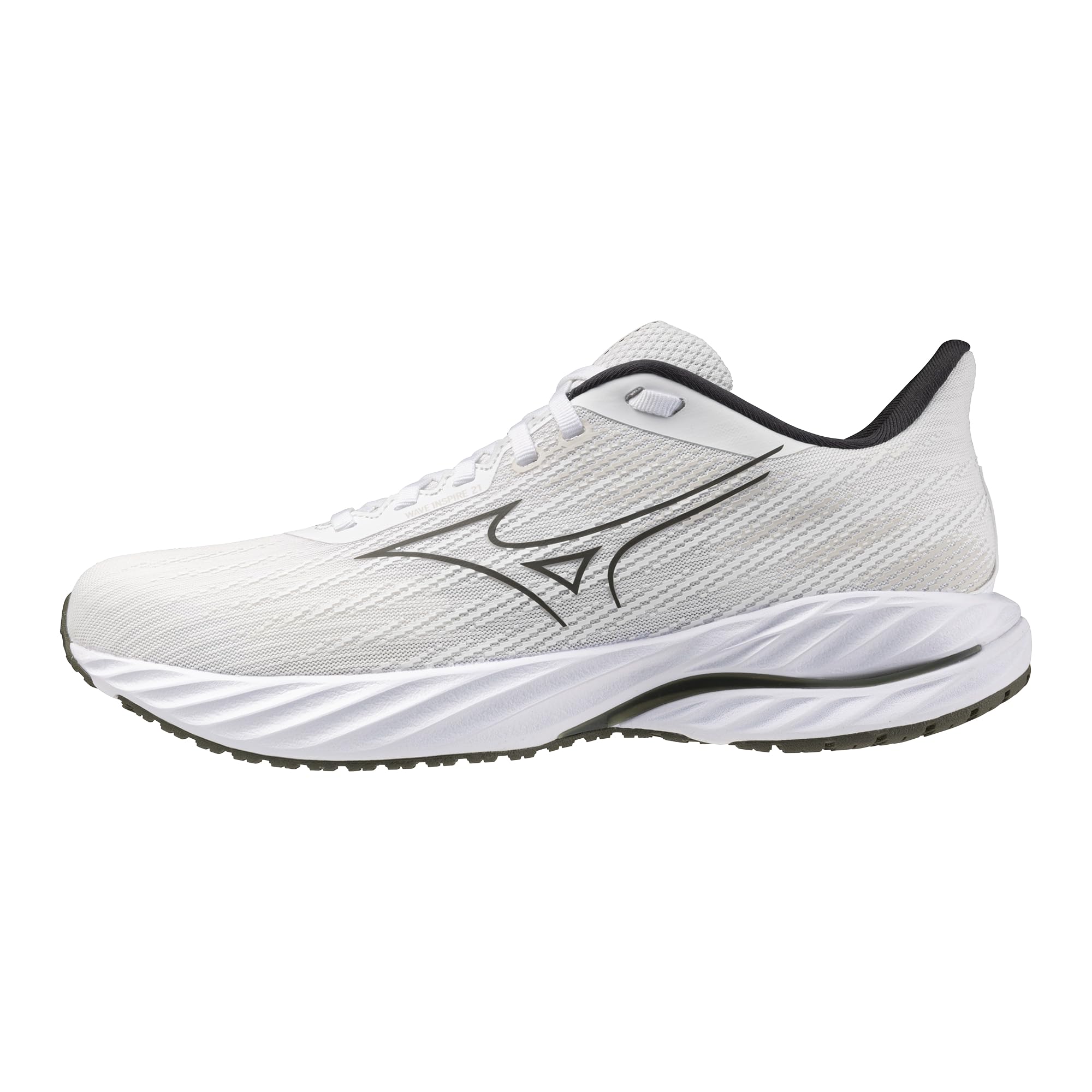
3. Mizuno Men’s Men’s Wave Inspire 21 Running Shoe
The stability specialist that stays smooth through the whole stride instead of clunking into place.
Mizuno’s Wave Inspire 21 holds the highest rating on this list — 4.5+ out of 5 — by pairing soft ENERZY NXT heel landings with medial support that does not clunk. The ENERZY NXT foam in the heel softens the landing, and the medial support sits where your arch loads on each stride. The connected forefoot outsole rolls you through toe-off with a smooth transition, so you never feel like you are fighting the shoe to get forward. Quality is the aspect buyers call out the most, with durability and stability right behind.
The Wave Inspire 21 has far fewer ratings than the New Balance 608 V5 in this guide — the 608 V5 has 89,000+ ratings against the 194 on the Inspire 21 — but reviewers on the new pair are unusually settled in their praise. Versatility earns repeated mention: the same shoe that works for a half marathon also fits a wide range of workout types, so it is a solid single-pair option for a runner who does not want three shoes for three activities.
What sets this shoe apart from the rest of the list is the forefoot continuity — the outsole is designed as one connected piece from midfoot to toe, so the ride stays unbroken under the ball of your foot. The known trade-off is that the medial support can feel firm through your arch if you have a high instep or wear a thicker insert. If you have been running in neutral shoes and are moving directly into stability for the first time, ease into your first few runs.
The single best thing about the Inspire 21: a top-shelf rating combined with a real stability design that most buyers can feel within the first mile.
The trade-off: fewer long-term owner reviews than the higher-volume picks, so your mileage may vary on how the ENERZY foam ages across a season.
Built for the stability-minded runner who wants the highest-rated option on this list and runs a variety of workout types.
Not the first choice if: you want a super-plush, rocker-shaped ride — for that, look at the Hoka Bondi 9 or Saucony Guide 18.
4. ASICS Men’s Gel-Cumulus 27 Running Shoes
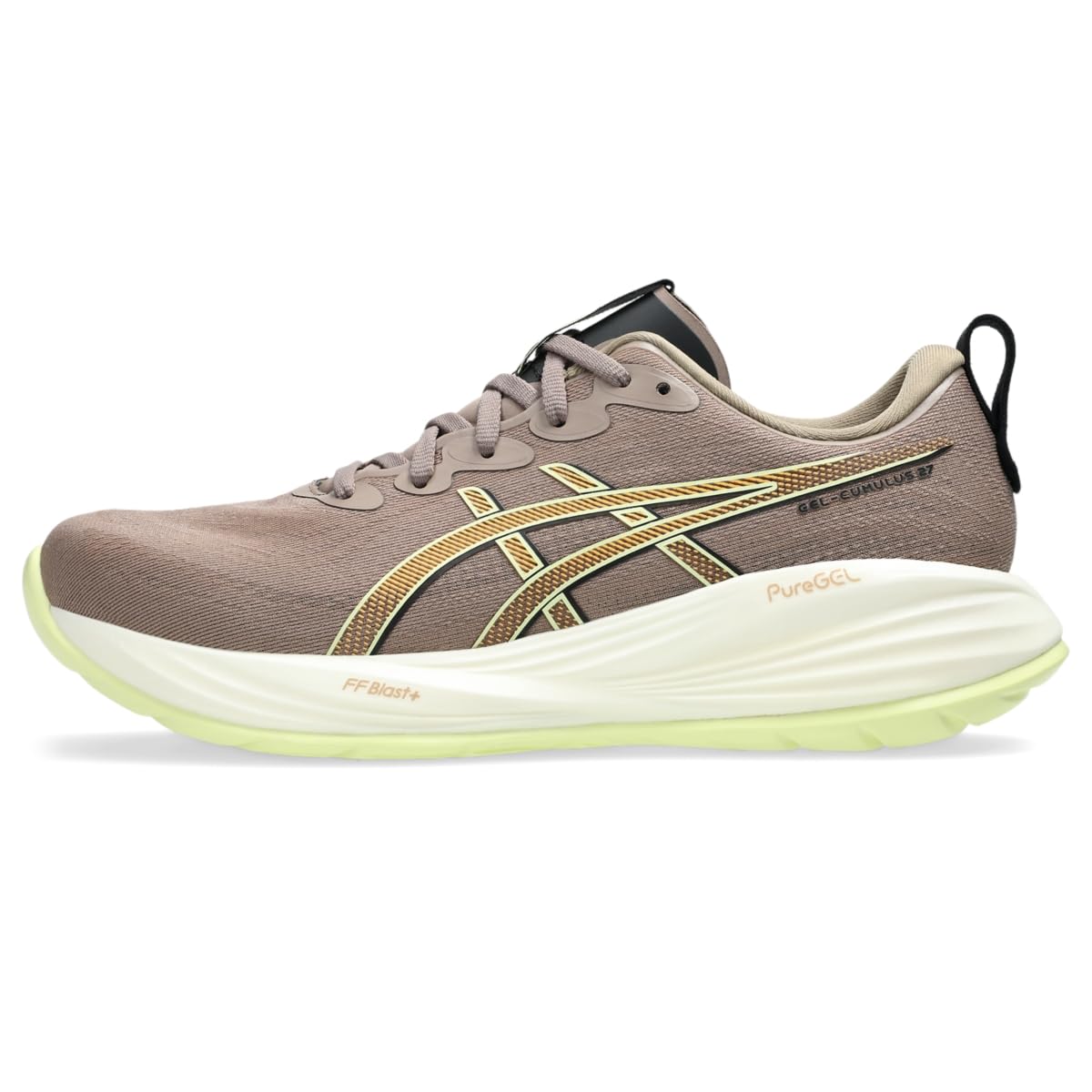
A cushion-forward workhorse that keeps the shock out of your joints without turning into a marshmallow.
The Gel-Cumulus 27 stacks PureGEL in the heel and FF BLAST PLUS foam through the midsole, so landings feel soft but the shoe never goes flat under you. The FluidRide outsole under the ball of the foot gives you a firmer push-off than pure foam, which is what keeps the ride from taking on the wobbly quality that irritates a cranky IT band. The fit runs true to size with extra toe room, and heel stability is repeatedly called out by buyers.
Where the Cumulus 27 distances itself from the more cushioned picks above it is daily durability. Reviewers buying this as a healthcare work shoe report eight to ten hours on thin carpet over concrete with cushioning still intact, and the break-in period was about a week. One long-shift owner describes extra padding compared to the Gel Contend 9 and says their feet feel better after long shifts. That is the pattern: the Cumulus 27 is the shoe for the buyer who spends as much time standing on hard floors as they do on the road.
The honest limit is the outsole. A few customers note the sole rubber is thin or missing in sections, and worst-case reports say the tread wears through around the 300-mile mark if you log a lot of outdoor asphalt. Sizing runs slightly long across iterations in some men’s sizes. If you do most of your miles on pavement and only replace shoes once a year, budget for the fact that the Cumulus 27 will likely wear out before the upper does.
What earns the Cumulus 27 a spot
- PureGEL heel pod absorbs shock where your foot lands first — good news for a knee that flares on impact
- FF BLAST PLUS foam midsole keeps the ride soft without going mushy under the ball of your foot
- Extra toe room and true-to-size fit that wide-footed buyers specifically call out
- Works as both a walking shoe and a jogging shoe with no break-in drama
Where it can trip you up
- Thin, lightly padded tongue can press across the top of high-arched feet after long hours
- Sole durability is the recurring caveat — some reviewers point out tread wearing out well before the upper
Best for the shift worker: if you stand on concrete for a living and want the same shoe for evening jogs.
Best if you want durability: look to the New Balance 608 V5 instead — the Cumulus 27 trades lifespan for cushion comfort.
5. ASICS Women’s Gel-Cumulus 27 Running Shoes
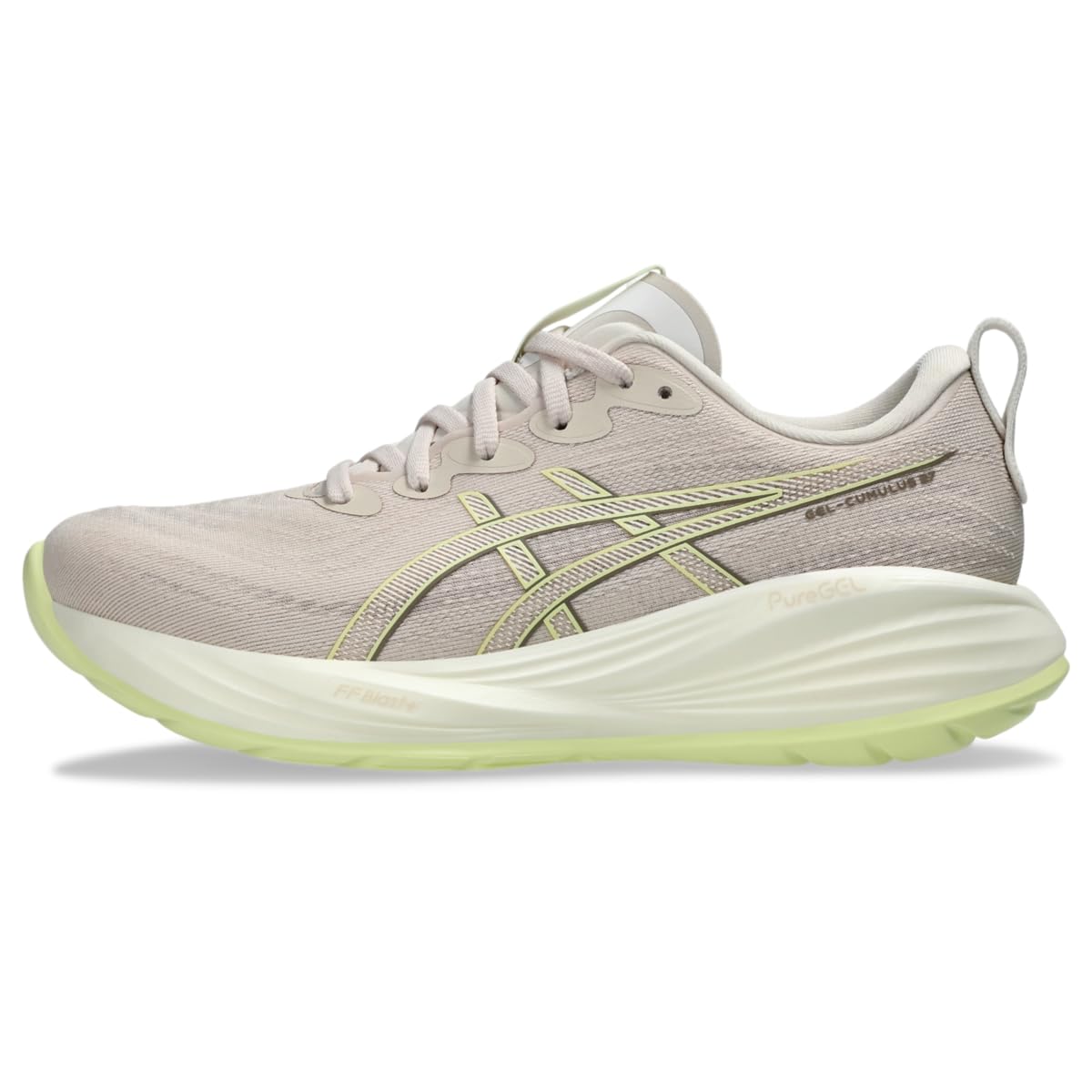
ASICS calls it the lightest and most padded Cumulus ever — the fit is the real headline.
The women’s Gel-Cumulus 27 pairs PureGEL heel cushioning with FF BLAST PLUS foam and a FluidRide outsole — the same basic recipe as the men’s version above, but tuned as the lightest and most padded Gel-Cumulus model ASICS has produced. A single pair weighs 1.44 pounds, which is light enough to feel like very little is on your foot after a full day of walking. Fit is by far the most-discussed aspect among owners, ahead of cushioning, colours, and low weight.
What buyers describe most is the walking-on-clouds feel — one owner says the shoes feel great walking and during strength-training workouts, and another who walked around Japan with them reports hardly any aches. A third, after three foot surgeries, calls them the most comfortable sneakers they have ever worn. That kind of language tells you where this shoe lands: soft, cushioned, and forgiving under a tired foot, especially when the day is mostly spent on your feet rather than racking up fast miles.
The one thing to plan around is sizing. A separate cluster of reviewers report this generation runs about half a size larger than previous Cumulus models, with a wider and longer toe box and a tongue that buckles when tied. If you normally order true to size in ASICS, consider dropping down half a size. The midsole is soft, not corrective — for a hard medial posting against pronation, this is not the shoe. It is the plush neutral cushion pick in this lineup, not the stability pick.
Best reason to buy: luxury underfoot feel at 1.44 pounds a pair, with PureGEL softening each heel strike.
Plan for: a reported half-size increase compared to older Cumulus generations.
Pick the women’s Cumulus 27 if your days involve more standing and walking than running, and you want the lightest max-cushion shoe ASICS makes in this line.
Move to the Saucony Women’s Guide 19 instead if you overpronate and need real medial support rather than pure cushioning.
6. Saucony Men’s Guide 18 Sneaker
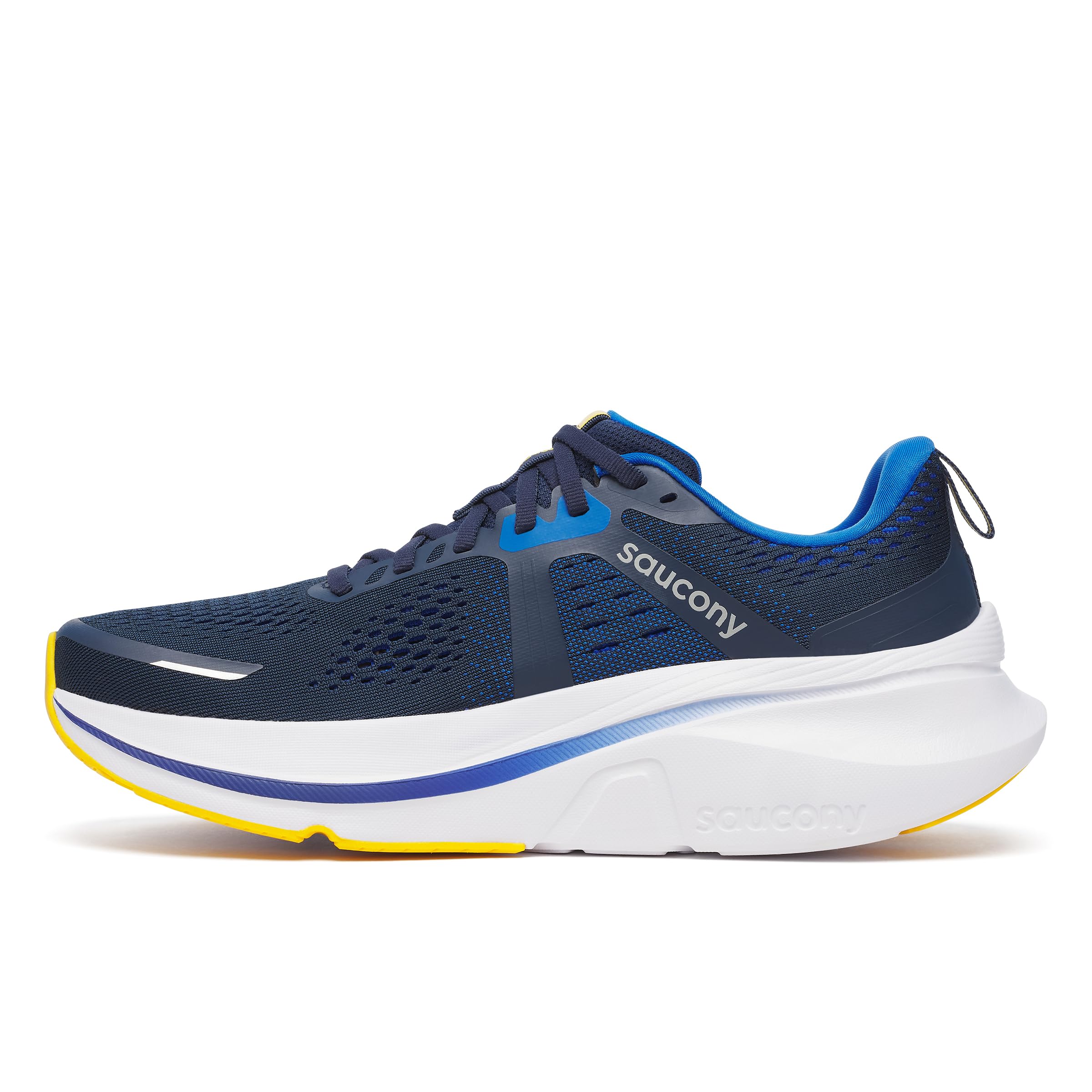
Roomy up front, held in the middle — the sneaker older runners keep reaching for.
Saucony builds the Guide 18 around Center Path Technology, a design that keeps your foot on a standard centerline by raising the sidewalls of the midsole. Combined with a rocker shape at the forefoot and the soft PWRRUN foam, the shoe rolls you smoothly from heel to toe and never lets your ankle wander. The wide toe box makes the fit feel generous, and 4.0+ out of 5 confirms the shape works for a lot of feet.
What the review pages say most often is stability — buyers describe the ride as centered and confident, and older runners specifically point to the way it supports their stride. Cushioning gets called “like walking on bubble wrap” more than once. Buyers also report less post-run joint pain and quieter plantar fasciitis symptoms. That combination — soft foam plus a strictly neutral centerline — is why the Guide 18 lands in the top half of this list for anyone chasing down IT band pain without giving up a comfortable ride.
The trade-off is a slightly narrow fit through the midfoot and a rocker curve that has its own adaptation period. A short list of owners note that the toe-off feels a little stiff for the first few runs before your calf loosens up around the curve. The upper is also built for road training and warm weather, so it feels less padded than a full winter trainer. If you want maximum room across the whole shoe, the wide toe box helps, but there is less sidewall give in the midfoot than a soft mesh trainer would offer.
Why older runners keep choosing it
- Center Path Technology keeps your foot tracked toward the center of the shoe, which is exactly the correction you want when inward roll is the culprit
- PWRRUN foam in a soft, responsive blend so long walks do not beat up your feet
- Wide toe box lets your toes splay with each push-off
- Rocker shape at the toe-off eases forward motion on tired late-run strides
Know before you lace up
- Rocker curve takes a couple of runs to get used to
- Midfoot fit runs a little snug — some buyers want a wider feel
- Upper is tuned for road miles, not heavy weather
For the runner who wants to feel the shoe keep their stride straight: the Guide 18.
Skip if you want huge midfoot room: the wide-toe-box shape is generous up front, but the midfoot hugs a bit more than a pure plush trainer.
7. ALTRA Women’s Torin 8 Road Running Shoe
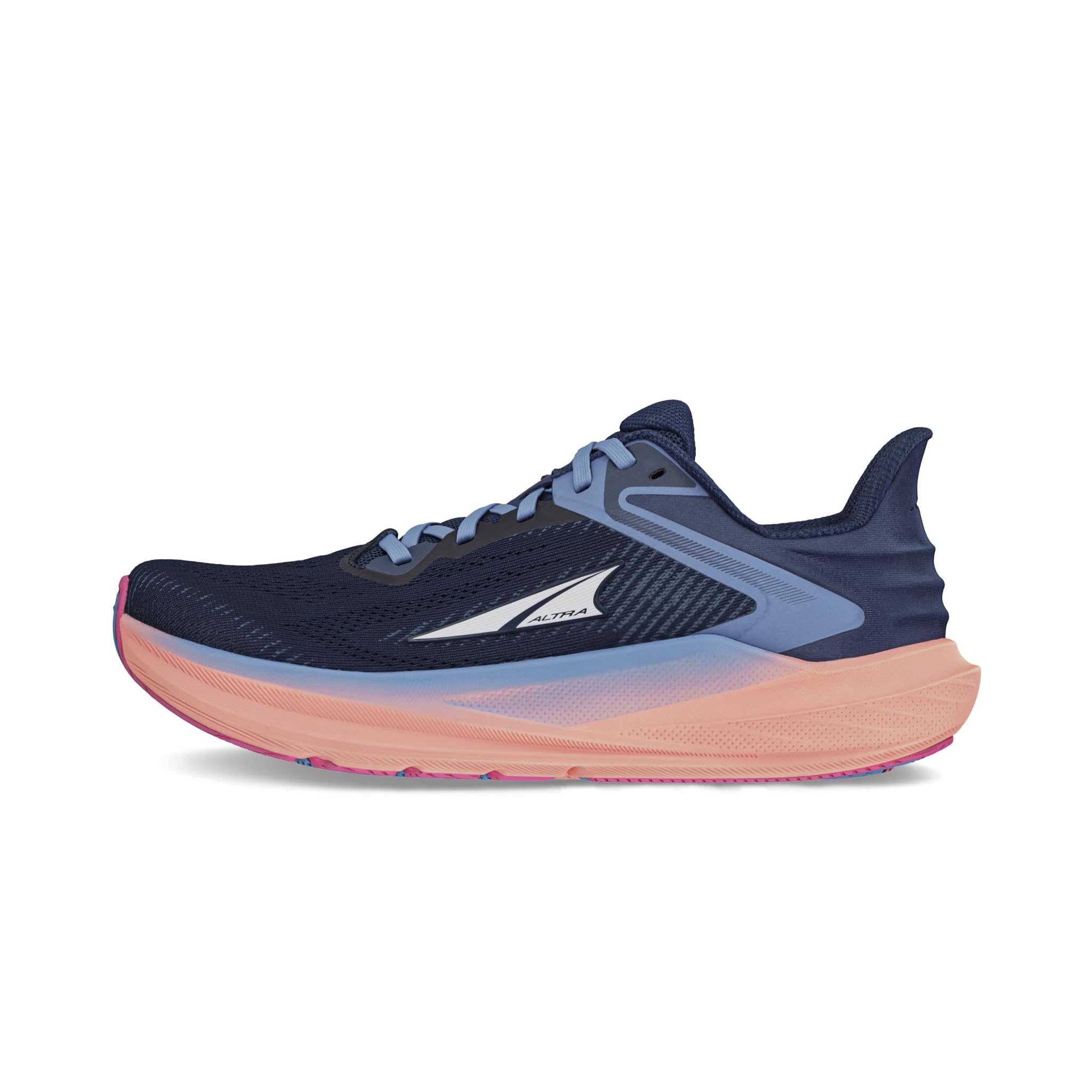
Flat, roomy, and shaped for your toes — the shoe for runners who need space, not posting.
Altra’s whole philosophy is a flat footbed and room to move, and the Torin 8 delivers both. The signature FootShape toe box is genuinely wide through the front, the heel-to-toe drop measures 0 mm, and the stack height sits at 30 mm/30 mm — so your foot lands level and your toes stay free to spread on push-off. The upper is a jacquard mesh with a secure midfoot, and the heel collar molds to your ankle without digging. That combination lands strongly with women who have wide feet or who have been fighting bunions.
Fit is what owners talk about most — the most-discussed aspect among them, well ahead of arch support and the toe box itself. The waist of the shoe holds the middle of your foot firmly so the roomy front does not slide around, and that stability matters when your IT band is sensitive to inward roll. One notable consequence of the zero drop: your calf and Achilles will stretch more through the stride. Runners adding a zero-drop shoe for the first time should work into it slowly instead of running their normal distance on day one. If you can take the transition, the Torin 8 opens up a natural-range gait you cannot get from shoes with a raised heel.
The cushioning is plush, the outsole flexes with your foot, and the shoe stays light on your feet across road miles. Runners with plantar fasciitis report relief, which fits the flat 0 mm platform and FootShape toe box. The main caveat is that the drop-adaptation period is real — if you run in the Torin 8 the day after wearing a 12 mm-drop shoe, you will notice the difference in your calves. Give yourself a couple of weeks of shorter runs to settle in.
What makes this shoe different: a 0 mm drop and a 30 mm/30 mm stack mean your foot sits level from heel to toe — no downward slope pulling your stride forward.
The honest limit: zero drop is a change, and your calves and Achilles will tell you if you rush the transition.
The right pick for: wide-footed women and anyone who wants a flat, roomy platform and can adapt to zero drop over a few weeks.
Not the shoe for: first-time stability buyers or anyone who needs a firm medial post — the Torin 8 is a natural-fit neutral, not a corrective shoe.
8. Saucony Women’s Guide 19 Sneaker
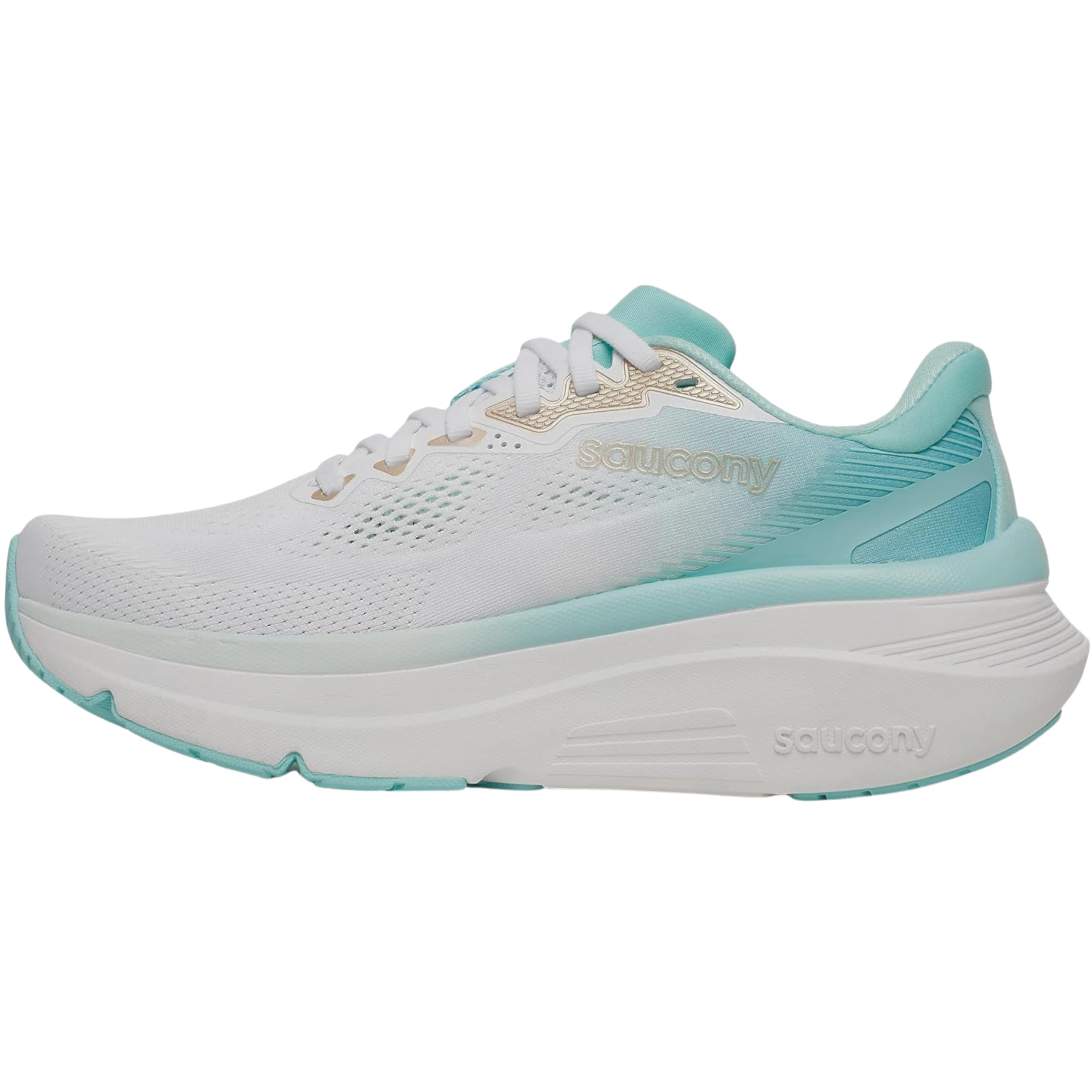
The women’s Guide with a softer foam blend — the same correction, a little kinder on your feet.
Saucony refreshed the women’s Guide 19 with a softer PWRRUN blend, a more flexible forefoot, and better durability than the previous generation. The design is built around the same overpronation correction that made the men’s Guide 18 so effective — a stable platform that holds your foot centered through the whole stride. The larger-than-average toe box gives your toes room to work, and the shoe is aimed at anyone whose knee pain flares specifically when their foot rolls inward too hard. Fit, comfort, and quality all sit at the top of what owners talk about.
The story the reviews tell is that over-pronation correction is immediate. One owner walks miles in them with no back, hip, or knee pain — the exact trio that flares when IT band syndrome is the cause. Another long-walker who dislikes the general trend of soft foam says this Saucony stays supportive despite the cushioning and takes away the fear of ankle roll. That combination — soft but supportive — is the pattern buyers keep describing, and it is the reason the Guide 19 lands in this list.
The caveat worth knowing is that sizing runs a little short and the ankle collar can feel tight around the top until you get used to it. A short list of owners size up to fix that fit, and once they do the shoe sits properly. There is also a small cluster of feedback about the heel geometry producing a slight backward-tipping feel while standing still — most owners either adapt to it or find it disappears once they are walking rather than standing. If you are in between sizes, plan to size up.
What the Guide 19 gets right
- Stable platform with a softer PWRRUN blend so overpronation support does not feel punishing
- Larger-than-average toe box for a roomier walk from day one
- Enhanced forefoot flexibility for a natural roll through the gait cycle
- Walkers logging long distance with knee, hip, or back concerns keep coming back to it
Room for improvement
- Reported to run a half size short — many buyers size up
- Ankle collar runs a touch tight for the first few wears
- Heel geometry can feel like a backward tilt when standing still
Buy the Guide 19 if your knee pain tracks to overpronation and you want a women’s stability shoe with a truly roomy toe box.
Order your true size elsewhere if you prefer a snug fit — the Guide 19 rewards buyers who accept the half-size-up reality.
9. Hoka Men’s Bondi 9

The living-room-soft maximalist that turns every paved mile into a slower, kinder ride.
The Bondi 9 is the deepest-cushioned shoe on this list by design. Hoka increased the stack height, dropped in a new premium foam midsole, and wrapped the whole thing around MetaRocker geometry — a curving sole shape that rocks your foot forward instead of asking your knee to bend for the transition. A 3D molded collar and a structured knit upper with zonal breathability keep the fit stable, and Durabrasion rubber on the high-wear zones protects the outsole where it takes the most abuse. The payoff for an angry IT band is the same thing Hoka has built its reputation on: less impact traveling up your leg on every landing.
Owners describe it in almost identical language — walking on mattresses, walking on pillows. Buyers wear them for all-day concrete shifts, running, and travel, and those with mid-foot arthritis and plantar fasciitis single out the support. A long-shift worker says a second and third pair replaced the first, with no more leg soreness after full days on concrete. The 3D heel collar in particular locks the ankle in place without pressure points, and the zonal knit lets heat escape where your foot gets hottest.
The Bondi 9 does ask two things of you. First, buy the Wide (EE) if your feet swell or you normally wear a D width — shoppers say the standard width runs narrow, and that is a common complaint. Second, the shoe is bulky and tuned for recovery pace rather than speed — the MetaRocker roll does not want to turn over quickly. And a small minority report durability issues with the heel giving out after about six months of hard running. This is a cushioning-first shoe, not a speed shoe and not a heavy-duty trainer; buy it knowing that.
What makes the Bondi 9 worth it: a premium foam midsole and improve stack combine to make every step feel almost weightless on hard surfaces — the highest-rated max-cushion option here.
An honest caution: buy the Wide (EE) if your feet swell — the standard width is narrow enough that buyers routinely report needing the wide version instead.
The shoe for: anyone whose day is spent on concrete, in airports, or on recovery-paced walks and who wants the deepest cushion money can buy here.
Not for: runners chasing a fast tempo pace — the Bondi 9 is built to rock you forward slowly, not to push you fast.
Know the Specs
Heel-to-toe drop
Heel-to-toe drop — often just called “drop” — is the height difference between the heel of the shoe and the toe, measured in millimeters. A 0 mm drop means the foot sits level, which is what the ALTRA Torin 8 does with a 30 mm/30 mm stack. A higher drop tilts your foot forward and shifts more load to your knee and hip. If your IT band flares on long runs, a lower drop is often worth trying — but budget time for your calves to adjust, because they will work harder at first.
Medial support and guidance systems
Medial support is firmness built into the inner side of the midsole — the part under your arch — that slows how quickly your foot rolls inward. Some brands use a firmer foam block, some use a raised sidewall, and some use a guidance system like Brooks’ GTS or Saucony’s Center Path Technology. The goal is the same in all cases: keep your foot tracking straight so the tissue along the outside of your knee is not stretched on every stride.
Common Questions
Do I need a stability shoe or a neutral one for IT band syndrome?
Is zero drop better for outer knee pain than a raised heel?
How many miles should I expect before replacing shoes for IT band syndrome?
Should I size up or down in the Brooks Glycerin GTS 23?
Will a wide toe box actually help my knee pain?
Can I use a walking shoe instead of a running shoe for IT band pain?
Is a rocker sole easier on my knee than a flat sole?
How do I know when my IT band pain is caused by my shoes and not something else?
Do I need inserts or orthotics with a stability shoe?
How long should I wait before deciding a new shoe is helping my knee?
The Bottom Line
For most people chasing down that outer-knee burn, the shoes for it band syndrome pick that holds up best is the New Balance Men’s 608 V5 — real arch support, a wide version that genuinely fits wide, and the most proven track record of any shoe here. If your knee needs a guidance system built for running, the Brooks Women’s Glycerin GTS 23 pairs plush cushioning with real support. And for a flat, roomy platform that lets your foot land level on every stride, the ALTRA Women’s Torin 8 is the one to reach for. Whichever you pick, give the shoe a few weeks and let your knee tell you whether the inward-roll correction is the lever your body needed.
How we choose
We do not accept paid placement. Every pick is matched to a real buyer and a real use-case; we do not hands-on test units.
Sources
Specifications: manufacturer listings and product documentation. Review insights: verified customer reviews, as of October 2026. Pricing: not shown on this page (it changes often); check the current price via the retailer link.
As an Amazon Associate, Aappliancez earns from qualifying purchases. This does not affect which products we feature.