Disclosure: Some links in this post are affiliate links. As an Amazon Associate I earn from qualifying purchases, at no extra cost to you. Learn more
Specs are compiled from manufacturer listings and verified buyer reviews and can change over time — please confirm the key details on the product page before buying.
If you carry extra weight, the wrong shoe does more than feel flat — it lets your foot roll inward, loads your knees unevenly, and turns a short walk into an ache. The fix is not simply “more cushion.” You need a wide, stable base under the heel, a sole that springs back under load, and a fit roomy enough that your toes never jam on the down-step. That combination is what earns a place on this list.
This guide is built by comparing the manufacturers’ published specifications and the patterns across verified customer reviews, so you get each pick’s real strengths and trade-offs instead of marketing spin.
A heavier body compresses foam harder, so a soft shoe that feels plush in the store can bottom out a mile in. The picks below are sorted by the job you actually need them to do — all-day standing, trail support, or a work site — with the cushioning and stability figures that matter spelled out. These are the Shoes for Heavy People worth putting your weight on.
Top Picks

How To Choose The Best Shoes for Heavy People
A heavy person’s foot pushes down with more force than a lighter foot does, so the foam under your heel has to do two jobs at once: soak up the landing and spring back before the next step. A shoe that only does the first feels wonderful for ten minutes and dead by lunch. Everything below comes back to that balance between soft landing and firm support.
Start with the base, not the foam
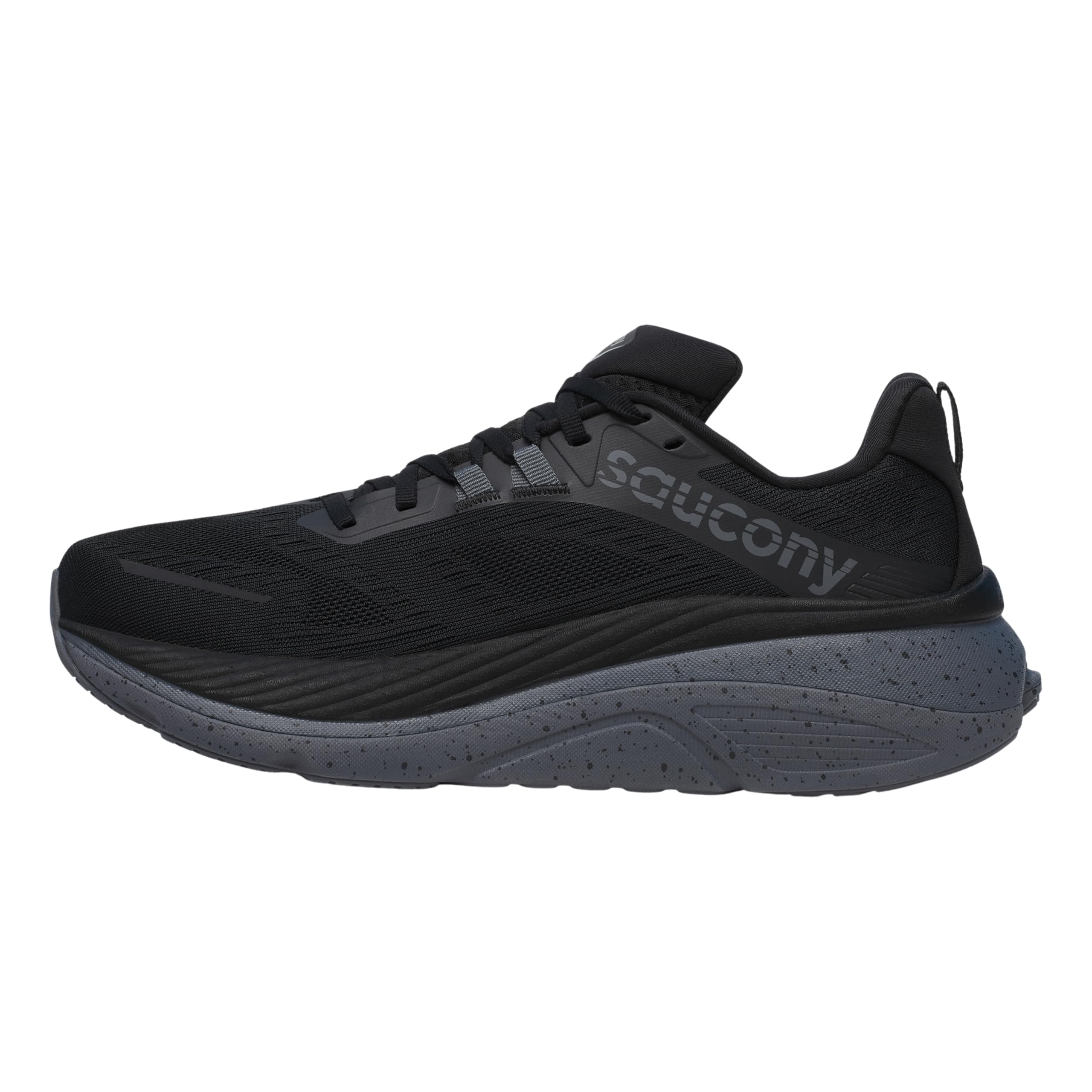
A broad, wider base under your heel is what stops your ankle rolling inward on the down-step. Look for a shoe described as stability, with sidewalls that hold your foot centered. The Saucony Hurricane 24 is the clearest example here — its broader base and higher sidewalls are built to keep a heavier stride from spilling over the edge.
Get the width right before anything else
A wrong width ruins an otherwise good shoe. If a shoe pinches across the ball of your foot, the foam never gets a fair chance because you walk differently to avoid the pressure. Many of these picks come in wide and extra-wide sizes. Check the sizing note in each review — several of these run small or long, and sizing down or up a half size is a real choice you may need to make.
Match the sole to your surface
A soft foam tread works fine on an indoor floor and wears quickly on asphalt. If your day means concrete, wet pavement, or a trail, the outsole is the part to read closely. The New Balance Garoé V2 uses an AT Tread outsole for grip off-road, while a lighter trainer with shallow tread is honest about being an indoor walker.
Decide how long you stand before you pick
An eight-hour shift on concrete is a different demand than a three-mile jog. Standing shoes need a stable, supportive platform that does not shift as your weight rocks from heel to toe. Running shoes need energy return so each stride feels easier. The same cushioning figure can serve both, but the stability and tread need to match the job.
Side-by-Side Comparison
| Model | Best For | Weight | Cushioning / Support Type | Fit Note | Amazon |
|---|---|---|---|---|---|
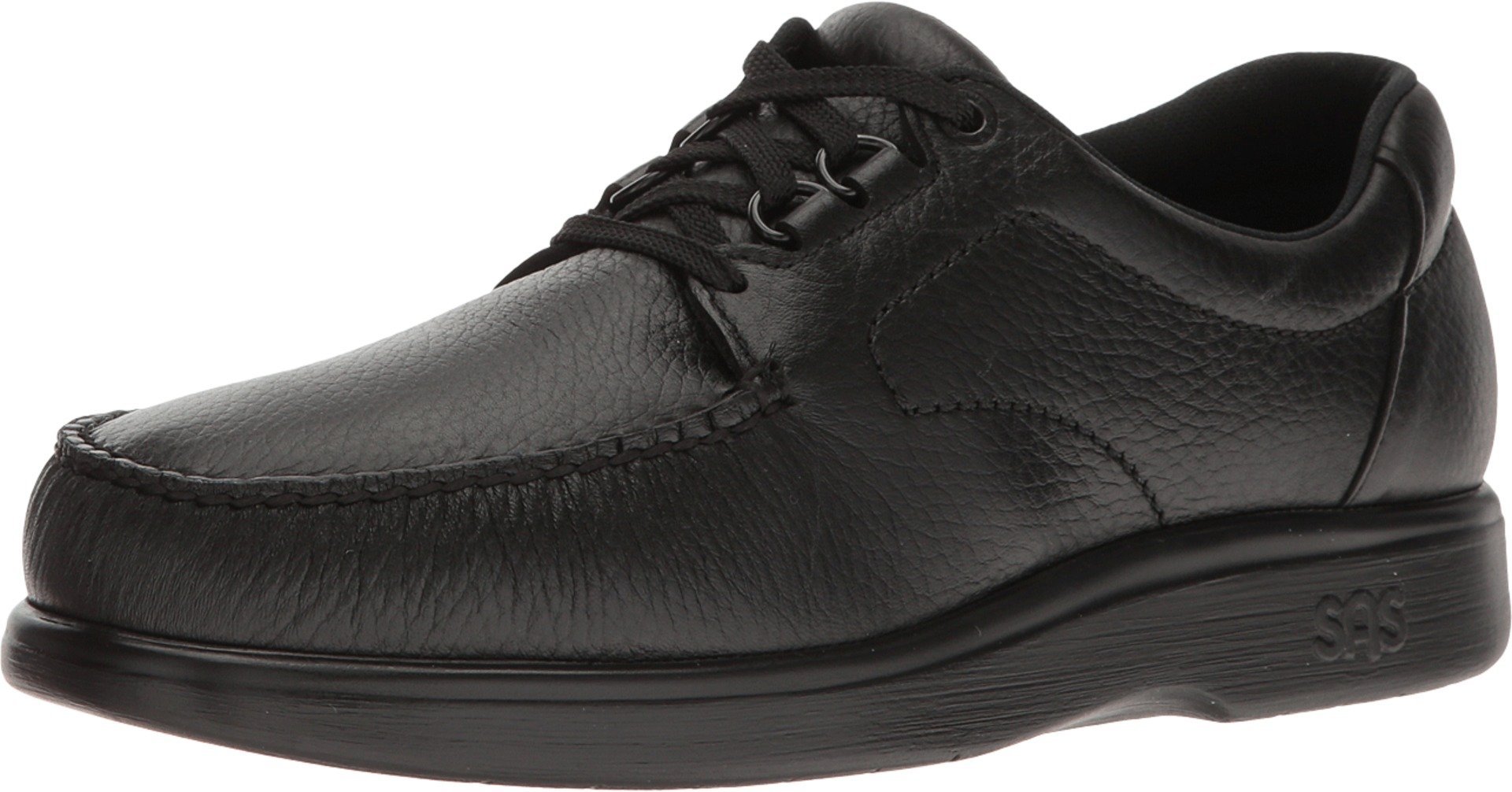
| SAS Bout Time Comfort Lace Up★ Best Overall | Everyday smart comfort in a wide fit | 1.9 pounds | Padded insole, cushioned leather upper | Offers Double Wide; size down a half | Amazon |
| Saucony Men’s Hurricane 24 SneakerStability Champion | Stability and max cushion for heavier strides | 10.6oz (302g) | PWRRUN PB + PWRRUN frame, 6mm offset | Runs small — order a half size up | Amazon |
| ASICS Men’s Gel-Cumulus 27 Running ShoesShift Saver | Long shifts and daily jogging | — | PureGEL + FF BLAST PLUS foam, FluidRide outsole | True to size with extra toe room | Amazon |
| New Balance Men’s Fresh Foam X Garoé V2 | Trails and uneven ground | — | Fresh Foam midsole, AT Tread outsole | True to size; runs about a half larger than some brands | Amazon |
| Brooks Men’s Trace 4 Neutral Running Shoe | All-round daily running and gym | 1.5 pounds | Soft responsive neutral cushioning | True to size, built for narrower feet | Amazon |
| ANTA Men’s PG7 Cushioning Running Shoe | Budget-friendly max cushioning | — | Adaptive PG7 midsole, ultra-soft rebound | True to size with roomy toe box | Amazon |
| KEEN Utility Men’s Detroit Mid Steel Toe Work Boot | Medium-duty site work | 28.25 oz / 801 g per boot | Steel toe, removable insoles, waterproof leather | Runs a little small | Amazon |
| New Balance Men’s FuelCell Rebel V5 | Fast, responsive medium-distance runs | 2.1 pounds | FuelCell foam, FantomFit upper | Runs small — size up a half | Amazon |
| Thorogood American Heritage 8″ Soft Toe Work Boots | Long days on concrete and light site work | 4 pounds | Poron shock-absorbing insole, fiberglass shank, Goodyear Storm Welt | Runs large — size down | Amazon |
Detailed Reviews
1. SAS Bout Time Comfort Lace Up
Our pick — 4.5+★ from 600+ verified ratings; the strongest balance of quality and price.
The dressy leather walker that fits wide feet without looking like a corrective shoe.
The pairing that makes this the easiest recommendation here is a real Double Wide option and a soft padded interior under one leather upper. For a heavier walker, width is the first battle — squeeze the ball of the foot and the whole stride changes. This is the shoe that sidesteps that fight. One owner put the sizing win plainly: “Other brands size 11-12, SAS 10.5 WW fits perfectly.”
Comfort is what wins people over most, and the story there is not a soft foam — it’s a cushioned interior that holds up. Owners describe the feel of walking in padded slippers, and the leather does not sag after months of daily wear. A pair that has been worn daily for years still looks the part, which matters if you want one shoe for the office, dinner, and the street. The factory warranty covers manufacturer defects only, so keep that in mind.
Where it earns its keep outside the house is on long travel days. The supportive build and decent traction handle hours of walking, though it is a comfort walker rather than a long-distance sport shoe. If you plan a multi-hour hiking excursion, a dedicated running shoe will feel springier underfoot — but otherwise this smart casual pick handles a ten-block walk to dinner without complaint.
The wide-foot advantage
- Genuine Double Wide sizing means an actual wide fit, not a stretched-up regular.
- Real leather upper holds its shape and stays presentable for years.
- Supportive, cushioned interior keeps the foot planted through long walking days.
- Smart enough for dinner and travel, not just the sidewalk.
Where it asks for patience
- Fit leans narrow for some foot shapes, so try a half size down from your usual.
- Value is a common talking point — some owners question whether the build justifies the premium tag.
- Not a long-distance sport shoe; you will want something springier for hours on a trail.
Best for: Buyers who need genuine wide sizing with a leather upper that can go from the office to dinner.
Size down a half: Most owners find the SAS runs roomy compared with other brands.
2. Saucony Men’s Hurricane 24 Sneaker
Built for heavier runners who roll inward and need the shoe to say no.
At 10.6oz (302g) the Hurricane 24 is not the lightest trainer in this list — the New Balance Rebel V5 comes in at 2.1 pounds — but weight is not what buys stability. What buys it is the dual-layer build: a plush PWRRUN PB foam top for soft landing, sitting on a firmer PWRRUN frame for support underneath. A 6mm offset (the height difference from heel to toe) keeps the platform low enough to feel steady under a heavier frame.
Stability here is the non-intrusive kind. Owners describe the foam guides as bathtub-like — they center your stride without forcing an arch, which is exactly what a heavier runner with flat feet needs. The broader base and higher sidewalls do the hard work on pronation and supination, and the cushioning is soft without bottoming out on a long run. One long-term user who lost 160lb+ dropped from a 13M 4E X-Wide to a 12.5M Neutral and called it the most comfortable max-stack stability shoe they had worn.
The main catch is fit. Owners disagree on sizing — some find it true to size and others find it snug, and the honest move is to go a half size up if you are on the fence. The other oddity is build variation between factories: pairs made in one country versus another have turned up with different arch and width feel, so check the pair you get. Walk around indoors before you commit to a long run.
Why it leads on stability: The dual PWRRUN setup and 6mm offset give you a soft landing with a firm base — the exact combination that stops a heavier foot rolling off.
The sizing gamble: A half-size-up rule catches most people, but factory differences mean you should test the pair you receive before a long run.
Reach for this if: You prefer a cushioned shoe that quietly centers your stride without a pronounced arch.
Look elsewhere if: You want the lightest option and are already comfortable with a firm, minimal ride.
3. ASICS Men’s Gel-Cumulus 27 Running Shoes
For the eight-hour concrete shift that ruins your feet by two o’clock.
The specification that decides this one is the cushioning system: PureGEL in the heel to soften the landing and FF BLAST PLUS foam through the midsole to keep the ride springy. For a heavier person standing on concrete all day, that combination is the difference between sore heels at lunch and feet that make it to shift end. Buyers report using these for healthcare and pharmacy work with “ample cushioning” and a break-in inside a week — and extra-wide sizing left feet feeling significantly better after long shifts.
Comfort is clearly the headline, and the fit story is friendly. The shoe is true to size with extra toe room, so heavier toes do not jam on the down-step. Heel stability is strong enough to keep a wider frame centered, and the weight stays low enough to wear all day without feeling like a burden. A wide-footed buyer found the men’s extra-wide fit without looking oversized.
Two honest limits surface repeatedly. The first is tread: one regular walker found the foam heavy underfoot ran slick on wet surfaces after the tread wore down, so it makes a better indoor or dry-day shoe than a rain-day runner. The second is durability — Some owners mention the outsole wearing through before 300 miles, so treat it as a replaceable service-life shoe rather than a decade-long investment. If you want a shoe that survives thousands of miles, the trail-ready Garoé V2 is the better fit.
The shift-saver case: PureGEL and FF BLAST PLUS together give a plush landing with spring — the mix that keeps heavier feet comfortable through a full standing day.
The honest watch-out: Tread wears quickly on wet asphalt and the foam shows its age after a few hundred miles. Great for indoor shifts, less so for rain-soaked roads.
Your shoe if: Your job keeps you standing on hard floors and you want a true-to-size extra-wide option.
The trade-off: The sole is a service-life component — plan to replace it once the tread thins.
4. New Balance Men’s Fresh Foam X Garoé V2 Trail Running Shoe

The trail shoe that carries weight over gravel and grass without letting your foot roll.
The feature that does the work here is the AT Tread outsole, a rubber pattern built to bite on gravel, grass, and rock rather than slip on it. Pair that with an ultra-soft Fresh Foam midsole and you get a shoe that absorbs a heavier down-step while still letting your foot find grip. Owners describe the sole as thick, soft, and bouncy — surprising shock absorption that cleared foot pain on uneven ground.
Durability is the quiet strength of this one. One buyer logged 700+ miles over 15 months of daily wear with minimal wear on the upper, and a second pair felt just as solid. That long service life is a real advantage over a lighter trainer whose foam thins out fast. It also stays true to a standard US size — though it runs about a half size larger than some other brands, so if you are between sizes, size down.
The catch is arch support. This is a truly neutral shoe, and if you have flat feet or roll inward, you will need to add inserts — one flat-footed owner did exactly that. The soft sole is also not for everyone; a few find it too soft and prefer a firmer platform. Lace loops are the other durability point flagged, so handle those gently. For a heavier walker heading off pavement, this is a stable partner.
The trail-day wins
- AT Tread outsole digs into gravel and grass instead of skating over it.
- Fresh Foam midsole absorbs heavy down-steps on uneven ground.
- Long service life — 700+ miles reported on a daily-worn pair.
- True to a standard US size with a roomy toe area.
The honest fit note
- Zero built-in arch support — flat-footed buyers will want inserts.
- The sole runs soft; a few find it too yielding for their taste.
- Lace loops can wear out sooner than the rest of the shoe.
Go with this if: You walk trails, grass, or uneven ground and want grip plus shock absorption.
Budget for inserts if: You have flat feet or roll inward — this is a deliberately neutral shoe.
5. Brooks Men’s Trace 4 Neutral Running Shoe

A dependable daily trainer that goes to work, the gym, and the road without fuss.
What makes the Trace 4 a steady pick is a soft yet responsive neutral cushioning that does not feel bulky underfoot. For a heavier walker who wants one shoe for several jobs, that smooth ride is the value — it covers running, gym training, and daily wear without looking out of place. Owners describe it as comfy, wearing “like iron,” and true to size.
Consistency is its reputation. A long-time Brooks runner with many pairs across the brand called it well-made and dependable, and a daily walker logging 4+ miles six days a week is on a fourth pair. It comes with no break-in period, a breathable upper, and outsole grip that handles a road loop.
The one limit you should weigh honestly is fit width. This shoe is made for narrower feet, so if you have a wide forefoot you may want to size up or look at a wide-specific option like the SAS Bout Time instead. It is neutral by design, so a heavily pronating stride may want a stability shoe like the Saucony Hurricane 24 above. Otherwise, this is one of the least risky everyday choices on the list.
The daily-driver argument: Soft, responsive foam plus a true-to-size fit means you can lace it up and go — no break-in, no guesswork on sizing.
The width caution: It is built for narrower feet, so a wide forefoot should size up or pick a Double Wide shoe.
Pick this if: You want one neutral shoe for running, the gym, and daily wear at a fair value.
Think twice if: Your forefoot runs wide — this one is shaped for narrower feet.
6. ANTA Men’s PG7 Cushioning Running Shoe

The most cushion you can buy on a budget — with one important insole note.
The PG7 midsole is the reason this one punches above its price: micro-particles inside the foam stay loose at rest, then lock together under pressure for springy rebound. In plain terms, it firms up where you push down and stays soft where you don’t. A heavier wearer gets real cushioning that holds up over long days, and One buyer logged 60+ miles of European walking over rough cobblestones without sore feet.
Comfort is clearly the star — it is the most-mentioned strength of this shoe, and the fit is true to size with a roomy toe box. The arch support earns praise, including lighter-feeling backs and knees. For an all-day standing job, it was described as nearly matching far more expensive max-cushion models. And the price-to-value ratio is the second big selling point.
The one thing to plan for is the stock insole. It is not a stability insole, and a few owners found it caused instability or discomfort until they swapped in a better insert. Heavier walkers with flat feet especially should budget for a proper insole from day one. The rest of the shoe is solid: not waterproof (wet grass soaks through), but customers note it staying durable and comfortable through 400 miles. This is the budget buy to beat if you are willing to fine-tune the footbed.
The value math: Adaptive PG7 foam gives soft-then-firm support that holds up for long days, at a budget-tier price.
The insole caveat: Stock insoles want upgrading for heavy, flat-footed wearers — factor in an aftermarket pair.
Best for: Budget-minded buyers who want maximum cushioning and a roomy toe box.
Plan for this: Add a supportive insole — stock insoles lack stability for heavier wearers.
7. KEEN Utility Men’s Detroit Mid Steel Toe Work Boot

A waterproof steel-toe boot for medium-duty work, not a daily-wear all-rounder.
What separates this from a running shoe is protection: a steel toe and waterproof leather at 28.25 oz / 801 g per boot, built on KEEN’s traditional wider form. For a heavier worker in construction, landscaping, or maintenance, that wider last means the boot does not fight your foot, and the removable insoles let you dial in the support level. The waterproof leather keeps a wet site from soaking through.
Comfort is genuine when it fits. One buyer walking about 5 miles a day at work reported no foot pain, unlike other steel-toe boots they had owned. The moisture-wicking lining keeps the foot from cooking, and the leather comes from tanneries certified by the Leather Working Group (LWG), which reduces water and energy use in the process.
The honest limits come down to support and sole life. The arch support and insoles are the recurring weak point — One reviewer noted daily wear led to plantar fasciitis and returned to other brands, so heavier wearers should budget for a custom insole. The sole also peels away from the upper over time, which is a maintenance point rather than a reason to skip. And it runs a little small, so consider a half size larger for thick socks in winter. Medium-duty is the real ceiling here: this is not a heavy-construction boot.
What the boot gets right
- Steel toe and waterproof leather protect a heavier worker from site hazards.
- KEEN’s wider last accommodates a fuller foot comfortably.
- Removable insoles let you swap in your own support.
- Walked 5 miles a day on the job with no foot pain reported.
Where it needs attention
- Stock insoles and arch support are the common weak spot — budget for an upgrade.
- Sole separating over time is a maintenance issue, not a dead end.
- Runs a little small; size up for thick winter socks.
Reach for this if: You work a medium-duty site and need a waterproof steel-toe boot with a wide fit.
Add an insole: The stock arch support is the part most likely to need upgrading.
8. New Balance Men’s FuelCell Rebel V5

A light, springy trainer for the heavier runner who still wants some pace.
FuelCell foam is the defining feature here: it returns energy with every stride, so a heavier runner gets a propulsive feel from a shoe that stays surprisingly light at 2.1 pounds. The FantomFit bonded upper keeps the support without extra bulk, and the mesh upper breathes well enough for warm-weather runs. Compared with the softer ASICS Gel-Cumulus 27, this one feels quicker underfoot and less pillowy.
The fit guidance is the thing to get right. This shoe runs small for many buyers — the go-to move is to size up a half for daily comfort. Once sized right, the cushioning is supportive without feeling mushy, and the arch support suits those who want some structure without an aggressive arch feel. Owners describe it as great for running, training, and daily wear.
Two caveats keep it honest. A few owners found the toe box tight, so if you have a wide forefoot you will want to check that before committing. And a quality-control note: some pairs have arrived with glue and stitching defects where the canvas meets the rubber, so inspect yours on arrival. At a premium price, that is a real expectation to manage — treat it as a fast trainer for medium-distance runs, not a rough-and-tumble work shoe.
The pace angle: FuelCell foam and the FantomFit upper give a light, responsive ride that does not drag a heavier runner down.
The size-and-QC note: Size up a half for the tight toe box, and check the stitching on arrival — a few pairs arrive with defects.
Solid choice if: You want a light, springy trainer for medium-distance runs at a good clip.
Skip the gamble if: You have a wide forefoot — the toe box runs tight, so try before committing.
9. Thorogood American Heritage 8” Soft Toe Work Boots for Men

The American-made leather boot that feels like a baseball glove on day one.
What sets this boot apart is the build: Goodyear Storm Welt construction seals the upper to the midsole for wear resistance and moisture protection, and a fiberglass shank gives flex and strength under heavy load. The premium oil-tanned full-grain leather in Tobacco Brown or Black Walnut is the kind that softens with time, and the removable Poron Comfort Cushion insole uses air-permeable open cells that resist moisture and absorb shock. That combination is why it was described as feeling like a glove on day one, with no break-in period.
Comfort after the break-in is the strongest suit for long-concrete work. An aircraft mechanic reported no foot pain on 10-hour days on concrete and chemicals, and a daily-worn pair held up over a year with stitching and leather intact. The 8-inch shaft supports the ankle, and the MAXWear Wedge outsole with its slip-resistant design keeps you grounded. For soft-toe, heritage construction at long-term value, this one is hard to argue with.
There are two things to plan around. Sizing runs large — a size 11 sneaker wearer fit comfortably into a 10 EE — so size down, not up, for the best fit. And the tread is shallow and mediocre on ankle support, making this a boot for concrete and light work rather than construction or mud. Tread also slips on snow and ice. Treat this as a respectable everyday work boot, not a mountain-grade safety boot.
The heritage strengths
- Premium oil-tanned full-grain leather softens with age and holds up to punishing jobs.
- Poron insole absorbs shock and resists moisture all shift long.
- No break-in period — comfortable right from the box.
- American-made with components sourced in the USA and globally.
- Goodyear Storm Welt construction makes the boot dependable and fully serviceable.
What to weigh
- Runs large — most buyers should size down.
- Tread is shallow and slippery on snow and ice.
- Ankle support is moderate, so this is a concrete-and-light-work boot, not a heavy-construction model.
Choose it if: You want a comfortable, American-made leather boot for long days on concrete.
Know the ceiling: Soft toe and shallow tread mean it is not built for heavy construction or icy ground.
Know the Specs
Cushioning and rebound
Cushioning is the foam under your foot that soaks up the landing. Rebound is how quickly that foam springs back to its shape. A heavier person needs both: enough pressure to soften the landing and a foam stiff enough not to bottom out under the weight. That is why premium foams like PWRRUN PB and FuelCell are used in the picks above — they are built to spring back, not just squish flat.
Stack height and offset
Stack height is how much foam sits between your foot and the ground. Offset is the height difference between the heel and the toe, measured in millimeters — a 6mm offset, like the Saucony Hurricane 24 uses, keeps the platform low enough to feel planted. More offset can feel softer for a heel-heavy stride, but a lower offset gives more stability for a heavier frame.
Stability versus neutral
A neutral shoe lets your foot move naturally without extra guidance. A stability shoe adds a broader base or firm sidewalls to stop the ankle rolling inward. For a heavier walker who pronates, a stability model is often the safer bet. A neutral model with added inserts can also work if you prefer a softer ride.
Outsole and tread depth
The outsole is the bottom layer of rubber that touches the ground. The tread pattern and depth decide grip: deep lugs bite into gravel and grass, while shallow tread is fine on indoor floors but wears out on wet pavement. If most of your walking is outdoors on asphalt or trail, pick a shoe with a visible, grippy tread rather than thin foam.
Width and toe box
Width is how wide the shoe is at the forefoot, and the toe box is the room at the front. A heavier foot spreads under load, so a roomy toe box stops the toes jamming on the down-step. Look for Double Wide options like the SAS Bout Time, or check the fit note per shoe — several run small or large.
Weight versus support
The weight of the shoe is often the wrong thing to chase. A lighter shoe can actually be harder on a heavier frame if the foam compresses too fast. A shoe weighing a bit more, like the Saucony Hurricane 24 at 10.6oz (302g), can feel easier on a long day because the support holds up when the foam is under load. Judge the shoe by the balance of weight and support, not weight alone.
Common Questions
What kind of shoe should a heavier person wear every day?
Do I need a stability shoe or a neutral shoe?
How do I know if a shoe fits wide enough for a heavy foot?
Will a heavier runner wear out running shoes faster?
Should I add an insole if I weigh more than average?
Are work boots better than running shoes for standing all day on concrete?
What does the offset number mean on these shoes?
How long should cushioning last before I replace the shoe?
Are wide sizes the same as extra-wide across brands?
The Bottom Line
For most people carrying extra weight, the smartest starting point is the SAS Bout Time Comfort Lace Up — a genuine Double Wide fit and a leather upper that holds its shape through years of daily wear. It solves the width problem first, which is where heavy feet usually lose the battle. If you want stability and max cushioning in a sportier package, the Saucony Hurricane 24 quietly centers your stride with its PWRRUN dual-layer build. For the long concrete shifts, the ASICS Gel-Cumulus 27 brings PureGEL and extra-wide sizing that keeps you comfortable to shift end. Whichever you choose, the fit width and the stability under your heel matter more than any single spec — nail those two and your feet will tell you the rest.
How we choose
We do not accept paid placement. Every pick is matched to a real buyer and a real use-case; we do not hands-on test units.
Sources
Specifications: manufacturer listings and product documentation. Review insights: verified customer reviews, as of October 2026. Pricing: not shown on this page (it changes often); check the current price via the retailer link.
As an Amazon Associate, Aappliancez earns from qualifying purchases. This does not affect which products we feature.