Disclosure: Some links in this post are affiliate links. As an Amazon Associate I earn from qualifying purchases, at no extra cost to you. Learn more
Specs are compiled from manufacturer listings and verified buyer reviews and can change over time — please confirm the key details on the product page before buying.
On a construction site, your feet take the worst of it: twelve-hour shifts on concrete, rebar, mud, and gravel. Twelve-hour shifts on concrete, rebar, mud, and gravel will wreck a bad pair of boots by lunchtime. What saves them is not a brand name but the right combination of toe protection, sole grip, and a footbed that stays supportive past hour eight. This guide breaks down nine work boots that real construction crews, miners, and contractors keep buying, so you can match one to your own job and foot shape.
This guide is built by comparing the manufacturers’ published specifications and the patterns across verified customer reviews, so you get each pick’s real strengths and trade-offs instead of marketing spin.
We cover how to read a safety toe rating, what a shank actually does for your arch, and where each boot gives and takes. By the end you will know which pair to lace up for your next shift.
Top Picks

How To Choose The Best Shoes for Construction Workers
Your work boot must protect your toes from falling objects, grip wet concrete, loose gravel, or a steel beam, and keep your feet from aching by the end of a shift. Pick for the job you actually do — a dry warehouse and a muddy site call for different boots.
Steel toe or composite toe — which one is right for you?
A steel toe is a metal cap over your toes that takes an impact from a falling or rolling object. A composite toe does the same protective job using a non-metal material instead. The difference you feel is weight and temperature: steel can be cooler in winter and heavier on the boot, while composite is lighter and does not set off a metal detector. On a day-long shift, that toe cap design changes how tired your feet feel by the end.
Why the shank and outsole matter more than the leather
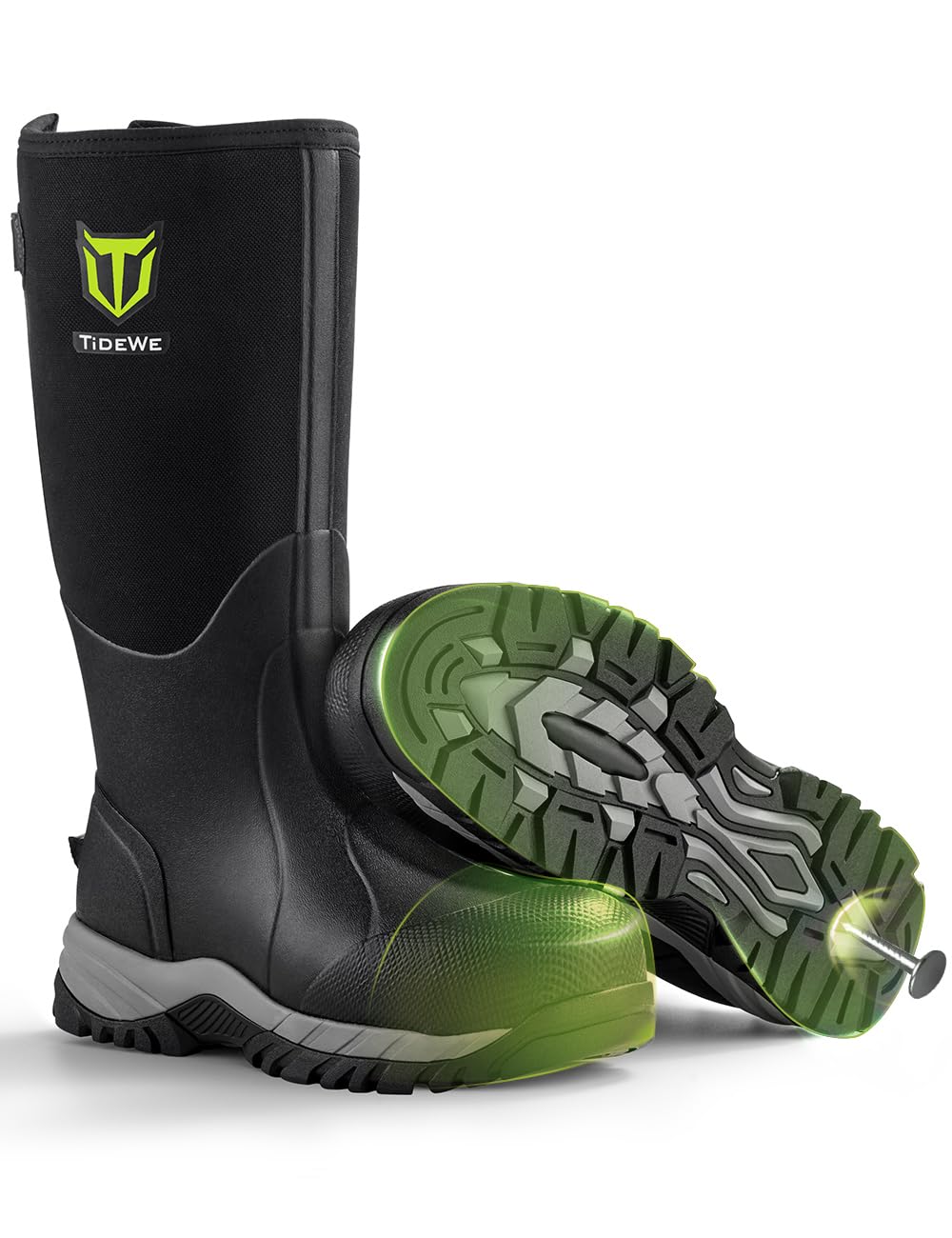
A shank is a stiff piece that runs between the insole and outsole under your arch. On a boot like the TIDEWE, a steel shank also acts as a barrier underfoot, so a nail or shard does not push straight up into your foot. That is a big deal on demolition or a site littered with debris. The outsole tread is your second protection layer — deep tread holds on wet concrete, and a smooth sole slips.
Fit matters more than any spec sheet
No spec sheet rescues a boot that pinches or slips at the heel. A roomy toe box lets your toes spread out, which matters more in a safety toe because the cap takes up space. Pull-on boots like a Chelsea style have no laces to cinch, so the fit has to be right from the start. If you have a wide foot, look for a boot that comes in a wide width — several of these picks do.
Side-by-Side Comparison
| Model | Best For | Toe Type | Waterproof | Closure | Amazon |
|---|---|---|---|---|---|
| Cat Footwear Striver Steel Toe★ Best Overall | All-day comfort on concrete | Steel toe | — | Pull-on | Amazon |
| TIDEWE Rubber Work BootsWet Site Pick | Wet mud and cold sites | Steel toe + steel shank | 100% waterproof rubber and neoprene | Pull-on | Amazon |
| Reebok Work Shaqnosis Composite ToeStyle Pick | Style plus safety on the site | Composite toe (XTR) | — | Lace-up | Amazon |
| Carhartt Men’s Chelsea Boots | Quick on-and-off between jobs | Steel or soft toe | — | Pull-on (twin gore) | Amazon |
| KEEN Utility Evanston 6″ | Wide-footed workers wanting lightweight boots | Carbon toe | Waterproof leather | Lace-up | Amazon |
| New Balance Calibre Comp Toe | Foot pain on long shifts | Composite toe | Water-repellent (per owner reports) | Lace-up with side zipper | Amazon |
| Timberland PRO Titan Ev 6″ | Sneaker-like cushioning with protection | Composite toe | Waterproof leather + internal membrane | Lace-up | Amazon |
| Ariat Rebar Lift 6″ | Oil refinery and heavy industrial use | Composite toe | Waterproof | Lace-up | Amazon |
| Danner Bull Run 6″ Chelsea | Electricians and carpenters moving in and out | Steel toe | — | Slip-on | Amazon |
Detailed Reviews
1. Cat Footwear mens Striver Steel Toe
Our pick — 4.5+★ from 650+ verified ratings; the strongest balance of quality and price.
The steel-toe pull-on that owners reorder in threes.
If you want one pair that handles a full shift without your feet screaming, start here. The Striver is a steel toe pull-on work boot, and it is the crowd favorite of this list at 4.5+ stars across 600+ owners. What wins people over is sheer build quality — it is the most-praised trait by a wide margin. Buyers describe these as among the best work boots they have ever owned, and that verdict repeats across years of repeat purchases.
Comfort is the second strongest theme, and it comes with a real-world shape. One long-term owner has gone through three pairs and says they were comfortable from day one with no break-in. Another was a woman’s size 9 wide who sized down to a 7 and got a good fit — which tells you the sizing runs toward the generous side for a men’s boot. A husband-and-wife review noted the boots still felt comfortable after months of work. The trade-off that shows up is weight: some owners find the Striver heavy, and that mass is the price you pay for a boot this sturdy. The leather also takes a couple of weeks to soften for most people, and the trick several owners use is double wool socks, mink oil, and a little heat.
Buyers like the Striver’s look so much they wear it off-site. One reviewer noted, “Till I wore them down finally demoted to work boots after like a year of wearing them.” That shows how well the Striver is finished, not a durability problem. For a mid-range steel toe that fits true and lasts, this is the smartest starting point on the list.
What earns the top spot
- Steel toe protection in a boot with a solid reputation for build quality and reliability
- True-to-size fit that owners praise, with wide sizes available
- Comfortable from day one for many, and still comfortable after months of work
- Slip-resistant and good-looking enough to wear outside the job
Where it asks you to compromise
- Heavy — several owners say the mass takes getting used to
- Leather can need two to three weeks of break-in for some feet
Best for: The worker who wants a proven, comfortable steel toe that fits true and does not need a break-in lecture.
Look elsewhere if: You need a waterproof rubber boot for standing water — this steel toe is not the wet-site pick.
2. TIDEWE Rubber Work Boots
For the crew that spends the day knee-deep in mud and never gets a dry minute.
Rubber boots are a different animal from leather, and the TIDEWE is the one to grab when the ground is a swamp. It is made from 100% waterproof rubber and neoprene, which means the whole boot is the waterproof layer — not just the leather upper. Standing water, slurry, and melting snow do not get through when the rubber does its job. The extra protection is the steel shank between the insole and outsole: it guards the underside of your foot from punctures and also gives enough comfort to wear the boot through a full shift.
Owners in wet, cold work love it. One mining-industry buyer wearing them daily says they keep feet and lower legs dry and mud-free and stay comfortable all day. Cold weather is a real strength thanks to the 6mm neoprene lining, which traps warmth when temperatures drop. Fit is the biggest thing to get right, and the feedback is split both ways: some reviews say these run a half size small, while others say they run very big. That is why the seller’s own advice matters here — measure your foot and choose a size roughly 0.16 inches larger than your actual measurement. One buyer settled on an 11 despite normally wearing an 11-1/2, and reported, “Shoes 11-1/2 but an 11 in these fit fine.”
The honest catch is the mixed water-resistance experience and grip on smooth wet surfaces. Some owners stay bone-dry; a few report wet feet quickly, and one noted slipping in just water. Size the boot right and treat it as a wet-site and cold-weather boot first, and it earns its spot.
The real strength: A fully rubber-and-neoprene shell with a steel toe and steel shank — protection against water, cold, and underfoot punctures in one boot.
The sizing rule: Measure your foot and pick a size about 0.16 inches longer than your actual measurement; feedback runs both large and small, so the size chart is your friend.
The caveat: Water resistance and grip get mixed reports, and it runs slightly large on balance — the perfect fit is the whole game here.
Reach for this if your job means standing water, mud, snow, or a cold early-morning site.
Think twice if you need a leather hiking-style boot for dry indoor concrete all day.
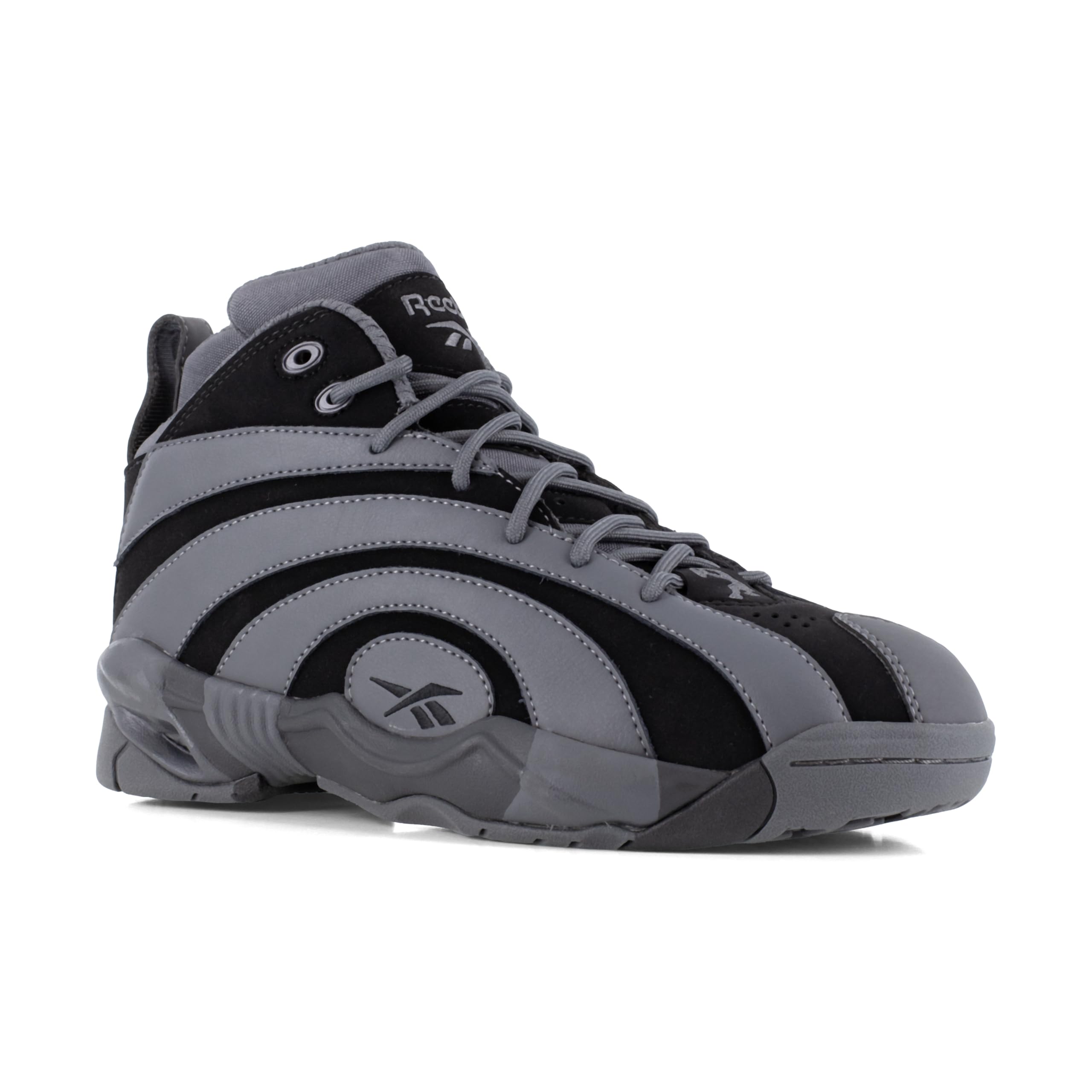
3. Reebok Work Men’s Shaqnosis Composite Toe Work/Duty – Black
A composite-toe work sneaker styled on the nineties Shaqnosis court shoe.
The Shaqnosis is for the worker who is tired of dull work shoes and wants something with a personality that still passes safety. The upper is action leather, mesh, PU, and rubber, and the whole boot is 100% non-metallic with a composite toe that meets ASTM F2413 standards. That composite toe is the big draw: it protects like a steel toe but stays light and won’t set off a metal detector. Add electrical hazard protection and a slip-resistant outsole, and this is a serious work sneaker dressed in a mid-nineties court design.
Comfort and looks are what buyers talk about most, and this boot is built around a MemoryTech memory foam footbed that gives a soft first feel. Buyers report wearing them all day without fatigue, with thick insoles and a secure liner. The styling is a genuine talking point — coworkers routinely guess these are not safety toes at all and ask where to get a pair. The XTR composite toe also gives extra wide room up front, so your toes can spread.
The fit is where you need to be careful. Some owners find them true to size and supportive, while others say they run smaller than other work shoes and recommend sizing up at least one full size. The boot is also heavier and bulkier than a standard sneaker, so don’t expect a featherweight. If you want classic work-boot style, skip this; if you want a comfortable composite toe that gets compliments, it delivers.
Why the crew keeps asking about them
- XTR composite toe meets ASTM F2413 and gives extra-wide toe room
- 100% non-metallic, with electrical hazard protection and slip-resistant outsole
- MemoryTech memory foam footbed plus good ankle support for all-day wear
- Bold Shaqnosis design that reads as a sneaker, not a work boot
Points to plan around
- Fit is mixed — plenty of owners say it runs smaller than other work shoes
- Heavier and bulkier than a plain athletic sneaker
The right buyer: A safety shoes hater who wants composite-toe protection in a shoe that looks like it belongs on a sneaker shelf.
The one caution: Try a half to full size larger than your normal casual size, since the fit feedback is genuinely split.
4. Carhartt Men’s Chelsea Boots
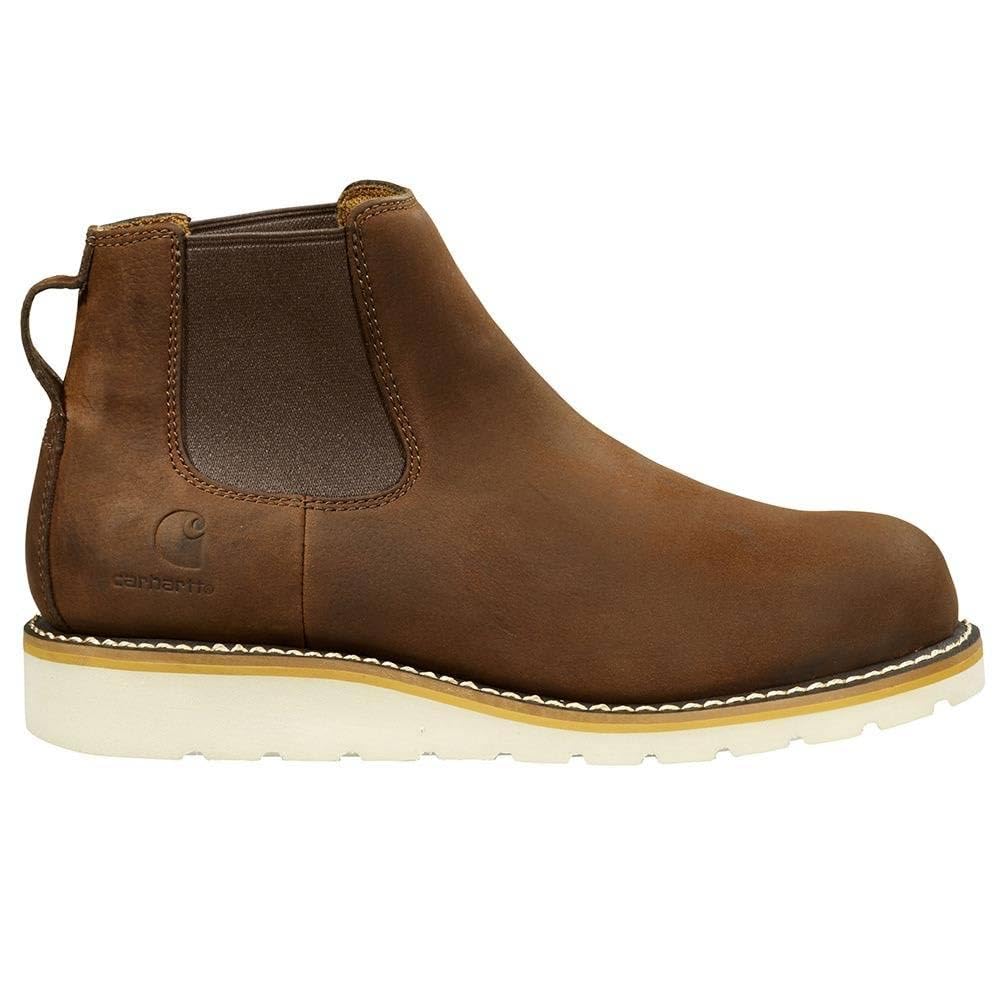
Slip on, slip off, and never tie a lace between jobs again.
The wedge Chelsea is Carhartt’s answer to a simple problem: you are in and out of buildings, trucks, and job trailers all day, and laces slow you down. This pull-on boot uses oil-tanned leather and twin gore panels to create a snug fit you step straight into. It comes in steel toe and soft toe versions, so you can pick your protection level. The Insite footbed delivers high-rebound cushioning and arch support designed to cut foot fatigue from sunrise to sunset, and FastDry linings pull moisture away to keep feet drier on long shifts.
The traction comes from dual-density Carhartt rubber outsoles with a slip-resistant tread, plus Goodyear welt construction for durability. Owners describe it as easy on-and-off and genuinely comfortable, with good quality and a clean look. Carhartt is a brand people trust, and this boot straddles work and casual: one owner wears them around the house and out to eat with friends. The leather scratches easily according to at least one buyer, so this is not the boot for a spotless dress look.
Two real limits show up in the feedback. The fit runs loose for many people, and a few report their feet sliding inside, especially at the heel, on long walks. There are also scattered reports of soles separating over time, so durability is a gamble rather than a guarantee. It is a heavy boot too — one contractor used to a lighter slip-on noted the weight. Those are sizing and longevity notes, not reasons to pass if you want easy on-and-off with a proven name.
what separates it: Twin gore panels (stretchy side inserts) and oil-tanned leather let you step in faster than a lace-up, in steel toe or soft toe.
What it is not: A precision-fitting boot — the fit runs loose for many, so try your normal size and expect some heel slide until you settle in.
Who it suits: Contractors and site workers who value a quick on-and-off over a laced boot, with a footbed built for long days.
Who may prefer another: People who need a snug, locked-in fit — the gore-panel build is naturally roomier than a laced boot.
5. KEEN Utility Men’s Evanston 6″ Composite Toe
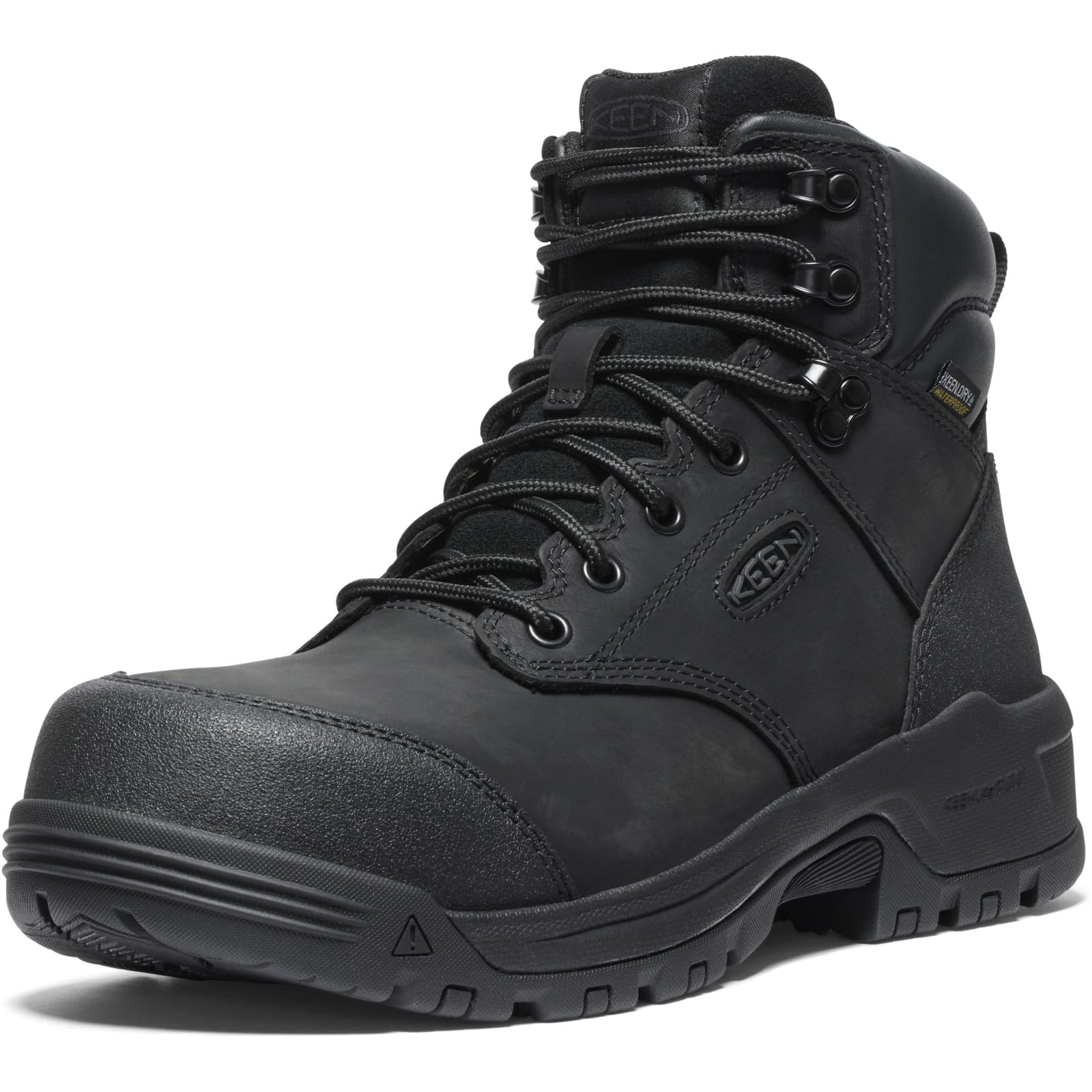
A take on the work boot that finally gives a wide, fan-shaped foot room to breathe.
KEEN built the Evanston on its traditional wider formed last, and for a lot of workers that is the whole pitch. The carbon toe sheds the weight steel would add, and the boot weighs 25.3 oz (720 g) per boot. That lightness matters by hour ten. The energy-returning KEEN.ReGEN midsole propels you through the day’s tasks, and the waterproof leather upper keeps feet dry and cool. A 90-degree heel and internal shank add stability on uneven ground.
People who fit this boot love it. One buyer with a wide, fan-shaped foot who wore Wolverine boots for three and a half years before switching says their feet stopped being calloused and the fit was spot on. Others praise the traction and waterproofing, with several saying they put in 8 to 12 hours without foot fatigue. A warehouse and plant worker reported the boots still looked like new after six months.
This boot divides people on fit and comfort. Some owners say the wide size still grinds the sides of their foot or the tongue seam cuts the ankle. Durability feedback is mixed: a few report treads wearing early or waterproofing failing within a month. Treat it as a boot for tradesmen and warehouse work, not the heaviest tow-and-recovery abuse. If your foot matches KEEN’s wider form, you get a lightness and support win; if not, size carefully.
Where the Evanston wins
- Wider foot form designed for a broad, fan-shaped foot
- Lightweight carbon toe and 25.3 oz (720 g) per boot
- Waterproof leather and a KEEN.ReGEN energy-returning midsole
- Strong traction and slip resistance on mud, stairs, and ladders
What to watch for
- Fit and comfort feedback is split — some find the wide size still tight across the foot
- Long-term durability has mixed reports, so treat it as medium-duty rather than heavy abuse
The match: A wide-footed worker in construction, utilities, or maintenance who wants a light, waterproof boot with real traction.
The mismatch: If your foot is average width, this wider form may feel roomy or rub — try it carefully before committing to a full shift.
6. New Balance Men’s Work & Safety Calibre Comp Toe Work Boots
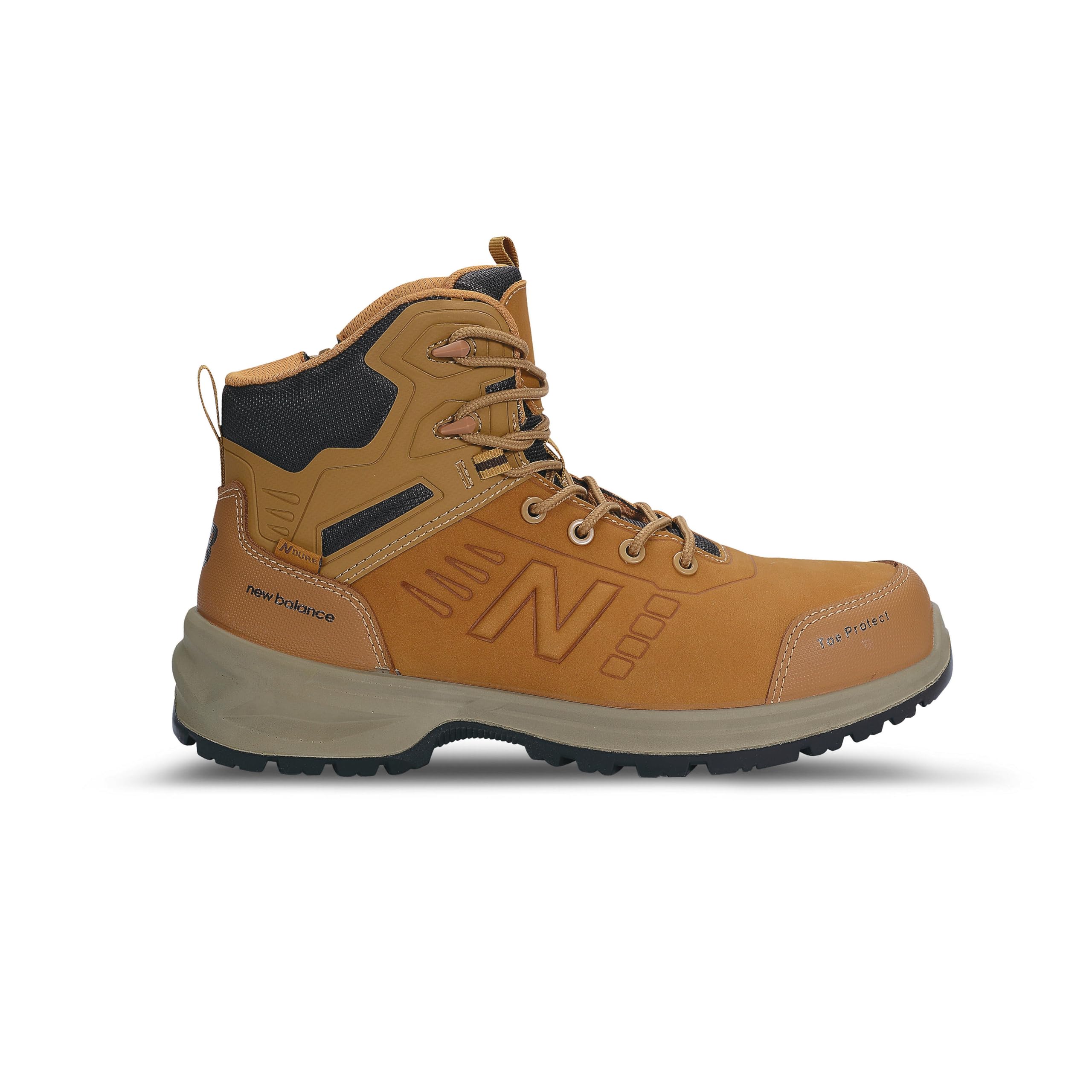
The boot for workers whose feet ache before the shift is half over.
If foot pain is your daily reality on concrete, the Calibre is the pair to try first. It sits at the top of this list for comfort feedback by a wide margin, and the reason is the NB Comfort Insole paired with Acteva foam in the midsole. That combination delivers support, low weight, and flexibility so an eight-to-twelve-hour day does not leave your arches thrashed. The rubber outsole has a dual-use tread that combines trail and running lug patterns, so it holds on both rough site ground and smoother indoor floors.
The side zipper is the feature that turns casual owners into repeat buyers. You can step in and out without untying, which is a real difference on a site where you change footwear several times a day. A worker wearing them three days straight with heavy walking said they stayed consistently comfortable the whole time. An overhead crane operator in steel mills put a year of use on a pair and reported they were still going strong. The reinforced toe and decent laces round out a boot that holds up to daily abuse better than its price class suggests.
Where it gets tricky is fit and finish. The toe box runs wide for some, and a few owners find the full-leather upper low on breathability. The lacing system is a common gripe — laces cinch from the toe end and do not relax after walking, so some people have to tie loosely and pull from the toe. The side zipper also needs you to untie before you unzip, which undercuts the convenience for some. None of that makes it a bad boot; it just means you should know the lace quirk going in.
The standout: Acteva foam and the NB Comfort Insole deliver cushioning that owners say matches boots costing far more, with a side zipper for fast changes.
The honest snag: The lacing takes some getting used to, and the side zipper does not skip the untying step — small friction on an otherwise comfortable boot.
Reach for this if foot pain on concrete is your biggest worry and you want cushioned support with a quick-entry zipper.
Would not suit someone who wants a heavy, insulated winter boot — this one is not built for deep cold.
7. Timberland PRO Men’s Titan Ev 6 Inch Composite Safety Toe
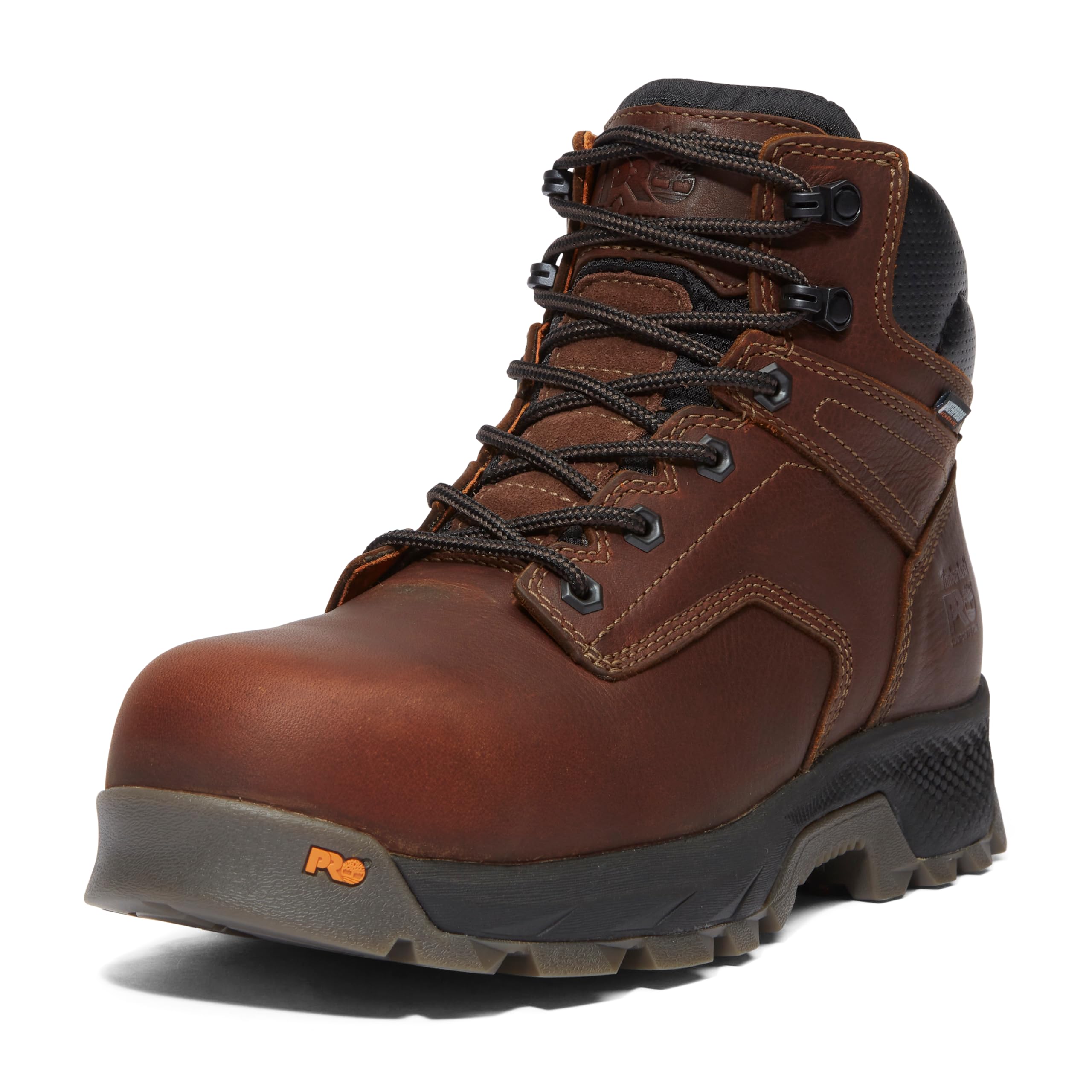
A premium boot that walks like a sneaker and protects like a work boot.
The Titan Ev is the premium comfort play on this list, built around a lightweight Hover Spring foam midsole that Timberland calls industry-leading for comfort and flexibility. Waterproofing comes from full-grain waterproof leather plus an internal waterproof membrane, so rain and splashes get stopped at two layers. The composite safety toe delivers protection without the metal, and the outsole is a non-marking rubber with heat, oil, slip, and abrasion resistance for indoor and outdoor traction. A breathable lining made from ReBOTL fabric, containing at least 50% recycled plastic, manages moisture.
Owners with long days on their feet say the comfort is real. One buyer working eight hours on their feet reported no foot pain and a back that felt good. Another overhead lineman said the boot is more comfortable than a hiking boot and fits best of the brands they have tried. Fit feedback leans positive with a roomy toe box, and several owners describe the feel as sneaker-light. The Anti-Fatigue Technology footbed adds all-day shock absorption and energy return, which is what keeps the boot from bottoming out at the end of a shift.
The caveat here is generational: some long-time Titan owners who loved the classic model say this Ev version feels less rugged than the original, with reports of plastic grommets and laces that loosen. Durability is also unverified for recent buyers since the boot is newer. That makes it a great pick for comfort-first workers, but not a guaranteed lifetime workhorse. The recycled-plastic lining is a nice touch that also keeps feet drier on hot days.
The case for the Titan Ev
- Hover Spring foam midsole delivers sneaker-like comfort in a safety boot
- Waterproof leather plus internal membrane for two-layer rain protection
- Composite toe with a roomy toe box and true-to-size fit
- Heat, oil, slip, and abrasion-resistant outsole for indoor and outdoor traction
The honest caveat
- Long-term durability is still unproven for the Ev generation, with some reports of early wear on laces and grommets
- Premium-tier build means you are paying for comfort more than raw toughness
Best fit: Workers who spend long shifts on their feet and want protection packed into a boot that feels like athletic footwear.
Second thoughts if: You want a proven decade-long tank of a boot — this premium model is comfortable but its long-term ruggedness is still being proven.
8. Ariat Men’s Rebar Lift 6″ Waterproof Composite Toe Work Boot
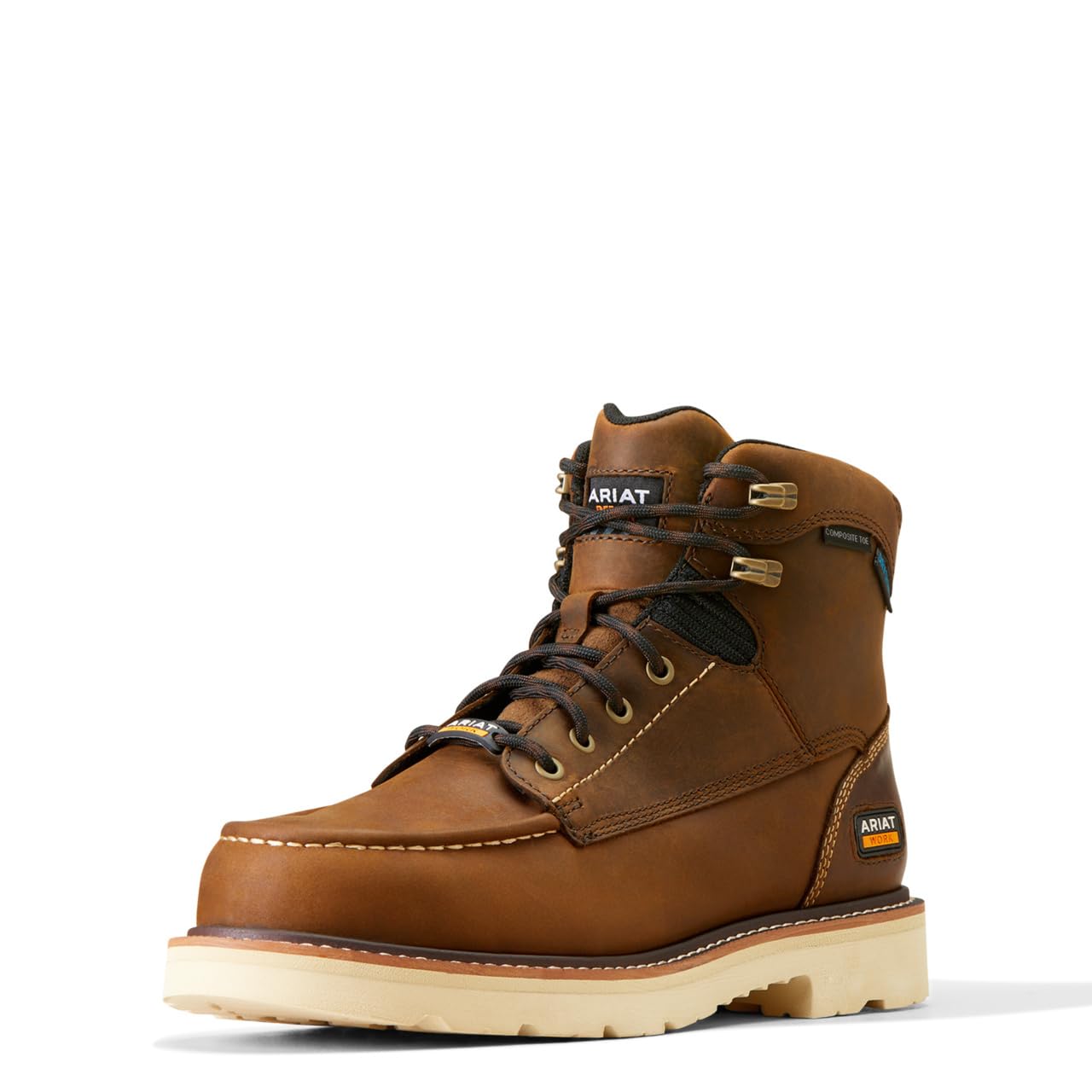
Built for the oil refinery and the long refinery shift, where lightweight still matters.
The Rebar Lift is a waterproof composite toe work boot built to be light enough to move fast and durable enough for industrial conditions. Ariat calls it lightweight yet durable, with cushioning and stability meant for long work days. The composite toe protects without metal, and the waterproof build is ready for outdoor weather. It is the most premium industrial pick on the list, and it earns its place on the feet of people who actually work in refineries and plants.
The comfort feedback is strong. One buyer who has spent an entire career in the industrial and commercial world called it the most comfortable pair of work boots they have ever owned. Another working in an oil refinery said it feels like a high-top basketball shoe on and that they can depend on it every day. The leather, stitching, and thick oil-resistant soles drew praise on first inspection, and a few owners mention the foot support keeps them going through long standing shifts.
Be aware of two things. The sizing is genuinely inconsistent — some buyers find it runs a little big and size down, while others with a composite toe box say it feels cramped and recommend going up to a wide. And heat is a real complaint: the boot traps warmth, and one HVAC worker described their feet as being on fire after a single day. Durability also has mixed signals, with the leather and stitching looking tough but some long-term questions remaining. It is a premium boot best suited to cooler or temperature-controlled industrial work.
The highlight: Waterproof leather, a composite toe, and cushioning built for refinery-grade wear — with a sneaker-light feel on the foot.
The sizing reality: Runs big for some and narrow for others, so try your normal size and keep the wide option in mind.
Where it stumbles: Breathability — this boot runs hot, which is a real issue in summer or a heated plant.
Who this suits: Industrial and refinery workers who want premium cushioning, waterproofing, and a composite toe in a light package.
Who should think again: Anyone working hot environments or needing a breathable summer boot — the warmth is the trade-off.
9. Danner Bull Run 6″ Chelsea Steel Toe Work Boots for Men

The handmade boot for electricians and carpenters who value a true fit over glitter.
Danner’s Bull Run Chelsea is the top of the premium tier because it is built differently — with the brand’s stitchdown construction and a Portland-made 503 last. That last gives a casual fit without losing the lace-to-toe comfort Danner is known for. The full-grain leather upper is soft but durable, and the slip-on design makes it quick to step in and out of when you are moving from outside to inside all day. The oil- and slip-resistant outsole keeps you comfortable on wood, tile, or concrete.
What owners talk about most is fit — several say it fits better than the Thorogood boots they had before. One buyer is glad they replaced their 10-year-old boots with these, reporting true sizing and a quick break-in. The leather is described as soft yet durable, easy to slide on without being loose enough to blister. The removable insole lets you put in your own, which several owners took advantage of by swapping the thin factory sole.
The downside is price and durability confidence. This is the most premium boot here, and mixed reports exist on soles separating or breaking down after a few months. The steel toe can also feel tight across the ball of the foot and heel for some feet, and one buyer mentioned the boot runs bigger than the same-size boot from another brand. It is a handcrafted pick for someone who will care for it, not a budget throwaway.
Where the Bull Run shines
- Stitchdown construction and a true-to-size fit owners praise
- Soft, durable full-grain leather and quick break-in
- Slip-on Chelsea design for fast in-and-out movement
- Oil- and slip-resistant outsole for wood, tile, and concrete
What to factor in
- Premium-tier cost, with mixed reports on long-term sole durability
- Steel toe can squeeze the ball of the foot for some wearers
Where it belongs: On the feet of electricians, carpenters, and wood workers who want a handcrafted slip-on that fits true.
When to hold back: If your daily world is standing water and you need a rubber boot, this is a dry-site craft boot, not a wet-site one.
Know the Specs
Safety toe types (steel vs. composite vs. carbon)
A safety toe is the protective cap over the front of the boot. Steel uses a metal cap that takes a heavy impact but adds weight. Composite uses non-metal materials like carbon or fiberglass, which is lighter and does not trigger metal detectors. Carbon toe is a lighter composite variant. Check the label for an ASTM rating if your site requires certified protection.
Waterproofing: membrane vs. rubber vs. leather
Waterproofing can come from a few places. A full rubber boot like the TIDEWE keeps water out with its entire shell. A leather boot may use a waterproof leather plus an internal membrane, as the Timberland PRO does, to stop water in two layers. Water-repellent leather resists splashes but is not the same as fully waterproof. Match the level to your site, and do not expect dry feet if you stand in a puddle in a breathable leather boot.
Shank and outsole: what protects the bottom of your foot
A shank is a stiff support piece under the arch that adds stability and, in steel versions, helps guard against punctures from below. The outsole tread is your grip — deep lugs hold on mud and gravel, and slip-resistant rubber helps on wet concrete. If you work around nails and debris, look for a shank and a puncture-resistant plate in the spec.
Weight and day-long comfort
Boot weight affects fatigue as much as any cushioning. A boot at roughly 25 ounces per foot (720 g) is on the lighter side for a safety toe, and a 4.21-pound pair is a heavier build. Lighter boots are easier to keep moving in all day; heavier boots feel sturdier underfoot but tire you faster. The footbed and midsole foam matter just as much — memory foam, high-rebound insoles, and energy-returning foams are what keep the boot from bottoming out by hour ten.
Common Questions
Will a composite toe boot pass a metal detector at a secure site?
Do construction work boots run true to size or should I size up?
Is a steel toe or composite toe better for standing on concrete all day?
What does a steel shank actually do in a rubber work boot?
Are pull-on Chelsea boots as safe as lace-up work boots?
How long should construction work boots last?
Can I wear construction boots in cold weather?
Do I need a waterproof boot for indoor construction work?
Are wide sizes worth it for construction boots?
Is a non-metallic or metal toe better for electrical work?
The Bottom Line
For most people, the shoes for construction workers winner is the Cat Striver Steel Toe because it combines a proven steel toe with a true-to-size fit and day-one comfort that owners keep coming back to. If you work in wet mud and cold, grab the TIDEWE Rubber Work Boots. And for the worker whose feet ache by noon, the New Balance Calibre
How we choose
We do not accept paid placement. Every pick is matched to a real buyer and a real use-case; we do not hands-on test units.
Sources
Specifications: manufacturer listings and product documentation. Review insights: verified customer reviews, as of October 2026. Pricing: not shown on this page (it changes often); check the current price via the retailer link.
As an Amazon Associate, Aappliancez earns from qualifying purchases. This does not affect which products we feature.