Disclosure: Some links in this post are affiliate links. As an Amazon Associate I earn from qualifying purchases, at no extra cost to you. Learn more
Specs are compiled from manufacturer listings and verified buyer reviews and can change over time — please confirm the key details on the product page before buying.
If a bone spur on the top of your foot makes every lace-up feel like a tourniquet, the fix is simpler than you think: you need a shoe with extra room above your instep (the top of your foot where the laces sit) and a soft, seam-free lining across that spot. The picks below are chosen for that exact pressure point — deep toe boxes (extra room in front of your toes), padded tongues, and stretchy or adjustable closures that stop rubbing directly on the tender spot. A rocker sole (a curved sole that rolls your foot forward) or a cushioned platform also helps, because it spreads your weight across the whole foot instead of concentrating it where the spur sits.
This guide is built by comparing the manufacturers’ published specifications and the patterns across verified customer reviews, so you get each pick’s real strengths and trade-offs instead of marketing spin.
You will see how extra depth, soft linings, and adjustable straps each solve top-of-foot pressure differently, plus which picks fit wide feet and custom orthotics. Here is the practical breakdown of the best Shoes for Bone Spurs on Top of Foot.
Top Picks


How To Choose The Best Shoes for Bone Spurs on Top of Foot
A bone spur on top of the foot sits right where laces and seams press down. So your shoe has to do the opposite of what a snug athletic shoe does — it has to give your instep room to rise. The three features that matter most are extra depth above the foot, a soft lining across the tongue area, and a closure you can loosen without the shoe sliding off.
Why extra depth beats extra cushioning
Extra depth (listed as “double depth” on some models) means the shoe is built taller inside so there is more vertical room above your foot. That space is what stops the upper from resting on the spur. Cushioning under your heel helps with impact, but it does nothing for pressure on top — depth is the feature that actually addresses your problem.
Laces vs. straps around the instep
Laces let you dial in the fit precisely, which is useful if your swelling changes through the day. Hook-and-loop straps are faster to adjust and easier on stiff hands. Either way, look for a padded tongue so the closure never sits directly on the tender spot.
Width and the toe box
A wide or extra-wide toe box gives your toes room to spread without pushing the upper upward. If you wear custom orthotics, check that the insole is removable — a removable footbed lets you swap in your own insert and often adds a little more depth once it is out.
Side-by-Side Comparison
| Model | Best For | Depth / Toe Box | Closure | Key Strength | Amazon |
|---|---|---|---|---|---|
| Dr. Comfort William-X★ Best Overall | Everyday diabetic comfort | Double depth, roomy toe box | Lace-up | Substantial build that lasts | Amazon |
| FitVille Rebound CoreBest Value | Wide feet and value | Wide/2E to XX-Wide/6E toe box | Lace-up | Patented PropelCore sole | Amazon |
| Gravity Defyer Mighty Walk | Energy return for walking | Wide toe box, W/XW widths | Lace-up | Rocker sole design | Amazon |
Detailed Reviews
1. Dr. Comfort William-X Men’s Diabetic Casual Shoe
Our pick — 4.0+★ from 700+ verified ratings; the strongest balance of quality and price.
Double depth built for swollen, sensitive feet that need room above the instep.
The William-X earns the top spot because of one feature that directly answers your problem: double depth. That means the shoe is built taller inside, so the upper sits higher above the top of your foot instead of pressing down on the spur. The roomy toe box gives your toes space without pushing the leather upward, and the smooth interior keeps seams away from your tender spots.
Owners keep coming back to this one for the fit, and the numbers back it up — the vast majority of the 4.0+ star score comes from people who found the sizing true. The removable insole also makes room for your own orthotics or diabetic inserts. Buyers report it accommodates swelling and holds up over long days on your feet.
The trade-off is weight. This is a heavier, more substantial shoe than a lightweight sneaker, and the traction gets mixed feedback — fine on dry ground, less confidence-inspiring on slick surfaces. It also runs true to size, so ordering your normal size usually works, but if you wear thick socks you may want to size up.
What you get for the money
- Double depth gives real vertical room above the instep
- Roomy toe box keeps pressure off the top of the foot
- Removable insole accommodates custom orthotics
- Durable build that holds up, per owners
Where it gives ground
- Lighter sneakers will feel easier by comparison
- Traction gets mixed notes on slick surfaces
- True-to-size fit means thick socks may crowd it
Go for it if: you have a top-of-foot spur or swelling and want the most depth for the money, with room to add your own orthotics.
Pause if: you want a featherweight shoe or you regularly walk on wet, slick ground.
2. FitVille Men’s Wide Walking Shoes Rebound Core
The wide-foot specialist that goes all the way up to 6E without charging premium money.
If your problem is less about a spur and more about a foot that regular shoes squeeze, the Rebound Core is the one. It comes in Wide/2E, Extra Wide/4E, and Extra Extra Wide/6E — the widest range here. The wide toe box and high instep design are both built to keep the upper away from the top of your foot, and the patented PropelCore sole pairs arch support with cushioning.
The feel is soft and protective. Owners describe them as “like walking on clouds,” and they look like a normal athletic sneaker rather than orthopedic footwear. It is designed for all-day standing and long-distance walking, and the insole is removable so your own orthotics drop right in. Compared with the Gravity Defyer below, this one wins on width options and costs noticeably less — but the Mighty Walk has the edge on arch support feedback.
At 4.0+ with a huge review base, this is a shoe most owners are happy with. The honest catch: a wide toe box and high instep are excellent for top-of-foot pressure but add bulk, and if you want a slimmer profile this will feel chunky. Fit is true to size for most, though not everyone.
Dials in for: wide or extra-wide feet that need room up top, at a budget-friendly price.
Shrugs at: anyone who wants a low-profile, slim sneaker for dressier wear.
3. Gravity Defyer Mighty Walk Walking Shoes for Women
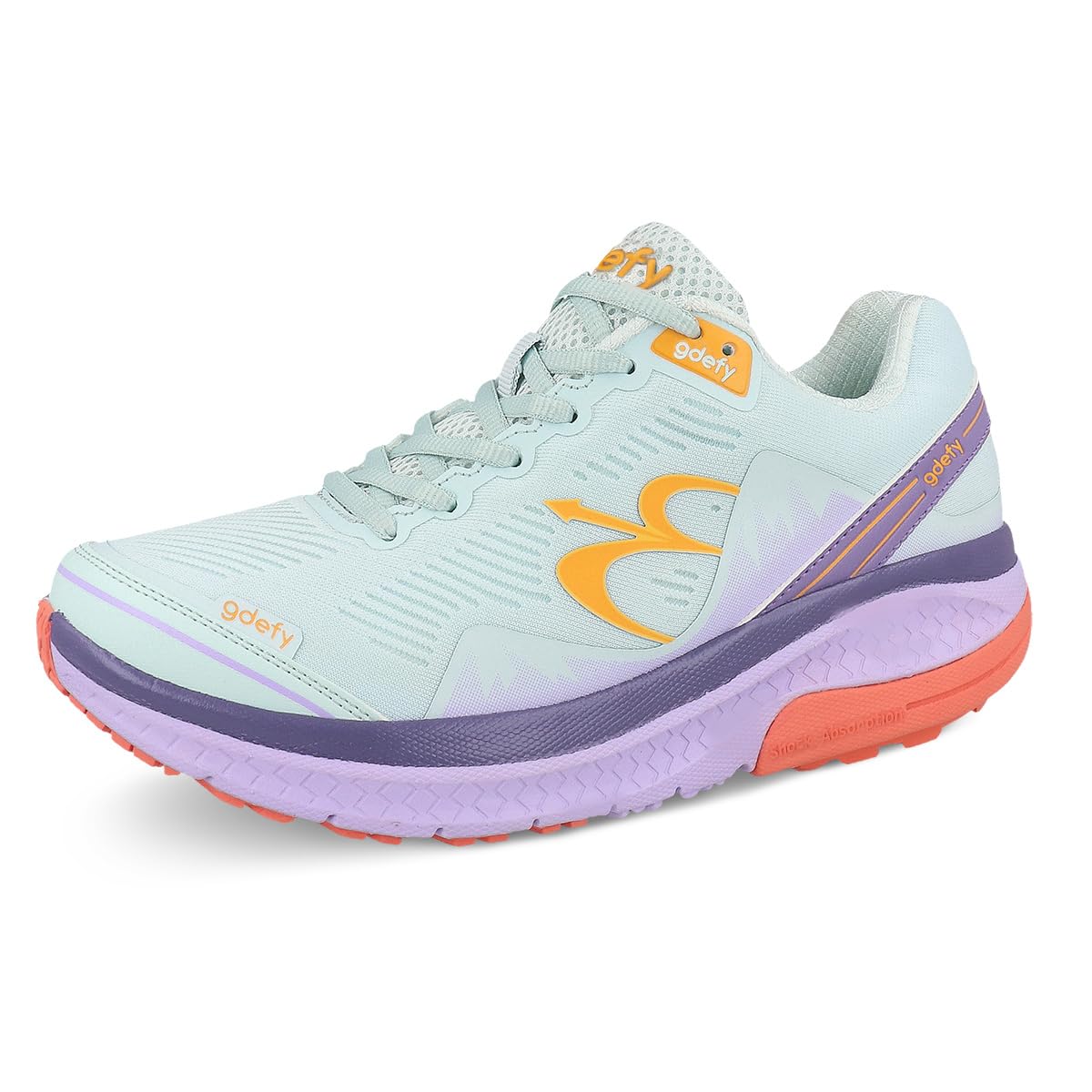
A rocker sole that rolls your stride forward and keeps weight off the tender instep.
The Mighty Walk solves top-of-foot pressure from a different angle: the rocker sole. Instead of your foot stopping flat, the rounded sole keeps your weight moving from heel to toe, promoting a natural gait and smoother transitions with every step. For a spur on top of the foot, that matters because a rolling stride spreads load across the whole foot rather than letting one spot take the hit.
The wide toe box gives toes room, and the fit is true to size with W and XW widths available — XW runs about ½ inch wider than standard. Owners praise the comfort most, with the arch support a close second. Owners say the cushioning and energy return keep them going on all-day walks.
One thing to expect: the rocker sole feels different at first. Break them in for 1–2 hours daily over the first 3–5 days, start on flat surfaces, and take stairs slowly until you adapt. If you are between sizes, size up by half a size. That adjustment period is the price of the rocker benefit.
Picks this if: you want a rolling, energetic stride and a wide toe box to take pressure off the instep.
Think twice if: you wear orthotics that need a flat, stable base — the rocker changes how the foot lands.
Know the Specs
Extra / Double Depth
Extra depth (or “double depth”) means the shoe is built taller inside, adding vertical room above your foot. That space is what keeps the upper off a bone spur on top of the instep. Depth is about the height inside the shoe, not the cushioning under your heel, so read the listing for “extra depth” or “double depth” rather than assuming a cushioned shoe will do the job.
Toe Box Width
The toe box is the front compartment of the shoe. A wide or extra-wide toe box gives your toes room to spread without the upper pushing upward against the top of your foot. Widths are listed as Wide/2E, Extra Wide/4E, and Extra Extra Wide/6E on some models — higher numbers mean a wider foot. If you wear wide shoes normally, start at Wide/2E.
Rocker Sole
A rocker sole is curved so the shoe rolls from heel to toe instead of stopping flat. For a spur on the instep, the benefit is a smoother, rolling stride that spreads weight across the whole foot. Expect a short adjustment period — some makers suggest 1–2 hours daily for the first 3–5 days, starting on flat ground.
Closure and Lining
Laces give a precise, adjustable fit; hook-and-loop straps are faster and easier on stiff hands. Either way, look for a padded tongue and collar so the closure never presses directly on the tender spot. A soft, breathable lining (like Dri-Lex on the Drew models) keeps the foot cool and reduces friction.
Common Questions
Will extra depth actually help a bone spur on top of my foot?
Can I wear my own orthotics inside these shoes?
Should I choose laces or hook-and-loop straps?
How do I know which width to order?
Do these shoes run true to size?
Is a rocker sole better than a flat sole for top-of-foot pain?
How long does it take to break in a rocker-sole shoe?
Are these shoes heavy?
Can I wear these if I have diabetes or sensitive feet?
The Bottom Line
For most people dealing with a bone spur on top of the foot, the shoes for bone spurs on top of foot winner is the Dr. Comfort William-X because its double depth lifts the upper off the instep and leaves room for your own orthotics. If wide feet are your real concern, grab the FitVille Rebound Core for its range up to XX-Wide/6E. And for a rolling stride that spreads pressure across the whole foot, the Gravity Defyer Mighty Walk is the one to reach for.
How we choose
We do not accept paid placement. Every pick is matched to a real buyer and a real use-case; we do not hands-on test units.
Sources
Specifications: manufacturer listings and product documentation. Review insights: verified customer reviews, as of October 2026. Pricing: not shown on this page (it changes often); check the current price via the retailer link.
As an Amazon Associate, Aappliancez earns from qualifying purchases. This does not affect which products we feature.