Disclosure: Some links in this post are affiliate links. As an Amazon Associate I earn from qualifying purchases, at no extra cost to you. Learn more
Specs are compiled from manufacturer listings and verified buyer reviews and can change over time — please confirm the key details on the product page before buying.
If every step feels like you are walking on a pebble just behind your toes, the fix is rarely a thicker sock — it is a metatarsal pad landing in the right spot. The picks below all put a raised pad or support under the ball of your foot, but they do it in different ways and suit different shoes. Read the fit notes before you buy, because a pad that sits a few millimetres too far forward can make the pain worse rather than better.
This guide is built by comparing the manufacturers’ published specifications and the patterns across verified customer reviews, so you get each pick’s real strengths and trade-offs instead of marketing spin.
What follows sorts the thin dress-shoe options from the cushioned athletic ones, so you can match an insert to the shoes you actually wear. Here is how to narrow down the shoe inserts for metatarsalgia that fit your feet and your shoe rotation.
Top Picks


How To Choose The Best Shoe Inserts for Metatarsalgia
Metatarsalgia is pain in the ball of your foot, at the ends of the long bones that run to your toes. The wrong insert is usually the one whose pad sits too far forward or too far back. Choosing well starts with where the pad lands and whether the insert physically fits inside the shoe you wear most.
Where the metatarsal pad sits
A metatarsal pad is a raised bump that lifts the bones just behind the ball of your foot, spreading pressure away from the tender spot. It should sit just behind the metatarsal heads — the knuckles at the base of your toes — not directly on top of them. When it lands too far toward the heel, it pushes up into the arch instead, which is the single most common reason these inserts do not work for a given foot.
3/4 length versus full length
A 3/4 length insert stops before the toes, so it leaves room in tight shoes and works in loafers, ballet flats and low-profile lace-ups. A full-length insert runs the whole length of the shoe and replaces the factory footbed, which suits running shoes and athletic trainers where you can pull the original liner out. Check that the insert does not crowd your toes — a cramped toe box makes any pad feel worse.
Arch height and cushioning
An insert with a modest arch gives you support without forcing your foot into a shape it does not want. Cushioning matters too: a firmer pad redistributes pressure, while a soft foam topper absorbs impact. Both approaches help, but they feel very different after an hour of standing.
Side-by-Side Comparison
| Model | Best For | Length | Metatarsal Support | Weight | Amazon |
|---|---|---|---|---|---|
| Pedag Holiday★ Best Overall | Dress shoes and tight loafers | 3/4 length | Metatarsal pad | 1.12 ounces | Amazon |
| Footlogics 3/4 Length OrthoticBest for Ball-of-Foot Pain | Ball-of-foot pain in flat shoes | 3/4 length | Built-in metatarsal raise | 3.84 ounces | Amazon |
| Kelaide Metatarsalgia Insoles | Everyday and work shoes | Full length | Built-in metatarsal pad | 9.91 ounces | Amazon |
| 10 Seconds Pressure Relief 3030 | Cushioned comfort in boots and slip-ons | Full length | Plastazote topper with metatarsal pad | 5.61 ounces | Amazon |
| PowerStep Pulse Plus Met | Running and long walks | Full length | Metatarsal pad | 5.93 ounces | Amazon |
Detailed Reviews
1. Pedag Holiday 3/4 Length Sheepskin Orthotic Inserts
Our pick — 4.5+★ from 800+ verified ratings; the strongest balance of quality and price.
The featherweight slip that disappears into a dress shoe without wrecking the fit.
Here is the number that tells you what this insert is: 1.12 ounces. The metatarsal pad and heel cushion sit under the ball and heel, and the 3/4 length means it stops before your toes so nothing crowds them.
What wins people over is how long a pair keeps working. Buyers report a decade of daily wear with the lambskin leather top still odor-resistant. It carries the APMA Seal of Acceptance, the American Podiatric Medical Association’s recognition for products that promote foot health. One owner reports these stiff, thin 3/4-length insoles outperforming custom podiatrist orthotics for over-pronation, bunions and plantar fasciitis, enabling 4-7 miles a day pain-free.
The catch is cushioning. This is a firm, thin support layer, not a soft bed, so it suits you best if you want discreet arch and ball-of-foot support rather than pillow-soft comfort. Sizing also runs small on the European chart, so order up a size if you are between sizes or a half size. And the foam heel pad can tear if you use a stick-on heel adhesive, which owners warn shortens the life of the insert considerably. It holds 4.5+ stars across 800+ ratings.
Why It Earns The Top Spot
- At 1.12 ounces it fits dress shoes where thicker inserts simply will not go.
- Lambskin leather top stays odor-resistant and lasted owners through a decade of daily use.
- Carries the APMA Seal of Acceptance for foot health.
- 3/4 length leaves the toe box free so your toes are not squished.
The Honest Trade-Offs
- Firm and thin rather than cushioned — not the pick if you want a soft underfoot feel.
- Skip the heel adhesive pads; they tear the foam heel pad and cut lifespan.
- Will not work in high heels because of the heel shelf.
Reach for this if: you wear loafers, oxfords or ballet flats and need support that will not show or cramp your foot.
Look elsewhere if: you want plush cushioning for long athletic days — this one is built for support, not padding.
2. Footlogics 3/4 Length Orthotic Shoe Insoles
A prominent built-in raise under the ball of the foot, made for flat shoes with room to spare.
Australian podiatrists designed this 3/4-length insert specifically for ball-of-foot pain and Morton’s neuroma. The defining feature is a prominent built-in metatarsal raise — a lift under the front of the foot that takes pressure off the ball — paired with a deep heel cup and strong arch support. It fits flat or low-heeled shoes with or without laces, so loafers and flats are fair game.
What people rave about most is the comfort, and the pain relief follows close behind — buyers describe pain lifting within a couple of hours and being gone within days. One buyer with two years of daily pain from a suspected Morton’s neuroma reports relief within about two hours and no pain after three days. The cushioning comes from a lightweight yet supportive Q-E.V.A. base with shock-absorbing Podflex padding at the heel and forefoot.
Fit is the honest sticking point. The 3/4 length suits some shoes beautifully and not others, and half-size inserts can slide unless you secure them — one workaround is spraying adhesive and pulling the original insoles out. Some feet find the metatarsal pad sits too far toward the heel, which pushes into the arch. If you are between sizes, sizing up is the safer call. It sits at 4.0+ stars from 800+ ratings, with mixed fit notes worth reading before you buy.
What It Delivers
- The built-in metatarsal raise directly targets ball-of-foot pressure.
- Q-E.V.A. base with Podflex heel and forefoot padding absorbs shock.
- Deep heel cup and strong arch support give real structure.
- Works in flats, loafers and lace-ups that a full-length insole would crowd.
Where It Falls Short
- Pad placement is love-it-or-not; some feet feel it crowd the arch.
- Half sizes can slide — you may need to glue it down or remove the stock insole.
- Cushioning is modest; it leans toward firm support rather than softness.
Try this if: you want a pronounced raise under the ball of your foot and wear flat shoes with a bit of room.
Consider the trainer pick instead if: you need it to sit rock-solid in an athletic shoe with zero sliding.
3. Kelaide Orthotics Arch Support Metatarsalgia Insoles
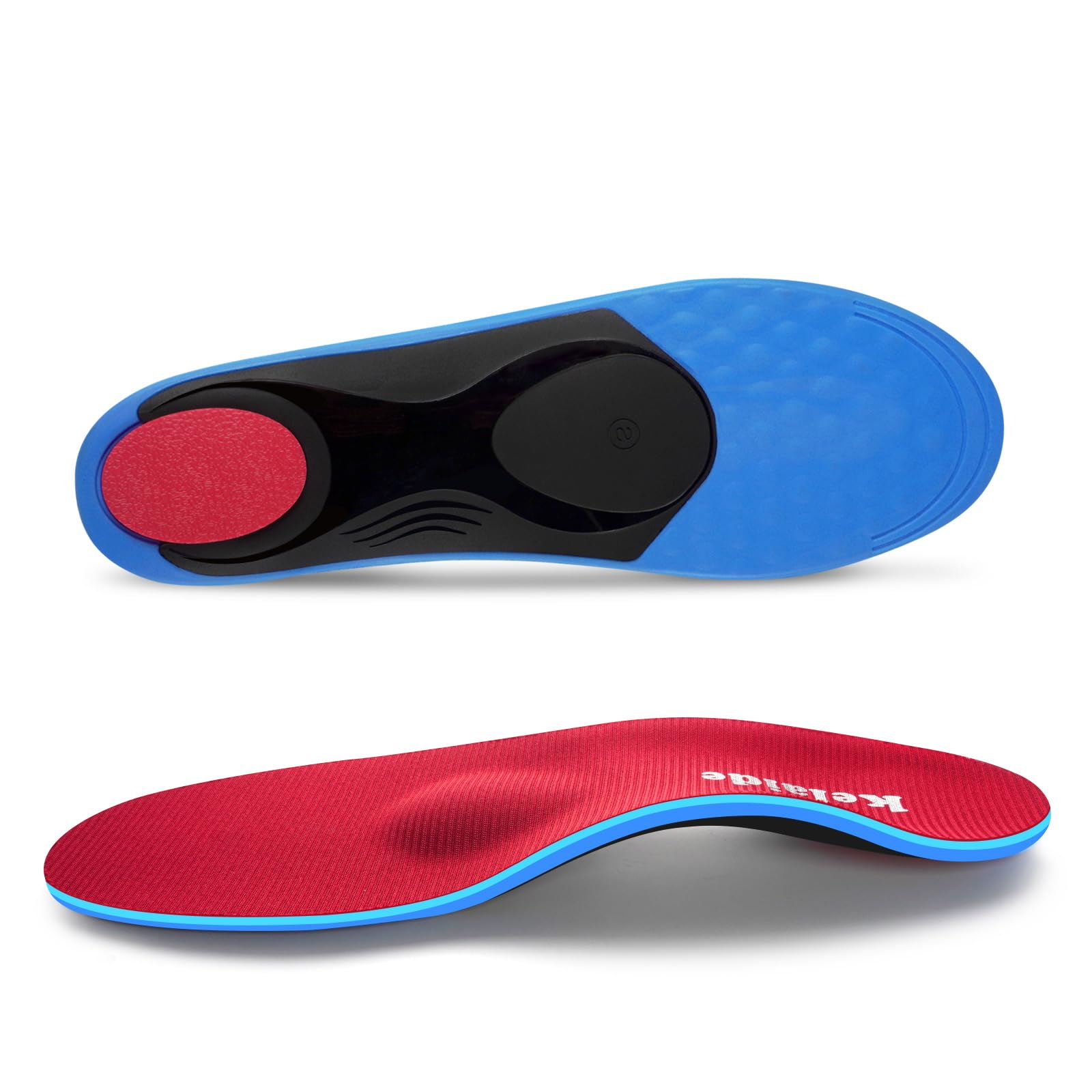
A full-length, breathable daily driver with a neutral arch and a built-in metatarsal pad.
This full-length pair is a sensible place to start if you want one insert that lives in your everyday shoes. A built-in metatarsal pad (a raised cushion under the ball of your foot) sits right where the pain hits. The heel wrap is low enough to fit standard shoes, so you can swap it between pairs. A soft foam and breathable fabric top layer cuts heat and friction, so your foot stays cooler on long days. It is built for athletic, walking, running, work and some casual and dress shoes.
The thing owners praise most is comfort, with quality close behind — it reads as a sturdy, well-made everyday insert rather than a flimsy cut-out. It feels noticeably heavier than the thin Pedag Holiday at 9.91 ounces versus 1.12 ounces, and that extra mass is the foam and structure you get in return. Foot pronation and arch support are the real point here.
The honest note is fit width. Some feet find it too narrow for normal-width slippers, so check the width of the shoes you plan to use it in. The surface is textured, which stops socks from sliding and twisting in a way smooth inserts do not — a genuine plus if you have been fighting inserts that rotate. First-timers may need a few days to adjust to the metatarsal pad before wearing it all day.
The everyday case: a breathable, textured, full-length insert built around a metatarsal pad, with comfort and build quality carrying its reputation. It works across work and walking shoes without needing to be glued down.
Worth knowing: it is not plush, so a full day on your feet can leave some soreness — the support is doing the work, not soft padding. Width is the one spec to double-check against your shoes.
Best matched to: a single pair of work or walking shoes that could use a breathable, structured daily insert.
Not ideal if: you need something paper-thin for a snug dress shoe — this one needs room.
4. 10 Seconds Pressure Relief 3030 with Metatarsal Pad

The softest of the bunch — a plastazote memory-foam topper that molds to your foot shape.
For pure underfoot softness, this is the most cushioned insert here. The plastazote topper — a memory-foam style material — molds to the shape of your foot over time, and the metatarsal pad sits under the ball to redistribute pressure. Medium arch height and a trim-to-fit design let you match it to your shoe. It is a full-length insert at 5.61 ounces, so it wants shoes with a removable footbed.
The quality and comfort are what people rave about, with foot-pain relief right behind. It leans on a couple of clever materials: the plastazote topper for shock absorption, and Poron strike pads under the heel to soak up impact and fight fatigue during activity. The metatarsal pad is larger and differently shaped than many rivals, which several owners find helps target the tender spot below the second and third toes.
The honest limitation is durability under heavy mileage. One long-walker found the support faded and pain returned at around three miles after weeks of use, and another preferred the firmer Ultra Arch version for its sturdier feel. The foam cover can feel warm and make socks stick, too. It holds 4.0+ stars across 1,000+ ratings, so most people are clearly getting on with it. Trim it carefully before committing it to a shoe.
Why it stands out: the plastazote topper and Poron heel pads together deliver the highest cushioning on this list, which matters most if the ball of your foot is raw and impact-sensitive rather than just tired.
The real caveat: it is a comfort-first insert, not a long-haul one — if you log serious daily miles, expect the support to soften sooner and plan to replace it.
Choose this for: boots, slip-ons and casual shoes where you want softness under a sensitive ball of foot.
Pass on it if: you need a firm, long-lasting support for high daily mileage rather than cushioning.
5. PowerStep Pulse Plus Met Ball of Foot Pain Relief Insoles
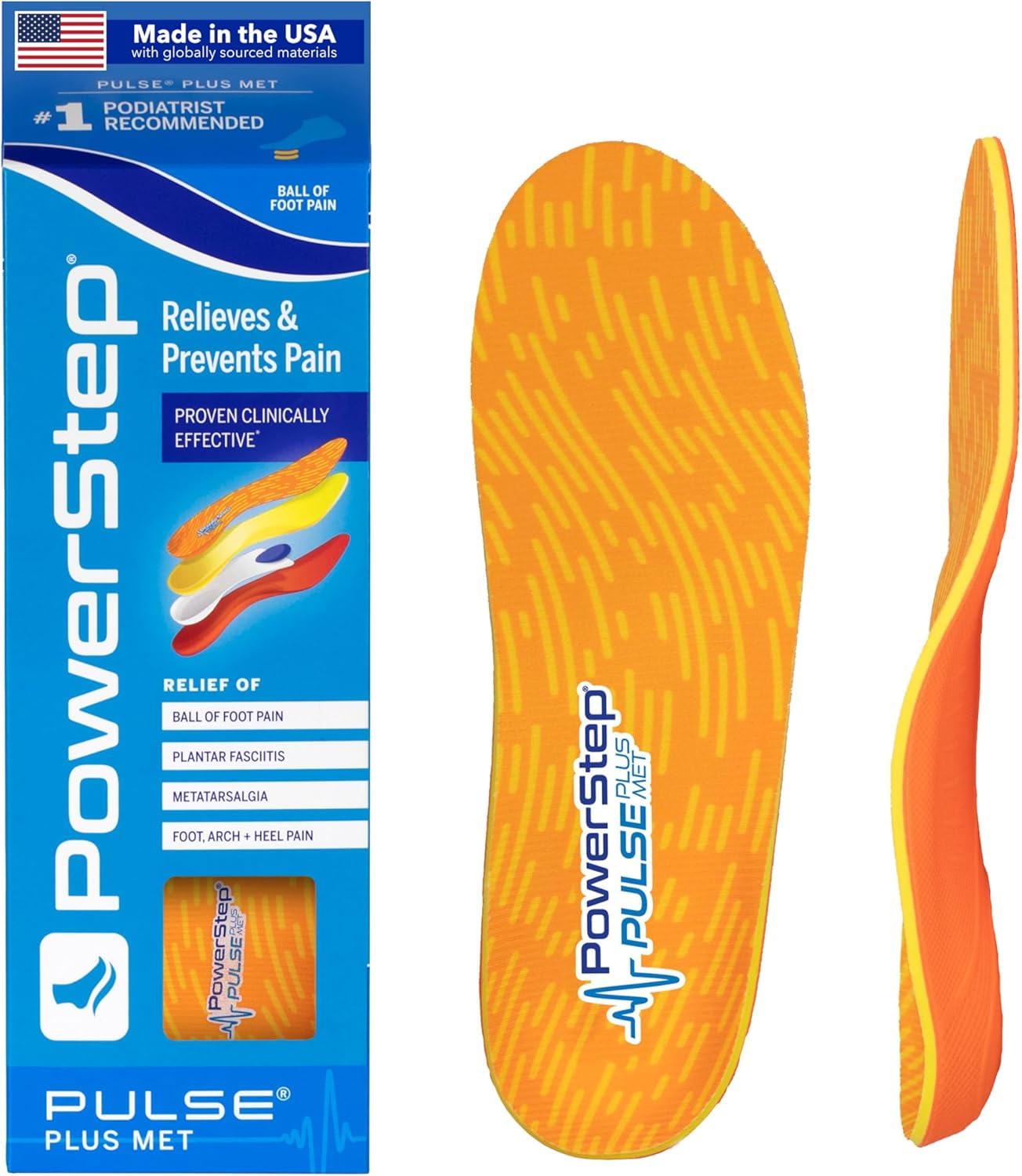
A full-length running orthotic with broad, even metatarsal support and an odor-control top fabric.
Made in the USA, this full-length insert is built for running shoes and replaces the factory footbed entirely. It features a metatarsal pad under the ball and an odor-control top fabric that helps reduce heat, friction and perspiration. At 5.93 ounces it gives you total-contact support through the whole shoe.
What owners praise most is build quality, with comfort close behind, and the metatarsal support reads as broad and even rather than an isolated lump — which is exactly what makes it forgiving in an athletic shoe. Some wearers say it outperforms fitted orthopedic insoles, and owners mention finishing long hikes and walks they expected to abandon. The design is full-length, so it holds position far more reliably than a 3/4 insert when you are moving fast.
The catch is sizing and shoe fit. This insert is bulky enough that some owners say it barely fits in a running shoe, so you may need to pull out the stock insole to make room. Durability is worth planning around: some wearers report replacing it roughly every six months with regular use, and a few find the arch shape takes getting used to. Sizing runs true, which helps. It sits at 4.0+ stars from 900+ ratings.
Stands Up To
- Broad, even metatarsal support rather than a single pressure point.
- Odor-control top fabric cuts heat, friction and perspiration.
- Full length sits steady in a moving running shoe, unlike a 3/4 insert.
- Sizing is true to size, which takes the guesswork out of ordering.
Where The Catch Sits
- Some feet find it barely fits inside a running shoe — expect to remove the factory liner.
- Regular users may need a fresh pair roughly every six months.
- A minority find the arch shape awkward at first.
Made for: runners and long-distance walkers who want support that stays put through a full session.
Look at the thinner picks above if: your shoes are snug and you cannot give up the factory footbed.
Know the Specs
Metatarsal Pad and Raise
A metatarsal pad is the raised section that lifts the bones behind the ball of your foot. A built-in raise, like the one in the Footlogics pair, is a more prominent, molded lift; a foam pad is softer and more contoured. Both work by taking pressure off the ball, but the placement must sit behind the metatarsal heads or it pushes into the arch instead.
3/4 Length vs Full Length
A 3/4 length insert stops just short of the toes so it fits tight dress shoes and flats without crowding your toes. A full-length insert runs the whole shoe and replaces the factory footbed, suiting athletic shoes where you can pull the original liner out. Match the length to the shoes you wear most.
Arch Height and Cushioning
Arch height sets how much lift your midfoot gets — medium, modest or strong. Cushioning is how much softness sits under the foot. A firmer insert redistributes pressure, while a plastazote or memory-foam topper absorbs impact. Neither is better outright; you pick based on whether your foot needs structure or softness.
Weight and Shoe Room
Insert weight, measured in ounces, hints at how much material you are adding to the shoe. A 1.12-ounce insert barely changes the feel; a 9.91-ounce insert takes up real space. If your shoes are already snug, weight and bulk are the first specs to check.
Common Questions
Will a metatarsal pad help Morton’s neuroma as well as metatarsalgia?
Should I buy 3/4 length or full length inserts?
How do I size inserts for metatarsalgia when I am between sizes?
Why does the metatarsal pad sometimes make my arch hurt?
Can I wear these inserts in high heels?
How long should a pair of inserts for metatarsalgia last?
Do I need to remove the factory insole before adding an insert?
Will inserts stop the pain from standing all day?
Can I move one pair of inserts between different shoes?
Do these insoles work better than custom orthotics?
The Bottom Line
For most people dealing with ball-of-foot pain, the shoe inserts for metatarsalgia that earns the top spot is the Pedag Holiday because it slips into dress shoes at just 1.12 ounces and still carries a real metatarsal pad. If a pronounced lift under the ball of your foot is what you need, reach for the Footlogics 3/4 pair. And for runners logging serious miles, the full-length PowerStep Pulse Plus Met is the one to put in your trainers. Whichever you choose, give the metatarsal pad a few days to settle before you judge it — placement, not padding, does the heavy lifting here.
How we choose
We do not accept paid placement. Every pick is matched to a real buyer and a real use-case; we do not hands-on test units.
Sources
Specifications: manufacturer listings and product documentation. Review insights: verified customer reviews, as of October 2026. Pricing: not shown on this page (it changes often); check the current price via the retailer link.
As an Amazon Associate, Aappliancez earns from qualifying purchases. This does not affect which products we feature.