Disclosure: Some links in this post are affiliate links. As an Amazon Associate I earn from qualifying purchases, at no extra cost to you. Learn more
Specs are compiled from manufacturer listings and verified buyer reviews and can change over time — please confirm the key details on the product page before buying.
Picking a shrub for a shady bed is where most gardeners get burned. The plant looks fine in the nursery, goes into the ground, and then sulks for two seasons because the spot gets a few hours of weak morning light and nothing else. The fix is choosing a shrub whose listing names partial shade or full shade as a growing condition, not one that merely tolerates it. Every plant below has that spelled out on its own listing, along with real mature sizes so you know what you are planting into.
This guide is built by comparing the manufacturers’ published specifications and the patterns across verified customer reviews, so you get each pick’s real strengths and trade-offs instead of marketing spin.
The list starts with the proven performer that owners keep reordering, then works through compact evergreens and flowering shrubs for the darker corners of your yard. By the end you will know which of these shade shrubs fits your light level, your zone, and the space you actually have.
Top Picks


How To Choose The Best Shade Shrubs
A shrub that wants sun will not flower in a dark bed, no matter how well you water it. So the first job is not picking a color you like — it is matching the plant’s stated light and zone range to the exact spot you have in mind. Match those two numbers and the planting itself is straightforward.
Read the light language on the tag correctly
“Partial shade” usually means a few hours of sun with shade for the rest of the day, often afternoon shade. “Full shade” means no direct sun at all, or dappled light through a canopy. Several picks here run on partial shade to full sun, which gives you flexibility on the sunnier edge of a shady bed. A few — the rhododendron and the andromeda — are the ones to lean on when the light is genuinely thin.
Match the zone range to your winter
USDA zones are a rough map of how cold your winter gets. A shrub rated for zones 3 to 8 handles a much colder winter than one rated 7 to 9. Check your zone first, then confirm the plant’s range covers it. The camellia here, for example, is a zones 7 to 9 plant — a different animal from the arborvitae at zones 3 through 8.
Plan for the mature size, not the shipped size
Most of these arrive small. The number that matters is the mature height and spread, because that is the footprint you are committing to. A shrub that finishes at 2 to 3 feet suits a border; one that reaches 15 feet needs to be somewhere it can stay. Read the mature height before you dig.
Decide if you want year-round structure
Evergreens hold foliage through winter, so a shady bed keeps its shape in the cold months. Deciduous shrubs go bare, then come back with flowers. Many buyers run both — an evergreen backbone with a flowering shrub in front of it.
Side-by-Side Comparison
| Model | Best For | Light Needs | Mature Height | Hardy Zones | Amazon |
|---|---|---|---|---|---|
| Proven Winners Bloomerang Dark Purple Lilac★ Best Overall | Repeat color in a semi-shady border | Partial shade to full sun | 4-7 ft | 3-8 | Amazon |
| Rhododendron ‘Aglo’Deep Shade Pick | Deep shade with spring pink | Partial sun or full shade | 5-6 ft | 4-8 | Amazon |
| Pieris ‘Cavatine’ Dwarf AndromedaCompact Pick | Compact evergreen for a small shady spot | Partial shade | 2-3 ft | 5-8 | Amazon |
| Emerald Arborvitae | A fast, tall green privacy line | Full to part sun | 15 ft | 3-8 | Amazon |
| Osmanthus ‘Goshiki’ False Holly | Multicolor foliage and container growing | Full sun or partial shade | 8-10 ft | 6-8 | Amazon |
| Lady Vansittart Camellia | Striped spring blooms in mild-winter areas | Morning sun, afternoon shade | 8 ft | 7-9 | Amazon |
| Proven Winners Let’s Dance Rhythmic Blue Hydrangea | Color that shifts with soil pH | Full sun or partial shade | 2-3 ft | 5-9 | Amazon |
| American Beauties Haas’ Halo Smooth Hydrangea | Pollinator-friendly native border | Sun or shade | 3-5 ft | 3-9 | Amazon |
| Green Velvet Boxwood | Low edging and tidy evergreen borders | Full or partial sun | 2-3 ft | 4-8 | Amazon |
| Hicks Yew | A tall, narrow evergreen hedge | Full sun or partial shade | 10-15 ft | 4-8 | Amazon |
| Dwarf Alberta Spruce ‘Conica’ | A small pyramidal evergreen accent | Partial shade or full sun | 6-8 ft | 3-8 | Amazon |
Detailed Reviews
1. Syringa x Bloomerang Dark Purple
Our pick — 4.5+★ from 500+ verified ratings; the strongest balance of quality and price.
A lilac that flowers twice a year, and arrives in a big three-gallon pot.
Most lilacs give you one burst in spring and then nothing but leaves. This one is bred to rebloom, so it carries dark purple flowers from mid-summer to frost on top of that spring show. That second flush carries dark purple into fall, when most shade-border shrubs have finished for the year. It runs in partial shade to full sunlight and sits comfortably in USDA zones 3 to 8, so a wide stretch of the country can plant it in the ground and leave it.
You get a real head start with the #3 container, which is a three-gallon pot fully rooted in soil and ready to go into the ground on arrival. The mature footprint is 7 feet tall with a spread of 4 to 6 feet, so place it where that fits. At 12 pounds the pot is manageable to move yourself. Buyers report it has a habit of taking off fast — as one puts it: “Has doubled its size in the first year.. very pleased with this plant”.
What wins people over first is how healthy these ship, and the size that arrives is the second thing they tend to bring up. The one honest wrinkle is color: the flowers can read a touch less deep purple than the photos suggest, so buy it for the shape and the repeat bloom rather than a shade-match. It also needs some winter protection, and it drops its spent petals on its own, which keeps the bed tidy without deadheading. For zones 3 to 8 gardeners who want repeat bloom on a lilac that needs no deadheading, this is the pick.
Why This One Leads
- Blooms in spring, then again from mid-summer to frost
- Ships as a #3 (three-gallon) pot, fully rooted and plantable on arrival
- Zones 3-8 covers a broad range of winters
- Self-cleaning — spent petals drop on their own
The Honest Catches
- Flower color can come in lighter than the listing photos
- Needs some winter protection
- Ships dormant with no leaves from late fall through winter
Reach for this if: you want a flowering shrub that keeps producing into fall and you have a spot with at least partial sun.
Look elsewhere if: the bed is fully shaded all day — the rhododendron below is the better fit.
2. Rhododendron ‘Aglo’
The one to plant where the sun barely reaches, and the pink arrives in early May.
Of everything on this list, this rhododendron is the most shade-forward: it grows well in partial sun or full shade, which is a rare thing to be able to say about a flowering evergreen. In early May the pink flowers nearly cover the branches. It keeps small evergreen leaves the rest of the year, so a dark corner still has structure in winter. It sits in USDA zones 4 to 8 and finishes at 5 to 6 feet tall with a spread the same — a rounded shape rather than a tall one.
The #2 container ships at 5 pounds, and it arrives rooted and ready to plant with care instructions included. Compare that to the Bloomerang lilac above at 12 pounds in a #3 pot, and this is the easier box to handle. Owners mention it lands in a pot that matches what was promised, with the plant looking full and healthy from the start.
The frank trade-off here is color consistency. Some arrive with flowers lighter pink than the deep intense pink the Aglo name suggests, so treat the exact shade as a pleasant surprise rather than a guarantee. Size and shape, on the other hand, come in reliably. If you need a flowering evergreen that blooms in genuine full shade, this is the only pick here listed for it.
Where it earns its place: the stated full-shade tolerance paired with early-May blooms and evergreen leaves is a hard combination to find, and it ships light and plantable.
What to expect: the pink can skew paler than the listing photos, so fit this pick to a shade bed you want filled, not to a specific paint-chip color.
Best for: a genuinely dark bed in zones 4-8 that needs evergreen shape plus spring flowers.
Worth knowing: one shipped box can arrive with a branch broken in transit — check it over on arrival.
3. Pieris jap. ‘Cavatine’
A tight little evergreen for the small shady gap you have been staring at.
The mature height here is 2 feet — the most compact pick on this entire list. That makes it the natural choice for a narrow strip beside a path, a small foundation bed, or a container on a shaded porch. Its growth habit is tighter than traditional andromeda, maturing to 2 to 3 feet. White bell-like flowers open in April, and it grows well in partial shade in USDA zones 5 to 8. Contrast that footprint with the Hicks Yew further down at 10 to 15 feet and you can see how differently these two shade-tolerant evergreens behave over time.
Two things stand out from the people who actually planted it. The first is quality — it is the aspect owners bring up most, and the plant consistently lands healthy and nicely sized. The second is toughness with deer: the bell flowers and evergreen leaves came through a heavy-deer winter untouched for at least one buyer, which is a real consideration for a shrub sitting out in an open shade bed. It ships at 5 pounds in a #2 container, rooted and ready to plant with instructions included.
The caveat is simply that a 2-foot shrub is small by design. If you need a quick screen or a shrub that fills space fast, this is not the one — you are buying a tidy dwarf that stays low on purpose. Check the box on arrival, since one arrived badly jostled in transit, though it is described as durable enough to keep going.
The low-maintenance angle: a 2-to-3-foot spread and partial-shade tolerance mean it slips into tight spots where nothing taller fits, and it holds evergreen foliage year-round.
Set your expectations: this is a compact specimen, not a filler — one shipped box arrived battered, so inspect the plant within a day or two of delivery.
Pick this one when: you want small, elegant, evergreen and have a partly shaded spot with limited width.
Pass if: you are trying to build privacy — the arborvitae or yew will get you there years sooner.
4. Emerald Arborvitae
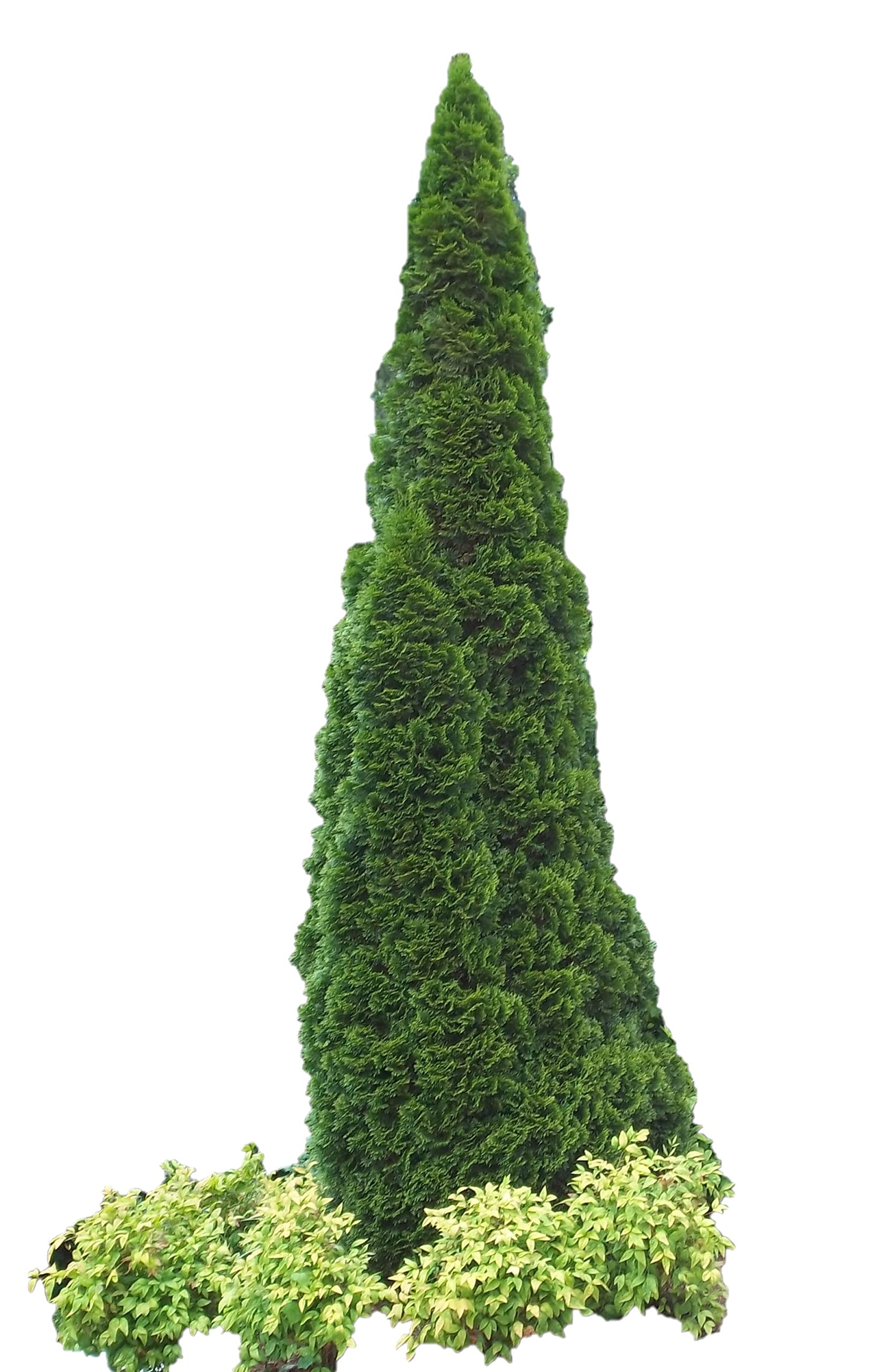
Ships tiny at one to two feet, then climbs toward fifteen over time.
This is the big-grower on the page. You receive a plant 1 to 2 feet tall in a gallon pot, but it is expected to reach 15 feet — a very different scale from the dwarf andromeda that tops out at 2 feet. That makes it the shrub for a back-fence privacy line rather than the front-of-bed role. It thrives in zones 3 through 8 with full to part sun, is listed as deer resistant, and wants regular watering in loam soil. Plant it in the ground and leave it — DAS Farms specifically directs you not to transplant it into another container.
Buyers keep saying the same thing: this shrub arrives healthy and packed with care. The double-boxing (two boxes nested for extra protection) is what does the work here. California customers note the plants grow fine even after they doubted them, and one report from a ten-plant order had every single one land in good condition. That consistency matters in a fence-line planting, where two or three bare gaps in a row would ruin the look.
The honest catch is patience. At 1 to 2 feet tall on arrival, a hedge takes seasons to fill, so if you need a screen this year this will feel slow. DAS Farms covers a successful transplant for 30 days when their planting instructions are followed with the right location and water. If that is a hedge line in a sunny-to-part-shade yard, this delivers the height and color that a dwarf shrub never will.
The Case For It
- Expected to reach 15 feet tall — real screening height
- Double-boxed shipping built for fragile plants
- Deer resistant; zones 3 through 8
- California orders packaged to state regulations
Before You Commit
- Ships at only 1 to 2 feet tall, so a hedge fills slowly
- Must go into the ground — no transplanting to another container
- Needs full to part sun, not deep shade
Go for it: you are building a long-term privacy line and want healthy, well-packed plants in quantity.
Hold off: your spot is fully shaded, or you need instant height this season.
5. Osmanthus heterophyllus ‘Goshiki’
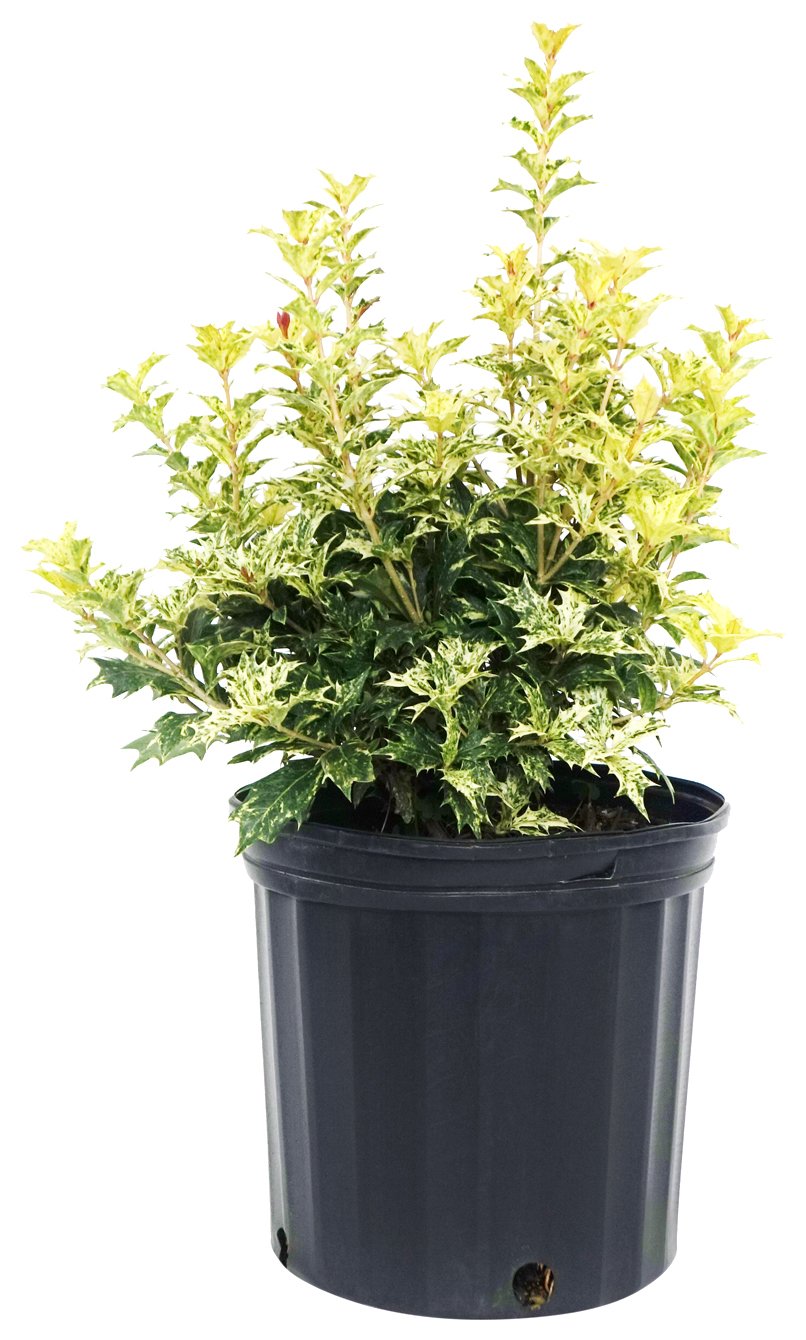
Cream, gold, white and bronze on one plant — an evergreen that does not look like a hedge filler.
This false holly carries older leaves flecked with cream and gold, while new growth on the branch ends emerges reddish-bronze, so the plant shows several colors at once. It grows well in full sun or partial shade in USDA zones 6 to 8, and reaches 8 to 10 feet tall with a 6 to 8 foot spread. The listing also calls it perfect for container plantings, which gives you a way to bring that multicolored foliage onto a shaded patio rather than only into the ground.
Owners praise plant quality most, and size comes close behind — it tends to arrive bigger than the listing suggests. The #2 container (a nursery pot about 2 gallons) ships at 5 pounds, light enough for one person to lift. The packaging also earns special mention: more than one gardener has called it the best packing they have seen for an online plant, with the pot held steady in transit.
One fair question to raise is leaf color. Variegation can lean more yellow than green depending on the plant, so if you have a precise look in mind, expect slight variation from the photos. It is also a zones 6 to 8 plant, so a very cold winter sits outside its range. For a partly shaded bed in zones 6 to 8 that needs a focal evergreen instead of a plain green wall, this is the most visually varied pick here.
Why it stands out: new reddish-bronze growth against cream-and-gold older leaves gives year-round color that few shade evergreens can match, and it will grow in a container too.
Worth knowing: variegation varies plant to plant and can run heavier on the yellow side, so plan for a multicolor look rather than an exact pattern.
The right buy for: zones 6-8 gardeners who want evergreen color and a plant that works in a large pot.
Think twice if: you are in a colder zone outside 6-8, or you want plain deep green.
6. Lady Vansittart Camellia
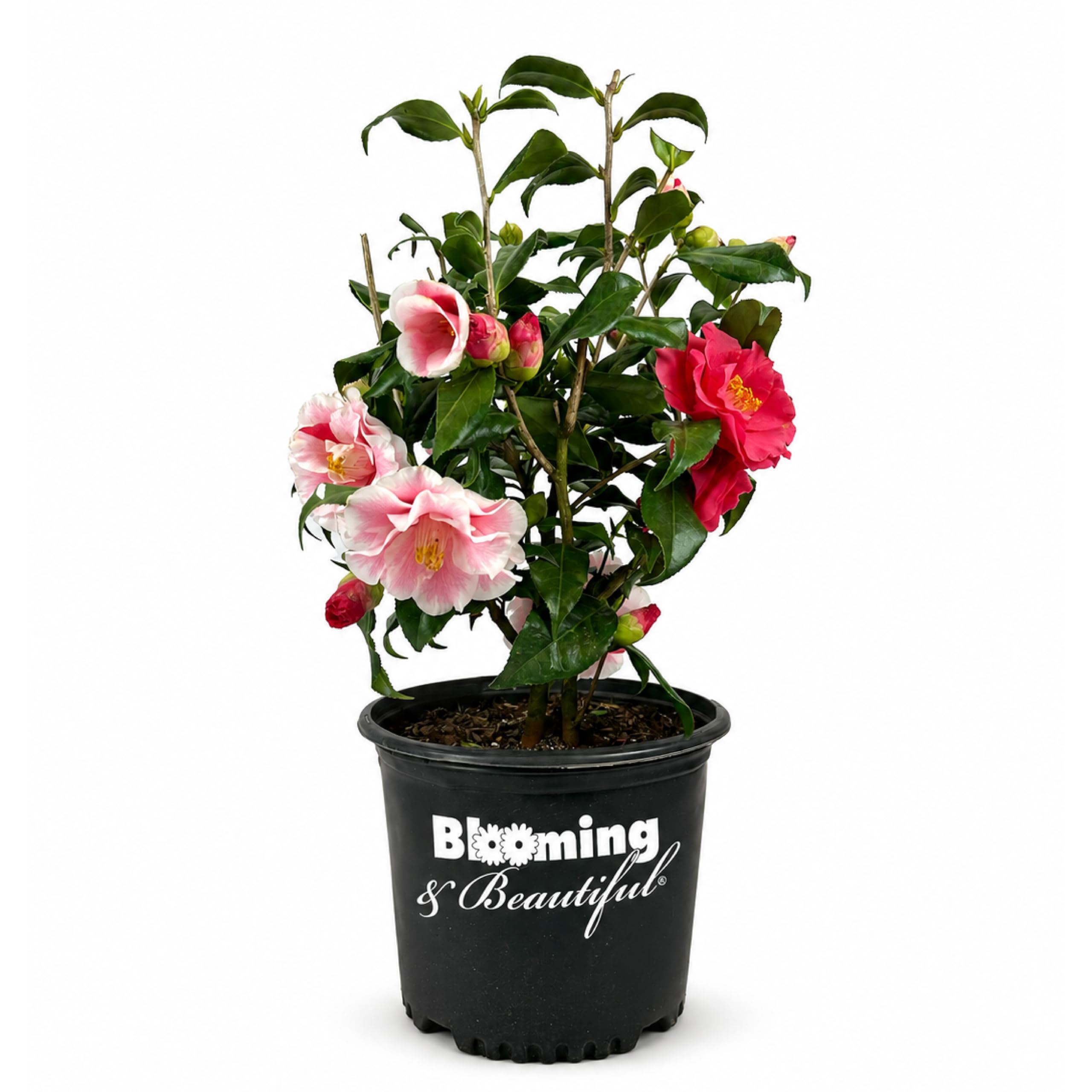
White blooms striped rose pink, on a glossy evergreen that ships established.
The camellia’s trick is the flower: white semi-double blooms striped with rose pink, opening in spring. Behind the flowers sit glossy green leaves that hold color well past the bloom season, so the shrub keeps its looks long after the petals drop. It grows best in USDA zones 7 to 9 with morning sun and afternoon shade — the classic shade-bed light pattern — and it wants acidic, moist, well-drained soil. It forms a compact upright shrub roughly 8 feet tall and 4 feet wide.
Health and quality are the two things that come up again and again with this plant. It arrives established with healthy root development from a nursery, and it lands bigger than people expect, often already loaded with buds. The glossy foliage is the detail that gives it away as a plant that shipped in good shape. Reviewers point out it makes a strong gift for exactly that reason, and it goes into the ground ready to grow.
The one hard limit to name up front: this seller cannot ship to Alaska, Arizona, California, Colorado, Hawaii, Idaho, Montana, New Mexico, Nevada, Oregon, Utah, Washington or Wyoming — orders to those states are automatically cancelled. If you are outside that list and in zones 7 to 9, a camellia that blooms striped in partial shade is a standout for a bed that gets morning sun and afternoon rest.
Strengths that matter: striped rose-pink blooms over 8-foot glossy evergreen structure, arriving established and often budded, in zones 7-9.
The shipping catch: a long list of western and high-country states cannot receive this plant at all, so confirm your state before you order.
Ideal when: you are in zones 7-9, your state is on the shippable list, and you want a flowering evergreen with real presence.
Not for you if: you live in one of the excluded states or in a colder zone than 7.
7. Hydrangea mac. Let’s Dance Rhythmic Blue

Blue or pink depending on your soil — the flower color is in your control.
Bigleaf hydrangeas are the shrubs that let you steer the bloom color with soil chemistry. This one flowers blue in acidic soils and pink in basic soils — the same plant, two different looks, decided by what is in your ground. It grows well in full sun or partial shade across a wide USDA zones 5 to 9 spread, and it stays compact at 2 to 3 feet tall with a 3 to 4 foot spread. The #3 container holds a plant fully rooted and ready to plant on arrival, and the listing warns against planting during frigid winter or drought.
Owners come back grinning about the size of the show — the huge flower heads are the part people describe most. Quality and overall appearance are what really carry this plant in owner experience, with bloom and value close behind. It ships at 12 pounds in that three-gallon pot, and it handles full sun to partial shade, so it is not confined to the shadiest corner. Plant it where the soil suits the color you want.
The recurring honest note is condition in extreme heat — in intense sun and high temperatures the leaves can wilt, which is a hydrangea-wide trait rather than anything unusual about this one. Site it with some afternoon relief in hot climates and it performs. It also ships dormant with no leaves from late fall through winter and leafs out in spring, so a bare-looking box in the cold months is expected, not a problem.
What It Does Well
- Blue in acidic soil, pink in basic soil — you control the color
- Zones 5-9 and compact at 2-3 feet tall, 3-4 feet wide
- Big, showy flower heads
- Ships in a #3 pot, rooted and ready to plant
Where It Tests You
- Leaves can wilt under intense heat and full sun
- Avoid planting during frigid winter or drought
- Arrives leafless and dormant from late fall through winter
Choose it if: you want to influence bloom color through soil and have either sun or partial shade to work with.
Keep looking if: your bed bakes in relentless afternoon sun and heat — a hydrangea will struggle there.
8. Hydrangea arb. ‘Haas’ Halo’
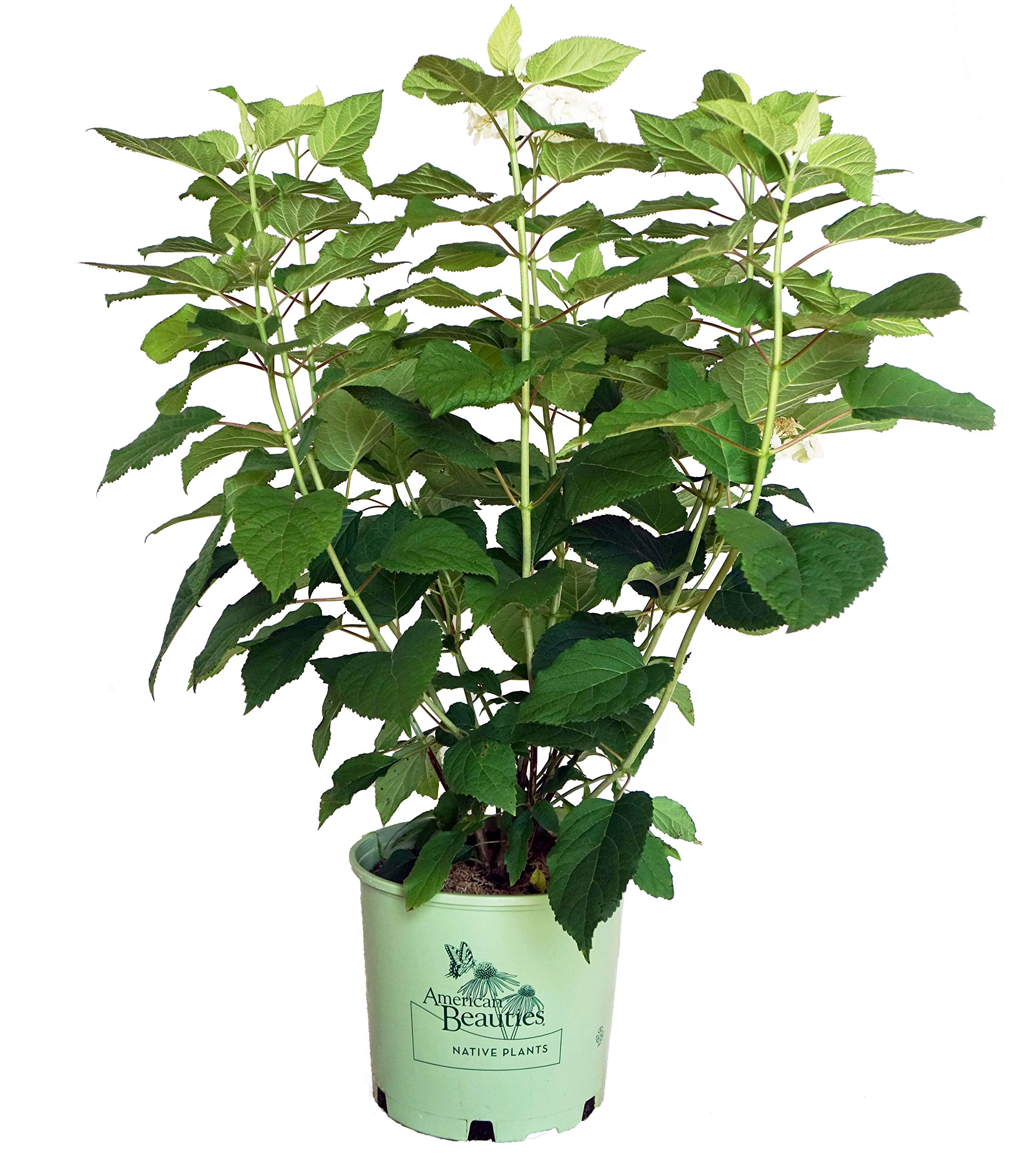
A native hydrangea whose flat white lacecaps are built to feed pollinators, not just look pretty.
Most big-flowered hydrangeas are mostly sterile petals — pretty but of little use to bees. Haas’ Halo is different in structure: big sterile flowers ring the outside, with masses of smaller fertile flowers in the center, and those open centers are what pollinators actually work. It is a zones 3 to 9 plant — the broadest range here — growing 3 to 5 feet tall and wide, in sun or shade. The large blue-green foliage backs up summer-blooming white flower heads, and it is a host plant for the Hydrangea Sphinx Moth.
What owners appreciate is the pollinator angle specifically, and it is a genuine native-plant advantage rather than a marketing line. Beyond the bees and butterflies, the shrub attracts hummingbirds, and native songbirds nest in it while the dried flowers become nesting material. Growth is the aspect people praise most, and one order arrived with buds already set. It ships at #3 size, rooted in the soil and ready to plant on arrival, with moderate watering needs.
The one caution that matters with this plant is cultivar accuracy. It is a rarer variety, so supply is thin, and a well-grown plant can still turn out not to be true Haas’ Halo — a full sterile bloom with no fertile center means no pollinator benefit. Order with an eye on the bloom when it opens, since that is the tell. For a native border in sun or shade where feeding pollinators is the goal, this lacecap’s fertile centers are built for it.
What makes it different: fertile flower centers on flat lacecap heads give real pollinator value, plus a zones 3-9 range and host-plant status for the Hydrangea Sphinx Moth.
The thing to check: cultivar supply is scarce and identification can vary, so watch the first bloom for a fertile center to confirm you got what you ordered.
A great fit for: native-plant gardeners and anyone building a pollinator border in sun or shade zones 3-9.
Be aware if: you need certainty on the exact cultivar, since this rare plant can arrive mislabeled.
9. Buxus micro. jap. ‘Green Velvet’

A tight, low evergreen that holds its leaf color all year and keeps a border crisp.
Boxwood earns its keep on the edges of a planting — along a walkway, framing a bed, holding a line. This Green Velvet selection grows compactly to 2 to 3 feet tall with a matching 2 to 3 foot spread, and it keeps excellent evergreen leaf color throughout the year. It is rated for USDA zones 4 to 8, grows well in full or partial sun, and ships in a #3 container fully rooted and plantable on arrival, at 12 pounds.
Because it stays low and dense, it is the shrub here meant for the front row rather than the back. That is a different job from the tall Hicks Yew or the arborvitae, which climb into screening territory. Where those build height, this builds a clean, tidy line at knee height, and the evergreen foliage means that line survives the winter when deciduous neighbors go bare. Partial sun keeps it happy, so it fits the brighter edge of a shady bed.
The trade-off to weigh is scale and pace: boxwood is deliberate and slow, so it will not fill a big gap quickly, and it wants a spot with at least some sun rather than deep shade. Set it along a walkway or bed line in zones 4 to 8 and it holds that edge at 2 to 3 feet without shearing.
The fit: a low border or edging line in zones 4-8 that needs year-round evergreen color.
The limit: it tops out at 2-3 feet, so it will not screen or fill deep shade.
10. Taxus x media ‘Hicksii’ (Hicks Yew) Evergreen, #3 Container

Grows taller than it spreads, which is exactly what a hedge wants.
The Hicks Yew’s defining trait is its shape: it reaches 10 to 15 feet tall but only 4 to 6 feet wide, so it climbs into a narrow vertical hedge rather than sprawling out. That upright habit is why the listing calls it ideal for creating a hedge in the landscape. Green needled foliage fills the branches, it grows well in full sun or partial shade, and it sits in USDA zones 4 to 8. It ships in a #3 container, rooted and ready to plant at 12 pounds.
Health is what owners highlight most, and appearance is right behind it — this yew arrives fresh, deep green, and full. It earns a special nod for value against big-name online nurseries, coming in healthier and larger than a pricier alternative. Set a row of these and the evergreen needles hold a green wall through winter in a partly shaded spot.
The honest limit is width and shade. It wants sun or partial shade rather than full shade, and its narrow spread means it is not the shrub for filling a broad bed. Where a vertical green wall at the property line is the goal, few plants here match that tall-narrow combination.
What it delivers: a 10-15 foot upright evergreen that stays 4-6 feet wide, ideal for a tall narrow hedge, in zones 4-8.
What to watch: it needs sun or partial shade and stays slim, so plan it as a vertical screen, not a wide filler.
Plant a row if: you want a tall, narrow evergreen hedge that handles partial shade.
Don’t choose it for: a wide shaded bed or full shade — it wants light and a vertical role.
11. Picea glauca ‘Conica’

A slow-growing cone of emerald green that holds its pyramid shape without clipping.
This dwarf Alberta spruce grows into a neat pyramid on its own, with rich emerald green foliage in several shades and a slow growth habit the listing pairs with low maintenance. It reaches 6 to 8 feet tall with a 3 to 4 foot spread and thrives in both partial shade and full sun across USDA zones 3 to 8. You get the #3 three-gallon pot, and a smaller #1 one-gallon option is also offered. It ships rooted and ready to plant at 12 pounds.
Quality is the thing that stands out most here, and the appearance follows — people describe it as better than expected when the box opens. Set it as a single focal shrub in a shaded bed and its cone shape gives a vertical, Christmas-tree silhouette without crowding anything around it. Because it grows slowly, it holds that shape without constant trimming.
Two things vary with this plant and are worth stating plainly. Size can land on either side of expectation — some arrive larger than hoped, some come in genuinely small. Health and value also draw a split reaction, so buy it as a slow, low-maintenance accent rather than a fast-growing filler, and give it a spot where its shape can be seen.
Where it shines: a natural pyramidal emerald-green form, slow growth, and tolerance of partial shade to full sun across zones 3-8.
Set expectations: delivered size can run small or large, and it is a slow accent rather than a quick screen.
Best suited to: a single shaded focal point where you want a tidy, slow evergreen cone.
Less ideal for: fast coverage or filling a wide bed, since it grows slowly and stays narrow.
Know the Specs
Light Needs: What Partial Shade and Full Shade Really Mean
Partial shade usually means a few hours of direct sun with shade the rest of the day, and full shade means little to no direct sun. Match this to your bed before anything else, because a sun-lover in deep shade will not bloom. Several shrubs here — the lilac, hydrangeas, yew and spruce — will take partial shade or full sun, giving flexibility on the brighter edge of a dark bed.
USDA Zones: Your Winter’s Cold Number
A plant’s zone range tells you how cold a winter it tolerates, so check your own zone against it first. A zones 3-8 shrub handles a broad range of cold winters, while a zones 7-9 plant suits milder climates. Choose a shrub whose range includes your zone and it should come back year after year.
Mature Height and Spread: The Footprint You Commit To
The shipped plant is not the final plant, so read the mature size before you dig. Dwarf picks like the andromeda finish at 2 to 3 feet, while the arborvitae and Hicks Yew climb to 15 feet. That number decides whether the shrub suits a border, a pot, or a property-line hedge.
Container Size: A #2 Versus #3 Pot
A #2 container is a smaller nursery pot than a #3 (three-gallon) container, and it usually means a smaller shipped plant. A larger container arrives with more root and top growth, so it settles in faster — but it also weighs more. Several picks here ship in #3 pots; a few ship in #2.
Evergreen Versus Deciduous in a Shade Bed
Evergreens hold foliage through winter and keep a bed’s structure in the cold months. Deciduous shrubs, like the lilac, drop leaves and go dormant, then return with flowers. Many shade gardens pair an evergreen backbone with a flowering shrub in front.
Deer Resistance and Moisture Needs
Deer resistance means a shrub is not a favorite target for browsing deer, though no plant is completely safe in a heavy-deer area. Moisture needs run from moderate to regular watering, so match this to how much you will realistically water a shaded bed.
Common Questions
Which of these shrubscan actually grow in full shade?
How long does a shade shrub take to reach its mature size?
Will these shrubs come back every year?
What does the number on the container, like #2 or #3, actually mean?
Can I grow any of these shrubs in a container instead of the ground?
Why did my shrub arrive with no leaves?
Which of these shrubs is the most deer resistant?
How do I get a hydrangea to bloom blue instead of pink?
Can I have these plants shipped to my state?
Do I need to protect these shrubs over winter?
The Bottom Line
For most shade gardeners, the shade shrubs winner is the Proven Winners Bloomerang Dark Purple Lilac because it reblooms from mid-summer to frost, ships as a rooted #3 pot (a nursery pot about 3 gallons), and handles zones 3 to 8 (cold-hardiness zones based on winter low) — the widest useful spread of color for a partly shaded bed. If your spot is genuinely dark all day, grab the Rhododendron ‘Aglo’ for its full-shade tolerance and early-May pink. And for a tall, narrow evergreen hedge, the Hicks Yew is the one to reach for. Whichever you pick, match the zone range and the light needs to your actual bed before you dig — that single check saves you the most heartache in a shade garden.
How we choose
We do not accept paid placement. Every pick is matched to a real buyer and a real use-case; we do not hands-on test units.
Sources
Specifications: manufacturer listings and product documentation. Review insights: verified customer reviews, as of October 2026. Pricing: not shown on this page (it changes often); check the current price via the retailer link.
As an Amazon Associate, Aappliancez earns from qualifying purchases. This does not affect which products we feature.