Disclosure: Some links in this post are affiliate links. As an Amazon Associate I earn from qualifying purchases, at no extra cost to you. Learn more
Specs are compiled from manufacturer listings and verified buyer reviews and can change over time — please confirm the key details on the product page before buying.
If you want to sew stretchy knits, stop fraying edges, and finish seams like a factory, a serger (also called an overlocker) is the machine that does it. It trims the fabric edge, wraps it in thread, and sews a seam all at the same time. Threading is the main reason people hesitate to buy a serger. Here is the truth: some models make that easy, and some make it harder. Threading difficulty varies by model.
This guide is built by comparing the manufacturers’ published specifications and the patterns across verified customer reviews, so you get each pick’s real strengths and trade-offs instead of marketing spin.
Three things decide whether you use it weekly or shelve it: threading ease, feed stability, and stitch quality on knits and stretch. This guide to the serger sewing machine covers seven models with specs and owner feedback.
Top Picks

How To Choose The Best Serger Sewing Machine
A serger does three jobs in one pass: it trims the fabric edge, wraps thread around it, and stitches. That is why it finishes a seam in one quick motion instead of the two or three steps a regular sewing machine needs. But not every serger threads easily, and not every one handles the same fabrics. Thread count and fabric handling vary enough that the wrong pick wastes hours on tension and puckering.
Thread Count: 2, 3, or 4 Threads
The number of threads tells you what kinds of stitches and seams the machine can make. Four threads gives you the strongest, most durable seam for heavy fabrics and garments that get washed a lot. Three threads is the workhorse for most seam finishing. Two threads is used for rolled hems and narrow edges on lightweight fabric. Machines that convert between all three give you the most flexibility. When a machine states 2-3-4 thread capability, it means you can switch between those setups depending on the fabric and the finish you want.
Differential Feed: Your Anti-Pucker Tool
Differential feed is the feature that keeps stretchy fabric from stretching out and lightweight fabric from puckering. It works by adjusting how fast the front feed dogs move relative to the back ones. When you sew a knit like jersey, you set it to gather slightly so the seam stays flat. When you sew a delicate sheer, you set it to stretch slightly so the edge stays flat. Without differential feed, knits stretch out and sheers pucker. With it, the seam stays flat on both.
Threadability: The Make-or-Break Skill
Sergers have four to five threads running through multiple loopers and tension discs. Threading is more involved than a standard sewing machine. Color-coded thread paths, on-deck guide diagrams, and clear printed instructions make a huge difference to how quickly you get started. Many machines now direct you to online PDFs or YouTube tutorials instead of a paper manual — which is fine if you know that going in, but worth checking before you buy.
Side-by-Side Comparison
| Model | Best For | Thread Capability | Stitch Speed | Item Weight | Amazon |
|---|---|---|---|---|---|
| Brother XR9550 Computerized Sewing and Quilting Machine★ Best Overall | Quilting and all-purpose sewing | 165 built-in stitches | — | 10.1 pounds | Amazon |
| MILLEPUNTI MLD42 Serger Overlock Sewing MachineBest Beginner Serger | Beginner serger users | 2/3/4 threads | 1300 SPM | 18 pounds | Amazon |
| American Home AH100 Serger | Sewists upgrading from a standard machine | 4/3/2 threads | — | 14.8 pounds | Amazon |
| SINGER S14-78 Serger Overlock Machine | Garment sewing and decorative edges | 2-3-4 threads | 1300 stitches/min | 13.9 pounds | Amazon |
| SINGER S0230 Navy Blue High Speed Overlock Serger | High-volume garment sewing | 2/3/4 threads | 1300 stitches/min | 13.5 pounds | Amazon |
| Janome 8002D Serger | Straightforward overlocking | 2, 3, 4 threads | — | — | Amazon |
| JUKI MO-735 5-Thread Serger and Cover Hem | Advanced sewing, coverstitch, and activewear | 5 threads, 24 stitch options | — | 23.1 pounds | Amazon |
Detailed Reviews
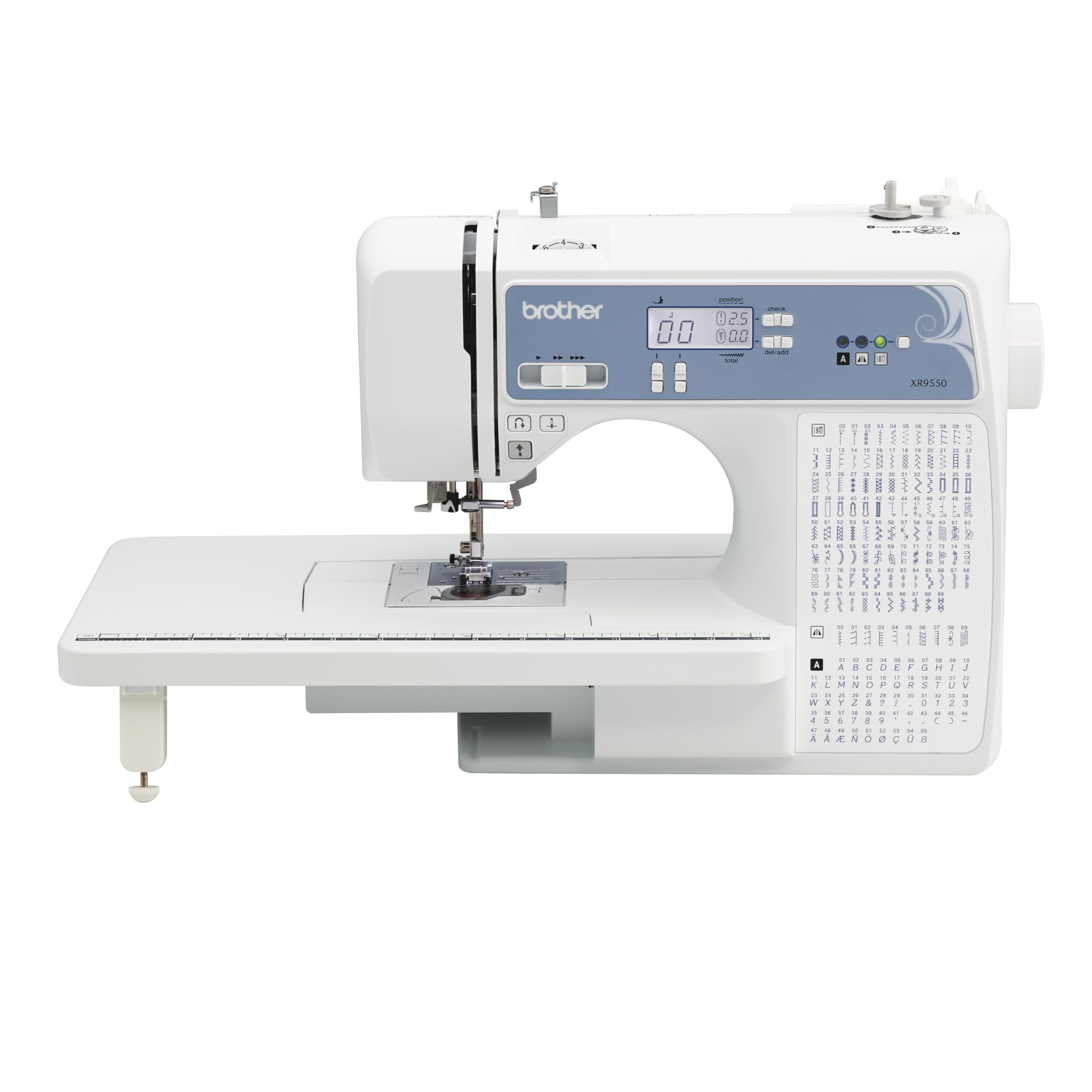
1. Brother XR9550 Sewing Machine
Our pick — 4.5+★ from 4,500+ verified ratings; the strongest balance of quality and price.
The machine that walks beginners through their first hundred stitches without a meltdown
If you are new to finishing seams and want a machine that grows with you, this is where to start. The XR9550 gives you 165 built-in stitches — a mix of utility, decorative, and alphanumeric stitches plus 8 styles of auto-size buttonholes. More stitches than any serger on this list by a wide margin, because this is a sewing and quilting machine rather than a dedicated overlocker. The LCD screen lets you pick a stitch and go, and the automatic needle threader handles the thing most people dread.
What you get from the start is genuinely everything: a hard protective cover, a wide table for quilting, and 8 presser feet including zigzag, buttonhole, zipper, blind stitch, overcasting, and quilting feet. At 10.1 pounds it is the lightest machine here by a wide stretch — the MILLEPUNTI MLD42 sits at 18 pounds, and that difference matters if you carry your machine to a class or tuck it back in a closet after every session. Its footprint is 13.5 by 20 by 17.9 inches, while the MILLEPUNTI is 11 by 11.9 by 11.6 inches, so this one takes up noticeably more table real estate.
What the machine does right
- 165 built-in stitches including 110 utility, decorative, and heirloom stitches plus 55 alphanumeric characters — the most stitch variety on this list
- Automatic needle threader and jam-resistant drop-in top bobbin remove the two most common beginner pain points
- Comes with a hard case, wide table, and 8 presser feet so no accessory hunting
- Free technical support through Brother’s at-your-side program via chat or phone for the life of the machine
- Lightweight at 10.1 pounds — easy to move between rooms or classes
Where it asks for patience
- Lighting is dim enough that a 63-year sewer who called this a reliable machine still flagged the work area brightness as a shortcoming
- The auto threader is convenient but feels flimsy to some — one experienced owner needed to move the needle right before it would catch
- This is a sewing and quilting machine, not a true overlocker, so it will not trim and overcast an edge in one pass like the MILLEPUNTI MLD42 or SINGER sergers here
Reach for this if: You want one versatile machine for sewing garments, quilting, and decorative stitching, and the idea of a dedicated serger can wait.
Look elsewhere if: Your main goal is finishing raw edges on knits and wovens in a single pass — for that you need a true overlocker.
2. MILLEPUNTI MLD42 Serger Machine
Comes pre-threaded with four cones already in place, so your first seam happens today
Most serger anxiety is threading anxiety. The MLD42 sidesteps it by shipping pre-threaded with four white cones plus colored threads ready for tie-on. For a total beginner, that single detail decides whether the machine gets used or shoved in a closet. Once running, it stitches up to 1,300 stitches per minute and gives you 12 built-in stitches across flexible 2, 3, or 4 thread setups. The integrated waste collector keeps the trimmed scraps contained rather than scattering them across your table.
The weight earns its keep too. At 18 pounds it is the heaviest dedicated serger on this list apart from the JUKI MO-735 at 23.1 pounds, and that heaviness is a feature — it sits still on the table instead of walking across it at speed. The differential feed handles stretch fabrics and delicate lettuce-edge finishing, and the free arm makes short work of armholes and trouser cuffs. What owners keep talking about is the performance — it is the thing that wins people over most, followed closely by how approachable it feels for a first-time serger owner.
Here is the catch for anyone who already owns a serger: the cutting knife cannot be disabled, and a 5-thread pro owner who bought this as a secondary machine wanted that flexibility. Threading the needles themselves still takes tweezers and practice, and new machines carry a strong oil smell at first that fades with use. Buyers report it arrives “cute, quiet,” and reliable enough for three dresses plus a skirt right out of the gate.
The real advantage: Pre-threaded delivery plus 2/3/4 thread flexibility removes the two biggest barriers for someone who has never threaded a serger before. The metal frame and accessory kit — needle pack, tweezers, dust cover, waste collector, spool holders, and 2-thread converter — mean nothing extra to buy.
The honest limit: No knife disable option means you cannot use it as a pure overlocker without trimming. If you routinely sew without cutting the edge, that becomes a nuisance rather than a dealbreaker.
Start here if: You are buying your first serger and want to be sewing the same day without a threading ordeal.
Keep looking if: You need the cutting knife to be switchable for specialty techniques, or you already run a 5-thread machine and want a second one with the same flexibility.
3. American Home AH100 Serger Machine

A lightweight serger with a full accessory kit and an instruction DVD that walks you through the threading path step by step
The AH100’s strongest quality is how quickly you can get from unboxing to a finished edge. Owners consistently describe setup in minutes and sewing within a five-minute window — that is the headline here. It handles 4, 3, and 2 thread serging with a color-coded threading system, plus rolled hemming. The differential feed adjusts fullness in your fabric, and a dial controls stitch length and width. The free arm reaches into cuffs and sleeves that a flatbed machine cannot touch.
At 14.8 pounds with a carrying handle, it sits between the lighter SINGER S14-78 at 13.9 pounds and the heavier American Home on this list — the handle is not decorative. You also get a real accessory kit: all-purpose foot, elastic foot, blind hem foot, rolled hem needle plate, needle set, four thread caps, tweezers, an extra lower blade, a subsidiary looper, oiler, brush, Allen wrench, and screwdriver. The included DVD and printed guides show step-by-step how to thread the machine and set tension dials for balanced stitches.
What owners mention most is how approachable it feels and how well it performs once threaded. An experienced sewist new to serging ran a lavender rolled edge on a linen tablecloth and was happy with the result on a first project. A returning sewist who had owned a similar Singer serger decades ago found the machine virtually identical in feel. Two recurring notes: it is louder than the product video suggests, and there is no thread cutter. Swapping plates and needles for rolled edges is fiddly because of the tight space around the needle area. Backed by a 25-year limited warranty, which is unusually long for a machine at this tier.
Worth it if: You want a full accessory kit and a clear instruction path to your first serged edge, and you value portability between rooms.
Think twice if: A built-in thread cutter is non-negotiable, or you need the near-silent operation some sergers deliver.
4. SINGER S14-78 Serger Machine

A garment-focused overlocker that handles knits, rolled hems, and free-arm cuffs without asking you to babysit it
The S14-78 is built for one job done well: finishing garment seams cleanly across the fabric types you actually sew. It runs 2, 3, or 4 thread stitch setups and produces seams, seam finishes, decorative edges, and rolled hems. Speed tops out at 1,300 stitches per minute, matching the MILLEPUNTI MLD42 and SINGER S0230. The differential feed tackles lightweight fabrics without puckering and stretch knits without stretching them out — that is the feature that saves your jersey tops from wavy hems.
The free arm is worth calling out because it slides out when you remove the extension table, letting you sew cuffs and sleeves without fighting the machine. Rolled and narrow hemming modes convert with simple adjustments for scarves and table linens. At 13.9 pounds it is one of the lightest true sergers here, though a long-time Singer user noted it feels lighter than an earlier Singer model — which cuts both ways if you prefer a weightier machine that sits still.
Quality is what buyers point to most, and the machine does what it promises when you follow along with videos. The honest split is threadability: some find it straightforward from the start, and others find it genuinely tricky. There is no printed manual in the box — you download the PDF online, which frustrated owners who expected paper. The general consensus is that the YouTube videos make the threading path manageable, and once threaded it sews knits well.
Where it shines: The combination of 2-3-4 thread flexibility, differential feed, free arm, and rolled hem modes covers the full range of garment sewing without add-ons.
Set expectations on: Threading is the primary complaint area — plan to spend your first session with a video open. And the missing paper manual is a real inconvenience if you prefer a physical guide at the machine.
The pick for you if: Garments, knits, and decorative edges are your focus and you are comfortable watching a video the first time you thread.
Not the one if: You need a printed manual in the box, or you want a machine that feels substantial enough to stay put without suction cups or a heavy frame.
5. SINGER S0230 Serger
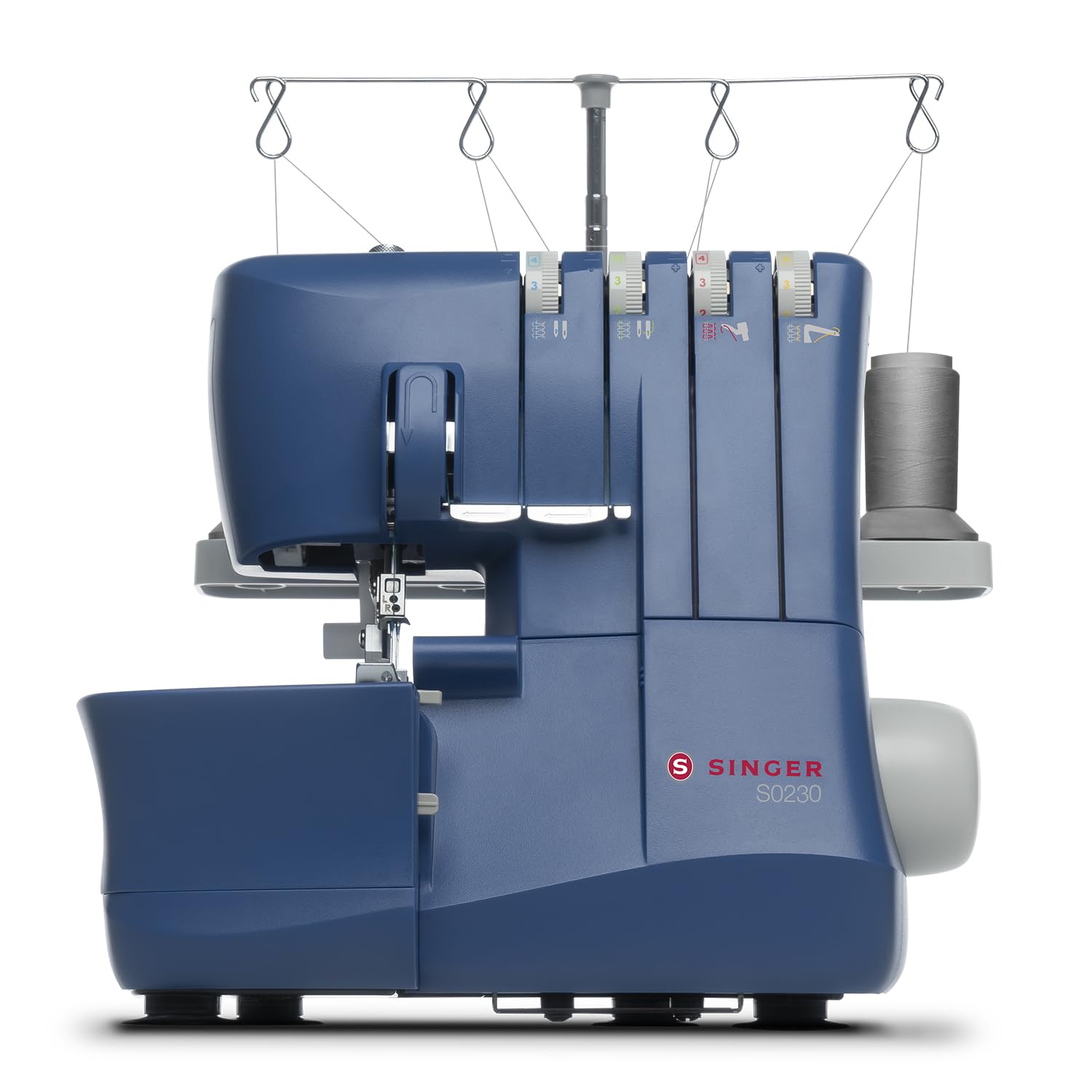
The serger that runs 1,300 stitches per minute and holds its ground with suction cups that do not quit
Speed is the story here — 1,300 stitches per minute means the machine trims, sews, and finishes a seam in one motion without slowing you down. The 2/3/4 thread capability opens up seams, rolled hems, and decorative edges. The color-coded threading system is the feature that makes setup reasonable for a beginner. Accessories — tweezers, needles, and a screwdriver — store inside the cloth plate so you are not chasing them mid-project.
What makes this serger distinctive in daily use is how it stays planted. The suction cups grip the table hard enough that owners describe them as fierce, which matters at 1,300 stitches per minute when vibration would otherwise walk the machine sideways. The differential feed handles knits and sheers without distortion. The free arm reaches sleeves, cuffs, and children’s clothing with precision.
Quality is what buyers praise most here, and it is the machine’s clearest strength. Rethreading is easy enough that it becomes a practical fix for tension problems rather than a chore. It runs smoothly without needing rethreading after extended use, and it produces clean, professional-looking finishes on garments. The recurring friction point: no paper manual ships in the box, only a PDF link, and finding the right manual among hundreds of models is not always quick. Some owners work around that with YouTube. Others are simply happy with the machine and never needed the manual at all.
What earns it a top spot: 1,300 stitches per minute, color-coded threading, aggressive suction-cup stability, and 2/3/4 thread range make it a genuine workhorse for repeat garment sewing.
What to know going in: No printed manual in the box. If you strongly prefer paper documentation at the machine, budget time to download and organize it before your first project.
For you if: You sew garments regularly and want a serger that keeps pace, stays put at speed, and makes rethreading painless enough to use as a tension fix.
Pass if: You need everything in the box to be paper-based, or you sew so rarely that high speed has no value for your projects.
6. Janome 8002D Serger Includes Bonus Accessories

Ships threaded and ready to sew, with a cutting width you can dial in for the finish you want
The Janome 8002D arrives threaded. For anyone who has read horror stories about serger threading, that detail alone changes the purchase decision. It handles 2, 3, and 4 thread setups and gives you an adjustable cutting width from 3.1mm to 7.3mm — one of the few machines on this list where the width itself is stated, letting you choose exactly how much edge gets trimmed. Easy rolled hem changeover and an easy-to-read threading chart round out the setup story. Differential feed is included.
The enjoyment factor is what carries this machine in real use. Owners describe it as simple enough for a beginner but capable enough that an experienced seamstress finds it nearly replaces a standard sewing machine for edge finishing. It arrives ready to use out of the package. Re-threading was overwhelming on the first attempt, comfortable by the sixth, and easier with each pass. It manages burp cloths, blankets, and over-edging without complaint — a solid pick if those are your frequent projects.
The honest friction: noise level is a genuine split. Some find it quieter than expected; others find it loud enough that they would not recommend it to noise-sensitive sewers. Arriving pre-threaded is not always perfect — one owner received a semi-threaded machine with tangled spools. A small number of units have a slight oil smell when new. There is also no cover or cuttings holder in the box, so trimmed scraps go where they fall unless you supply your own tray. Durability reviews are mixed but lean toward dependable, and most owners call the machine a good value.
The case for it: Arrives threaded, offers adjustable cutting width from 3.1mm to 7.3mm, and is simple enough for beginners while still capable enough for an experienced seamstress.
Two real limits: Noise is a split — fine for some, too loud for others. And no cover or cuttings holder ships in the box, so make sure you have a plan for the trimmings.
Best match for: Sewers who want a machine that arrives ready to run and who value the ability to dial in cutting width for different edges.
Wrong fit if: You are sensitive to machine noise during long sessions, or you expect a cover and cuttings tray to be included at this level.
7. JUKI MO-735 5-Thread Serger and Cover Hem Sewing Machine

Turns one machine into a serger, a coverstitch, and a chainstitch without swapping equipment
The MO-735 changes what a serger is even for. With 24 stitch options it can run a chainstitch, a 5-thread safety stitch, and a 2 or 3 needle coverstitch — the technique that finishes hems and neckbands on activewear and knits that a standard overlocker cannot touch. It handles ultra-light to heavy-weight fabrics, plus difficult-to-feed materials that stall lesser machines. That range is why someone sewing sportswear, childrenswear, or decorative home fashions lands here.
At 23.1 pounds it is nearly double the weight of the Brother XR9550 at 10.1 pounds, and that heft is deliberate — it keeps the machine stable at speed and while handling heavy fabric. Machine quality is what owners value most here, followed by ease of use. One owner had it set up and running within 15 minutes. Another reported it was quiet, fast, did not bounce around, and was simple to thread — changing out thread colors took about two minutes.
The honest friction is threading and reliability, which owners describe as mixed. Threading is described as straightforward by some and as a nightmare by others. On the mechanical side, one owner — an early buyer and first-time serger user — had a needle plate issue where a needle came unglued and bent into a seam. The vendor sent a replacement part in about a week, which resolved it. Reliability overall splits, though the coverstitch and chainstitch capability remains the reason buyers keep choosing this model over a standard serger.
Why it earns its price tier: 24 stitch options, 5-thread capability, chainstitch, and 2 or 3 needle coverstitch make this the only machine here that covers both serging and coverstitching in one unit.
What this picks costs you: Threading is more involved than a 2/3/4 thread serger, reliability reports split, and the machine is heavy at 23.1 pounds — not a portable pick for a sewing class bag.
The one to buy if: Activewear, coverstitch hems, and multi-technique sewing are on your project list and you want one machine instead of two.
Not the fit if: You need a light, simple overlocker for basic seam finishing and do not want the extra threading complexity of a 5-thread setup.
Know the Specs
Thread Count: What It open up
Thread count decides what a serger can do. Two threads handle rolled hems and narrow edges. Three threads is your everyday seam finisher. Four threads is stronger and used for garments that see heavy wear. Five threads adds a safety stitch — a stitch that secures both the seam and the edge in one pass. The JUKI MO-735 runs 5-thread capability and 24 stitch options, the highest on this list. The MILLEPUNTI MLD42, the SINGER S14-78, and the SINGER S0230 all run 2/3/4 thread setups.
Differential Feed: The Feature Behind Flat Seams
Differential feed controls how fast the front feed dogs move relative to the back ones. Set it to gather slightly and knits stay flat instead of stretching out. Set it to stretch slightly and lightweight sheers stop puckering. It is the difference between a flat seam and a wavy one. Every serger on this list includes differential feed, and the American Home AH100 adds a dial to adjust stitch length and width alongside it.
Common Questions
What is the difference between a serger and an overlock machine?
How hard is it to thread a serger for the first time?
Can a serger replace my regular sewing machine?
What does differential feed actually do on a serger?
Do I need a 5-thread serger or is 4-thread enough?
How fast do these sergers actually stitch?
What is a free arm and why does it matter on a serger?
Can I use a serger on stretchy knit fabric?
Do sergers come with a warranty?
Can I use voltage converters with these sergers?
The Bottom Line
For most sewers, the serger sewing machine that covers the widest range of projects is the MILLEPUNTI MLD42 because it arrives pre-threaded, runs 2/3/4 threads, and stitches at 1,300 SPM without asking you to master threading before you can sew a seam. If raw speed and suction-cup stability matter most to you, the SINGER S0230 keeps pace on garment work. And for coverstitch and chainstitch capability in the same machine, the JUKI MO-735 is the one to reach for. Whichever you choose, get the machine threaded and run a test seam before your first garment — a five-minute test saves hours of tension chasing later.
How we choose
We do not accept paid placement. Every pick is matched to a real buyer and a real use-case; we do not hands-on test units.
Sources
Specifications: manufacturer listings and product documentation. Review insights: verified customer reviews, as of October 2026. Pricing: not shown on this page (it changes often); check the current price via the retailer link.
As an Amazon Associate, Aappliancez earns from qualifying purchases. This does not affect which products we feature.