Disclosure: Some links in this post are affiliate links. As an Amazon Associate I earn from qualifying purchases, at no extra cost to you. Learn more
Specs are compiled from manufacturer listings and verified buyer reviews and can change over time — please confirm the key details on the product page before buying.
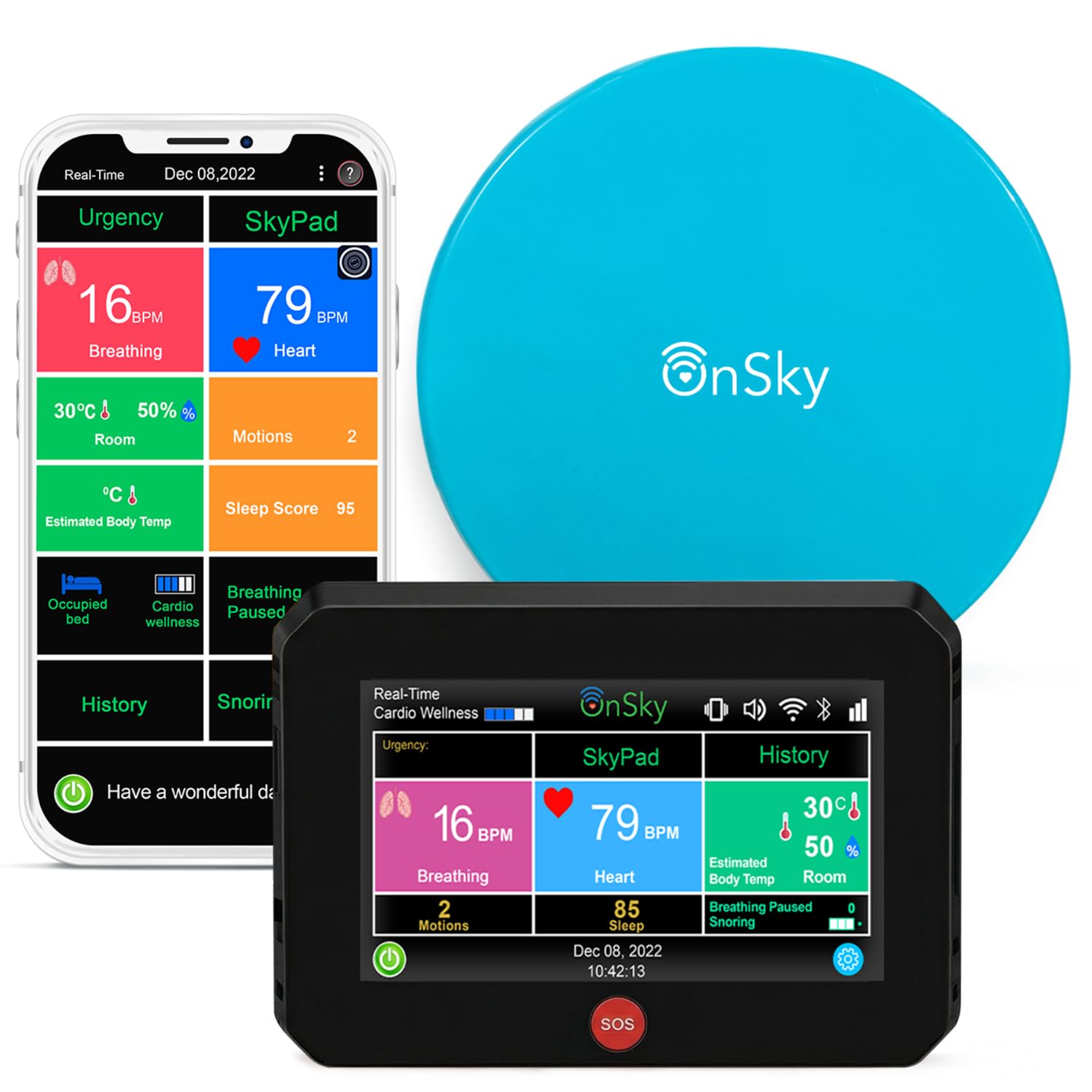
If you are caring for someone who has seizures, the hardest part is the silence — the minutes you cannot see. This guide covers monitors that put eyes on the room without putting cameras in it, from fall-and-SOS wearables to a contact-free pad that watches breathing while your family sleeps. Not every device here is built specifically for seizures, so you will see plainly which ones actually name convulsions and which ones only cover the surrounding risks.
This guide is built by comparing the manufacturers’ published specifications and the patterns across verified customer reviews, so you get each pick’s real strengths and trade-offs instead of marketing spin.
You will learn what each device actually senses, which ones charge ongoing subscriptions, and where the coverage gaps sit — all laid out so you can pick the right layer of safety for your household. seizure monitoring devices range from wearable SOS watches to a contact-free pad, and matching the right pick to your loved one’s routine is what makes it work.
Top Picks


How To Choose Seizure Monitoring Devices
Seizure monitoring is less about finding the “best gadget” and more about covering the gap between when something happens and when someone who can help finds out. Two devices can look similar on a listing and behave completely differently at 3 a.m. in a dark bedroom. Focus on four decisions: what gets sensed, how an alert reaches you, what you pay monthly, and what happens when the wearer cannot press anything.
Decide if you need a wearable or a room sensor
A wearable monitors on the body, so it goes wherever the person goes. That means it covers the bathroom, the stairs, and the walk to the mailbox. A room sensor watches a defined area — typically the bed or a spot in the room — and needs no cooperation from the wearer. For someone with cognitive impairment who will not keep a watch on, a room sensor is the more realistic layer. For someone active and cooperative, a wearable earns its keep. Several caregivers run both.
Work out the true alert path, not just the sensor
Sensor quality is only half the job. Ask exactly who gets notified, how fast, and through what channel. Email and app notifications are often free; SMS texts and voice calls are frequently billed per message or per call. Some systems place a call to your phone, others send a push notification that depends on your phone being on and charged. None of these devices can dial public emergency numbers like 911 or 999 as an alert contact — that restriction shows up repeatedly in the listings and is worth knowing before you buy.
Look at whether seizures are named in the spec
Many “health monitors” track heart rate, blood oxygen, and movement — useful context, but not the same thing as convulsion detection. Read the feature list closely. One pick here explicitly lists seizure and convulsion monitoring; the others cover fall detection, SOS alerting, or vital signs. Choose on the coverage you need rather than the label on the box, and treat anything not written in the spec as absent rather than assumed.
Count the ongoing costs before you commit
Equipment cost is only the first bill. Watch for annual connectivity plans, per-report charges, per-SMS fees, and monthly monitoring subscriptions. Some systems include a first-year connection and then charge annually afterward; others sell alert credits per family member notified. Add up a realistic monthly figure for the person you are caring for. A contact-free sensor that requires no subscription can be the cheaper path over a year even if the hardware costs more up front.
Side-by-Side Comparison
| Model | Best For | Monitoring Type | Key Sensor | Battery / Power | Amazon |
|---|---|---|---|---|---|
| RaDoTech Wellness Tracker★ Best Overall | Noninvasive 2-minute health snapshot | Handheld body analyzer | 12-point cell conductivity | Rechargeable battery | Amazon |
| SkyPad Contact-Free MonitorAlso Great | Seizure and breathing monitoring under the pillow | Contact-free pad | Heart, breathing, convulsion, apnea | Power adapter | Amazon |
| Audar E2 Senior SmartwatchBest for Independent Seniors | Seniors living alone who need SOS plus vitals | Wearable watch | Fall detection, SOS, heart, SpO2 | 7 days / 280 mAh | Amazon |
| Nomo Medical Alert System | Camera-free fall alerting across a whole home | Hub + wearable tags | Fall and motion tags | Battery (Lithium Metal) | Amazon |
| Wellue O2Ring-S | Overnight blood oxygen and pulse tracking | Finger ring | SpO2, pulse rate, motion | 24 hours | Amazon |
| SereniBrain EEG Headband | Brainwave feedback for focus and calm | Wearable headband | EEG (alpha, beta, theta) | Lithium-Ion, rechargeable | Amazon |
| Sentinare Fall Detection Sensor | Privacy-preserving room monitoring | Wall sensor (stick figures) | AI fall and bed-exit detection | Plug-in, Wi-Fi | Amazon |
| Nonin TruO2 OTC Pulse Oximeter | Spot-check SpO2 across skin tones | Fingertip clip | PureSAT optical SpO2 | Up to 2,200 checks, 2 AAA | Amazon |
| Withings Scanwatch Nova | All-day vitals in a traditional watch | Hybrid smartwatch | Heart rate, SpO2, temperature | 30 days | Amazon |
Detailed Reviews
1. RaDoTech Wellness & Body Conductivity Tracker
A handheld scanner that measures electrical conductivity across twelve points in about two minutes.
RaDoTech measures the cell conductivity of your twelve vital organs using an ultra-low electric current and the Japanese Ryodoraku technique, delivering a snapshot of functional health in around two minutes. It holds up to 100 profiles, so one device covers a whole family. The app is free and walks you step by step. One owner reports the battery still above 90% after a long stretch without charging. It pairs with a wearable tracker to add what the makers call extra context to those readings.
We include it here as an example of what a wellness scanner is — and is not. It does not detect falls, send SOS alerts, monitor breathing, or track convulsions. Nothing in its spec claims to alert anyone when something goes wrong. What it does is give you a two-minute conductivity reading and a profile system. If your goal is active alerting for seizures, this is not that tool. It is better understood as a personal wellness device you use when you are feeling off.
Honesty is the theme with this one. The build is sturdy and survives falls, and the free app with multi-profile logging is genuinely easy for a family. But the readings cannot be independently verified, so you must take the result on faith. One reviewer noted the scan stopping after the first of twelve points, and another hit a paid virus-protection upsell at checkout that they found unreasonable. If unverifiable readings undercut your confidence, choose an audio alert device or a clinically labeled oximeter instead. For someone who enjoys wellness gadgets and wants a light daily read, it is a reasonable entry tool.
What it actually delivers
- Two-minute scan across twelve points using an ultra-low current
- Holds up to 100 profiles so one device covers the family
- Free app with step-by-step guidance, no subscription
- Sturdy build that survives drops
Straight answers on the limits
- No fall, SOS, breathing or seizure alerting — it is not a safety device
- Readings cannot be independently verified
- Some users report the scan stopping early and a paid upsell at checkout
A fit for: the wellness enthusiast who wants a quick daily snapshot and family profiles.
Not a fit for: anyone who needs active alerting — there is no SOS, fall or seizure function here.
2. SkyPad FDA-Cleared Contact-Free Seizure Monitor
The only pick here that names seizure and convulsion monitoring in its spec — and it reads through a pillow pad, with nothing on the body.
SkyPad is the only device here whose spec names seizure and convulsion monitoring. It is a sensor pad you slip under any pillow and cover with a bed sheet, plus a hub with a 5-inch touchscreen. The pad continuously watches heart rate, heartbeats, breathing, movement, sleep patterns, sleep apnea, convulsion, and even room temperature and humidity. For a family monitoring someone through the night, that is the widest net of any device on this page.
The practical win is that nothing needs to be worn. No strap slipping off, no watch to charge, no button your loved one has to remember to press. If you are caring for an adult or a child one year or older who cannot be relied on to wear a device, this is the setup that asks nothing of them. Setup is quick — the listing says under 15 minutes in a few of the descriptions, and calibration per the manual is what turns the readings consistent.
The catch is honest and specific: calibration has to be respected. Without a careful calibration, the pad can drift into reporting an empty bed when someone is on it. One pattern repeated across the review pages is that recalibration every couple of days keeps things on track, and users who skipped that step reported missed readings. It also wants low-bandwidth 2.4GHz Wi-Fi rather than high-speed internet, and the app is stand-alone — no Apple Health integration and no data export or print option. Emergency calling, though, needs no subscription and rings up to three people. That combination — no monthly fee, no camera, no wearable — makes it the strongest overall package for seizure-concerned households.
Why it takes the top slot
- Convulsion and seizure monitoring are named in the spec, not left to assumption
- Zero skin contact — pads under the pillow mean no straps, no recharging, no cooperation needed
- No subscription required for the SOS call, which rings up to three people
- Watches heart rate, breathing, sleep apnea and movement all at once
Where it asks for your attention
- Calibration must be kept current — a stale setup can report an empty bed
- Needs 2.4GHz Wi-Fi only; no data export or Apple Health sync
- A small review pool compared with the wearables on this list
Built for: the household that needs overnight, hands-off monitoring of someone who cannot wear or press anything.
Think twice if: you want to share data with your doctor easily — this app stays self-contained.
3. Audar E2 Senior Smartwatch with Fall Detection & SOS
A watch with its own cellular connection, so alerts go out even when there is no phone in the house.
The Audar E2 carries a built-in SIM that connects to low-cost IoT networks in 20+ countries, so it needs no smartphone, app, Wi-Fi, or Bluetooth to function. Vitals are sampled automatically at intervals you set — 30 minutes, 1 hour, 2 hours, or 4 hours — or on demand, tracing heart rate, blood pressure, SpO2 and body temperature. It runs on a 280 mAh lithium-ion cell and holds about 7 days with hourly measurements, plus up to 30 days of standby. The watch is IP67-rated, meaning it resists water, dust and sweat, and the magnetic strap fits wrists from 135–238 mm.
What wins people over is the fall alerting. A fall triggers a vibrating yes/no prompt and, once confirmed, sends location-bearing alerts to designated contacts by SMS, voice message, or email. Family members describe accidental drops prompting the check — and a minor fall on carpet confirmed the detection was working. The knock-on issue is the fee structure. Connectivity is included for the first year, then a annual subscription applies. SMS and voice alerts run per four SMS messages or per voice message, and each additional AI wellbeing report is after the ten complimentary ones.
One caution worth naming: fall detection is not the same as seizure detection. Several families reported a real fall slipping past the sensor, and repeated false alarms were the most-discussed concern. The accuracy across blood pressure, oxygen and heart rate drew better feedback than the fall trigger did. If your main worry is a seizure specifically, this watch tracks vitals rather than convulsions — pair it with a nightly sensor or treat it as the button-and-fall layer, not the whole answer. Public emergency numbers like 911 or 999 cannot be used as alert contacts, so plan your Care Circle accordingly.
The connectivity play: no phone tethering means the watch can raise an alarm from anywhere with signal, including a garden or a shower-safe IP67 environment. The alerts reaching family across borders in minutes is the real-world payoff described most often.
The fee you drill into the family: the annual plan plus per-message SMS charges turn a one-time purchase into a small recurring line item. Budget for the year two onward before you buy.
Reach for it if: you want a single wrist device that alerts family over its own cellular link — no phone required.
Look elsewhere if: seizure detection specifically is your goal — this watch is vitals-and-falls, not convulsions.
4. Nomo Medical Alert System with Fall Detection
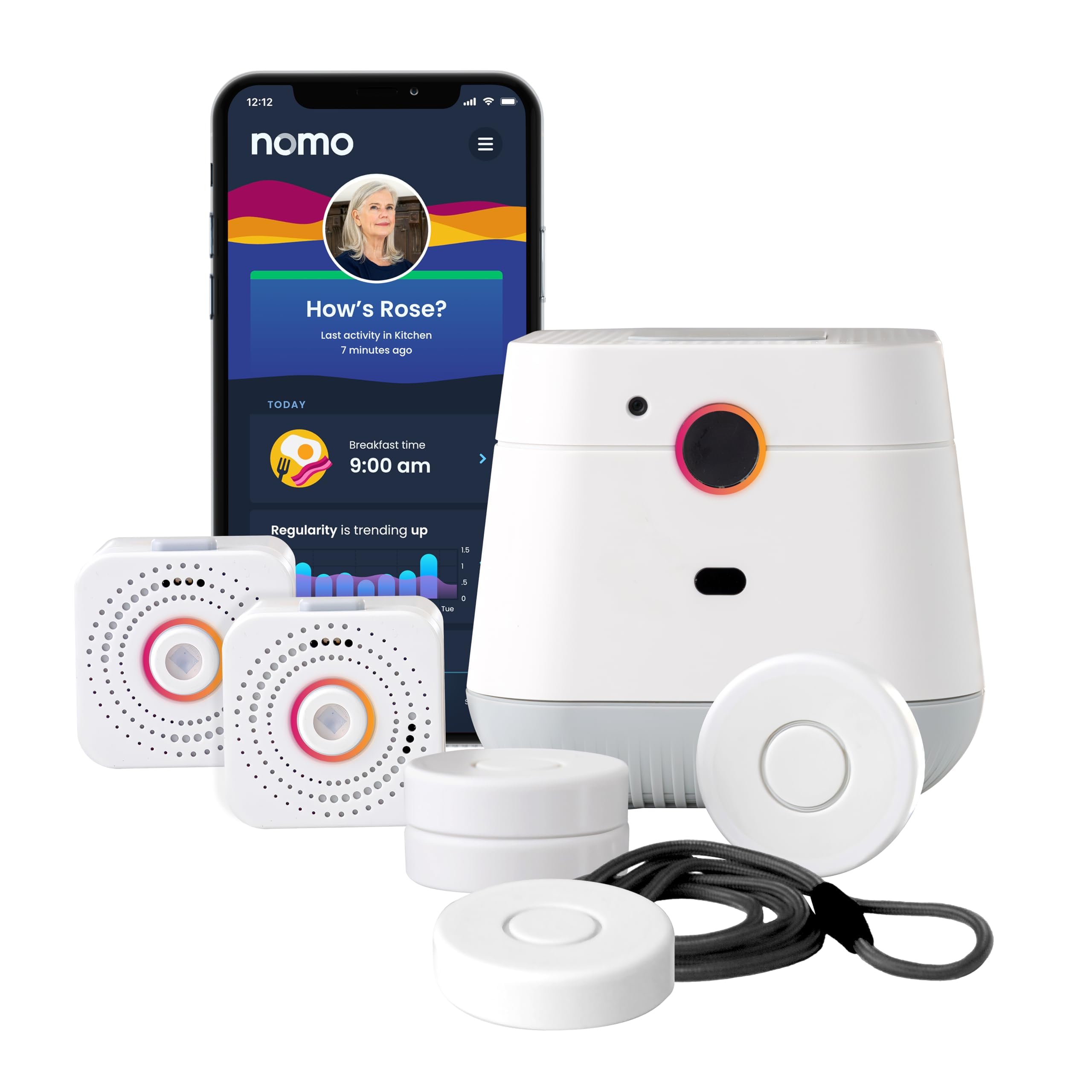
A smart hub, two range extenders and wearable tags — the least intrusive way to cover a whole house.
Nomo is the pick for confidence without a watched room. The kit pairs a Smart Hub with two Satellite range extenders and wearable Tags, all over secure Wi-Fi with no landline. The Tags handle fall detection and a panic button, and the Hub offers two-way voice so you can speak and be spoken to during an emergency. Setup is plug-and-play: connect the Hub and Satellites to wall outlets, place or wear the Tags, and you are running with no technician visit.
Buyers report that effectiveness is what they talk about most. Families caring for a 90-year-old still living independently describe knowing she is up and around, and getting a signal if anything is “off.” A wearer who lives out of state from their parents said it is reassuring without being intrusive. Button alerts arrive as both a text and a phone call. The call center escalates carefully — it attempts contact multiple times before dialing 911, which limits false-alarm penalties. Alerts flow to a trusted “Care Circle” whenever the Tags detect a fall or an unusual movement pattern.
Two honest caveats. There is a subscription: the kit includes a 30-day trial of 24/7 monitoring with RapidSOS, and a monthly fee applies afterward (cancel anytime). You should also read the fall-detection trigger as a supplement, not a guarantee — one family reported the automatic detection missing real falls despite success on drop tests. The smart play is to treat the summon-by-button path as the primary and the fall sensor as an extra pair of eyes. One tag arrived not paired and one lanyard shipped in the wrong color, both of which support resolved.
Privacy without a lens: there is no camera anywhere in this kit. For a parent who refuses to be watched, that design removes the biggest objection before it is raised.
The monthly line: the trial ends and a subscription begins. Ask about the annual plan and any prorating before you rely on the system, because that is the number that repeats.
Suits the caregiver who wants motion and fall alerts across multiple rooms with a two-way speaker and no camera in sight.
Not for you if you need convulsion-specific detection — the tags sense falls and movement patterns only.
5. Wellue O2Ring-S Oxygen Monitor

A ring that samples your blood oxygen 200 times a second and buzzes when levels drop too low.
Seizures and overnight breathing problems often arrive in the same hours, and the O2Ring-S is built for those hours. It slips on a finger — fitting finger perimeters from 55–80 mm — and starts recording on contact. An upgraded chip samples data at 200Hz, producing up to 36,000 data sampling points per report. The device stores four sets of 10-hour data and syncs to the ViHealth app or the free O2 Insight Pro PC software. Battery runs 24 hours, which the listing frames as removing the need for frequent recharging.
The vibration reminder is the feature that earns its place beside a seizure monitor. If your SpO2 drops below a preset threshold, or heart rate climbs or falls outside your set range, the ring vibrates and marks it in the report. For a family member nearby, that buzz is a physical nudge in the room rather than a notification on a phone somewhere else. One user’s sleep doctor reviewed the printed overnight graphs at a follow-up visit. Fits onto any finger or thumb, with no sizing to choose.
Know the limits up front. The device is explicitly not a medical device and is listed for sports and aviation use only, not for medical monitoring. Accuracy is the most-discussed concern: some users compare readings almost exactly to hospital equipment, others call out inconsistencies and a charging port that did not take a standard USB-C cable. Charging is proprietary, and a one-size ring can feel loose on thin fingers or tight on larger ones. It is a strong sleep-data tool, not a diagnostic instrument.
What earns its place beside a seizure monitor
- 200Hz sampling with up to 36,000 data points per report gives deep overnight detail
- Vibration alert when SpO2 or heart rate leaves your preset band
- Starts recording the moment you put it on — nothing to remember to press
- Holds four sets of 10-hour data and auto-syncs to the free app and PC software
What to know before you rely on it
- Not a medical device — labeled for sports and aviation use only
- Charges with a proprietary cable, not standard USB-C
- One-size ring can feel loose or pinched depending on the finger
Your pick if: the worry is what happens to breathing and oxygen during sleep and you want a physical buzz in the room.
Pass on it if: you need a clinically rated oximeter for a diagnosed condition — this one is labeled for sport and aviation.
6. SereniBrain EEG Neurofeedback Headband
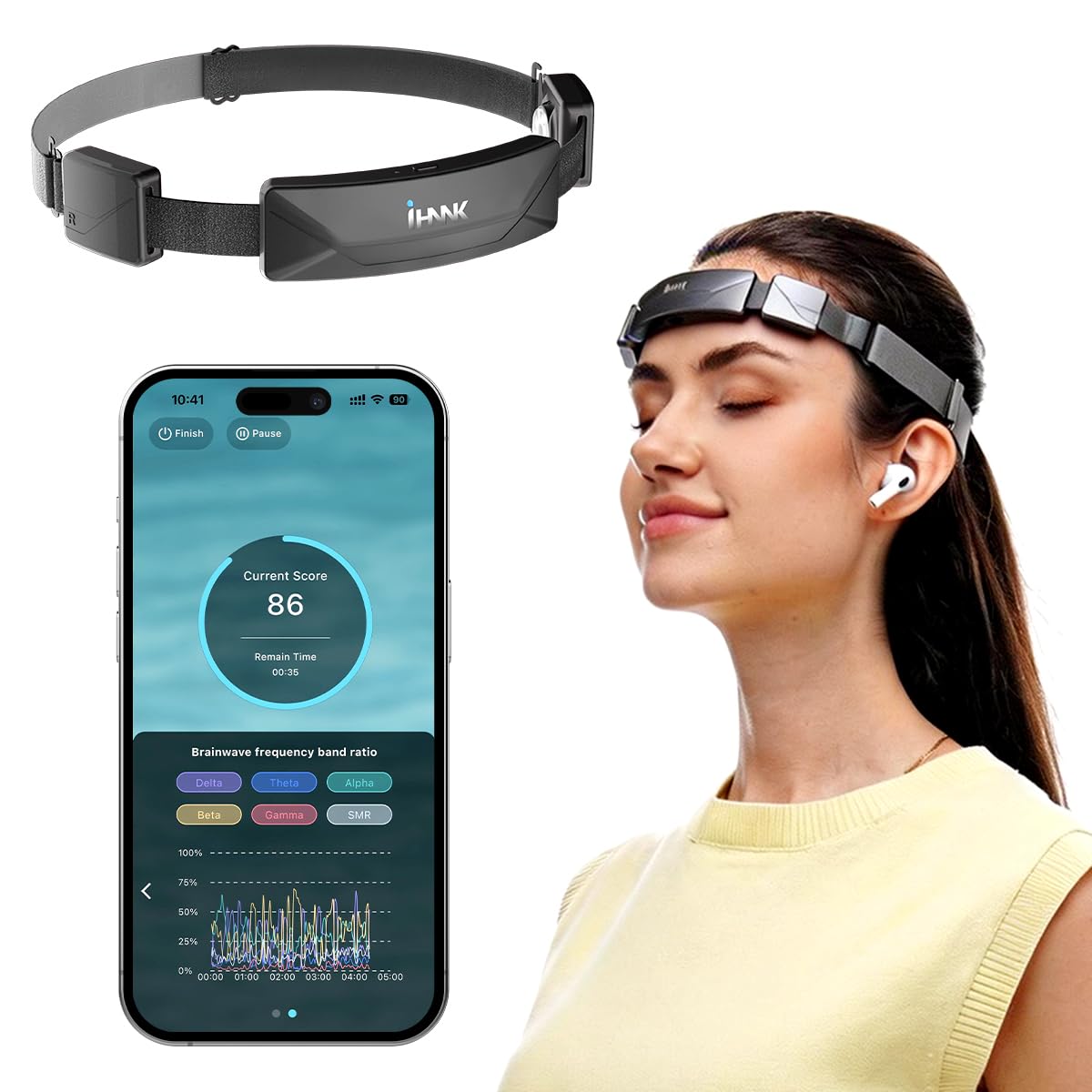
Reads the brainwaves themselves — alpha, beta and theta — and turns them into visual and audio feedback.
This one sits closer to the brain than any other pick. The headband uses EEG sensors to track alpha, beta and theta waves in real time, with soft hydrogel pads that contact the forehead to hold a stable signal. It weighs 50 g, connects to the SereniBrain app over Bluetooth, and works with iOS 14 or higher and Android 10 or higher. The app has no subscription fees, and session data can be downloaded freely to follow progress over time. What is not in the spec list is fall or seizure detection — this is a brainwave monitor, not an alert system.
So why include it? Because “training focus and calmness” is often the reason a family starts looking at brainwave devices in the first place. Neurofeedback training here reacts to your actual brain activity: as the mind calms and focus sharpens, the visuals and sound become clearer. Sessions track meditation duration, focus levels and training history. If you are looking for a way to build awareness and predict triggers, the Alpha-wave trend reports and data export make it a serious practice tool. It ships with six extra signal-collecting pads and a storage case.
The active pairing with a seizure-monitoring system is the honest one. This headband says nothing about detecting convulsions, and it is not a fall alert device. It also has a gentle learning curve — the app gives you something to react to, but one user found it hard to know how to “make it work” and ended up humming with eyes closed. A session time limit cuts off after the first hour, which rules out all-night sleep tracking. Use it for the waking work of noticing your own brain states; pair it with a room sensor for the sleeping hours.
What the price buys: a portable EEG machine that measures Delta brain waves, a feature one owner called rare at this level. The no-subscription app and free data download mean the cost is once, not monthly.
Set your expectations: treat this as a training and awareness tool. Nothing in its specs claims to detect a seizure, and the session limit stops overnight use.
Best for the household that wants to understand brain states and build a calm, focused routine — not to raise an alarm.
Rule it out if the requirement is automatic alerting when something goes wrong. That is not what an EEG headband does.
7. Sentinare Fall Detection & Activity Sensor

An AI chip turns what it sees into stick figures, so it can watch a bedroom without recording a person.
Privacy is the reason this one stands out. The Sentinare sensor uses an AI chip to extract stick figures rather than send video, which makes it a legitimate option for bedrooms and bathrooms — the two rooms where families most want eyes and least want a camera. It is touchless, so no wearable is involved, and that suits someone with cognitive impairment who will not keep a device on. Coverage reaches up to 6 m (20 ft), it detects slow falls, and it is described as not affected by pets. Region-of-interest monitoring also flags bed exit, overstay or absence, and all basic features work with no monthly fee.
Reliability is where you need to set expectations. The image turns into a stick figure only within the designated fall zones, and one family found the coverage limited to a few areas rather than the whole room. A fair share of feedback notes the setup took some troubleshooting — a Wi-Fi password push failed on some Android phones and needed a particular device to complete. What earns loyalty is the view itself: a clear stick figure in the bathroom that tells you mom is okay, plus fall detection as a bonus and support that resolved a serial-number issue within minutes by email.
The system is a layer, not a replacement for a button or a wearable. Some users reported false alarms and occasional missed events, so plan it alongside a direct way to call for help. The mic and speaker are described as mediocre, so do not expect a clear two-way conversation through it. Mounted on a wall with a plug-in power feed and Wi-Fi, it runs continuously without charging. For a room where you want a privacy-safe check-in and bed-exit tracking, it earns the install.
The design that sells itself: a stick-figure view is a camera that respects dignity. For a parent who would refuse a lens in the bedroom, this is the compromise that gets a monitor installed at all.
The setup reality: this is one of the pickier devices to get onto Wi-Fi, and coverage stays inside its fall zones. Budget time for the first install and test every room.
Worth mounting if: you need a privacy-preserving view of one specific room and want no ongoing monthly fee.
Look past it if: you expect whole-house coverage or a dependable two-way speaker — this is one room, one job.
8. Nonin TruO2 OTC Pulse Oximeter 3250

A clip that reads accurately through cold fingers and different skin tones — and it is FDA-cleared for home use.
Nonin built this to work where cheaper oximeters stumble. PureSAT delivers SpO2 readings across skin tones and through low circulation or cold fingers — the exact conditions where a cheap fingertip clip tends to give up. It is FDA-cleared for over-the-counter home use with no prescription, and uses the same PureSAT technology Nonin supplies to clinicians, hospitals, and the military. A bright LED display shows the reading, and CorrectCheck instantly alerts you if a finger is not positioned correctly for a high-quality measurement.
The Bluetooth connection to compatible iOS devices is how this becomes a monitoring tool rather than a one-off check. You can save and share readings with Apple Health or email history through the NoninConnect app, so a caregiver can follow trends without being in the room. Power is two included AAA batteries that the listing rates for up to 2,200 spot checks — enough to keep it in a bag for months. It is made in the USA and carries a 2-year warranty.
Accuracy is what the praise centers on: readings within a point of a doctor’s office device and steady results with colder hands. The trade-off is build feel. Some find the clip sturdy, others find the hinge and battery cover flimsier than the price implies, and more than one found a cheaper clip equally accurate. It is also bulky enough to slide off smaller fingers. The honest read is that you are paying for repeatable accuracy and app sharing, not a fancy shell. Treat it as the spot-check tool for the moments when a reading is needed fast.
The accuracy-first checklist
- FDA-cleared for over-the-counter home use, no prescription needed
- PureSAT readings hold up on cold fingers and low circulation
- CorrectCheck flags a badly placed finger before you trust a bad number
- Shares readings to Apple Health or email via the NoninConnect app
The honest build caveats
- Plastic clip and battery cover feel lighter than the medical-grade billing suggests
- Large enough to slip off a smaller finger
- Bluetooth sharing is limited to compatible iOS devices
Great match for: the family who needs a fast, trustworthy SpO2 number on a shaky or cold hand.
Skip the upgrade if: you only want an occasional reading at home — a basic clip covers that and this one is built for repeatable accuracy.
9. Withings Scanwatch Nova

A real watch face that quietly collects heart, oxygen and temperature data for a month at a time.
The Scanwatch Nova is for the person who will not wear a screen on their wrist but will wear a good-looking watch. Underneath the traditional face — stainless steel case, silver band, steel bracelet — sit 24/7 heart rate monitoring with alerts when the rate goes too high or too low, plus overnight heart rate variability so trends show up over time. A TempTech24/7 module tracks baseline body temperature and fluctuations, and on-demand SpO2 plus overnight tracking for breathing disturbances rounds it out. Sleep duration, light and deep sleep, interruptions, regularity and a Sleep Quality Score are all logged. Battery is rated at 30 days, with a 2-hour charge time.
Why it belongs in a monitoring conversation: it captures the kind of continuous baseline that helps you notice when something has shifted. Overnight blood oxygen and heart rate variability are the patterns families follow, and 40+ activities auto-recognize alongside a VO2 max estimate for fitness context. It works with both iOS and Android. A lot of the appeal is simply that it looks like a watch a person would choose, so it stays on the wrist instead of landing in a drawer.
Battery is the practical surprise. The 30-day figure is what the spec lists, but several owners mention reaching for the charger much more often. Functionality and sleep tracking drew a mix of reactions, and the app has some clumsy corners — alarm setting through an app time wheel is not intuitive. The battery is not user-replaceable, which matters on a long-hold purchase. As a health-context watch that blends in, it is excellent; as a real-time seizure alarm, it is not what you are buying.
The stealth advantage: health tracking that looks like a dress watch means it actually gets worn. Owners who compared it to screen watches praised the look and the fit that keeps it on daily.
Set the battery bar honestly: the 30-day spec and the charger are not always in agreement. If you need guaranteed uptime for wearable alerting, treat this as a data companion rather than a primary alarm.
Pick it for: continuous heart, oxygen and temperature context in a watch that passes as jewelry.
Don’t pick it for: real-time seizure or fall alerting — there is no SOS or fall sensor in this spec list.
Know the Specs
Contact sounds and vibration alerts
Some devices alert by buzzing on the body or in the room, others by app notification, SMS, voice call or email. The channel matters. A vibration reminder on a finger or wrist gives an immediate physical cue to the person wearing it or someone close by. A text or call reaches a family member wherever they are, but requires a phone on and signal. Look at the whole path: sensor to alert to recipient. When the spec lists SMS or voice messaging, check whether there is a per-message fee, because several systems charge per message or per call after the first year.
What SpO2 actually means
SpO2 is the percentage of oxygen carried by your red blood cells, and it is one of the basic vitals an oximeter reads. Devices here differ in how they sample: a fingertip clip reads on demand; a ring can sample continuously (200Hz on the Wellue) and store data for a report; a contact-free pad reads from beneath a pillow. All of them track a trend rather than diagnose anything. A single reading can vary with cold hands, poor circulation or finger position — which is why a calibration step or a position check like Nonin’s CorrectCheck exists. Use trends across nights, not one number.
Wearable versus room sensor
The core decision is where the sensing happens. A wearable — watch, ring, headband — goes wherever the person goes and covers stairs, the shower or a garden, but requires compliance and charging. A room sensor watches a stationary area, typically the bed, and needs no cooperation from the wearer. For someone with cognitive impairment or a person who removes straps, the room sensor is the reliable layer. For someone mobile and cooperative, the wearable covers more ground. None of the picks here is a full replacement for an attentive caregiver, and several families layer two devices to cover day and night.
Subscription and fee structure
These devices spread the cost in different places. Some include the first year of cellular connection and then renew annually; some charge per SMS, per voice message, or per AI report; some charge a monthly monitoring fee after a trial; others advertise no monthly fee at all. Before buying, estimate a twelve-month figure that includes hardware, connectivity, and alert fees for the number of family members notified. A higher sticker price with no subscription is often cheaper over a year than a lower price with recurring charges — do the addition with your own numbers.
Common Questions
Can any of these devices detect a seizure while it happens?
Do I need a subscription for alerts to work?
Will a fall detector reliably catch a slow slide or a seizure-related collapse?
Can these systems call 911 or 999 directly?
How long does the battery last on the wearable options?
Is a contact-free pad accurate if someone moves a lot in bed?
What is the difference between a pulse oximeter and a ring like the O2Ring-S?
Does the Night mode on a room sensor really keep my parent’s privacy?
Can two different monitors run in the same household without clashing?
What happens if the Wi-Fi drops or the phone is off?
How many people can receive an alert at once?
Is a wellness scanner like the RaDoTech the same as a seizure monitor?
The Bottom Line
For most families caring for someone at risk of seizures, the seizure monitoring devices winner is the SkyPad — it is the only pick here that names seizure and convulsion monitoring, and it does so without asking the wearer to cooperate. It needs no subscription, no camera, and no strap. The one honest note is that its calibration must be kept current; a stale setup can report an empty bed. Do that, and you have the widest overnight net in this guide.
If you want a wrist device that sends alerts over its own cellular link, grab the Audar E2, and plan for its annual connectivity charge and per-message alert fees. For camera-free coverage across a whole house, the Nomo earns its place. And if you simply want privacy-safe eyes in one room with no monthly fee, the Sentinare is the one to mount. Whichever you pick, test the alert path end-to-end before the first night you rely on it.
How we choose
We do not accept paid placement. Every pick is matched to a real buyer and a real use-case; we do not hands-on test units.
Sources
Specifications: manufacturer listings and product documentation. Review insights: verified customer reviews, as of October 2026. Pricing: not shown on this page (it changes often); check the current price via the retailer link.
As an Amazon Associate, Aappliancez earns from qualifying purchases. This does not affect which products we feature.