Disclosure: Some links in this post are affiliate links. As an Amazon Associate I earn from qualifying purchases, at no extra cost to you. Learn more
Specs are compiled from manufacturer listings and verified buyer reviews and can change over time — please confirm the key details on the product page before buying.
If your screen door sticks, jumps the track, or drags on the bottom rail, you almost never need a new door — you need the right replacement track and fresh rollers. That fix — a new track plus fresh rollers — costs a fraction of a door shop’s quote and makes a sagging porch slider feel new again. Below you get seven real track and screening options, sorted by what each one actually solves, so you can match the part to your door instead of guessing at the hardware aisle.
This guide is built by comparing the manufacturers’ published specifications and the patterns across verified customer reviews, so you get each pick’s real strengths and trade-offs instead of marketing spin.
You can finish a track replacement in one afternoon with a hacksaw and a helper. The trick is measuring the rail width first, then confirming if you need a top track, a bottom track, or the whole cap-and-base framing (the full frame that holds the track). Every pick below matches a real door frame, not a generic size.
Top Picks

How To Choose The Best Screen Porch Track System
Most people buy the wrong part because they assume all sliding-door track is one size. It is not. The rail your screen door rides on has a specific width and height. A rail even a hair too narrow pinches the rollers (the small wheels the door rolls on) until the door barely moves. Before you order, slide the door open and check three things: the width of the groove the roller sits in, whether the rail is at the top or the bottom of the opening, and whether the old track is metal or vinyl.
Top Track vs Bottom Track — Which One Is Failing
A screen door hangs from a top track and is guided by a bottom rail. If the door sags, jumps off when you slide it, or rubs the frame, the top track is usually the culprit because that is where the rollers carry the weight. If the door drags, scrapes, or leans, the bottom rail has worn down or cracked. Buying a bottom rail when your top track is shot will not fix a jumping door, and the reverse is just as true — so confirm which end is failing first.
The Stainless Cover Question
A stainless-steel cover is a thin metal cap that sits over the vinyl rail where the rollers run. It matters because that surface takes the constant grind of every open and close, and bare vinyl wears a groove into itself over time. Covers are not all the same thickness either — a thicker gauge simply lasts longer before the roller starts cutting through. If your door gets heavy traffic or faces sun and weather, a covered rail is the safer buy.
Measure Twice, Cut Once
Nearly every track here ships longer than most openings and gets trimmed to fit. That is normal and it is how manufacturers cover multiple door widths with one part. The catch is that cutting a stainless-clad rail takes a hacksaw through metal, which is more effort than slicing plain vinyl. Leave yourself a little extra length on the first cut and sneak up on the final fit.
Side-by-Side Comparison
| Model | Best For | Material | Length | Type | Amazon |
|---|---|---|---|---|---|
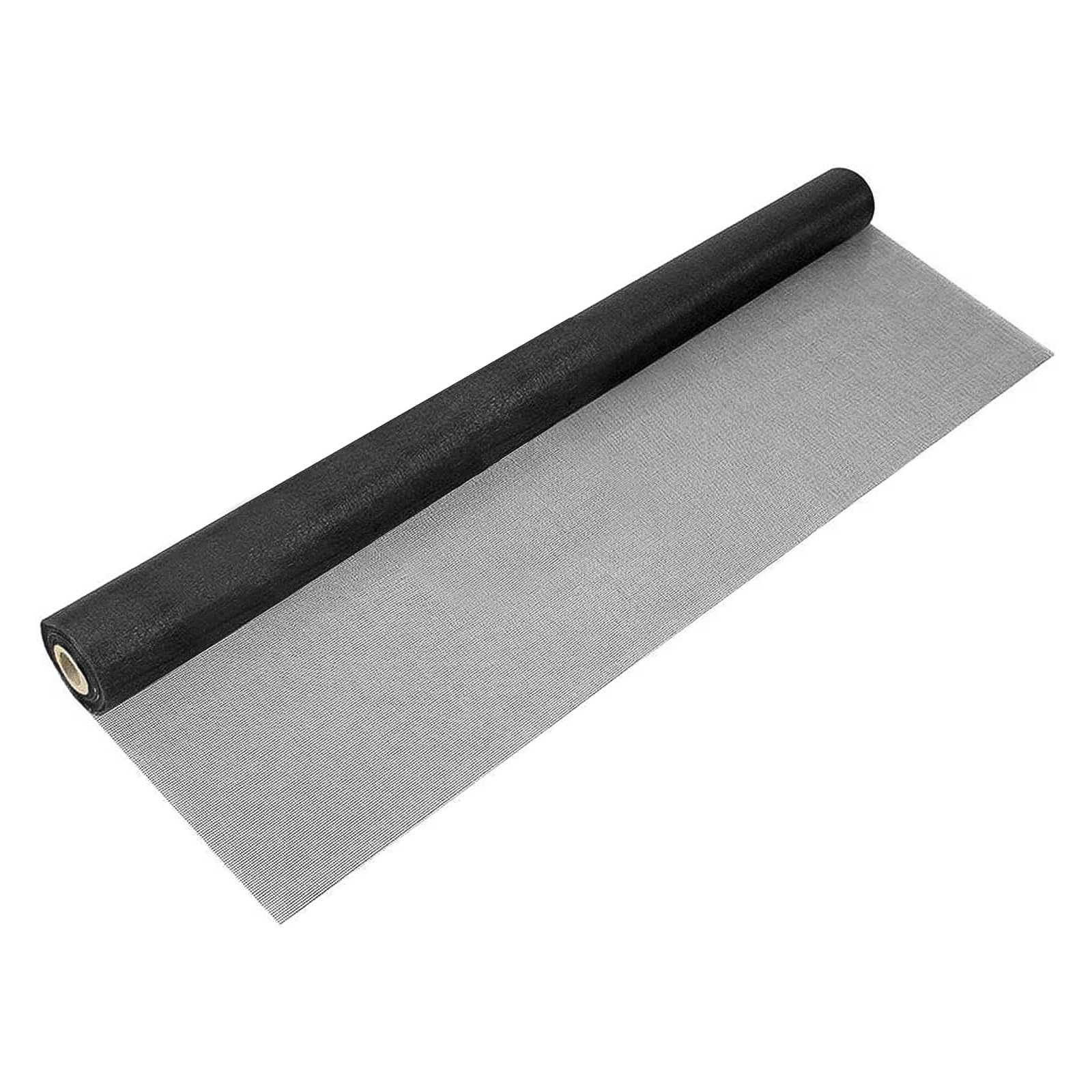
| NeatiEase Fiberglass Screen Roll★ Best Overall | Re-meshing the whole porch | Fiberglass, 18×16 weave | 72 in x 100 ft | Screen mesh roll | Amazon |
| CBW Doors Double Panel TrackBest for Heavy Doors | Heavy glass patio sliders | Vinyl with stainless cover | 72 Inch | Bottom track | Amazon |
| KC Hardware Vinyl Track | Quick screen door repair | Vinyl | 72 Inch | Bottom track | Amazon |
| CWH Premium American Made Track | Long-term glass door fix | UV-stabilized vinyl, 304 stainless cover | 72 in (6 ft) | Bottom track | Amazon |
| Metro Screenworks Square Vinyl Bottom Track | Full-length patio door rail | Vinyl | 96 Inch | Bottom track | Amazon |
| Top Track 5/8″ x 3/4 | Jumping or sagging doors | Aluminum | 96 inches | Top track | Amazon |
| Screen Tight Porch Screening System | Building a porch enclosure | Vinyl cap and base | 1.5 in x 96 in (20 pk) | Cap and base system | Amazon |
Detailed Reviews
1. NeatiEase Fiberglass Screen Roll, 72″ x 100′
Our pick — 4.5+★ from 950+ verified ratings; the strongest balance of quality and price.
A hundred feet of mesh on one roll — enough to re-screen a porch and still have leftovers.
Buy the track and the mesh together, or you finish the job with bare frames. This 72-inch-wide by 100-foot roll of black fiberglass mesh (the woven screen cloth) is the mesh half of that pair. It is sized more generously than most people expect. One buyer review sums it up: “Came with sooo much screen, didn’t realize it was going to be so much!” When one roll covers a full porch and more, the project costs far less than paying a screening crew.
The weave is an 18×16 grid, which simply means 18 strands one direction and 16 the other in each square inch. That density is the balance point — tight enough to stop mosquitoes and small bugs, open enough that the breeze still comes through on a warm evening. Fiberglass is the material choice because it is heat-resistant and wrinkle-resistant, so it holds up to sun and still cuts flat with a straight edge. You trim it to your frame size and fix it in place with spline or pair it with a magnetic screen window.
The part nobody puts on the box: it creases. Rolled mesh has to be rolled, and some of those folds need time or a warm afternoon before they relax out of the panel. Allow for a 2-inch wastage length when you measure so the creased edges land outside your visible window. Do that, and the mesh hangs flat, keeps the bugs out, and covers far more area than a hardware store roll for the money.
Why the roll earns its place
- 72 inches wide by 100 feet long covers multiple openings from one purchase
- 18×16 weave blocks mosquitoes while keeping airflow open
- Fiberglass resists heat, wrinkling, and tearing after cutting
- Trims to any size with a straight edge and a sharp blade
- Also fits patio screens, pool screens, sliding doors, and French doors
What to plan around
- Rolled mesh arrives creased and needs time to relax flat
- You must budget a 2-inch wastage on every measured length
- At 13.97 pounds the roll is awkward to unroll solo
Reach for this if: you are re-meshing porch or patio frames and want one length to cover every opening.
Plan ahead for: a little patience — unroll it early and let the folds settle before you cut.
2. CBW Doors Sliding Doors Double Panel Track (72 Inch)
The rail that turns a door you have to shoulder open back into one you slide with a finger.
When a glass slider starts catching, most homeowners assume the door is finished. It usually is not. The vinyl rail underneath has cracked, and the door has dropped onto it. This 72-inch CBW replacement rail is built for exactly that problem. Buyers report the door now “glides like Butter.” That matters when your alternative is a new door plus an installer.
Two design choices matter here. First, the rail is clad in a stainless-steel track cover. That cover is the wear surface the rollers actually run on, so you get metal on metal instead of metal grinding into soft vinyl. Second, the install is simple: cut the rail to length with a hacksaw and snap it into the existing groove. One buyer priced a replacement door first, then wrote: “Got a quote for a new sliding door and instead replaced the track and got new wheels.” The gap between those two paths is real.
What to know before you order. It is a 10.4-ounce vinyl rail, so it feels lighter in hand than the price might suggest, and durability over many years is the fair question to ask. The stainless cover has to be cut through with a hacksaw, which takes real effort compared with plain vinyl. And a heavy dual-pane door is a two-person lift onto a new track — do not plan this as a solo job. Pair it with fresh rollers and the door slides smoothly again.
Where it wins: a stainless running surface on a snap-in vinyl body suits a door that gets opened all day. The cover takes the metal-on-metal wear instead of letting rollers chew into soft plastic.
The honest caveat: the vinyl body itself has a light feel, so treat this as a solid repair that depends on the cover, and swap your roller assemblies at the same time for the smoothest ride.
An easy yes for: anyone with a dragging or binding glass slider who wants to keep the door they already have.
Think twice if: you need a top track — this is a bottom rail, and it will not stop a door that hangs badly from above.
3. KC Hardware Vinyl Sliding Screen Door Track (72 Inch)

Five minutes, a hacksaw, and a cracked screen door slider that finally behaves.
This is the pick for the homeowner who just wants the screen door to stop catching on a snapped bottom rail. It is high-grade white vinyl at 72 inches, made to be cut to your opening and snapped directly into the groove your old track sat in. The whole job is a trim-and-click, which is why the reviews keep circling back to speed rather than difficulty. As the review pages sum it up: “I watched a video online and replaced the cracked slider on my door in about 5 minutes.”
Fit is where this rail lives or dies, and it is the thing owners praise most — the measurements line up with the older patio slider frames these parts are made for. The vinyl is smooth once it is seated, and the door slides quietly along it. It is not a one-trick part either: the maker lists it as suitable for bypass, pocket, patio, and barn doors, plus closet and cabinet rails and shower doors. That range makes it worth keeping a spare length on the shelf.
The catch worth flagging is that its pricing sits on the high side for a length of vinyl, and some doors slide more smoothly on it than others. Screen door travel is the mixed note — a rail that works fine on one frame can feel stiff on another depending on the door’s weight and the shape of the rollers. Order new rollers with it. Then the part that decides your result is cutting the length square, which the regulars manage with a hand saw.
What buyers get right
- Cut to length and snaps in — no fasteners through the frame
- Fit is the trait owners praise most, especially on older patio frames
- Works across bypass, pocket, patio, barn, closet, and shower door tracks
- Solid vinyl that holds up once seated
What to weigh honestly
- The price is on the steep side for a single vinyl rail
- Slide smoothness varies depending on your door and rollers
- You must cut it yourself for a correct fit
The fit-first pick: ideal for a standard older patio screen door where a fast, accurate replacement is the whole goal.
Look elsewhere if: your opening is an unusual width or you need a heavy glass-door rail — this one is sized for screen doors.
4. CWH Premium American Made Vinyl Sliding Door Track

The rail built for sun-blasted patios, with a metal cover thick enough to say why.
Most track covers are an afterthought of unspecified thickness. This one is not — Cottonwood Hardware states a 0.018-inch stainless-steel cover over a UV-stabilized vinyl body, and then backs that up with 304 stainless, the corrosion-resistant grade used in wet and salt-air settings. If your patio door faces hard desert sun or coastal humidity, that combination is the reason to look here rather than at a bare vinyl rail. The vinyl is deliberately stabilized against sunlight so it does not go brittle and split after a few summers.
Installation is the standard route: pull the old track, hacksaw the new one to length, snap it into the frame. If the frame is warped or damaged and the rail sits loose, a bead of silicone adhesive holds it firm. The unit is a two-and-a-third-pound piece of hardware, which is substantial enough to feel like a real part rather than a strip of trim. The maker is one of those rare window-repair outfits that offers a support team, so you are not alone if the fit fights back.
Compare this to the KC Hardware rail above and the difference is the running surface — this one is metal-capped, which is why it targets doors that see constant traffic rather than a once-a-day screen. One buyer’s test case was a bottom guide that had survived past twenty years before it failed; they trimmed a few inches off the length with a hacksaw and a jigsaw and snapped it in. The only complaint that showed up at all was a slow delivery, so plan for the install after the rail is actually in your hands.
The deciding spec: a 0.018-inch 304 stainless cover on UV-stabilized vinyl is a durability story told by materials, not adjectives — metal where the rollers ride, sun-treated plastic underneath.
Where it asks something of you: cutting stainless takes a hacksaw and a steady hand, and the 72-inch length assumes a 6-foot door, so measure before you commit.
Best for: a glass patio slider in a sunny or coastal climate where a rail needs to outlast the weather.
Not the fit for: a narrow screen door opening — this is a 6-foot glass-door rail and sizes accordingly.
5. Metro Screenworks Square Vinyl Bottom Track (96 in)

Eight feet of vinyl that makes a tired screen door roll smoother than the day it was hung.
When your opening is a full patio width, the 72-inch rails above come up short and you are splicing two pieces. This square-profile vinyl bottom track runs 96 inches — a full 8 feet — so one length covers a standard wide slider without a joint in the middle. It is the reason this part is worth the step up for a big opening: a single continuous rail is one less place for the door to catch.
The vinyl is meant to shrug off rain, humidity, and temperature swings without rusting or warping the way metal track can. Cutting is the easy part — it trims with a hand saw, and owners have done it with everything from landscaping shears to a serrated kitchen knife, since vinyl does not fight back like aluminum. That splinter-free edge is also why it is a reasonable choice for someone who has never installed a track before. One buyer’s note says it succinctly: the replacement for a quarter-century-old rail was installed in 10 minutes once the old one was lifted out.
The fair caution is warping. While the vinyl is built to resist weather, some are not so lucky and report a rail that bowed after a couple of weeks in the sun — worth knowing if your track faces full afternoon sun. Pricing also lands on the high side for a length of vinyl, which is the recurring gripe rather than any flaw in how it fits. Measure the full span before ordering and you avoid the only sizing snag.
Where it clears the bar
- 96-inch continuous length covers a full-width patio opening
- Vinyl resists rust, humidity, and temperature change
- Cuts with a hand saw, kitchen knife, or shears
- Splinter-free and safe to handle for first-time installers
Where to slow down
- Some vinyl rails warp after exposure to intense sun
- Price is steep relative to a single piece of vinyl
- Must be cut to size before installation
Best for: a wide patio slider where one piece of track should span the entire opening without a seam.
Look elsewhere if: your door sits under punishing afternoon sun and you would rather have a metal-capped rail doing the work.
6. Top Track 5/8″ x 3/4 for Sliding Screen Door (96 in)

The aluminum top rail that keeps a jumping screen door from leaving its groove.
If your screen door pops out of the track, wobbles on its rollers, or needs a shove to slide, you are probably looking at the wrong end of the door. This is the top track — the rail the screen door hangs from — at 5/8 inch wide by 3/4 inch tall and a full 96 inches long. The center carries a shorter sub-track for the top rollers, so the door is guided rather than left to swing free. That design is what stops the unnecessary tugging on every open.
Aluminum is the interesting call here. Metal top tracks resist rain, humidity, and temperature swings without rusting or warping, and aluminum is light enough to handle and cut yourself. It is splinter-free, so trimming to your opening with a hand saw is a safe job rather than a hazard. The maker, Metro Screenworks, has manufactured screen door hardware in the USA for decades and builds this for screened-in porches and sunrooms, so the part is aimed squarely at the enclosure crowd.
Now the honest part. The widest complaint about this track is that it does not fit every screen door. One brand name comes up specifically: a standard Andersen sliding screen can run narrower than this rail. One buyer found a standard hardware-store screen door frame sat so tightly on it that friction stopped the door from sliding at all. Size decides whether this part works for you, so measure the groove width on your door before you buy. Fit it correctly and owners describe a door that had been jumping the rail sliding “like new” again.
What it does well: an aluminum body that will not rust and a roller sub-track at the center give a sagging screen door back its guide, which is the fix a bottom rail cannot deliver.
The catch to check: measure your existing groove carefully — a fit that is too tight creates friction, and Andersen doors in particular may need a narrower profile than 5/8 inch.
Right call if: your door jumps, sags, or refuses to stay in the groove and you know your door runs on a 5/8-inch top rail.
Hold off if: you have not measured — the honest risk with this part is a rail that is too snug for your door.
7. Screen Tight Porch Screening System, Cap and Base (20 pk)

The cap-and-base system that upgrades a plain porch frame into a screened room without a staple gun.
Everything above is a repair part. This is different — it is the framing system you install around a porch opening so the screen is held in a snap-on cap and base rather than stapled into wood. You are buying twenty 96-inch lengths of white vinyl cap and base that snap together, tighten the fabric, and hide the hardware behind a clean trim line. If you are screening in a porch from scratch or replacing an old staple-and-tack job, this cap-and-base system gives the frame a clean, finished trim line.
The system removes the worst part of screened enclosures: the staple line, which tears mesh and leaves ripples. With Cap and Base, the screen sits between the two pieces and the cap clicks down over the top, tensioning the fabric as it goes. When it is time to rescreen, you pop the cap off and click it back down over the new mesh — no tools required. The cap is paintable, so you can match a trim color. Do-it-yourselfers, tradespeople, and builders have used this system across millions of homes, and one former pool contractor in Florida called it “a piece of cake” after screening in a back porch.
There is one fact to understand before ordering, and it trips people up. This pack includes the cap and base only. You must buy your screen fabric and your spline separately, so budget for both. And this is a whole-installation product — the price sits in the premium tier because you are getting twenty 96-inch pieces, not a single repair rail. The trade-off is simply that if your screen door just needs a new bottom rail, this is not that part.
What the system delivers
- Snap cap and base replaces staples and hides hardware
- Pop the cap off and back on to rescreen — no special tools
- Paintable surface matches trim and siding
- Twenty 96-inch lengths cover a large porch run
What the box leaves out
- Screen fabric and spline are sold separately
- Premium price reflects the full pack, not a single rail
- Cuts best with metal snips rather than a blade
Made for: a homeowner screening in a porch or redoing a stapled frame who wants a clean, paintable finish.
Not for: a screen door that just needs a replacement rail — get the KC Hardware or CBW track for that.
Know the Specs
Track Width and Groove Fit
Every track has a specific width and height — 5/8 inch by 3/4 inch on the aluminum top track, or a broader vinyl profile on bottom rails. The rollers on your door have to sit inside that groove without pinching. A rail a fraction too narrow creates friction, and the door stops sliding mid-travel. Measure the width of your existing rail before ordering and compare it to the spec sheet. This is the single number that decides whether a track fits or fights.
Stainless Steel Cover Gauge
The stainless cover is the wear surface where the rollers ride. A 0.018-inch cover takes years of daily opening and closing before it shows wear, so a covered rail outlasts a bare vinyl one. Bare vinyl works fine for light screen-door use, but for a glass patio door you slide every day, metal on metal is the difference between a repair that lasts and one you repeat.
Mesh Weave and Mesh Roll Size
An 18×16 fiberglass weave describes the number of strands per inch each direction. It is the right screen for stopping mosquitoes while letting the breeze through. Roll size matters too — 72 inches by 100 feet is a bulk quantity meant to cover multiple openings, so measure how many you have before buying. Plan a 2-inch wastage allowance as well, since the edges of the roll are the creased ones.
Top Track vs Bottom Rail
A screen door hangs from the top track and is guided by the bottom rail. If the door jumps, wobbles, or sags, the top track is usually the suspect because the rollers carry the weight up there. If the door drags or scrapes, the bottom rail has worn. A repair to either end alone will only half-fix a door that has failed at both, so inspect both before deciding which part to order.
Common Questions
Will a 5/8-inch top track fit my sliding screen door?
Do I need a new track and new rollers at the same time?
Can I cut a vinyl or stainless-clad track to fit my opening?
What causes a screen door to keep jumping off the track?
How much screen mesh do I need for a porch?
Does the Screen Tight system include the fabric and spline?
Will a vinyl rail warp in direct sun?
Can one bottom track fit both a screen door and a glass patio door?
What tools do I need to replace a sliding door track?
Does a replacement track really save money over a new door?
The Bottom Line
If you are re-meshing a porch or patio, the NeatiEase Fiberglass Screen Roll is the pick. A 100-foot roll of 18×16 mesh (18 threads per inch one way, 16 the other) covers multiple openings and keeps the bugs out at a value that is hard to argue with. For a dragging or binding glass slider, the CBW Doors Double Panel Track saves you from a new door, with its stainless cover taking the wear. If your door jumps off the rail instead of dragging, grab the Top Track 5/8″ x 3/4 — after you measure. And for the homeowner building a screened porch from the frame out, the Screen Tight System turns a plain porch into a screened room. Match the part to the failing end of your door, buy fresh rollers with it, and the swap takes a single afternoon.
How we choose
We do not accept paid placement. Every pick is matched to a real buyer and a real use-case; we do not hands-on test units.
Sources
Specifications: manufacturer listings and product documentation. Review insights: verified customer reviews, as of October 2026. Pricing: not shown on this page (it changes often); check the current price via the retailer link.
As an Amazon Associate, Aappliancez earns from qualifying purchases. This does not affect which products we feature.